What is Tusk?
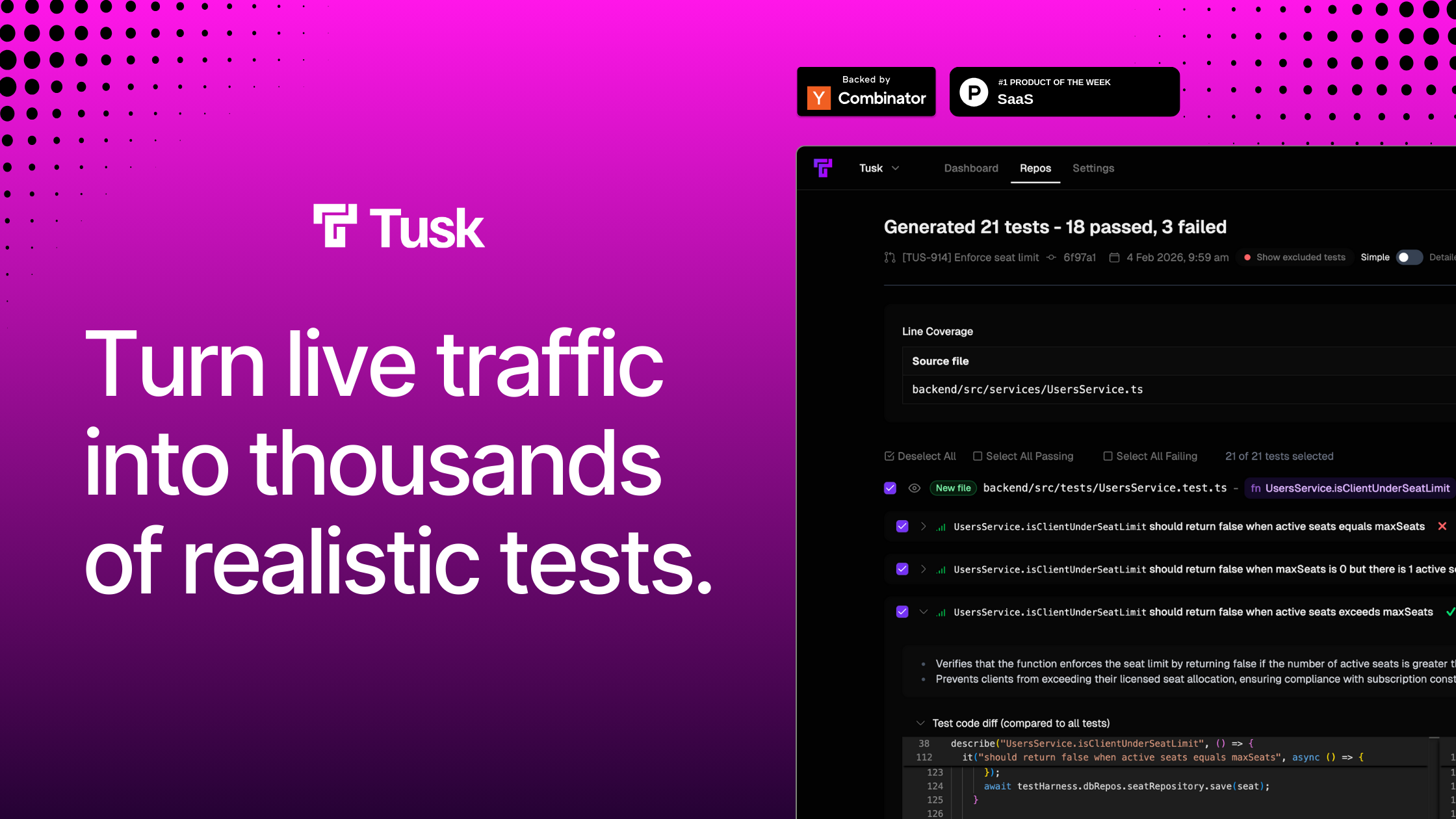
Tusk is an AI agent that automatically generates unit and integration tests for software changes as they move through code review.
It sits in continuous integration and provides test coverage whenever an engineer raises a pull request, with the goal of catching critical regressions before they ship and steadily raising overall coverage.
What distinguishes Tusk is that it grounds its test generation in live traffic and real business context rather than only the diff, which helps it produce tests that reflect how code actually behaves in production; the company reports its tests catch real-world regressions in a meaningful share of pull requests.
Tusk also self-iterates: if a generated test errors when run, the agent fixes and reruns it rather than handing developers a broken test, removing the back-and-forth typical of copilot-style suggestions. A high proportion of Tusk-generated test suites are accepted into customers' pull requests, indicating practical usefulness.
Tusk was founded by a Y Combinator (W24) team focused on automating test generation within existing workflows. Typical users are engineering teams that want automatic regression coverage without writing every test by hand or changing how they work.
Pros include zero-friction CI integration, context-aware test generation, and self-correcting tests. Cons include that it focuses specifically on test generation rather than full code review, and generated tests still warrant human inspection before merging. Pricing is typically subscription-based.
Pricing changes often, so check the official site for current plans. Tusk's core capabilities include Automatic unit and integration test generation on PRs, Live-traffic and business-context-aware tests, Runs inside CI on every pull request, Self-iterates and fixes failing tests and Integrates into existing GitHub workflows.
Automatic unit and integration test generation on PRs is built in, Live-traffic and business-context-aware tests is built in, Runs inside CI on every pull request is built in, Self-iterates and fixes failing tests is built in, so you get a rounded toolkit rather than a single trick.
Each feature is designed to take the manual effort out of the task and help you reach a usable result faster, which is what makes Tusk worth a place on your shortlist.
On the plus side, users consistently highlight Zero-friction CI integration, Context-aware, realistic tests and Self-corrects rather than handing off broken tests as the reasons they keep using Tusk.
It isn't perfect, though — Focused only on test generation, not full review and Generated tests still need human inspection are the trade-offs people most often mention, so weigh those against your own priorities before you commit.
As with any AI tool, the output still benefits from a quick human review, but Tusk gets you most of the way there with far less effort. Tusk runs on a subscription pricing model, aimed at users who want the full feature set without free-tier limits.
AI-tool pricing changes often, so always check the current plans, seats and add-ons on the official site for the latest details before you buy. Who is Tusk for? It's best suited for ai agent that writes tests for your pull requests.
Whether you're a beginner trying this kind of AI tool for the first time or a professional who'll use it every day, it's a credible option to consider.
If you're still deciding, compare Tusk against the alternatives and the head-to-head comparisons linked below — looking at features, pricing and real user ratings side by side is the fastest way to find the right fit for your workflow and budget.
Who is Tusk for?
Tusk is best suited for ai agent that writes tests for your pull requests. Whether you are trying this kind of coding & development tool for the first time or use one every day, it is a credible option to shortlist — compare it with the alternatives and head-to-head comparisons linked on this page to find the best fit for your workflow and budget.