Head-to-Head
Smartcat vs Typeface
Editor Scores, pricing and fit side by side — to help you pick the right writing & content tool in 2026.
Our Verdict
Smartcat edges it by 0.2 in our reviews. Pick Smartcat if you want AI translation across 280+ languages; choose Typeface for arc Graph for automatic brand and audience grounding. On pricing, neither has a standing free plan — start on a trial to compare.
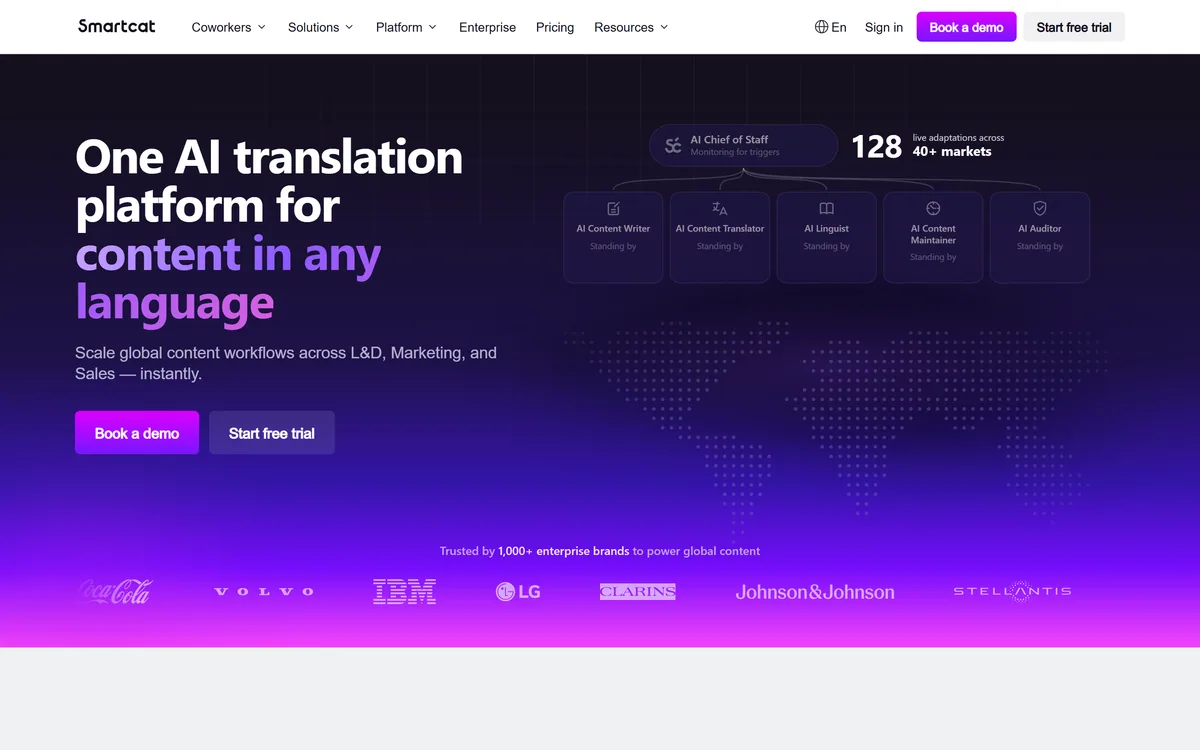
Smartcat
PaidEditor Score · Very good
Best for: Companies publishing marketing and product content across many markets
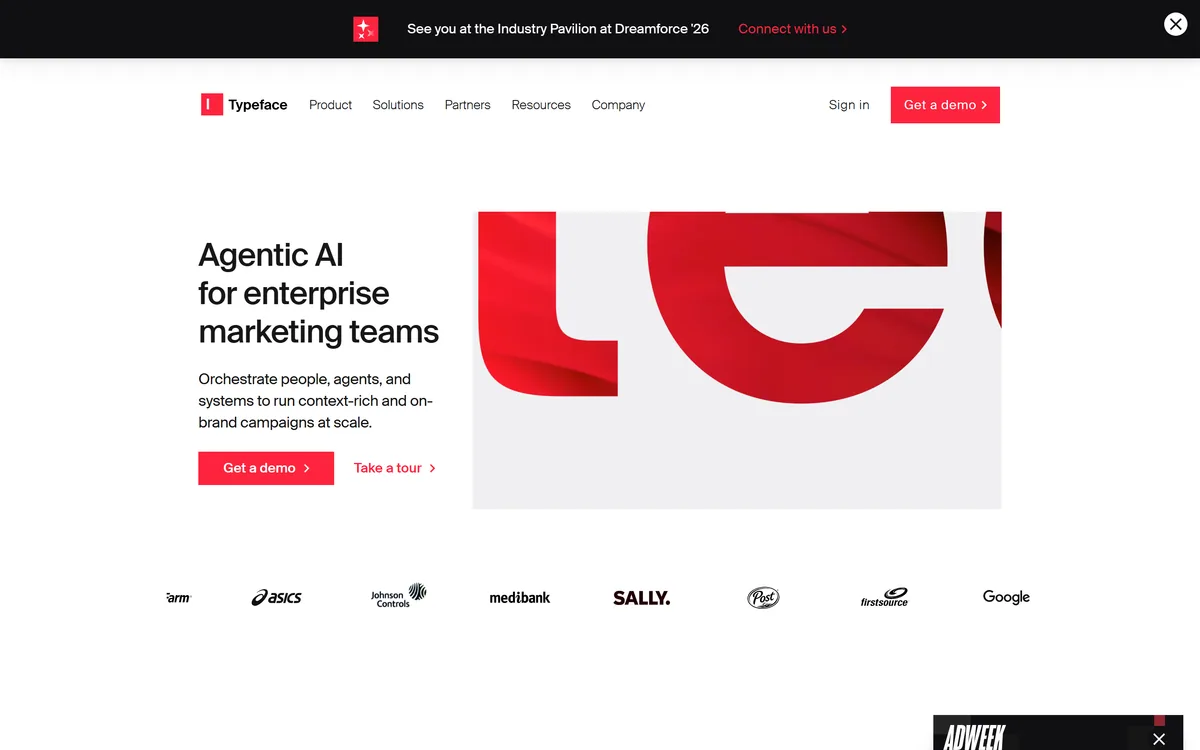
Typeface
PaidEditor Score · Very good
Best for: Enterprise marketing teams running multiple brands or markets
Smartcat vs Typeface: Side by Side
| Detail | ||
|---|---|---|
| Editor Score | 4.4/5 | 4.2/5 |
| Pricing model | Subscription | Paid |
| Free plan | No | No |
| Best for | Companies publishing marketing and product content across many markets | Enterprise marketing teams running multiple brands or markets |
| Review last verified | Sep 2026 | Sep 2026 |
Quick Verdict: Which Should You Choose?
Short answer: a winner is called only where the data decides one. Fit — what each tool is built for — is covered in Who Should Pick Which below.
| Factor | Smartcat | Typeface | Winner |
|---|---|---|---|
| Editor Score | 4.4 | 4.2 | Smartcat |
| Free to start | No | No | Neither |
| Overall | Smartcat |
Smartcat: Strengths and Trade-offs
Smartcat combines AI translation across 280+ languages with a CAT tool, translation memory, a marketplace of 500,000+ linguists, and AI agents for writing, auditing and maintaining content — integrated with Figma, Contentful, WordPress, Git and Salesforce.
What It Does Well
- Translation memory and glossaries deliver consistency AI alone cannot
- AI first pass and human review live in one system, with no lossy handoff
- Figma integration catches text-expansion layout problems at design time
- Content Maintainer targets decay, which is where localisation usually fails
Where It Falls Short
- Fluent machine output can reverse meaning invisibly to a monolingual reviewer
- Quality varies widely across 280 languages, and low-resource pairs are weaker
- Cultural adaptation and idiom still require a human from that market
Typeface: Strengths and Trade-offs
Typeface has correctly identified that generation stopped being the bottleneck in enterprise marketing some time ago. What large organisations are short of is not copy but a way to keep hundreds of assets on brand, get them reviewed, and publish them across markets without the whole thing collapsing into a chase for approvals. Arc addresses exactly that, with a graph holding brand context, spaces holding the workflow and a forge for extending both. The catch is that a platform of this shape only pays off at genuine scale, and it needs change management to land at all.
What It Does Well
- Correctly treats orchestration, not generation, as the enterprise bottleneck
- Grounding moves brand constraints upstream of the review queue
- Approval workflow sits at the centre rather than bolted on
- MCP support signals participation in an existing stack, not replacement
Where It Falls Short
- Only pays off at genuine multi-brand or multi-market scale
- Dedicated models is a phrase that spans three very different architectures
- Indemnification for generated output is not addressed on the homepage
Who Should Pick Which?
 Pick Smartcat for…
- Companies publishing marketing and product content across many markets
- Teams whose translated content goes stale as the source keeps changing
- Organisations needing consistent terminology across documentation
 Pick Typeface for…
- Enterprise marketing teams running multiple brands or markets
- Organisations where brand and legal review is a formal gate
- Teams producing many localised variations of one campaign
Bottom line: your use case decides this one — Smartcat leans into AI translation across 280+ languages, while Typeface is built for arc Graph for automatic brand and audience grounding. Both are paid, so start each on a trial before you commit.
Frequently Asked Questions
Is Smartcat Better Than Typeface?
What Is the Difference Between Smartcat and Typeface?
Is Smartcat or Typeface Cheaper?
Which Is Better for Beginners, Smartcat or Typeface?
More Writing & Content Comparisons
Other head-to-heads in the same category.
About the Author
Senior AI Tools Reviewer
Daniel leads AInexfinder's tool reviews. He researches each tool from its own pricing, documentation and policies, checks its claims against independent sources, and writes up what it does well, where it falls short and who it genuinely suits.
Keep Exploring
Last updated September 2026. Scores are each tool's Editor Score, or a provisional estimate marked “Est.” while its full review is pending — see our methodology.