
Wordtune review on AInexfinder — freemium AI tool for Writing & Content. Features, pricing notes, and alternatives.
Writing & Content Review
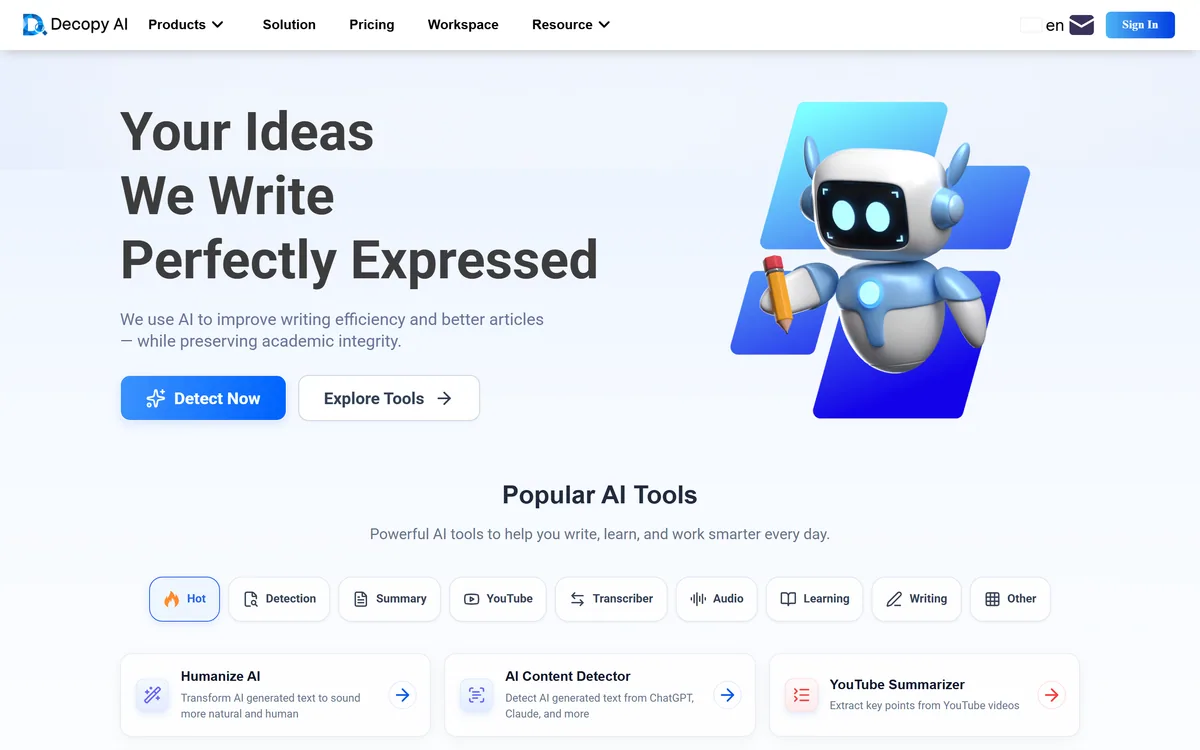
Decopy AI is a free suite of writing and study utilities covering text humanizing, AI detection, summarisation of documents, video and audio, speech conversion, a maths solver, flashcard and worksheet creation, and story and article generation — usable without creating an account.
Fair
Genuine free access with no login is rare and makes the summarisation and transcription utilities immediately useful for students. The score is low because the suite pairs an AI detector with a humanizer designed to defeat detectors, because the site publishes nothing about who runs it or what happens to uploaded documents, and because its academic-integrity framing sits awkwardly beside a tool named AI Homework. AInexfinder Editor Score: 3.2/5.
Best for: Students summarising lectures, readings and recorded material; Anyone needing quick transcription without a subscription
The visit link goes to decopy.ai, the official site. Paid placements on AInexfinder are always labelled. How we make money
On academic use. Several tools here are aimed at students, and some — humanizing AI text, generating homework answers — can be used in ways that breach academic integrity policies. This listing describes what the suite does and where each tool is legitimately useful; whether a particular use is permitted is governed by your institution's policy, not by the tool.
Of the ten tools here, a specific group is genuinely useful and separating them from the rest saves time.
Document and video summarisation is the strongest offering. Feeding in a PDF, a lecture recording, a PowerPoint deck or a YouTube link and getting a structured summary is a real workflow for a student with more reading than hours, and it does not involve any integrity question at all — summarising material to understand it is studying.
Speech to text matters more than it looks for the same audience. A recorded lecture becomes searchable text, which is transformative for revision and genuinely important for students with disabilities who cannot take notes at speed.
Dedicated maths tools such as Mathos AI go far deeper on the solver specifically. OCR from images completes the set. Photograph a textbook page or a whiteboard and it becomes text you can search, summarise and quote.
Flashcard and worksheet generation is the most pedagogically defensible tool in the suite, because retrieval practice — testing yourself rather than rereading — is among the best-evidenced study techniques there is. A tool that pushes toward it is helping people learn rather than helping them avoid learning.
That group alone, free and without a login, is a reasonable reason to bookmark the site. The rest of the suite needs more thought.
Summarising a lecture to understand it is studying. Generating an essay to submit is not. The same website offers both, and only you can tell them apart.
Decopy AI offers an AI Content Detector and a Humanize AI tool designed to make AI text pass detectors. That pairing deserves stating plainly.
The two products work directly against each other. One identifies machine-written text; the other exists to prevent exactly that identification. A customer of one is the adversary of a customer of the other.
The commercial logic is understandable — building a good humanizer requires understanding detection intimately, so the same research serves both. Undetectable AI runs the same model at larger scale.
The practical implication for a user is specific. If you are relying on the detector to check something — as a teacher, an editor, a hiring manager — you are relying on a detector built by a company whose other tool defeats detectors. Whether it catches its own humanizer's output is a question only they can answer, and the incentive points the wrong way.
For any consequential check, a vendor that does not also sell evasion avoids the question. Originality.ai publishes its false positive rates and does not sell a humanizer.
There is a broader point about detection generally that applies whatever tool you use: detectors misclassify formal and non-native English writing at meaningful rates, and a score should never be the sole basis for accusing anyone of anything.
The site frames itself around maintaining academic integrity while offering a tool called AI Homework. Those two things sit awkwardly together and it is worth being direct rather than diplomatic.
The distinction that matters is not technical. Using a maths solver to see the worked steps for a problem you got wrong is studying. Using it to produce answers you submit without understanding them is not. The tool cannot tell the difference and neither can the website's framing.
That said, the honest position is that the tool is not the deciding factor. Students who want to avoid work have always had routes to it, and a homework generator is a faster version of an old problem rather than a new one.
What is genuinely new is the scale and the plausibility. Generated work is fluent, arrives instantly, and is much harder to spot than a copied answer. That is a real change for institutions, and it is why integrity policies have been rewritten across the sector.
For a student reading this, the practical point is unglamorous: the consequence of submitting work you did not do is not being caught. It is arriving at an exam without the understanding the coursework was supposed to build. That is a cost the tool defers rather than removes.
For a teacher reading this, the practical point is that detection is not a reliable answer, and assessment design — process, drafts, oral defence, in-class work — is where the actual response lies.
This site does not publish plan prices. Decopy AI's stated position is that basic use is free with no login required, and that is worth examining rather than simply welcoming.
No login is a genuine convenience and it is unusual across a suite this size. Most competitors gate at least document upload behind an account.
The question free tools always raise is how they are funded, and the site does not answer it. The usual models are advertising, upselling to a paid tier, or using submitted content to improve models. Which one applies here is not stated.
That matters most for the document tools. If you are uploading a PDF, a lecture recording or coursework, you are sending it to a service that publishes nothing about retention or use. For public material that is fine. For anything unpublished, confidential or personal, it is worth pausing over.
The site does not describe watermarking, usage limits, or what specifically distinguishes free from paid use, so the boundaries of the free tier are unclear until you hit them.
The reasonable approach is to use the free tools for what they are good at, on material you would not mind a third party holding, and not to build anything important on a service whose operator and terms are undisclosed.
Being direct about the gaps is more useful than filling them in, and there are several here that would matter for anything beyond casual use.
No company background. No founding date, no location, no team, no legal entity named on the pages reviewed. For a free utility that is common; for a service you upload documents to it is a fair thing to notice.
No data handling detail. Nothing on retention, deletion, or whether uploaded content is used to improve models.
No accuracy claims or evaluation for the detector, which is the tool where accuracy matters most and where competitors do publish figures.
No pricing structure. Free access is stated without describing what paid use adds or costs.
None of this makes the tools bad — the summarisation and transcription utilities are useful regardless of who built them. It means the sensible use is casual and low-stakes: public documents, your own notes, material you would be relaxed about a third party retaining.
For anything that matters — confidential documents, consequential detection decisions, work you depend on — a vendor that publishes its terms is the better choice even if the tool is less convenient.
| Category | Free AI writing and study utilities |
|---|---|
| Named tools | Humanize AI, AI Content Detector, YouTube Summarizer, Speech to Text, Text to Speech, AI Homework, AI Story Generator, AI Writer, Math Problem Solver, flashcard and worksheet creator |
| Text handling | Rewriting, paraphrasing, summarisation and translation |
| Document handling | PDF, Word and PowerPoint summarisation |
| Image handling | AI detection and OCR text extraction |
| Audio handling | Transcription and summarisation |
| Video handling | YouTube transcript and summary extraction |
| Account requirement | None stated for basic use |
| Stated positioning | Vendor frames the suite around improving writing efficiency while maintaining academic integrity |
| Not published | Company background, data retention, detector accuracy, or paid tier detail |
| Charging model | Free to use with no login required for basic access; paid structure not described. No prices published here |
Each of Decopy's tools has a specialist alternative worth knowing when the stakes rise.
Humanize AI for rewriting machine-generated text
AI content detector for text and images
YouTube video transcript and summary extraction
Speech to text transcription
Text to speech generation
PDF, Word and PowerPoint summarisation
OCR text extraction from images
Maths problem solver
Flashcard and worksheet creation
AI writer and story generator
Paraphrasing, summarising and translation
Free access with no login required
A free bundle covers many jobs adequately; specialists do one of them properly.
| Tool | Scope | Publishes terms | Cost |
|---|---|---|---|
| Decopy AI | Ten tools across writing and study | No — background and data handling undisclosed | Free, no login |
| StudyFetch | Study tools grounded in your course material | Company detail published | Freemium |
| Mathos AI | Maths only, with step-by-step video | Company detail published | Freemium |
| Originality.ai | Detection, plagiarism and fact checking | Publishes false positive rates | Credit-based |
| Turbolearn AI | Notes into flashcards and revision | Company detail published | Freemium |
Last checked . Read from decopy.ai during this check, with the screenshot above captured at the same time.
This suite offers both an AI detector and a humanizer designed to defeat detectors, which is a conflicted pairing — for any consequential check, use a vendor that does not sell both. Nothing is published about who operates the service, how long uploaded documents are retained, or whether submitted content trains models, so restrict use to public or low-sensitivity material. AI detection scores should never be the sole basis for an accusation against any individual.
AInexfinder does not list plan prices or billing details. For current pricing, plans, and trials, visit the official Decopy AI website.
Visit official website for pricingVendor pricing, credits, and billing policies change over time. Always confirm on the official site before you buy.
Decopy AI earns an AInexfinder Editor Score of 3.2/5 (fair). Best for: Students summarising lectures, readings and recorded material; Anyone needing quick transcription without a subscription; People extracting text from photographs of documents.
Visit Decopy AILog in to write a review.
No reviews yet. Be the first to share your experience with Decopy AI.
Assigned reviewer
Daniel ReedSenior AI Tools Reviewer
Daniel leads AInexfinder's tool reviews. He researches each tool from its own pricing, documentation and policies, checks its claims against independent sources, and writes up what it does well, where it falls short and who it genuinely suits.
Daniel and the AInexfinder editorial team research Decopy AI from its own website, pricing, documentation and policies, checked against independent sources. This review is research-based: unless its method note says otherwise, we have not bought a plan or run hands-on tests. The Editor Score is our editorial judgement, and payment never changes it.
Similar Tools
Wordtune review on AInexfinder — freemium AI tool for Writing & Content. Features, pricing notes, and alternatives.
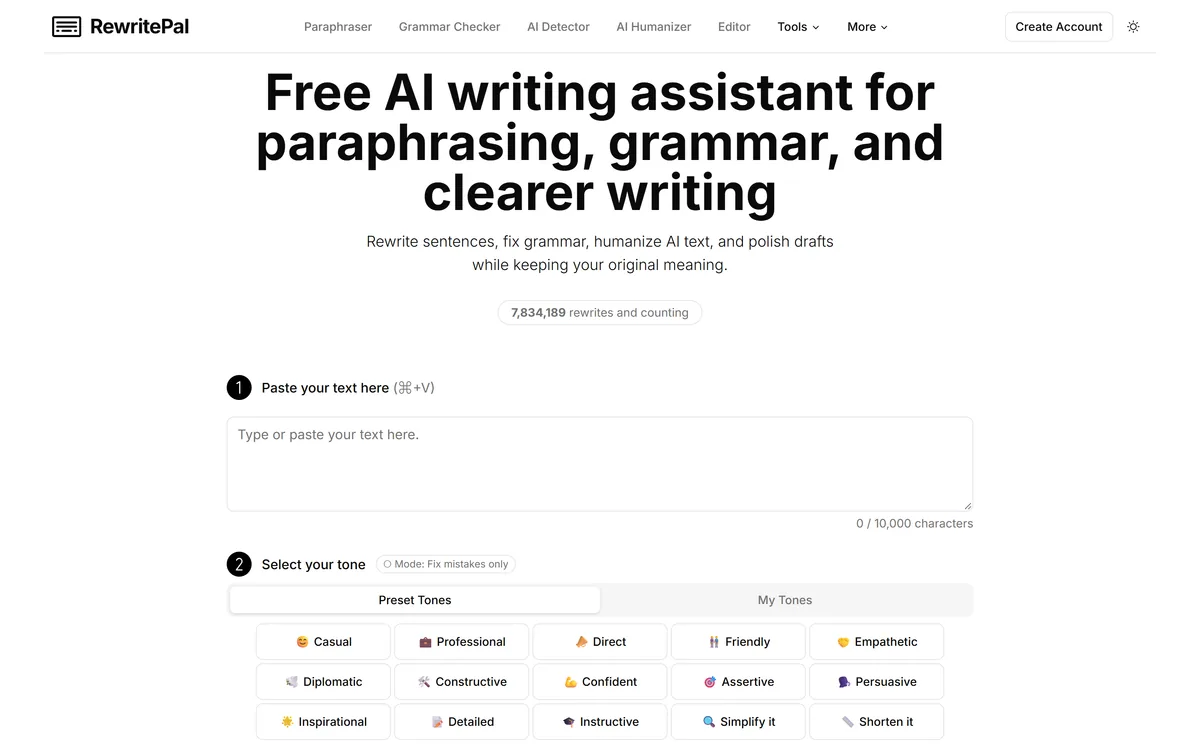
RewritePal is a free online writing assistant for paraphrasing, grammar and spelling correction, tone adjustment, and making AI-generated text read more naturally, with a 40,000-character editor and no account required.
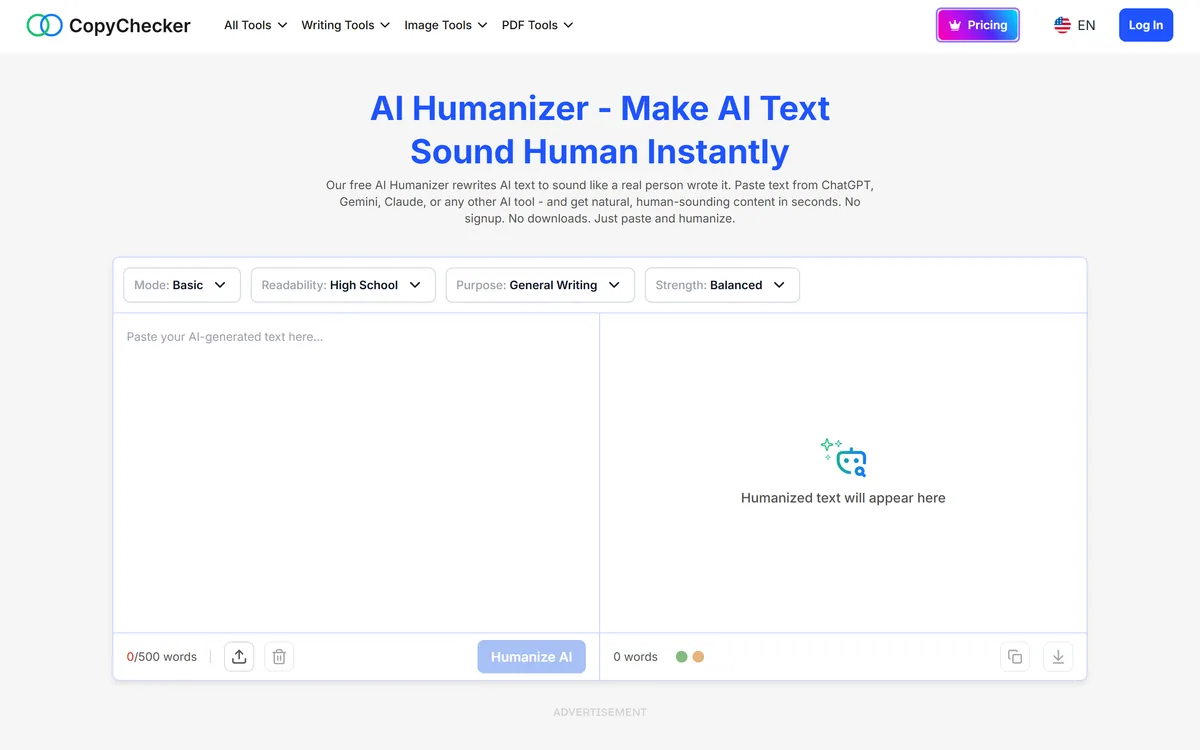

Free AI Humanizer is a tool on CopyChecker that rewrites AI-generated text to read more naturally, with controls for mode, readability level, purpose, and strength, capped at 500 words per run and usable without signup.
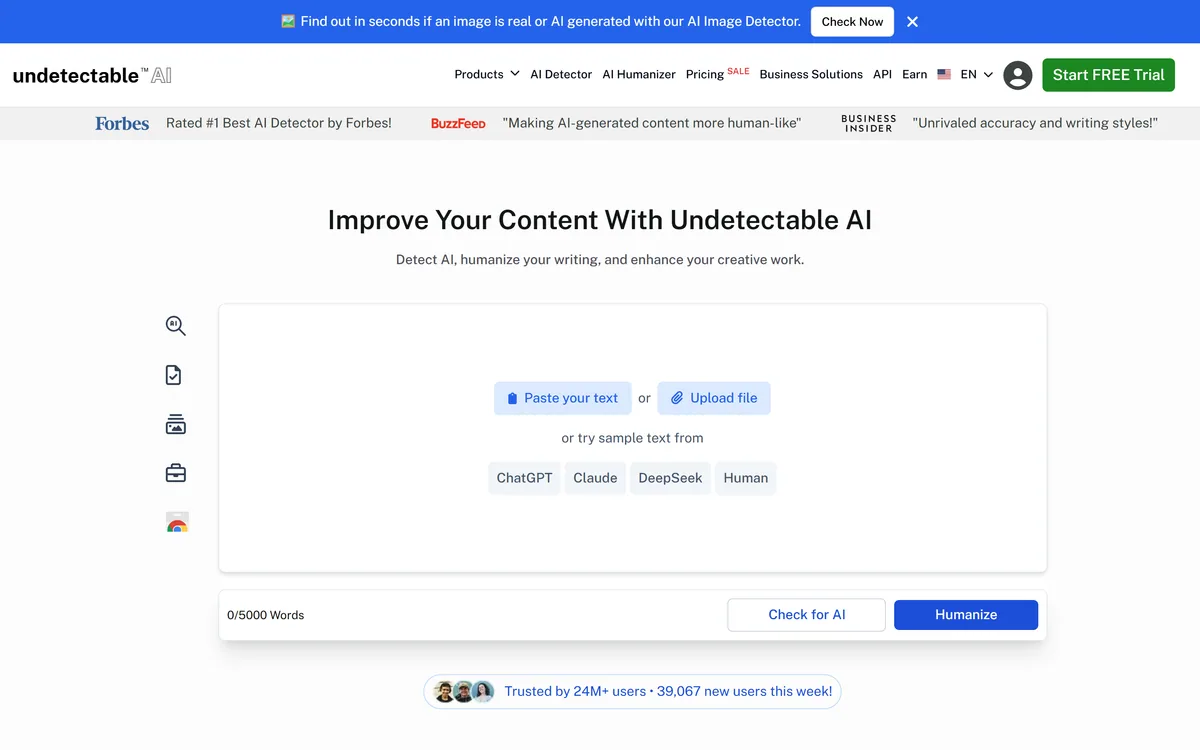
Undetectable AI rewrites AI-generated text so it reads as human-written and is less likely to be flagged by detectors. It also sells detection tools of its own — for text, images, voice, video and deepfakes — plus a suite of writing utilities and a Chrome extension.
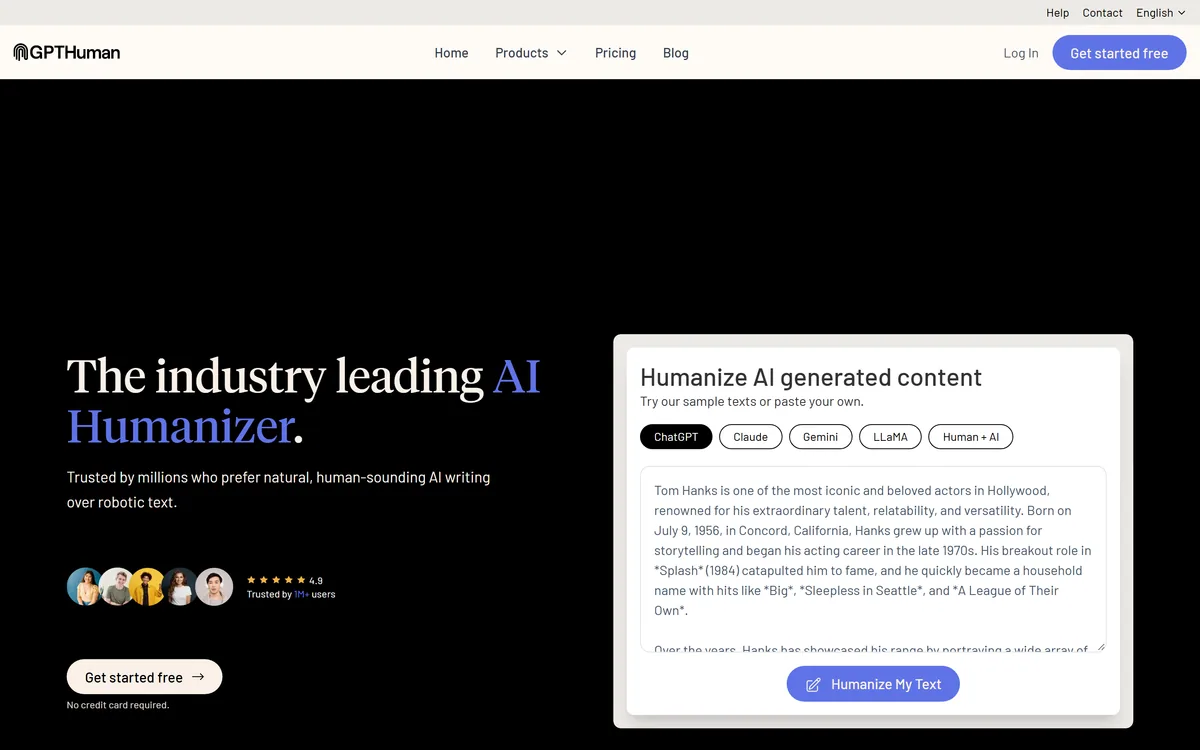
GPTHuman is an AI humanizer that rewrites text from ChatGPT, Claude, Gemini and other models to sound more human and to pass AI-detection tools. It is marketed to students, writers and SEO, but its dominant use, passing AI work off as human, breaches most institutions' rules, which this review weighs honestly.
Duplichecker review on AInexfinder — freemium AI tool for Writing & Content. Features, pricing notes, and alternatives.
Related Pages