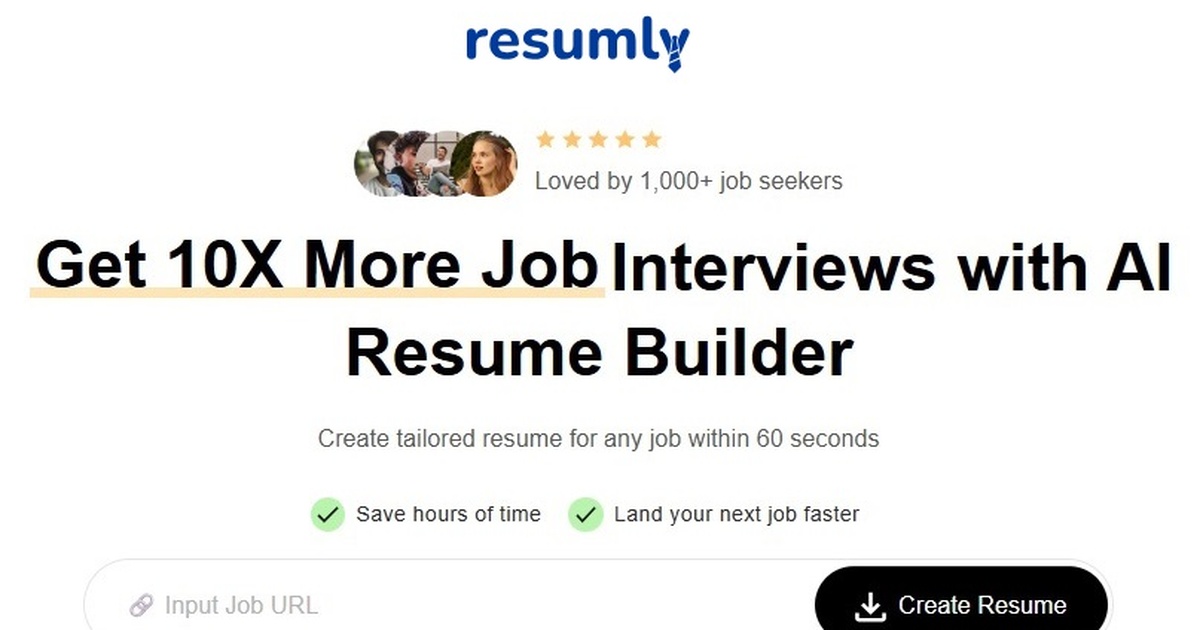
AI resume and cover letter writer with job-search automation Category: Writing & Content.
Writing & Content Review
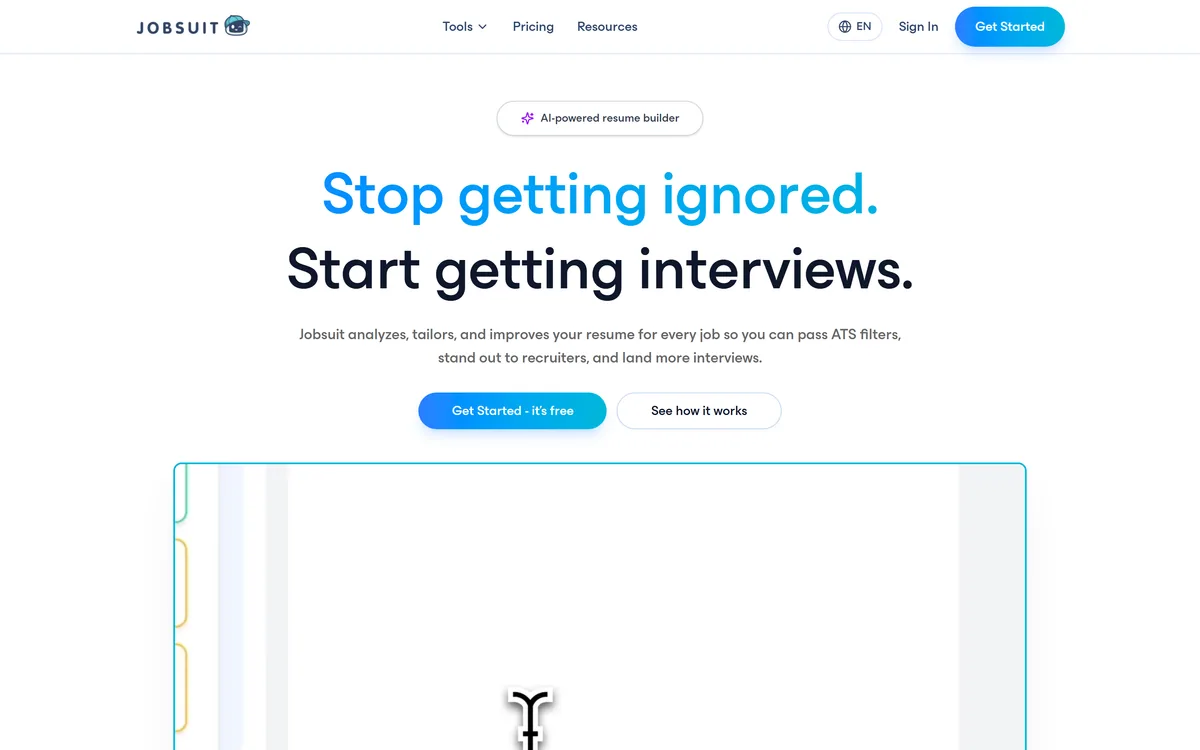
Jobsuit AI is a resume builder from Jobsuit AI PTE. LTD. that analyses a CV against a job description, flags missing keywords and content gaps, tailors the document to the role, writes matching cover letters and tracks applications.
Good
Jobsuit AI has an AInexfinder Editor Score of 3.9/5.
Best for: Graduates and early-career applicants making many applications; Career changers who need existing experience reframed for a new field
The visit link goes to jobsuit.ai, the official site. Paid placements on AInexfinder are always labelled. How we make money
Every careers adviser gives the same advice: tailor your CV to each role. Every job seeker ignores it, and for an entirely rational reason. Genuinely rewriting a CV against a job description takes half an hour or more, and someone making forty applications does not have twenty hours to spend on formatting.
Jobsuit AI, run by Singapore-registered Jobsuit AI PTE. LTD., is built around collapsing that cost. Paste a job description, and it compares your CV against it, names the missing keywords and content gaps, and produces a tailored version — plus a matching cover letter and a tracker for where everything went.
This review covers what the analysis genuinely does, what 'ATS-optimised' can and cannot mean, why the tracker matters more than it sounds, and where a tool like this stops being able to help.
| Company | Jobsuit AI PTE. LTD., Singapore |
|---|---|
| Category | AI resume builder, analyser and tailoring tool |
| Named features | Resume Analysis, Resume Tailoring, Resume Agent, ATS-friendly Templates, Cover Letter Generator, Job Application Tracker |
| Analysis covers | ATS fit, missing keywords, content gaps, improvement recommendations |
| Inputs | Upload an existing resume or build from scratch; paste a job description |
| Outputs | Tailored resumes, cover letters, resume scores, keyword recommendations |
| Templates | Designed to be recruiter-scannable and parseable by applicant tracking systems |
| Tracking | Central record of target roles, tailored documents and application progress |
| Example roles cited | Business analysts, UX researchers, marketing associates, data analysts, product designers, software engineers, finance analysts, sales executives, project managers |
| Community | Discord |
| Site sections | Resume builder, tailoring, analysis, examples, cover letters, FAQs |
Resume Analysis evaluates ATS fit, identifies missing keywords, spots content gaps and recommends improvements. Understanding what each of those means keeps expectations sensible.
Missing keywords is the most reliable part, because it is a genuine comparison between two documents. If the job description says 'stakeholder management' six times and your CV never says it, that is a fact, and it is one people miss constantly — they describe the work without using the words the role uses.
Content gaps is softer. It identifies requirements the job lists that your CV does not address, which is useful for catching the qualification you have but forgot to mention. It cannot distinguish between something you neglected to write down and something you genuinely cannot do.
ATS fit is where care is needed, and the next section deals with it properly.
Applicant tracking systems are the software employers use to receive and filter applications, and an entire advice industry has grown around them — much of it overstated.
Here is what is genuinely true. ATS software parses documents, and parsing does fail: heavy multi-column layouts, text inside images, unusual fonts and tables can all produce a mangled record. A clean, conventionally structured document really does survive this better, which is what an ATS-friendly template is for.
Here is what is not knowable from outside. Every employer configures their system differently, few publish how they weight anything, and no external tool can see what a specific company's instance will do with your file. Any score you are shown is that tool's estimate against its own model of how these systems behave — a useful proxy, not a reading from the employer's software.
The wider point is that ATS filtering is rarely the actual barrier people imagine. Most applications fail because there were three hundred of them and forty were better matched. A well-parsed CV gets you read; it does not get you shortlisted.
A score of 92 is that tool's opinion of your CV. The employer's system has not seen it yet, and would not tell you either way.
Resume Tailoring adapts a CV to a specific job description by aligning your experience with the role's requirements. Used well, this is legitimate and effective. Used badly, it becomes a problem.
The legitimate version reframes true things. The same project can honestly be described as data analysis, stakeholder management or process improvement depending on which the role cares about — you are choosing emphasis, not inventing history.
The illegitimate version happens quietly, when a keyword suggestion for a technology you touched once becomes a bullet implying fluency. Nobody decides to lie; the document simply drifts under repeated optimisation.
The discipline is straightforward and worth stating: read every tailored version as if you are about to be interviewed on it, because you are. Any sentence you would not want to be asked to expand on for five minutes should not be there.
The Job Application Tracker centralises target roles, tailored documents and application progress, and it is easy to dismiss as an add-on.
It is not, because tailoring creates a filing problem. Send the same CV to forty employers and there is one document. Tailor forty and there are forty, and six weeks later a recruiter calls about a role you barely remember and asks about something on a version you cannot locate.
Turning up to an interview unable to recall what your own CV claimed is a specific and avoidable humiliation. A tracker linking each application to the exact document sent is what makes per-role tailoring survivable at volume.
The Resume Agent — an interactive chat that acts as a career counsellor for refining sections — is the other supporting piece, most useful for the parts people write worst: the summary, and the framing of a career gap or a change of direction.
The tool rewards being used at the right point in a process you still control.
Volume applications are not a strategy, and a tool that makes applying faster makes it easier to apply badly at scale. Twenty tailored applications to roles you are genuinely suited to beat two hundred optimised ones to roles you are not.
Referrals still outperform everything. A CV that arrives with an internal recommendation is read differently from one that arrives through a portal, and no amount of keyword alignment substitutes for that.
And the tool cannot fix a mismatch. If the role wants seven years and you have two, tailoring changes the wording, not the arithmetic. Recognising when the answer is 'apply anyway and expect nothing' versus 'this is not the role' is judgement software does not have.
Senior and specialist hiring in particular runs on narrative, network and demonstrated results. Structural CV optimisation matters most at the volume end of the market, and diminishes as seniority rises.
Resume analysis covering ATS fit, missing keywords and content gaps
Resume tailoring against a pasted job description
Resume Agent, an interactive chat for refining individual sections
ATS-friendly templates designed to parse cleanly and scan well
Cover letter generation aligned to the tailored resume
Job application tracker linking roles, documents and progress
Build from scratch or upload an existing resume
Downloadable output for submission
These overlap on CV work but differ on what they are actually optimising.
| Tool | Core function | Job-description matching | Best for |
|---|---|---|---|
| Jobsuit AI | Analysis, tailoring, cover letters, tracking | Yes — paste the description and compare | High-volume applicants who want per-role tailoring |
| Kickresume | Resume building with designed templates | Present but not the focus | People who want a polished document first |
| ApplyArc | Application assistance and workflow | Yes | Managing the application process end to end |
| Careered | AI career and application support | Yes | Broader career guidance alongside documents |
| Grammarly | Writing correctness and clarity | No | The final proofread before anything is sent |
Documents, process and writing quality are separate problems in an application.
Last checked . Read from jobsuit.ai during this check, with the screenshot above captured at the same time.
The discussion of applicant tracking systems reflects how such software generally behaves and is not a claim about Jobsuit's accuracy. No external tool can read a specific employer's ATS configuration, so any score shown by any product in this category is an estimate against its own model.
AInexfinder does not list plan prices or billing details. For current pricing, plans, and trials, visit the official Jobsuit AI website.
Visit official website for pricingVendor pricing, credits, and billing policies change over time. Always confirm on the official site before you buy.
Jobsuit AI earns an AInexfinder Editor Score of 3.9/5 (good). Best for: Graduates and early-career applicants making many applications; Career changers who need existing experience reframed for a new field; Anyone currently sending one identical CV to every role.
Visit Jobsuit AILog in to write a review.
No reviews yet. Be the first to share your experience with Jobsuit AI.
Assigned reviewer
Daniel ReedSenior AI Tools Reviewer
Daniel leads AInexfinder's tool reviews. He researches each tool from its own pricing, documentation and policies, checks its claims against independent sources, and writes up what it does well, where it falls short and who it genuinely suits.
Daniel and the AInexfinder editorial team research Jobsuit AI from its own website, pricing, documentation and policies, checked against independent sources. This review is research-based: unless its method note says otherwise, we have not bought a plan or run hands-on tests. The Editor Score is our editorial judgement, and payment never changes it.
Similar Tools
AI resume and cover letter writer with job-search automation Category: Writing & Content.
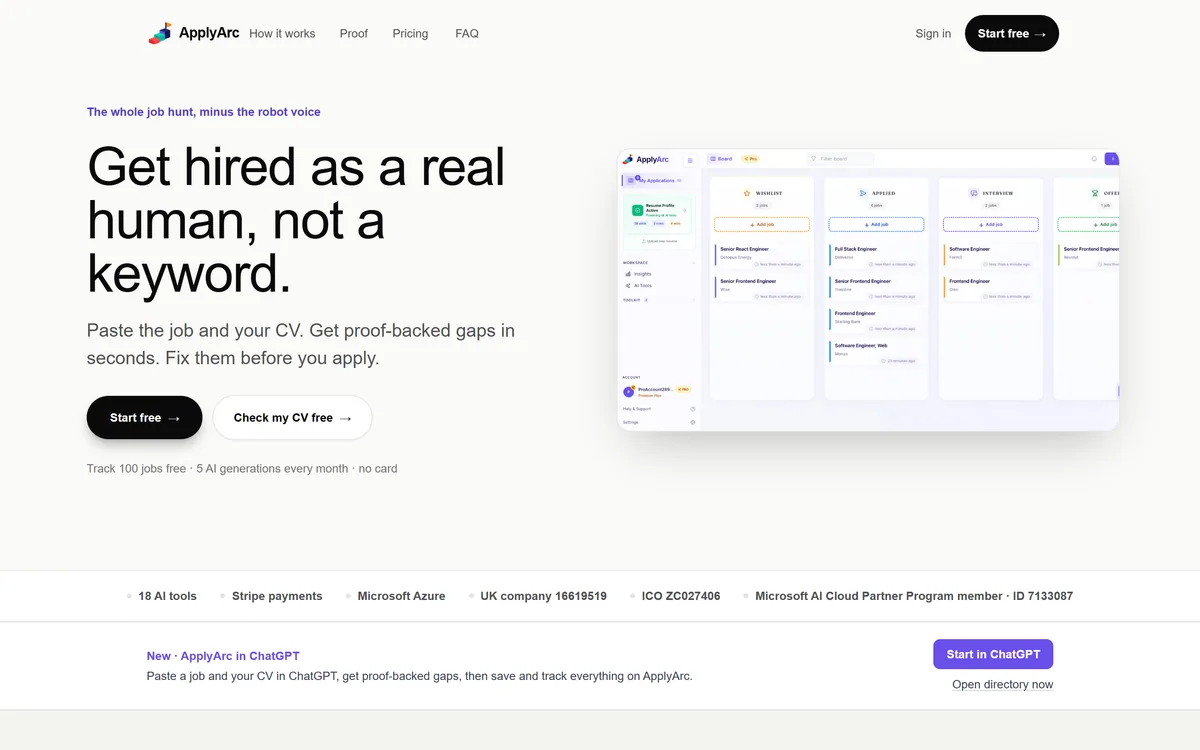
ApplyArc pairs a Kanban job tracker with eighteen AI tools built around one loop: paste a job posting, paste your CV, read the gap analysis, fix the gaps, then apply. It runs on Azure OpenAI, is operated by a registered UK company, and states that your data is never used for training.
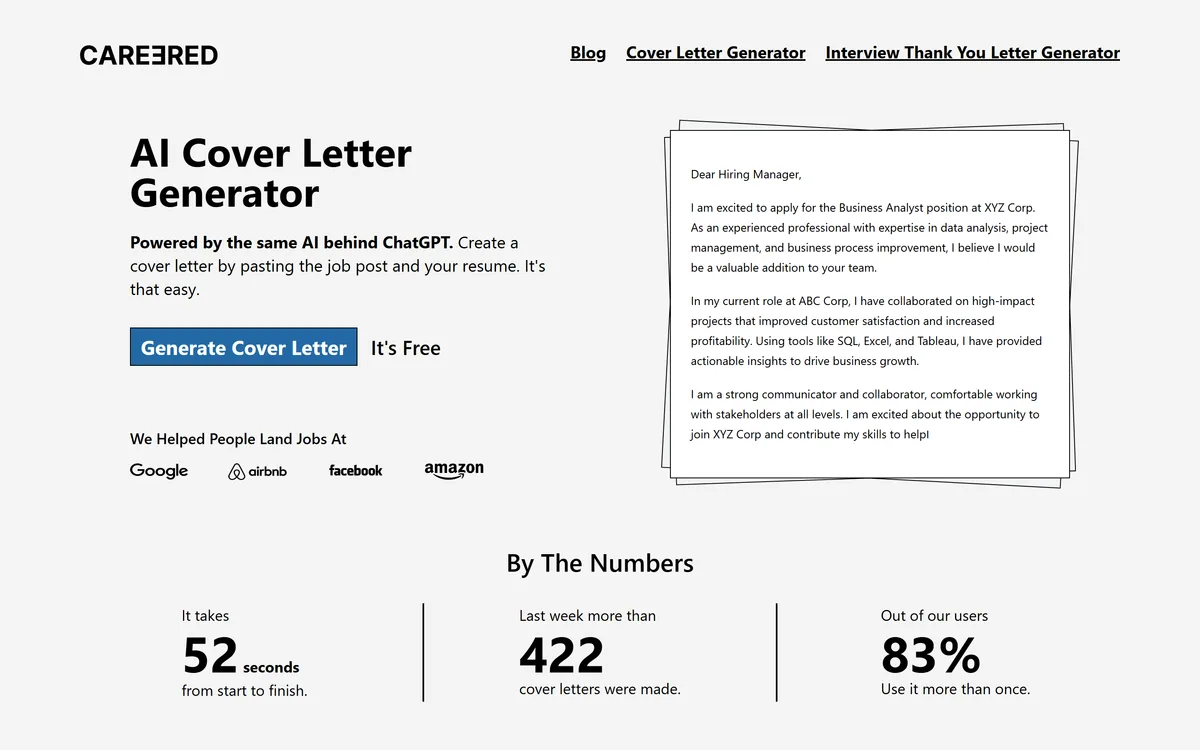
CareerEd is a free AI cover letter generator. You paste a job posting and your resume, and it returns a tailored letter in under a minute. It also generates interview thank-you notes and publishes a library of cover letter and resume examples by role.
Duplichecker review on AInexfinder — freemium AI tool for Writing & Content. Features, pricing notes, and alternatives.
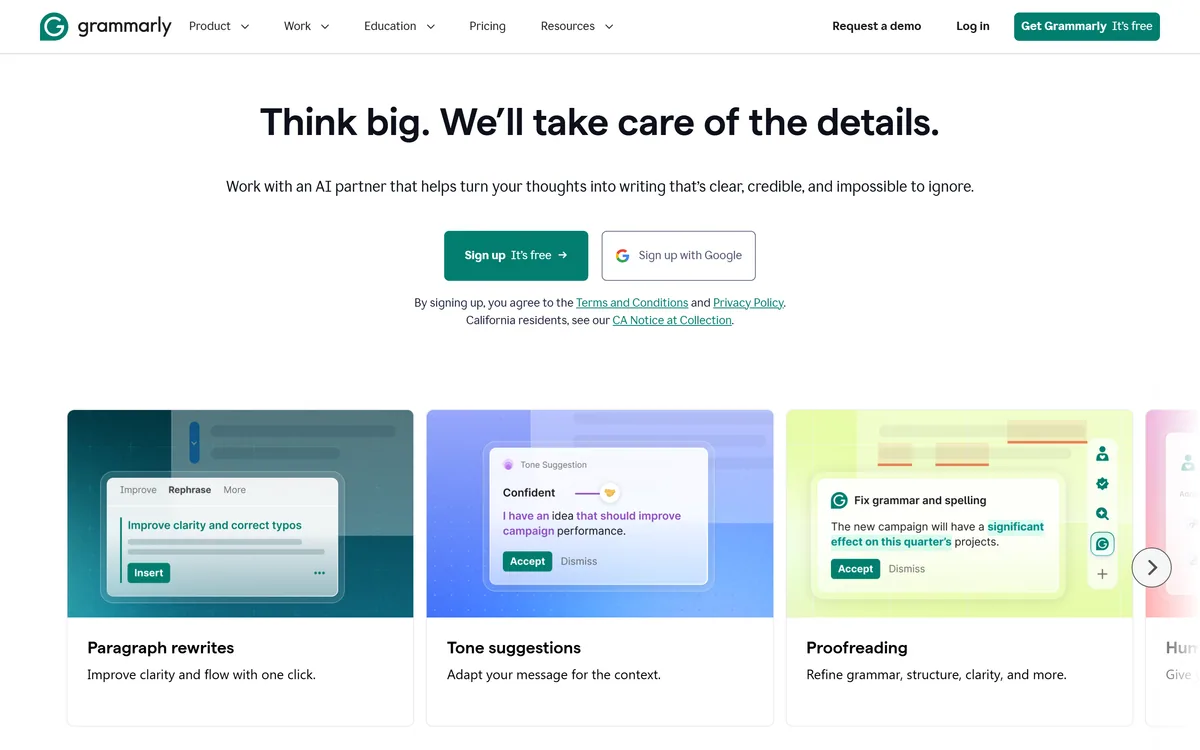

Grammarly is an AI writing assistant that checks grammar, clarity, and tone wherever you already write — browser, desktop, mobile keyboard, Google Docs, and Microsoft Office — and now ships AI agents for humanising, detecting, and grading text.
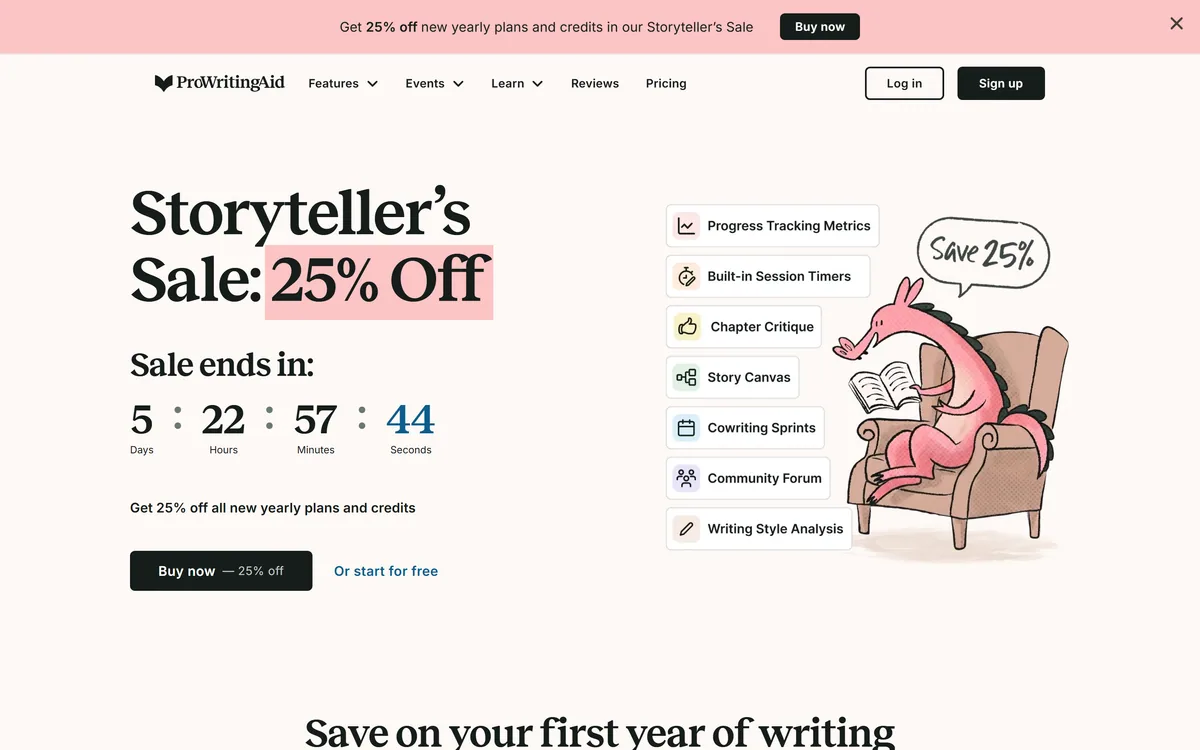
ProWritingAid is a writing platform for novelists from Orpheus Technology, combining grammar and style reports with manuscript-level critique — Chapter Critique, Character Analysis, Virtual Beta Reader and Marketability Analysis — across Word, Google Docs and Scrivener.
Related Pages