
Fitia review on AInexfinder — freemium AI tool for Health & Lifestyle. Features, pricing notes, and alternatives.
Health & Lifestyle Review
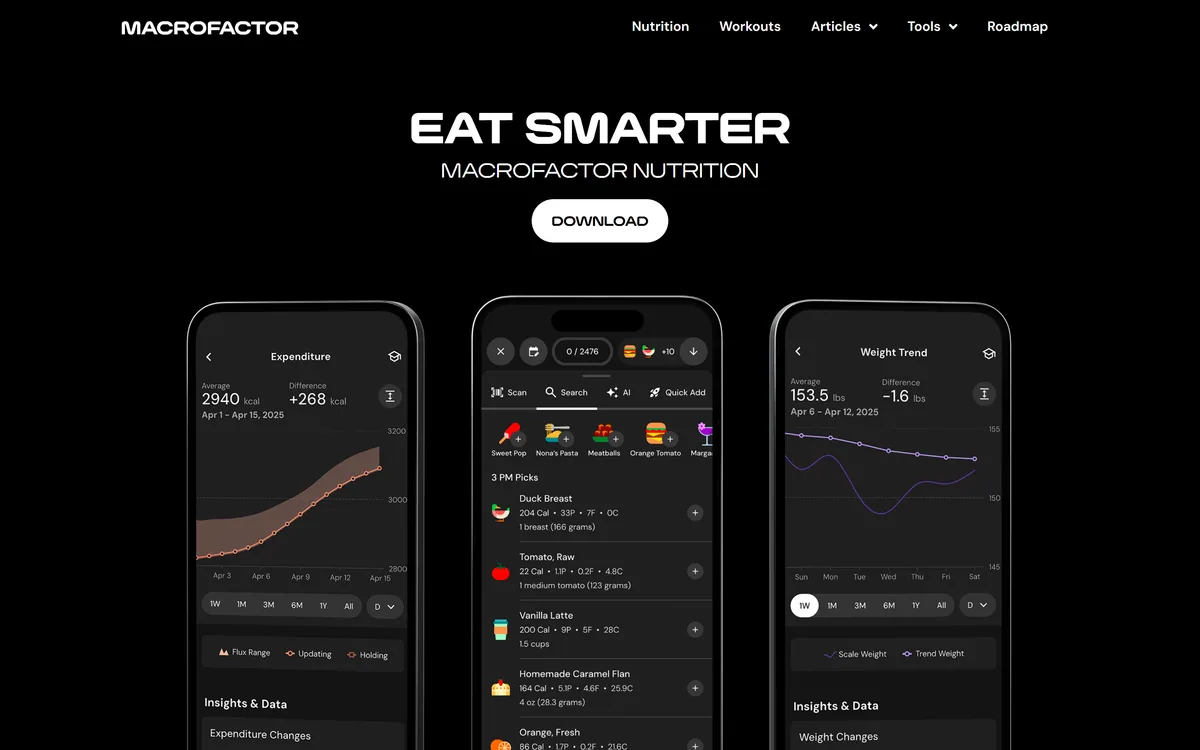
MacroFactor is a nutrition and workout tracking app whose coaching adapts weekly to your logged intake and weight trend, estimating your actual energy expenditure rather than using a formula. It publishes in-depth research articles alongside the apps and maintains a public roadmap.
Very good
Every calorie calculator gives you a number derived from a population formula, and every one of them is wrong for you specifically — sometimes by several hundred calories. MacroFactor's approach is to stop guessing and measure: log intake and weight, and it works backwards to what your expenditure actually is, then adjusts weekly. That is a genuinely better method and it is the reason the app has the reputation it has. The catch is inherent — it requires consistent, honest logging, and the accuracy of everything downstream depends entirely on that. AInexfinder Editor Score: 4.2/5.
Best for: People whose calculator-based targets never produced the predicted result; Anyone stuck at a plateau and unsure whether it is adaptation or logging
The visit link goes to macrofactor.com, the official site. Paid placements on AInexfinder are always labelled. How we make money
Every diet starts with a number that is made up. A calculator takes your height, weight, age and a rough activity guess, applies a formula derived from population averages, and hands you a daily target.
For any specific person that number can be several hundred calories out in either direction. People then eat to it, do not get the result it predicted, and conclude that they are broken or that tracking does not work.
MacroFactor's method is to stop guessing. Log what you eat and what you weigh, and the maths works backwards to what your expenditure actually is.
The premise is straightforward arithmetic applied consistently, which is why it works better than a formula.
If you log your intake and your weight over several weeks, the relationship between the two reveals your expenditure. Eating 2,400 calories a day while weight holds steady means you are expending roughly 2,400, regardless of what any calculator predicted.
That estimate then becomes the basis for targets, and it updates as the data accumulates. It also captures things a formula structurally cannot — how much you fidget, how your body responds to a deficit, what your job actually involves physically.
Adaptation matters most later in a diet, when metabolic adaptation and reduced spontaneous movement mean expenditure drifts down. A fixed target that was correct in week one is wrong by week eight, and most people experience that as a plateau they cannot explain.
The honest limit is that the whole thing rests on logging accuracy. The maths cannot distinguish an untracked weekend from a metabolic change, and the estimate degrades exactly as far as the logging does — which is why consistency-focused tracking apps across health categories all face the same constraint.
Eating 2,400 calories while your weight holds steady means you are expending 2,400 — regardless of what any calculator predicted.
The reason this matters more than it sounds is that individual variation in energy expenditure is genuinely large.
Two people of identical height, weight, age and stated activity level can differ by several hundred calories a day in what they actually burn, and no formula input captures why.
Non-exercise activity is the biggest source of that variation and the least visible. Fidgeting, posture, walking pace, how much you move around a room — these accumulate to a substantial daily difference that nobody self-reports accurately.
This is also why so many people conclude they have a slow metabolism. Frequently they are right in the sense that matters — their expenditure is genuinely lower than the calculator predicted — and a measured estimate simply tells them the true number instead of arguing with them.
The corollary is reassurance. If a target derived from your own data is not producing results, the answer is nearly always logging accuracy rather than metabolism, which is a much more actionable conclusion.
MacroFactor publishes long-form articles on rest times between sets, warm-up protocols, reps in reserve and post-workout nutrient timing, alongside a knowledge base and release notes.
Publishing this kind of material is a meaningful signal in a category that mostly does not.
Writing an article on what the research says about rest intervals means engaging with evidence that may contradict what would be convenient to claim — and doing so publicly, where anyone can check it.
It also tells you what kind of product it is. An app that discusses nutrient timing with nuance is aimed at people who want to understand the reasoning, not people who want to be told what to do without explanation.
The practical benefit is calibration. When the app makes a recommendation, you can find out why, and a recommendation you understand is one you follow correctly rather than approximately — which is the difference between a tracker being used for three weeks and being used for a year.
That approach is uncommon in consumer health software generally. Sleep tools such as SleepQ and habit apps like Insight Timer mostly present conclusions without the reasoning, which is fine until a recommendation conflicts with something a user already believes.
Publishing the reasoning is slower and it produces a different relationship with the user. Somebody who understands why a target moved is far less likely to abandon the app when it moves in a direction they did not expect.
The honest weakness of every nutrition tracker is that most people stop using it, usually within a month.
The reasons are consistent. Logging is tedious, restaurant meals are guesswork, and one bad day makes the whole record feel ruined, which is when people quietly stop opening the app.
Adaptive systems have a specific advantage here. Because targets adjust to observed reality rather than to a plan you deviated from, a heavy week produces a revised estimate rather than a sense of failure — the system treats it as information.
That said, it still requires logging, and no design removes that. The apps that survive are the ones people use imperfectly rather than the ones they use perfectly for three weeks.
The realistic advice is to log consistently rather than precisely. An estimated restaurant meal logged is far more useful than an accurate one omitted, because a systematic small error still produces a usable trend and a gap does not.
MacroFactor ships nutrition and workout tracking as separate downloads, with separate release notes, plus a public roadmap and a knowledge base.
Splitting them is defensible and slightly unusual. Nutrition and training tracking are different daily habits with different failure modes, and bundling them often means one gets used and the other becomes clutter.
The public roadmap is the more notable choice. Publishing what you intend to build invites people to hold you to it, and it is a commitment most consumer apps avoid precisely for that reason.
A copyright running from 2021 to 2026 indicates a product with several years behind it rather than a recent launch, which matters for something you would use daily over years.
The user success stories published with dates through 2026 serve a similar function — they are marketing, and dated marketing that continues to appear is at least evidence that the product is actively promoted and presumably maintained.
The way tracking apps get abandoned is a bad first fortnight: unfamiliar logging, an estimate that has not settled, and no visible progress.
This sequence gets through that period with the data intact.
Adaptive nutrition coaching from logged data
Energy expenditure estimated rather than calculated from a formula
Weekly target adjustment
Separate workout tracking app
A food logging database
Published research articles
A knowledge base and public roadmap
Release notes for both apps
Health apps differ by what they measure and how far they interpret it.
| Tool | What it tracks | How it adapts | Best for |
|---|---|---|---|
| MacroFactor | Nutrition and training | Weekly, from your own logged data | People who will log consistently |
| Derm AI | Skin and routines | Progress graphs over time | Skincare consistency |
| SleepQ | Sleep patterns | Measurement over time | Understanding rest quality |
| Clarity | Mood and mental state | Reflection prompts | Emotional tracking |
| Insight Timer | Meditation practice | Streaks and sessions | Building a daily habit |
| Product type | Nutrition and workout tracking with adaptive coaching |
|---|---|
| Positioning | The smartest macro tracker and diet coach app |
| Apps | MacroFactor Nutrition and MacroFactor Workouts, downloaded separately |
| Coaching method | Expenditure estimated from logged intake and weight trend |
| Published content | In-depth articles on rest times, warm-ups, reps in reserve and post-workout nutrition |
| Support | A knowledge base with how-tos and feature explanations |
| Transparency | A public roadmap accepting feature requests |
| Release notes | Published separately for the nutrition and workout apps |
| Community | A Facebook group, a subreddit and Instagram |
| Legal pages | Privacy Policy, Cookie Notice, Health Disclaimer, Health Data Notice, Terms and Impressum |
| Copyright | © 2021-2026 MacroFactor |
Adjacent consumer health tools that measure something over time.
Last checked . Read from macrofactor.com in a browser session on the date above, with the screenshot captured alongside.
What we could not confirm: pricing and whether any tier is free, since we did not read a pricing page; the operating company, which the footer names only as the product with an Impressum we did not open; the exact algorithm behind the expenditure estimate; how food database accuracy is maintained; what health data is stored and where, beyond the existence of a Health Data Notice; and platform availability details. Nothing here is medical or nutritional advice, and anyone with a health condition should consult a clinician.
AInexfinder does not list plan prices or billing details. For current pricing, plans, and trials, visit the official MacroFactor website.
Visit official website for pricingVendor pricing, credits, and billing policies change over time. Always confirm on the official site before you buy.
MacroFactor earns an AInexfinder Editor Score of 4.2/5 (very good). Best for: People whose calculator-based targets never produced the predicted result; Anyone stuck at a plateau and unsure whether it is adaptation or logging; Trainees who want nutrition and training tracked together.
Visit MacroFactorLog in to write a review.
No reviews yet. Be the first to share your experience with MacroFactor.
Assigned reviewer
Daniel ReedSenior AI Tools Reviewer
Daniel leads AInexfinder's tool reviews. He researches each tool from its own pricing, documentation and policies, checks its claims against independent sources, and writes up what it does well, where it falls short and who it genuinely suits.
Daniel and the AInexfinder editorial team research MacroFactor from its own website, pricing, documentation and policies, checked against independent sources. This review is research-based: unless its method note says otherwise, we have not bought a plan or run hands-on tests. The Editor Score is our editorial judgement, and payment never changes it.
Similar Tools
Fitia review on AInexfinder — freemium AI tool for Health & Lifestyle. Features, pricing notes, and alternatives.
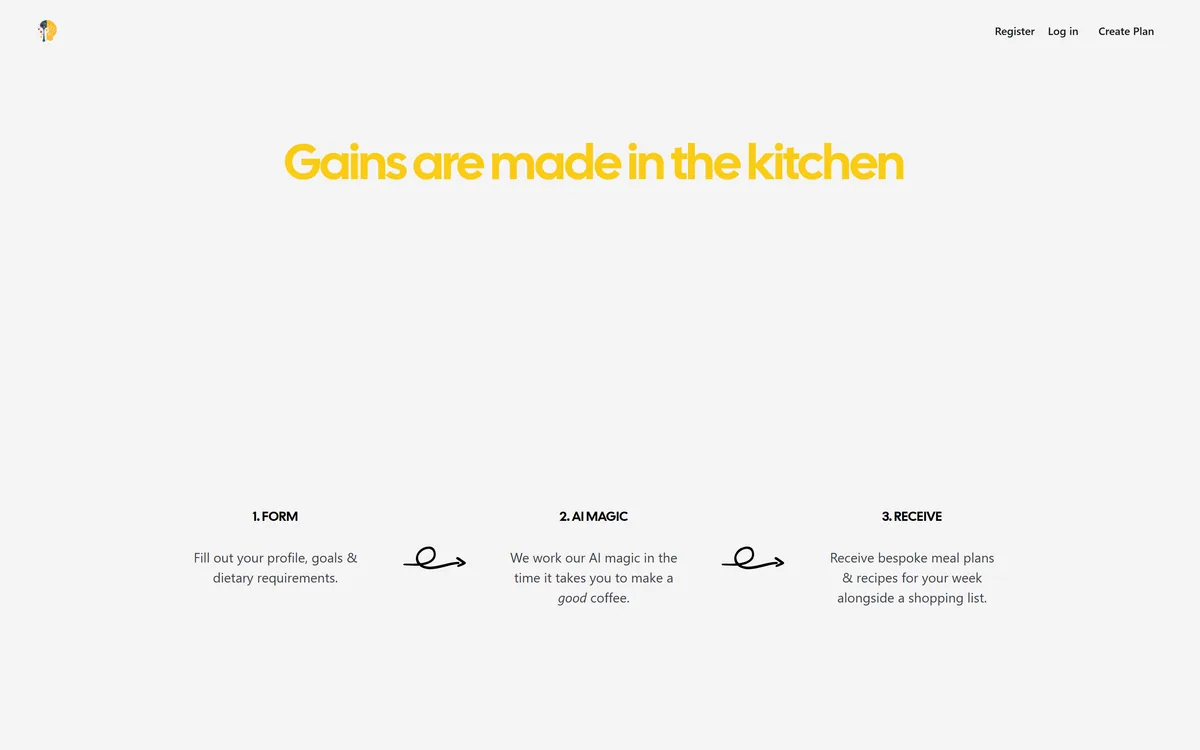
Mealmind review on AInexfinder — paid AI tool for Health & Lifestyle. Features, pricing notes, and alternatives.
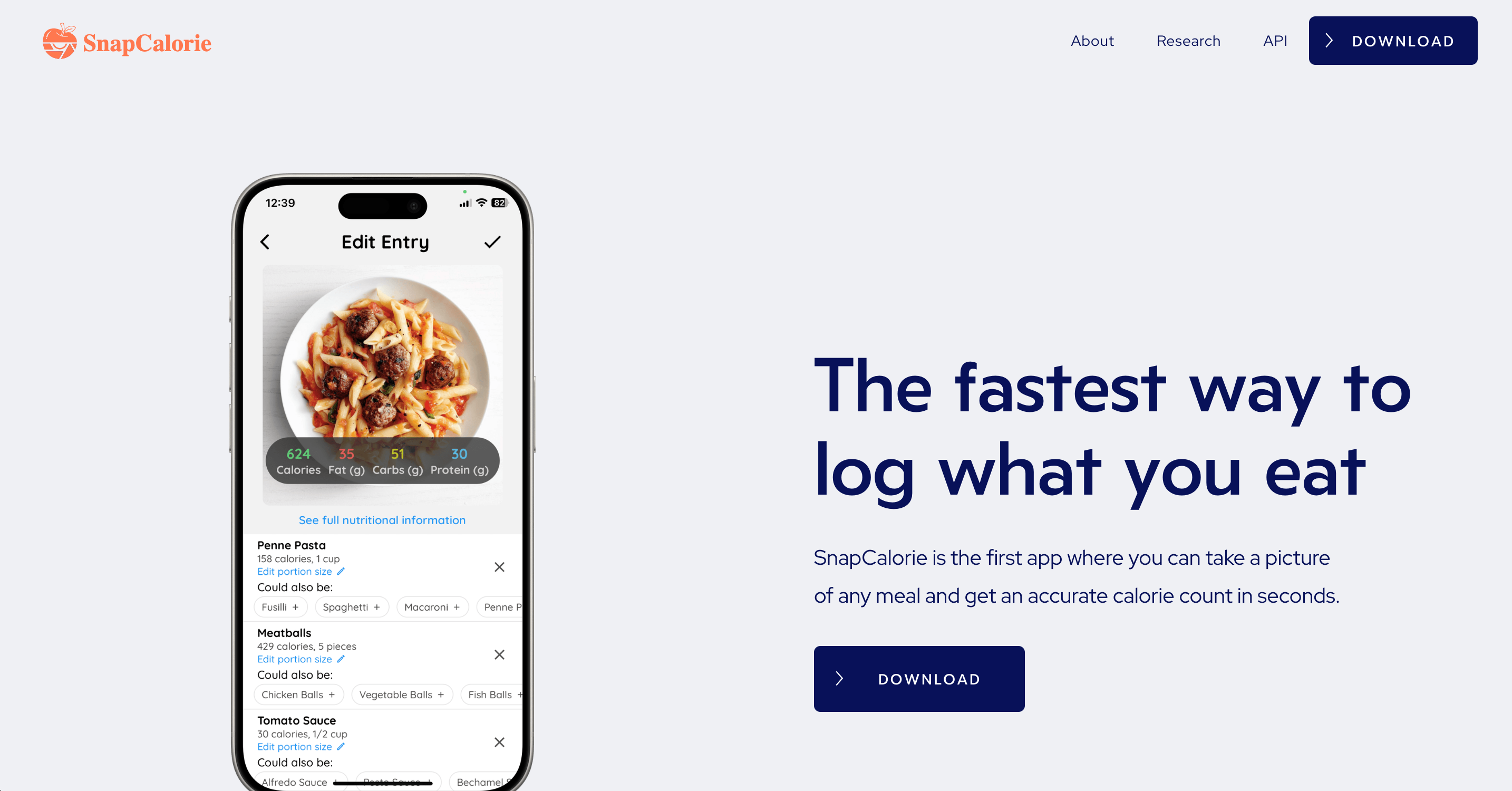
SnapCalorie review on AInexfinder — freemium AI tool for Health & Lifestyle. Features, pricing notes, and alternatives.

Eat This Much generates weekly meal plans from your calorie and macro targets, food preferences, budget, and schedule, then produces a grocery list that can be sent to Instacart or AmazonFresh — with keto, Mediterranean, paleo, vegan, and vegetarian options.
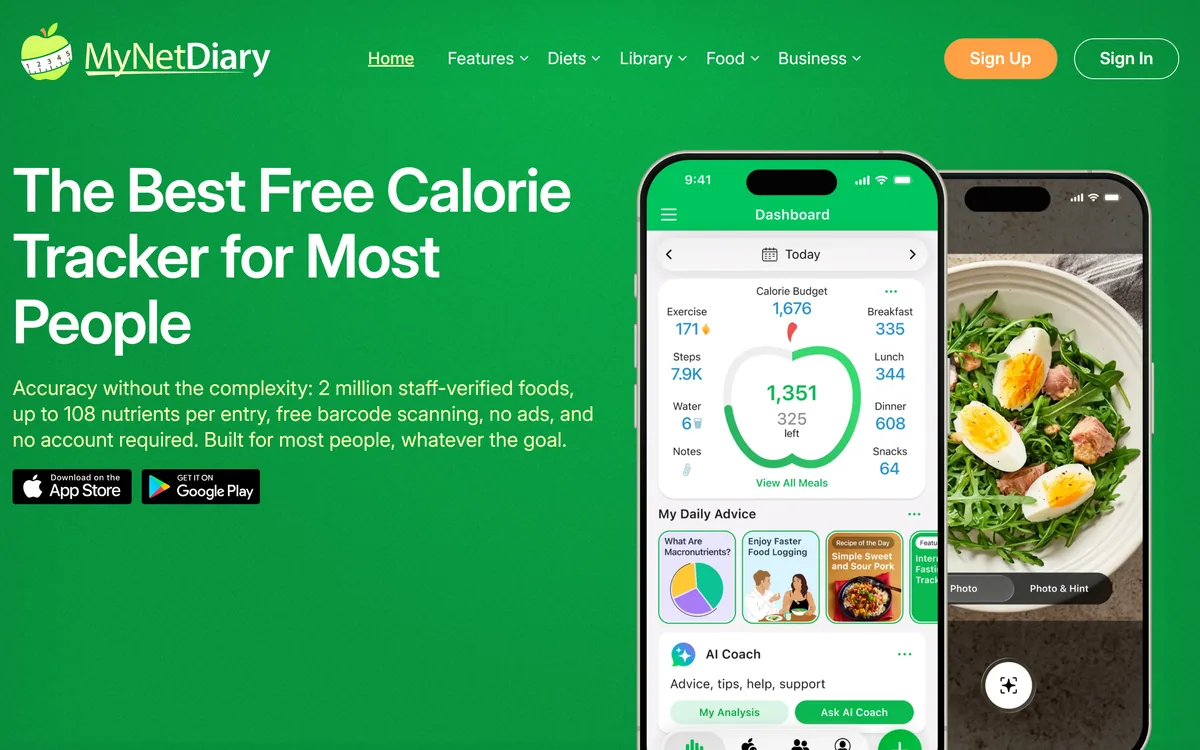
MyNetDiary tracks calories and nutrition against a staff-verified database of more than two million foods carrying up to 108 nutrients each, with barcode scanning, AI photo logging, restaurant menu analysis, wearable integrations and dedicated support for GLP-1 medication users.
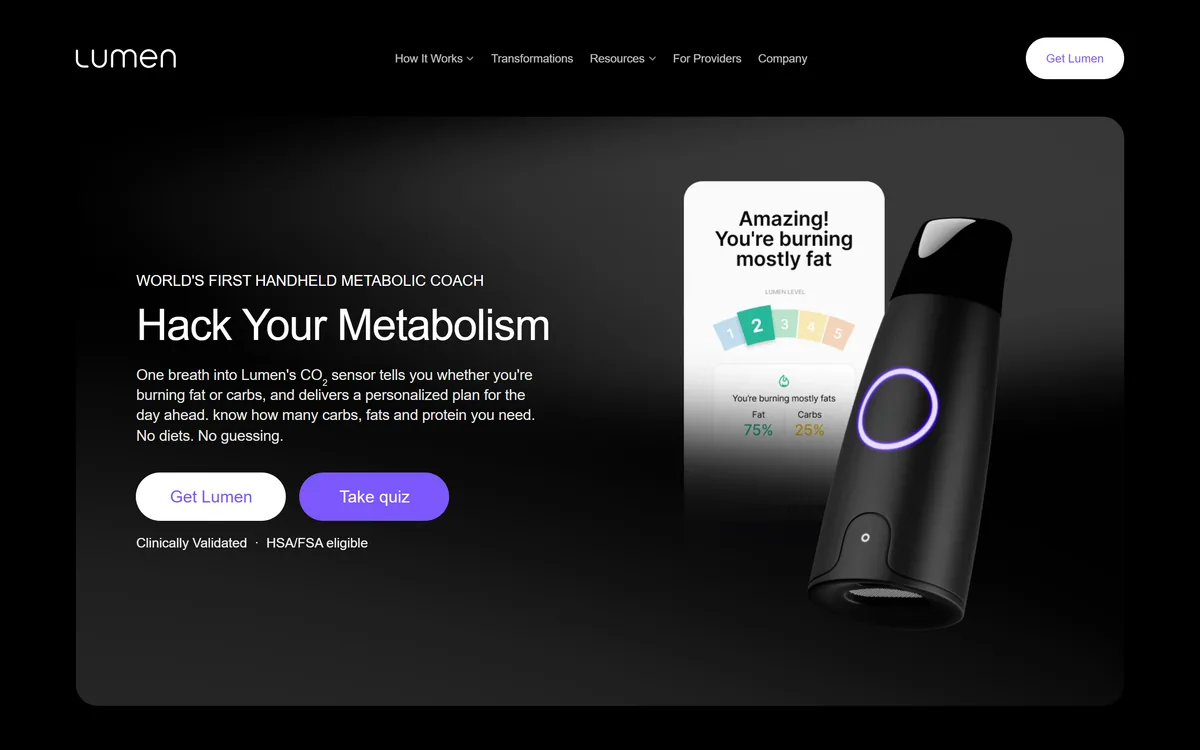
Lumen is a portable metabolic device using a CO2 sensor and flow meter to read the carbon dioxide concentration in a single breath, indicating which fuel your body is using. It builds a daily plan of what to eat and when, flags muscle-loss risk, and guides fuelling around workouts.
Related Pages