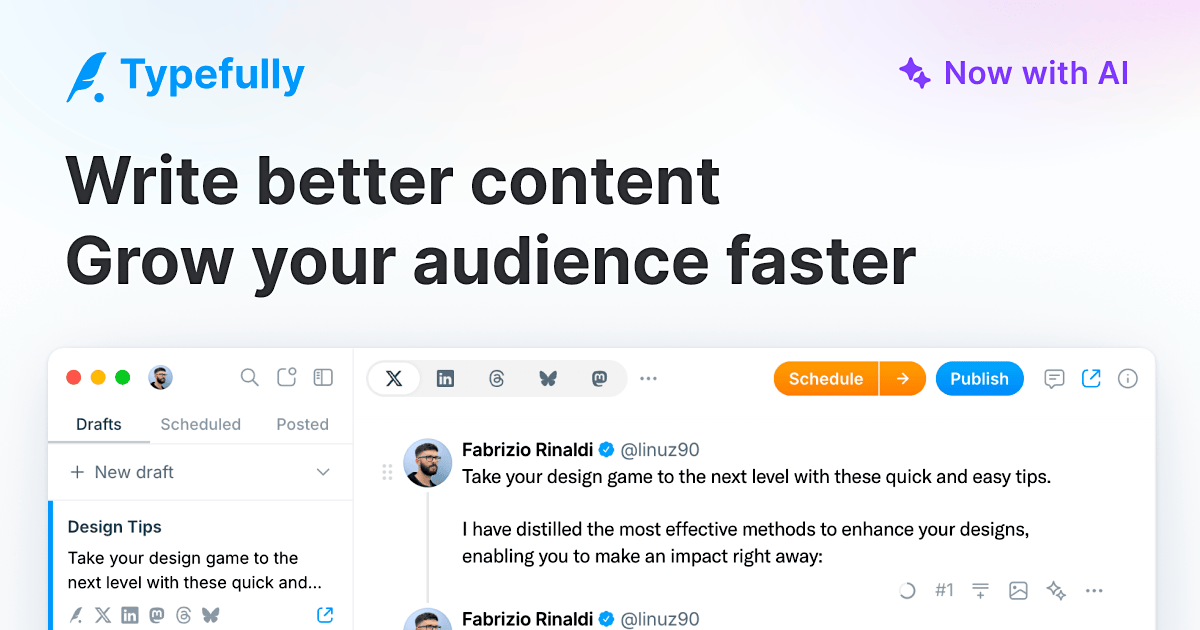
Typefully review on AInexfinder — freemium AI tool for Writing & Content. Features, pricing notes, and alternatives.
Writing & Content Review
ViralBrain analyses LinkedIn creators you nominate as heroes, extracts the hooks, structures and calls to action behind their posts, and generates drafts in your own voice on a scheduled calendar. It publishes through LinkedIn's official API, offers an MCP server, and ships a large library of free single-purpose tools.

Fair
The mechanism here is sound and honestly explained: nominate creators whose posts work, let the tool extract the structure rather than the words, and write your own content into that shape. The FAQ is unusually specific for this category, publishing goes through LinkedIn's official API rather than a browser extension, and both founders post publicly using it. What holds the score down is the marketing around that mechanism — a headline creator count that describes posts analysed rather than customers, placeholder engagement figures on the example cards, and a four-times-reach promise with no method attached. AInexfinder Editor Score: 3.4/5.
Best for: Founders who have things to say and no posting habit; Consultants building an audience on LinkedIn deliberately
The visit link goes to viralbrain.ai, the official site. Paid placements on AInexfinder are always labelled. How we make money
The honest problem with LinkedIn is that posting well is a learnable skill and almost nobody learns it, because the feedback loop is slow and the rules are unwritten.
ViralBrain's answer is to make the rules explicit. Pick creators whose posts land, let the tool pull apart what they are doing structurally, and write your own material into that shape.
That is a legitimate approach — formats are not private property — and it works better the more you understand what is actually being copied.
ViralBrain describes itself as trained on hundreds of thousands of high-performing posts and states that it reverse-engineers the exact hooks, structures and calls to action, then rebuilds them for your topic.
The distinction that matters is between structure and substance, and it is worth being precise about it.
A structure is a shape: an opening line that withholds the point, three short paragraphs of build, a turn, a specific detail, a question at the end. That shape is a craft convention, not anyone's property, and studying it is what writers have always done.
Substance is the argument, the anecdote, the number, the thing only you know. Nothing in a pattern supplies that, and no tool can.
So the honest version of what this does is teach you form by example and leave the content to you. Used that way it is a genuine accelerant. Used the other way — same shape, borrowed insight, someone else's story rewritten — it produces the flat, familiar feed everyone complains about, and the tool cannot tell which you are doing.
A post's structure is a craft convention anyone can study. Its substance is the thing only you know. No pattern supplies the second.
Several figures appear across the page and they measure different things, so it is worth separating them before they blur.
The recurring number in the thousands describes creators tracked and analysed. A separate, much smaller figure — in the hundreds — is the one the page attaches to creators using the product. Both appear near each other, and only the smaller one is about customers.
Two impression totals also appear, one describing what the training corpus covers and one describing what users have generated. They are not comparable and neither is dated.
The example post cards are worth reading carefully too: every one displays the same reaction, comment and repost counts, so those figures are placeholder styling rather than measured engagement.
None of this makes the product worse than it is. It does mean the mechanism deserves your attention and the headline arithmetic does not — which is the right way round to evaluate anything in this category, MaekerSuite and every other growth tool with a headline multiple included.
The workflow runs in three moves the site names as decode, refine and post. You add heroes, the tool analyses their recent posts — stated as ten per hero on the free tier and twenty on a paid plan — and generation draws on both their structures and your own writing style.
Generation accepts an unusually wide set of starting points: a hero post, a YouTube video, an article, a Reddit thread, an image, a document, a voice note, a post you paste in, or nothing at all.
The voice note input is the most interesting of those and the least advertised. Talking through an idea produces different material from typing it, and the resulting post tends to carry the specifics that make writing worth reading.
A pattern banner then lets you apply a hero's structure, switch to another, or clear it and start from a blank shape — which is the right level of control, because it keeps the choice explicit rather than baked into every draft.
Trending topic discovery runs alongside, pulling from Reddit, X, Google and LinkedIn. Treat that as raw material rather than direction; commenting on whatever is trending is how a feed of interchangeable takes gets made — a trap that also catches Postwise users on other platforms.
Two co-founders are named on the site with links to their LinkedIn profiles and their own impression totals, described as both using ViralBrain to grow on LinkedIn every day.
For a growth tool this is the single most useful signal available, and far more informative than any testimonial wall.
The reason is that LinkedIn is public. A founder claiming their tool grows an audience while posting rarely and getting no engagement is contradicted by the platform itself, in real time, at no cost to you.
Anyone evaluating this can therefore do something they cannot do with most software: open both profiles, read a month of posts, and judge whether the output reads like something you would want under your own name.
The customer testimonials on the page support this rather than replacing it — they name real people with follower counts and job titles, and those profiles are equally checkable. Verifiability, not volume, is what makes social proof worth anything here.
ViralBrain states that it publishes through LinkedIn's official API rather than a browser extension, on a thirty-day calendar, with automatic posting available on its top tier and preview-and-copy on the lower ones.
That detail sounds procedural and is genuinely the most important compliance fact on the page.
Tools that automate LinkedIn through browser extensions operate by driving the interface as if it were you, which is the category of automation platforms move against periodically. When enforcement arrives it lands on the account, not the vendor.
Using the official API means the integration is sanctioned, rate-limited and revocable in the normal way. It also constrains what is possible, which is why extension-based tools can offer more and are worth less.
The MCP server is the forward-looking piece — posting to LinkedIn from an agent client rather than from the product's own interface. That is a sensible bet on where this workflow ends up, and a useful signal that the team is building for interoperability rather than lock-in. Video-first tools like Klap meet the same platform-terms question from the other side.
The failure mode with pattern tools is not that they do not work. It is that they work well enough to produce a feed of technically competent posts nobody remembers.
This sequence uses the mechanism for what it is good at and keeps the part that makes writing yours.
Hero analysis of nominated LinkedIn creators
Pattern application from extracted post structures
Generation from video, article, Reddit, voice note, image or document
Post image generation across 12 styles
30-day content calendar with automatic publishing on the top tier
Publishing through LinkedIn's official API
A LinkedIn MCP server for agent clients
A large library of free single-purpose tools
Social growth tools differ by platform and by how much they generate for you.
| Tool | Platform | Method | Best for |
|---|---|---|---|
| ViralBrain | LinkedIn specifically | Pattern extraction from chosen creators | Building a posting habit with structure |
| Postwise | X and threads | Generation plus scheduling | Short-form on a different platform |
| MaekerSuite | YouTube and scripts | Research and scripting | Long-form video content |
| Klap | Short video clips | Cutting existing footage | Repurposing video into social |
| LogicBalls | General writing | Templates across formats | Occasional posts, not a programme |
| Focus | LinkedIn content generation and scheduling |
|---|---|
| Contact domain | A humanoidz.ai email address given in the footer |
| Core mechanism | Hero analysis extracting hooks, structures and tone from nominated creators |
| Analysis depth | Stated as ten posts per hero on the free tier, twenty on paid |
| Generation inputs | Hero post, YouTube video, article, Reddit thread, image, document, voice note, pasted post or from scratch |
| Images | Post image generation stated across 12 styles including photo, illustration, infographic, diagram and chart |
| Publishing | Through LinkedIn's official API on the top tier, with a 30-day calendar |
| Agent access | A LinkedIn MCP server for posting from agent clients |
| Free tools | Described as 60-plus in one place and 100-plus in another, usable without an account |
| Other features | Carousel generator, hook generator, text formatter, engagement calculator, profile optimiser |
| Founders | Two co-founders named on the site with public LinkedIn profiles |
| Trial | A seven-day trial requiring a card, per the site's own FAQ |
Other approaches to social publishing across platforms and formats.
Last checked . Read from the ViralBrain site in a fetched page on the date above, including the footer. The screenshot was captured at the same time.
What we could not confirm: the basis for the four-times impression growth claim, which no methodology accompanies; how the creator counts on the page relate to one another, since the larger figure describes creators analysed and the smaller one creators using the product; whether the training corpus figures are current; what senior ghostwriters editing the output means operationally; the legal entity behind the humanoidz.ai contact address; and how LinkedIn's terms treat pattern-derived content. Plan prices are stated on the site and are not reproduced here. We did not connect a profile or publish a post.
AInexfinder does not list plan prices or billing details. For current pricing, plans, and trials, visit the official ViralBrain website.
Visit official website for pricingVendor pricing, credits, and billing policies change over time. Always confirm on the official site before you buy.
ViralBrain earns an AInexfinder Editor Score of 3.4/5 (fair). Best for: Founders who have things to say and no posting habit; Consultants building an audience on LinkedIn deliberately; Agencies running several client accounts in one place.
Visit ViralBrainLog in to write a review.
No reviews yet. Be the first to share your experience with ViralBrain.
Assigned reviewer
Daniel ReedSenior AI Tools Reviewer
Daniel leads AInexfinder's tool reviews. He researches each tool from its own pricing, documentation and policies, checks its claims against independent sources, and writes up what it does well, where it falls short and who it genuinely suits.
Daniel and the AInexfinder editorial team research ViralBrain from its own website, pricing, documentation and policies, checked against independent sources. This review is research-based: unless its method note says otherwise, we have not bought a plan or run hands-on tests. The Editor Score is our editorial judgement, and payment never changes it.
Similar Tools
Typefully review on AInexfinder — freemium AI tool for Writing & Content. Features, pricing notes, and alternatives.

AI LinkedIn ghostwriting tool for agencies and founders Category: Writing & Content.
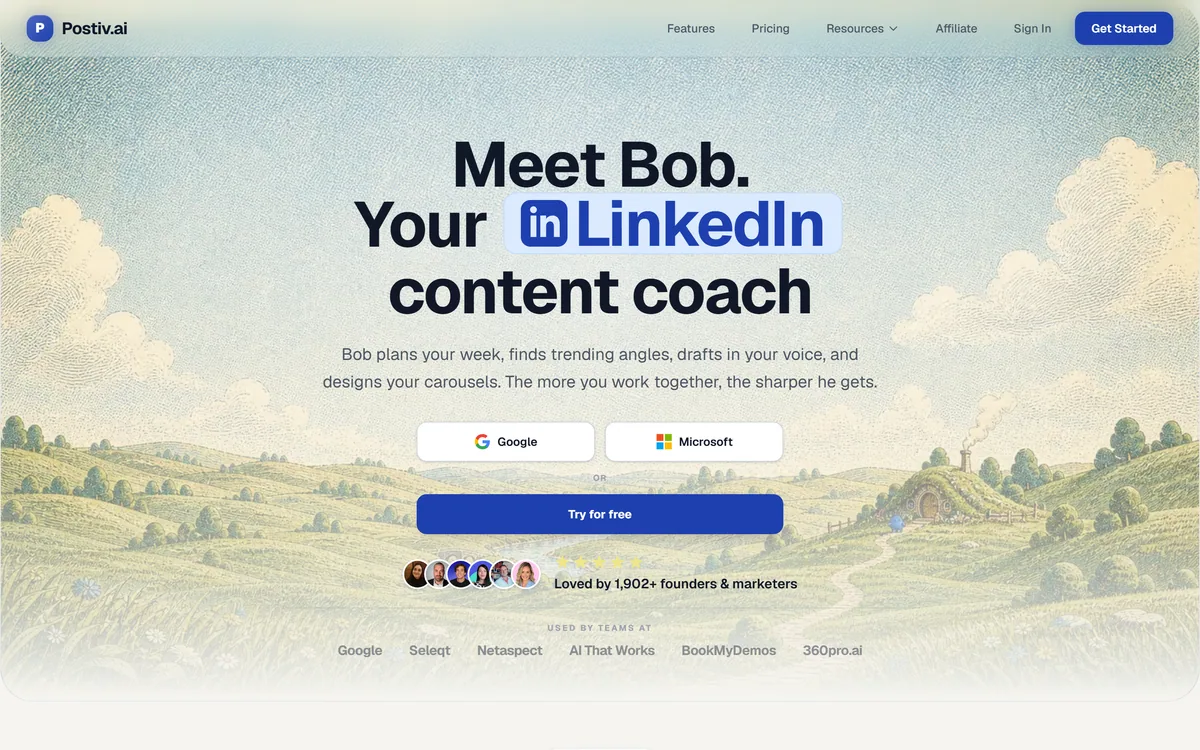
Postiv packages LinkedIn strategy, drafting, carousel design, scheduling, analytics and comment replies into a single weekly ritual run by an assistant called Bob, working through the official LinkedIn API rather than a browser extension.
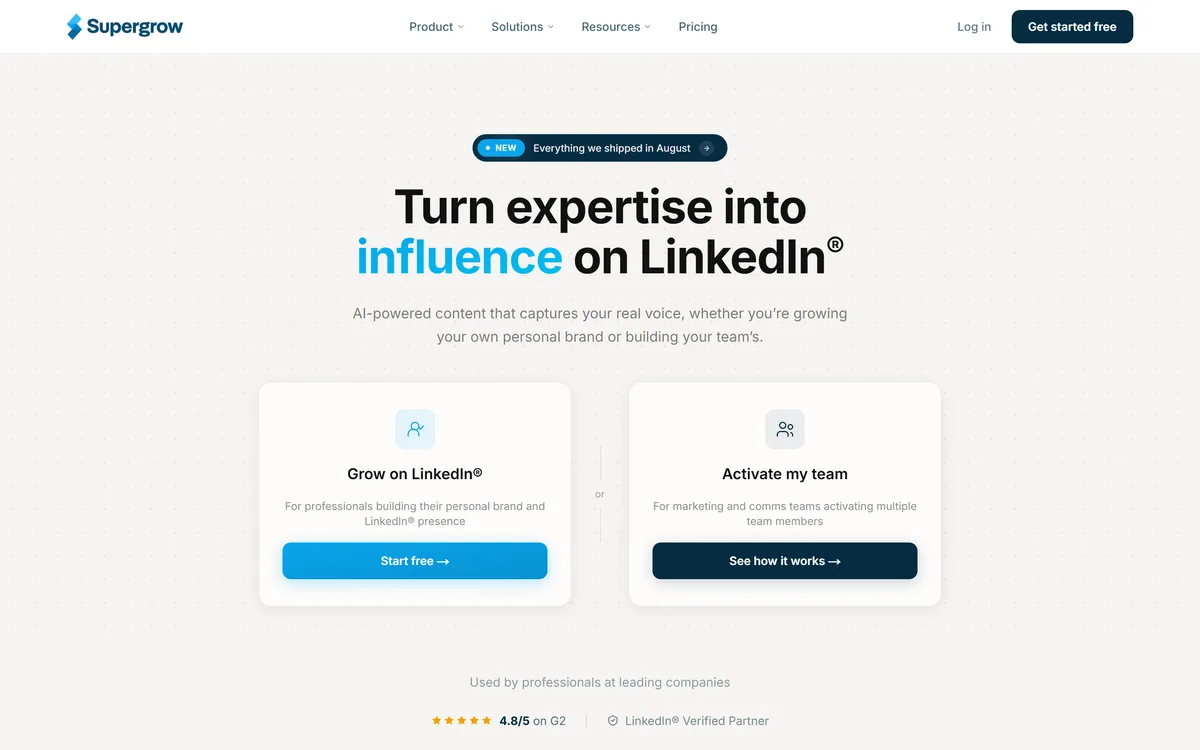
Supergrow is a LinkedIn-only content platform that builds a voice profile through an AI interview rather than a prompt, then generates, schedules and analyses posts. It adds repurposing from video, blogs and PDFs, team approval workflows, first-comment scheduling and a LinkedIn Verified Partner status.
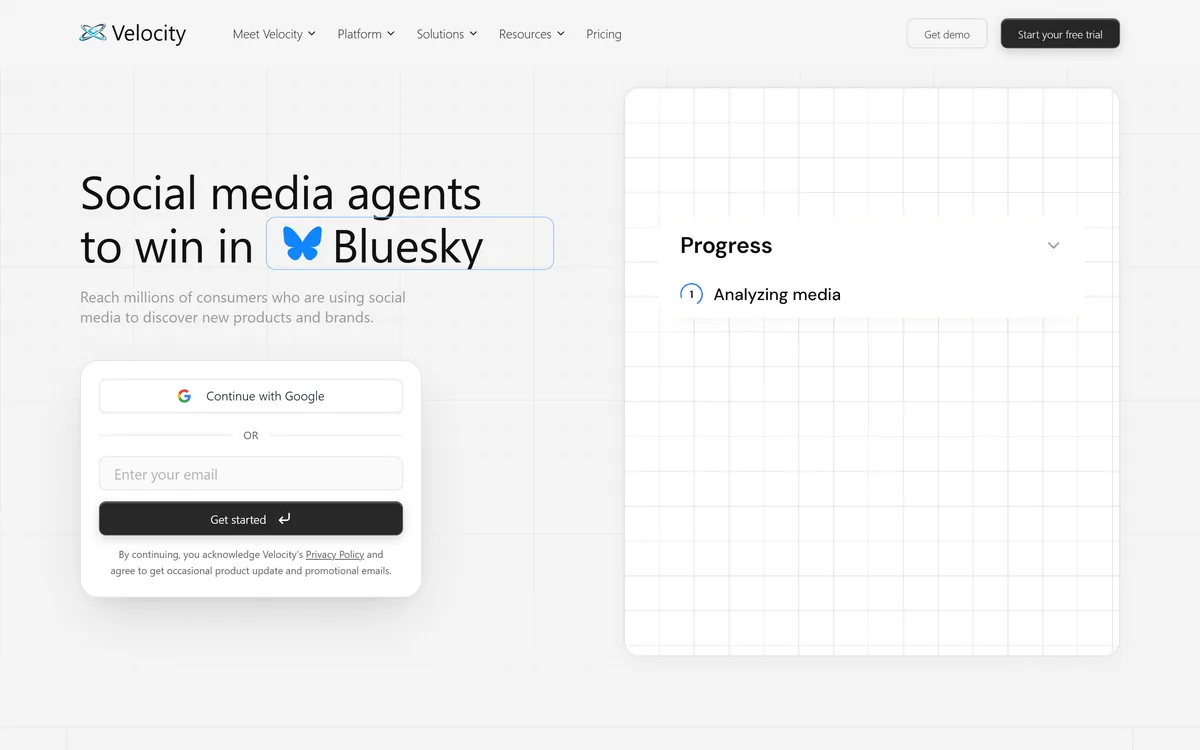
Velocity is a team of AI social-media agents for small businesses, agencies and multi-brand teams that research trends, draft on-brand captions and images, schedule and publish, and analyse results across Instagram, Facebook, YouTube, TikTok, LinkedIn, X and Bluesky.
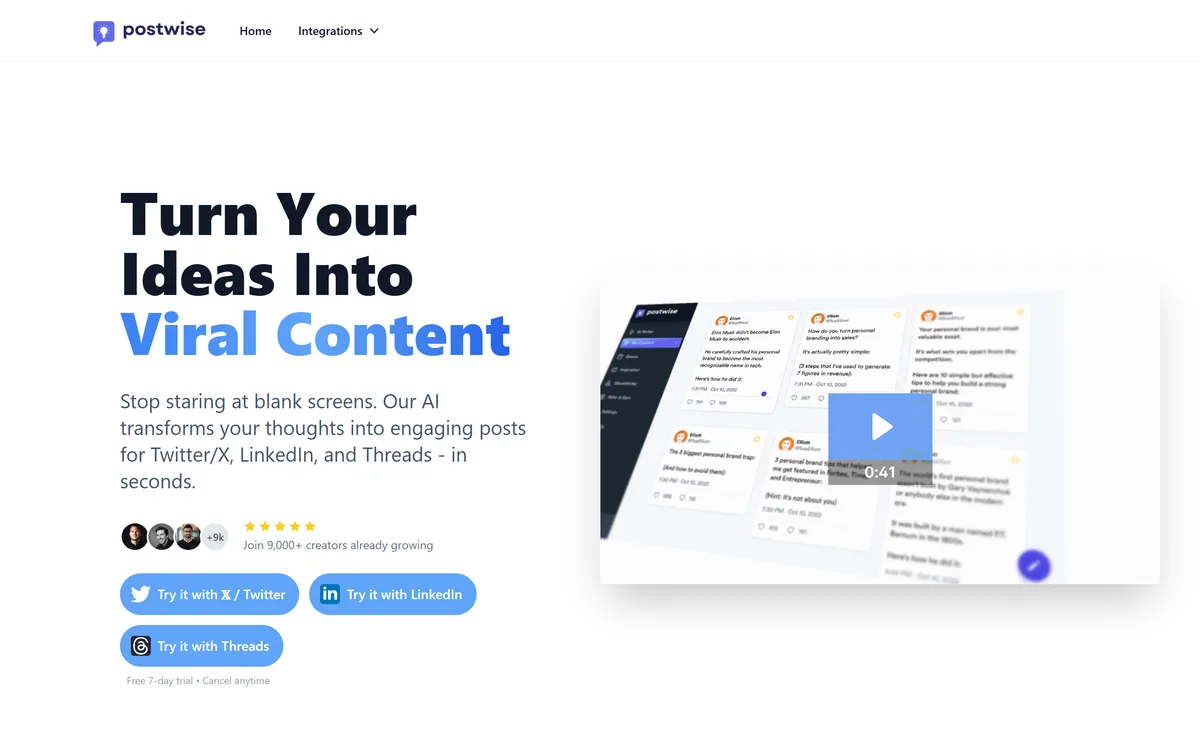
Postwise turns an idea into posts optimised for X, LinkedIn and Threads from one dashboard, with scheduling, viral post repurposing and engagement tracking. It states 9,000+ creators and offers a seven-day free trial. Operated by XO Labs Ltd.
Related Pages