Summarization Rankings

Best Summarization AI Tools in 2026: 6 Ranked

Summarize long documents, papers, and videos, ranked on Editor Score, pricing and fit — each linked to its full review.

Daniel ReedBy the AInexfinder Editorial Team·Overseen by Daniel ReedUpdated October 2026How we rank →

The Short Answer

Algor Education is our top-ranked summarization tool, with an Editor Score of 4.1/5 — Turn any source into editable maps, notes, flashcards and quizzes. Summarize long documents, papers, and videos. Across the 6 tools ranked here, all 6 have a free or freemium plan.

How we rank: research-based. Every tool here has its own review, scored from the vendor's documentation, pricing and independent sources; this list orders them with one published formula led by that Editor Score. Last updated October 2026. How we rank

At a Glance: The 6 Best Summarization Picks

#ToolScorePricingFree planLinks
1
Algor Education logo
Algor Education

Top ranked

4.1FreemiumReview
24.5FreemiumReview
34.1FreemiumReview
43.9FreemiumReview
53.8FreemiumReview
63.5FreemiumReview
Scores: top 6 summarization tools

Score out of 5 — each tool's Editor Score.

Our Top 6 Summarization Picks, Ranked

1

Algor Education

Top ranked
4.1/5

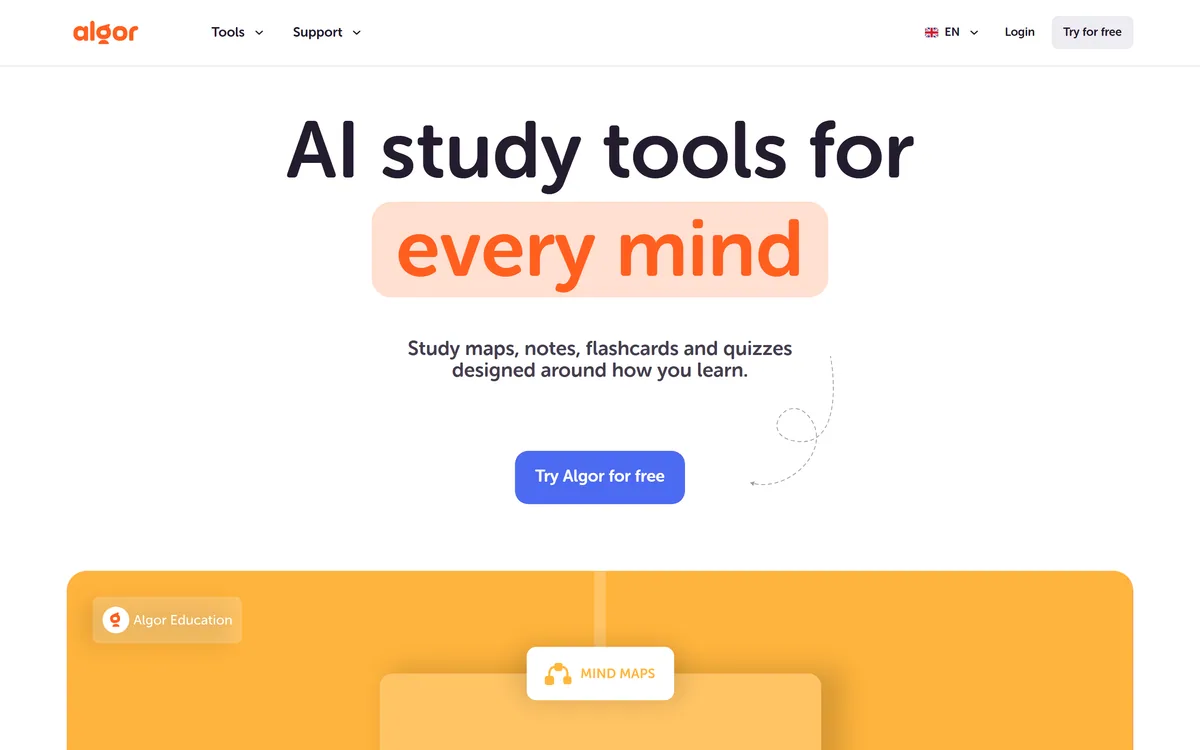
Algor Education is an all-in-one AI study platform that turns notes, documents, web links and videos into a structured Set — editable concept maps, study notes, flashcards and quizzes with progress tracking and an AI assistant.

  • Builds a whole study environment, not a single output
  • Visual, editable maps aid understanding, not just memorisation
  • Accepts almost any source, including YouTube and recordings
  • Cards, quizzes and tracking close the learn-to-test loop
  • Not a research database for the wider literature
  • AI maps and notes still need checking for accuracy
  • Free-plan limits can be tight for heavy material
  • Flashcard drilling alone is deeper in dedicated apps

Best for: Visual learners who think in maps

Pricing: Freemium · Very good

2Est.4.5/5

SoBrief review on AInexfinder — freemium AI tool for Education & Research. Features, pricing notes, and alternatives.

  • Huge, multilingual catalog that is free to read
  • Consistent structure makes summaries easy to scan
  • Fun discovery and barcode-scan features
  • 70,000+ AI-generated book summaries in 40+ languages
  • AI-generated summaries can miss nuance
  • Audio narration requires a paid subscription
  • Results still need a quick human review for best quality
  • Integrations may not cover every app in your stack

Best for: Users who need 70,000+ AI-generated book summaries in 40+ languages

Pricing: Freemium

34.1/5

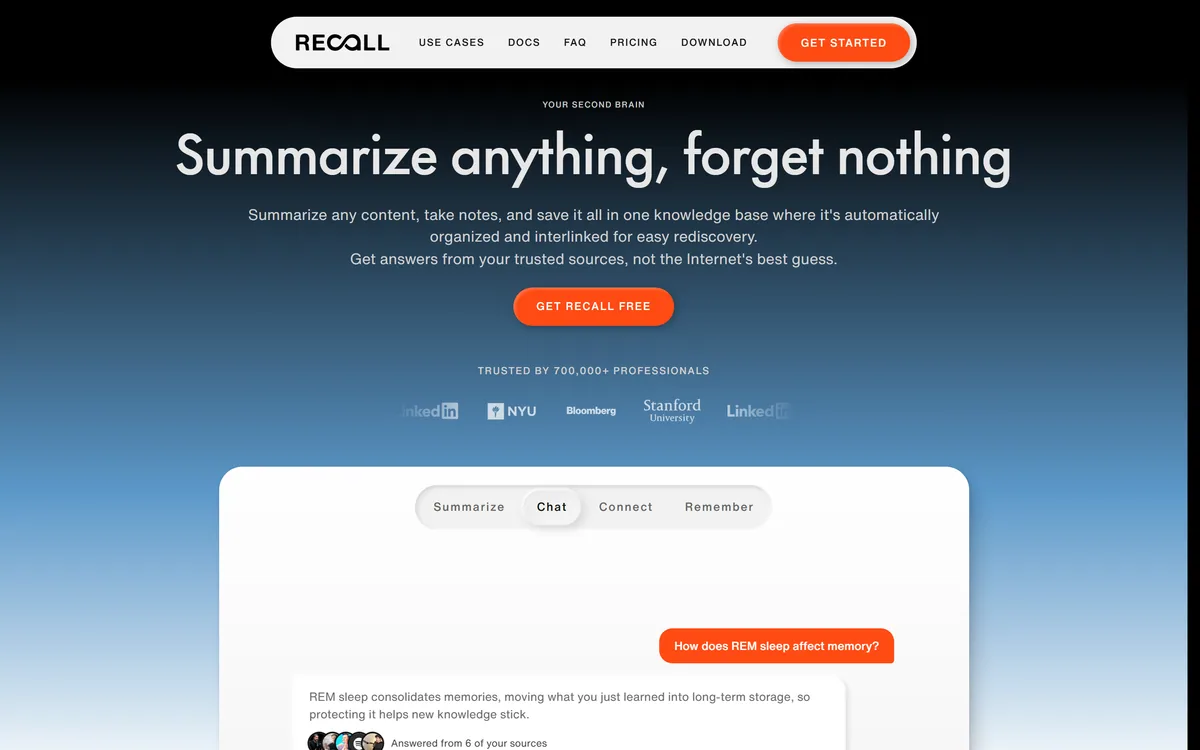
Recall is an AI knowledge base that saves videos, articles, podcasts, PDFs and books, summarises them, auto-tags and links related ideas, and schedules spaced-repetition quizzes. It runs on web, iOS and Android with Chrome, Safari, Edge and Firefox extensions.

  • Spaced repetition is the best-evidenced retention technique and nobody applies it to their reading
  • The scheduling is computed, which matters because nobody can guess their own forgetting curve
  • Auto-tagging removes the manual filing that kills every personal knowledge system
  • Connections surface links across months that no folder structure would produce
  • Generated questions test facts more reliably than understanding
  • Automatic connections are noisy, mixing insight with keyword overlap
  • Still depends on the habit of reviewing, without which it is a read-later app again
  • Local-first describes an architecture, not a verified guarantee

Best for: People who save constantly and retain almost nothing

Pricing: Freemium · Very good

43.9/5

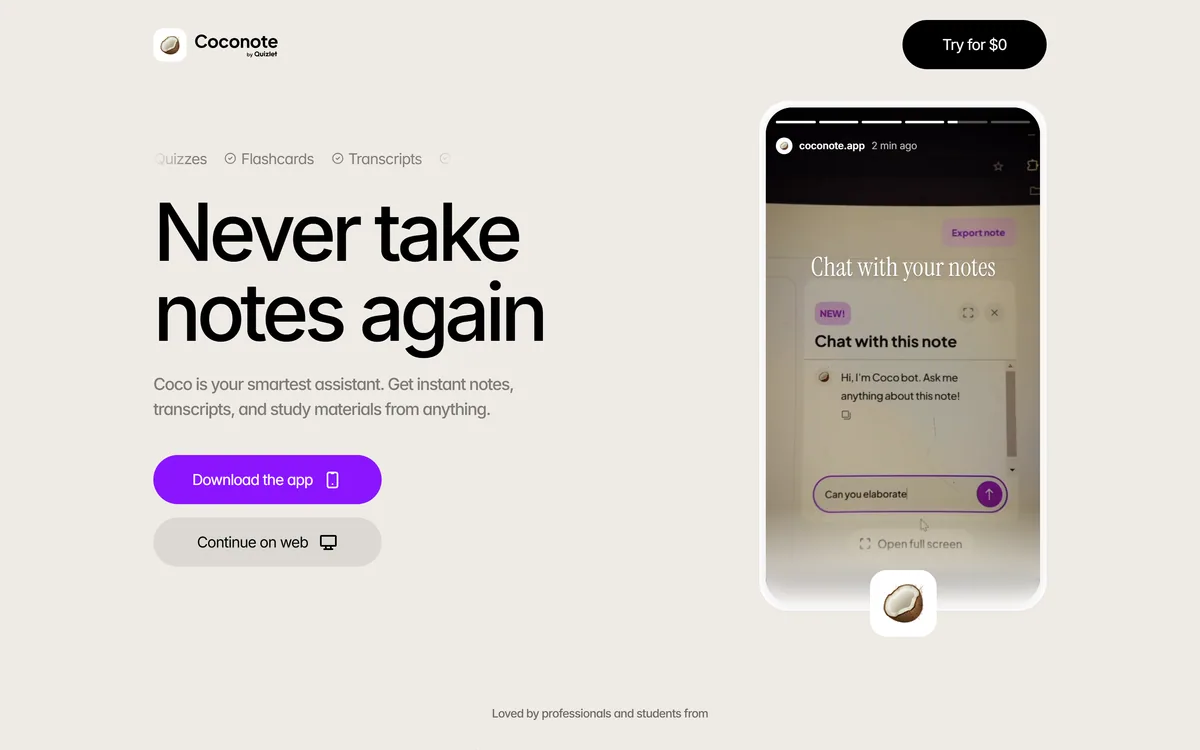
Coconote records or accepts uploads — lectures, PDFs, videos, links, documents — and produces organised notes and transcripts, then generates quizzes, flashcards, study games and AI podcasts. It supports 100+ languages and syncs across iPhone, iPad, Android, web and desktop.

  • Addresses the honour code question directly rather than avoiding it
  • States plainly that recording requires the teacher's agreement
  • Quizzes, flashcards and games are the half with genuine evidence behind them
  • Study games target the motivational barrier rather than the informational one
  • Summaries produce the feeling of having covered material without the retention
  • Generated questions favour definition recall over application
  • Passive podcast listening is comfortable and weak as a review method
  • Transcription accuracy varies by language and fails first on technical terms

Best for: Students who cannot listen and take notes simultaneously

Pricing: Freemium · Good

53.8/5

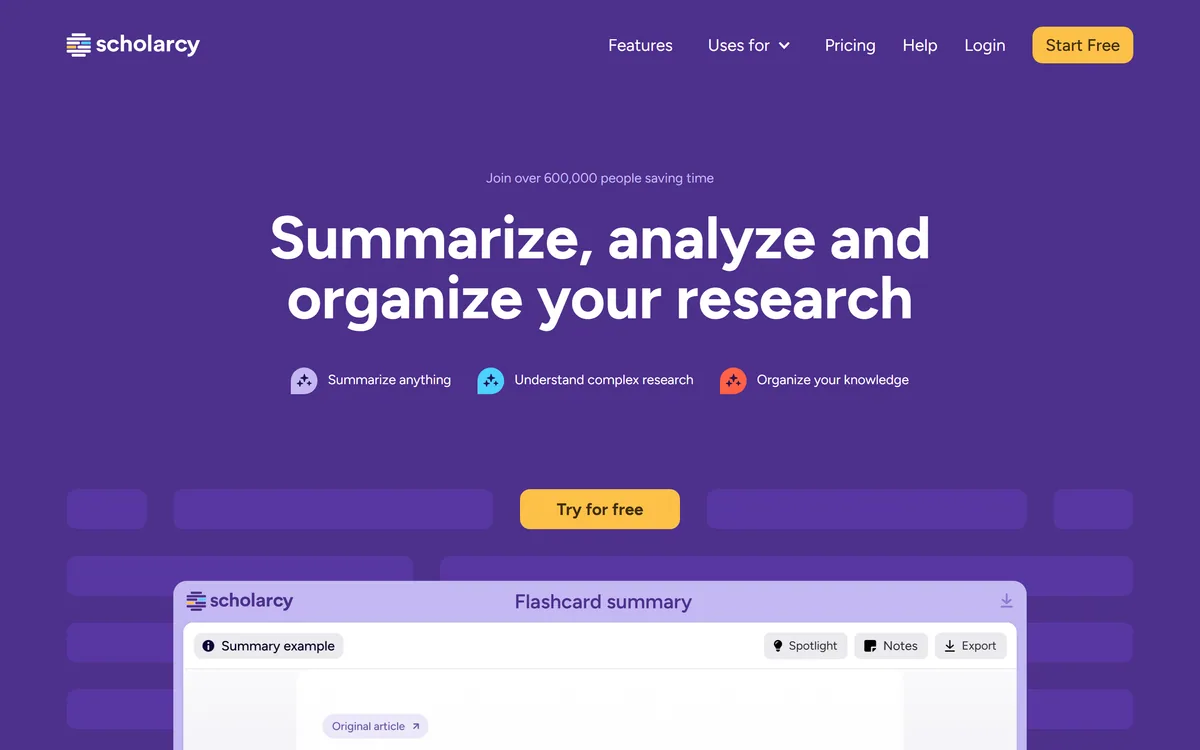
Scholarcy (Scholarcy Ltd, UK) is an AI research tool that breaks down academic papers and documents into summary flashcards, key points, highlights and extracted references, to help you read and triage research faster, via web, browser extension and library. It suits students and researchers, with the caveat that summaries are a reading aid, not a replacement for the source, and need checking.

  • Fast triage of dense papers
  • Key findings and highlights up front
  • Extracts references
  • Browser extension and library
  • Summaries aren't the source
  • Can miss nuance or misstate findings
  • Integrity risk if misused
  • Single-document, not synthesis

Best for: Reading papers faster

Pricing: Freemium · Good

63.5/5

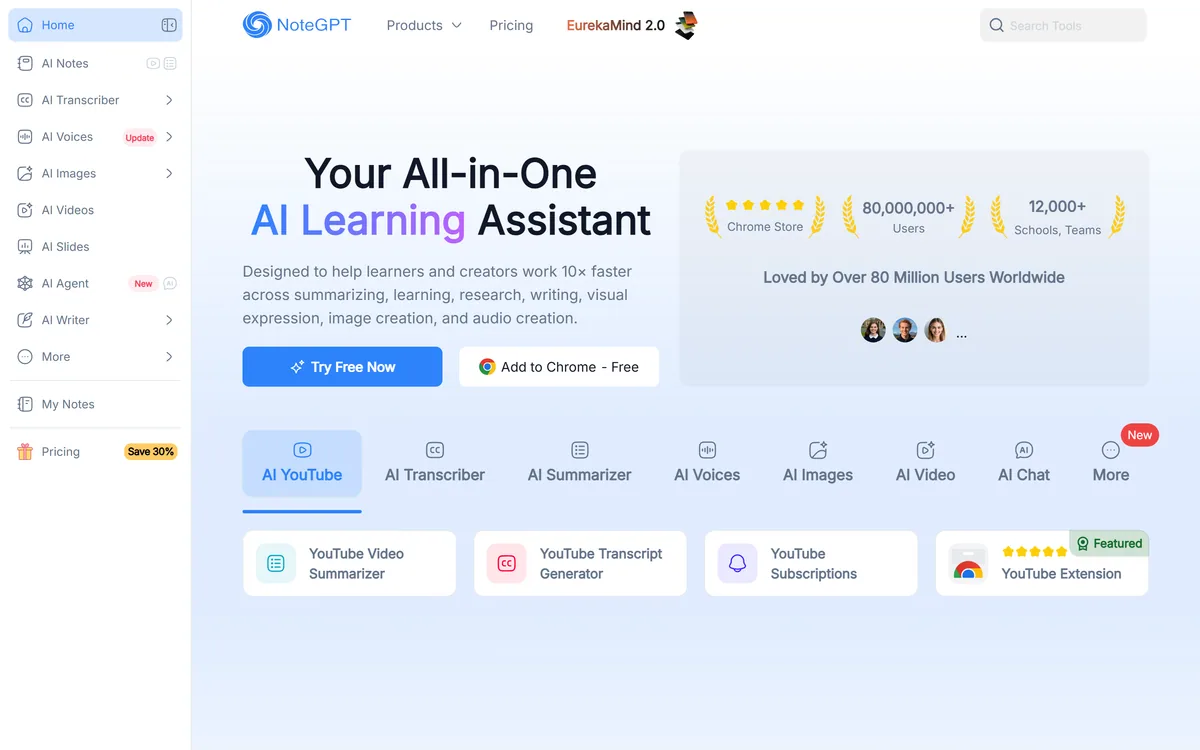
NoteGPT is an AI learning assistant covering YouTube summarising, transcription, note taking, flashcards, quizzes and slide generation, alongside image, audio and writing tools. Chrome and Edge extensions extend it into the browser.

  • Flashcard and quiz generation removes the setup barrier to retrieval practice
  • Summarising is genuinely valuable for triage across more material than you can read
  • Very wide input support — YouTube, PDFs, slides, audio, video and articles
  • Browser extensions put summarising where the lectures actually are
  • Summaries produce the feeling of understanding with much less of the substance
  • Generated flashcards skew toward definition recall rather than application
  • The tool count means uneven depth, and you cannot tell which tools got attention
  • An AI detector and humaniser sit beside the study tools, which changes what the product is for

Best for: Students triaging more lectures and papers than they can watch

Pricing: Freemium · Good

How We Ranked These Summarization Tools

Every tool here is a live summarization product with its own review. The order comes from one published formula, applied the same way on every ranking:

CriterionWhat it measuresWeight
Editor ScoreThe score on each tool's own review, from our research into its official documentation, pricing and independent sources. Tools whose full review is still pending carry a provisional formula estimate, marked “Est.”.50%
User reviewsVerified user ratings on AInexfinder — counted only once a tool has at least three.25%
Feature depthHow many documented features the tool has.15%
FreshnessHow recently the review was last verified. Reviews still pending get a neutral value.10%

Featured listings, a paid placement, get a small boost inside the Editor Score criterion, always keep a place in their own category’s ranking, and are labelled Featured above; listings whose maker shows the AInexfinder badge on its own site get a smaller boost. Neither changes the Editor Score itself. Read the full methodology.

What to Look for in a Summarization Tool

Output Quality

The factor that decides everything else — can it produce summarization results you'd actually ship? It's why Algor Education leads this list; judge each tool on output you can use without heavy rework.

Pricing & Free Tier

Every tool on this list has a free or freemium plan, so test before you pay. Check each free tier's real caps (usage, output count, watermarks) and whether the paid step-up is fair for your volume.

Ease of Use

A clean interface and good onboarding mean you get value on day one, not after a week of learning the tool.

Integrations

Does it connect to the tools you already use — your editor, browser, Slack, Google Workspace or API?

Speed & Reliability

Fast, consistent results matter for daily work. Look at uptime and how the tool handles peak-time load.

Support & Updates

Active development, solid docs and responsive support signal a tool that will keep getting better over time.

Free vs Paid Summarization Tools

When Free Is Enough

All 6 summarization tools offer a free or freemium plan (Algor Education is the one we'd start with). Free tiers suit light or occasional use, testing a workflow, or personal projects — though they usually cap usage, features or output quality.

When to Go Paid

Paid plans make sense for heavy or professional summarization use — higher limits, team collaboration, priority support and advanced features. If a tool is core to your daily work, the subscription usually pays for itself in time saved.

Pricing breakdown
Pricing breakdown6tools

6 of 6 tools offer a free or freemium plan.

Which Summarization Tool Should You Choose?

Match the tool to the job. Each line below is the audience that tool's review found it suits best:

  • Algor Education (4.1/5) — Visual learners who think in maps
  • SoBrief (4.5/5) — Users who need 70,000+ AI-generated book summaries in 40+ languages
  • Recall (4.1/5) — People who save constantly and retain almost nothing
  • Coconote (3.9/5) — Students who cannot listen and take notes simultaneously
  • Scholarcy (3.8/5) — Reading papers faster
  • NoteGPT (3.5/5) — Students triaging more lectures and papers than they can watch
4.1/5

AInexfinder’s Final Verdict on the Best Summarization Tools

Start with Algor Education if you want our top-ranked summarization tool. If none of these fits, our Algor Education alternatives list goes wider. The summarization space moves fast, so each review shows the date it was last verified.

Frequently Asked Questions

What Are the Best Summarization AI Tools in 2026?

The top summarization tools right now are Algor Education, SoBrief, Recall. All 6 are ranked on Editor Score, user reviews, feature depth and freshness — see the full list above.

What Is the Best Free Summarization Tool?

Algor Education is the highest-ranked option with a free plan (freemium — a free tier plus paid upgrades). In fact, all 6 tools here have a free or freemium plan — the At a Glance table marks each one.

How Are These Summarization Tools Ranked?

By a published formula: Editor Score 50%, verified user reviews 25%, feature depth 15% and freshness 10%. User reviews only count for tools that have approved ones; the rest are ranked on the other four factors, so the Editor Score carries most of the weight. The How We Ranked section above shows each criterion.

How Many Summarization AI Tools Are Compared Here?

This page ranks 6 summarization tools. Every one links to its full review, and the category page lists the rest.

Is Algor Education the Best Summarization Tool?

Algor Education is our current top pick with an Editor Score of 4.1/5, but the right choice depends on your needs and budget. The Which Tool Should You Choose section matches each top tool to the people it suits best.

Which Summarization Tool Is Best for Beginners?

Algor Education is the easiest place to start: it has a free plan, so you can learn on a real summarization tool without paying. Once you outgrow it, the paid tools above add more power.

Are Summarization AI Tools Worth It?

Start with one of the 6 free options above to confirm a summarization tool fits your workflow — for most people the right one earns back its cost in hours saved, but only once it clearly slots into how you already work.

How Often Is This List Updated?

The ranking recalculates whenever a review on it changes, and reviews are re-verified on a rolling basis — each one shows when it was last checked. This page was last updated in October 2026.

Keep Exploring

About the Author

Daniel Reed
Daniel Reed

Senior AI Tools Reviewer

Daniel leads AInexfinder's tool reviews. He researches each tool from its own pricing, documentation and policies, checks its claims against independent sources, and writes up what it does well, where it falls short and who it genuinely suits.

AI tool reviewsPricing researchAI software
More about Daniel →

Last updated October 2026. Ranked on Editor Score, user reviews, feature depth and freshness — see our methodology.