Research Tools Rankings

Best AI Research Tools in 2026: 13 Ranked

Find, analyze, and synthesize research with AI, ranked on Editor Score, pricing and fit — each linked to its full review.

Daniel ReedBy the AInexfinder Editorial Team·Overseen by Daniel ReedUpdated October 2026How we rank →

The Short Answer

Elicit is our top-ranked research tool, with an Editor Score of 4.6/5 — Systematic review work across 125 million papers, with a citation on every claim. Find, analyze, and synthesize research with AI. Across the 13 tools ranked here, 12 of the 13 offer a free or freemium plan.

How we rank: research-based. Every tool here has its own review, scored from the vendor's documentation, pricing and independent sources; this list orders them with one published formula led by that Editor Score. Last updated October 2026. How we rank

At a Glance: The 13 Best Research Tools Picks

#ToolScorePricingFree planLinks
1
Elicit logo
Elicit

Top ranked

4.6FreemiumReview
24.7FreeReview
34.5FreeReview
44.3FreemiumReview
54.5FreemiumReview
64.5FreemiumReview
74.5FreeReview
84.1FreemiumReview
94.0FreemiumReview
104.0FreemiumReview
114.4FreemiumReview
12
Sourcely logo
Sourcely

Best paid

3.7PaidReview
133.7FreemiumReview
Scores: top 10 research tools

Score out of 5 — each tool's Editor Score.

Our Top 13 Research Tools Picks, Ranked

1

Elicit

Top ranked
4.6/5

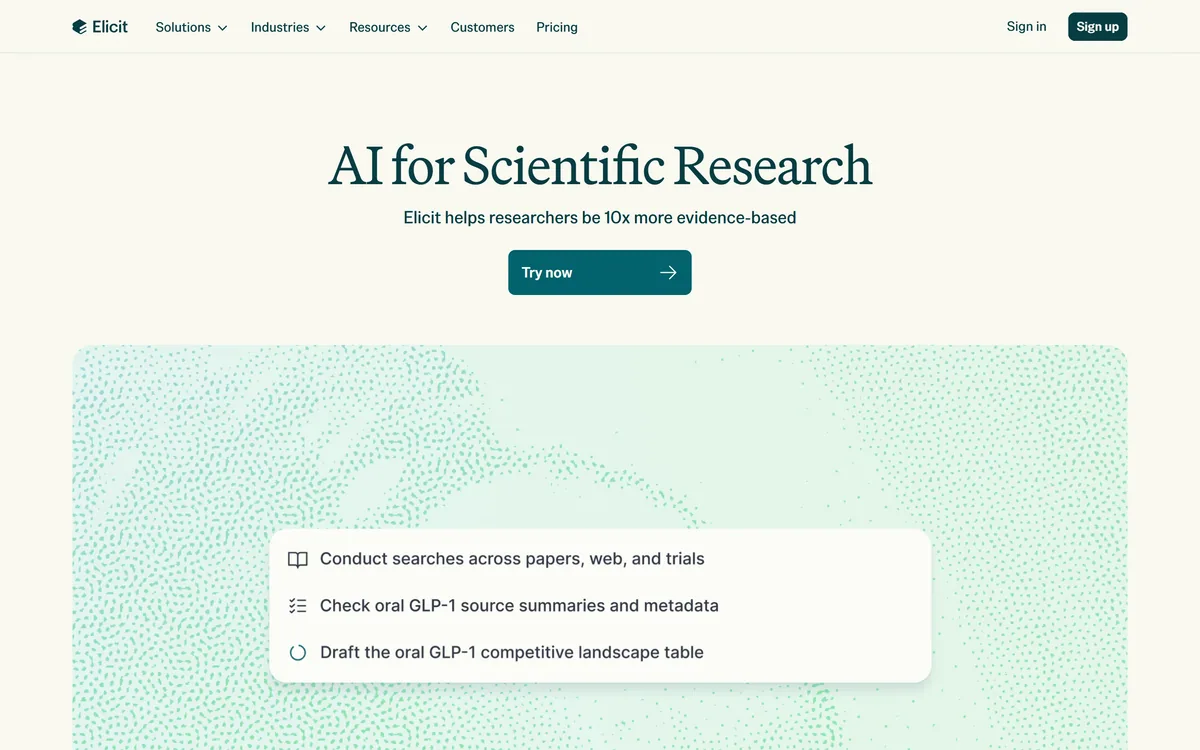
Elicit is an AI research assistant for scientific literature. It searches across more than 125 million papers, screens and extracts data at systematic-review scale, and produces research reports where every claim carries a sentence-level citation back to its source.

  • Built around systematic review methodology rather than around a chat box
  • Sentence-level citation grounding directly addresses the fabricated-reference problem
  • Benchmarking against 994 completed Cochrane reviews is a genuinely checkable standard
  • Attacks screening and extraction, which is where review hours actually go
  • 95% search recall means roughly one relevant paper in twenty is missed
  • Performs no risk-of-bias or methodological quality assessment
  • Inherits publication bias, since unpublished negative results cannot be found
  • Coverage is weaker for non-English, older and paywalled literature

Best for: Researchers conducting systematic and scoping reviews

Pricing: Freemium · Excellent
2Est.4.7/5

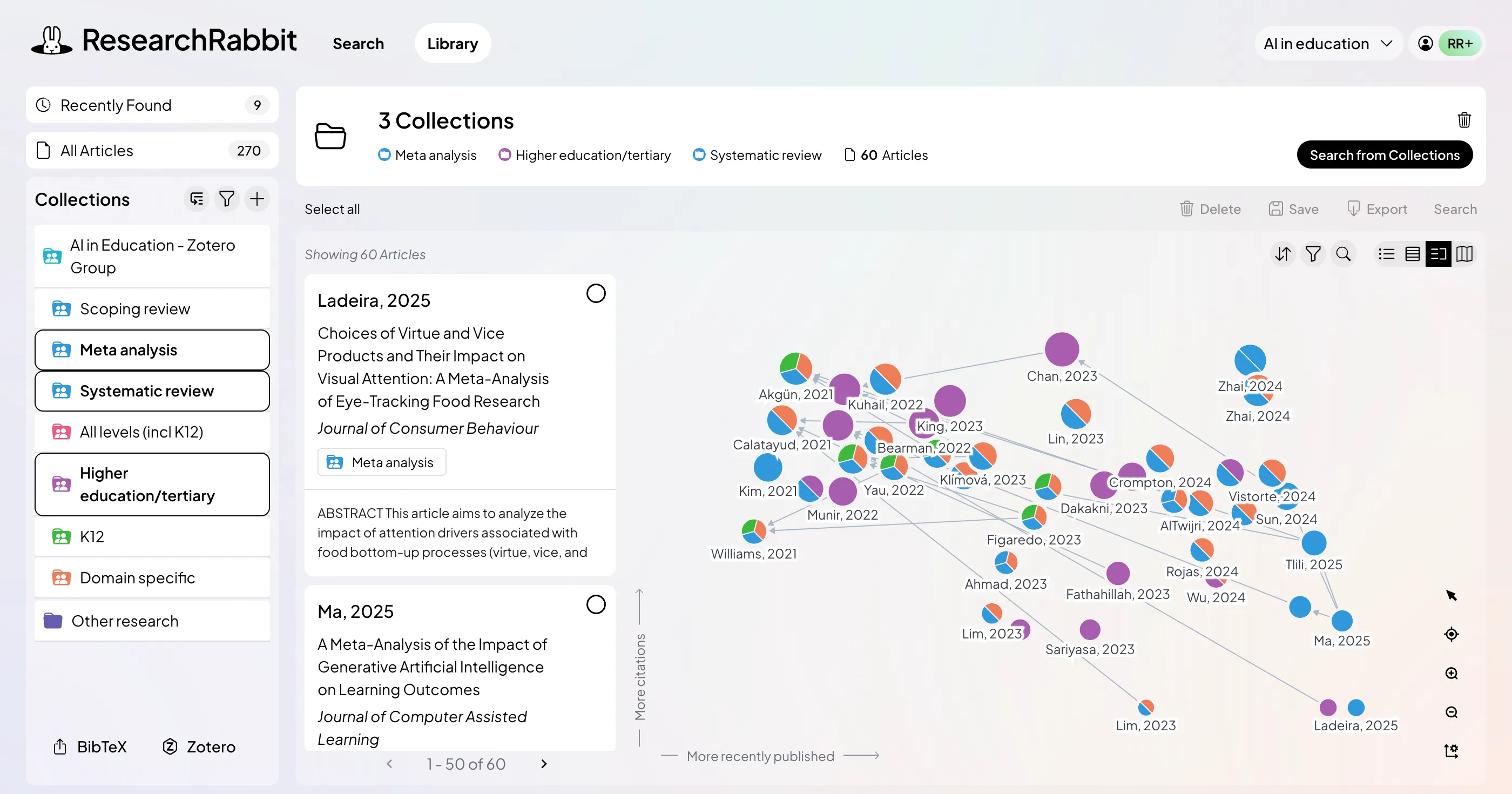
Free literature discovery and citation mapping tool Category: Education & Research.

  • Completely free for core features
  • Visual maps surface related research fast
  • Integrates with Zotero workflows
  • Citation-network visualization from seed papers
  • Focused on discovery, not full-text reading
  • Interface can feel busy with large collections
  • ResearchRabbit is strongest in its core use case, not every niche
  • Compare a short trial against your real workflow first

Best for: Teams that need citation-network visualization from seed papers

Pricing: Free

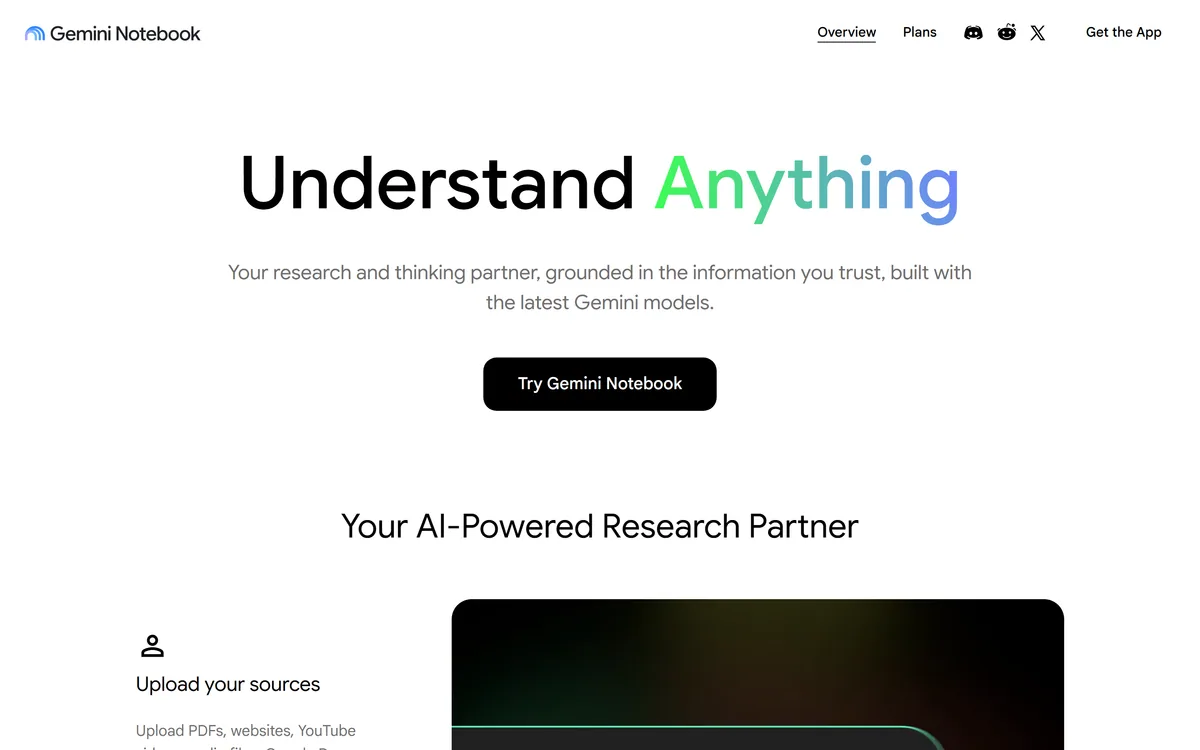
Gemini Notebook is Google's research and thinking tool, grounded in sources you upload rather than the open web. Renamed from NotebookLM on 16 July 2026, it now also runs code in a secure cloud environment and syncs notebooks with the Gemini app.

  • Source grounding removes the failure mode that makes chatbots unsafe for research
  • Citations point at the passage, so verification takes seconds
  • A wrong answer is diagnosable — either the source or the retrieval failed
  • Code execution replaces model arithmetic with actual computation
  • Grounding is not verification — a poor source is reported faithfully and confidently
  • Documentation, tutorials and links written before July 2026 use a name that no longer exists
  • Code execution rolls out by tier, so availability depends on your plan
  • Wrong code over a misidentified column is precisely wrong, which is harder to spot

Best for: Researchers working through more source material than they can read

Pricing: Free · Excellent

44.3/5

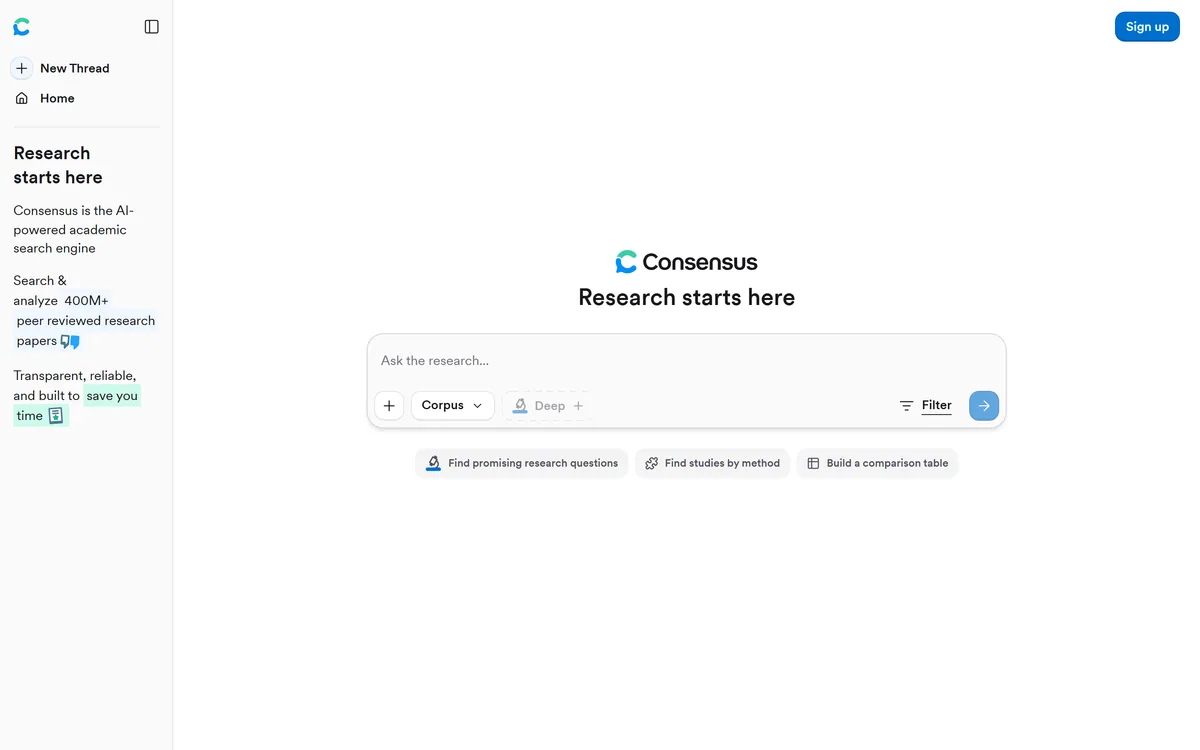
Consensus is an AI-powered academic search engine that searches and analyses hundreds of millions of peer-reviewed research papers, with a Deep Search that automates literature review, a Medical mode for clinical sources, and natural-language filters, used across university libraries.

  • Grounded in peer-reviewed literature, with citations
  • Deep Search automates real literature review
  • Medical mode for trusted clinical answers
  • Natural-language filtering keeps results rigorous
  • Not for quick general-knowledge questions
  • Corpus and usage figures are vendor-stated
  • Still requires reading the cited sources
  • Narrower than open-web search by design

Best for: Researchers and academics

Pricing: Freemium · Very good

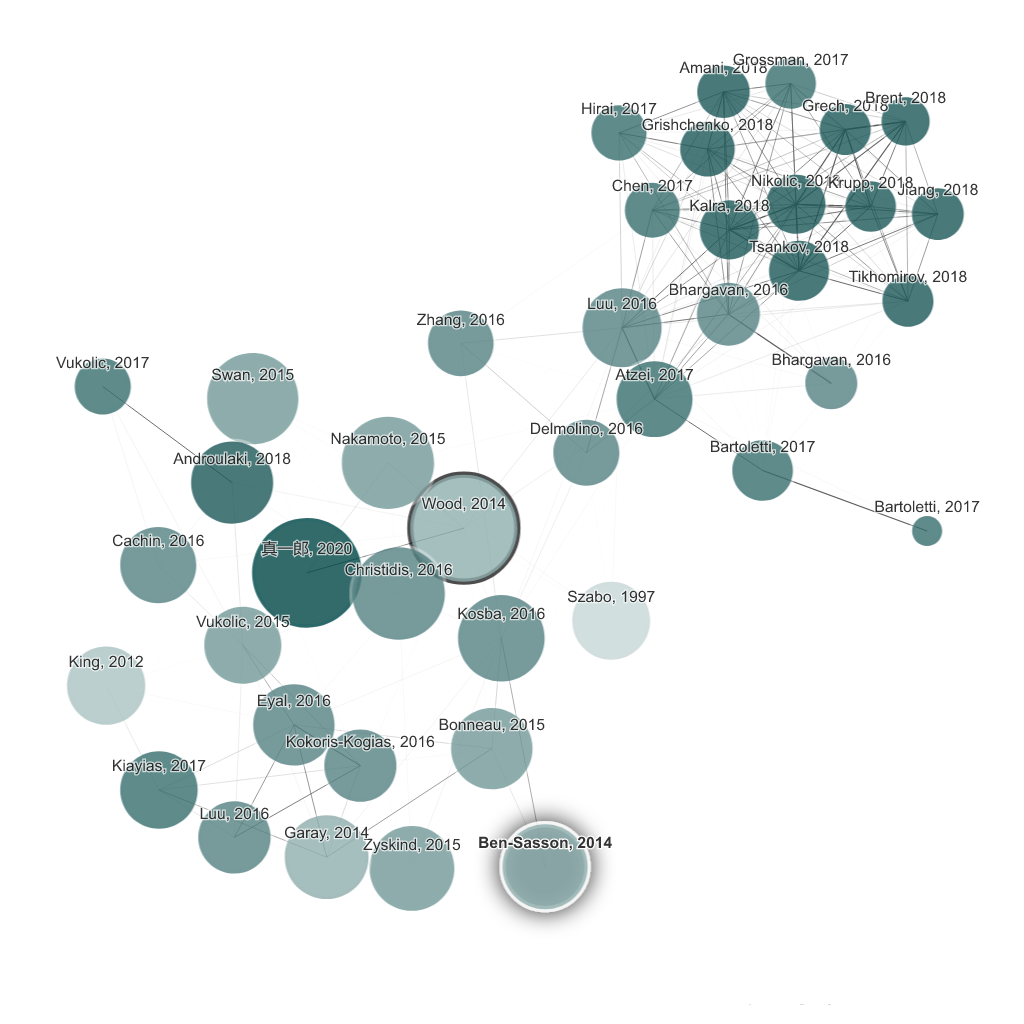
Visual graph tool to explore academic literature Category: Education & Research.

  • Intuitive, attractive literature graphs
  • Good for starting a literature review
  • Scholarship option for low-budget researchers
  • Visual similarity graph from a seed paper
  • Free plan caps monthly graphs
  • Surfaces papers but does not summarize full text
  • May be more specialized than an all-in-one suite
  • Mobile experience can lag the desktop workflow

Best for: Teams that need visual similarity graph from a seed paper

Pricing: Freemium

6Est.4.5/5

AI writing assistant built for academic and research writing Category: Education & Research.

  • Tailored specifically for academic writing
  • Integrates with Word, Google Docs, and Overleaf
  • Covers the full writing-to-submission workflow
  • Real-time academic language editing
  • Free tier caps premium feature usage
  • Plagiarism and AI detection limited without upgrading
  • Narrowly specialized, not for general content
  • Customization options can take time to master

Best for: Users who need real-time academic language editing

Pricing: Freemium

Free AI-powered academic search across millions of papers Category: Education & Research.

  • Completely free and backed by a non-profit
  • Huge multidisciplinary paper corpus
  • AI summaries and reader speed up research
  • AI search across hundreds of millions of papers
  • Coverage can lag for niche or very recent work
  • Summaries are not a substitute for full reading
  • Feature set can be simpler than premium alternatives
  • There is a short learning curve for new users

Best for: Users who need AI search across hundreds of millions of papers

Pricing: Free

84.1/5

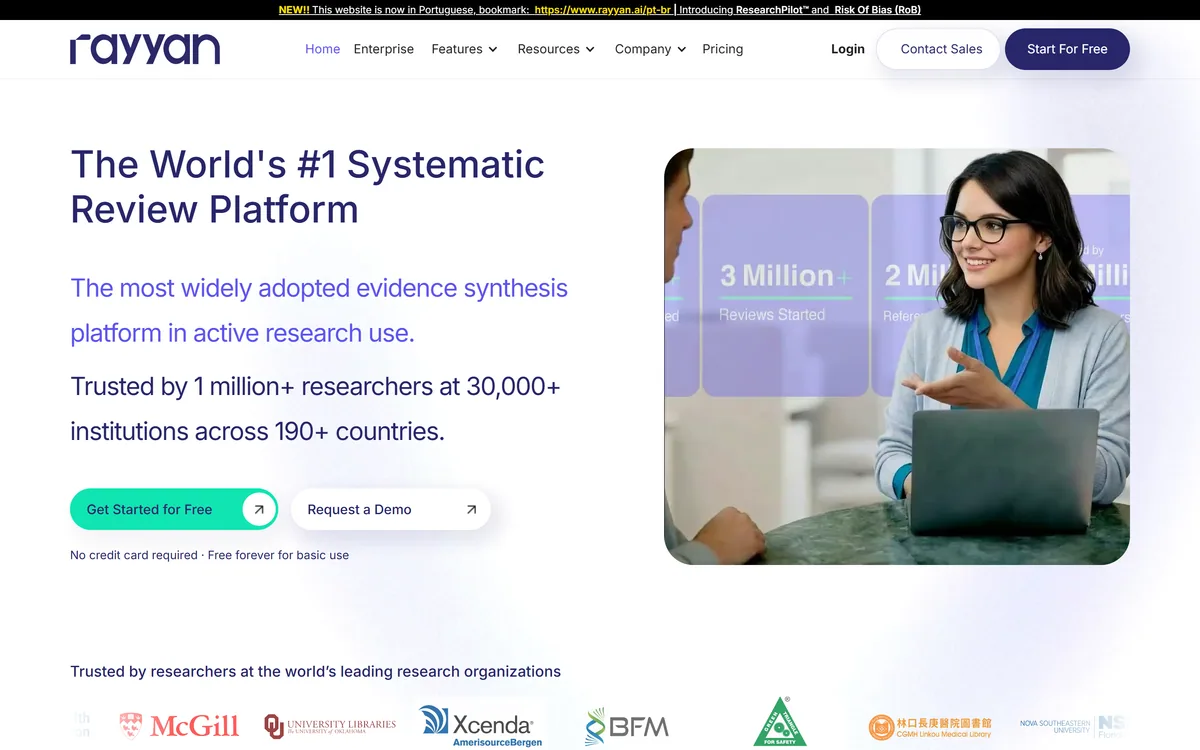
Rayyan is an AI-assisted systematic-review and evidence-synthesis platform that speeds up screening and deduplication, with AI relevance ratings (ResearchPilot), PRISMA diagrams, audit trails and team collaboration, used by over a million researchers. It suits researchers and systematic reviewers, with the caveats that its AI predictions support but don't replace the reviewer's judgement, and that its reach and time-saving figures are vendor- or user-reported.

  • Real AI screening acceleration
  • Rigorous, auditable, PRISMA-aligned
  • Dedup up to 200,000 references
  • Strong team collaboration
  • AI assists, reviewer still decides
  • Overkill for casual searches
  • Heavier features behind paid tiers
  • Reach/time figures self-reported

Best for: Systematic reviews

Pricing: Freemium · Very good

94.0/5

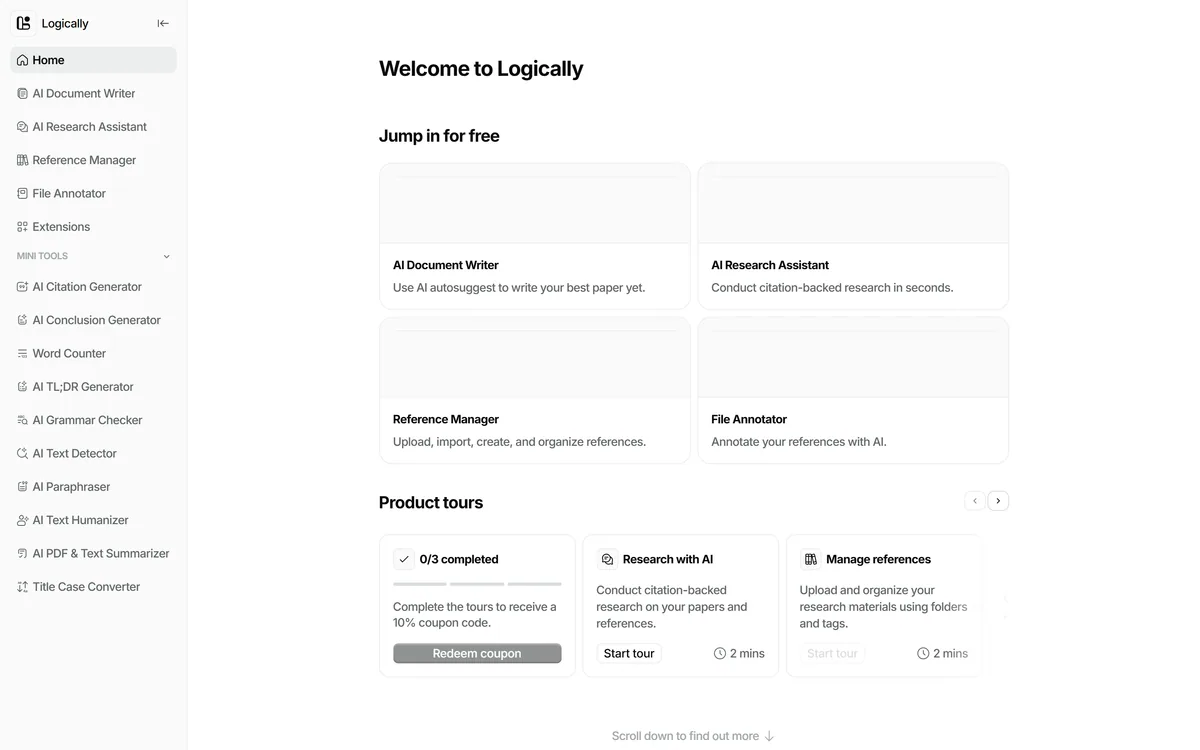
Afforai (now branded 'Logically') is an AI research and writing workspace: citation-backed answers over your papers, a reference manager with 10,000+ styles, a PDF annotator and an AI document writer, aimed at students and researchers. It suits citation-heavy research work, with the notes that the brand/company name differs (Afforai Inc. owns Logically.app) and that it also ships paraphraser/humanizer tools that carry authenticity considerations.

  • Citation-backed, grounded answers
  • Strong reference management
  • Cited AI writing
  • Consolidates a research stack
  • Afforai vs Logically name mismatch
  • Ships a paraphraser/humanizer (authenticity)
  • Output still needs verifying
  • Paid tiers for full use

Best for: Citation-backed research

Pricing: Freemium · Very good

104.0/5

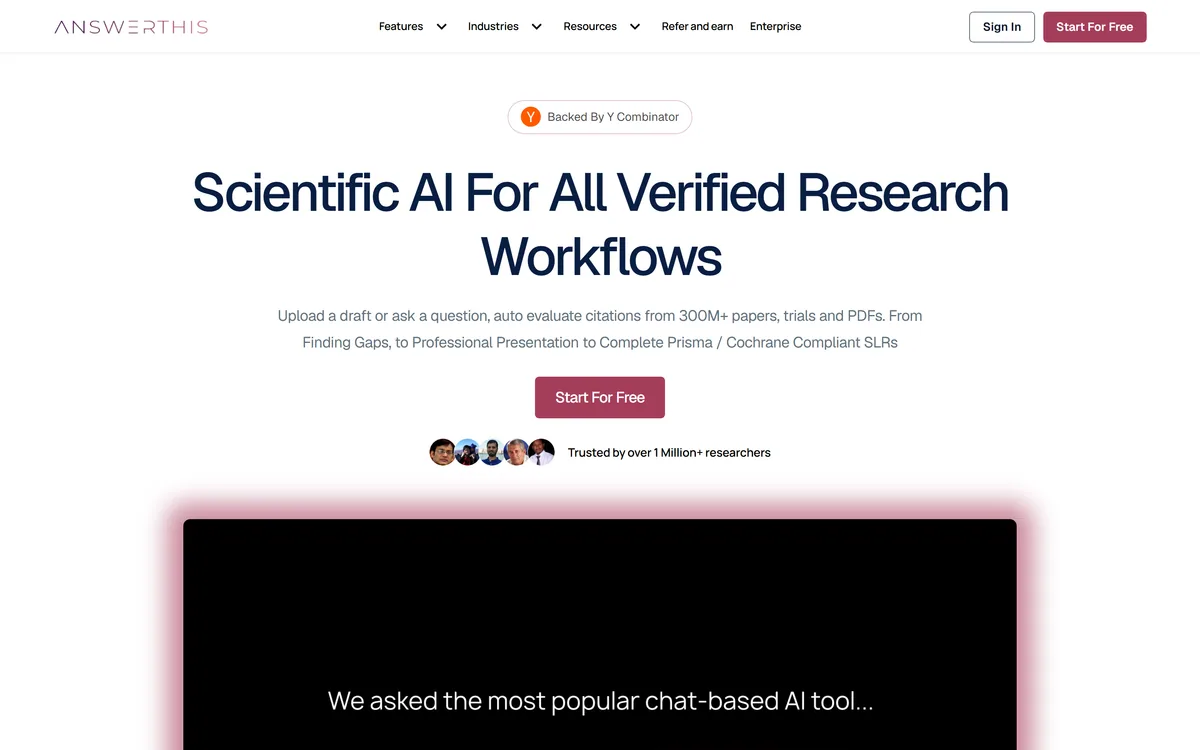
AnswerThis is an AI research assistant for literature reviews that searches a large database of papers and trials, checks citations and claims against their sources, supports PRISMA- and Cochrane-style systematic reviews, and helps draft, revise and collaborate on research writing.

  • Verification-first approach to citations
  • Covers search through drafting
  • Supports formal systematic reviews
  • Traceable, exportable steps
  • Checks are not a guarantee
  • Does not replace methodological expertise
  • Database coverage varies by field
  • Integrity rules apply for students

Best for: Literature reviews

Pricing: Freemium · Very good

11Est.4.4/5

SciSpace review on AInexfinder — freemium AI tool for Education & Research. Features, pricing notes, and alternatives.

  • Explains complex papers
  • Good for students
  • Free tier
  • Paper explainer
  • Academic focus
  • Output needs checking
  • There is a short learning curve for new users
  • Results still need a quick human review for best quality

Best for: AI tool to read and understand papers

Pricing: Freemium

12

Sourcely

Best paid
3.7/5

Sourcely is an AI academic source finder: paste your text and it finds matching credible papers, highlights citation-worthy passages, summarizes sources, and exports citations in 700+ styles, drawing on a database of 200M+ papers. It is a source-finding tool, not an essay generator, though pasting a finished essay to back-fill citations is a misuse to avoid.

  • Finds real, credible sources
  • Avoids fabricated citations
  • Summaries and credibility checks
  • Wide citation-style export
  • Can be misused to back-fill citations
  • Demo summaries are illustrative
  • Figures are vendor-stated
  • Operator not named

Best for: Finding academic sources

Pricing: Paid · Good

133.7/5

Copyleaks (New York) is an AI content-detection and plagiarism platform for education and business: plagiarism checking across trillions of sources, an AI text detector, AI image/video detectors, code plagiarism and LMS/API integrations, with SOC 2 and GDPR compliance. Strong for plagiarism and IP; its AI-writing detection must be treated as a signal, not proof.

  • Deep, broad plagiarism checking
  • Catches paraphrasing and manipulation
  • Broad detector and governance suite
  • Strong compliance certifications
  • AI-writing detection is unreliable
  • False positives can harm students
  • '99% accuracy' is vendor internal testing
  • Non-English detection less reliable

Best for: Plagiarism checking

Pricing: Freemium · Good

How We Ranked These Research Tools

Every tool here is a live research tools product with its own review. The order comes from one published formula, applied the same way on every ranking:

CriterionWhat it measuresWeight
Editor ScoreThe score on each tool's own review, from our research into its official documentation, pricing and independent sources. Tools whose full review is still pending carry a provisional formula estimate, marked “Est.”.50%
User reviewsVerified user ratings on AInexfinder — counted only once a tool has at least three.25%
Feature depthHow many documented features the tool has.15%
FreshnessHow recently the review was last verified. Reviews still pending get a neutral value.10%

Featured listings, a paid placement, get a small boost inside the Editor Score criterion, always keep a place in their own category’s ranking, and are labelled Featured above; listings whose maker shows the AInexfinder badge on its own site get a smaller boost. Neither changes the Editor Score itself. Read the full methodology.

What to Look for in a Research Tool

Output Quality

The factor that decides everything else — can it produce research results you'd actually ship? It's why Elicit leads this list; judge each tool on output you can use without heavy rework.

Pricing & Free Tier

12 of these 13 tools have a free or freemium plan. Check the free tier's real limits and whether paid pricing scales fairly with your usage — watch for hidden caps on output or features.

Ease of Use

A clean interface and good onboarding mean you get value on day one, not after a week of learning the tool.

Integrations

Does it connect to the tools you already use — your editor, browser, Slack, Google Workspace or API?

Speed & Reliability

Fast, consistent results matter for daily work. Look at uptime and how the tool handles peak-time load.

Support & Updates

Active development, solid docs and responsive support signal a tool that will keep getting better over time.

Free vs Paid Research Tools

When Free Is Enough

12 of these 13 research tools offer a free or freemium plan (Elicit is the one we'd start with). Free tiers suit light or occasional use, testing a workflow, or personal projects — though they usually cap usage, features or output quality.

When to Go Paid

For heavy or professional research tools work, a paid plan like Sourcely's buys higher limits, team collaboration, priority support and advanced features. If a tool is core to your daily work, the subscription usually pays for itself in time saved.

Pricing breakdown
Pricing breakdown13tools

12 of 13 tools offer a free or freemium plan.

Which Research Tool Should You Choose?

Match the tool to the job. Each line below is the audience that tool's review found it suits best:

  • Elicit (4.6/5) — Researchers conducting systematic and scoping reviews
  • ResearchRabbit (4.7/5) — Teams that need citation-network visualization from seed papers
  • Gemini Notebook (4.5/5) — Researchers working through more source material than they can read
  • Consensus (4.3/5) — Researchers and academics
  • Connected Papers (4.5/5) — Teams that need visual similarity graph from a seed paper
  • Paperpal (4.5/5) — Users who need real-time academic language editing
4.6/5

AInexfinder’s Final Verdict on the Best Research Tools

Start with Elicit if you want our top-ranked research tool, and give ResearchRabbit a look too — the two are within a fraction of each other. If none of these fits, our Elicit alternatives list goes wider. Research tools change month to month, so each review shows the date it was last verified.

Frequently Asked Questions

What Are the Best AI Research Tools in 2026?

The top research tools right now are Elicit, ResearchRabbit, Gemini Notebook. All 13 are ranked on Editor Score, user reviews, feature depth and freshness — see the full list above.

What Is the Best Free Research Tool?

Elicit is the highest-ranked option with a free plan (freemium — a free tier plus paid upgrades). 12 of the 13 tools on this list offer a free or freemium plan — the At a Glance table marks each one.

How Are These Research Tools Ranked?

By a published formula: Editor Score 50%, verified user reviews 25%, feature depth 15% and freshness 10%. User reviews only count for tools that have approved ones; the rest are ranked on the other four factors, so the Editor Score carries most of the weight. The How We Ranked section above shows each criterion.

How Many Research AI Tools Are Compared Here?

This page ranks 13 research tools, and 12 of them have a free tier. Every one links to its full review, and the category page lists the rest.

Is Elicit the Best Research Tool?

Elicit is our current top pick with an Editor Score of 4.6/5, though ResearchRabbit has a slightly higher Editor Score (4.7/5), but the right choice depends on your needs and budget. The Which Tool Should You Choose section matches each top tool to the people it suits best.

Which Research Tool Is Best for Beginners?

Elicit is the easiest place to start: it has a free plan, so you can learn on a real research tool without paying. Once you outgrow it, the paid tools above add more power.

Are AI Research Tools Worth It?

Start with one of the 12 free options above to confirm a research tool fits your workflow — for most people the right one earns back its cost in hours saved, but only once it clearly slots into how you already work.

How Often Is This List Updated?

The ranking recalculates whenever a review on it changes, and reviews are re-verified on a rolling basis — each one shows when it was last checked. This page was last updated in October 2026.

Keep Exploring

About the Author

Daniel Reed
Daniel Reed

Senior AI Tools Reviewer

Daniel leads AInexfinder's tool reviews. He researches each tool from its own pricing, documentation and policies, checks its claims against independent sources, and writes up what it does well, where it falls short and who it genuinely suits.

AI tool reviewsPricing researchAI software
More about Daniel →

Last updated October 2026. Ranked on Editor Score, user reviews, feature depth and freshness — see our methodology.