AI content detection and plagiarism checking in one platform Category: Education & Research.
Education & Research Review
Consensus is an AI-powered academic search engine that searches and analyses hundreds of millions of peer-reviewed research papers, with a Deep Search that automates literature review, a Medical mode for clinical sources, and natural-language filters, used across university libraries.
Very good
Consensus earns 4.3 for doing research search the rigorous way: answering from a corpus of hundreds of millions of peer-reviewed papers with citations, a Deep Search that genuinely automates literature review, a Medical mode for clinical sources, and natural-language filters that keep results evidence-based. It is narrower than open-web search by design and its corpus figures are vendor-stated, but for researchers and clinicians it is a strong, defensible tool, provided you still read the sources. AInexfinder Editor Score: 4.3/5.
Best for: Researchers and academics; Graduate students
The visit link goes to consensus.app, the official site. Paid placements on AInexfinder are always labelled. How we make money
General AI search will confidently answer a research question from whatever is on the open web. Consensus takes a stricter path: answer from peer-reviewed literature, and show the papers.
It is an AI academic search engine over hundreds of millions of research papers, with a Deep Search that automates literature review, a Medical mode for clinical sources, and natural-language filters, used across 170+ university libraries. It sits among research tools like Gemini Notebook and consumer search like Perplexity AI, distinguished by its peer-reviewed foundation.
This review covers how Consensus runs a literature review, who it suits, how it prices research access, and where another tool fits better.
| What it is | An AI-powered academic search engine |
|---|---|
| Corpus | Hundreds of millions of peer-reviewed papers |
| Deep Search | Automated literature-review strategy |
| Medical mode | Top clinical guidelines and journals |
| Grounding | Peer-reviewed literature, with citations |
| Filters | Natural-language (timeframe, population, design) |
| Reach | 170+ university libraries, 10M+ users (vendor) |
| Access | Freemium with paid plans |
Consensus's defining choice is its corpus: instead of the open web, it searches and analyses peer-reviewed research papers, hundreds of millions of them, including licensed full-text content from leading publishers. For anyone who needs defensible answers, that foundation is the whole value.
That is the difference between a plausible answer and a cited one. Consensus is built to save research time without sacrificing academic rigour, surfacing what the literature actually says and letting you see the studies behind it.
Its adoption signals back this up: it reports partnerships with 170+ university libraries and millions of users across students, researchers and clinicians. Those are vendor-stated, but the institutional footprint is a meaningful indicator for a research tool.
The difference is between a plausible answer and a cited one. Consensus answers from peer-reviewed literature and lets you see the studies behind it.
Two capabilities do the heavy lifting: Deep Search, and the modes and filters that keep results rigorous.
Deep Search turns days of literature review into minutes: it builds a comprehensive search strategy, expands key terms, identifies conflicting arguments and explores the citation graph, then synthesises what the research agrees and disagrees on, with sources.
That automated-review depth is where it goes beyond a search box. A source-grounded tool like Gemini Notebook works from documents you supply; Consensus brings the whole peer-reviewed corpus and the review strategy to the question.
A Medical mode narrows to high-quality clinical sources, clinical guidelines and top medical journals, for trusted clinical answers, and natural-language filters let you specify timeframe, population, study design and more directly in the prompt, which Consensus applies automatically.
Those controls are what make it rigorous rather than merely fast. A consumer AI search like Perplexity AI answers general questions from the web; Consensus is purpose-built for evidence from the literature, which is a different and narrower job.
Consensus suits researchers, graduate students, academics and clinicians who need evidence-based answers grounded in peer-reviewed literature, and who do real literature reviews where speed without rigour is no help.
It especially suits anyone doing systematic or semi-systematic reviews, where Deep Search's strategy-building and citation-graph exploration save substantial time, and clinicians who want answers from trusted medical sources via Medical mode. The institutional library access makes it practical at universities. For discovery through an indexed citation database rather than an AI synthesis, a tool like Web of Science Research Assistant approaches the same literature from a different angle.
It suits less well someone wanting quick general-knowledge answers, where a consumer AI search is faster and broader, and anyone outside research who does not need peer-reviewed grounding. And, as always with AI, you should still read the cited papers rather than trusting a synthesis blindly.
Consensus is freemium: a free tier to search, paid plans for more (including Deep Search and advanced use), plus institutional access through university libraries and organisation plans. We do not publish prices, which change; check the site.
For an individual researcher, the value question is whether it meaningfully speeds literature review and surfaces evidence you would otherwise miss, which for anyone doing real reviews it usually does.
Many users get it through a university library, so check whether your institution already provides access before paying individually, and use the free tier to judge the quality of its answers on your own topics.
Because the point is rigorous, cited answers, test Consensus on a real research question you know well.
Academic search over peer-reviewed papers
Deep Search literature review
Citation-graph exploration
Agreement-and-disagreement synthesis
Medical mode for clinical sources
Natural-language filters
Cited answers
University library access
The useful comparison is with other research and search tools, on grounding and scope.
| Tool | Tool | Grounding | Best for |
|---|---|---|---|
| Consensus | Peer-reviewed literature | Cited, evidence-based answers | Researchers and clinicians |
| Gemini Notebook | Your own sources | Grounded Q&A on your material | Working with specific docs |
| Perplexity AI | The open web | Fast general answers | Everyday research |
| Web of Science Research Assistant | A citation database | Indexed literature search | Academic discovery |
A source-grounded research tool, a consumer AI search and a citation database to weigh alongside Consensus.
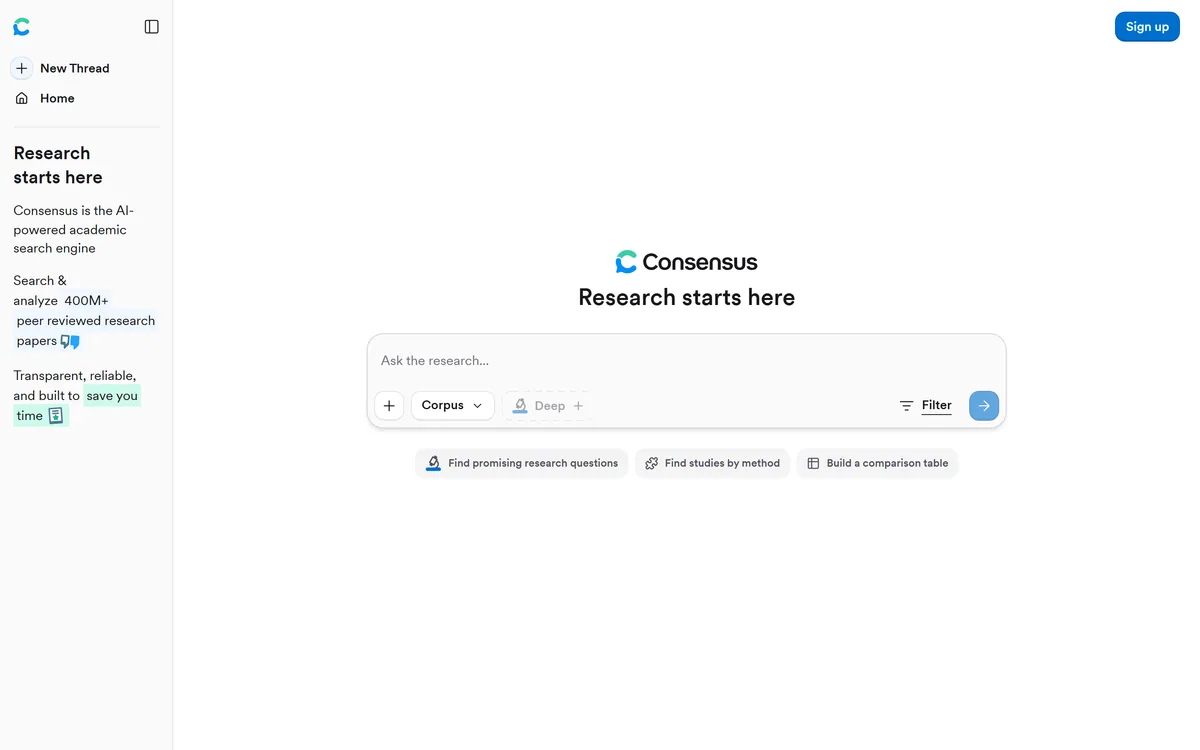
Last checked . Read from consensus.app during this check, with the screenshot above captured at the same time.
Consensus's corpus size and usage figures are vendor-stated. As with any AI research tool, read the cited papers rather than treating the synthesis as a substitute for the sources.
AInexfinder does not list plan prices or billing details. For current pricing, plans, and trials, visit the official Consensus website.
Visit official website for pricingVendor pricing, credits, and billing policies change over time. Always confirm on the official site before you buy.
Consensus earns an AInexfinder Editor Score of 4.3/5 (very good). Best for: Researchers and academics; Graduate students; Clinicians.
Visit ConsensusLog in to write a review.
No reviews yet. Be the first to share your experience with Consensus.
Assigned reviewer
Daniel ReedSenior AI Tools Reviewer
Daniel leads AInexfinder's tool reviews. He researches each tool from its own pricing, documentation and policies, checks its claims against independent sources, and writes up what it does well, where it falls short and who it genuinely suits.
Daniel and the AInexfinder editorial team research Consensus from its own website, pricing, documentation and policies, checked against independent sources. This review is research-based: unless its method note says otherwise, we have not bought a plan or run hands-on tests. The Editor Score is our editorial judgement, and payment never changes it.
Similar Tools
AI content detection and plagiarism checking in one platform Category: Education & Research.
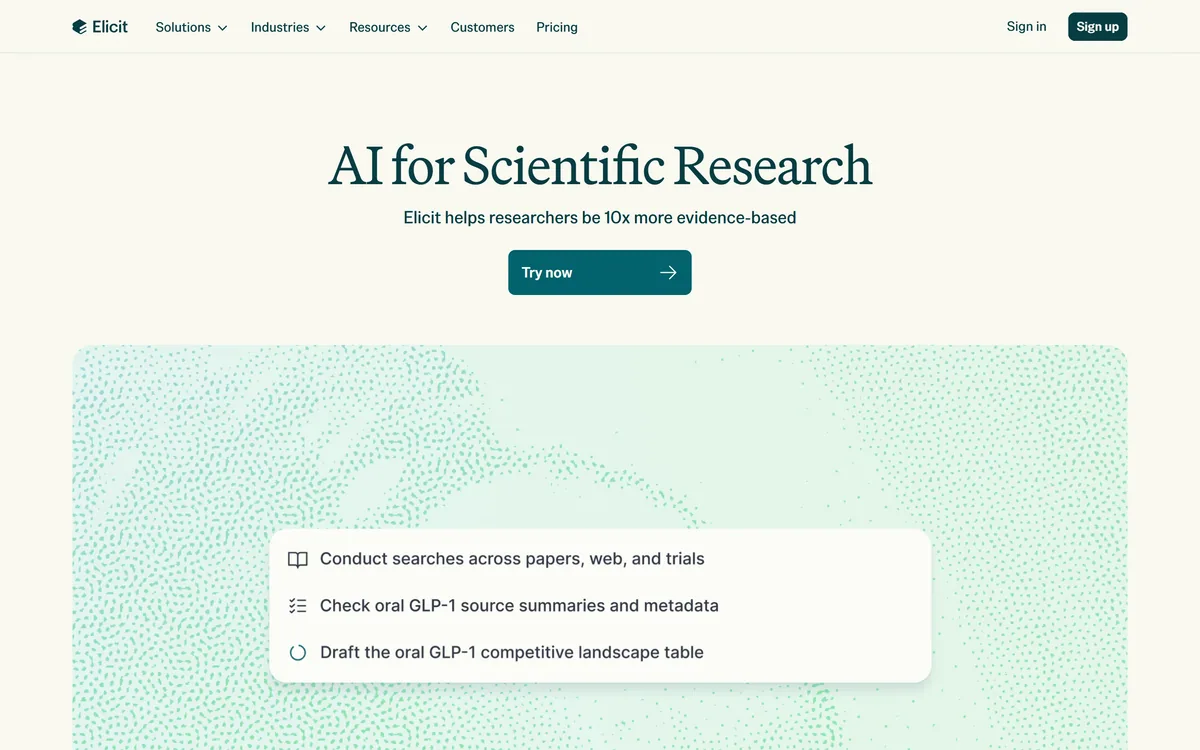
Elicit is an AI research assistant for scientific literature. It searches across more than 125 million papers, screens and extracts data at systematic-review scale, and produces research reports where every claim carries a sentence-level citation back to its source.
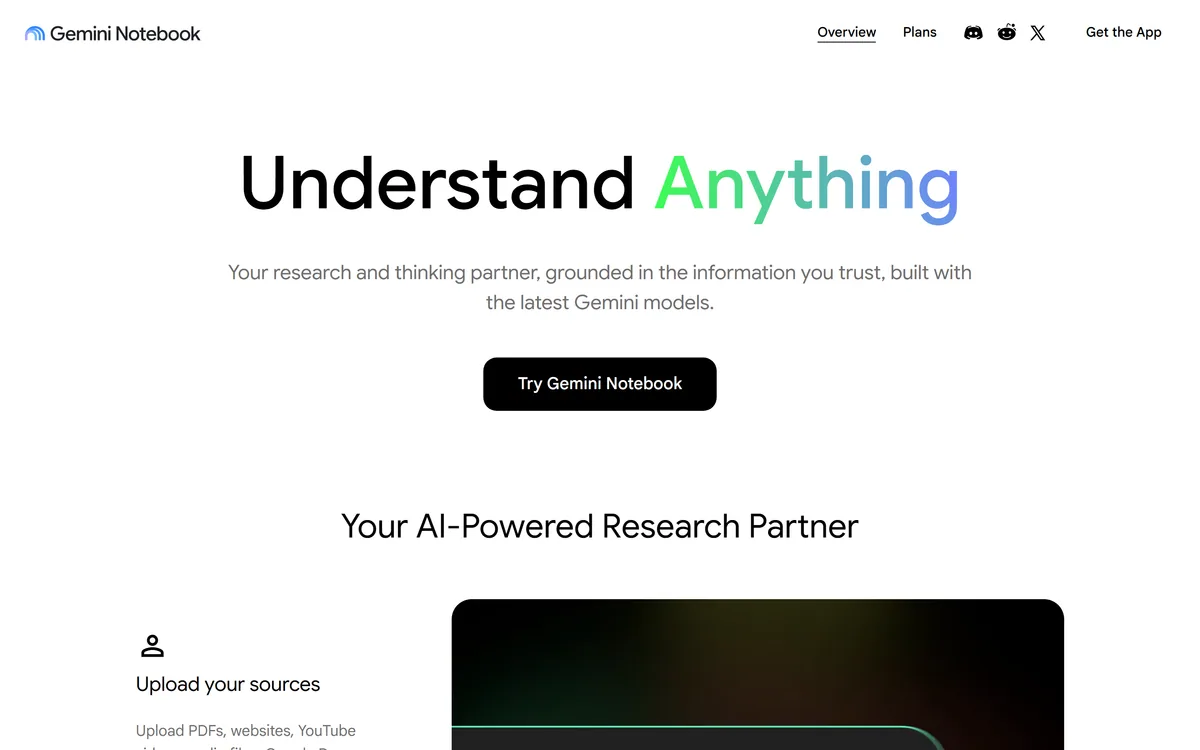
Gemini Notebook is Google's research and thinking tool, grounded in sources you upload rather than the open web. Renamed from NotebookLM on 16 July 2026, it now also runs code in a secure cloud environment and syncs notebooks with the Gemini app.

SciSpace review on AInexfinder — freemium AI tool for Education & Research. Features, pricing notes, and alternatives.
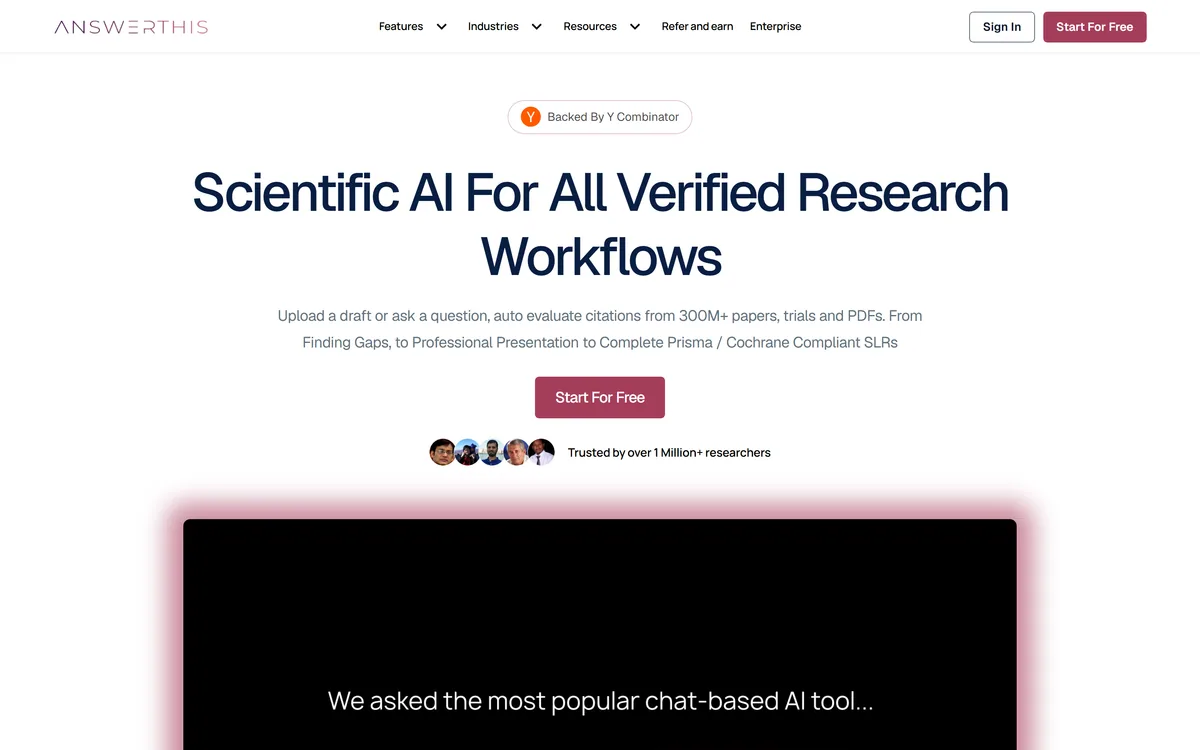
AnswerThis is an AI research assistant for literature reviews that searches a large database of papers and trials, checks citations and claims against their sources, supports PRISMA- and Cochrane-style systematic reviews, and helps draft, revise and collaborate on research writing.
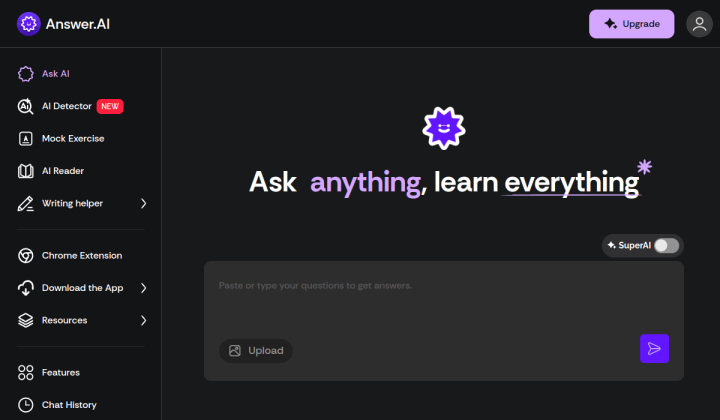
Answer AI review on AInexfinder — freemium AI tool for Education & Research. Features, pricing notes, and alternatives.
Related Pages