Head-to-Head
Elicit vs Gemini Notebook
Editor Scores, pricing and fit side by side — to help you pick the right education & research tool in 2026.
Our Verdict
In our reviews, Elicit and Gemini Notebook land almost level. Pick Elicit if you want search across more than 125 million academic papers; choose Gemini Notebook for answers grounded in sources you upload, with citations back into them. On pricing, both have a free plan, so you can try each before paying.
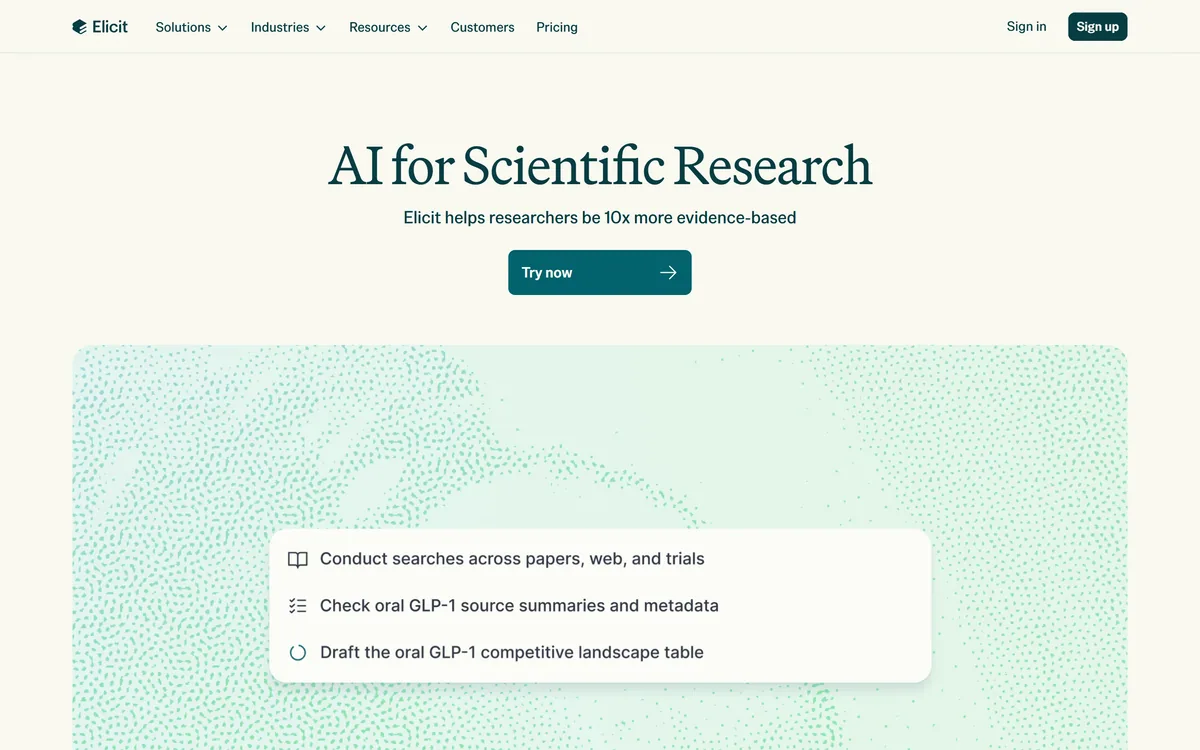
Elicit
FreemiumEditor Score · Excellent
Best for: Researchers conducting systematic and scoping reviews
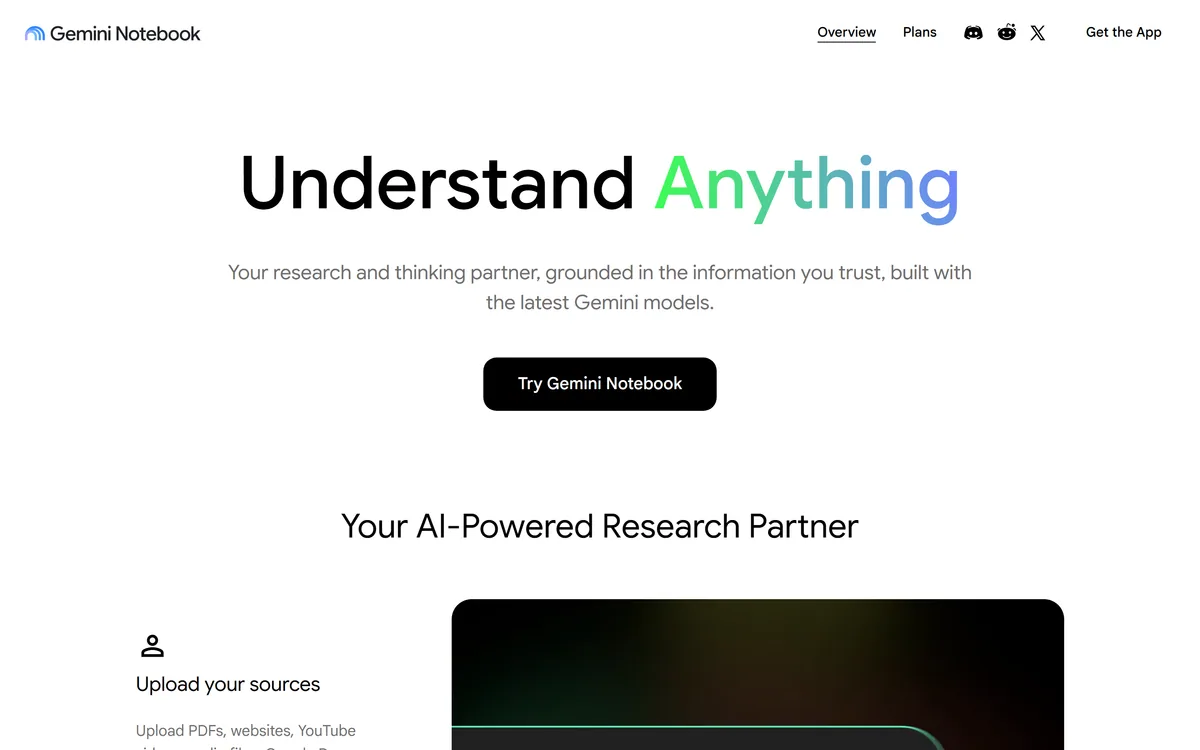
Gemini Notebook
FreeEditor Score · Excellent
Best for: Researchers working through more source material than they can read
Elicit vs Gemini Notebook: Side by Side
| Detail | ||
|---|---|---|
| Editor Score | 4.6/5 | 4.5/5 |
| Pricing model | Freemium | Free |
| Free plan | Yes | Yes |
| Best for | Researchers conducting systematic and scoping reviews | Researchers working through more source material than they can read |
| Review last verified | Sep 2026 | Sep 2026 |
Quick Verdict: Which Should You Choose?
Short answer: a winner is called only where the data decides one. Fit — what each tool is built for — is covered in Who Should Pick Which below.
| Factor | Elicit | Gemini Notebook | Winner |
|---|---|---|---|
| Editor Score | 4.6 | 4.5 | Level |
| Free to start | Yes | Yes | Both |
| Overall | Depends on your use case |
Elicit: Strengths and Trade-offs
Elicit is an AI research assistant for scientific literature. It searches across more than 125 million papers, screens and extracts data at systematic-review scale, and produces research reports where every claim carries a sentence-level citation back to its source.
What It Does Well
- Built around systematic review methodology rather than around a chat box
- Sentence-level citation grounding directly addresses the fabricated-reference problem
- Benchmarking against 994 completed Cochrane reviews is a genuinely checkable standard
- Attacks screening and extraction, which is where review hours actually go
Where It Falls Short
- 95% search recall means roughly one relevant paper in twenty is missed
- Performs no risk-of-bias or methodological quality assessment
- Inherits publication bias, since unpublished negative results cannot be found
Gemini Notebook: Strengths and Trade-offs
Gemini Notebook scores highly for a design constraint most AI products refuse to accept: it answers only from sources you gave it. That single decision removes the failure mode that makes general chatbots unusable for serious research — you cannot tell which parts came from your document and which came from the model's training. Here, everything is attributable. The July 2026 rename to Gemini Notebook changed the branding rather than the product, and the addition of code execution against your own sources is a genuine capability step. It sits just below the top because grounding is only as good as what you upload.
What It Does Well
- Source grounding removes the failure mode that makes chatbots unsafe for research
- Citations point at the passage, so verification takes seconds
- A wrong answer is diagnosable — either the source or the retrieval failed
- Code execution replaces model arithmetic with actual computation
Where It Falls Short
- Grounding is not verification — a poor source is reported faithfully and confidently
- Documentation, tutorials and links written before July 2026 use a name that no longer exists
- Code execution rolls out by tier, so availability depends on your plan
Who Should Pick Which?
 Pick Elicit for…
- Researchers conducting systematic and scoping reviews
- Pharmaceutical and medical device evidence teams
- Policy analysts synthesising research for government
 Pick Gemini Notebook for…
- Researchers working through more source material than they can read
- Anyone who must be able to show where an answer came from
- Analysts with quantitative material in uploaded files
Try both if you are unsure — each has a free plan, so run the same real task through them and keep the one that fits. Bottom line: your use case decides this one — Elicit leans into search across more than 125 million academic papers, while Gemini Notebook is built for answers grounded in sources you upload, with citations back into them.
Frequently Asked Questions
Is Elicit Better Than Gemini Notebook?
What Is the Difference Between Elicit and Gemini Notebook?
Is Elicit or Gemini Notebook Cheaper?
Which Is Better for Beginners, Elicit or Gemini Notebook?
More Education & Research Comparisons
Other head-to-heads in the same category.
About the Author
Senior AI Tools Reviewer
Daniel leads AInexfinder's tool reviews. He researches each tool from its own pricing, documentation and policies, checks its claims against independent sources, and writes up what it does well, where it falls short and who it genuinely suits.
Keep Exploring
Last updated September 2026. Scores are each tool's Editor Score, or a provisional estimate marked “Est.” while its full review is pending — see our methodology.