Head-to-Head
Humy vs Pingo AI
Humy and Pingo AI compared on Editor Score, pricing and who each one suits — to help you pick the right education & research tool in 2026.
Our Verdict
Humy and Pingo AI score within a fraction of each other in our reviews. Pick Humy if you want source-grounded historical figures; choose Pingo AI for conversation-led practice with spoken input. On pricing, Humy is the one with a free plan, so it's the cheaper place to start.
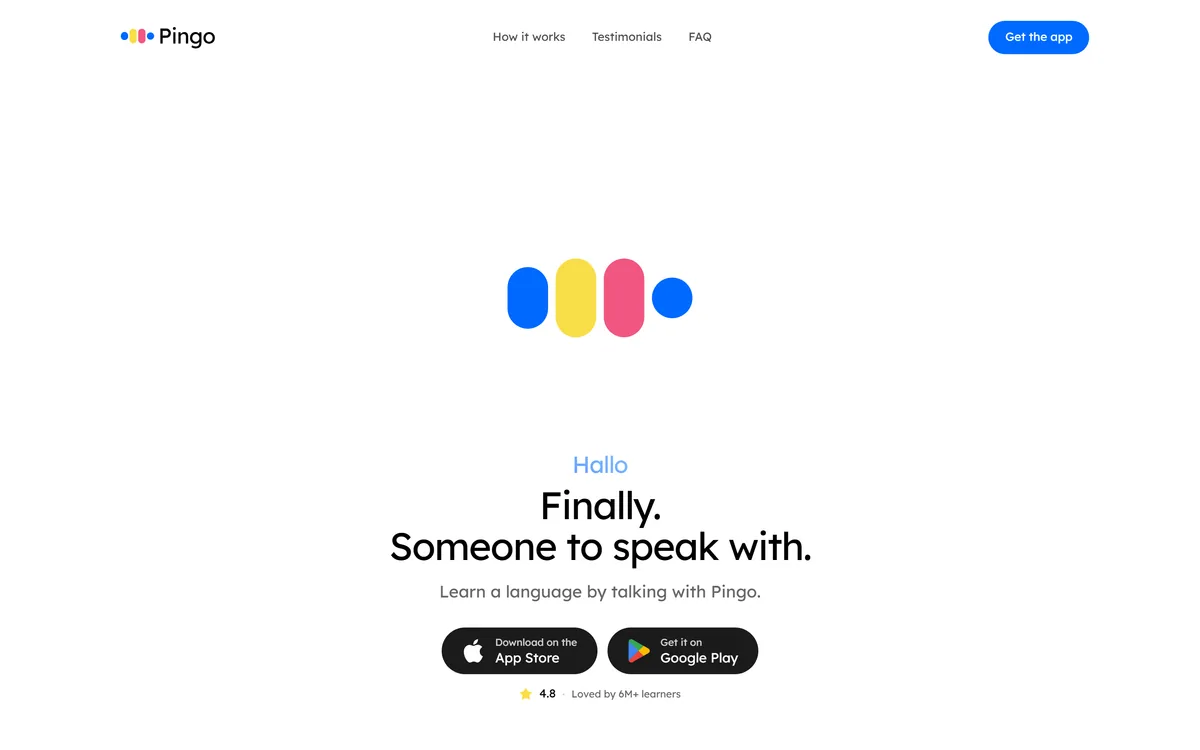
Pingo AI
PaidEditor Score · Very good
Best for: Intermediate learners stuck at the point of speaking
Humy vs Pingo AI: Side by Side
| Detail | ||
|---|---|---|
| Editor Score | 4.3/5 | 4.2/5 |
| Pricing model | Freemium | Subscription |
| Free plan | Yes | No |
| Best for | Inquiry-based history lessons | Intermediate learners stuck at the point of speaking |
| Review last verified | Oct 2026 | Sep 2026 |
Quick Verdict: Which Should You Choose?
Short answer: a winner is called only where the data decides one. Fit — what each tool is built for — is covered in Who Should Pick Which below.
| Factor | Humy | Pingo AI | Winner |
|---|---|---|---|
| Editor Score | 4.3 | 4.2 | Level |
| Free to start | Yes | No | Humy |
| Overall | Depends on your use case |
Humy: Strengths and Trade-offs
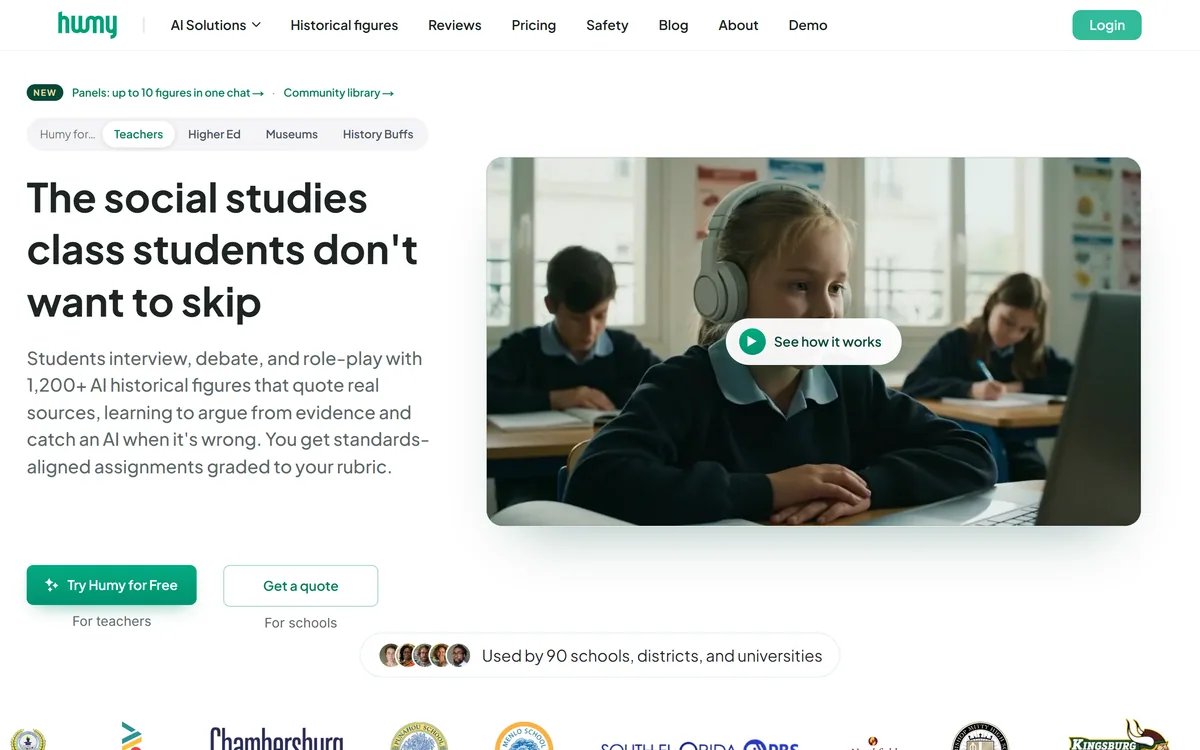
Humy earns 4.3 as one of the more thoughtful classroom AI tools we have reviewed. By grounding its 1,200-plus historical figures in primary sources and publishing its own AI error rate, it turns a cheating worry into an inquiry and AI-literacy exercise, while its assignment builder and rubric grading save history teachers real time. The honest limits are that it is strongest in social studies and history, other subjects lean on uploaded sources, and heavy panel use meets message-pool caps. For history and social-studies teachers who want students doing inquiry rather than consuming, it is an easy recommendation.
What It Does Well
- Answers grounded in primary sources
- Honest about errors with a published rate
- Strong teacher workflow and grading
- Great for inquiry and AI literacy
Where It Falls Short
- Strongest only in history/social studies
- Other subjects need uploaded sources
- Message-pool limits can cap heavy use
Pingo AI: Strengths and Trade-offs
Pingo AI has picked the correct problem. Most language apps make you excellent at recognising a language and leave you mute in front of an actual person, because recognition and production are different skills and only one of them is easy to gamify. Building the whole product around talking, with session-to-session memory so yesterday's mistake becomes today's starting point, addresses the gap directly. It is not a substitute for structured grammar instruction, and the site does not pretend otherwise.
What It Does Well
- Targets production, the half of language learning most apps skip
- Session memory turns a chatbot into something closer to a tutor
- Scenario framing matches how language is actually retrieved
- Teaching in 15-plus native languages rather than assuming English
Where It Falls Short
- Not a substitute for systematic grammar instruction from zero
- Only 15 of the stated 25-plus target languages are named publicly
- How granular the memory really is cannot be judged from outside
Who Should Pick Which?
 Pick Humy for…
- Inquiry-based history lessons
- Debate and DBQ practice
- AI-literacy teaching
- Starting without a budget — it has a free plan
 Pick Pingo AI for…
- Intermediate learners stuck at the point of speaking
- Anyone with a trip, move or interview on a fixed date
- Learners whose native language is not English
Bottom line: there's no one-size answer here — Humy leans into source-grounded historical figures, while Pingo AI is built for conversation-led practice with spoken input. Humy is the lower-cost place to start; the other is worth a trial if its strengths fit better.
Frequently Asked Questions
Is Humy Better Than Pingo AI?
What Is the Difference Between Humy and Pingo AI?
Is Humy or Pingo AI Cheaper?
Which Is Better for Beginners, Humy or Pingo AI?
More Education & Research Comparisons
Other head-to-heads in the same category.
About the Author
Senior AI Tools Reviewer
Daniel leads AInexfinder's tool reviews. He researches each tool from its own pricing, documentation and policies, checks its claims against independent sources, and writes up what it does well, where it falls short and who it genuinely suits.
Keep Exploring
Last updated October 2026. Scores are each tool's Editor Score, or a provisional estimate marked “Est.” while its full review is pending — see our methodology.