
Fitia review on AInexfinder — freemium AI tool for Health & Lifestyle. Features, pricing notes, and alternatives.
Health & Lifestyle Review
Cladwell is a smart closet app that catalogues the clothes you own and generates daily outfit suggestions from them, factoring in the weather forecast and your style preferences. It is built around capsule wardrobe principles and includes an AI styling assistant.

Good
Cladwell has an AInexfinder Editor Score of 3.8/5.
Best for: People with large wardrobes who wear a small fraction of them; Anyone attempting a capsule wardrobe
The visit link goes to cladwell.com, the official site. Paid placements on AInexfinder are always labelled. How we make money
Almost every clothing app on your phone exists to sell you something, and the fashion industry's own AI tooling — WeShop AI for product imagery, Style3D for garment design — is built to move more of it. Cladwell is built on the opposite premise: that the problem is not a shortage of clothes but an inability to see the ones you have.
The company cites a figure that captures the whole thesis — its users wear around 65% of their wardrobe, against a widely-quoted industry norm closer to 20%. Most of what people own is invisible to them, not missing.
This review covers what the app actually does day to day, why the setup effort is the single deciding factor, how the weather integration is more useful than it sounds, and who realistically keeps using it past week three.
Standing in front of a full wardrobe with nothing to wear is a genuine cognitive phenomenon rather than a joke about indecision.
A wardrobe is stored badly for how a brain retrieves things. Items are folded, stacked, hung by type, or buried behind whatever was worn last week. You do not see garments; you see a wall of fabric edges.
So people default to a small rotation — the six or seven items reachable and visible — and the rest becomes storage. Every so often a cull turns up something forgotten, still with tags on.
Digitising the wardrobe attacks this directly. A grid of photographs is a visual index, and combinations you would never have assembled standing at the rail become obvious once every item is on screen at once.
That is a real, unglamorous benefit and it explains why the product is framed around what you own rather than what you might buy. It is also why the number that matters is the share of your wardrobe you actually wear, not the size of it.
You do not forget you own the shirt. You forget it exists at 7am while looking directly at the drawer it is in.
Pulling the forecast into outfit suggestions sounds like a small convenience feature. It is closer to load-bearing.
Dressing is a daily constraint-satisfaction problem and temperature is the constraint that actually kills options. Half a wardrobe is unavailable on any given morning for reasons of weather, and the half that is unavailable changes constantly.
A suggestion engine ignoring that would produce beautiful, unwearable results — which is exactly the failure mode of every magazine styling feature and most Pinterest boards.
There is a second, subtler benefit. When the forecast changes overnight, the outfit you had half-planned stops working, and that is a common cause of the whole system being abandoned for a familiar default. An engine that re-plans automatically removes the friction at precisely the moment it usually wins.
It also gets the seasonal transitions right, which is where people struggle most — the weeks in spring and autumn when the answer changes daily and last week's habits no longer apply.
Every digital closet app lives or dies on the same obstacle, and being straightforward about it is more useful than any feature description.
Before the app can suggest anything, it needs to know what you own. That means photographing, or otherwise entering, every garment you intend to wear. For a modest wardrobe that is an evening. For a large one it is a weekend.
This is where the overwhelming majority of installations end. The value is entirely on the far side of the effort, and there is no partial version that works — a half-catalogued wardrobe produces suggestions missing the items you actually want.
There are two honest ways through. Catalogue only what you genuinely wear, accepting that a hundred forgotten items stay forgotten, and add things as you rediscover them. Or use the cataloguing as the decluttering exercise itself, which is where the association with Marie Kondo's method makes sense — handling every garment once is the method.
The second approach is slower and produces a much better result, because the app is only as good as the wardrobe underneath it. Digitising clothes you will never wear just gives you a searchable index of clothes you will never wear.
Three figures appear on the site and each is worth reading precisely.
Five minutes to get dressed. Believable, and probably the most honest of the three, because the app's real function is decision elimination rather than style improvement.
65% of the wardrobe worn, against a norm nearer 20%. The comparison is with a widely-repeated industry rule of thumb rather than a controlled study, and the users being measured are people motivated enough to catalogue a wardrobe — a self-selected group. The direction is credible; the precision is not.
An annual saving of several hundred dollars. This is a modelled figure based on clothes not bought, which is inherently a counterfactual. Whether it applies to you depends entirely on whether you were overbuying in the first place.
None of these are misleading, but all three are the vendor's own and none are independently audited. Treat them as a description of what the product is for rather than as a forecast of your outcome.
The pattern here is consistent across digital closet apps and worth naming plainly.
The behaviour it is really asking for is a routine, which is the same territory tools like Habit Coach AI occupy. It sticks with people who are already inclined toward systems — anyone who has attempted a capsule wardrobe, done a serious declutter, or has a uniform-like approach to dressing. For them the app formalises something they were already doing by hand.
It sticks with people whose wardrobe is genuinely too large to hold in their head, and with anyone who has recently changed size, climate or context and no longer knows what they own.
It does not stick with people who enjoy shopping as an activity, because the entire premise runs against that. Nor with anyone whose wardrobe is already small enough to see at a glance, where the cataloguing effort buys nothing.
And it does not stick with anyone hoping for a taste upgrade. The app works from what you own, so it can only recombine your existing choices. If your wardrobe is the problem, no amount of indexing it will help — that is a shopping problem, and this is deliberately not a shopping tool.
| Category | Digital wardrobe and AI styling |
|---|---|
| Core function | Catalogue owned clothing and generate daily outfit suggestions from it |
| AI feature | Ask Cladwell, for style advice and outfit questions |
| Contextual input | Local weather forecast |
| Wardrobe method | Capsule wardrobe curation and management |
| Founder and CEO | Erin Flynn |
| Reported downloads | More than one million, per the company |
| Press coverage cited | People, Good Morning America, Brit+Co |
| Method association | KonMari, the decluttering method popularised by Marie Kondo |
| Reported usage outcome | Company states users wear around 65% of their closet, against a commonly cited norm nearer 20% |
| Reported time saved | Company states five minutes to get dressed |
| Access | Mobile app, with a web entry point at app.cladwell.com |
Digital closet inventory of clothes you already own
Daily outfit suggestions generated from your own wardrobe
Weather-aware recommendations using the local forecast
Ask Cladwell, an AI assistant for styling questions
Capsule wardrobe curation and management
Mix-and-match combination browsing across your items
Preference learning so suggestions narrow toward what you actually wear
Very little competes directly, because most fashion technology is built to sell clothes rather than to organise the ones you own.
| Tool | Direction of travel | Needs your own wardrobe entered | Outcome |
|---|---|---|---|
| Cladwell | Use what you own | Yes, and it is the main effort | Faster decisions, less buying |
| WeShop AI | Generate product and model imagery | No | Commercial photography |
| Style3D | Design and simulate garments | No | Production and design |
| Habit Coach AI | Behaviour change generally | No | Routine building |
Nothing here is a substitute — they sit on either side of the problem, in commercial fashion and in personal routine.
Last checked . Read from cladwell.com during this check, with the screenshot above captured at the same time.
All outcome figures above are reported by the company and have not been independently audited. The wardrobe-utilisation comparison uses a widely repeated industry rule of thumb rather than a controlled study, and measures a self-selected group of motivated users. Press mentions and the KonMari association are cited by the company as coverage, not as endorsements of any particular claim.
AInexfinder does not list plan prices or billing details. For current pricing, plans, and trials, visit the official Cladwell website.
Visit official website for pricingVendor pricing, credits, and billing policies change over time. Always confirm on the official site before you buy.
Cladwell earns an AInexfinder Editor Score of 3.8/5 (good). Best for: People with large wardrobes who wear a small fraction of them; Anyone attempting a capsule wardrobe; Those deliberately reducing clothing purchases.
Visit CladwellLog in to write a review.
No reviews yet. Be the first to share your experience with Cladwell.
Assigned reviewer
Daniel ReedSenior AI Tools Reviewer
Daniel leads AInexfinder's tool reviews. He researches each tool from its own pricing, documentation and policies, checks its claims against independent sources, and writes up what it does well, where it falls short and who it genuinely suits.
Daniel and the AInexfinder editorial team research Cladwell from its own website, pricing, documentation and policies, checked against independent sources. This review is research-based: unless its method note says otherwise, we have not bought a plan or run hands-on tests. The Editor Score is our editorial judgement, and payment never changes it.
Similar Tools
Fitia review on AInexfinder — freemium AI tool for Health & Lifestyle. Features, pricing notes, and alternatives.
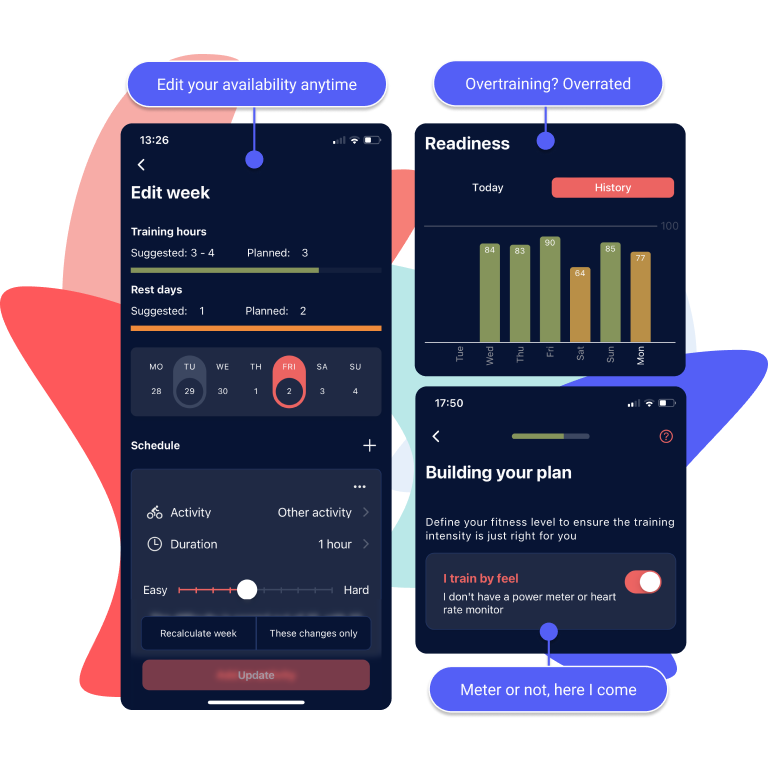
AI cycling coach that adapts plans to your readiness Category: Health & Lifestyle.

Humanity review on AInexfinder — freemium AI tool for Health & Lifestyle. Features, pricing notes, and alternatives.

Aidoc is enterprise clinical AI for hospitals — the aiOS platform and CARE foundation model analyse imaging across radiology, cardiology, neurovascular, and vascular care to triage urgent findings, deployed in 1,600+ medical centres.
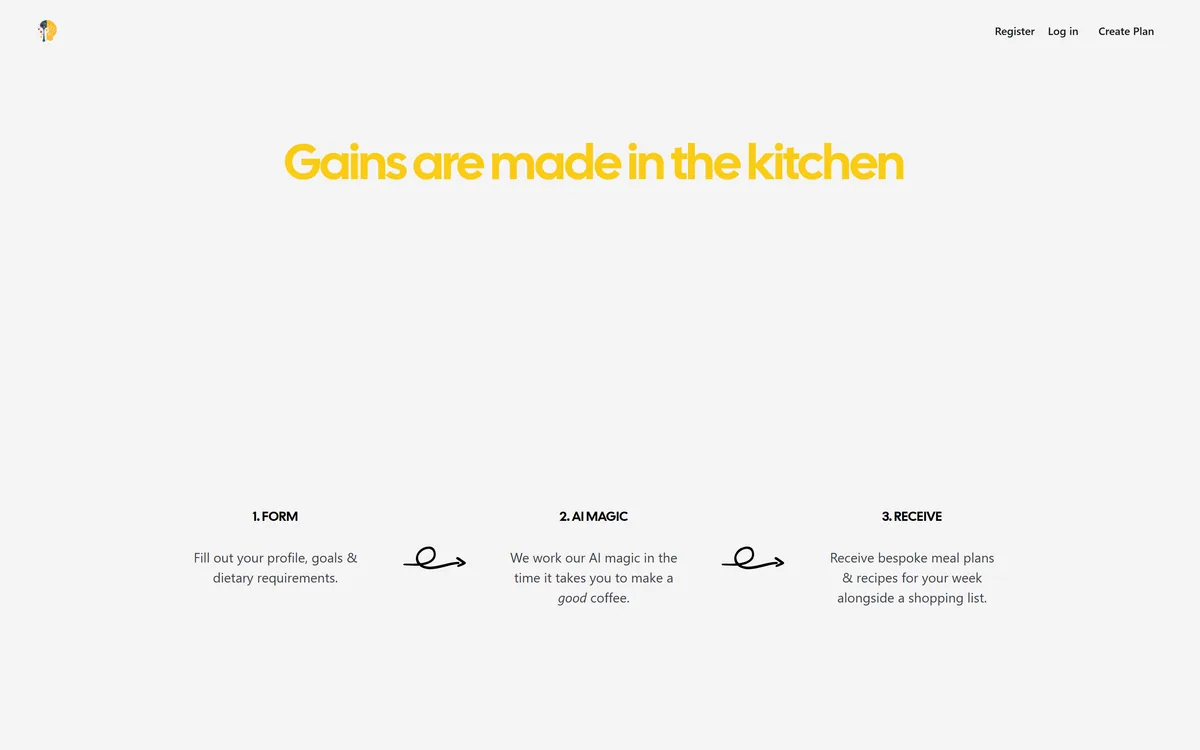
Mealmind review on AInexfinder — paid AI tool for Health & Lifestyle. Features, pricing notes, and alternatives.

AI running coach for goal runners and Boston qualifiers Category: Health & Lifestyle.
Related Pages