
Fitia review on AInexfinder — freemium AI tool for Health & Lifestyle. Features, pricing notes, and alternatives.
Health & Lifestyle Review
SuperAge review on AInexfinder — freemium AI tool for Health & Lifestyle. Features, pricing notes, and alternatives.

Provisional score · full review pending
SuperAge has an AInexfinder Editor Score of 4.5/5.
Best for: Users who need AI biological, fitness, and metabolic age estimates; Users focused on blood-test biomarker analysis using PhenoAge and KDM
The visit link goes to apps.apple.com, the official site. Paid placements on AInexfinder are always labelled. How we make money
SuperAge is a freemium product (free tier plus paid upgrades) listed on AInexfinder for people who need estimate your biological age from health data. If you are searching for a SuperAge review, what SuperAge is, or how SuperAge works in real projects, this page explains the product in plain language using the details on its listing — without restating the feature cards and pros/cons blocks that already appear on this page.
SuperAge review on AInexfinder — freemium AI tool for Health & Lifestyle. Features, pricing notes, and alternatives. In short, SuperAge is aimed at getting you from a clear task to a usable result with less manual busywork.
Searchers comparing SuperAge alternatives usually want three answers: what the tool is for, whether the workflow matches theirs, and what trade-offs show up after the first week. This SuperAge review is written for that decision — not as a sales page, and not as a copy of the bullet lists further down the page.
At a high level, SuperAge is built around a simple loop: you bring a clear input (a brief, a file, a prompt, or a task), you guide the process with the controls the product exposes, and you take away a draft or result you can refine. The exact input depends on the job — for example AI biological, fitness, and metabolic age estimates — but the evaluation method stays the same: run one real task end-to-end and see if the output is usable.
In practice, people often start with AI biological, fitness, and metabolic age estimates, then shape the output until it matches the job. Another part of the loop is blood-test biomarker analysis using PhenoAge and KDM, which keeps the work moving without rebuilding the process from scratch each time.
SuperAge also surfaces apple Health and wearable data integration, so teams can keep quality consistent across runs. When the task is more complex, personal trainer with exercise videos and voice coaching becomes the control that separates a rough draft from something you can actually ship.
Because SuperAge is a freemium product (free tier plus paid upgrades), your first session should also test whether free limits (if any) or plan boundaries affect the task you care about. The listing describes the commercial model; this review focuses on how the work feels once you are inside the product.
SuperAge is most useful when it plugs into a step you already do repeatedly: drafting, generating, editing, analyzing, automating, or preparing assets for a team. If your process is one-off and highly custom, a general-purpose assistant might be enough. If you keep returning to the same job, a focused product like SuperAge can reduce setup time and keep results more consistent.
On this listing, the intended audiences include themes such as users who need AI biological, fitness, and metabolic age estimates, users focused on blood-test biomarker analysis using PhenoAge and KDM, teams using apple Health and wearable data integration, and teams that need personal trainer with exercise videos and voice coaching. Treat those as starting hypotheses: the right test is whether SuperAge shortens your real cycle time on a task you will repeat next week.
A practical pattern: pick one “golden path” task, write down the input you will use, define what “good enough” looks like, and run SuperAge against that bar. That single experiment beats scanning feature names. If SuperAge clears the bar with less rework than your current stack, it earns a longer trial.
The strengths below are framed as outcomes, not a second feature list. The Key features and Pros cards on this page already inventory the listing facts; here the goal is to explain what those facts mean when you are mid-project.
Day to day, it helps that uses recognized biological-aging methodologies.
A practical upside is that brings many longevity metrics into one app. For many teams, the value shows up because AI biological, fitness, and metabolic age estimates.
On the capability side, AI biological, fitness, and metabolic age estimates is one of the reasons people shortlist SuperAge instead of a generic alternative. On the capability side, blood-test biomarker analysis using PhenoAge and KDM is one of the reasons people shortlist SuperAge instead of a generic alternative.
On the capability side, apple Health and wearable data integration is one of the reasons people shortlist SuperAge instead of a generic alternative.
For SEO-minded readers evaluating “is SuperAge any good,” quality usually means consistency under your constraints: speed, control, export format, and how much cleanup you still do. Run the same task twice. If SuperAge stays stable and the edits you make are small, that is a stronger signal than a polished marketing page.
No serious SuperAge review should skip limits. The Cons card on this page captures listing trade-offs; the notes here explain how those trade-offs show up while you work, without dramatic language.
Before you commit, remember that biological-age estimates are approximations, not diagnoses. Like most focused tools, SuperAge is not perfect: advanced features require a premium subscription.
It is fair to note that works best when you invest a bit of setup time. A realistic trade-off is that may be more specialized than an all-in-one suite.
Also plan for the usual AI-tool realities: edge cases need judgment, templates can feel generic until you add your own examples, and team rollout goes smoother when one person owns the first playbook. SuperAge is strongest when you treat it as leverage on a defined job, not as a replacement for domain expertise.
A clean first hour with SuperAge looks like this: open the product with one real task, ignore optional settings until you have a first draft, then tighten controls only where quality slips. Save a before/after note so you can compare against your previous process. That note becomes your internal “should we keep SuperAge?” evidence.
On day one, focus on AI biological, fitness, and metabolic age estimates and blood-test biomarker analysis using PhenoAge and KDM. Those are enough to see whether the workflow matches your muscle memory. On day two, explore secondary controls only if the first path already saves time.
If SuperAge is a freemium product (free tier plus paid upgrades), map your expected monthly volume in the first week. Limits, credits, or plan gates matter more after the novelty fades. Keep the evaluation tied to throughput you actually need.
SuperAge is a better fit when you have a recurring job aligned with estimate your biological age from health data, when you can define quality in concrete terms, and when someone will own the rollout for a few weeks. It is a weaker fit when your needs change every day, when you need deep custom development the listing does not describe, or when you expected an all-in-one suite rather than a focused tool.
A balanced way to decide: if the upside around “Uses recognized biological-aging methodologies” outweighs the friction around “Biological-age estimates are approximations, not diagnoses” on your actual task, keep testing. If the friction shows up every run, shortlist an alternative and compare side by side on the same input.
For buyers searching “SuperAge vs alternatives,” insist on identical prompts or source files. Directory pages like this one help you shortlist; a controlled bake-off tells you what to buy.
When you document a SuperAge trial for stakeholders, capture: the task, the input, the settings you used, the time spent, the edits required, and whether a teammate could repeat the result without you. Those notes turn a vague “it felt good” demo into a decision other people can trust.
Also separate product quality from category hype. SuperAge should be judged on the job listed for this page — estimate your biological age from health data — not on whether it claims to do everything. Focused tools often win on reliability precisely because they refuse to be a Swiss army knife.
Finally, re-check this AInexfinder listing after your trial: features, pros, cons, and editor notes can help you brief a teammate, while your own test results should drive the final call. If SuperAge earns a place in your stack, write a one-page internal playbook so usage stays consistent as more people join.
Bottom line: SuperAge is worth a structured trial if your workload matches estimate your biological age from health data and you can measure success on a real task within a week. Use this SuperAge review as context, use the cards below for scannable facts, and let a hands-on test decide whether it stays in your toolkit.
AI biological, fitness, and metabolic age estimates
Blood-test biomarker analysis using PhenoAge and KDM
Apple Health and wearable data integration
Personal trainer with exercise videos and voice coaching
Sleep and recovery tracking with phase visualization
On-device AI processing for privacy
AInexfinder does not list plan prices or billing details. For current pricing, plans, and trials, visit the official SuperAge website.
Visit official website for pricingVendor pricing, credits, and billing policies change over time. Always confirm on the official site before you buy.
SuperAge has a provisional score of 4.5/5: a formula estimate from this listing’s details, not yet an Editor Score. It is replaced once SuperAge gets its full research-based review. Best for: Users who need AI biological, fitness, and metabolic age estimates; Users focused on blood-test biomarker analysis using PhenoAge and KDM; Teams using apple Health and wearable data integration.
Visit SuperAgeLog in to write a review.
No reviews yet. Be the first to share your experience with SuperAge.
Assigned to
Daniel ReedSenior AI Tools Reviewer
Daniel leads AInexfinder's tool reviews. He researches each tool from its own pricing, documentation and policies, checks its claims against independent sources, and writes up what it does well, where it falls short and who it genuinely suits.
This page is a summary of SuperAge built from its own website and listing details. It has not had its full research-based review yet, so its score is a provisional formula estimate, not an Editor Score. Daniel will research and re-score it; payment never changes a score.
Similar Tools
Fitia review on AInexfinder — freemium AI tool for Health & Lifestyle. Features, pricing notes, and alternatives.
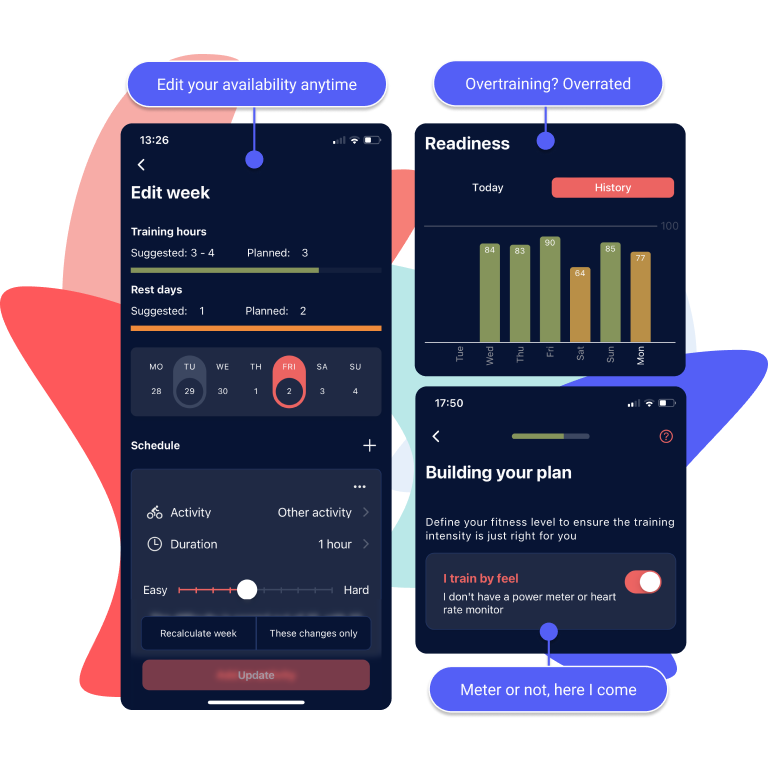
AI cycling coach that adapts plans to your readiness Category: Health & Lifestyle.

Hormone-aware training, nutrition and recovery for women Category: Health & Lifestyle.

Aidoc is enterprise clinical AI for hospitals — the aiOS platform and CARE foundation model analyse imaging across radiology, cardiology, neurovascular, and vascular care to triage urgent findings, deployed in 1,600+ medical centres.

StillMind is an iOS and Android meditation app that generates a session from what you describe — choosing technique, length and script to match the moment. It adds a voice journal, mood-tagged entries, AI-composed courses and pattern tracking without streaks.

Nabla is a clinical AI platform for ambient documentation, dictation and coding. It generates structured notes from patient-clinician conversations, integrates with Epic, athenahealth, Oracle Health, NextGen and others, and states 85,000+ clinicians and 20M+ annual encounters.
Related Pages