Head-to-Head
Cypris vs EOSDA Crop Monitoring
How these two emerging & specialized tools stack up, from our reviews of each — to help you pick the right emerging & specialized tool in 2026.
Our Verdict
There's barely a point between Cypris and EOSDA Crop Monitoring in our reviews. Pick Cypris if you want unified search across patents, scientific literature, chemical and market data; choose EOSDA Crop Monitoring for remote crop health monitoring from Sentinel-2 and PlanetScope imagery. On pricing, EOSDA Crop Monitoring is the one with a free plan, so it's the cheaper place to start.
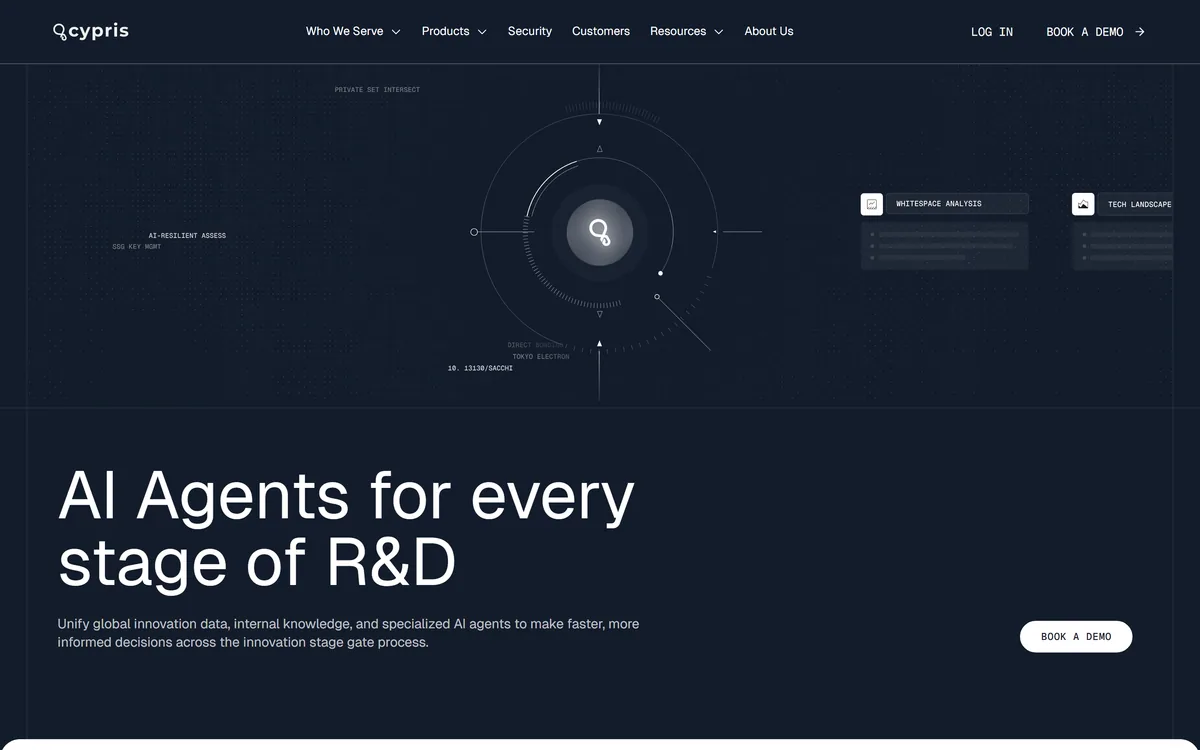
Cypris
PaidEditor Score · Very good
Best for: Corporate R&D teams running continuous technology scouting
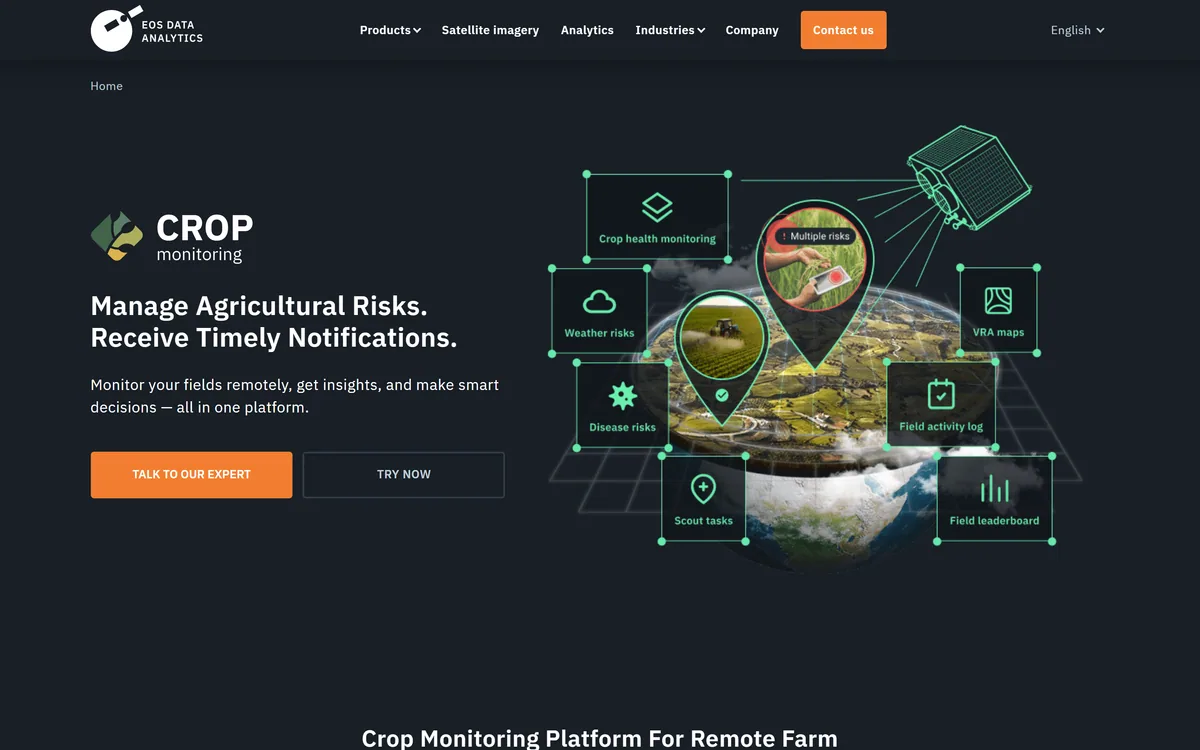
EOSDA Crop Monitoring
FreemiumEditor Score · Very good
Best for: Growers managing more land than they can scout on foot each week
Cypris vs EOSDA Crop Monitoring: Side by Side
| Detail | ||
|---|---|---|
| Editor Score | 4.4/5 | 4.3/5 |
| Pricing model | Subscription | Freemium |
| Free plan | No | Yes |
| Best for | Corporate R&D teams running continuous technology scouting | Growers managing more land than they can scout on foot each week |
| Review last verified | Sep 2026 | Sep 2026 |
Quick Verdict: Which Should You Choose?
Short answer: a winner is called only where the data decides one. Fit — what each tool is built for — is covered in Who Should Pick Which below.
| Factor | Cypris | EOSDA Crop Monitoring | Winner |
|---|---|---|---|
| Editor Score | 4.4 | 4.3 | Level |
| Free to start | No | Yes | EOSDA Crop Monitoring |
| Overall | Depends on your use case |
Cypris: Strengths and Trade-offs
Cypris is an innovation intelligence platform for R&D and IP teams. It searches across patents, scientific literature, chemical compounds and market sources, runs purpose-built agents for technology scouting, prior art and white space analysis, and connects internal project knowledge to that external data.
What It Does Well
- Corpus breadth across patents, papers and chemicals is the genuine differentiator here
- Task-scoped agents fit a field where the right answer differs sharply by question type
- Source-grounded output is essential when findings feed filing and legal decisions
- Joining internal knowledge to external data solves a real and expensive organisational problem
Where It Falls Short
- Contact-sales enterprise licensing with no self-serve entry point
- Chemical and regulatory collections may be licensed separately rather than included
- Internal knowledge search is only as good as what your organisation actually wrote down
EOSDA Crop Monitoring: Strengths and Trade-offs
EOSDA Crop Monitoring is a satellite-based precision agriculture platform from EOS Data Analytics. It combines Sentinel-2 and PlanetScope imagery with ten vegetation indices, growth-stage tracking, risk maps, yield estimation and variable-rate application maps.
What It Does Well
- Index range is broad enough to answer different agronomic questions properly, not just show greenness
- Combines free Sentinel-2 with commercial PlanetScope, so cost and detail can be traded deliberately
- Cloud and shadow removal prevents the most common false alarm in optical monitoring
- VRA output and machinery integration close the loop between seeing variation and acting on it
Where It Falls Short
- Optical satellites cannot see through cloud, so persistently cloudy regions get gaps in the record
- Indices locate anomalies but cannot diagnose them — ground truthing stays essential
- Yield estimates are model outputs and carry uncertainty a single number tends to obscure
Who Should Pick Which?
 Pick Cypris for…
- Corporate R&D teams running continuous technology scouting
- In-house IP teams doing prior art and landscape work
- Pharmaceutical and chemical research organisations
 Pick EOSDA Crop Monitoring for…
- Growers managing more land than they can scout on foot each week
- Agricultural consultants reporting consistently across a client portfolio
- Operations with variable-rate capable machinery that can act on prescriptions
- Starting without a budget — it has a free plan
Bottom line: it comes down to fit, not a single winner — Cypris leans into unified search across patents, scientific literature, chemical and market data, while EOSDA Crop Monitoring is built for remote crop health monitoring from Sentinel-2 and PlanetScope imagery. EOSDA Crop Monitoring is the lower-cost place to start; the other is worth a trial if its strengths fit better.
Frequently Asked Questions
Is Cypris Better Than EOSDA Crop Monitoring?
What Is the Difference Between Cypris and EOSDA Crop Monitoring?
Is Cypris or EOSDA Crop Monitoring Cheaper?
Which Is Better for Beginners, Cypris or EOSDA Crop Monitoring?
More Emerging & Specialized Comparisons
Other head-to-heads in the same category.
About the Author
Senior AI Tools Reviewer
Daniel leads AInexfinder's tool reviews. He researches each tool from its own pricing, documentation and policies, checks its claims against independent sources, and writes up what it does well, where it falls short and who it genuinely suits.
Keep Exploring
Last updated September 2026. Scores are each tool's Editor Score, or a provisional estimate marked “Est.” while its full review is pending — see our methodology.