Emerging & Specialized Rankings

Best Emerging & Specialized AI Tools in 2026: 15 Ranked

AI tools for specialized industries and newer use cases, ranked on Editor Score, pricing and fit — each linked to its full review.

Daniel ReedBy the AInexfinder Editorial Team·Overseen by Daniel ReedUpdated September 2026How we rank →

The Short Answer

Insilico Medicine is our top-ranked emerging & specialized tool, with an Editor Score of 4.6/5 — The generative-AI drug company whose first designed molecule reached Phase II — and published the data. For a free option, start with GuideGeek. AI tools for specialized industries and newer use cases. Across the 15 tools ranked here, 5 of the 15 offer a free or freemium plan.

How we rank: research-based. Every tool here has its own review, scored from the vendor's documentation, pricing and independent sources; this list orders them with one published formula led by that Editor Score. Last updated September 2026. How we rank

At a Glance: The 15 Best Emerging & Specialized Picks

#ToolScorePricingFree planLinks
14.6PaidReview
24.5PaidReview
3
GuideGeek logo
GuideGeek

Top free

4.7FreeReview
44.4PaidReview
54.4PaidReview
64.4PaidReview
74.4PaidReview
84.4PaidReview
94.4PaidReview
104.6FreemiumReview
114.6FreemiumReview
124.3PaidReview
134.3PaidReview
144.3FreemiumReview
154.3FreemiumReview
Scores: top 10 emerging & specialized tools

Score out of 5 — each tool's Editor Score.

Our Top 15 Emerging & Specialized Picks, Ranked

14.6/5

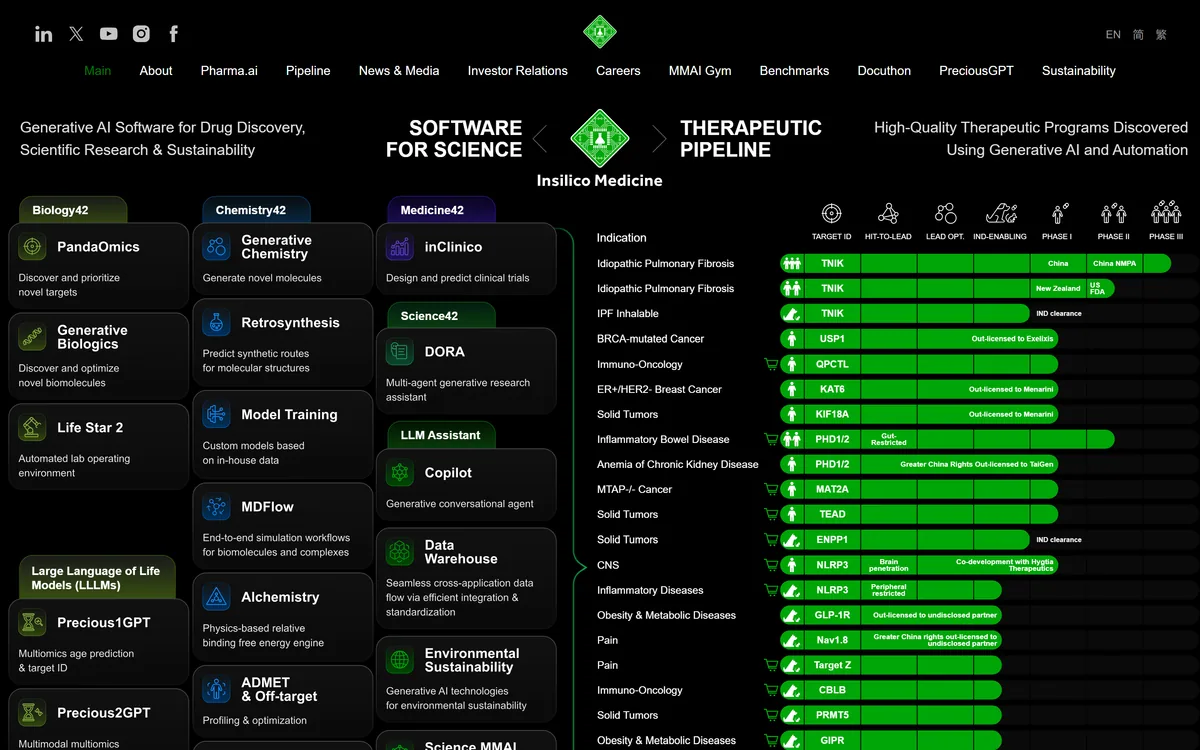
Insilico Medicine pairs the Pharma.ai software suite — PandaOmics, Chemistry42, inClinico and more — with its own clinical pipeline. Its lead candidate rentosertib, a TNIK inhibitor for idiopathic pulmonary fibrosis, has Phase IIa results published in Nature Medicine.

  • The only AI drug discovery claim in the category backed by published, placebo-controlled Phase II data
  • Software modules map to real stages of discovery rather than being one model rebranded several times
  • Retrosynthesis planning keeps generated molecules within what chemists can actually make
  • Running its own pipeline aligns the company with outcomes rather than software renewals
  • The Phase IIa was small, short and single-geography — encouraging rather than conclusive
  • AI shortens the cheapest part of drug development; trials remain the expensive, slow, failure-prone part
  • Enterprise discovery software with no realistic path for individual researchers to evaluate it
  • Success rates for AI-designed drugs versus conventional ones remain unproven for the whole field

Best for: Biotech discovery teams evaluating target-identification or generative-chemistry platforms

Pricing: Paid · Excellent
24.5/5

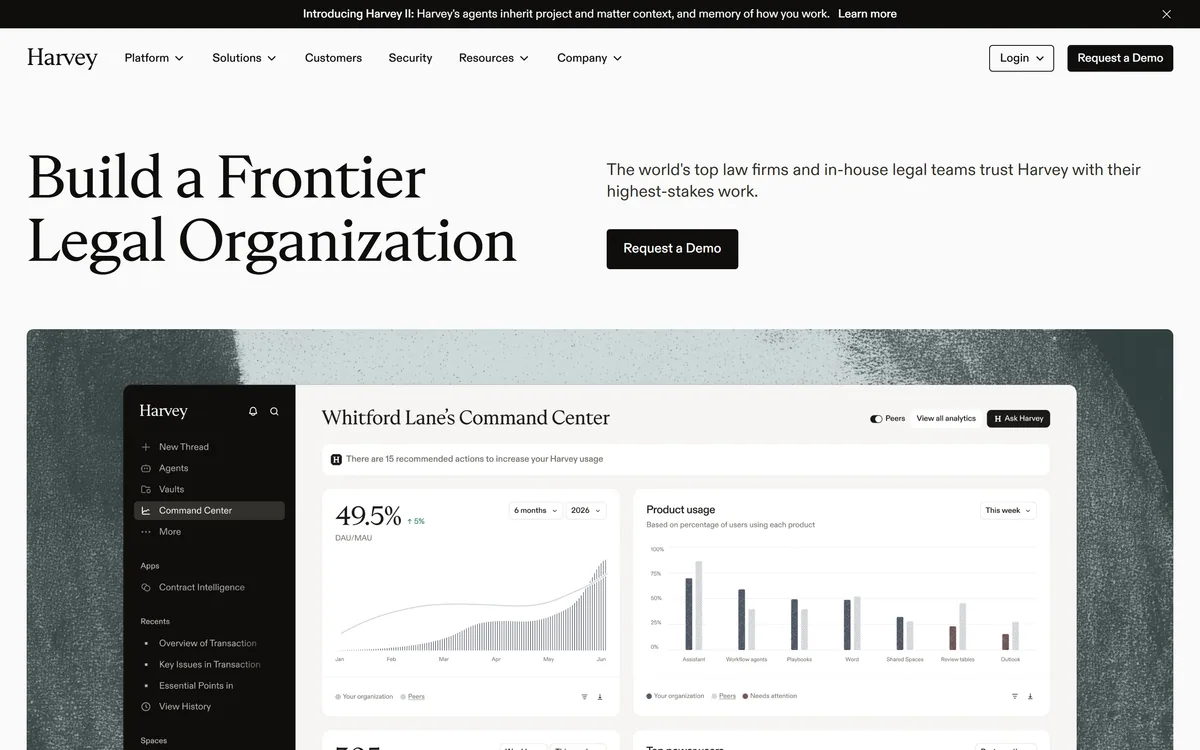
Harvey is an AI platform for legal and professional services — agents, a Vault for documents, Knowledge, Spaces, and Contract Intelligence — used by firms including A&O Shearman, Latham & Watkins, and Norton Rose Fulbright.

  • Compliance stack is genuinely exceptional, including ISO 42001 for AI governance
  • Built for legal work specifically rather than adapted to it
  • Reasons over firm precedent that no general assistant can access
  • Adoption by major firms functions as evidence of passed security reviews
  • Institutional purchase with no self-serve route for small practices
  • Output still requires lawyer verification — the professional duty does not move
  • Faster review conflicts directly with hourly billing economics
  • Coverage quality varies by jurisdiction, since legal reasoning does not generalise

Best for: Law firms running high-volume due diligence and contract review

Pricing: Paid · Excellent
3

GuideGeek

Top free
Est.4.7/5

Free AI travel assistant on your messaging apps Category: Emerging & Specialized.

  • Free and frictionless via WhatsApp and Instagram
  • Real-time conversational travel help
  • Multilingual and easy to start
  • Chat-based travel assistant in messaging apps
  • Less structured than dedicated planning apps
  • Suggestions should be verified before booking
  • Team collaboration tools depend on your plan
  • Customization options can take time to master

Best for: Teams that need chat-based travel assistant in messaging apps

Pricing: Free

44.4/5

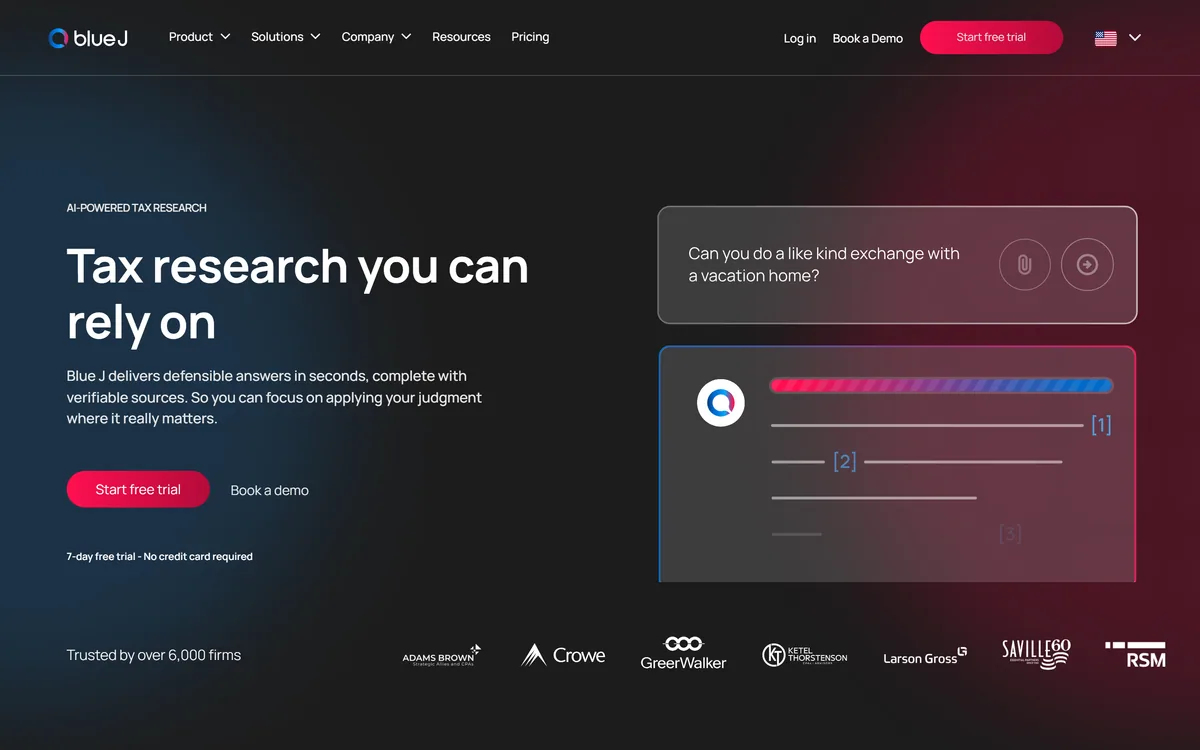
Blue J answers tax research questions in seconds and returns verifiable sources with every answer, drawing on primary authoritative content plus Tax Notes and IBFD. It covers the United States, Canada and the United Kingdom, and is used by more than 6,000 firms from sole practitioners upward.

  • Every answer arrives with the authority cited, which is what makes AI usable in regulated advice at all
  • Licensed professional sources rather than general web material, so provenance and currency are managed
  • IBFD inclusion makes cross-border questions tractable rather than guesswork
  • Three jurisdictions in one tool, covering the main English-language tax markets
  • Time-saving figures carry no stated methodology, sample or baseline
  • No accuracy or citation-precision figure is published anywhere we could read
  • Source update cadence is not stated, and in tax an answer that was right last quarter is simply wrong
  • A fluent cited answer is more persuasive than an uncited one, which makes skipping verification easier

Best for: Tax professionals whose research time goes into locating authority

Pricing: Paid · Very good

54.4/5

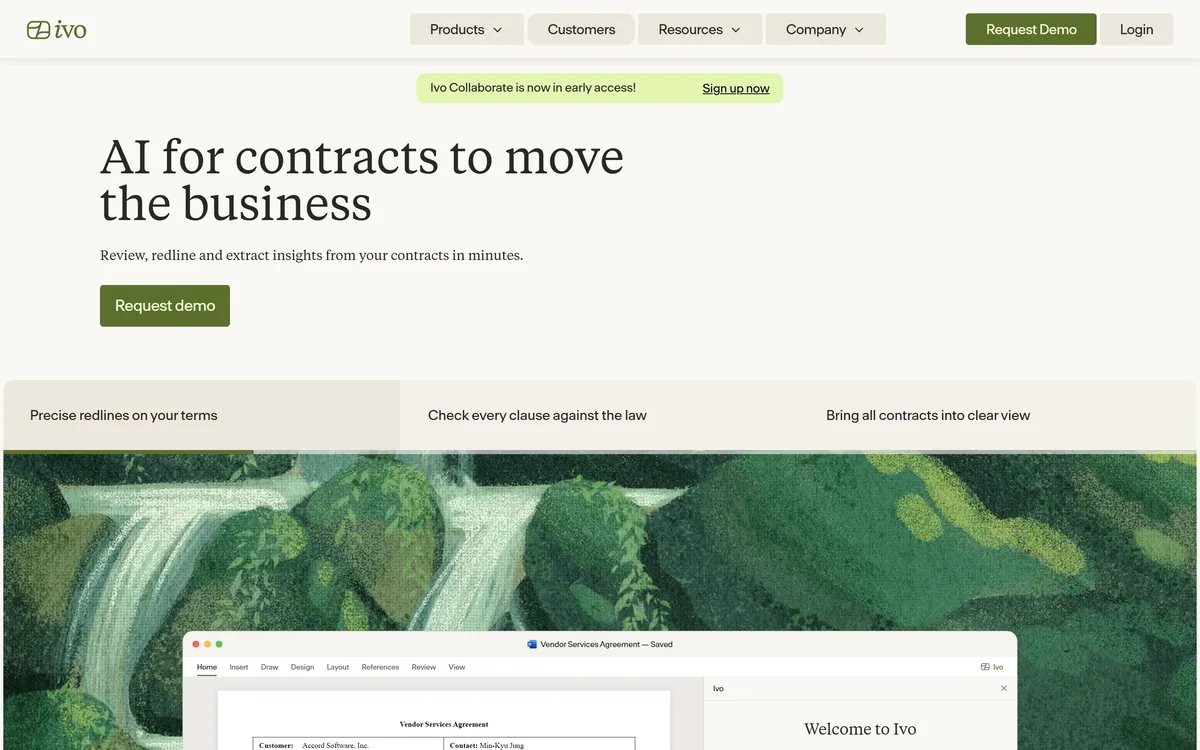
Ivo is AI contract review for in-house legal teams. It applies redlines directly in Microsoft Word or Google Docs, evaluates agreements against your playbooks and historical contracts, benchmarks clauses by governing law and industry, and queries executed contracts in plain language.

  • Works inside Word and Google Docs, where contract negotiation actually happens
  • Applying redlines in the document removes the translation step a review report creates
  • Reviewing against your playbook rather than a generic standard produces judgement rather than noise
  • Deriving a playbook from executed contracts turns tacit institutional knowledge into something checkable
  • No pricing published anywhere, so cost requires a sales process
  • No accuracy or evaluation data for redlining, leaving your own testing as the only measure
  • The population behind clause benchmarks is not disclosed, which changes what a benchmark means
  • Not a full CLM — no workflow, signature or obligation management

Best for: In-house legal teams drowning in routine agreements

Pricing: Paid · Very good

64.4/5

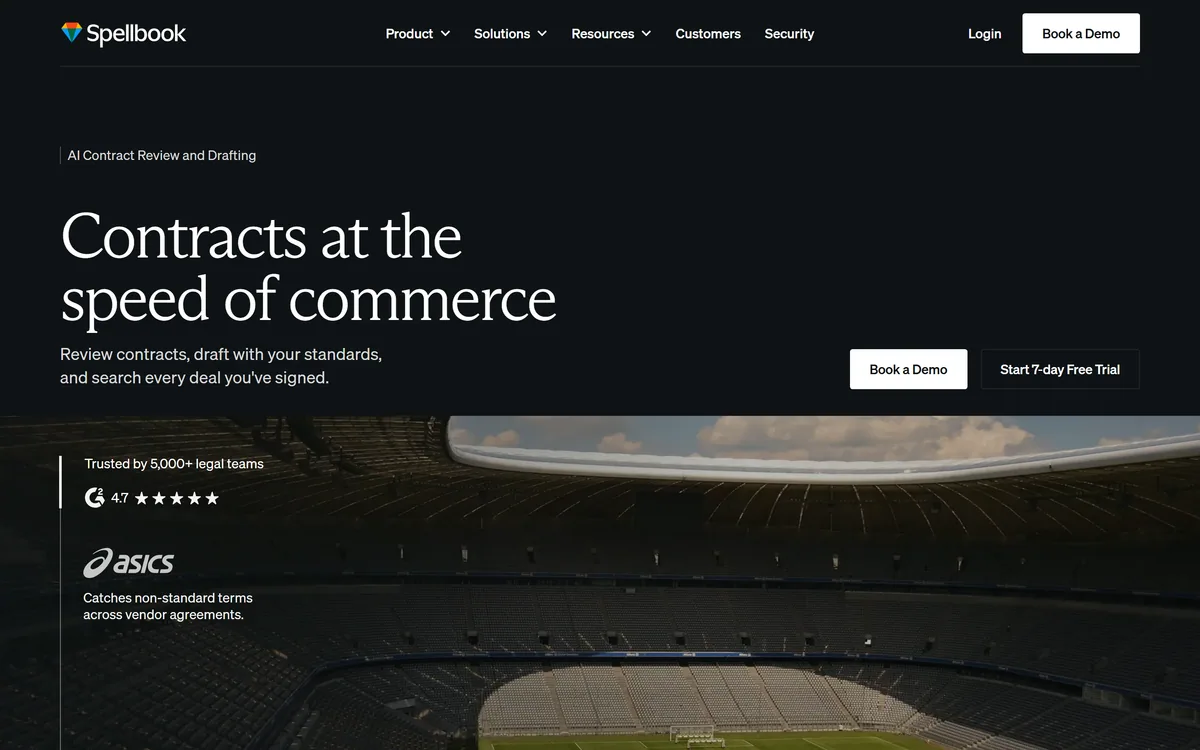
Spellbook reviews and drafts contracts inside Word and Google Docs, redlining against a firm's own playbooks, comparing terms to thousands of similar agreements, and indexing signed contracts for search — used by a stated 5,000-plus legal teams in 80-plus countries.

  • Runs inside the tools lawyers already use rather than beside them
  • Playbooks encode institutional memory rather than generic best practice
  • Zero retention named at provider level, where the uncertainty usually sits
  • Compliance set includes the EU AI Act, which few vendors list yet
  • Output quality tracks playbook effort, which teams routinely underestimate
  • Market standard data can erode a negotiating position if used as an argument
  • Bespoke or novel agreements remain outside what a first pass helps with
  • How the comparison corpus was built, and whether it fits your sector, is unstated

Best for: In-house legal teams handling high volumes of routine agreements

Pricing: Paid · Very good

74.4/5

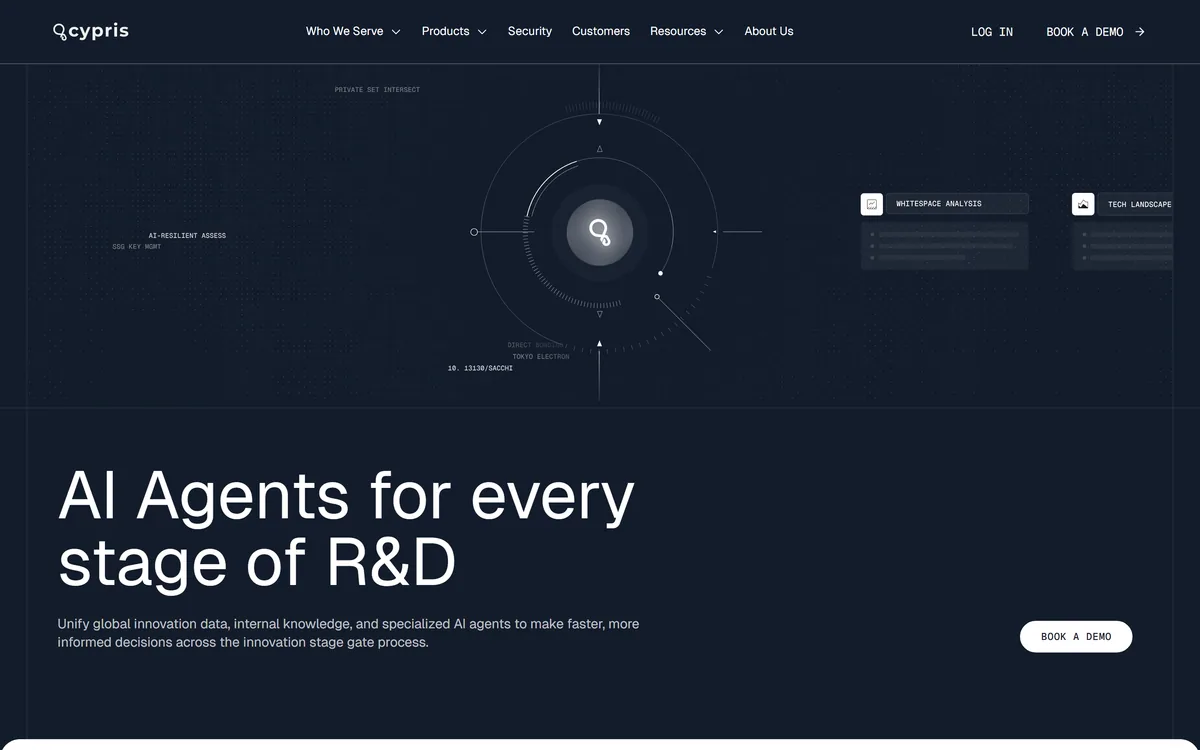
Cypris is an innovation intelligence platform for R&D and IP teams. It searches across patents, scientific literature, chemical compounds and market sources, runs purpose-built agents for technology scouting, prior art and white space analysis, and connects internal project knowledge to that external data.

  • Corpus breadth across patents, papers and chemicals is the genuine differentiator here
  • Task-scoped agents fit a field where the right answer differs sharply by question type
  • Source-grounded output is essential when findings feed filing and legal decisions
  • Joining internal knowledge to external data solves a real and expensive organisational problem
  • Contact-sales enterprise licensing with no self-serve entry point
  • Chemical and regulatory collections may be licensed separately rather than included
  • Internal knowledge search is only as good as what your organisation actually wrote down
  • White space results can reflect coverage gaps rather than genuine opportunities

Best for: Corporate R&D teams running continuous technology scouting

Pricing: Paid · Very good

84.4/5

Restb.ai applies computer vision to real estate imagery, turning listing photos into structured data: room types, features, architectural style, and standardised condition and quality scores. It powers automated valuation models, MLS compliance checks, appraisal workflows and property search.

  • Condition and quality scoring targets the single largest blind spot in automated valuation
  • Outputs use the industry's existing C1–C6 and Q1–Q6 scales rather than a proprietary score
  • The named customer and partner list spans valuation, insurance, MLSs and portals credibly
  • Compliance models turn photo rule enforcement from a complaint process into an upload check
  • Listing photography is marketing material, so the model reads a curated version of the property
  • Published outcome figures are customer-reported rather than independently audited
  • Not usable by individual agents or small brokerages — it is licensed as infrastructure
  • Model output inside a lending decision brings fair-lending testing obligations with it

Best for: Automated valuation model operators and iBuyers

Pricing: Paid · Very good

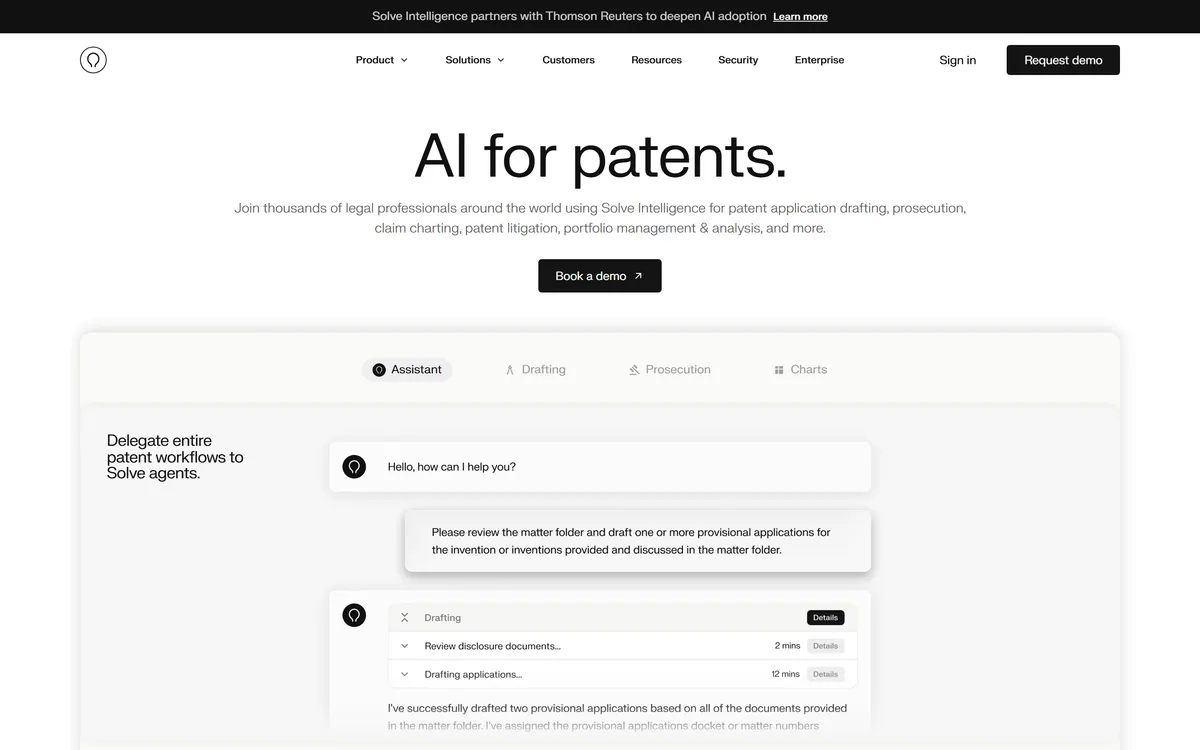
Solve Intelligence is an AI platform for patent work, covering application drafting, office action responses, invalidity and claim-mapping charts, freedom-to-operate reviews and portfolio analysis. It is used by over 700 in-house IP teams and law firms, with SOC 2 Type II and ISO 27001 certification and no training on customer data.

  • Handles the specialised parts — figures, Markush claims, sequence listings — not just the prose
  • Examiner statistics turn informal institutional knowledge into a queryable input
  • Security posture is genuinely strong, including the newer ISO 42001 AI management standard
  • Explicit no-training and zero-retention terms meet a threshold requirement in this field
  • Contact-sales licensing with no self-serve route in
  • Claim scope, where the commercial value sits, remains irreducibly a human judgement
  • Prior art coverage cannot include applications unpublished for around eighteen months
  • Client consent for third-party processing may be a blocker in some engagements

Best for: In-house IP teams managing large patent portfolios

Pricing: Paid · Very good

10Est.4.6/5

Move AI review on AInexfinder — freemium AI tool for Emerging & Specialized. Features, pricing notes, and alternatives.

  • Eliminates expensive mocap hardware and suits
  • Faster shoots and scalable volumes
  • Democratizes motion capture for smaller teams
  • Markerless AI motion capture from video
  • Highest fidelity needs multi-camera setups
  • Results can require cleanup for demanding work
  • Team collaboration tools depend on your plan
  • Customization options can take time to master

Best for: Teams that need markerless AI motion capture from video

Pricing: Freemium

11Est.4.6/5

AI tool that explains the meaning behind song lyrics Category: Emerging & Specialized.

  • Free access to a large library of existing interpretations
  • Detailed line-by-line meaning breakdowns
  • Connects with popular music platforms
  • AI analysis of song themes and emotions
  • Lyric interpretations are inherently subjective
  • Generating new analyses requires paid credits
  • Customization options can take time to master
  • Songtell is strongest in its core use case, not every niche

Best for: Users who need AI analysis of song themes and emotions

Pricing: Freemium

124.3/5

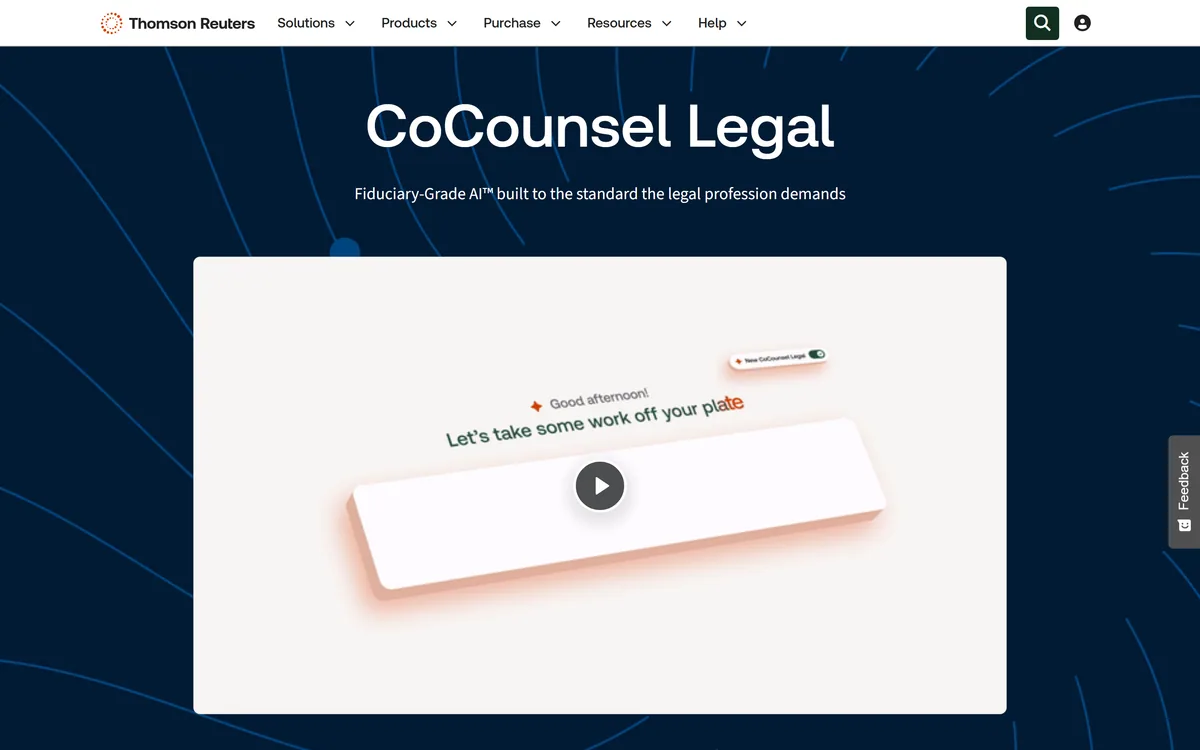
CoCounsel Legal is Thomson Reuters' AI legal assistant. It reasons from Westlaw content, Practical Law guidance and your firm's own documents, producing cited research, analysis and drafts, with Workspaces, Westlaw Brief Builder and Tabular Analysis across up to 10,000 documents.

  • Grounding in a licensed, edited corpus changes the failure mode from fabrication to judgement
  • Linked citations reduce verification friction, which is what determines whether verification happens
  • Content and AI come from the same publisher rather than two vendors pointing at each other
  • Tabular Analysis brings consistency to questions asked across thousands of documents
  • Most of the value depends on already licensing Westlaw and Practical Law
  • Two of the three headline figures are agreement statistics, not measured outcomes
  • Self-reported time savings are a weak basis for a business case
  • Grounding reduces fabrication risk but does not remove the duty to verify

Best for: Firms already embedded in the Westlaw and Practical Law ecosystem

Pricing: Paid · Very good

134.3/5

LegalOn is a contract lifecycle platform from LegalOn Technologies, Inc. covering intake, review, redlining, storage and analysis, built on more than 135 attorney-authored playbooks across industries and countries, with a Microsoft Word integration and agentic workflows.

  • Review standards trace to written attorney playbooks rather than to statistical patterns
  • Working inside Word removes the behaviour change that kills legal software adoption
  • Redlines as tracked changes are immediately sendable rather than a task to perform
  • Intake from email and Slack captures work that otherwise enters no system
  • Playbook coverage is uneven by definition, and the gap between covered and uncovered is large
  • Which jurisdictions are covered, and how current the playbooks are, is not published
  • The underlying models are not disclosed
  • The 9,000+ teams figure is vendor-stated and the unit is undefined

Best for: In-house legal teams reviewing high volumes of standard agreements

Pricing: Paid · Very good

Promethean AI is a world-building assistant for digital art teams that indexes a studio's existing assets as metadata without moving or storing the files, sits on top of Unreal and other 3D editors rather than replacing them, and states over 10,000 users including PlayStation Studios.

  • Assets are never uploaded, stored or trained on, which makes NDA work approvable
  • Layers onto an existing pipeline instead of demanding migration
  • Retrieval of owned work sidesteps the provenance questions generation raises
  • The artist-first position is backed by a costly and checkable action
  • The tenfold and hundredfold claims carry no source
  • Only Unreal is a primary integration; other editors carry version caveats
  • Deployment realistically needs a technical artist
  • Value scales with library size, so small teams gain little

Best for: Game studios with large accumulated asset libraries

Pricing: Freemium · Very good

154.3/5

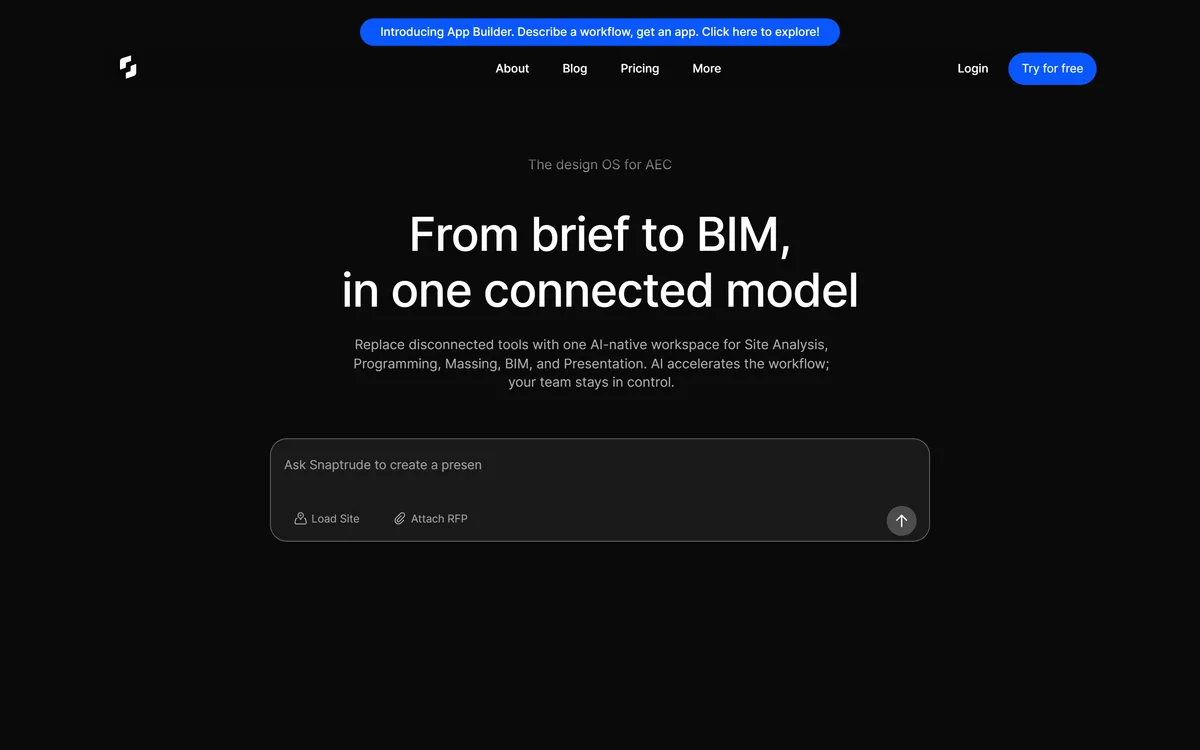
Snaptrude is an AI-native workspace for architecture covering site analysis, programming, massing, BIM and presentation in one connected model, converting massing into full BIM in a click and exporting to Revit and Rhino, with SOC 2 compliance and ring-fenced AI queries.

  • Targets the rebuild between concept and documentation, which is the real waste
  • Live-linked programme tables stop areas and geometry drifting apart
  • Distinguishes building logic from generated imagery, which most tools blur
  • One-click mass to BIM removes the most tedious transition in the workflow
  • Ring-fenced AI queries are named but not explained technically
  • Export fidelity claims need testing against your own firm standards
  • Generated adjacencies encode code logic, not operational logic
  • Covers early phases, so documentation and coordination still happen elsewhere

Best for: Architecture practices doing competitive RFP work

Pricing: Freemium · Very good

How We Ranked These Emerging & Specialized Tools

Every tool here is a live emerging & specialized product with its own review. The order comes from one published formula, applied the same way on every ranking:

CriterionWhat it measuresWeight
Editor ScoreThe score on each tool's own review, from our research into its official documentation, pricing and independent sources. Tools whose full review is still pending carry a provisional formula estimate, marked “Est.”.50%
User reviewsVerified user ratings on AInexfinder — counted only once a tool has at least three.25%
Feature depthHow many documented features the tool has.15%
FreshnessHow recently the review was last verified. Reviews still pending get a neutral value.10%

Featured listings, a paid placement, get a small boost inside the Editor Score criterion, always keep a place in their own category’s ranking, and are labelled Featured above; listings whose maker shows the AInexfinder badge on its own site get a smaller boost. Neither changes the Editor Score itself. Read the full methodology.

What to Look for in an Emerging & Specialized Tool

Output Quality

The factor that decides everything else — can it produce emerging & specialized results you'd actually ship? It's why Insilico Medicine leads this list; judge each tool on output you can use without heavy rework.

Pricing & Free Tier

5 of these 15 tools have a free or freemium plan. Check the free tier's real limits and whether paid pricing scales fairly with your usage — watch for hidden caps on output or features.

Ease of Use

A clean interface and good onboarding mean you get value on day one, not after a week of learning the tool.

Integrations

Does it connect to the tools you already use — your editor, browser, Slack, Google Workspace or API?

Speed & Reliability

Fast, consistent results matter for daily work. Look at uptime and how the tool handles peak-time load.

Support & Updates

Active development, solid docs and responsive support signal a tool that will keep getting better over time.

Free vs Paid Emerging & Specialized Tools

When Free Is Enough

5 of these 15 emerging & specialized tools offer a free or freemium plan (GuideGeek is the one we'd start with). Free tiers suit light or occasional use, testing a workflow, or personal projects — though they usually cap usage, features or output quality.

When to Go Paid

For heavy or professional emerging & specialized work, a paid plan like Insilico Medicine's buys higher limits, team collaboration, priority support and advanced features. If a tool is core to your daily work, the subscription usually pays for itself in time saved.

Pricing breakdown
Pricing breakdown15tools

5 of 15 tools offer a free or freemium plan.

Which Emerging & Specialized Tool Should You Choose?

Match the tool to the job. Each line below is the audience that tool's review found it suits best:

  • Insilico Medicine (4.6/5) — Biotech discovery teams evaluating target-identification or generative-chemistry platforms
  • Harvey AI (4.5/5) — Law firms running high-volume due diligence and contract review
  • GuideGeek (4.7/5) — Teams that need chat-based travel assistant in messaging apps
  • Blue J (4.4/5) — Tax professionals whose research time goes into locating authority
  • Ivo (4.4/5) — In-house legal teams drowning in routine agreements
  • Spellbook (4.4/5) — In-house legal teams handling high volumes of routine agreements
4.6/5

AInexfinder’s Final Verdict on the Best Emerging & Specialized Tools

Start with Insilico Medicine if you want our top-ranked emerging & specialized tool, and give Harvey AI a look too — the two are within a fraction of each other. On a budget, GuideGeek is the best place to start for free. If none of these fits, our Insilico Medicine alternatives list goes wider. This corner of AI rarely sits still, so each review shows the date it was last verified.

Frequently Asked Questions

What Are the Best Emerging & Specialized AI Tools in 2026?

Our highest-ranked emerging & specialized tools are Insilico Medicine, Harvey AI, GuideGeek. All 15 are ranked on Editor Score, user reviews, feature depth and freshness — see the full list above.

What Is the Best Free Emerging & Specialized Tool?

GuideGeek is the highest-ranked option with a free plan. 5 of the 15 tools on this list offer a free or freemium plan — the At a Glance table marks each one.

How Are These Emerging & Specialized Tools Ranked?

By a published formula: Editor Score 50%, verified user reviews 25%, feature depth 15% and freshness 10%. User reviews only count for tools that have approved ones; the rest are ranked on the other four factors, so the Editor Score carries most of the weight. The How We Ranked section above shows each criterion.

How Many Emerging & Specialized AI Tools Are Compared Here?

This page ranks 15 emerging & specialized tools. Every one links to its full review, and the category page lists the rest.

Is Insilico Medicine the Best Emerging & Specialized Tool?

Insilico Medicine is our current top pick with an Editor Score of 4.6/5, though Harvey AI is within a fraction of it, but the right choice depends on your needs and budget. The Which Tool Should You Choose section matches each top tool to the people it suits best.

Which Emerging & Specialized Tool Is Best for Beginners?

GuideGeek is the easiest place to start: it has a free plan, so you can learn on a real emerging & specialized tool without paying. When you need more, our top pick Insilico Medicine is the natural step up.

Are Emerging & Specialized AI Tools Worth It?

Start with one of the 5 free options above to confirm a emerging & specialized tool fits your workflow — for most people the right one earns back its cost in hours saved, but only once it clearly slots into how you already work.

How Often Is This List Updated?

The ranking recalculates whenever a review on it changes, and reviews are re-verified on a rolling basis — each one shows when it was last checked. This page was last updated in September 2026.

Keep Exploring

About the Author

Daniel Reed
Daniel Reed

Senior AI Tools Reviewer

Daniel leads AInexfinder's tool reviews. He researches each tool from its own pricing, documentation and policies, checks its claims against independent sources, and writes up what it does well, where it falls short and who it genuinely suits.

AI tool reviewsPricing researchAI software
More about Daniel →

Last updated September 2026. Ranked on Editor Score, user reviews, feature depth and freshness — see our methodology.