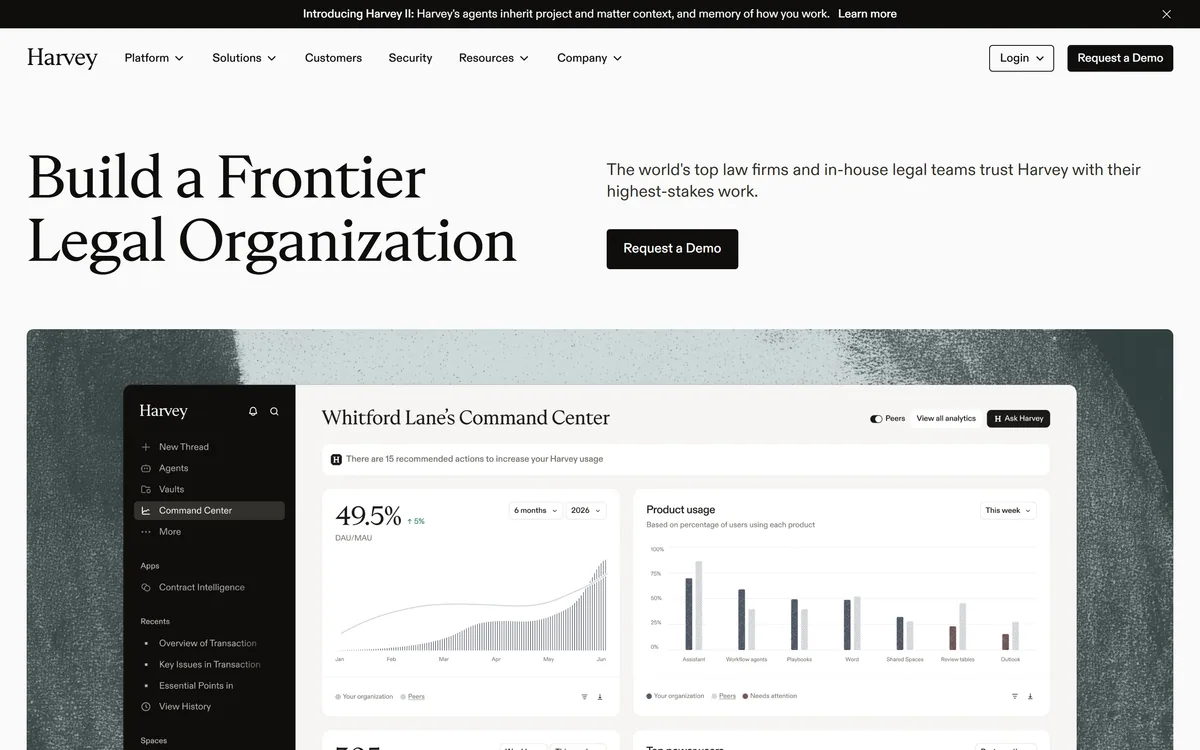

Harvey is an AI platform for legal and professional services — agents, a Vault for documents, Knowledge, Spaces, and Contract Intelligence — used by firms including A&O Shearman, Latham & Watkins, and Norton Rose Fulbright.
Emerging & Specialized Review
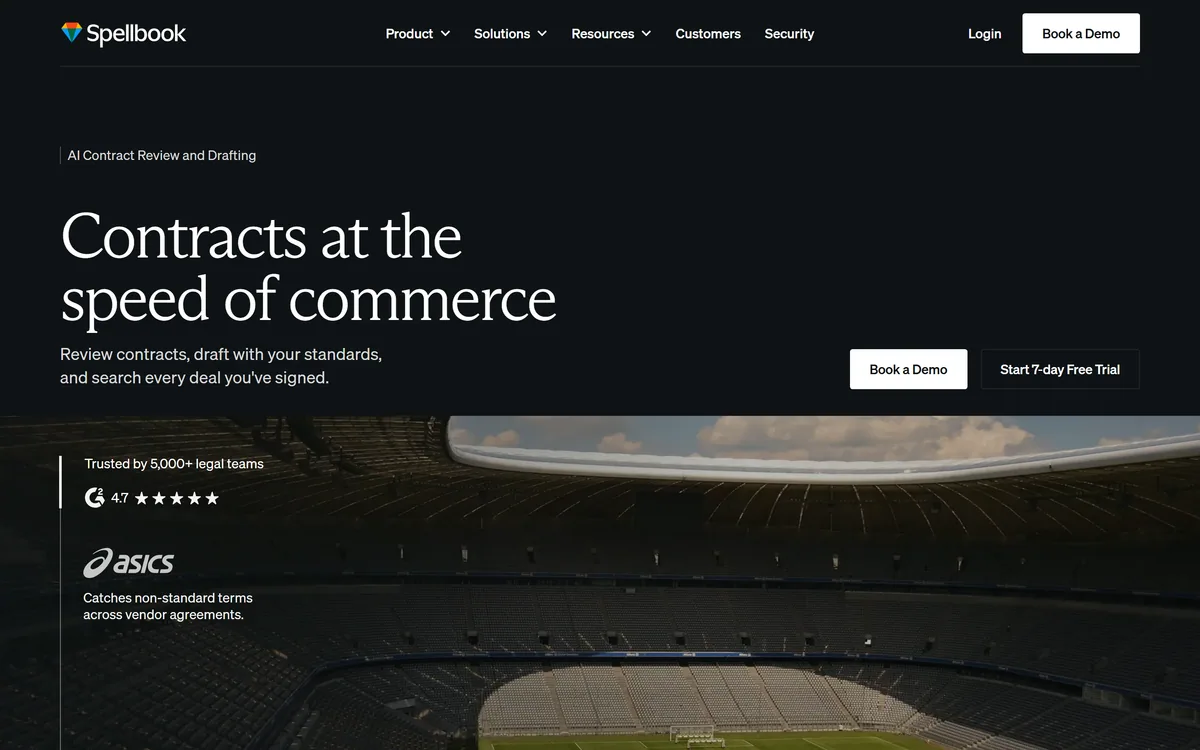
Spellbook reviews and drafts contracts inside Word and Google Docs, redlining against a firm's own playbooks, comparing terms to thousands of similar agreements, and indexing signed contracts for search — used by a stated 5,000-plus legal teams in 80-plus countries.
Very good
Spellbook has made two decisions that matter more than any feature. It lives inside Word and Google Docs rather than asking lawyers to work somewhere else, which is the difference between a tool that gets used and one that gets demoed. And it states zero data retention — its model providers never train on, learn from or store client documents — which is the precondition for a confidentiality-bound profession using anything at all. The published compliance set now includes the EU AI Act, which almost nobody in this category lists yet. AInexfinder Editor Score: 4.4/5.
Best for: In-house legal teams handling high volumes of routine agreements; Law firms doing transactional work at scale
The visit link goes to spellbook.com, the official site. Paid placements on AInexfinder are always labelled. How we make money
| Category | AI contract review, drafting and contract intelligence |
|---|---|
| Where it runs | Inside Microsoft Word and Google Docs |
| Adoption | Stated as 5,000-plus legal teams, with a 4.7 rating displayed |
| Geography | Stated as serving teams in 80-plus countries |
| Workflow | Three stages — intake, review, insight |
| Intake | Contracts arriving from email, Slack, Salesforce and elsewhere |
| Review | Redlining against your standards, flagging terms needing attention |
| Products | Review, Draft, Compare, Ask, Playbooks, Associate and contract management |
| Associate | Described as an agent for multi-document drafting and review |
| Market data | Comparison against thousands of similar agreements |
| Data handling | Zero data retention stated — providers never train on, learn from or store your data |
| Compliance | SOC 2 Type II, HIPAA, GDPR and EU AI Act listed, with SSO, MFA and audit controls |
The proposition is contracts at the speed of commerce: review contracts, draft with your standards, and search every deal you have signed.
The three-stage framing underneath it — intake, review, insight — describes a lifecycle rather than a feature, and that is the more useful way to read the product.
The phrase doing the real work is your standards. A tool that reviews a contract against general best practice is telling you what a textbook thinks, and lawyers already know that.
What a firm actually needs is whether this agreement departs from the position it has taken on the last four hundred, because a term that is unremarkable in the abstract may be one the firm has decided never to accept.
That is what playbooks encode, and it is why the same clause can be fine at one organisation and an automatic escalation at another. The value is not legal knowledge; it is institutional memory applied consistently at three in the morning on the fortieth vendor agreement of the quarter.
A tool reviewing against general best practice tells lawyers what a textbook thinks. What a firm needs is whether this departs from the position it took on the last four hundred.
The homepage carousel puts it plainly: catches non-standard terms across vendor agreements.
Non-standard is a relative word, and encoding what it means for a specific organisation is where this category succeeds or fails.
Every legal team already has a playbook, even when it is not written down. It lives in a partner's head, in a folder of precedents, and in the reflex of an associate who knows the firm never accepts unlimited indemnity in this deal type. New joiners acquire it by getting things sent back.
Writing that down is valuable independent of any software, and it is the part of adoption most likely to be underestimated.
The corollary is that output quality tracks the effort put into the playbook. A team that configures carefully gets review reflecting how it actually negotiates; a team that installs and expects magic gets generic commentary and concludes the category does not work. That is a deployment problem rather than a product one, and it is the same story with enterprise platforms like Ironclad at the contract management end of the same lifecycle.
The failure is not that lawyers cannot review contracts. It is that the volume of routine agreements has grown faster than the capacity to look at them properly.
An in-house team of four receives vendor agreements, NDAs, order forms and renewals from every department, arriving through email, Slack and the CRM. Most are unremarkable. A small number contain something that matters.
The economics force a choice nobody likes: review everything slowly and become the department that blocks deals, or triage by instinct and accept that something will eventually be signed unread.
A first pass on every contract changes that arithmetic, because the question shifts from which agreements to read to which flagged terms to consider.
The site's own quotes describe both sides of the benefit — a partner estimating an extra billable hour a day, and a lawyer at a technology company describing the substantive work being run through it. The second framing is the more interesting one: not doing less legal work, but spending the same hours on the parts that need judgement.
The security statement is unusually direct: built for legal-grade confidentiality, with zero data retention meaning model providers never learn from, train on or store your data, alongside SSO, MFA, encryption and audit controls.
For this profession that is not a feature, it is the entry requirement.
Legal privilege and professional confidentiality obligations are not satisfied by a vendor's good intentions. A firm sending client documents to a third-party model has to be able to say precisely where they went, how long they persisted and who could see them — and for many firms the honest answer historically was that nobody knew.
Naming the commitment at provider level rather than only at vendor level is the specific detail that matters, because that is where the uncertainty usually sits.
The compliance list is broader than the norm: SOC 2 Type II, HIPAA, GDPR and the EU AI Act. That last one is worth noticing, because the EU AI Act imposes obligations by risk category and few vendors in any sector list it yet. Whether that reflects completed assessment or stated intent is a fair procurement question, and the answer belongs in writing. Firms comparing this against broader platforms like Harvey AI should compare the retention terms line by line rather than the feature lists.
The third stage is the one that quietly justifies the platform: signed contracts stored automatically and indexed so you can search your full history, plus market comparison against thousands of similar agreements.
Most organisations cannot answer basic questions about their own contracts.
Which of our agreements auto-renew next quarter? How many contain a most-favoured-nation clause? What did we agree on liability caps with customers in this segment? These are answerable in principle and, in practice, require a person opening files for a week — so they are asked once, answered approximately, and not asked again.
An indexed repository turns them into queries, and the value compounds because every signed agreement makes the next answer better.
Market comparison is the more novel half, and it is worth being precise about what it is. Knowing that a term appears in most similar agreements tells you what is customary, not what is acceptable to you — those are different, and confusing them is how a negotiating position erodes one standard clause at a time. Used as context it is genuinely useful; used as an argument it is how everyone converges on the same terms. Document review platforms such as Luminance approach the corpus problem from the diligence side rather than the drafting side.
The risk in legal AI is not a wrong answer. It is a plausible answer that a busy person accepts without checking.
This order keeps the lawyer where the accountability sits.
Contract redlining inside Word and Google Docs
Drafting clauses and documents from precedents
Playbook-based review against your own standards
Comparison against thousands of similar agreements
Cited answers to questions about a contract
Automatic storage and indexing of signed agreements
An agent for multi-document drafting and review
SSO, MFA, encryption and audit controls
Legal AI tools differ by where they sit in the contract lifecycle.
| Tool | Focus | Where it runs | Best for |
|---|---|---|---|
| Spellbook | Review and drafting | Inside Word and Google Docs | Teams negotiating high contract volume |
| Ironclad | Contract lifecycle management | A platform of its own | Workflow, approval and repository |
| Harvey AI | Broad legal work | A dedicated platform | Large firms across practice areas |
| Luminance | Document analysis at corpus scale | A dedicated platform | Diligence and large-scale review |
| A junior lawyer | Everything, slowly | Wherever you ask | Judgement, and being accountable |
Other tools across contracting, diligence and legal research.
Last checked . Read from spellbook.com in a browser session on the date above, with the screenshot captured at the same time.
What we could not confirm: how playbooks are configured or how much effort a useful one requires; what the EU AI Act listing reflects in terms of completed assessment; which models are used for which tasks; how the market comparison corpus was assembled and whether it reflects your sector; how the 5,000-team figure is counted; and pricing. We did not review a contract or configure a playbook.
AInexfinder does not list plan prices or billing details. For current pricing, plans, and trials, visit the official Spellbook website.
Visit official website for pricingVendor pricing, credits, and billing policies change over time. Always confirm on the official site before you buy.
Spellbook earns an AInexfinder Editor Score of 4.4/5 (very good). Best for: In-house legal teams handling high volumes of routine agreements; Law firms doing transactional work at scale; Organisations that cannot search their own signed contracts.
Visit SpellbookLog in to write a review.
No reviews yet. Be the first to share your experience with Spellbook.
Assigned reviewer
Daniel ReedSenior AI Tools Reviewer
Daniel leads AInexfinder's tool reviews. He researches each tool from its own pricing, documentation and policies, checks its claims against independent sources, and writes up what it does well, where it falls short and who it genuinely suits.
Daniel and the AInexfinder editorial team research Spellbook from its own website, pricing, documentation and policies, checked against independent sources. This review is research-based: unless its method note says otherwise, we have not bought a plan or run hands-on tests. The Editor Score is our editorial judgement, and payment never changes it.
Similar Tools
Harvey is an AI platform for legal and professional services — agents, a Vault for documents, Knowledge, Spaces, and Contract Intelligence — used by firms including A&O Shearman, Latham & Watkins, and Norton Rose Fulbright.
AI contract review and lifecycle management for legal teams Category: Emerging & Specialized.
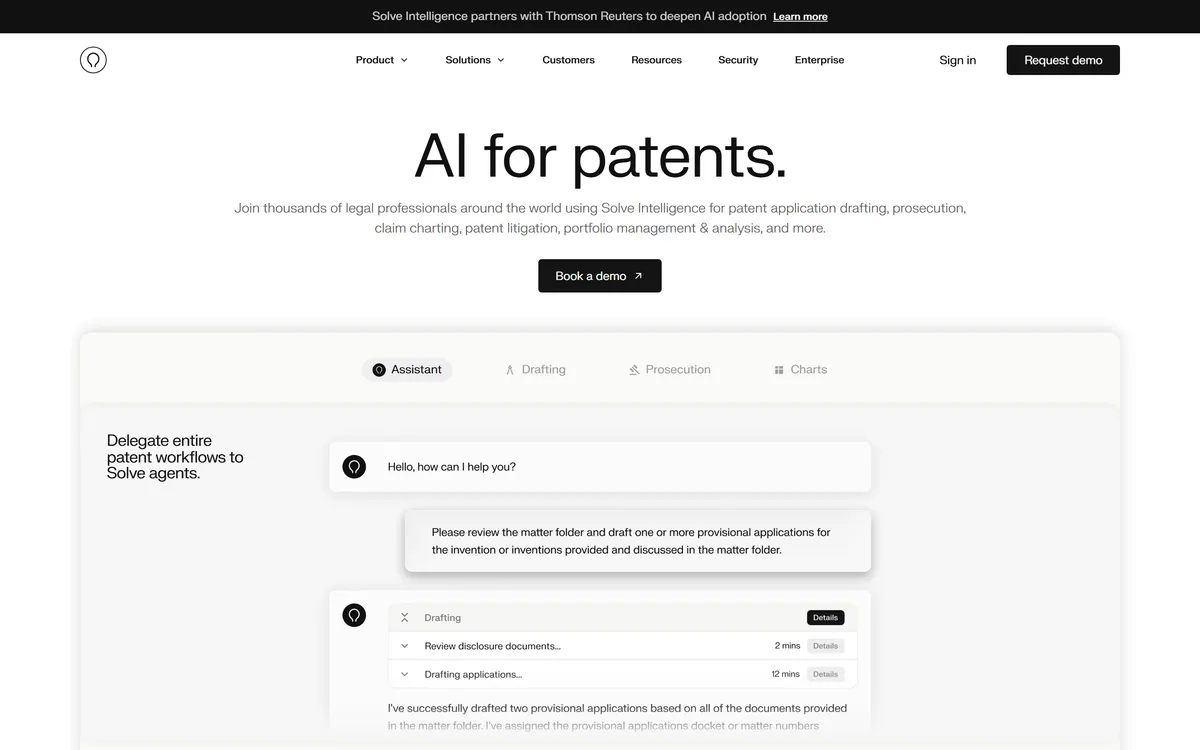
Solve Intelligence is an AI platform for patent work, covering application drafting, office action responses, invalidity and claim-mapping charts, freedom-to-operate reviews and portfolio analysis. It is used by over 700 in-house IP teams and law firms, with SOC 2 Type II and ISO 27001 certification and no training on customer data.
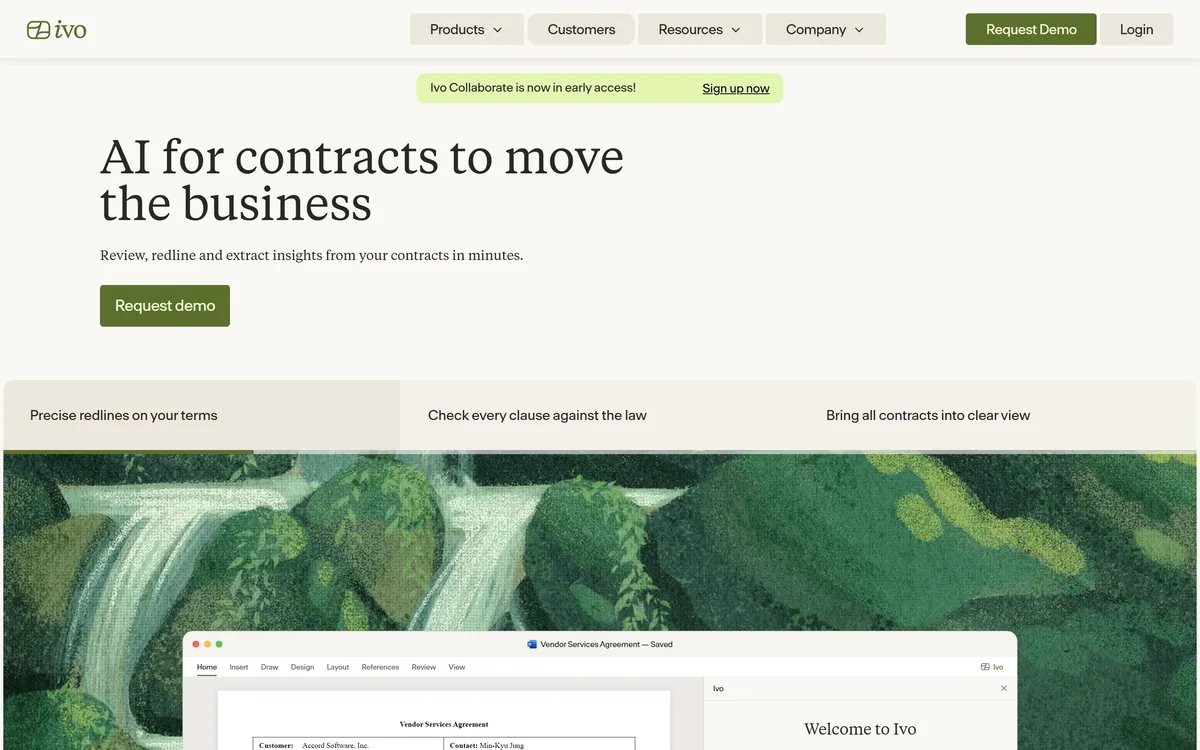
Ivo is AI contract review for in-house legal teams. It applies redlines directly in Microsoft Word or Google Docs, evaluates agreements against your playbooks and historical contracts, benchmarks clauses by governing law and industry, and queries executed contracts in plain language.
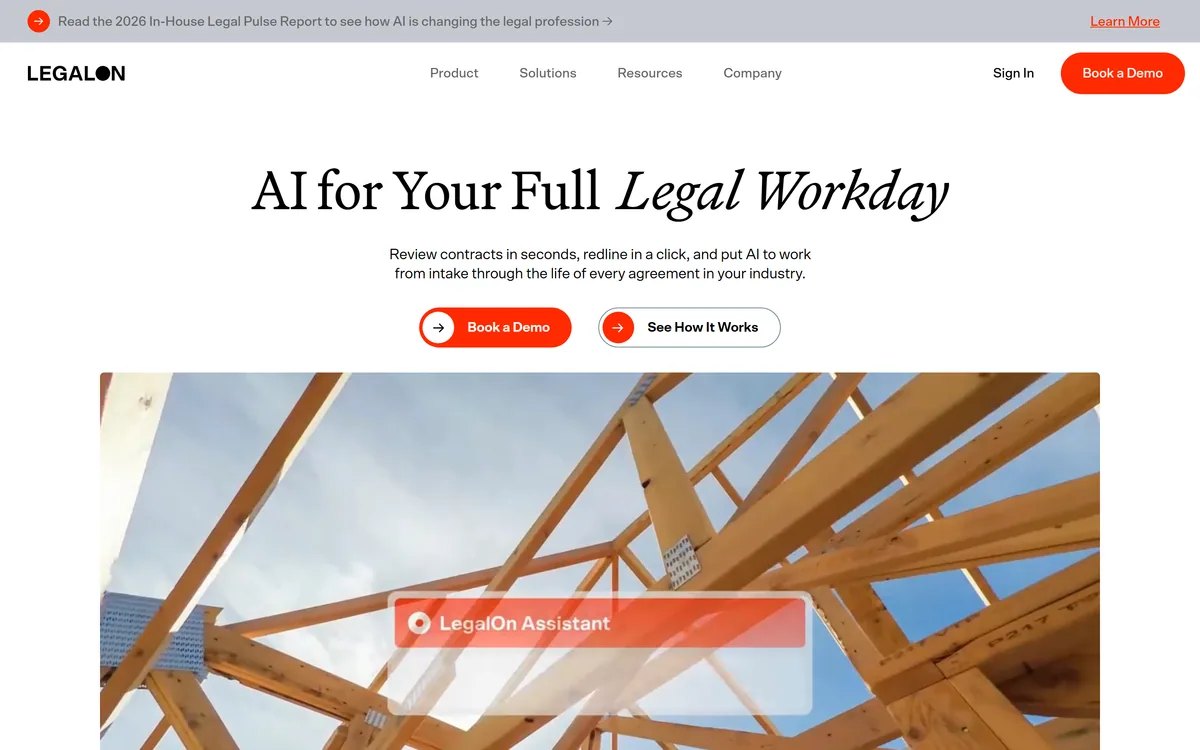
LegalOn is a contract lifecycle platform from LegalOn Technologies, Inc. covering intake, review, redlining, storage and analysis, built on more than 135 attorney-authored playbooks across industries and countries, with a Microsoft Word integration and agentic workflows.

Eve builds EveOS for plaintiff-side firms in personal injury, employment, medical malpractice, workers' compensation and Social Security disability. It runs intake, structures medical records, drafts demands and discovery, audits open matters nightly, and answers plain-English questions about the firm's own numbers.
Related Pages