Head-to-Head
Solve Intelligence vs Spellbook
How these two emerging & specialized tools stack up, from our reviews of each — to help you pick the right emerging & specialized tool in 2026.
Our Verdict
There's barely a point between Solve Intelligence and Spellbook in our reviews. Pick Solve Intelligence if you want full patent application drafting; choose Spellbook for contract redlining inside Word and Google Docs. On pricing, neither has a standing free plan — start on a trial to compare.
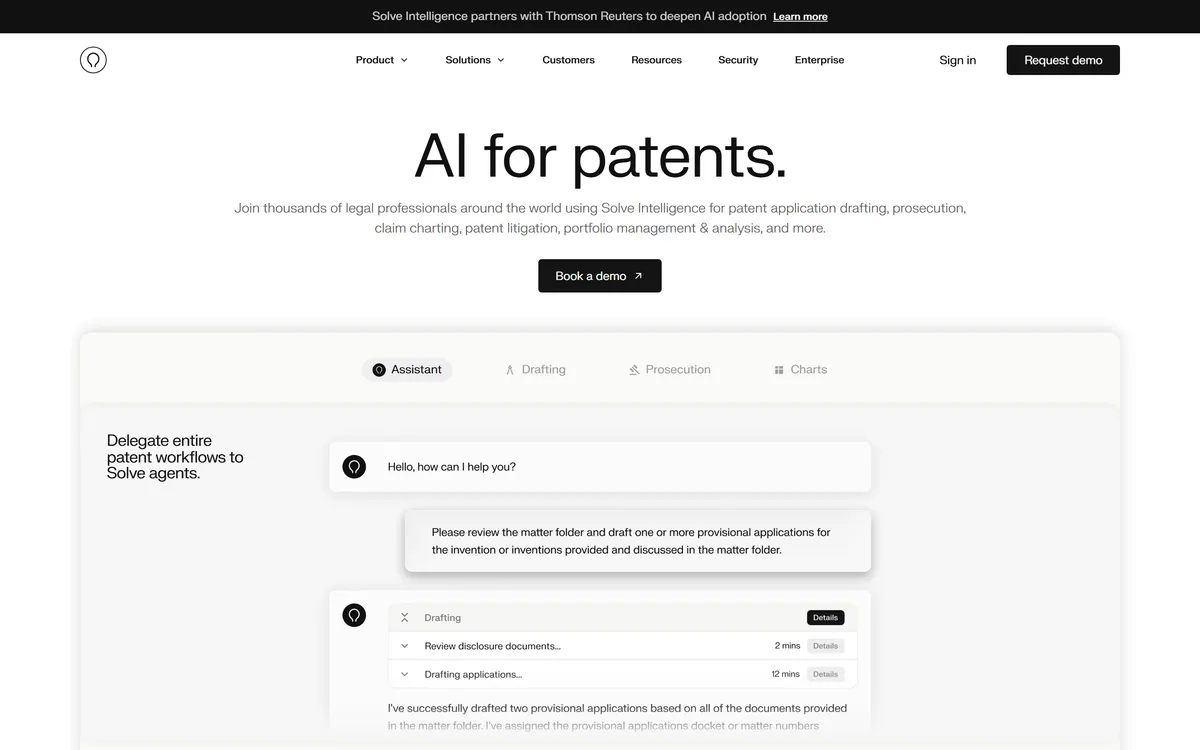
Solve Intelligence
PaidEditor Score · Very good
Best for: In-house IP teams managing large patent portfolios
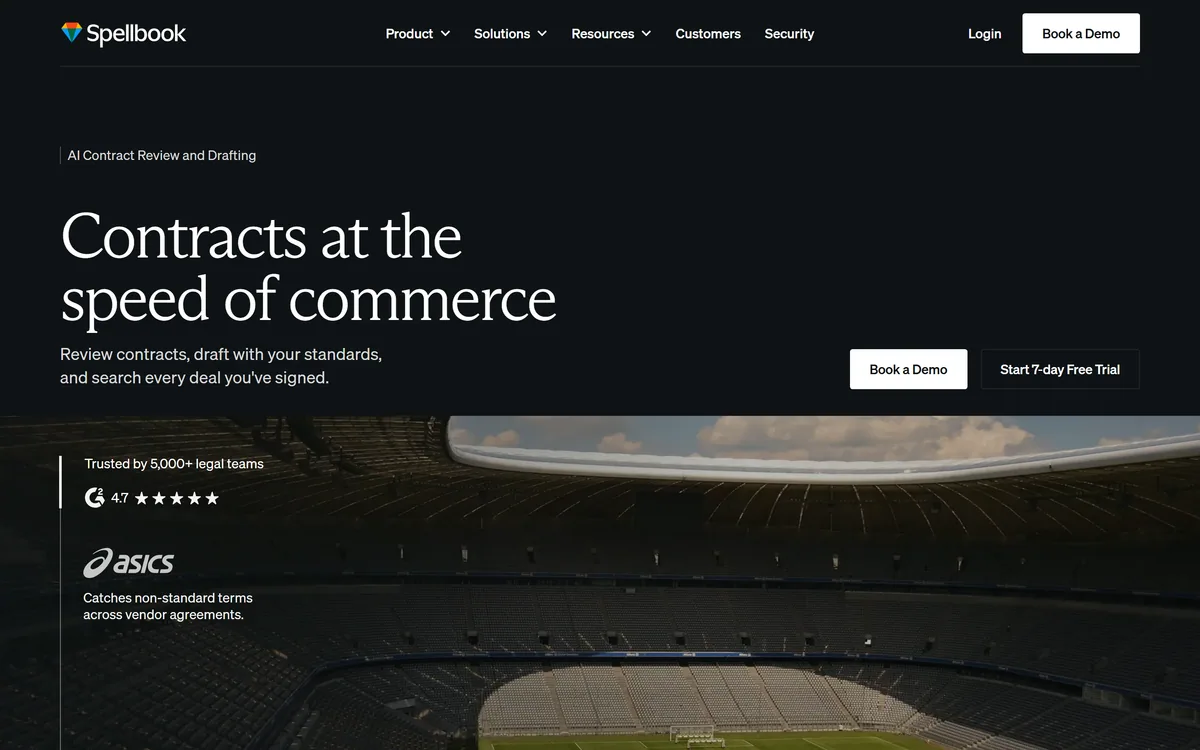
Spellbook
PaidEditor Score · Very good
Best for: In-house legal teams handling high volumes of routine agreements
Solve Intelligence vs Spellbook: Side by Side
| Detail | ||
|---|---|---|
| Editor Score | 4.4/5 | 4.4/5 |
| Pricing model | Paid | Subscription |
| Free plan | No | No |
| Best for | In-house IP teams managing large patent portfolios | In-house legal teams handling high volumes of routine agreements |
| Review last verified | Sep 2026 | Sep 2026 |
Quick Verdict: Which Should You Choose?
Short answer: a winner is called only where the data decides one. Fit — what each tool is built for — is covered in Who Should Pick Which below.
| Factor | Solve Intelligence | Spellbook | Winner |
|---|---|---|---|
| Editor Score | 4.4 | 4.4 | Level |
| Free to start | No | No | Neither |
| Overall | Depends on your use case |
Solve Intelligence: Strengths and Trade-offs
Solve Intelligence is an AI platform for patent work, covering application drafting, office action responses, invalidity and claim-mapping charts, freedom-to-operate reviews and portfolio analysis. It is used by over 700 in-house IP teams and law firms, with SOC 2 Type II and ISO 27001 certification and no training on customer data.
What It Does Well
- Handles the specialised parts — figures, Markush claims, sequence listings — not just the prose
- Examiner statistics turn informal institutional knowledge into a queryable input
- Security posture is genuinely strong, including the newer ISO 42001 AI management standard
- Explicit no-training and zero-retention terms meet a threshold requirement in this field
Where It Falls Short
- Contact-sales licensing with no self-serve route in
- Claim scope, where the commercial value sits, remains irreducibly a human judgement
- Prior art coverage cannot include applications unpublished for around eighteen months
Spellbook: Strengths and Trade-offs
Spellbook has made two decisions that matter more than any feature. It lives inside Word and Google Docs rather than asking lawyers to work somewhere else, which is the difference between a tool that gets used and one that gets demoed. And it states zero data retention — its model providers never train on, learn from or store client documents — which is the precondition for a confidentiality-bound profession using anything at all. The published compliance set now includes the EU AI Act, which almost nobody in this category lists yet.
What It Does Well
- Runs inside the tools lawyers already use rather than beside them
- Playbooks encode institutional memory rather than generic best practice
- Zero retention named at provider level, where the uncertainty usually sits
- Compliance set includes the EU AI Act, which few vendors list yet
Where It Falls Short
- Output quality tracks playbook effort, which teams routinely underestimate
- Market standard data can erode a negotiating position if used as an argument
- Bespoke or novel agreements remain outside what a first pass helps with
Who Should Pick Which?
 Pick Solve Intelligence for…
- In-house IP teams managing large patent portfolios
- Patent prosecution firms with high filing volume
- Chemistry and biotech practices needing Markush and sequence handling
 Pick Spellbook for…
- In-house legal teams handling high volumes of routine agreements
- Law firms doing transactional work at scale
- Organisations that cannot search their own signed contracts
Bottom line: it comes down to fit, not a single winner — Solve Intelligence leans into full patent application drafting, while Spellbook is built for contract redlining inside Word and Google Docs. Both are paid, so start each on a trial before you commit.
Frequently Asked Questions
Is Solve Intelligence Better Than Spellbook?
What Is the Difference Between Solve Intelligence and Spellbook?
Is Solve Intelligence or Spellbook Cheaper?
Which Is Better for Beginners, Solve Intelligence or Spellbook?
More Emerging & Specialized Comparisons
Other head-to-heads in the same category.
About the Author
Senior AI Tools Reviewer
Daniel leads AInexfinder's tool reviews. He researches each tool from its own pricing, documentation and policies, checks its claims against independent sources, and writes up what it does well, where it falls short and who it genuinely suits.
Keep Exploring
Last updated September 2026. Scores are each tool's Editor Score, or a provisional estimate marked “Est.” while its full review is pending — see our methodology.