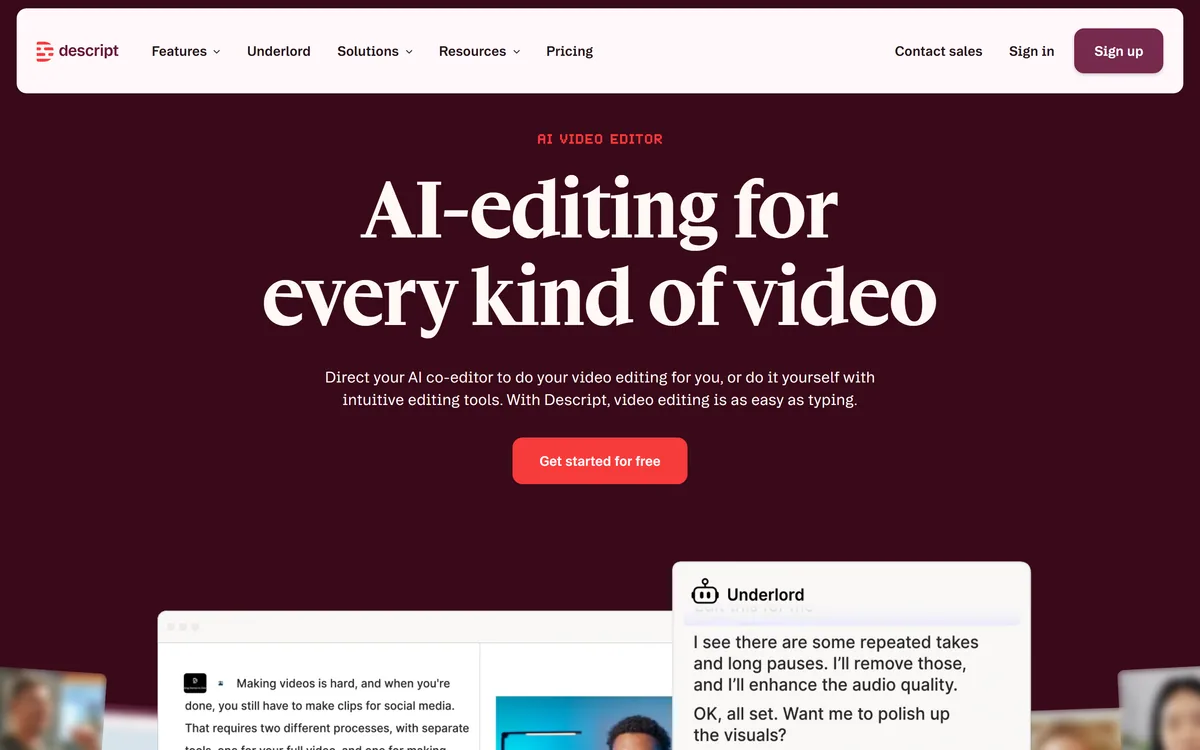

Descript is a video and audio editor that works by editing a transcript — delete a sentence and the footage goes with it — plus Studio Sound, Eye Contact, filler-word removal, AI voices, avatars, and the Underlord assistant.
Video & Audio Review
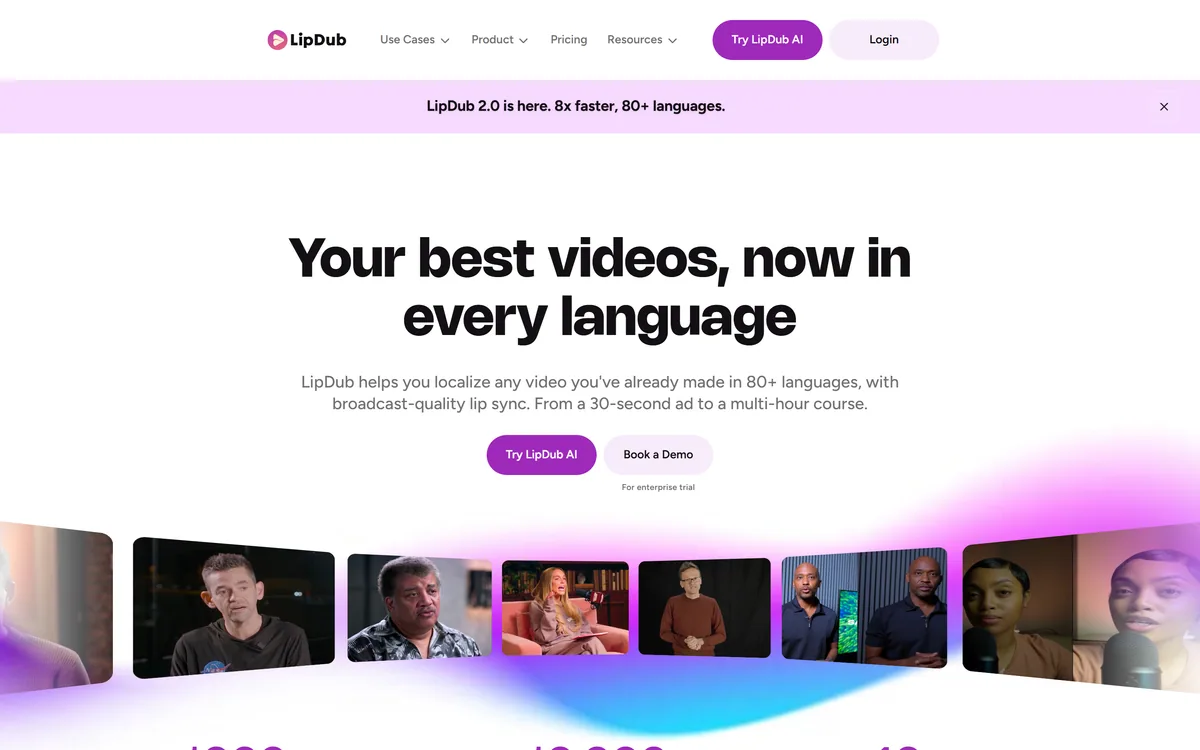
LipDub AI is an AI video localization platform: it translates a video, clones and dubs the voice, and re-syncs the on-camera speaker's lips so it plays as native in 80+ languages. Because it alters a real person's mouth to match dubbed audio, consent of the filmed person and transparency with audiences are central.
Good
LipDub AI earns 3.6 as a powerful AI video localization platform: it translates, voice-clones and re-syncs the on-camera speaker's lips so real footage plays as native across 80+ languages, with a developer API. It is genuinely useful for marketing and education teams with multi-market reach. Because it alters a real person's lips and voice, it is deepfake-adjacent, so it requires the filmed person's consent and, in many contexts, disclosure to audiences, its 'audience never knows' framing needs that honesty, and only the brand, not a legal entity, appears in the footer we read. AInexfinder Editor Score: 3.6/5.
Best for: Video localization; Multi-market marketing
The visit link goes to lipdub.ai, the official site. Paid placements on AInexfinder are always labelled. How we make money
Dubbed video usually gives itself away: the voice does not match the lips. LipDub AI's pitch is to fix that, re-syncing the on-camera speaker's mouth to the translated audio so a video plays as if filmed in each language.
It runs a pipeline of translate, voice-clone and dub, then AI lip-sync, across 80-plus languages, with an API for developers, aimed at marketing, education and agencies. It sits among localization tools like Synthesia, but focused on localizing real footage rather than generating avatars.
This review covers how LipDub AI re-voices a video, which teams it suits, how it prices localization, and the consent and transparency questions that come with altering a real person's lips.
| What it is | An AI video localization and lip-sync platform |
|---|---|
| Pipeline | Translate, voice-clone/dub, AI lip-sync, export |
| Languages | 80+ languages |
| Quality | 'Broadcast-quality' lip sync (vendor-stated) |
| API | Developer API available |
| Use cases | Marketing, education, agencies, creators |
| Sensitive | Alters a real speaker's lips (consent) |
| Operator | Brand only on the page we read |
LipDub AI's purpose is native-feeling localization of real video. Rather than adding subtitles or an avatar, it translates the speech, clones and dubs the original voice, and re-syncs the on-camera speaker's lips so the mouth matches the new language.
The workflow is a clear pipeline: upload, translate and refine, voice-clone and dub, AI lip-sync, then export, across more than 80 languages, with an API for teams that want to build it into their own systems.
The appeal for marketing and education is obvious: one source video can reach many markets looking and sounding native, which the vendor frames with the line that 'the audience never knows it's localized'.
That line is also exactly where the honest framing sits. Altering a real person's lips and voice is deepfake-adjacent technology: it requires the clear consent of the filmed person, and the idea that an audience 'never knows' raises a transparency question many contexts (and emerging rules) would answer with disclosure. Its 'broadcast-quality', '1000+ brands' and '8x faster' claims are vendor-stated.
LipDub AI makes localized video feel native by re-syncing a real mouth, which is powerful and exactly why consent and disclosure matter.
LipDub AI combines a localization pipeline with lip-sync and an API.
Its pipeline translates the video, clones and dubs the speaker's voice, and re-syncs the lips to the new audio, refining along the way, across 80-plus languages.
Where a tool like Dubverse focuses on dubbing with voices, LipDub AI adds the lip re-sync so the on-camera mouth matches, which is the harder, more sensitive part.
A developer API opens the pipeline to teams building localization into their own products, with use-case tracks for creators, education, marketing and agencies.
For dubbing-led localization of many videos, a tool such as Rask AI is a comparable option; LipDub AI's distinctive claim is the lip synchronisation of real footage.
LipDub AI suits marketing teams, online-education providers, agencies and creators localizing real footage for multiple markets who want it to look and sound native, and developers who want the capability via API.
It suits organisations with genuine multi-market reach and the rights to the footage and the consent of the people in it.
It fits less well anyone without consent from the filmed person, contexts where undisclosed localization would mislead, and those who only need subtitles or simple dubbing rather than lip manipulation.
A sensible way to judge it is by permission and transparency. With the filmed person's consent, the rights to the content, and honesty with audiences where it matters, it is a powerful localization tool; without those, re-syncing a real person's lips crosses an ethical and potentially legal line.
LipDub AI uses subscription and enterprise plans plus usage via its API, with a demo for enterprise. We do not publish prices, which change; check the site, including its credit and refund policy.
The value question is reach gained against the cost, versus subtitling or simple dubbing, bearing in mind lip-sync is the premium capability.
A low-risk way in is to localize one real video you have the rights and consent to use, judge the lip-sync quality, and settle the consent and disclosure approach before scaling across markets.
Because it alters a real person, trial LipDub AI only on footage you have rights and consent for.
Video translation
Voice cloning and dubbing
AI lip re-sync
80+ languages
Five-step pipeline
Developer API
Use-case tracks
Export
The useful comparison is with other localization and video tools.
| Tool | Tool | Approach | Best for |
|---|---|---|---|
| LipDub AI | Localization with lip-sync | Translate, dub, re-sync lips | Native-feeling localization |
| Synthesia | AI avatar video | Studio avatar videos | Training and comms |
| Dubverse | AI dubbing | Dubbing with voices | Video dubbing |
| Rask AI | AI dubbing and localization | Video in many languages | Creators and media |
Last checked . Read from lipdub.ai during this check, with the screenshot above captured at the same time.
LipDub AI alters a real person's lips and voice to match dubbed audio, which is deepfake-adjacent: it requires the filmed person's clear consent, and the marketing line that 'the audience never knows it's localized' raises a transparency question that disclosure answers in many contexts. 'Broadcast-quality', brand-count and speed figures are vendor-stated, and only the brand, not a legal entity, appears in the footer we read.
An avatar-video tool and two dubbing tools to weigh alongside LipDub AI.
AInexfinder does not list plan prices or billing details. For current pricing, plans, and trials, visit the official LipDub AI website.
Visit official website for pricingVendor pricing, credits, and billing policies change over time. Always confirm on the official site before you buy.
LipDub AI earns an AInexfinder Editor Score of 3.6/5 (good). Best for: Video localization; Multi-market marketing; Online education.
Visit LipDub AILog in to write a review.
No reviews yet. Be the first to share your experience with LipDub AI.
Assigned reviewer
Daniel ReedSenior AI Tools Reviewer
Daniel leads AInexfinder's tool reviews. He researches each tool from its own pricing, documentation and policies, checks its claims against independent sources, and writes up what it does well, where it falls short and who it genuinely suits.
Daniel and the AInexfinder editorial team research LipDub AI from its own website, pricing, documentation and policies, checked against independent sources. This review is research-based: unless its method note says otherwise, we have not bought a plan or run hands-on tests. The Editor Score is our editorial judgement, and payment never changes it.
Similar Tools
Descript is a video and audio editor that works by editing a transcript — delete a sentence and the footage goes with it — plus Studio Sound, Eye Contact, filler-word removal, AI voices, avatars, and the Underlord assistant.
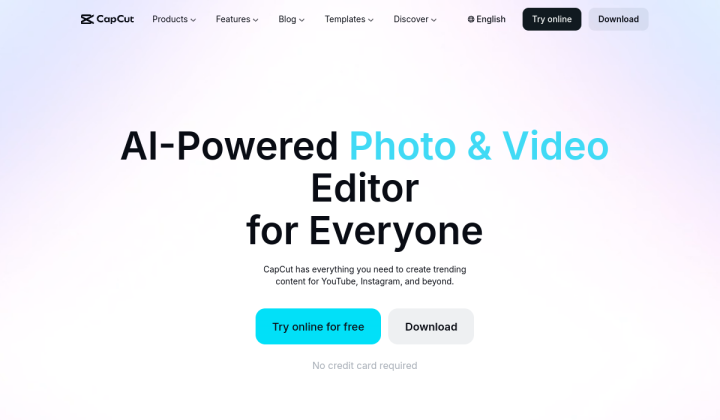
CapCut review on AInexfinder — freemium AI tool for Video & Audio. Features, pricing notes, and alternatives.
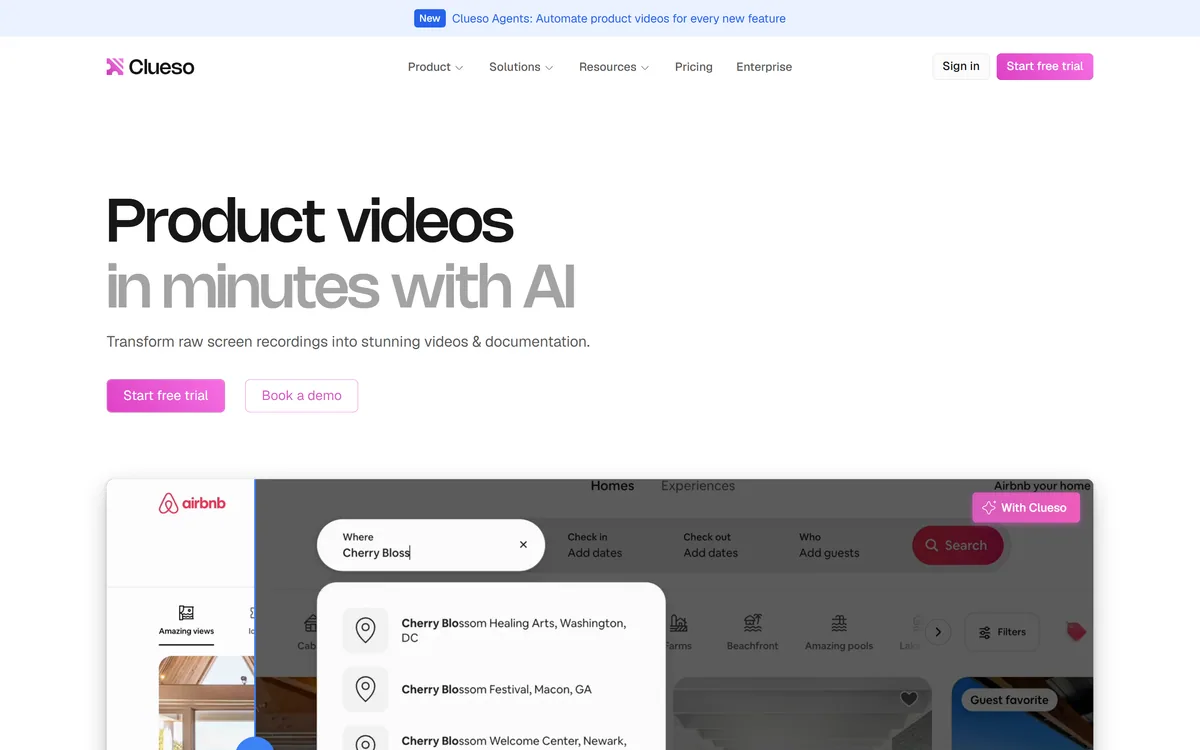
Clueso turns raw screen recordings into product videos and documentation. It rewrites the script to remove filler, replaces your audio with AI voiceover, adds automatic zooms and captions, applies branded templates, and generates step-by-step SOPs from the same recording.
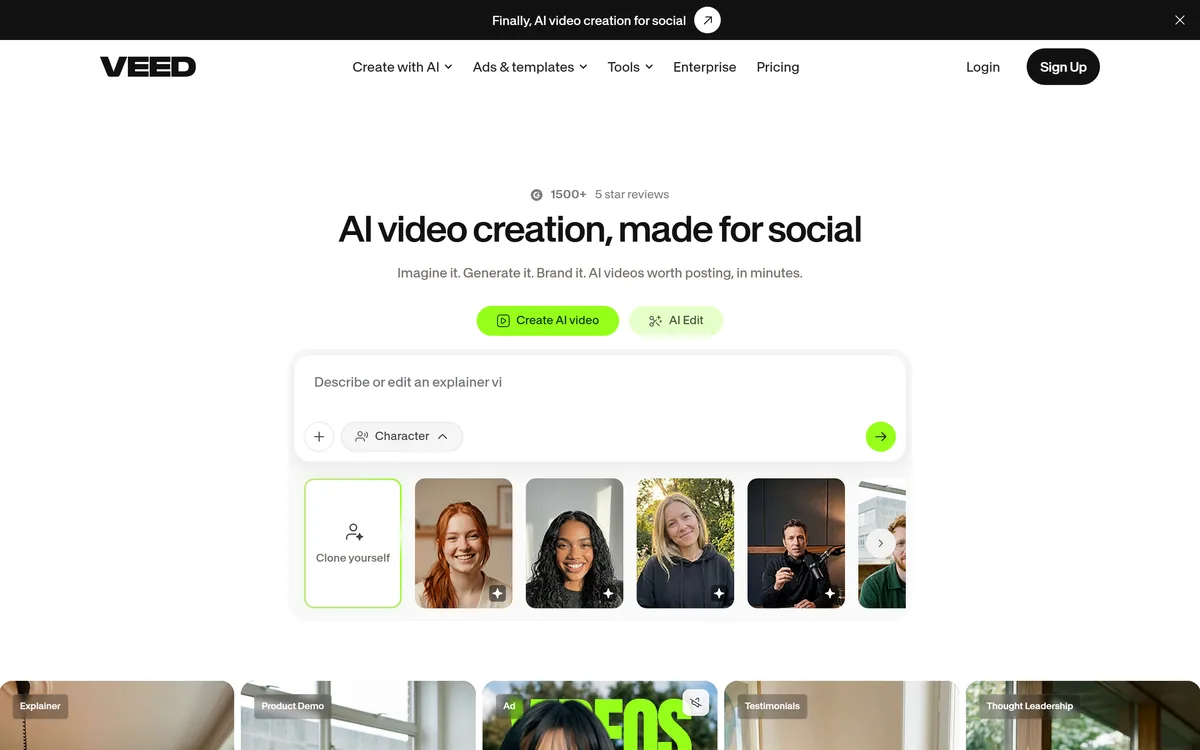
VEED is an AI video-creation platform that takes an idea to a finished social video in the browser, bundling generation, AI avatars, subtitles, dubbing, clean audio and a brand kit, plus access to frontier models like Sora 2, Veo and Kling.
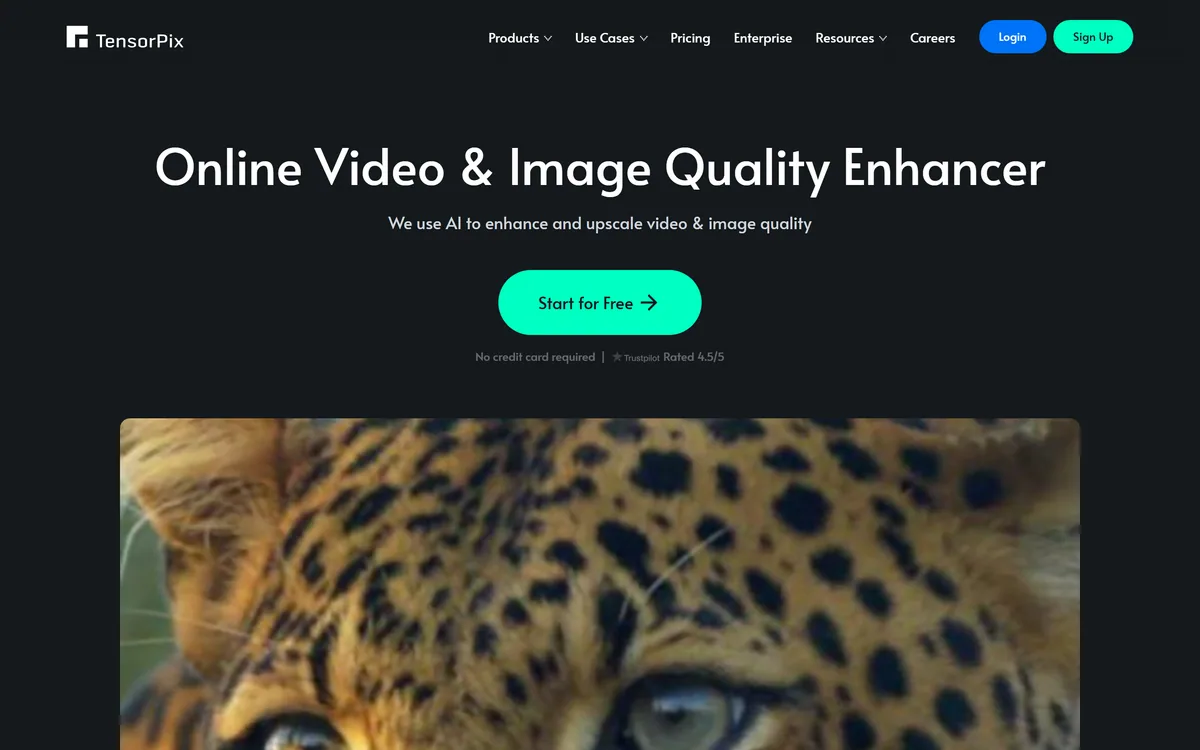
TensorPix from Tensorpix d.o.o. enhances video and images in the browser: upscaling to 4K, denoising, frame interpolation to 60 FPS, stabilisation, unblurring, colour restoration, and compression, with free previews before you commit credits.
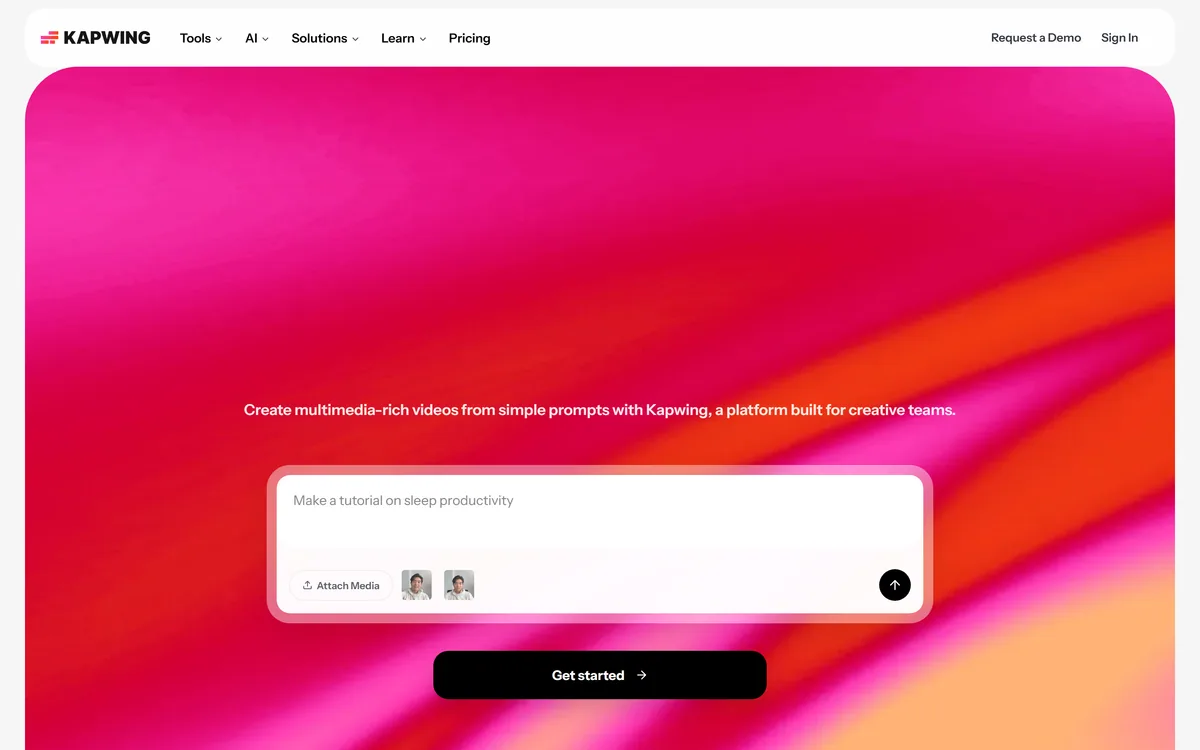
Kapwing is a browser-based video studio combining a timeline editor, subtitler, audio editor and dubbing into 40+ languages with AI tools including Smart Cut, Trim with Transcript, B-Roll Generator, Clip Maker and Character Consistency. Made in San Francisco.
Related Pages