Generated music has a problem that generated images mostly escaped: the industry it borrows from litigates. Anyone putting a track behind a commercial video is exposed to a question about where the model learnt to make it.
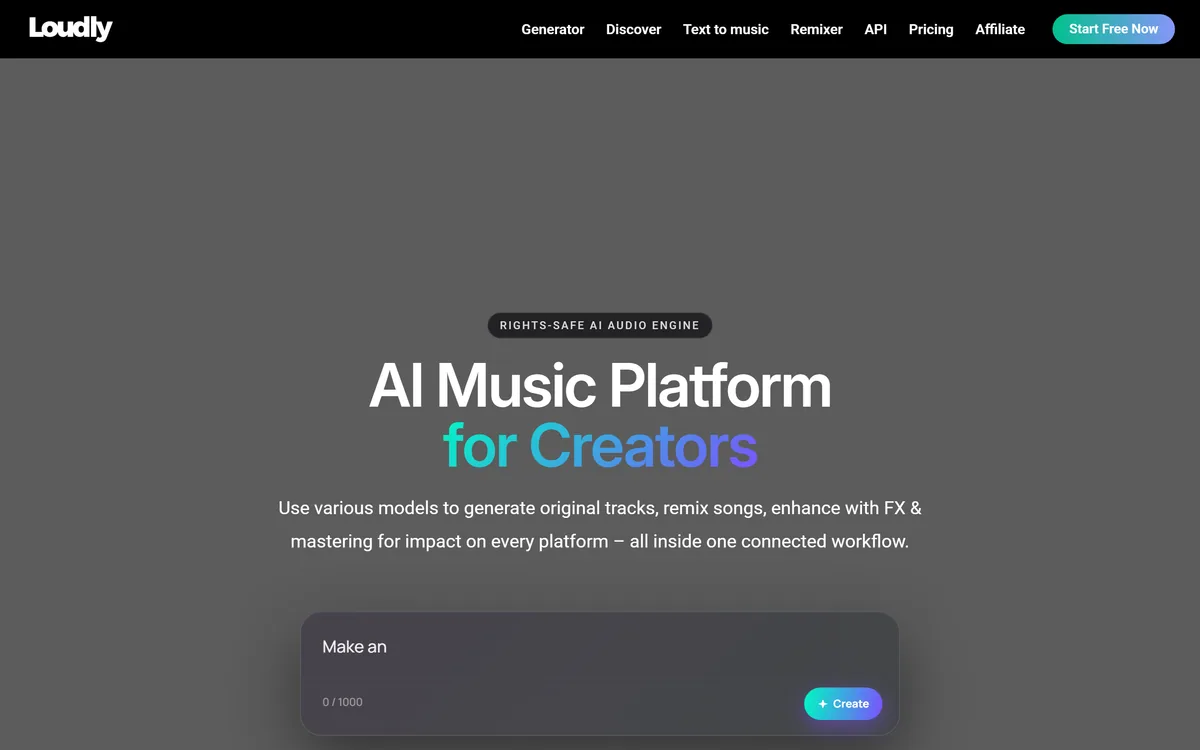
Loudly's answer is architectural rather than reassuring. Its proprietary models are described as rights-cleared by construction, with output cleared when it is generated rather than licensed afterwards.
Around that sit five named models, a track-analysis system called SongDNA, mastering, stem splitting and distribution — a full pipeline rather than a generator.
Loudly: Rights-Cleared Music, Generated
- Rights cleared at the point of generation — stated as no retroactive licensing and no litigation surface for its own models.
- Five named models: three VEGA tiers for instrumentals, MANTA for full songs with vocals, and a partner model for samples.
- SongDNA analyses a track into a structured fingerprint that grounds every agent action taken on it.
- A remix engine that refuses soundalikes, working only on songs you own and keeping rights with the holder.
- Mastering, stem splitting and distribution to 50-plus platforms, with 100 percent of royalties retained.
What Does Rights-Cleared By Architecture Mean?
The claim is unusually specific: all Loudly-proprietary models are rights-cleared by architecture, output is cleared at the point of generation, and there is no retroactive licensing and no litigation surface. Partner models are described as integrated under commercial agreements.
Unpacking that matters, because most of this category makes a vaguer version of the same promise.
The common formulation is that output is royalty-free, which describes what you may do with it and says nothing about where the model learnt. If the training corpus contained material the company had no right to use, a royalty-free licence from that company protects you only as far as that company can be pursued.
Cleared at the point of generation is a claim about the upstream position instead. It says the rights question was settled before the model existed, so nothing arrives later to be licensed.
The distinction between proprietary and partner models is the honest part. Loudly makes its architectural claim only for its own models and describes the partner model as covered by commercial agreement, which is a different assurance — and knowing which model produced a track therefore matters commercially, not just sonically.
Royalty-free describes what you may do with the output. It says nothing about where the model learnt to make it.
SongDNA As A Context Window
SongDNA is described as analysing audio, lyrics, structure, mood, tempo, key, hooks and your own inputs into a reusable fingerprint of a track — and the site states plainly that without it there is no intelligent agency.
That is the most interesting engineering idea on the page, and it addresses a specific failure in music generation.
A model asked to remix or extend a track without structural understanding produces something that sounds adjacent and behaves wrongly — a change at the wrong bar, a key that drifts, an arrangement decision that ignores where the chorus is. It is musically incoherent in ways a listener notices without being able to name.
A structured fingerprint — key, tempo, chord movement, section boundaries, genre proportions — gives every subsequent operation something concrete to reason against. Agent decisions become grounded rather than plausible.
The outputs built on it are the commercially useful part: a generation prompt derived from the track, a formatted playlist pitch, captions matched to the mood, and a hook-first short-form edit. Those are the jobs a musician actually has to do after the music is finished.
Five Models And What Each One Is For
The model stack is laid out plainly. VEGA 1 is low-latency and raw, described as ideal for scratch tracks and rapid iteration. VEGA 2 applies production techniques at generation, aimed at professional background music and sync licensing. VEGA 3 adds agentic arrangement, mixing and effects for production-ready instrumentals. MANTA 1 is the only model producing full songs with vocals and lyrics. A partner model handles sample generation.
Publishing that breakdown is rarer than it should be, and it changes how you use the platform.
Most generators present one quality dial and let you discover the trade by wasting credits. Naming the intended use per model — demos, sync licensing, catalogue-quality, full songs, sound design — lets you pick correctly the first time.
The speed and cost dimension is the practical one. Iterating on a brief with a fast raw model and then producing the final version with the highest-capability one is obviously the right workflow, and it is only possible when the tiers are visible.
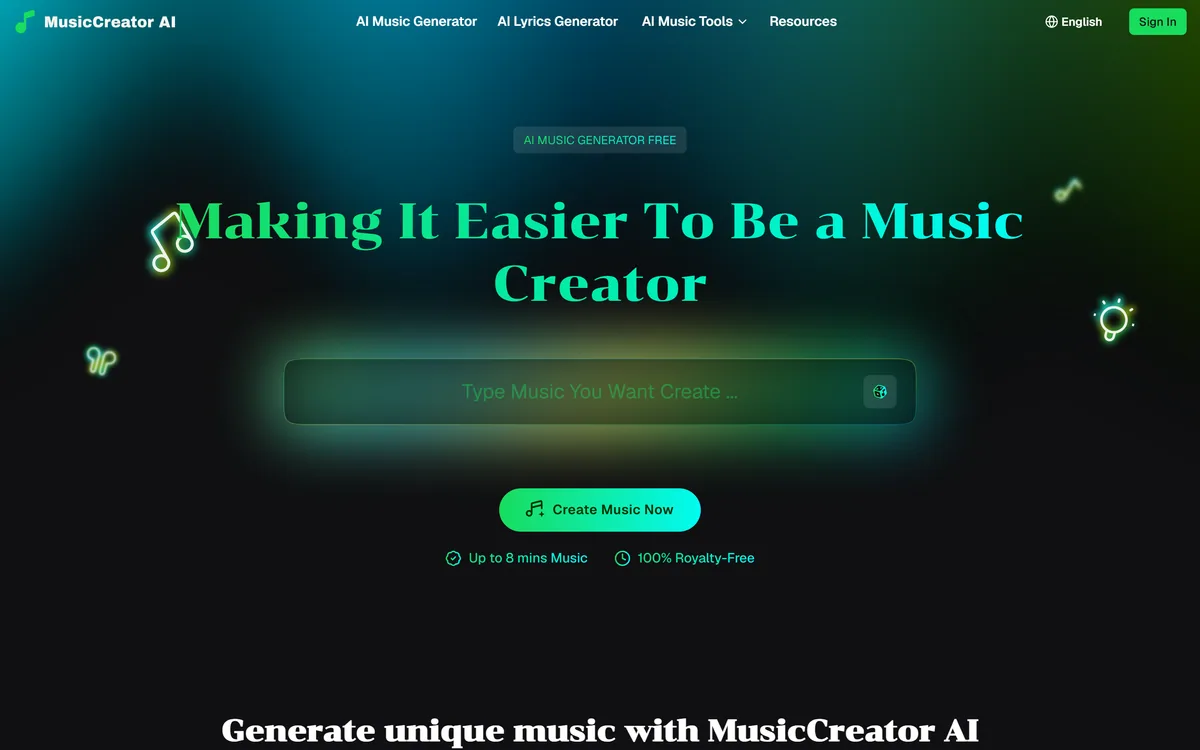
That instrumentals and vocals come from different models is also worth knowing up front. Only one model in the stack produces vocal tracks, so a project that needs sung lyrics has exactly one path through the platform — which is a constraint MusicCreator AI and others in the category handle differently.
- Iterate on the fast model and finish on the capable one.
- Note which model produced anything you intend to release.
- Check whether a track came from a proprietary or partner model.
- Use SongDNA before remixing rather than describing the track in a prompt.
- Read the licence for the specific output, not the platform generally.
Where Generated Music Falls Short
Loudly's own positioning is honest about where generated music belongs: professional background music, sync licensing, platform audio, catalogue tracks and client deliverables.
That is the right list, and the omission is instructive — nothing on it is music anyone listens to on purpose.
Background scoring is a genuine market with genuine requirements: fits the mood, does not distract, clears legally, and costs less than a library licence. Generated music meets all four, which is why this category found commercial traction faster than most.
What it does not do is carry a record. Music people choose to hear is doing something a model is structurally poor at — expressing a specific person's particular experience, which is the entire point of the art form.
The remix engine's own framing acknowledges an adjacent line, stating it does not create soundalike covers and works only on songs you own with rights staying with the holder. That is a deliberate refusal of the most legally dangerous thing this technology can do, and it is worth crediting.
Mastering, Stems And Getting It Released
Beyond generation sit three services that make this a pipeline rather than a generator: genre-aware mastering guided by platform loudness targets with no per-download fees and no AI training on uploaded audio, a stem splitter producing DAW-ready WAV or MP3 across vocals, drums, bass, guitar, synth and strings, and distribution to more than 50 platforms with 100 percent of royalties retained.
Mastering is the most quietly valuable of the three.
It is the step independent musicians most often skip or get wrong, and streaming platforms normalise loudness — so a track mastered without regard to those targets sounds quieter and thinner than everything around it, which listeners experience as lower quality without knowing why.
The stated no-training-on-uploads policy matters here specifically. You are uploading finished music you own to a company that also trains music models, and a company that says it does not use it is answering the obvious question rather than leaving it hanging.
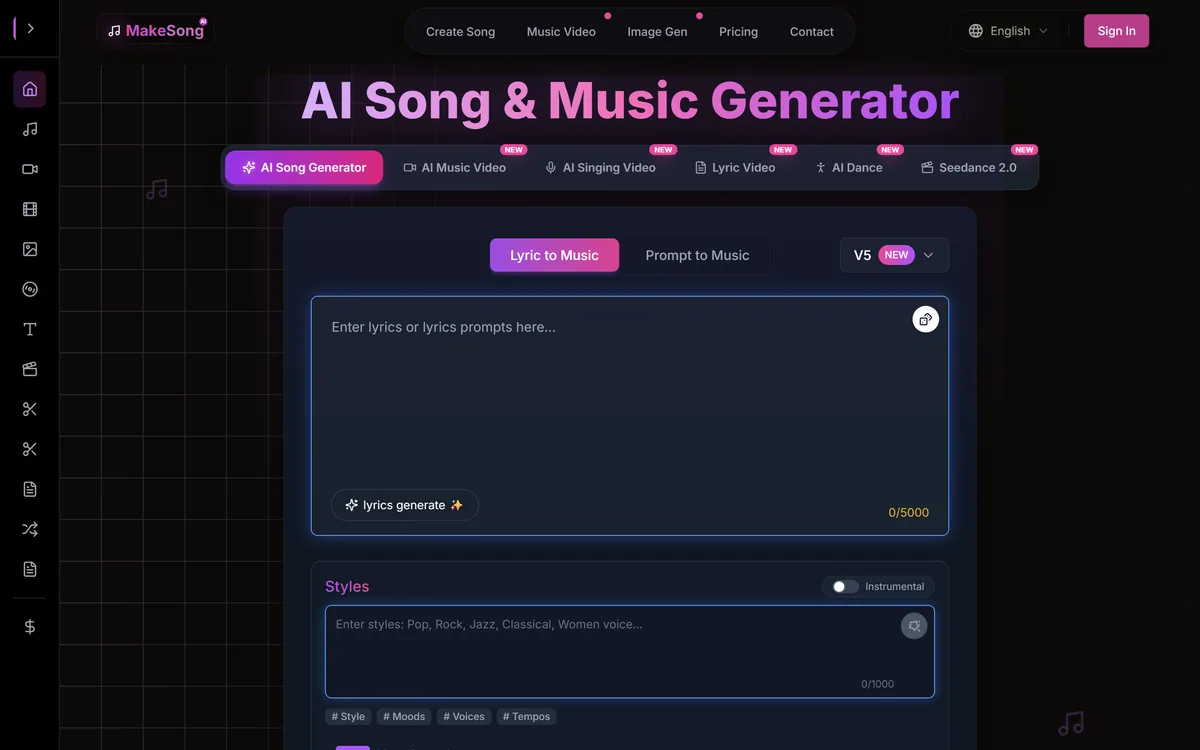
Distribution built into the pipeline rather than bolted on is a real convenience, and keeping all royalties is the standard modern distributor position rather than a differentiator — the thing to check is what the platform costs instead. Lyrics are the one part of a song this does not write, which is LyricLab's territory, while Boomy approaches the whole problem from the release end.
Scoring A Video Without A Composer
The commonest use of generated music is scoring something else, and the commonest mistake is generating first and fitting afterwards.
This sequence produces a track that works with the edit rather than against it.
- Lock the edit first — length and cut points determine everything.
- Prompt with function and energy rather than a genre you like.
- Use a fast model to shortlist, then regenerate the winner on a capable one.
- Split stems if you need to duck instruments under dialogue.
- Master to platform loudness targets rather than by ear.
- Record which model produced the track before you publish it.
Loudly: Catalogue And Licensing
| Company | Loudly GmbH, Berlin, Germany |
|---|
| Positioning | A rights-safe AI audio engine and music platform |
|---|
| Proprietary models | VEGA 1 low latency, VEGA 2 production quality, VEGA 3 agentic, MANTA 1 for vocals and lyrics |
|---|
| Partner model | A third-party sample generation model, integrated under commercial agreement |
|---|
| Rights position | Proprietary model output stated as cleared at the point of generation |
|---|
| SongDNA | Analyses audio, lyrics, structure, mood, tempo, key and hooks into a reusable fingerprint |
|---|
| SongDNA outputs | Style prompt, playlist pitch, social captions and a hook-first short-form edit |
|---|
| Remixer | Works on songs you own; states it does not create soundalike covers |
|---|
| Mastering | Genre-aware, guided by platform loudness targets, with no AI training on uploads |
|---|
| Stem splitting | Vocals, drums, bass, guitar, synth and strings in WAV or MP3 |
|---|
| Distribution | To 50-plus platforms with 100 percent of royalties retained |
|---|
| Infrastructure | An API-first offering for platforms embedding audio generation |
|---|