LyricLab: Lyrics Written To A Brief
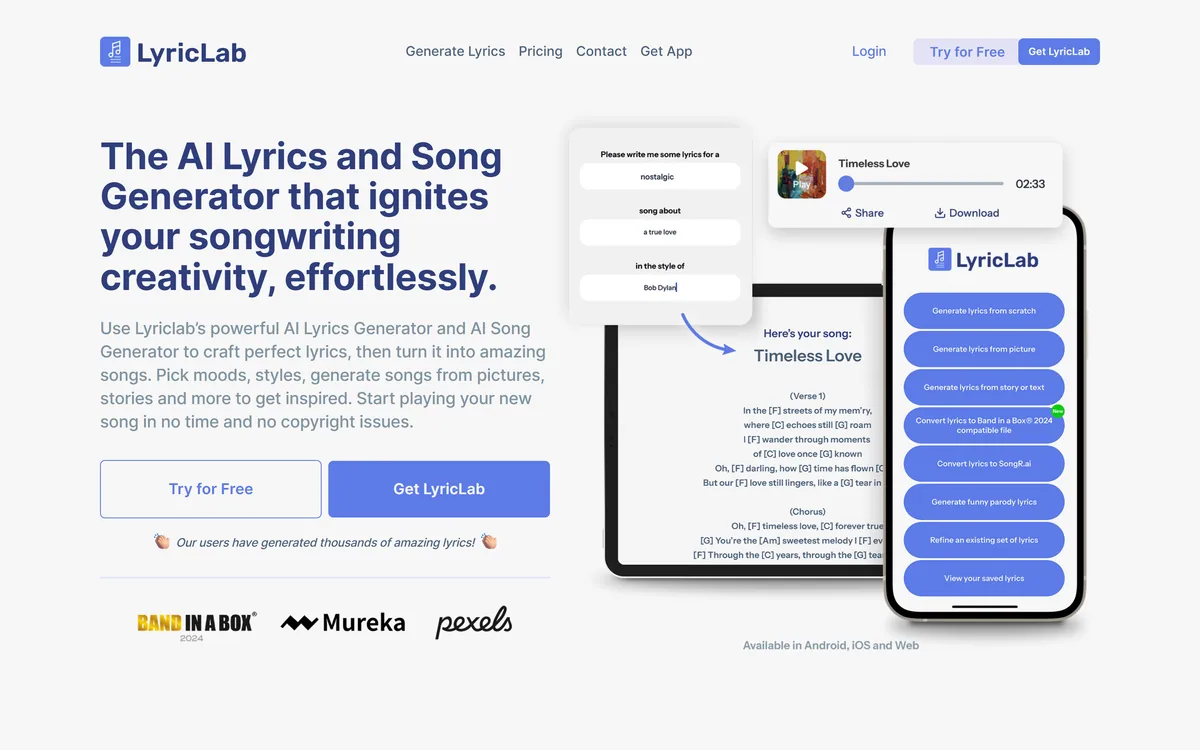
- Structured by song part — verses, choruses and bridges rather than an undifferentiated block of text.
- Start from a picture or a story, not just a prompt, which is a better cure for a blank page.
- Mood, style, genre, key, chords and language all selectable before generation.
- Exports to Band in a Box, placing it inside an existing songwriting workflow rather than beside one.
- Turns lyrics into a sung track with a male or female voice and a chosen genre.
Can A Model Write Lyrics Worth Singing?
LyricLab positions itself as igniting songwriting creativity and crushing writer's block, with quality results you can modify as you wish.
That framing is more honest than it might appear, and it is worth separating what generated lyrics do well from what they do not.
What a model handles competently is craft mechanics: rhyme that scans, syllable counts that fit a meter, a chorus that repeats, a structure that resolves. Those are pattern problems and models are good at pattern problems.
What it cannot supply is the thing a lyric exists for. A song works because someone meant it — a specific detail, an unflattering admission, an image only that person would have chosen. Generated lyrics are competent and general, which is precisely the combination that produces something forgettable.
So the defensible use is as a drafting partner rather than a writer. A generated verse that is nearly right is far easier to fix than an empty page, and the fixing is where your song actually gets made — the same relationship a writer has with any drafting tool.
Models handle rhyme and meter well. What they cannot supply is the reason a lyric exists — that someone meant it.
Rhyme, Meter And Why Structure Matters
The generator lets you choose mood, style, genre, key, time signature and chords, and structure output into verses, choruses and bridges.
Generating by song part rather than as continuous text is the most consequential of those choices.
A lyric is not prose broken into lines. A verse advances the story and a chorus repeats a single idea; a bridge changes perspective; and each has a different syllabic and rhythmic obligation because the melody underneath differs. Text generated without those constraints produces lines that read fine and cannot be sung.
Specifying the key and time signature pushes the same way. A lyric written to a four-four feel scans differently from one written to six-eight, and a generator that knows which is which is producing something a musician can use.
The absent constraint is melody. Lyrics and tune are usually written against each other, and a lyric generated without one will need reshaping when the melody arrives — which is normal songwriting work and worth expecting rather than resenting.
Picture, Story And Beating A Blank Page
Alongside a text prompt, LyricLab can generate from an uploaded image or from a story you tell it — framed as ending the blank page.
The image input is the better idea, and the reason has to do with how songs actually start.
Asking someone to describe the song they want is asking them to already have it. A person with writer's block does not lack the words for their idea; they lack the idea, and a prompt box demands exactly the thing they do not have.
An image sidesteps that. You choose a photograph that feels like something, and the specifics in it — weather, light, a place, a face — become raw material the generator can work from without you having articulated anything.
Telling it a story does the same in a different register, and it is closer to how songs are actually written: something happened, and the song is about that. Both inputs are more useful than a genre dropdown, and they are the features to reach for first.
- Start from a photograph or a story rather than a genre.
- Set the structure — verse, chorus, bridge — before generating.
- Rewrite at least half of what comes back; that is the point.
- Export to Band in a Box if you already work there.
- Treat the copyright assurance as a claim, not a guarantee.
Who Owns A Generated Lyric
The site states that there is no need to worry about plagiarism or copyright issues, and that your lyrics and chords are unique and yours to keep.
That is stated more absolutely than any generator can support, and it deserves unpacking rather than repeating.
Two separate questions hide inside it. The first is whether the output resembles an existing work closely enough to matter — usually no for freshly generated lyrics, and not something anyone can promise in advance, particularly with common phrases in a genre built on them.
The second is whether you own the output at all. Copyright in most jurisdictions requires human authorship, and purely machine-generated text has an unsettled and in places explicitly unprotected status. A lyric you substantially rewrote is a different case from one you accepted as generated.
The practical consequence is straightforward: rewrite it. Your contribution is what makes the work yours in the sense that matters, and it is also what makes it worth singing — so the legal advice and the creative advice happen to be identical. Broader music platforms such as MusicCreator AI raise the same question about audio, and general writing tools like LogicBalls about text.
Band In A Box And Why That Matters
The most specific claim on the page is that lyrics and chords export to Band in a Box, stated as available in the 2024 edition for PC.
That is a narrow integration and a meaningful signal.
Band in a Box is long-established songwriting and arranging software with a substantial installed base among working and hobbyist musicians. It is not a fashionable product, and its users are people who make music regularly rather than people trying an app.
Building an export path into it means someone made a decision about who this product is for — the songwriter who already has a workflow — rather than chasing whoever downloads a lyrics app.
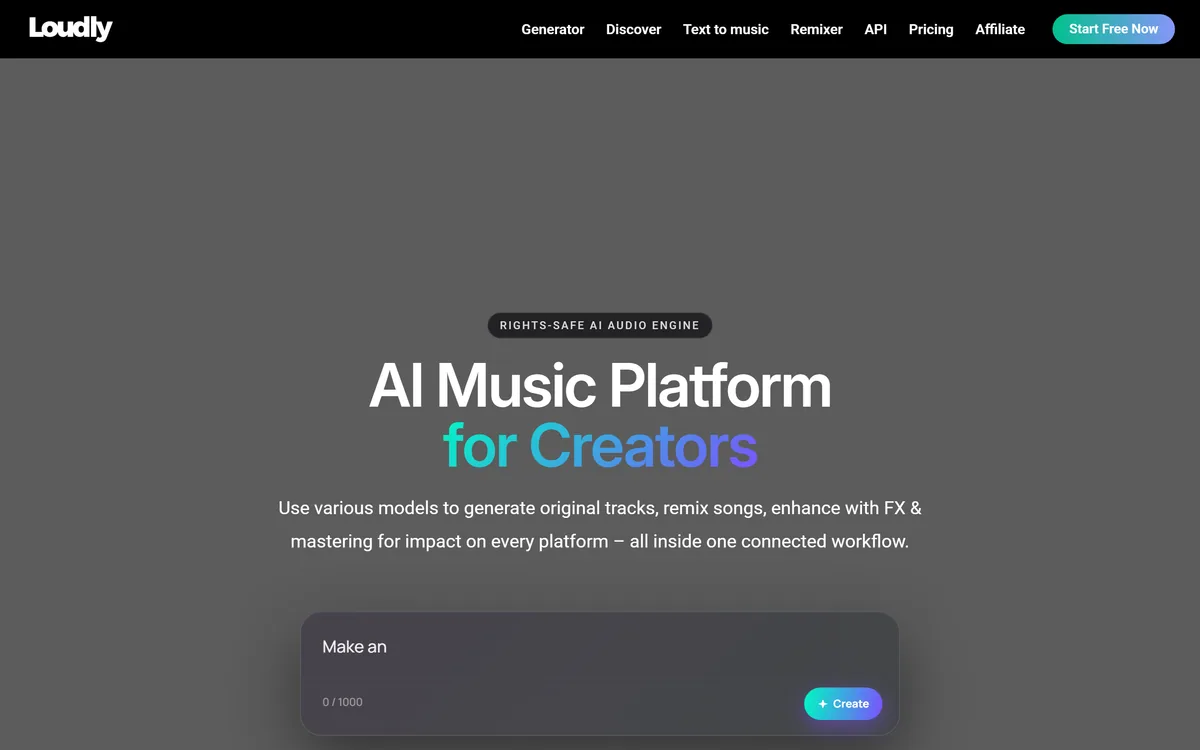
It also places the tool honestly in the chain. Lyrics come out of LyricLab and go somewhere else to become a song, which is a more accurate description of what it does than the sung output feature suggests, and a better reason to use it — much as Loudly earns credibility by covering mastering and distribution rather than only generation.
Writing Songs With A Drafting Partner
The mistake with a lyric generator is accepting what it produces, which yields a competent song nobody remembers.
This sequence uses it for the part it is good at and keeps the part that makes a song yours.
- Start from an image or a story you actually care about.
- Set genre, key and structure before generating anything.
- Generate several versions rather than refining the first.
- Keep the lines that surprise you and rewrite the rest.
- Put one specific, true detail into every verse yourself.
- Export to your arranging software and write the melody against it.
LyricLab: Features And Output
| Core function | AI lyrics generation, with optional song generation from those lyrics |
|---|
| Generation inputs | Mood, style, genre, chords, key, time signature, language, plus images and stories |
|---|
| Structure | Verses, choruses and bridges specified separately |
|---|
| Song output | A sung track with a male or female voice in a chosen genre |
|---|
| Export | Lyrics and chords to Band in a Box, stated for the 2024 PC edition |
|---|
| Refinement | Refining existing lyrics and generating parody lyrics |
|---|
| Mood control | A simple palette on the free tier and a comprehensive one on paid |
|---|
| Platforms | Web, Android and iOS |
|---|
| Free tier | Original lyrics, one free song generation, story-to-lyrics and simple chords |
|---|
| Paid tier | A one-off membership with song generation credits and advanced controls |
|---|
| Stated position | No plagiarism or copyright issues, with lyrics and chords described as unique and yours |
|---|
| Testimonials | Displayed with first names, one referring to the product's maker by name |
|---|
Should A Songwriter Use This?
Draft the lyric when
- You have a melody and a mood and no words.
- A blank page is what actually stops you finishing songs.
- You already work in Band in a Box and want lyrics in it.
- You write regularly enough that a draft partner saves real time.
- You will rewrite most of what comes back.
Write it alone when
- The song is about something specific that happened to you.
- You are writing for release under your own name without editing.
- Ownership of the finished lyric has to be unambiguous.
- The writing is the part of songwriting you enjoy.
- You would accept the first version and call it done.