
AI cycling coach that adapts plans to your readiness Category: Health & Lifestyle.
Health & Lifestyle Review
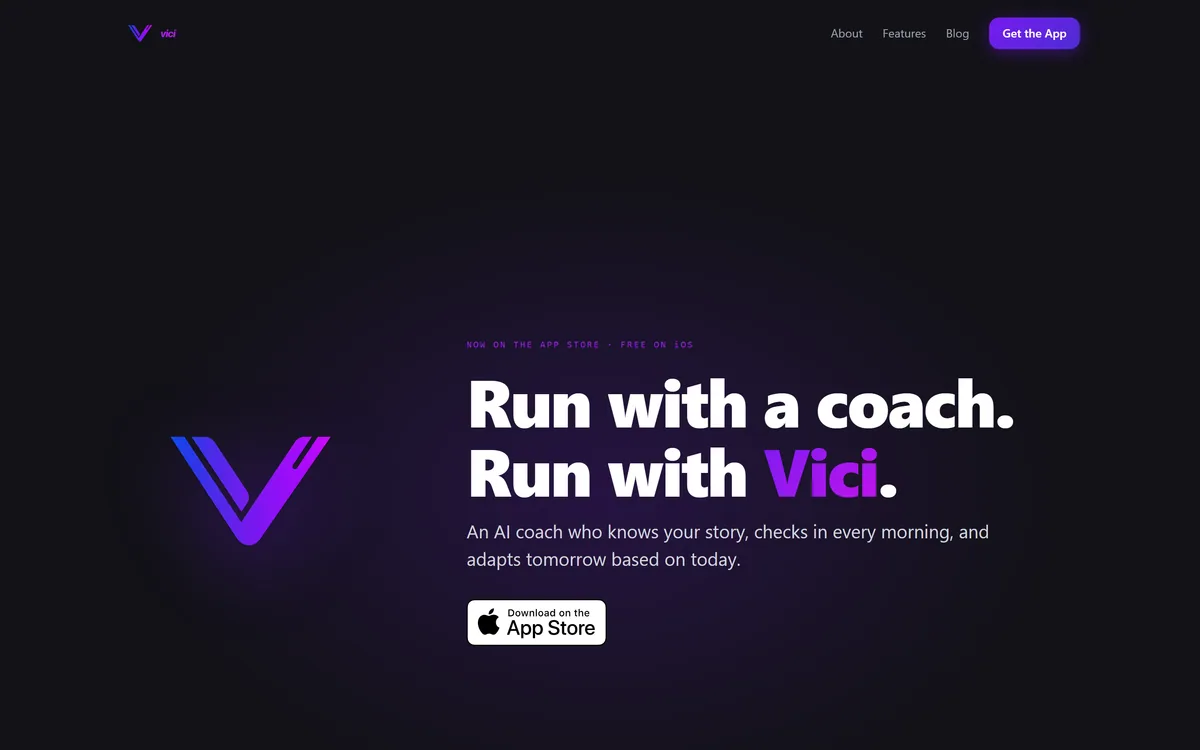
Vici is a free iOS running coach that connects to Strava and your wearable, checks in each morning against recovery, sleep, HRV and resting heart rate, adapts the day's session accordingly, and reads every completed run in two stages before adjusting what comes next.
Very good
Most training apps hand you a plan and leave you to follow it whether or not your body agrees. Vici's whole design is the opposite — read the wearable, ask one question, and change today's session before you run it. That daily adaptation is what a human coach actually provides, and the two-stage post-run read is more thoughtful than anything else at this price, which is nothing. It is early, iOS-only and thin on independent evidence, but the core coaching is free forever and the people behind it are runners with real credentials. AInexfinder Editor Score: 4.0/5.
Best for: Runners training for a specific race with a date; People whose fixed plans keep colliding with real life
The visit link goes to vici.run, the official site. Paid placements on AInexfinder are always labelled. How we make money
The gap between a training plan and a coach is not knowledge. It is that a plan does not know you slept badly, travelled on Tuesday, or came back from a race more tired than the calendar assumes.
Vici is built entirely around closing that gap. Every morning it reads your wearable, asks one question, and decides whether today's session stands or bends.
That daily adaptation, rather than the plan itself, is what it is actually selling — and it is the right thing to sell.
Vici's own framing is direct: an AI coach who knows your story, checks in every morning, and adapts tomorrow based on today. It also insists it is not a chatbot but a coach with tools.
That distinction is worth taking seriously, because it separates two very different products that look similar in a screenshot.
A chatbot answers what you ask. A coach holds a model of you — your history, your patterns, what a hard week does to you — and initiates. The difference shows up in whether the app tells you something before you think to ask.
The daily briefing is the mechanism for that, and it is the feature that most determines whether the app changes your training or just records it.
Where an app genuinely cannot match a coach is in the things a person notices and a sensor does not: how you look at the start of a session, that you have mentioned the same niggle three weeks running, that your life is falling apart and the training should not be the priority this month.
A chatbot answers what you ask. A coach tells you something before you think to ask. That is the whole distinction.
Vici's blog states a specific position on training paces: most apps average your race results, but a bad race day should not drag down your training paces — your best day reveals your fitness, your worst day reveals your circumstances.
That is a real coaching opinion, not marketing copy, and it is worth knowing whether you agree with it before adopting the app.
The argument in its favour is sound. A race ruined by heat, illness or a missed start is not evidence about your aerobic capacity, and averaging it in prescribes training that is too easy for months.
The counter-argument is equally real. Training from your best day alone risks prescribing sessions calibrated to a peak you were briefly capable of, which is a well-worn route to injury for anyone who is honest about how often that peak occurs.
Publishing the philosophy at all is the point in Vici's favour. An algorithm that quietly makes this choice is much harder to argue with than one whose reasoning you can read and disagree with. MacroFactor takes the same position about publishing how its algorithm decides.
The morning check-in pulls recovery, sleep, HRV and resting heart rate automatically, then asks what the site calls the one question that shapes today's training: are you ready, or are we backing off?
Its example of an adaptation is precise in a way that reveals the thinking. Five one-mile repeats become four when the legs need it — at the same pace band.
Holding the pace and cutting the volume is exactly what an experienced coach does, and it is not what most adaptive apps do. Slowing the session preserves the workout on paper and destroys its purpose, because the physiological stimulus lives in the intensity.
Cutting a repetition keeps the stimulus and lowers the dose. That single design choice tells you the people building this understand training rather than just data.
The caution belongs on the inputs rather than the logic. HRV is noisy, sensitive to measurement conditions, and meaningful mainly as a trend against your own baseline — so a single low morning is weaker evidence than the number's precision suggests.
When a run ends, Vici splits its response in two. Stage one syncs the activity, matches it to the planned workout and gives an immediate read on splits, heart rate, pace deltas and execution against the prescription. Between the stages sits a journal with sliders and an adaptive freeform question written from your data. Stage two is a deeper analysis with observations and adjustments to the next session.
The structure is more considered than it first appears, and the journal in the middle is the reason.
Data explains what happened to your body and not why. A slow run because you were dehydrated and a slow run because you are getting ill look identical in the file, and lead to opposite coaching decisions.
Asking you before the deeper analysis lets your context inform the conclusion rather than arriving after it. That is the correct order and very few apps get it right.
The adaptive question is the nice touch — generating it from your data means it can ask about the specific thing that looks odd rather than presenting the same form after every run, which is how journaling features usually die. Dedicated journalling apps like Reflection approach the same problem from the other direction.
Vici states that the core coaching experience — the plan, the daily check-ins, every post-run read and conversations with the coach — is free forever, with premium features possibly arriving later.
That is an unusually clear commitment, and it is worth reading precisely rather than gratefully.
What it promises is that the coaching loop described on the site stays free. What it leaves open is what a premium tier would eventually contain, and a company that has not yet decided cannot tell you.
The realistic read is that free is a deliberate strategy at this stage. An AI coach improves with data and credibility, and both are easier to acquire without a paywall in front of them.
Two testimonials, both labelled early user, is honest labelling and also a thin evidence base. That combination — genuine transparency about being early — is the fairest way to describe where this product currently sits. For movement quality rather than training load, VueMotion measures what nothing on your wrist can.
An adaptive coach only works if you feed it honestly, and the temptation to report readiness you do not feel is the main way people undermine one.
This sequence gets the loop running properly before you ask much of it.
| Company | Vici Performance Inc., per the footer |
|---|---|
| Platform | iOS, live on the App Store, with an Android waitlist |
| Cost | Core coaching stated as free forever |
| Data connection | Strava for training history, plus wearable signals |
| Morning signals | Recovery, sleep, HRV and resting heart rate, pulled automatically |
| Adaptation example | Five one-mile repeats become four, at the same pace band |
| Post-run stage one | Immediate read of splits, heart rate, pace deltas and execution |
| Journal | Sliders for execution plus an adaptive freeform question generated from your data |
| Post-run stage two | Deep analysis with observations and adjustments to the next session |
| Ask Vici | Proposes a specific change, applied in one tap, with reasoning logged |
| Plan views | Today, this week and the full plan |
| Founders | Two runners; co-founder Chris Dunn writes on the blog about a 2:29:50 Berlin marathon |
Daily morning check-in from wearable signals
Real-time session adaptation at constant pace bands
Two-stage post-run coaching analysis
Journal with an adaptive question generated from your data
Ask Vici for proposals applied in one tap
Chronological coaching feed
Dashboard, analytics and full run log
Strava connection for training history
Health apps differ by whether they measure, plan or actually adapt.
| Tool | Domain | Adapts to you | Best for |
|---|---|---|---|
| Vici | Running training | Daily, from wearable and journal | Runners chasing a specific goal |
| MacroFactor | Nutrition and body weight | Weekly, from intake and weight trend | Diet without guessing at targets |
| Reflection | Journalling and mood | Prompts from your entries | Mental rather than physical training |
| RelaxFrens | Relaxation and focus | Session based | Recovery around the training |
| VueMotion | Movement biomechanics | Per test, from video | How you move rather than how much |
Other tools across training, nutrition, recovery and movement.
Last checked . Read from vici.run in a browser session on the date above, including the full footer. The screenshot was captured at the same time.
What we could not confirm: which wearables and platforms are supported beyond Strava; how the coaching model is built or what it is trained on; how readiness is calculated from HRV and sleep; whether any qualified coaches were involved in designing the training logic; what a future premium tier would contain; and how the app behaves over a full training block, which two early testimonials cannot establish. We did not install the app or connect an account. Vici is not medical advice and pain should be assessed by a clinician.
AInexfinder does not list plan prices or billing details. For current pricing, plans, and trials, visit the official Vici website.
Visit official website for pricingVendor pricing, credits, and billing policies change over time. Always confirm on the official site before you buy.
Vici earns an AInexfinder Editor Score of 4.0/5 (very good). Best for: Runners training for a specific race with a date; People whose fixed plans keep colliding with real life; Wearable users with sleep and HRV data going unused.
Visit ViciLog in to write a review.
No reviews yet. Be the first to share your experience with Vici.
Assigned reviewer
Daniel ReedSenior AI Tools Reviewer
Daniel leads AInexfinder's tool reviews. He researches each tool from its own pricing, documentation and policies, checks its claims against independent sources, and writes up what it does well, where it falls short and who it genuinely suits.
Daniel and the AInexfinder editorial team research Vici from its own website, pricing, documentation and policies, checked against independent sources. This review is research-based: unless its method note says otherwise, we have not bought a plan or run hands-on tests. The Editor Score is our editorial judgement, and payment never changes it.
Similar Tools
AI cycling coach that adapts plans to your readiness Category: Health & Lifestyle.

Hormone-aware training, nutrition and recovery for women Category: Health & Lifestyle.

AI running coach for goal runners and Boston qualifiers Category: Health & Lifestyle.
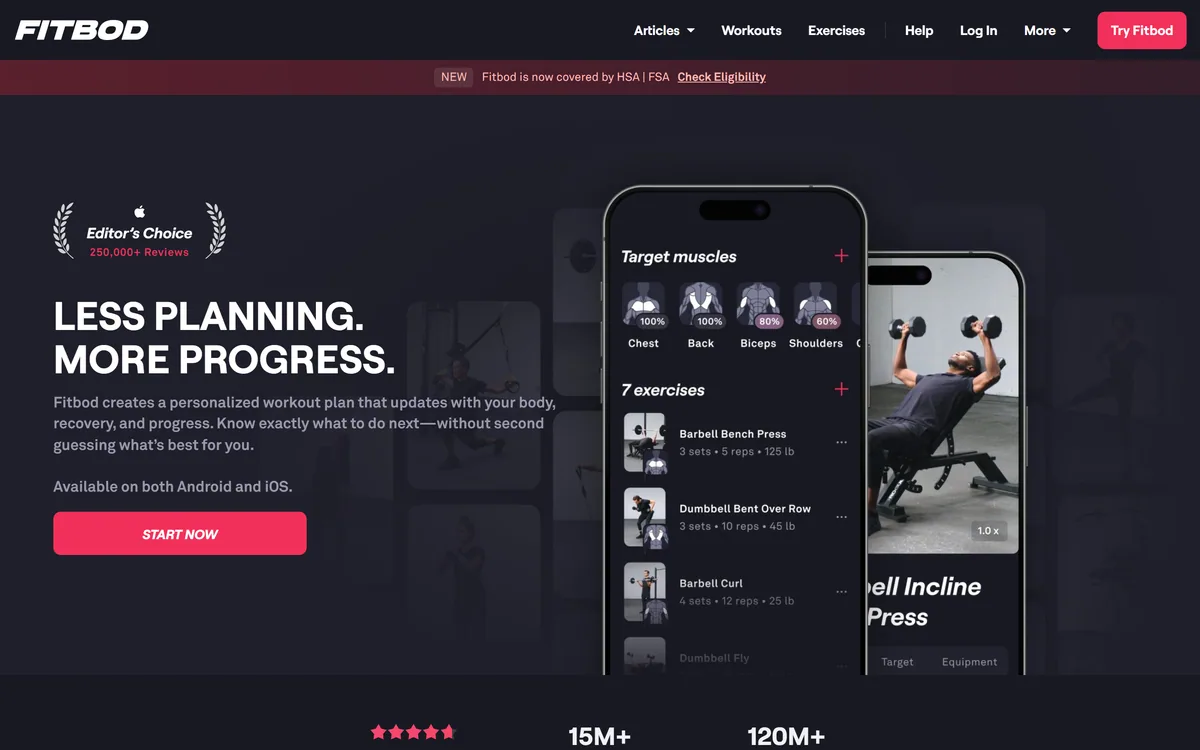
Fitbod review on AInexfinder — freemium AI tool for Health & Lifestyle. Features, pricing notes, and alternatives.
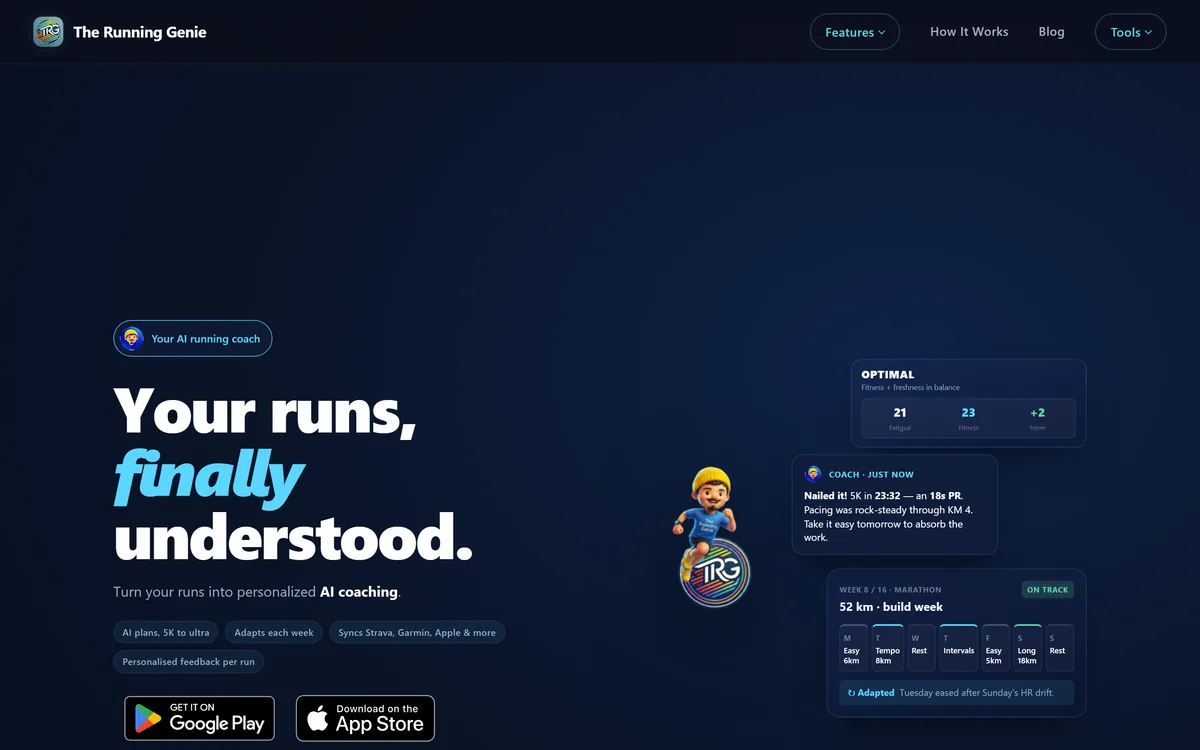
The Running Genie is an AI running coach that syncs from Strava, Garmin, Polar, Suunto and Apple Health, then builds adaptive training plans for 5K through ultra using VDOT, 80/20 polarised training and periodisation principles.
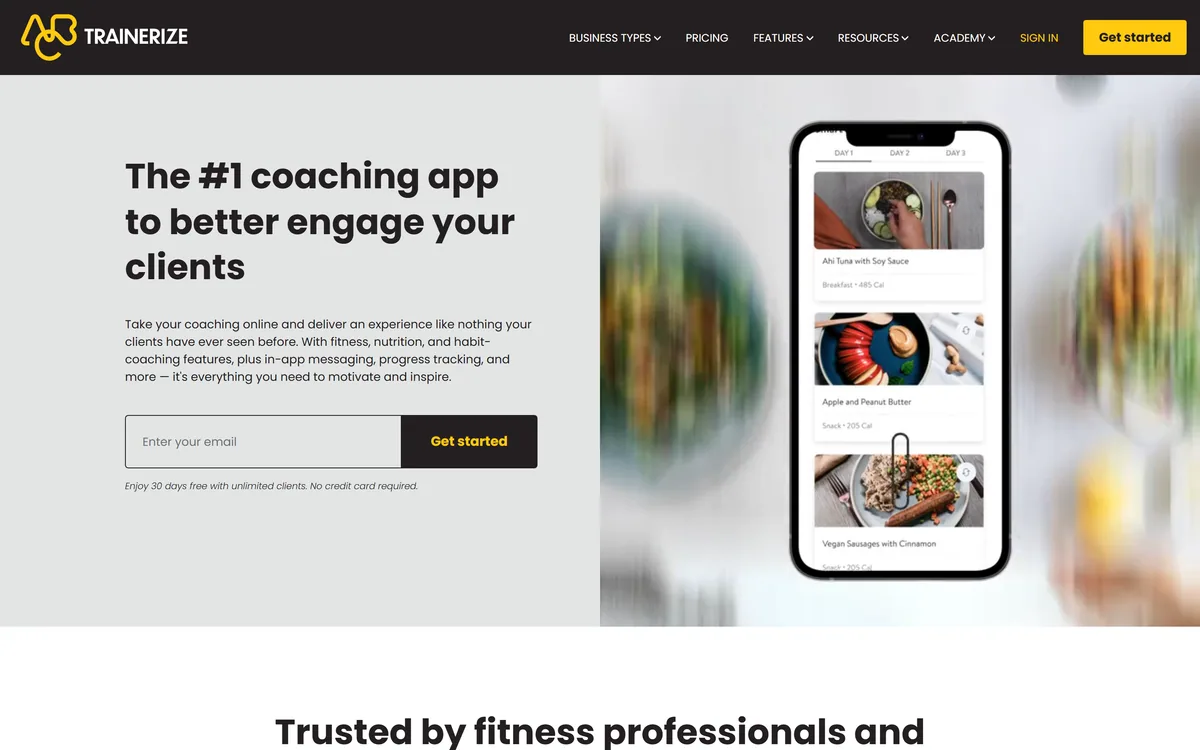
ABC Trainerize delivers training programmes, nutrition plans and habit coaching through a client-facing app with in-app messaging, progress tracking, scheduling and payments, serving a stated 400,000-plus trainers and 45,000-plus fitness businesses.
Related Pages