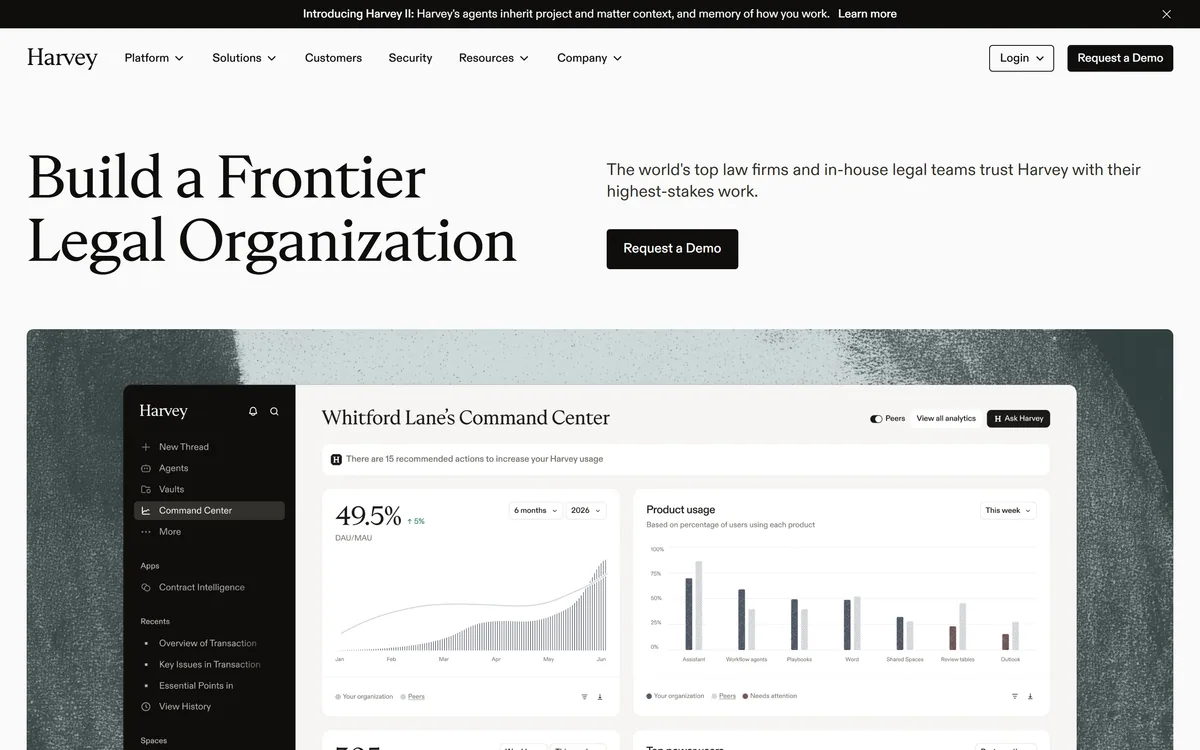

Harvey is an AI platform for legal and professional services — agents, a Vault for documents, Knowledge, Spaces, and Contract Intelligence — used by firms including A&O Shearman, Latham & Watkins, and Norton Rose Fulbright.
Emerging & Specialized Review
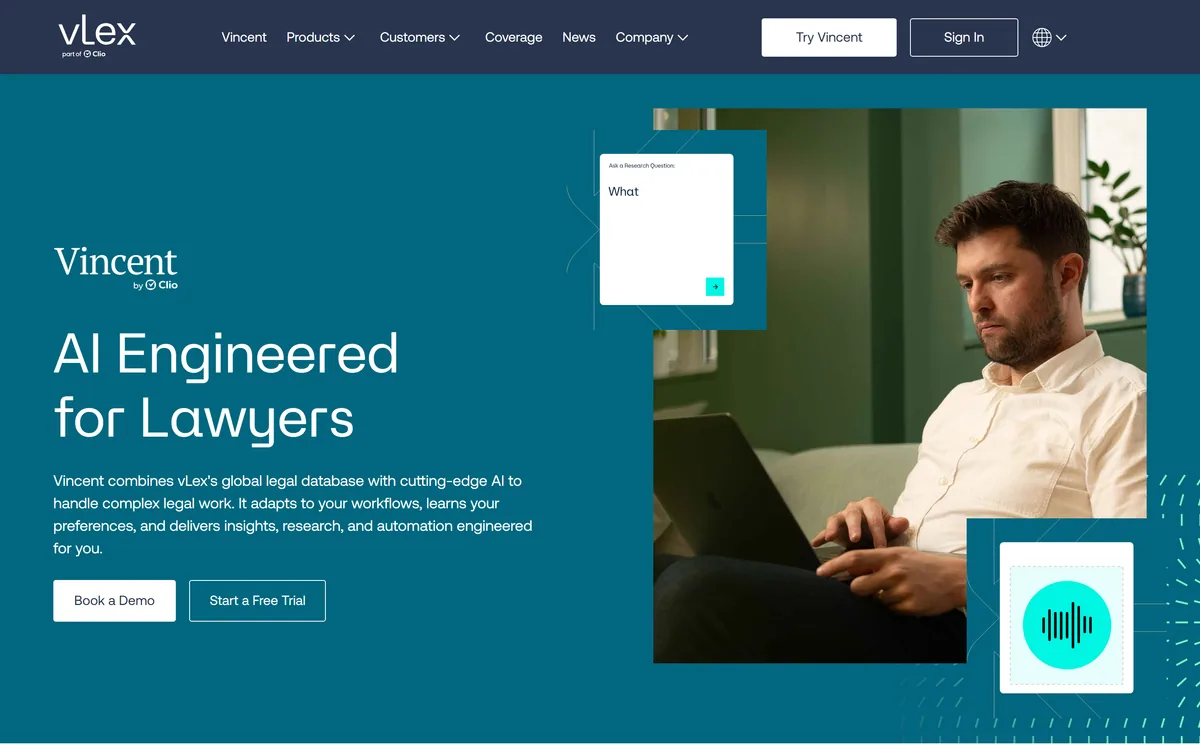
Vincent AI (by vLex, part of Clio) is a legal-research and analysis assistant that combines vLex's global legal database with AI for cited research, 50-state surveys, contract review, pleadings analysis and litigation profiles. It suits law firms and in-house teams, with the caveats that its output is research to verify (not legal advice), citation accuracy is critical, and it addresses confidentiality with SOC 2, ISO 27001 and zero-retention terms.
Very good
Vincent AI earns 4.1 as a serious, well-grounded legal-research assistant that does the right thing for law: it combines vLex's global legal database with AI to answer with full citations, rather than letting a general model invent authority. Its breadth, 50-state surveys, contract review, pleadings analysis, litigation profiles and no-code Studio workflows, makes it a capable legal-work platform for firms of all sizes. The duties are heavy and non-negotiable: its output is research and analysis to inform a lawyer, not legal advice, so citations and reasoning must be verified, and professional responsibility stays with the lawyer; its productivity metrics are vendor claims; and the confidentiality posture (SOC 2, ISO 27001, zero-retention) should be confirmed. For lawyers who verify its output it's a strong, purpose-built choice; non-lawyers, or anyone who'd skip verification, should steer clear. AInexfinder Editor Score: 4.1/5.
Best for: Legal research; 50-state surveys
The visit link goes to vlex.com, the official site. Paid placements on AInexfinder are always labelled. How we make money
Legal research is slow, high-stakes and only as good as its sources, and a general chatbot that invents citations is dangerous in law. Vincent AI's pitch is to ground AI in real law: vLex's global legal database, with citations.
It does natural-language legal research with full citations, 50-state surveys, contract review and redlining, pleadings analysis and litigation profiles. It sits among research tools like Paperguide, but purpose-built for legal work.
This review covers how Vincent AI researches law, which lawyers it suits, how it's sold, and the not-advice, accuracy and confidentiality duties to weigh first.
| What it is | A legal-research and analysis AI (Vincent by vLex) |
|---|---|
| Company | Themis Solutions Inc. (Clio); 'Vincent by vLex, part of Clio' |
| Core | Cited legal research over vLex's global database |
| Analysis | 50-state surveys, contract review/redline, pleadings analysis |
| Also | Judge/lawyer/firm/party litigation profiles; Vincent Studio workflows |
| Audience | Lawyers, big law, in-house, small practice |
| Access | Sales-led + free trial (book a demo / start a trial) |
| Sensitive | Legal (research not advice; citation accuracy); confidentiality |
Vincent AI's core job is to make legal research fast without sacrificing the thing law depends on: sources. It combines vLex's large global legal database with AI, answering natural-language legal questions with full citations, so a lawyer can trace every point back to real authority rather than trust an unsupported answer.
Beyond research it does legal analysis, 50-state surveys and jurisdiction comparisons, contract review and redlining, pleadings/complaint analysis, and litigation profiles of judges, lawyers, firms and parties, with a 'Vincent Studio' for building no-code custom workflows.
It's aimed squarely at lawyers, from big law to in-house and small practice, and leans on its database grounding as the answer to general-AI hallucination in a field where a wrong citation can be catastrophic.
The honest framing is that Vincent AI is a serious, well-grounded legal-research tool, and citation-backed answers over a real legal database are exactly the right design for law. But the duties are heavy and non-negotiable. Its output is legal research and analysis to inform a lawyer, not legal advice, and a lawyer must verify citations and reasoning before relying on them, AI in law still errs, and professional responsibility stays with the lawyer. Its productivity and reliability metrics (for example a stated minimum 38% productivity boost and '3.67x more reliability') are vendor claims to treat as such. On confidentiality, which is paramount in law, it addresses the right things, SOC 2, ISO 27001 and 'zero-retention agreements' with LLM providers, which you should still confirm against your firm's obligations. Its claims are vendor-stated.
Vincent AI grounds legal research in vLex's database with citations, the right design for law; its output is research to verify, not advice, and the lawyer's professional responsibility remains.
Vincent AI pairs cited legal research with analysis and litigation intelligence.
It answers legal questions with full citations from vLex's database, plus 50-state surveys and jurisdiction compares.
A tool like Afforai does citation-backed research broadly; Vincent AI's angle is legal research and analysis on a legal database, a specialist, higher-stakes job.
Contract review, pleadings analysis, litigation profiles and no-code 'Vincent Studio' workflows extend it across legal work.
An enterprise-search tool like Glean searches your own content; Vincent AI searches and reasons over legal authority, so match it to whether you need legal research specifically, and verify every citation.
Vincent AI suits law firms (big law to small practice) and in-house legal teams that do substantial legal research and analysis and want it grounded in a real legal database with citations.
It suits lawyers who will verify its output and use it to accelerate, not replace, their professional judgement, and firms that can satisfy themselves on the confidentiality and data terms.
It suits less well non-lawyers seeking legal answers (it's a professional tool, and its output isn't advice), anyone who'd rely on its citations without checking, and those who can't meet or confirm the confidentiality requirements.
A fair way to place it: if you're a lawyer or legal team wanting faster, citation-grounded research and analysis, Vincent AI is a strong, purpose-built choice, provided you verify its output and confirm the confidentiality terms; if you'd treat it as legal advice or skip verification, that's a professional risk, because the tool informs the lawyer, it doesn't carry the lawyer's responsibility.
Vincent AI is sold to firms, sales-led with a free trial (the site offers both 'book a demo' and 'start a free trial'), rather than a public self-serve price. We do not publish prices, which vary; confirm the plan and the confidentiality/data terms with vLex.
The value question is research time saved versus cost and verification: for a firm doing heavy research, citation-grounded AI can save real hours, but a lawyer must still verify, and the subscription is an investment judged against billable time.
The sensible approach is to trial Vincent AI on real research in your practice area, verify its citations and reasoning rigorously, confirm the confidentiality and data-handling terms against your obligations, and judge the time saved against your own work, not the vendor's metrics.
Because it's research not advice and accuracy is critical, trial Vincent AI and verify everything.
Cited legal research
50-state surveys
Contract review
Pleadings analysis
Litigation profiles
Vincent Studio
Jurisdiction coverage
vLex database
The useful comparison is with other research and knowledge tools.
| Tool | Tool | Approach | Best for |
|---|---|---|---|
| Vincent AI | Legal research AI | Cited law + analysis | Lawyers and firms |
| Paperguide | Research synthesis | Systematic reviews | Researchers |
| Afforai | Citation-backed research | RAG + references | Students/researchers |
| Glean | Enterprise search | Your company's content | Work knowledge |
Last checked . Read from vlex.com during this check, with the screenshot above captured at the same time.
Vincent AI's output is legal research and analysis to inform a lawyer, NOT legal advice, and a lawyer must verify citations and reasoning before relying on them; professional responsibility stays with the lawyer. Its productivity/reliability metrics (e.g. a 38% boost, '3.67x more reliability') are vendor claims. On confidentiality it addresses SOC 2, ISO 27001 and zero-retention with LLM providers, confirm those against your firm's obligations. Claims are vendor-stated.
A research-synthesis platform, a citation-backed research tool and enterprise search to weigh beside Vincent AI.
AInexfinder does not list plan prices or billing details. For current pricing, plans, and trials, visit the official Vincent AI website.
Visit official website for pricingVendor pricing, credits, and billing policies change over time. Always confirm on the official site before you buy.
Vincent AI earns an AInexfinder Editor Score of 4.1/5 (very good). Best for: Legal research; 50-state surveys; Contract review.
Visit Vincent AILog in to write a review.
No reviews yet. Be the first to share your experience with Vincent AI.
Assigned reviewer
Daniel ReedSenior AI Tools Reviewer
Daniel leads AInexfinder's tool reviews. He researches each tool from its own pricing, documentation and policies, checks its claims against independent sources, and writes up what it does well, where it falls short and who it genuinely suits.
Daniel and the AInexfinder editorial team research Vincent AI from its own website, pricing, documentation and policies, checked against independent sources. This review is research-based: unless its method note says otherwise, we have not bought a plan or run hands-on tests. The Editor Score is our editorial judgement, and payment never changes it.
Similar Tools
Harvey is an AI platform for legal and professional services — agents, a Vault for documents, Knowledge, Spaces, and Contract Intelligence — used by firms including A&O Shearman, Latham & Watkins, and Norton Rose Fulbright.
AI contract review and lifecycle management for legal teams Category: Emerging & Specialized.
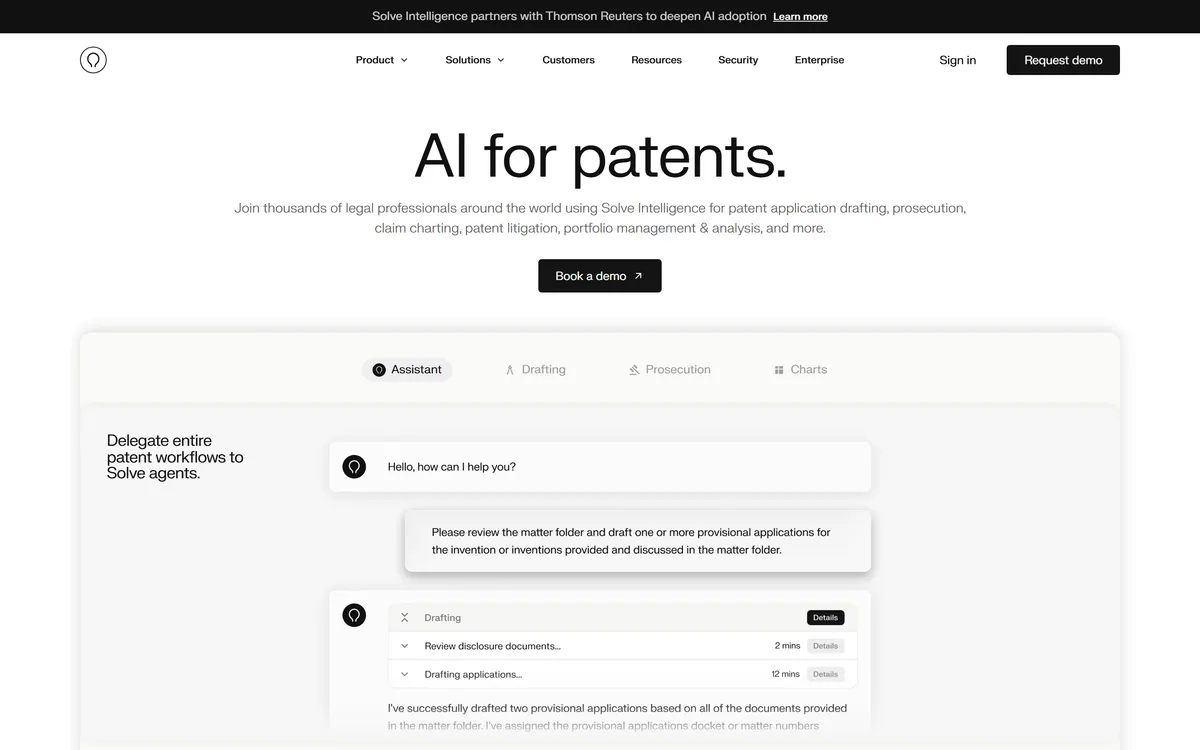
Solve Intelligence is an AI platform for patent work, covering application drafting, office action responses, invalidity and claim-mapping charts, freedom-to-operate reviews and portfolio analysis. It is used by over 700 in-house IP teams and law firms, with SOC 2 Type II and ISO 27001 certification and no training on customer data.
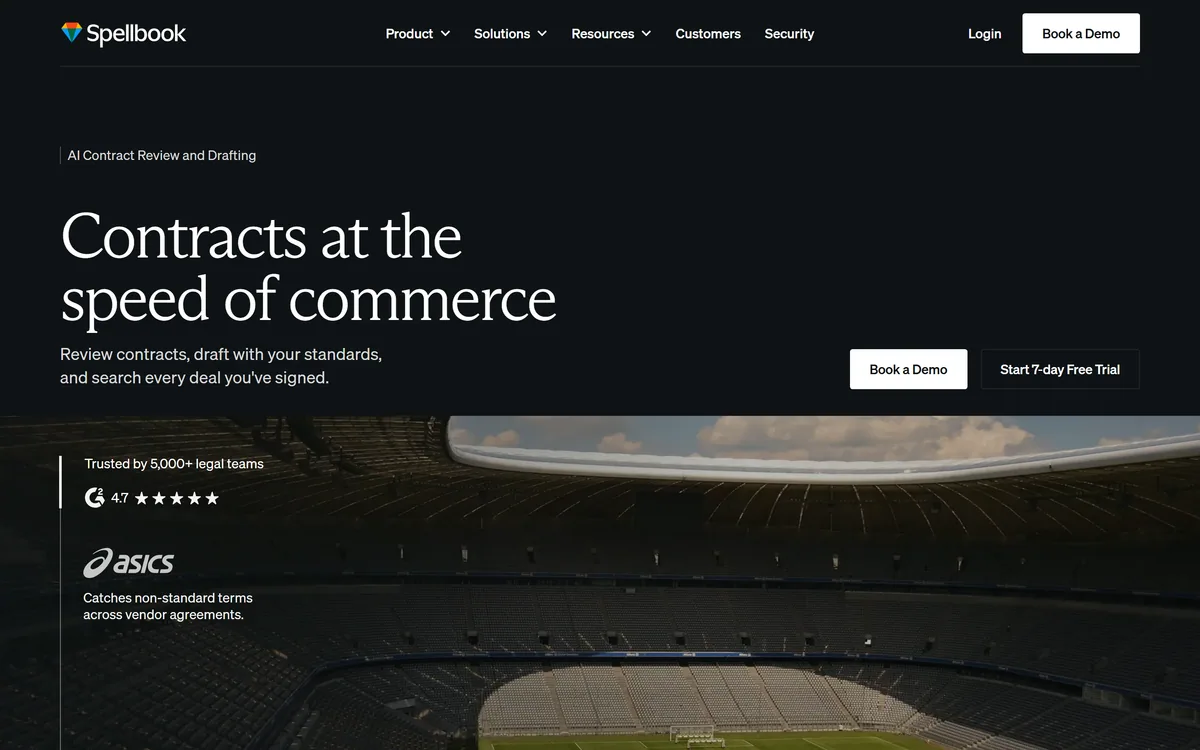
Spellbook reviews and drafts contracts inside Word and Google Docs, redlining against a firm's own playbooks, comparing terms to thousands of similar agreements, and indexing signed contracts for search — used by a stated 5,000-plus legal teams in 80-plus countries.
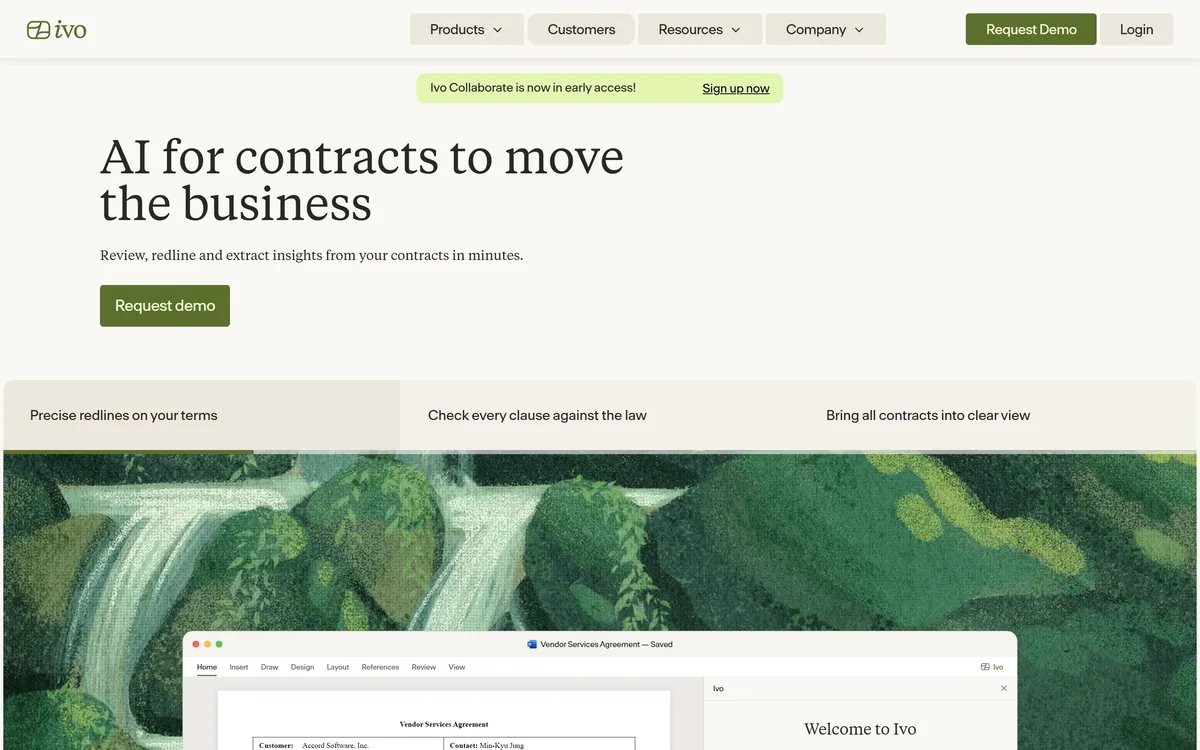
Ivo is AI contract review for in-house legal teams. It applies redlines directly in Microsoft Word or Google Docs, evaluates agreements against your playbooks and historical contracts, benchmarks clauses by governing law and industry, and queries executed contracts in plain language.
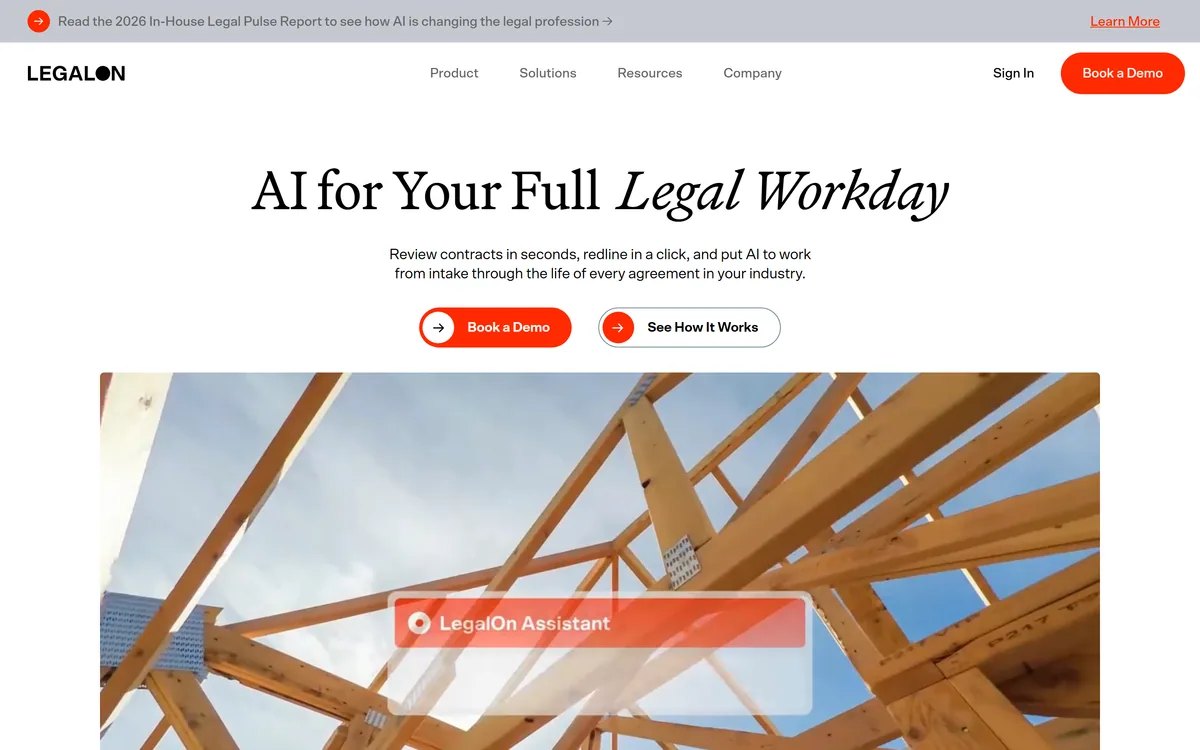
LegalOn is a contract lifecycle platform from LegalOn Technologies, Inc. covering intake, review, redlining, storage and analysis, built on more than 135 attorney-authored playbooks across industries and countries, with a Microsoft Word integration and agentic workflows.
Related Pages