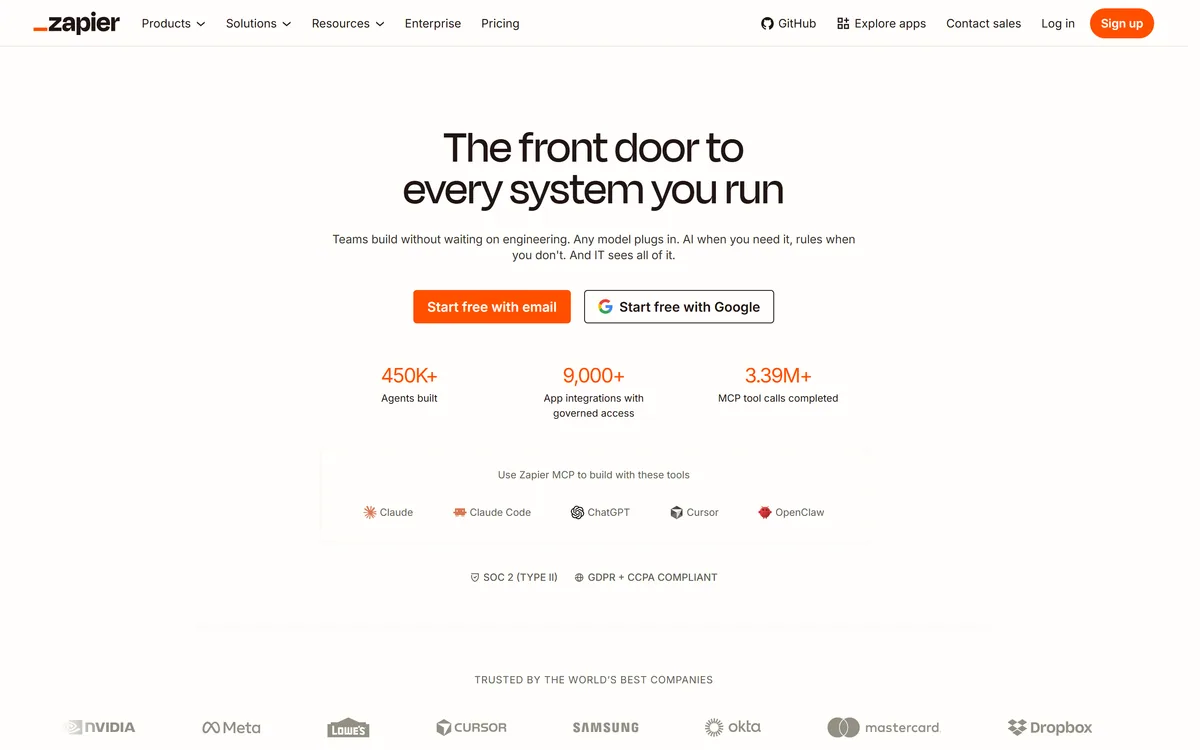

Zapier's AI layer adds agents and MCP tool access on top of its automation platform, connecting more than 9,000 apps with governed access so teams can mix AI decisions with deterministic rules under central oversight.
Productivity & Automation Review
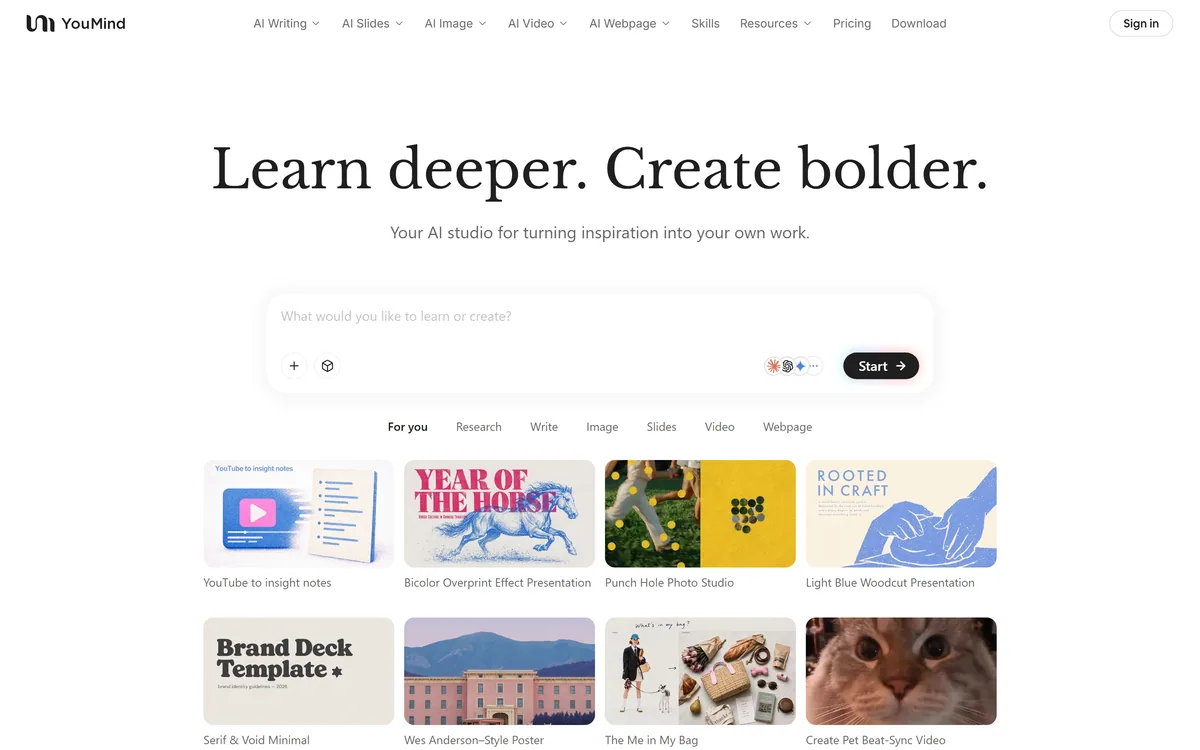
YouMind is an AI creation studio that turns saved articles, videos and notes into finished work — writing, slides, images, video and webpages — with reusable creator-built skills, across web, macOS, iOS and Android.
Good
YouMind earns 3.9 for a genuinely distinctive learn-then-make loop and real multi-format breadth in one studio; it is held back by depth that trails format specialists and by being young and broad enough that some users will only ever touch one corner of it. AInexfinder Editor Score: 3.9/5.
Best for: Creators who work from research and inspiration; People who want many formats in one workspace
The visit link goes to youmind.com, the official site. Paid placements on AInexfinder are always labelled. How we make money
Most AI tools pick a lane: a writer, a slide maker, an image generator. YouMind deliberately refuses to, positioning itself as a studio where the same saved material can become any of those, and where the point is as much understanding a topic as producing something from it.
The flow starts with inspiration you capture — an article, a video, a podcast, a half-formed thought — and moves through building understanding with AI to turning that into articles, slides, images, videos or webpages. Reusable skills, built and shared by its community, let a particular kind of output be produced the same way each time.
This review covers how that save-understand-make loop works, which formats it genuinely produces, how it differs from a notes app or a plain chatbot, how it is priced, and who will thrive in a broad studio versus who will find it does too much.
The loop YouMind is built around is distinctive. You bring what caught your eye — save articles, videos, podcasts and notes in one place — then use AI to ask questions, connect ideas and explore perspectives, and only then turn that understanding into something you make.
That ordering matters. Most generation tools assume you already know what you want and prompt for it; YouMind assumes you are still working it out, and treats the learning stage as part of the product rather than homework you do elsewhere. For people who create from research rather than from a finished brief, that is a genuinely different and useful shape.
The risk of the approach is the same as its appeal: an open studio with no fixed output can feel unfocused if you arrive knowing exactly what you want and just need it made.
YouMind assumes you are still working out what you want to say — and treats that figuring-out as part of the tool, not homework you do somewhere else.
The studio's breadth is the headline, and it is real: one body of saved material can become several very different kinds of output without switching tools.
YouMind produces long-form writing, slide decks, images, short videos and standalone webpages from the same workspace. The examples it showcases — a luxury-travel deck, a product video, a minimalist webpage — point at marketing and content-creator use as much as study.
On any single format, specialists go deeper. A deck tool like Gamma will out-polish YouMind on slides alone; YouMind's bet is that not having to leave for each format is worth more than squeezing the last ten percent out of any one of them.
Skills are YouMind's way of making a good result repeatable. A creator builds a recipe for producing a particular kind of output — a thumbnail style, a lesson format, a post shape — and it can be reused and shared rather than re-prompted from scratch each time.
For regular creators this is the feature that compounds: once a skill reliably produces the result you want, you are no longer re-explaining yourself to the model every session. It also means the library of what YouMind can do grows with its community rather than only with its roadmap.
It is easy to mistake YouMind for something you already have, so the distinction is worth drawing. It is not a notes app, and it is not a chatbot, though it borrows from both.
Against a knowledge tool like Notion AI, the difference is direction: Notion is a workspace you organise and occasionally generate inside, while YouMind is oriented around turning captured material into finished output. Against a general assistant like Perplexity AI, which answers questions well but hands you text, YouMind is trying to carry you from the question all the way to a made artefact.
Whether that combined scope is a strength depends on you. If your current setup is a notes app plus a chatbot plus three generators, a single studio is appealing. If you already have a tool you love for each job, YouMind has to beat the sum of them, which is a high bar.
YouMind runs on a subscription with a free entry point, and offers apps across web, macOS, iOS and Android plus a browser extension, so the paid plan follows you across devices rather than being tied to one.
AInexfinder does not publish plan prices because they change and the vendor states them best. The sensible way to think about the cost is consolidation: YouMind is worth paying for if it genuinely replaces several tools you currently pay for separately, and poor value if you would use only one corner of it.
Because it spans so many formats, check which ones and which usage limits your plan actually includes before assuming the studio does everything on the entry tier.
The only way to know whether a broad studio suits you is to run one real project through its whole loop, not to poke at individual features.
| What it is | AI studio for learning and multi-format creation |
|---|---|
| Operator | MIND MOTOR PTE. LTD. (Singapore) |
| Starts from | Saved articles, videos, podcasts and notes |
| Output formats | Writing, slides, images, video and webpages |
| Reusable skills | Creator-built recipes you can run and share |
| Platforms | Web, macOS, iOS, Android, plus a browser extension |
| Comparisons it draws | Notion, Gemini Notebook, ChatGPT, Gamma, Manus and others |
| Account type | Subscription with a free entry point |
Saves articles, videos, podcasts and notes as source material
AI that helps build understanding before you create
Output as long-form writing, slides, images, video and webpages
Reusable, shareable creator-built skills
Apps across web, macOS, iOS and Android
A browser extension for capturing inspiration
A single workspace spanning many formats
Comparison and template resources for common tasks
The real comparison is a broad studio against the specialists it hopes to replace.
| Tool | Scope | Strength | Trade-off |
|---|---|---|---|
| YouMind | Learn-then-make across many formats | One workspace from research to artefact | Breadth over best-in-class depth |
| Notion AI | AI inside a knowledge workspace | Organising and writing in one place | Less of a finished-artefact maker |
| Gamma | AI presentations and pages | Polished decks and sites | Narrower than a full studio |
| Perplexity AI | Research and answers | Fast, sourced answers | Hands you text, not a made output |
Last checked . Read from youmind.com during this check, with the screenshot above captured at the same time.
The homepage usage counters animate on load; we have not reproduced those figures as verified user numbers.
A knowledge workspace, a deck maker, and a research assistant — the specialists a studio hopes to combine.
AInexfinder does not list plan prices or billing details. For current pricing, plans, and trials, visit the official YouMind website.
Visit official website for pricingVendor pricing, credits, and billing policies change over time. Always confirm on the official site before you buy.
YouMind earns an AInexfinder Editor Score of 3.9/5 (good). Best for: Creators who work from research and inspiration; People who want many formats in one workspace; Anyone tired of juggling separate single-purpose tools.
Visit YouMindLog in to write a review.
No reviews yet. Be the first to share your experience with YouMind.
Assigned reviewer
Daniel ReedSenior AI Tools Reviewer
Daniel leads AInexfinder's tool reviews. He researches each tool from its own pricing, documentation and policies, checks its claims against independent sources, and writes up what it does well, where it falls short and who it genuinely suits.
Daniel and the AInexfinder editorial team research YouMind from its own website, pricing, documentation and policies, checked against independent sources. This review is research-based: unless its method note says otherwise, we have not bought a plan or run hands-on tests. The Editor Score is our editorial judgement, and payment never changes it.
Similar Tools
Zapier's AI layer adds agents and MCP tool access on top of its automation platform, connecting more than 9,000 apps with governed access so teams can mix AI decisions with deterministic rules under central oversight.
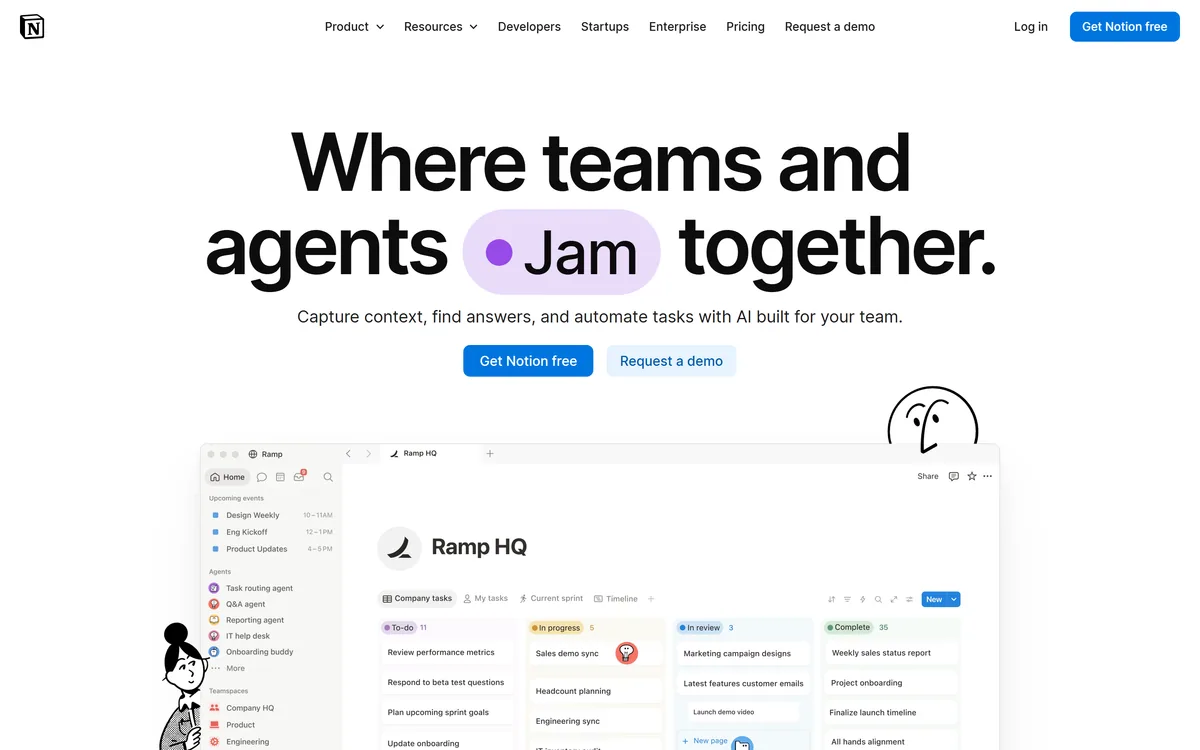

Notion AI is the assistant built into Notion — writing and editing in docs, agents that run recurring work like triage and reporting, AI Meeting Notes, and Enterprise Search across connected tools such as Slack, GitHub, Gmail, and Google Drive.
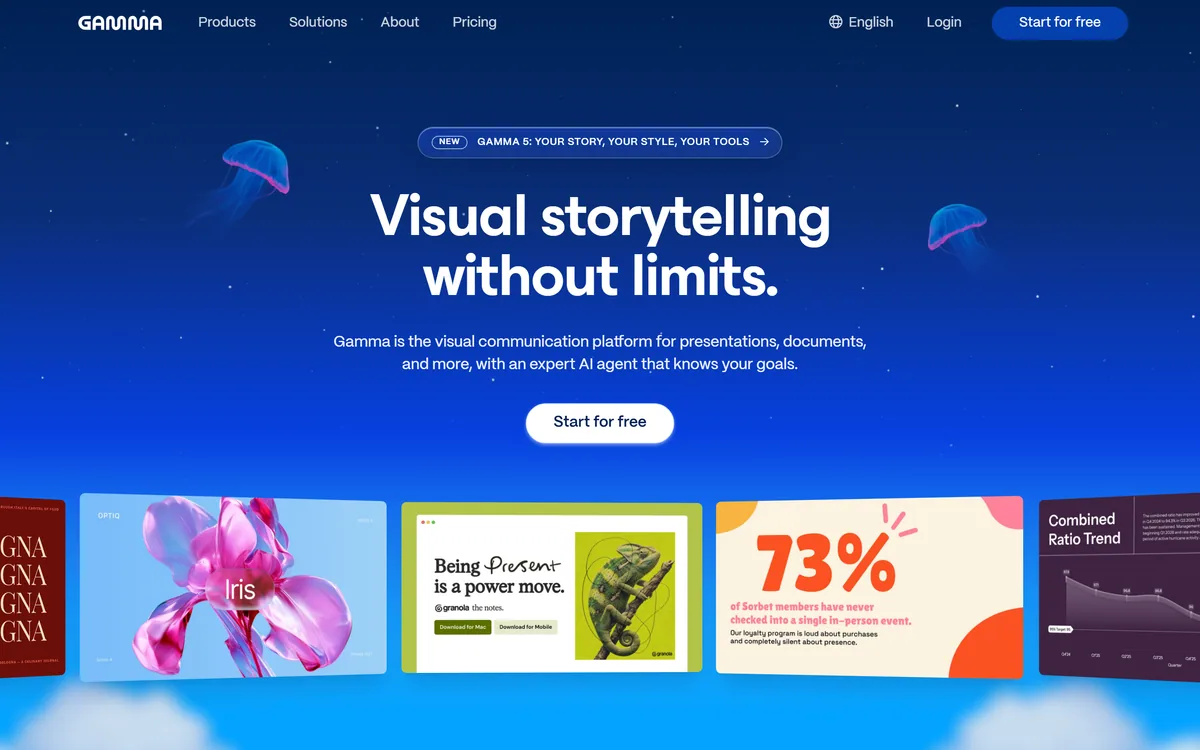
Gamma is a visual communication platform with an AI agent that turns an idea into presentations, documents or websites. It brainstorms an outline, designs a look from a prompt or inspiration, refines freeform, and imports and exports PowerPoint and PDF with 25+ connectors.
AI spreadsheet that analyzes data in plain language Category: Productivity & Automation.


Otter.ai transcribes meetings live, writes summaries and action items, and organises everything into searchable Channels — with OtterPilot joining Zoom, Teams, and Google Meet, plus role-specific agents for sales, recruiting, and SDR work.

Lokalise is a translation management platform built for continuous localisation: strings flow from your repository, design files and CMS into an AI translation pipeline that applies your approved terminology and tone, with role-based human approval before anything ships.
Related Pages