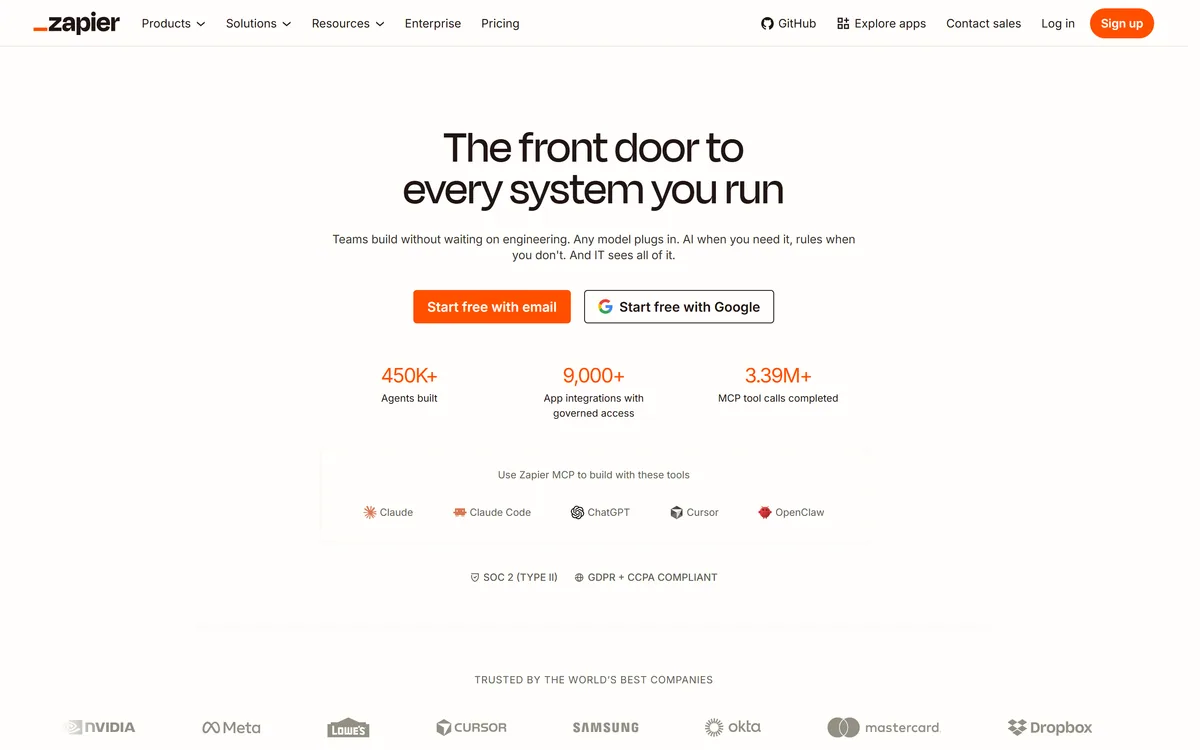

Zapier's AI layer adds agents and MCP tool access on top of its automation platform, connecting more than 9,000 apps with governed access so teams can mix AI decisions with deterministic rules under central oversight.
Productivity & Automation Review

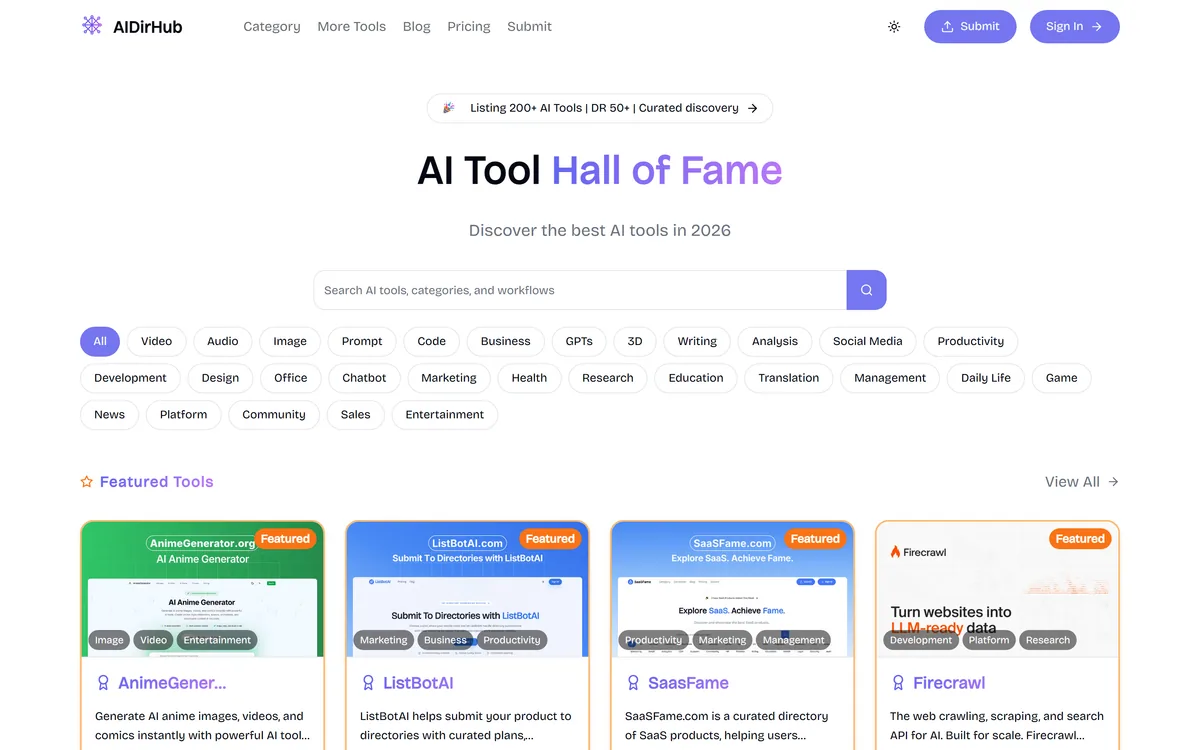
AIDirHub is a curated AI tools directory with search, tag filtering by platform, pricing model and skill level, category navigation across 30+ areas, featured and latest sections, a blog, and a submission route for vendors.
Fair
AIDirHub has an AInexfinder Editor Score of 3.4/5.
Best for: People surveying an AI category they do not yet know; Buyers assembling a comparison set before evaluating properly
The visit link goes to aidirhub.com, the official site. Paid placements on AInexfinder are always labelled. How we make money
Competitive disclosure: AInexfinder is itself an AI tools directory, so AIDirHub is a competitor. We are publishing this listing because our catalogue covers the category and readers deserve a straight account rather than a gap where a rival should be. Judge the assessment below on its reasoning, and apply the same tests to us.
There are a great many AI tool directories, and they are difficult to tell apart from their homepages. Each promises curation, each organises tools into categories, each offers search and filtering, and each invites vendors to submit listings.
AIDirHub is one of them: a browsable catalogue with category navigation across more than thirty areas, tag-based filtering by platform, pricing model and skill level, featured and latest sections, a blog, and a submission system for vendors seeking distribution.
Because AInexfinder is also a directory, the honest thing to write here is not a sales pitch and not a hatchet job. It is a description of what AIDirHub offers, followed by the questions worth asking of any directory — ours included.
| Category | AI tools directory |
|---|---|
| Operated by | The AIDirHub team, with support contact published on the site |
| Browsing | Category navigation across 30+ specialised areas |
| Search | Keyword search with filtering |
| Tag filters | Platform, pricing model, skill level |
| Homepage sections | Featured tools and latest additions |
| Vendor route | Submission system for listing a product |
| Editorial | Blog covering industry news and insights |
| Audiences | People looking for tools, and vendors seeking distribution |
| Footer | About, privacy policy, terms of service, sitemap, and partner links |
Category navigation across 30+ specialised areas
Keyword search with filtering
Tag-based filters for platform, pricing model and skill level
Featured tools section on the homepage
Latest additions section for recently listed products
Vendor submission system for getting a product listed
Blog covering industry news and insights
Individual product pages for each listed tool
Directories are one discovery route among several, each with a different bias.
| Tool | What it gives you | Main weakness | Best used for |
|---|---|---|---|
| AIDirHub | Browsable catalogue with category and tag filtering | Entry depth and freshness are the open questions | Discovering categories and assembling comparison sets |
| MaxAEO | What AI assistants say about tools in a category | Measures visibility, does not evaluate quality | Understanding what buyers are actually being told |
| Perplexity AI | Synthesised answers with citations | Depends on which sources it reaches | A quick shortlist with sources you can follow |
| Klue | Structured competitive intelligence | Built for sales teams, not general discovery | Tracking competitors seriously rather than browsing |
| Elicit | Evidence extraction from published research | Academic rather than commercial coverage | Checking whether a claimed capability has evidence |
Four questions separate a directory worth using from a page of links. They are more useful than any feature list, and you can apply them in about five minutes.
This is the hardest problem in the category and the one most directories quietly lose. AI tools change constantly — products get acquired, rebranded, repositioned or shut down — and a listing written eighteen months ago is frequently describing something that no longer exists in that form.
Test it directly: find three tools you already know well and read what the directory says about them. Anything stale about products you can verify tells you what to assume about the thousand you cannot.
A directory adds value by knowing something the vendor's own homepage does not tell you — what it is bad at, who it does not suit, how it compares.
An entry that only paraphrases marketing copy has saved you nothing, because you could have read the marketing copy. The number of entries is irrelevant if each one is a sentence and a link.
Every directory with a submission route has a commercial relationship with some of the tools it lists. That is normal, and it is how the category funds itself.
What separates a trustworthy directory from an advertising page is whether paid placement is labelled where it appears. 'Featured' sections are the specific thing to look at — ask whether featuring is editorial or purchased, and check whether the site tells you.
AIDirHub's tags — platform, pricing model, skill level — are a reasonable set, and skill level in particular is a genuinely useful axis that many directories omit.
The test is whether you can answer a question you actually have. 'Free video tools that run on Linux and suit a beginner' is a real query; a directory whose filters cannot express it is a browsing experience rather than a research tool.
AIDirHub's footer carries a large number of badges from other directories and launch platforms, and its homepage references appearing across 200+ directories. Anyone evaluating tools in this space will have noticed this pattern everywhere, and it is worth understanding rather than mistaking for endorsement.
Directory badges are a reciprocal listing and link exchange. A tool gets listed on many directories, each of which supplies a badge, and displaying them signals distribution rather than quality. No editorial judgement is involved in most of them.
This matters for a reader because a wall of badges looks like validation and is not. It tells you the operator has done distribution work — which is a real signal about their marketing, and no signal at all about whether the listings are accurate.
The same caution applies in reverse. When you see us or anyone else displaying such badges, read them the same way.
A badge wall tells you a site has been listed in many places. It tells you nothing about whether anything on it is true.
Having been sceptical, it is worth being fair about where directories earn their place — because they do.
Discovery in an unfamiliar category is the strongest case. If you do not know that a category of tool exists, no amount of searching finds it, and browsing a well-organised catalogue solves a problem search cannot.
Comparison sets are the second. Assembling five plausible alternatives yourself takes an afternoon of searching; a directory hands you the set in a minute, and you can then evaluate them properly.
Vendor distribution is the third, and it is the side of the market that funds all this. For a newly launched tool, directory listings are a legitimate and inexpensive route to being found — including by the AI assistants that increasingly read these pages when answering questions.
What a directory cannot do is make the decision. Any listing, ours included, is a starting point that should end with you on the vendor's own site, using the free tier.
Run this on AIDirHub, run it on us, run it on the next one you land on.
Directories, AI answers, competitive intelligence and evidence — different biases, different uses.
Last checked . Read from aidirhub.com during this check, with the screenshot above captured at the same time. Because the site is a competitor, we have restricted ourselves to observable facts and to guidance that applies equally to us.
AInexfinder is a competing directory, disclosed at the top of this page. We have not audited AIDirHub's listing accuracy, editorial process or commercial arrangements, and make no claims about any of them — the five-minute test above is offered so readers can check for themselves, on AIDirHub and on us alike.
AInexfinder does not list plan prices or billing details. For current pricing, plans, and trials, visit the official AIDirHub website.
Visit official website for pricingVendor pricing, credits, and billing policies change over time. Always confirm on the official site before you buy.
AIDirHub earns an AInexfinder Editor Score of 3.4/5 (fair). Best for: People surveying an AI category they do not yet know; Buyers assembling a comparison set before evaluating properly; Vendors seeking early distribution after a launch.
Visit AIDirHubLog in to write a review.
No reviews yet. Be the first to share your experience with AIDirHub.
Assigned reviewer
Daniel ReedSenior AI Tools Reviewer
Daniel leads AInexfinder's tool reviews. He researches each tool from its own pricing, documentation and policies, checks its claims against independent sources, and writes up what it does well, where it falls short and who it genuinely suits.
Daniel and the AInexfinder editorial team research AIDirHub from its own website, pricing, documentation and policies, checked against independent sources. This review is research-based: unless its method note says otherwise, we have not bought a plan or run hands-on tests. The Editor Score is our editorial judgement, and payment never changes it.
Similar Tools
Zapier's AI layer adds agents and MCP tool access on top of its automation platform, connecting more than 9,000 apps with governed access so teams can mix AI decisions with deterministic rules under central oversight.
Self-maintaining AI knowledge base for teams Category: Productivity & Automation.
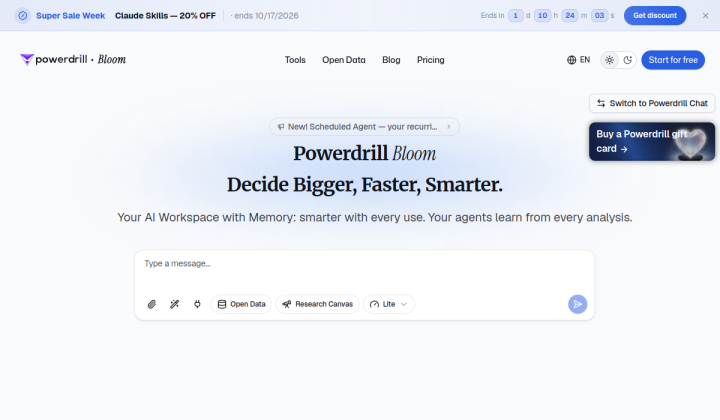
AI data workspace with memory and agent teams Category: Productivity & Automation.

Enterprise AI assistant for work search and agents Category: Productivity & Automation.
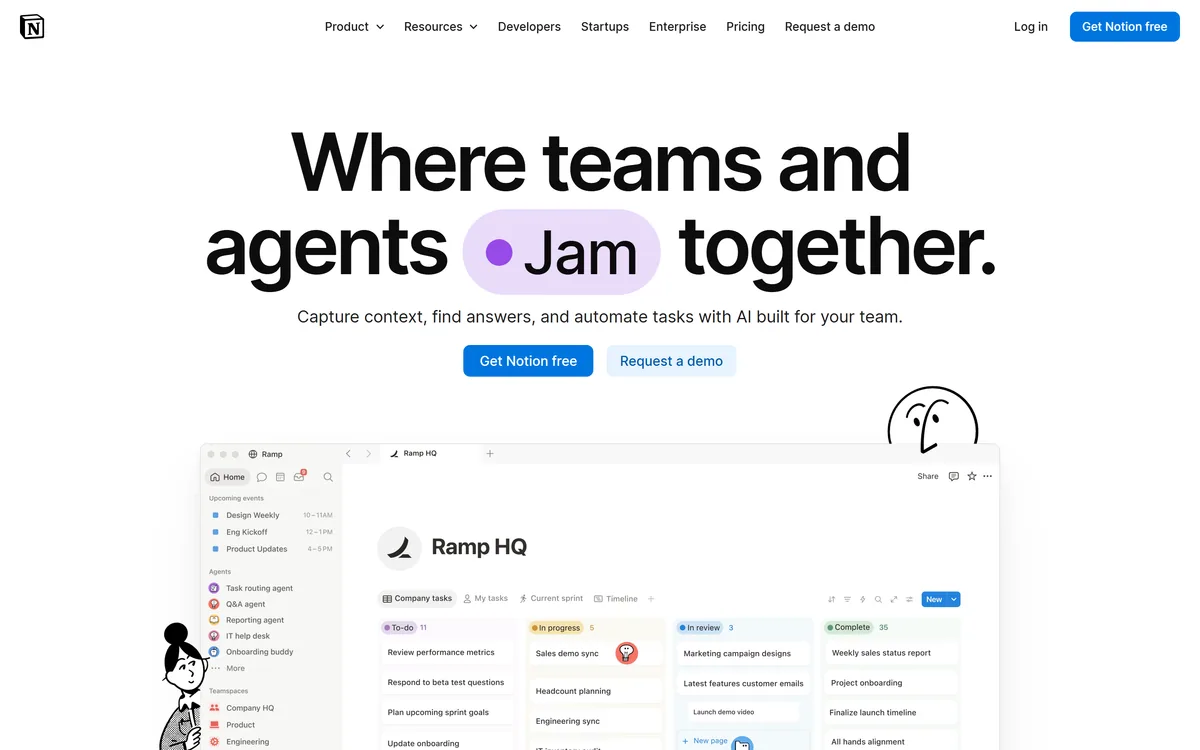

Notion AI is the assistant built into Notion — writing and editing in docs, agents that run recurring work like triage and reporting, AI Meeting Notes, and Enterprise Search across connected tools such as Slack, GitHub, Gmail, and Google Drive.
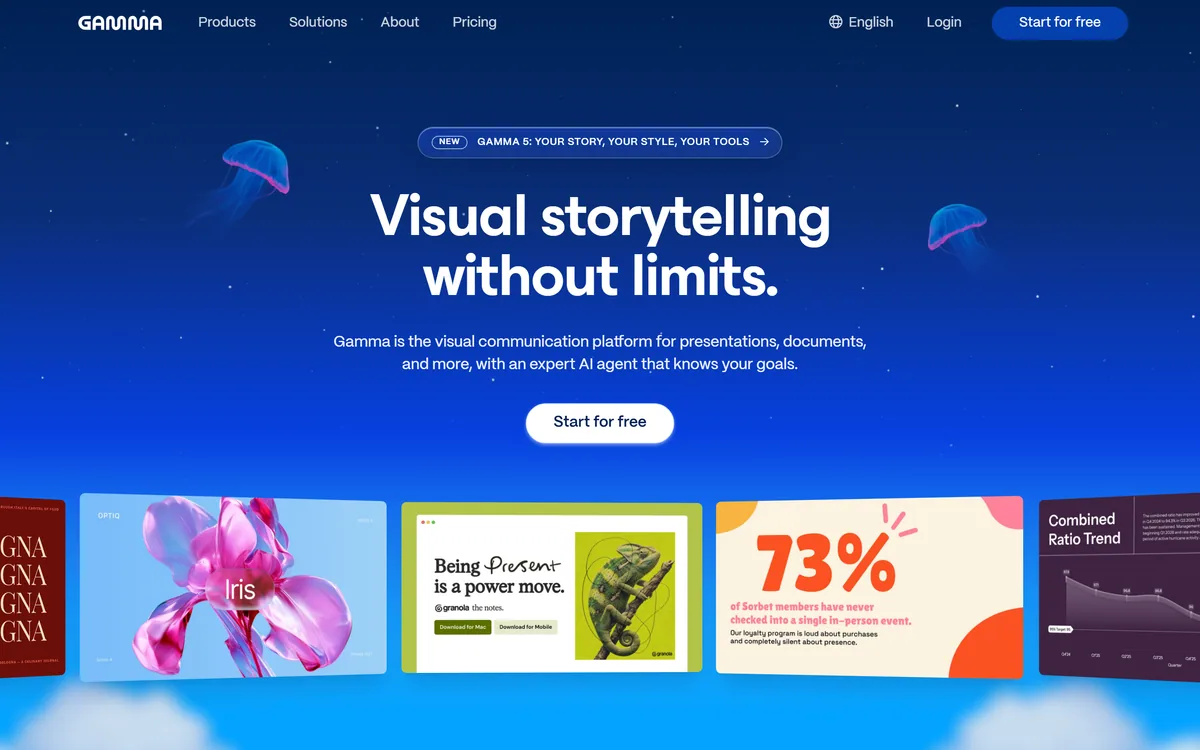
Gamma is a visual communication platform with an AI agent that turns an idea into presentations, documents or websites. It brainstorms an outline, designs a look from a prompt or inspiration, refines freeform, and imports and exports PowerPoint and PDF with 25+ connectors.
Related Pages