
AI cycling coach that adapts plans to your readiness Category: Health & Lifestyle.
Health & Lifestyle Review
Jefit is a workout planner and tracking app with a large exercise database, custom plan building, muscle recovery and one-rep-max metrics, and a community feed. Its adaptive plan analyses strength and fatigue to build the coming week, and periodization now applies to plans members build themselves.
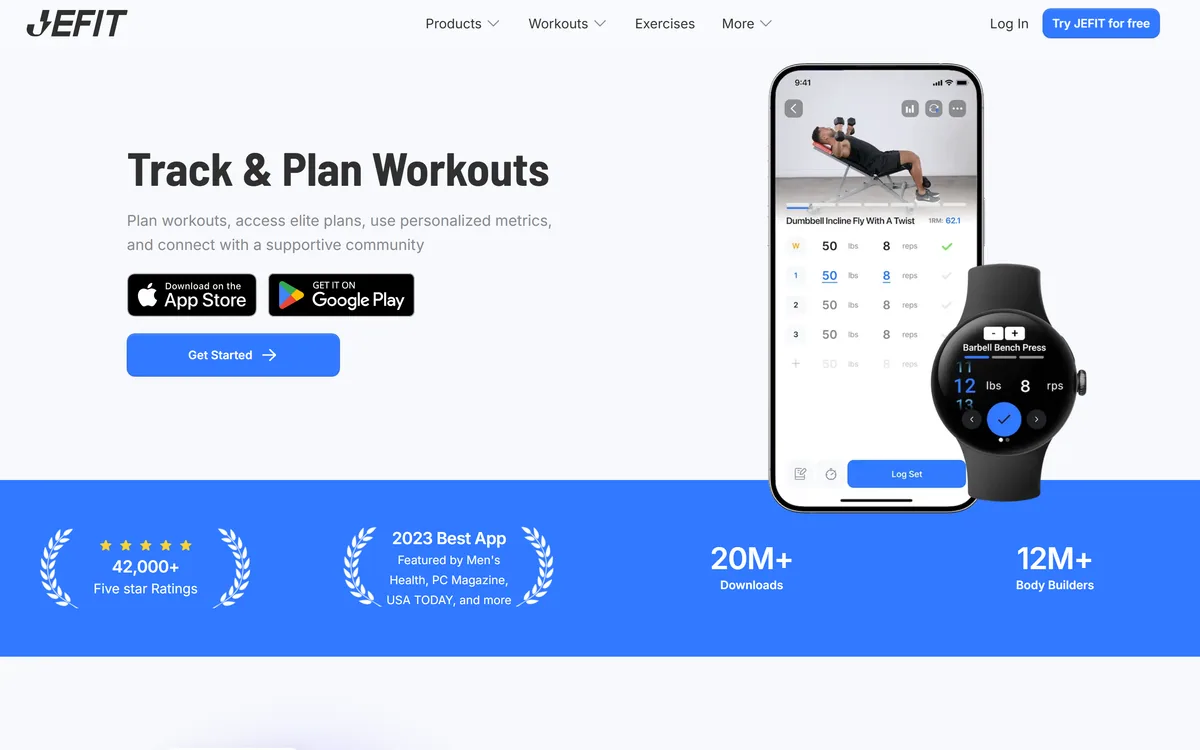
Very good
Jefit spent years being the serious person's logbook — a deep exercise database, real metrics and a training history that goes back further than most apps have existed. What it has added is the interesting part: periodization applied to plans you built yourself, rather than only to templates the company wrote. That is the harder engineering problem and the more useful feature, because people are attached to their own programmes and will not abandon them for a better structured one. The community feed is either the reason you stay or noise you ignore. AInexfinder Editor Score: 4.1/5.
Best for: Lifters who want a permanent training history; People attached to a programme they built themselves
The visit link goes to jefit.com, the official site. Paid placements on AInexfinder are always labelled. How we make money
For most of its life Jefit was a logbook — the app people used because the exercise database was deep, the charts were real, and it did not try to be a lifestyle brand.
That history is the asset. A training log with years of your own sets in it is the hardest thing in fitness software to walk away from.
What has changed is that the log now programmes. Periodization runs on plans you built yourself, which is a considerably harder feature than applying it to a template the company wrote.
Jefit describes its adaptive plan as running mesocycle training for you, with a four-phase structure and weekly signals deciding when to advance, hold or deload.
Those three words — advance, hold, deload — are the whole of intelligent programming, and most lifters only ever do the first.
A mesocycle is a block of roughly four to six weeks in which effort accumulates and then is deliberately reduced. Advancing means adding load or volume. Holding means repeating a week because the last one was not absorbed. Deloading means cutting deliberately so adaptation can catch up.
Left to themselves, people advance until something breaks. Progress feels like adding weight, so holding feels like failure and deloading feels like quitting — which is why so many lifters cycle between progress and injury rather than progressing steadily.
Automating the decision removes the psychology from it. When an app says hold, it is not a judgement about your commitment, which makes it far easier to accept than the same instruction from yourself. Handing over weight selection entirely is the next step along, and Dr. Muscle's whole premise.
Advance, hold, deload. Left to themselves, people only ever do the first, because holding feels like failure and deloading feels like quitting.
The change Jefit announced most recently is specific: periodization now works on the plans you build yourself, keeping your exercises while the app raises the effort phase by phase and schedules the recovery.
That distinction matters more than it sounds, and it is the harder half of the problem.
Applying periodization to a template is straightforward, because the company wrote the template and knows what every exercise is for. Applying it to something a user assembled means inferring intent from a list — which movements are the main lifts, which are accessories, what is being trained on which day.
It also solves the real adoption problem. Lifters are attached to their own programmes, often unreasonably, and will not abandon one they built for a better-structured one they did not. Meeting them inside their own plan is the only route that gets used.
The trade is that inference can be wrong. A plan the app misreads will be periodised against the wrong assumptions, which is worth watching for in the first block — particularly if your programme is unusual.
Alongside the coaching, Jefit's oldest asset remains its exercise database — with instructions, form guidance and the ability to build plans around preferred exercises, rest times, supersets, equipment and frequency.
Database depth sounds like a checkbox and is actually what determines whether an app survives contact with a real gym.
The failure is specific and universal. Your programme calls for an exercise, the gym does not have the machine, and you need a substitute right now — logged properly so the history stays continuous. An app with a shallow database forces you to log something approximate or nothing at all.
The same applies to the equipment filter. A plan built assuming a full commercial gym is useless in a hotel or a garage, and the ability to rebuild around what is actually available is the difference between training and skipping.
Supersets and rest time configuration matter for the same reason — they let the app represent how you actually train rather than an idealised version, and a log that does not match reality stops being kept. Endurance training has the same problem and a different answer, which is where Vici sits.
The site displays a member community in the millions, a download total roughly double that, and 42,000-plus five-star ratings, alongside a social feed of members posting about their sessions.
Those three numbers describe different populations and only one is about current use.
Downloads accumulate over the lifetime of an app and include everyone who installed it once. Members counts registrations. Five-star ratings count people who liked it enough to say so — a smaller and more meaningful population, and 42,000 of them is a substantial figure.
The community feed is the feature that divides users cleanly. For some it is why the app is opened daily — a small accountability structure that costs nothing and works.
For others it is exactly what they came to a logbook to avoid. Strength training is unusual in that its motivational structure is largely internal, and a feed of other people's sessions can be as demotivating as it is encouraging. Worth knowing that it can be ignored rather than being the product.
Jefit's metrics list includes muscle recovery breakdown, one-rep-max estimates, workout time and weightlifting charts.
Two of those change what you do, and two are mostly interesting.
The muscle recovery breakdown is the genuinely useful one. It answers the question people get wrong constantly — whether a muscle group has recovered enough to be trained again — and it is the mechanism behind most avoidable overuse in self-programmed lifting.
One-rep-max estimation is the other. It lets a plan prescribe percentages without you testing a true maximum, which is both safer and more practical, since testing a genuine one-rep max is a hard session in itself.
Workout time and cumulative volume charts are motivational rather than instructive. Seeing lifetime tonnage rise is satisfying and it does not tell you what to do differently — the same distinction that separates progress tracking in MacroFactor from the targets it actually sets.
The value of a training log is entirely a function of its continuity, and almost every log dies in the same six weeks.
This sequence builds a record that survives long enough to be worth having.
| Company | Jefit Inc., per the footer |
|---|---|
| Core function | Workout planning and set-by-set tracking |
| Adaptive plan | Analyses strength and fatigue to build the coming week, with a stated two-minute setup |
| Periodization | Applied to plans members build themselves, with phase-by-phase effort and scheduled recovery |
| Mesocycle structure | Described as four phases with weekly signals to advance, hold or deload |
| Plan building | Preferred exercises, rest times, supersets, equipment and frequency |
| Metrics | Muscle recovery breakdown, one-rep-max estimates, workout time and weightlifting charts |
| Prebuilt plans | Thousands, described as designed by experts |
| Devices | Mobile and watch logging |
| Community | A member feed, with membership stated in the millions |
| Ratings | 42,000-plus five-star ratings displayed |
| Press | Coverage cited from named consumer and technology publications |
Set-by-set workout logging on phone or watch
Custom plan building with supersets and rest times
Periodization applied to self-built plans
Adaptive weekly planning from strength and fatigue
Muscle recovery breakdown
One-rep-max estimation and progress charts
A large exercise database with instructions
Thousands of prebuilt expert plans
Gym apps differ by how much they decide and how much they record.
| Tool | Primary role | Decides | Best for |
|---|---|---|---|
| Jefit | Training log with adaptive planning | Phase progression on your own plan | Lifters attached to their own programme |
| Dr. Muscle | Automated programming | Weight and reps every session | Lifters who want it all decided |
| Gymscore | Form analysis | Nothing about load | Technique rather than progression |
| MacroFactor | Nutrition tracking | Calorie and macro targets | The fuelling half of progress |
| Vici | Running coach | Daily session adjustment | Endurance rather than strength |
Other tools across programming, technique and nutrition.
Last checked . Read from jefit.com in a browser session on the date above, including the full footer. The screenshot was captured at the same time.
What we could not confirm: the current size of the exercise database, which appears only inside a cited press quote; how the periodization feature infers which exercises in a user-built plan are main lifts versus accessories; how the muscle recovery breakdown is calculated; what separates the free tier from elite membership in practice; how the download, member and rating figures relate to each other; and pricing, which we did not reproduce. We did not install the app or log a session.
AInexfinder does not list plan prices or billing details. For current pricing, plans, and trials, visit the official Jefit website.
Visit official website for pricingVendor pricing, credits, and billing policies change over time. Always confirm on the official site before you buy.
Jefit earns an AInexfinder Editor Score of 4.1/5 (very good). Best for: Lifters who want a permanent training history; People attached to a programme they built themselves; Anyone who advances every week and never deloads.
Visit JefitLog in to write a review.
No reviews yet. Be the first to share your experience with Jefit.
Assigned reviewer
Daniel ReedSenior AI Tools Reviewer
Daniel leads AInexfinder's tool reviews. He researches each tool from its own pricing, documentation and policies, checks its claims against independent sources, and writes up what it does well, where it falls short and who it genuinely suits.
Daniel and the AInexfinder editorial team research Jefit from its own website, pricing, documentation and policies, checked against independent sources. This review is research-based: unless its method note says otherwise, we have not bought a plan or run hands-on tests. The Editor Score is our editorial judgement, and payment never changes it.
Similar Tools
AI cycling coach that adapts plans to your readiness Category: Health & Lifestyle.

Hormone-aware training, nutrition and recovery for women Category: Health & Lifestyle.

AI running coach for goal runners and Boston qualifiers Category: Health & Lifestyle.
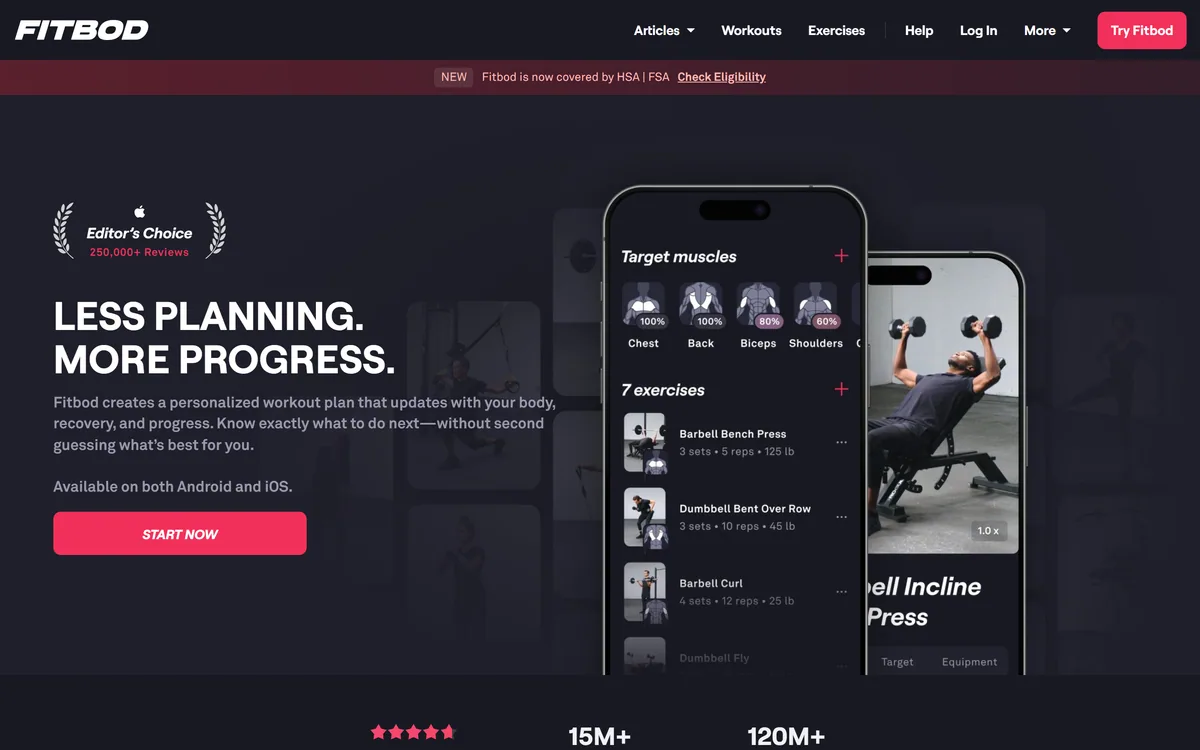
Fitbod review on AInexfinder — freemium AI tool for Health & Lifestyle. Features, pricing notes, and alternatives.
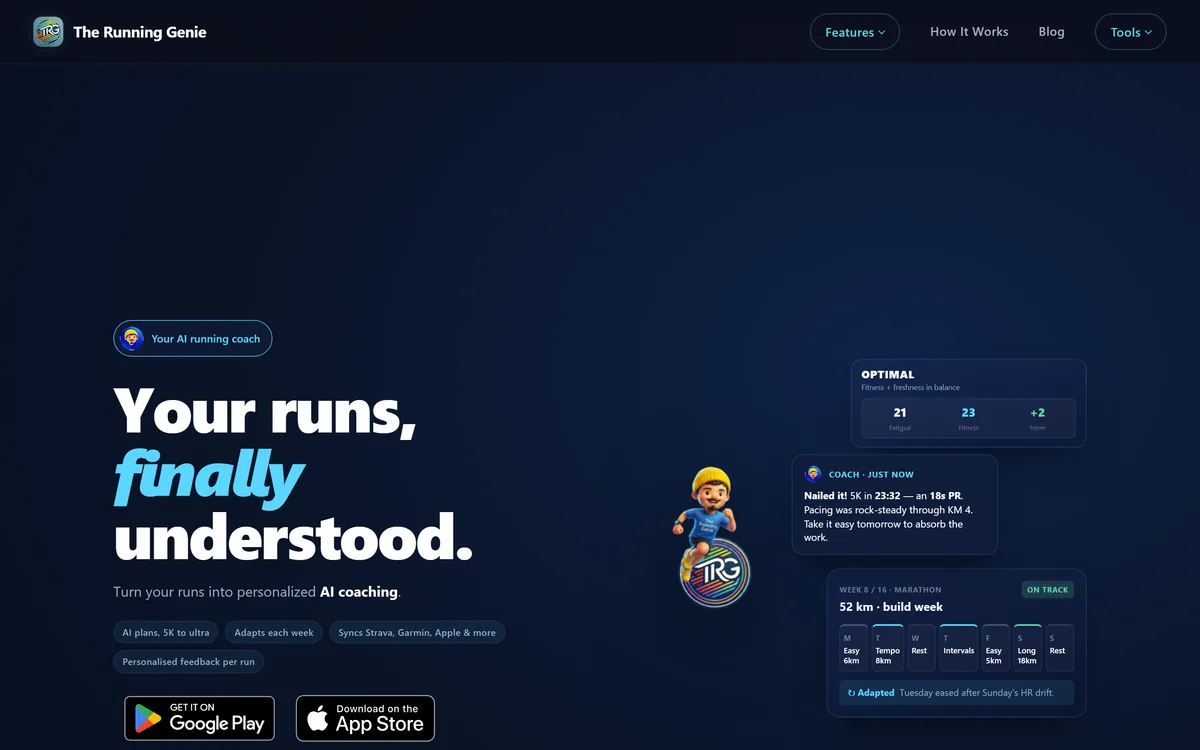
The Running Genie is an AI running coach that syncs from Strava, Garmin, Polar, Suunto and Apple Health, then builds adaptive training plans for 5K through ultra using VDOT, 80/20 polarised training and periodisation principles.
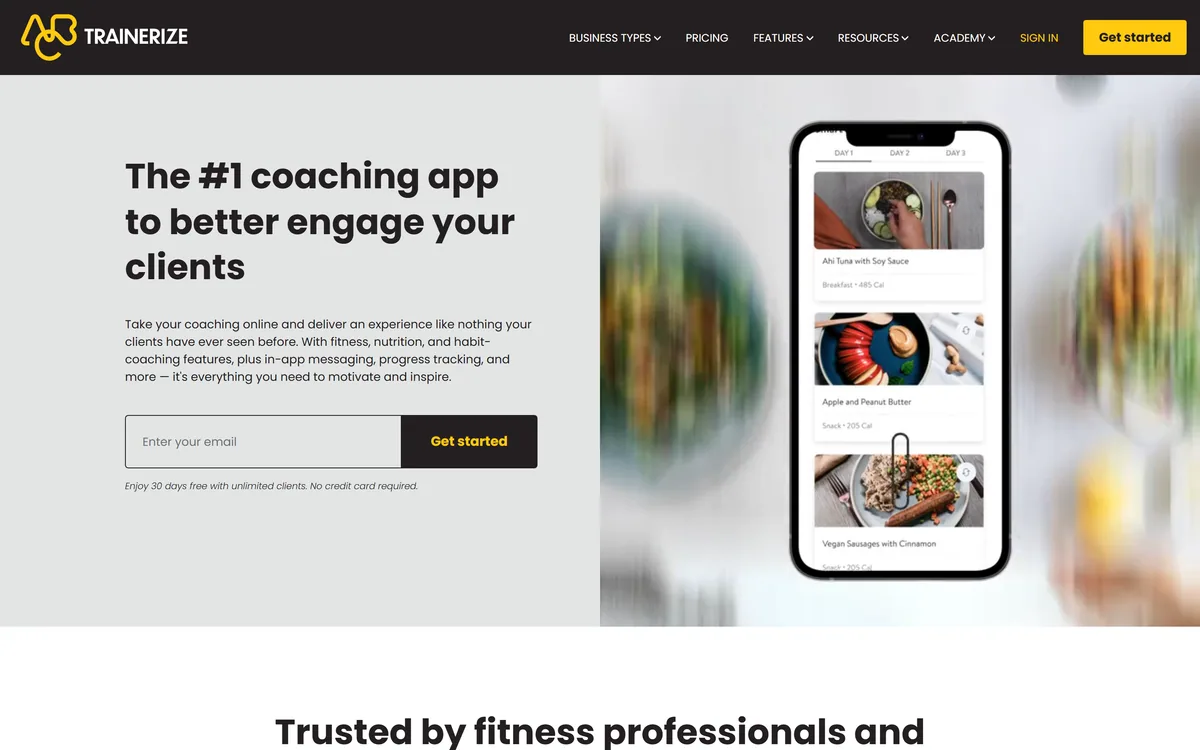
ABC Trainerize delivers training programmes, nutrition plans and habit coaching through a client-facing app with in-app messaging, progress tracking, scheduling and payments, serving a stated 400,000-plus trainers and 45,000-plus fitness businesses.
Related Pages