Coding & Development Review

Reviewed by Daniel Reed· Senior AI Tools ReviewerLast verified How we review
Kagent logo

Kagent Review

Verified

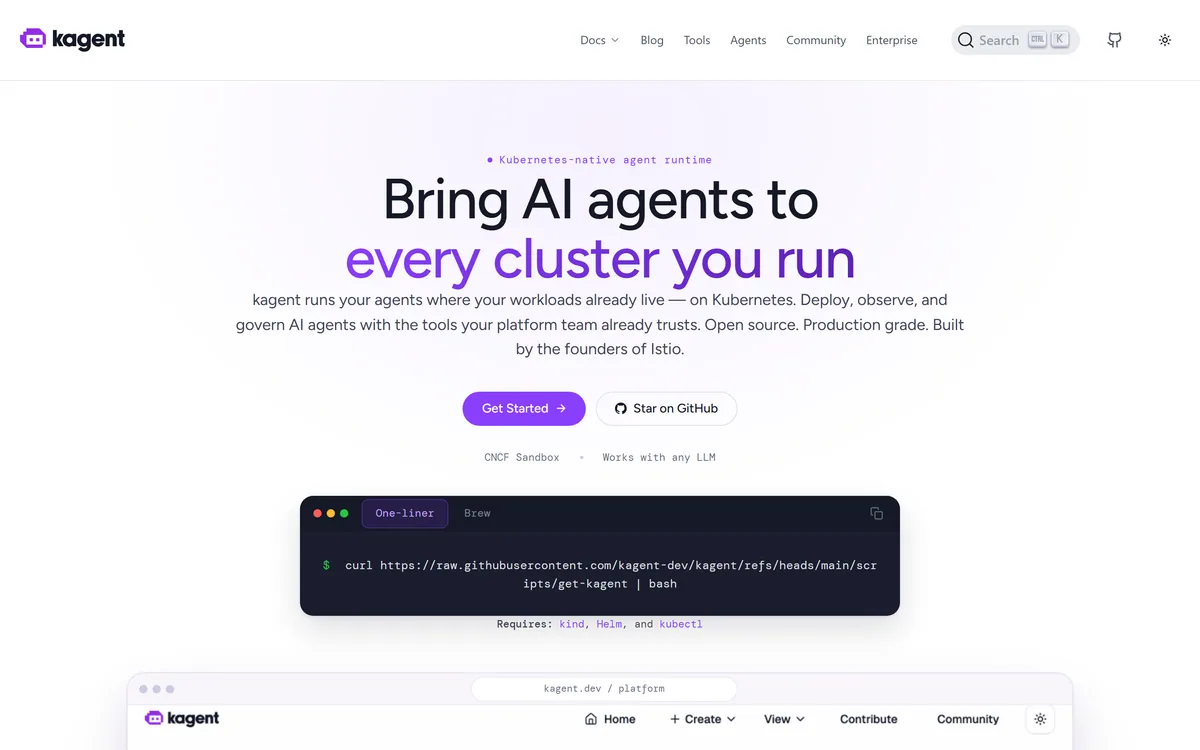
kagent is an open-source (Apache 2.0), Kubernetes-native runtime for deploying, observing and governing AI agents: agents are Kubernetes resources, with multi-LLM support, MCP tools, observability, human-in-the-loop gates and sandboxing. A CNCF Sandbox project created at Solo.io, it suits platform and DevOps teams already running Kubernetes who want to run agents the way they run everything else.

4.0Editor Score
Visit website
kagent.devAdded November 12, 2025
Kagent screenshot
4.0/5

Quick Verdict

Very good

kagent earns 4.0 as a serious, well-pedigreed, open-source runtime for running AI agents natively on Kubernetes. By making agents first-class Kubernetes resources, managed with the same GitOps, RBAC and observability as everything else, and staying model- and framework-agnostic with MCP tools, memory and human-in-the-loop gates, it lets platform teams govern agents the way they govern the rest of their stack. Being Apache-2.0 open source and self-hosted means no lock-in and no enterprise paywall on features, backed by a CNCF Sandbox pedigree from the Istio team. Its only real limit is fit: it assumes you already run Kubernetes and can operate infrastructure. For platform and DevOps teams that's an excellent choice; anyone wanting a managed, no-ops agent service should look elsewhere. AInexfinder Editor Score: 4.0/5.

Best for: Kubernetes-native agents; Governed, observable agents

Pricing:
Free
Last verified:
October 21, 2026
Official site:
kagent.dev

The visit link goes to kagent.dev, the official site. Paid placements on AInexfinder are always labelled. How we make money

Teams that run everything on Kubernetes don't want AI agents to be a separate, ungoverned island with its own deployment and security story. kagent's pitch is to end that: run agents natively on Kubernetes, the way you run everything else.

Agents become Kubernetes resources, with multi-LLM support, MCP tool servers, observability, human-in-the-loop gates and sandboxing, all installable with a single helm command. It sits among agent frameworks like Cline, but at the cluster-infrastructure layer.

This review covers how kagent runs an agent, which teams it suits, how it's licensed, and where its fit is specific, to weigh first.

kagent Kubernetes-Agent Facts

What it isAn open-source, Kubernetes-native AI-agent runtime
CompanyA CNCF Sandbox project, created at Solo.io; 'a Series of LF Projects, LLC'
CoreAgents as Kubernetes CRDs (GitOps, kubectl, RBAC)
ModelsOpenAI, Anthropic, Gemini, xAI, Azure, Bedrock, Vertex, Ollama, HF
FrameworksBYO LangGraph, CrewAI, Google ADK; MCP tools; A2A
OpsOpenTelemetry/Prometheus observability, vector memory, HITL gates
LicenseOpen source (Apache 2.0), self-host; single helm install
SensitiveNone major (security/sandboxing are features)

Running AI Agents Natively On Kubernetes

kagent's core idea is to make AI agents first-class citizens of Kubernetes. Agents are defined as Kubernetes resources (CRDs), so you deploy, version and manage them with the same GitOps, kubectl and RBAC you already use, rather than bolting on a separate agent platform.

It's model- and framework-agnostic: it works with many LLM providers (OpenAI, Anthropic, Gemini, xAI, Azure OpenAI, Bedrock, Vertex, Ollama, Hugging Face) and lets you bring frameworks like LangGraph, CrewAI or Google ADK, connect MCP tool servers, and use agent-to-agent (A2A) communication.

For operations it brings the things platform teams expect, OpenTelemetry and Prometheus observability, long-term vector memory, human-in-the-loop approval gates, context compaction, sandboxing and RBAC, Istio/Ambient mTLS, and Postgres storage, all installable with a single helm command.

The honest framing is that kagent is a serious, well-pedigreed piece of infrastructure, it's open source under Apache 2.0, a CNCF Sandbox project created at Solo.io (whose team founded Istio), with a growing GitHub following. Because it's open source and self-hosted, there's no lock-in and every feature works without waiting for an enterprise deal. The caveats are about fit, not quality: it assumes you already run Kubernetes and have the platform-engineering skills to operate it, so it's not for individuals or teams wanting a managed, no-ops agent service; and as self-hosted infrastructure, the running and securing of it is on you. Its claims are vendor-stated, though the code being open helps you verify them.

kagent is serious, open-source agent infrastructure for Kubernetes teams; its only real limit is that it assumes you run Kubernetes and can operate it.

How Does kagent Run An Agent?

kagent pairs Kubernetes-native agent definitions with model and framework freedom.

Agents As Kubernetes Resources

Agents are Kubernetes resources managed by GitOps, kubectl and RBAC, so they fit your existing cluster operations.

An agent coding tool like Relevance AI offers a managed, low-code agent platform; kagent's angle is self-hosted, Kubernetes-native infrastructure, the opposite end, for teams who want to own the stack.

Models, Tools And Observability

It's model- and framework-agnostic, with MCP tools, observability, memory and human-in-the-loop gates, installed via one helm command.

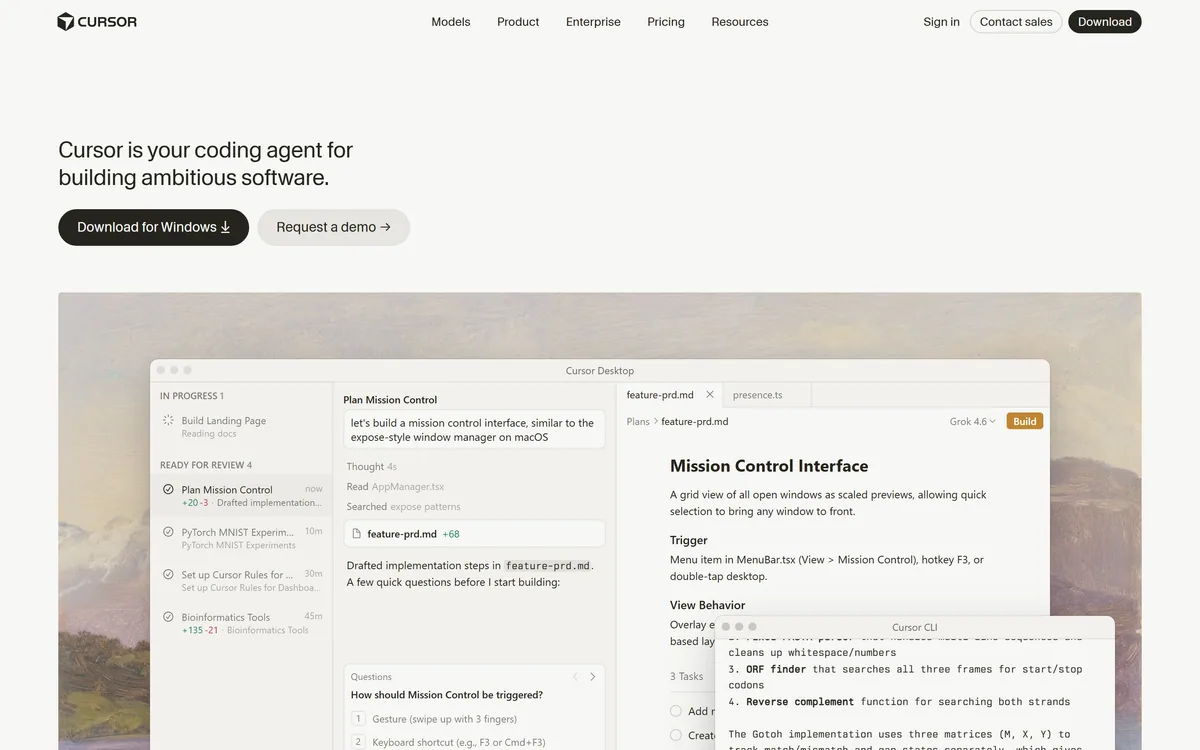
A coding agent like Kilo Code helps you write software; kagent is about running agents in production on your cluster, so match it to whether your need is building or operating agents.

Which Platform Teams kagent Suits

kagent suits platform-engineering, DevOps and SRE teams that already run Kubernetes and want to deploy and govern AI agents with the same tooling, controls and observability as their other workloads.

It suits organisations that value open source and self-hosting, no lock-in, full control, and that have the skills to operate cluster infrastructure and want model and framework freedom.

It suits less well individuals or small teams without Kubernetes, anyone wanting a managed, no-ops agent service, and non-technical users, this is infrastructure, not an app.

A fair way to place it: if you run Kubernetes and want agents to be a governed, observable, self-hosted part of your platform rather than a separate SaaS, kagent is an excellent, no-lock-in fit; if you don't run Kubernetes or want someone else to operate it, a managed agent platform will serve you far better, which is purely a question of fit.

kagent's Licence And Enterprise Tier

kagent is open source under Apache 2.0 and free to self-host, every feature works with a single helm install, with no paywall; an 'Enterprise' option exists but no price is published. We do not publish prices; the open-source core costs nothing beyond your own infrastructure and operating effort.

The value question isn't licence cost (the core is free) but operating cost: running agents on your own cluster means you bear the compute, the model-API usage and the engineering time to operate and secure it.

The sensible approach is to install the open-source version on a test cluster, wire up a model provider and an MCP tool, run a real agent through its observability and approval gates, and judge the operating effort before standardising on it.

Deploying One Agent With kagent

Because it's self-hosted infrastructure, deploy one agent on a test cluster first.

  1. Install kagent on a test cluster with a single helm command.
  2. Wire up a model provider and an MCP tool server.
  3. Deploy one real agent as a Kubernetes resource via GitOps.
  4. Exercise the observability, memory and human-in-the-loop gates.
  5. Judge the operating and securing effort for your platform team.
  6. Pass/fail: kagent is worth it if it fits your Kubernetes operations.
  7. Treat capability claims as vendor-stated; the open code aids verification.

kagent, The Agent-Runtime Brief

  • kagent runs agents on Kubernetes: AI agents as native Kubernetes resources.
  • It's open source: Apache 2.0, a CNCF Sandbox project, self-hosted.
  • It's built for platform teams: GitOps, RBAC, observability and sandboxing.
  • The fit is specific: it assumes you already run Kubernetes.

kagent Kubernetes-Agent Terms

Kubernetes-native
Built to run as part of Kubernetes, using its resources, tooling and controls rather than a separate system.
CRD
Custom Resource Definition: a way to define your own object types (here, agents) that Kubernetes manages.
MCP
Model Context Protocol: a standard for connecting AI models to external tools and data sources.
Human-in-the-loop
A design where a person approves or checks the AI's actions at key steps rather than letting it run unchecked.
Key Features of Kagent

  • Agents as K8s resources

  • Multi-LLM support

  • BYO frameworks

  • MCP tool servers

  • Observability

  • Vector memory

  • Human-in-the-loop gates

  • Sandboxing & RBAC

Pros & Cons

Pros

5
  • Runs agents natively on Kubernetes
  • Open source, no lock-in
  • Model and framework agnostic
  • Built-in observability and HITL gates
  • Strong pedigree (CNCF, Istio founders)

Cons

5
  • Assumes you already run Kubernetes
  • Not a managed, no-ops service
  • Operating and securing it is on you
  • Not for non-technical users
  • Enterprise option unpriced

Who Kagent Is For

A Good Fit For

  • Kubernetes-native agents
  • Governed, observable agents
  • Self-hosted agent infra
  • Platform-team deployments
  • No-lock-in agent runtime

kagent Beside Agent Frameworks

The useful comparison is with other agent tools and platforms.

ToolToolApproachBest for
kagentK8s-native agent runtimeSelf-hosted, governed agentsPlatform/DevOps teams
ClineOpen-source coding agentIn-editor agentDevelopers
Relevance AIManaged agent platformLow-code agentsBusiness teams
Kilo CodeAI coding agentWriting softwareDevelopers

Is kagent The Right Agent Runtime?

Platform Teams kagent Serves

  • Platform-engineering and DevOps teams
  • Teams already running Kubernetes
  • Organisations valuing open source/self-host
  • Those wanting model and framework freedom
  • Teams needing governed, observable agents

When kagent Assumes A Kubernetes Stack

  • Individuals or teams without Kubernetes
  • Anyone wanting a managed, no-ops service
  • Non-technical users
  • Those who won't operate infrastructure
  • Anyone needing an out-of-the-box app

What kagent's Open-Source Pages State

Last checked . Read from kagent.dev during this check, with the screenshot above captured at the same time.

  • Agents defined as Kubernetes resources (CRDs)
  • GitOps, kubectl and RBAC management
  • Multi-LLM and bring-your-own-framework support
  • MCP tools, A2A, observability and vector memory
  • Human-in-the-loop gates and sandboxing
  • Open source (Apache 2.0), self-hosted, single helm install
  • A CNCF Sandbox project created at Solo.io
  • An unpriced 'Enterprise' option exists
  • No prices reproduced here, in line with this site's pricing policy

kagent is open-source infrastructure, so running and securing it is on you, and it assumes you already operate Kubernetes and have the platform skills to do so, it's not a managed, no-ops service. Its capability claims are vendor-stated, though the open Apache-2.0 code helps you verify them. The core is free; your costs are compute, model usage and operating effort.

Agent Tools To Weigh Beside kagent

A coding agent, a managed agent platform and an AI coder to weigh beside kagent.

  • Cline — an open-source in-editor coding agent
  • Relevance AI — a managed, low-code agent platform
  • Kilo Code — an AI coding agent for writing software

Kagent Pricing

AInexfinder does not list plan prices or billing details. For current pricing, plans, and trials, visit the official Kagent website.

Visit official website for pricing

Vendor pricing, credits, and billing policies change over time. Always confirm on the official site before you buy.

Frequently Asked Questions

What is kagent?
kagent is an open-source, Kubernetes-native runtime for deploying, observing and governing AI agents: agents are Kubernetes resources, with multi-LLM support, MCP tools, observability, human-in-the-loop gates and sandboxing.
Is kagent free?
Yes, the core is open source under Apache 2.0 and free to self-host, every feature works with a single helm install. An unpriced 'Enterprise' option exists. Your costs are compute, model-API usage and operating effort.
Do I need Kubernetes to use kagent?
Yes. kagent is Kubernetes-native by design, agents run as Kubernetes resources, so it assumes you already run Kubernetes and have the platform-engineering skills to operate it.
Which AI models does kagent support?
Many: OpenAI, Anthropic, Gemini, xAI, Azure OpenAI, Bedrock, Vertex, Ollama and Hugging Face, and it lets you bring frameworks like LangGraph, CrewAI and Google ADK. It's model- and framework-agnostic.
Who makes kagent?
It's a CNCF Sandbox project created at Solo.io (whose team founded Istio), governed as 'a Series of LF Projects, LLC'. Being open source, you can inspect and contribute to the code.
Is kagent a managed service?
No. It's self-hosted infrastructure you run on your own cluster, so operating and securing it is on you. If you want a managed, no-ops agent platform, kagent isn't the right choice.
Who is kagent for?
Platform-engineering, DevOps and SRE teams already running Kubernetes who want to deploy and govern AI agents with the same tooling, controls and observability as their other workloads.
Does kagent support human oversight?
Yes, it includes human-in-the-loop approval gates, plus sandboxing and RBAC, so agents can be run with the controls production workloads need rather than unchecked.
Is kagent production-ready?
It markets itself as 'open source, production grade' with observability, memory and governance built in, but as self-hosted infrastructure you should validate it on a test cluster against your own requirements first.
What is the best way to try kagent?
Install the open-source version on a test cluster via helm, wire up a model provider and an MCP tool, run a real agent through its observability and approval gates, and judge the operating effort before standardising on it.
4.0/5

Bottom Line

Kagent earns an AInexfinder Editor Score of 4.0/5 (very good). Best for: Kubernetes-native agents; Governed, observable agents; Self-hosted agent infra.

Visit Kagent

User Reviews

Log in to write a review.

What Users Say

No reviews yet. Be the first to share your experience with Kagent.

Reviewed by Daniel Reed

Daniel Reed

Assigned reviewer

Daniel Reed

Senior AI Tools Reviewer

Daniel leads AInexfinder's tool reviews. He researches each tool from its own pricing, documentation and policies, checks its claims against independent sources, and writes up what it does well, where it falls short and who it genuinely suits.

Daniel and the AInexfinder editorial team research Kagent from its own website, pricing, documentation and policies, checked against independent sources. This review is research-based: unless its method note says otherwise, we have not bought a plan or run hands-on tests. The Editor Score is our editorial judgement, and payment never changes it.

AI tool reviewsPricing researchAI software
Last verified
Sources used
  • kagent.dev
  • AInexfinder listing fields (features, pros/cons, description)
  • Public vendor pages when available
Editorial policy
Listings may include affiliate or sponsored placements, which are labeled when present. Editorial scores and cons are not sold. See our affiliate disclosure and review methodology.
Embed this listing on your site
Featured on AInexfinder
Get your badge →

Related Pages

Kagent Comparisons & Guides

In Our Ranked Guides

Explore More