DevOps & Deployment Rankings

Best DevOps & Deployment AI Tools in 2026: 15 Ranked

Automate DevOps workflows and deployments with AI, ranked on Editor Score, pricing and fit — each linked to its full review.

Daniel ReedBy the AInexfinder Editorial Team·Overseen by Daniel ReedUpdated October 2026How we rank →

The Short Answer

CAST AI is our top-ranked devops & deployment tool, with a provisional score of 4.6/5 — AI-driven Kubernetes cost and performance automation. Automate DevOps workflows and deployments with AI. Across the 15 tools ranked here, 6 of the 15 offer a free or freemium plan.

How we rank: research-based. Every tool here has its own review, scored from the vendor's documentation, pricing and independent sources; this list orders them with one published formula led by that Editor Score. Last updated October 2026. How we rank

At a Glance: The 15 Best DevOps & Deployment Picks

#ToolScorePricingFree planLinks
1
CAST AI logo
CAST AI

Top ranked

4.6FreemiumReview
24.6FreemiumReview
34.6FreemiumReview
44.6FreeReview
5
Traversal logo
Traversal

Best paid

4.3PaidReview
64.5PaidReview
74.2PaidReview
84.1PaidReview
94.4FreemiumReview
104.0PaidReview
114.0FreeReview
124.0PaidReview
134.0PaidReview
143.9PaidReview
154.3PaidReview
Scores: top 10 devops & deployment tools

Score out of 5 — each tool's Editor Score.

Our Top 15 DevOps & Deployment Picks, Ranked

1

CAST AI

Top ranked
Est.4.6/5

AI-driven Kubernetes cost and performance automation Category: Coding & Development.

  • Large automatic Kubernetes cost reductions
  • Broad multi-cloud and integration coverage
  • Low-risk read-only evaluation before automation
  • Automatic workload rightsizing from real usage
  • Specialized only to Kubernetes environments
  • Full automation requires trusting an external platform
  • Results still need a quick human review for best quality
  • Integrations may not cover every app in your stack

Best for: Users who need automatic workload rightsizing from real usage

Pricing: Freemium
2Est.4.6/5

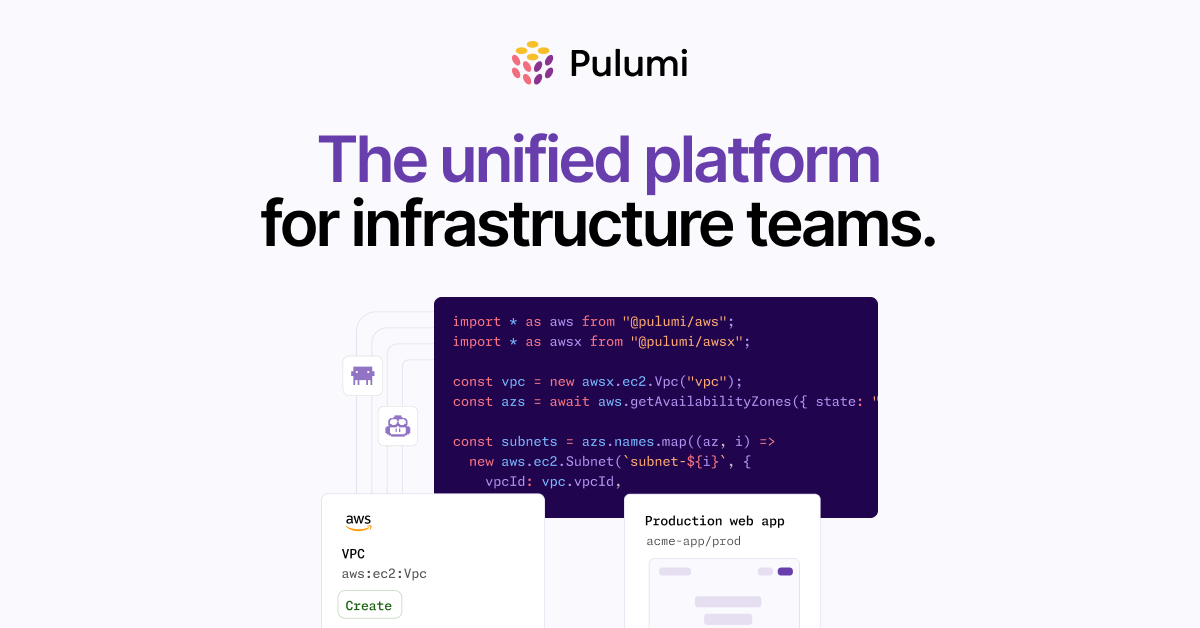
Infrastructure as code in real programming languages Category: Coding & Development.

  • Real programming languages enable reuse
  • Broad cloud and SaaS provider coverage
  • Capable AI agent with enterprise governance
  • IaC in TypeScript, Python, Go, C# and more
  • Code-first approach has a learning curve
  • Advanced features require paid plans
  • Team collaboration tools depend on your plan
  • Customization options can take time to master

Best for: Teams that need iaC in TypeScript, Python, Go, C# and more

Pricing: Freemium

3Est.4.6/5

Visually design cloud infra, auto-generate Terraform Category: Coding & Development.

  • Keeps diagrams and IaC code in sync
  • Multi-cloud, provider-optimized output
  • Integrated security and policy enforcement
  • Visual cloud architecture designer
  • Highly custom infrastructure may need manual edits
  • Collaboration and enterprise features require paid tiers
  • Compare a short trial against your real workflow first
  • Advanced features may sit on paid plans

Best for: Users focused on visual cloud architecture designer

Pricing: Freemium

4Est.4.6/5

Open-source AI workflows to automate developer gruntwork Category: Coding & Development.

  • Free and open source
  • Self-hosted with full model control
  • Composable across many automation types
  • Composable patchflow automations
  • Requires setup and workflow tuning
  • You bear your own LLM and infrastructure costs
  • Results still need a quick human review for best quality
  • Integrations may not cover every app in your stack

Best for: Composable patchflow automations workflows

Pricing: Free

5

Traversal

Best paid
4.3/5

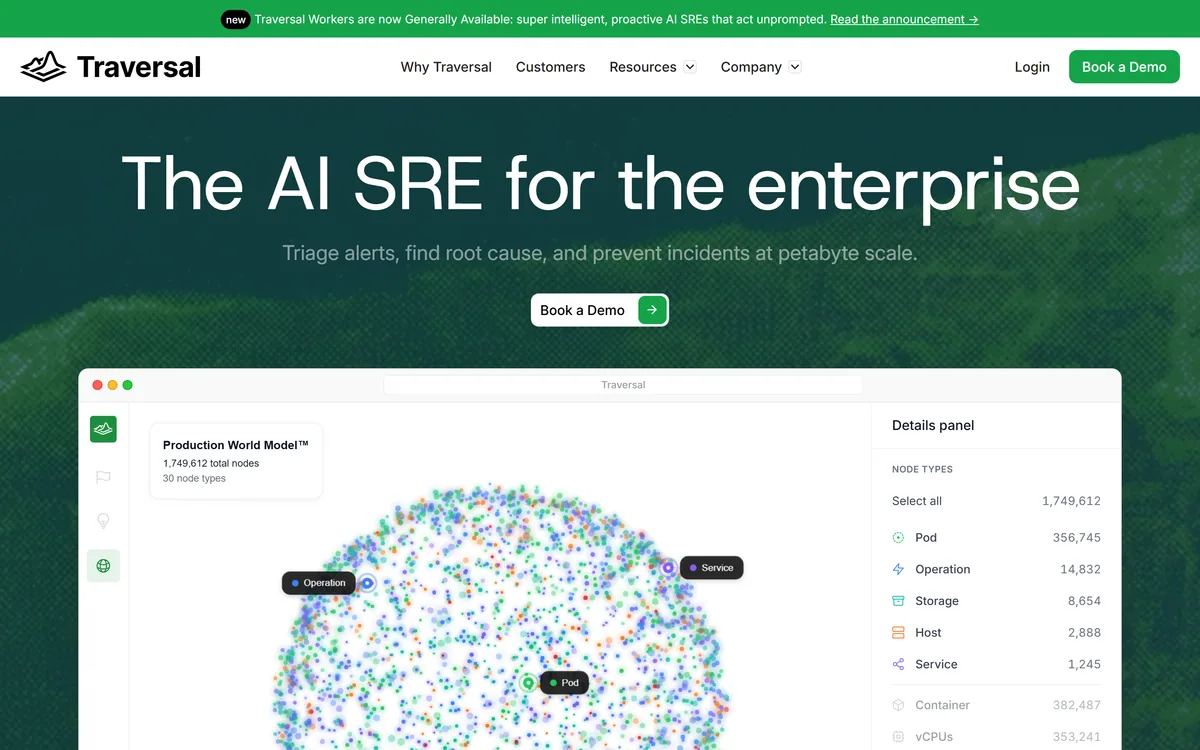
Traversal is an AI site reliability engineering platform. It builds a dependency graph of production — what the vendor calls a Production World Model — and uses a causal search engine to triage alerts, perform evidence-backed root cause analysis across distributed systems, and drive automated remediation.

  • Attacks diagnosis rather than detection, which is where incident time actually goes
  • An explicit dependency graph is the right architecture for causal reasoning
  • Evidence-backed conclusions can be checked rather than merely trusted
  • Named customer results, including DigitalOcean and Cloudways, exceed the category's usual evidence standard
  • Stated RCA accuracy means roughly one in five investigations reaches a wrong conclusion
  • The dependency graph must stay current, and a stale graph produces confidently wrong causality
  • Reasoning stops at poorly instrumented components, which is often where incidents start
  • Self-healing acting on a wrong diagnosis can compound an outage

Best for: Platform and SRE teams running large distributed systems

Pricing: Paid · Very good

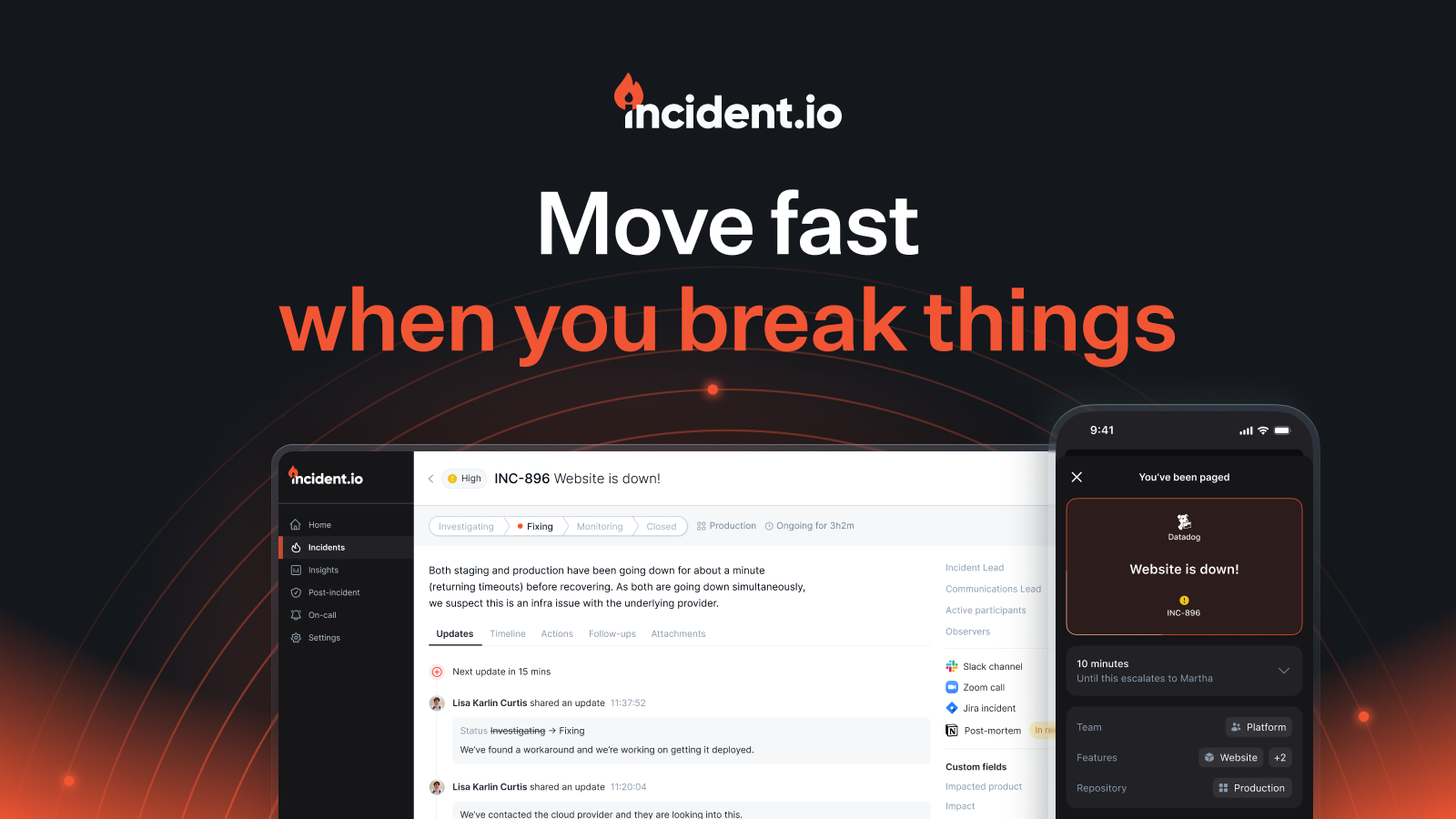
AI that resolves incidents like your best engineer Category: Coding & Development.

  • Deep integration with Slack, Teams, and existing incident workflows
  • Investigates across many data sources for faster root cause
  • Part of a unified platform covering on-call, response, and status pages
  • Multi-agent autonomous investigation of alerts and incidents
  • Per-user pricing can grow with larger teams and add-ons
  • AI-suggested fixes still require human validation before applying
  • Worth comparing plans before long-term commit
  • Cost can add up if you only need a few features

Best for: Users who need multi-agent autonomous investigation of alerts and incidents

Pricing: Paid

Resolve.ai puts AI agents into software operations: triaging alerts, investigating incidents alongside engineers to find root cause, and running operational workflows on a schedule or trigger. It is sold to large engineering organisations, with Coinbase, DoorDash, Snowflake and Robinhood among its named customers.

  • Targets triage noise, which is what actually makes on-call miserable
  • A customer list including Coinbase, Robinhood and Snowflake is a substantial diligence filter
  • Framing agents as rotation participants rather than assistants is the more ambitious and more useful position
  • Reducing how many engineers an incident consumes matters as much as reducing its duration
  • Outcome percentages are published with no baseline and an up-to qualifier
  • No founders, funding or headquarters published, which matters for an enterprise purchase
  • No named observability integrations, so implementation effort is unknown from outside
  • The boundary between investigating and acting on production is not specified publicly

Best for: Large engineering organisations with heavy on-call burden

Pricing: Paid · Very good

84.1/5

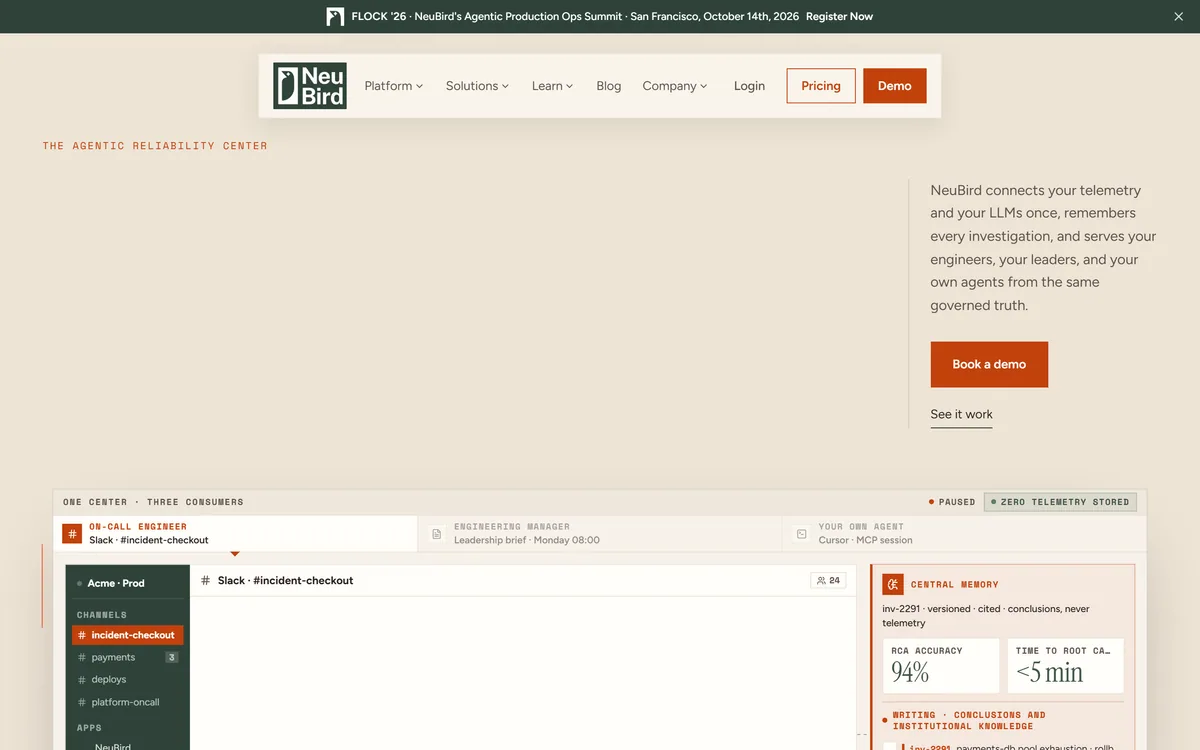
NeuBird is an agentic reliability platform (AI SRE) that connects your telemetry and LLMs once, remembers every investigation in a central governed memory, and serves engineers, leaders and your own agents the same cited truth, aiming for sub-five-minute root cause without storing your telemetry.

  • Remembers investigations so knowledge is not re-derived
  • Serves people and agents one cited truth
  • Keeps your existing stack in place
  • Thoughtful conclusions-not-telemetry posture
  • Overkill for small, low-incident teams
  • Accuracy figures are vendor-stated
  • Demo-led, no public pricing
  • Needs real volume to build useful memory

Best for: SRE and platform teams

Pricing: Paid · Very good

9Est.4.4/5

Open-source observability for LLM and GenAI apps Category: Coding & Development.

  • Open source and OpenTelemetry-native, avoiding lock-in
  • Broad provider and framework coverage
  • Non-intrusive instrumentation
  • OpenTelemetry-based LLM tracing
  • Requires instrumentation and tracing knowledge
  • Advanced platform features go beyond the free library
  • Customization options can take time to master
  • Traceloop is strongest in its core use case, not every niche

Best for: OpenTelemetry-based LLM tracing workflows

Pricing: Freemium

104.0/5

Rootly is an AI-native incident management and on-call platform for engineering teams: chat-first incident response in Slack, Teams or Google Chat, on-call scheduling and paging, an AI SRE for root-cause analysis and suggested fixes, retrospectives, a status page and an MCP server. Positioned as a PagerDuty alternative.

  • Runs response in existing chat tools
  • Full lifecycle: page, respond, retro
  • AI assists the slow diagnosis step
  • Status page and integrations included
  • Overkill for teams with rare incidents
  • AI suggestions need verifying
  • Value depends on integrations
  • Comparisons are vendor marketing

Best for: Incident response

Pricing: Paid · Very good

114.0/5

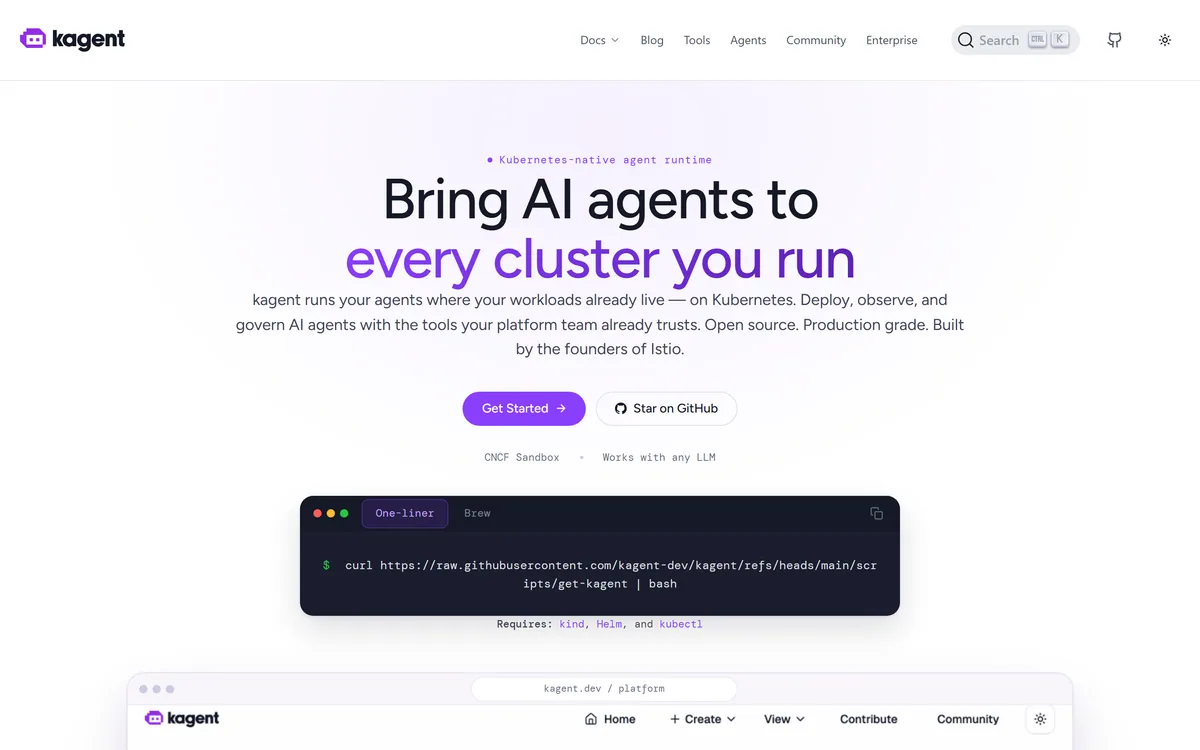
kagent is an open-source (Apache 2.0), Kubernetes-native runtime for deploying, observing and governing AI agents: agents are Kubernetes resources, with multi-LLM support, MCP tools, observability, human-in-the-loop gates and sandboxing. A CNCF Sandbox project created at Solo.io, it suits platform and DevOps teams already running Kubernetes who want to run agents the way they run everything else.

  • Runs agents natively on Kubernetes
  • Open source, no lock-in
  • Model and framework agnostic
  • Built-in observability and HITL gates
  • Assumes you already run Kubernetes
  • Not a managed, no-ops service
  • Operating and securing it is on you
  • Not for non-technical users

Best for: Kubernetes-native agents

Pricing: Free · Very good

124.0/5

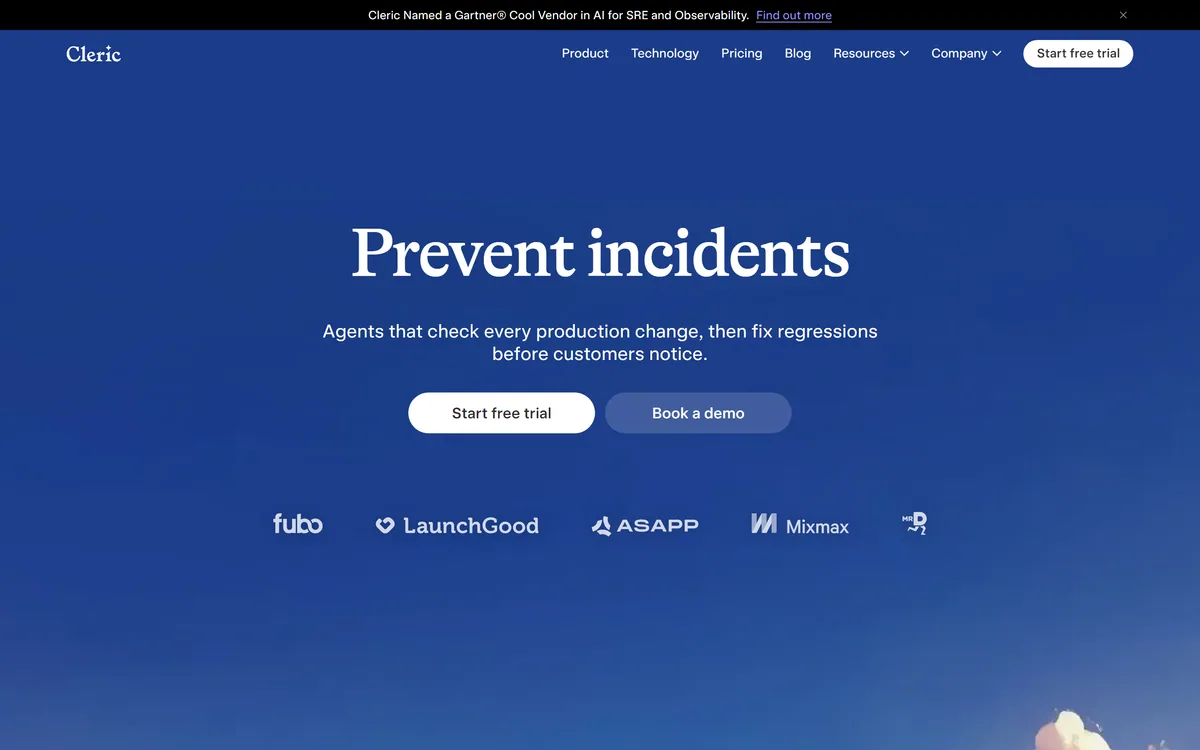
Cleric is an AI site-reliability (SRE) agent that verifies every production change, detects regressions, opens and ships fix PRs with human approval, and takes the pager to triage incidents, aiming to cut time-to-root-cause and prevent incidents before customers are affected.

  • Catches regressions at the change boundary
  • Human-approval gate before fixes ship
  • Takes on-call triage toil
  • Proactive rather than purely reactive
  • Acts on production; needs careful rollout
  • Accuracy figures are vendor-stated
  • Demo-led, no public pricing
  • Overkill for low-deploy, low-incident teams

Best for: High-deploy SaaS teams

Pricing: Paid · Very good

134.0/5

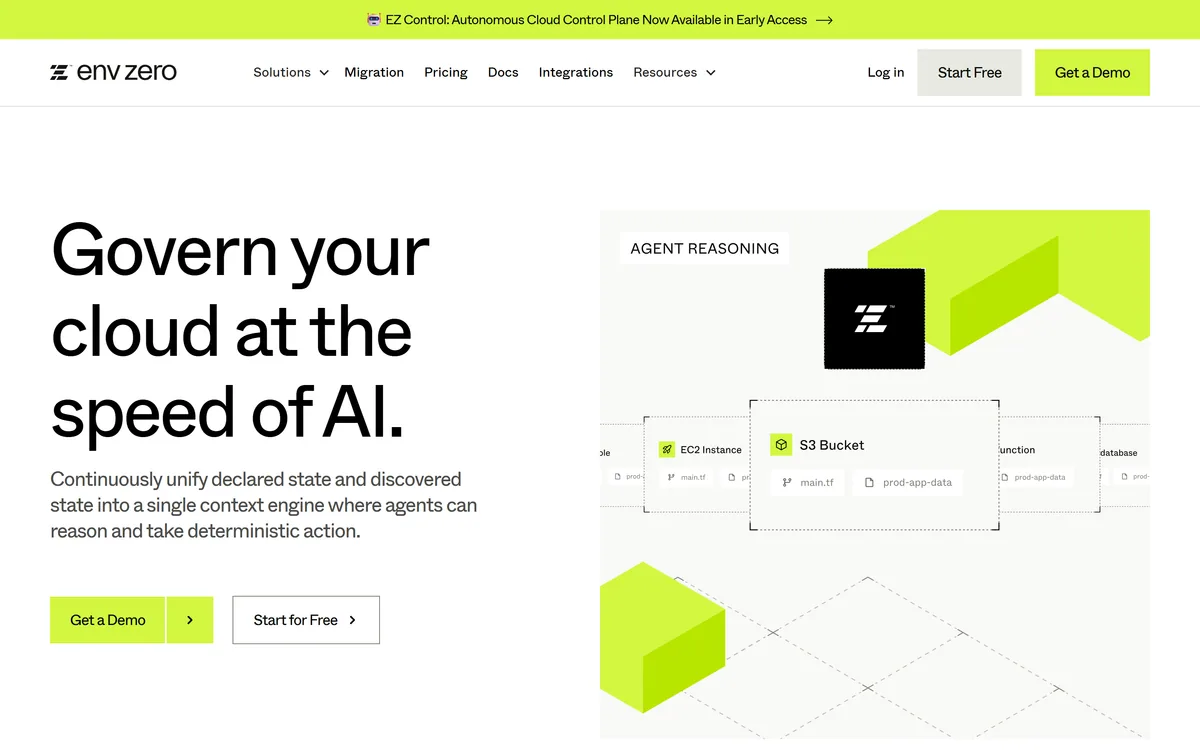
env0 is an infrastructure-as-code management and governance platform: self-service templates with RBAC and policy-as-code guardrails, drift detection and remediation, cloud asset management, and a newer AI-era control plane that unifies declared and discovered cloud state.

  • Governs fast deployment with guardrails
  • Keeps code and cloud in sync via drift control
  • Connects existing repos without code changes
  • Consistent policy across teams and clouds
  • Oversized for small, simple setups
  • Autonomous control plane partly early access
  • Value tied to having meaningful IaC
  • Governs provisioning, not incident response

Best for: Platform and cloud teams

Pricing: Paid · Very good

143.9/5

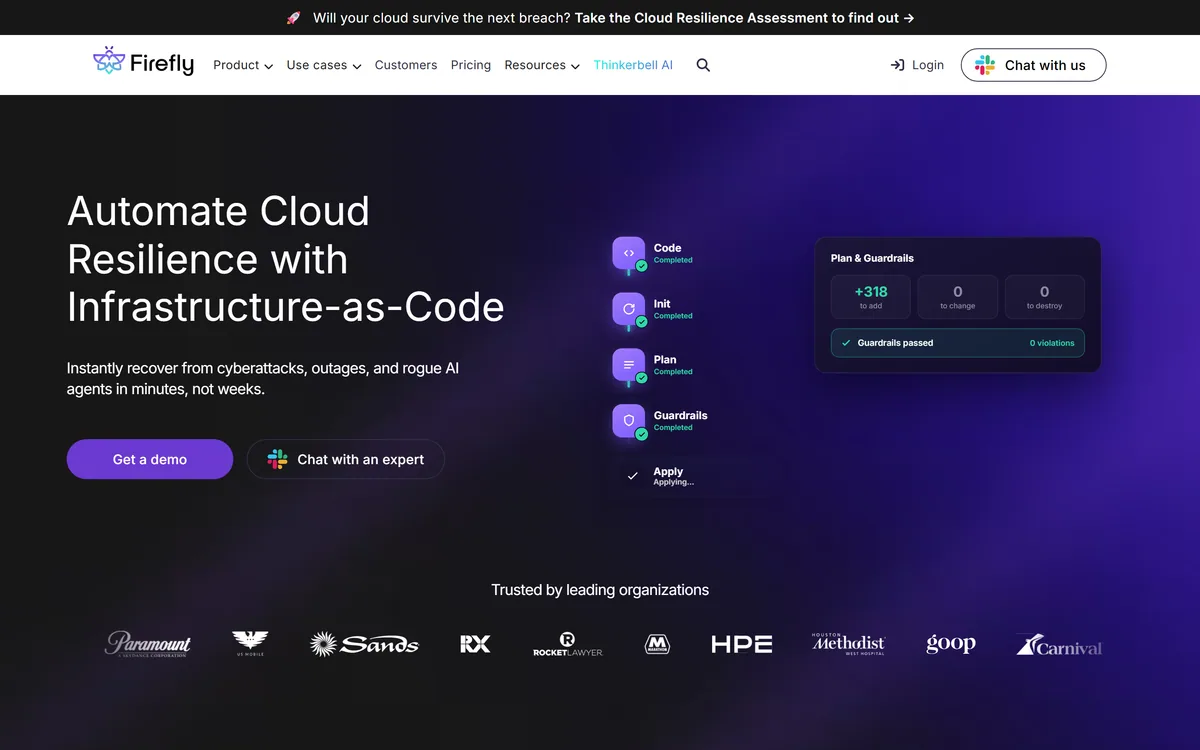
Firefly (firefly.ai) is a cloud resilience and infrastructure-as-code platform: it converts cloud resources to reusable IaC, detects and remediates drift, recovers full environments after outages or cyberattacks, and produces audit-ready compliance evidence. This is not Adobe Firefly and not a generative image tool.

  • Codifies cloud estates for governance
  • Detects and remediates drift
  • Recovers environments after outages
  • Audit-ready compliance evidence
  • Easily confused with Adobe Firefly
  • Enterprise focus and setup effort
  • Overkill for simple infrastructure
  • Recovery and reliability figures are vendor claims

Best for: Cloud disaster recovery

Pricing: Paid · Good

15Est.4.3/5

Parity review on AInexfinder — subscription AI tool for Coding & Development. Features, pricing notes, and alternatives.

  • Reduces on-call investigation burden
  • Read-only approach limits production risk
  • Integrates with common Kubernetes tooling
  • Automated Kubernetes alert investigation
  • Focused specifically on Kubernetes
  • Suggested fixes still need human approval
  • Integrations may not cover every app in your stack
  • Works best when you invest a bit of setup time

Best for: Users who need automated Kubernetes alert investigation

Pricing: Paid

How We Ranked These DevOps & Deployment Tools

Every tool here is a live devops & deployment product with its own review. The order comes from one published formula, applied the same way on every ranking:

CriterionWhat it measuresWeight
Editor ScoreThe score on each tool's own review, from our research into its official documentation, pricing and independent sources. Tools whose full review is still pending carry a provisional formula estimate, marked “Est.”.50%
User reviewsVerified user ratings on AInexfinder — counted only once a tool has at least three.25%
Feature depthHow many documented features the tool has.15%
FreshnessHow recently the review was last verified. Reviews still pending get a neutral value.10%

Featured listings, a paid placement, get a small boost inside the Editor Score criterion, always keep a place in their own category’s ranking, and are labelled Featured above; listings whose maker shows the AInexfinder badge on its own site get a smaller boost. Neither changes the Editor Score itself. Read the full methodology.

What to Look for in a DevOps & Deployment Tool

Output Quality

The factor that decides everything else — can it produce devops & deployment results you'd actually ship? It's why CAST AI leads this list; judge each tool on output you can use without heavy rework.

Pricing & Free Tier

6 of these 15 tools have a free or freemium plan. Check the free tier's real limits and whether paid pricing scales fairly with your usage — watch for hidden caps on output or features.

Ease of Use

A clean interface and good onboarding mean you get value on day one, not after a week of learning the tool.

Integrations

Does it connect to the tools you already use — your editor, browser, Slack, Google Workspace or API?

Speed & Reliability

Fast, consistent results matter for daily work. Look at uptime and how the tool handles peak-time load.

Support & Updates

Active development, solid docs and responsive support signal a tool that will keep getting better over time.

Free vs Paid DevOps & Deployment Tools

When Free Is Enough

6 of these 15 devops & deployment tools offer a free or freemium plan (CAST AI is the one we'd start with). Free tiers suit light or occasional use, testing a workflow, or personal projects — though they usually cap usage, features or output quality.

When to Go Paid

For heavy or professional devops & deployment work, a paid plan like Traversal's buys higher limits, team collaboration, priority support and advanced features. If a tool is core to your daily work, the subscription usually pays for itself in time saved.

Pricing breakdown
Pricing breakdown15tools

6 of 15 tools offer a free or freemium plan.

Which DevOps & Deployment Tool Should You Choose?

Match the tool to the job. Each line below is the audience that tool's review found it suits best:

  • CAST AI (4.6/5) — Users who need automatic workload rightsizing from real usage
  • Pulumi (4.6/5) — Teams that need iaC in TypeScript, Python, Go, C# and more
  • Brainboard (4.6/5) — Users focused on visual cloud architecture designer
  • Patchwork (4.6/5) — Composable patchflow automations workflows
  • Traversal (4.3/5) — Platform and SRE teams running large distributed systems
  • incident.io AI SRE (4.5/5) — Users who need multi-agent autonomous investigation of alerts and incidents
Est.4.6/5

AInexfinder’s Final Verdict on the Best DevOps & Deployment Tools

Start with CAST AI if you want the strongest all-round devops & deployment tool on this list, and give Pulumi a look too — the two are within a fraction of each other. If none of these fits, our CAST AI alternatives list goes wider. DevOps & Deployment tools change month to month, so each review shows the date it was last verified.

Frequently Asked Questions

What Are the Best DevOps & Deployment AI Tools in 2026?

The top devops & deployment tools right now are CAST AI, Pulumi, Brainboard. All 15 are ranked on Editor Score, user reviews, feature depth and freshness — see the full list above.

What Is the Best Free DevOps & Deployment Tool?

CAST AI is the highest-ranked option with a free plan (freemium — a free tier plus paid upgrades). 6 of the 15 tools on this list offer a free or freemium plan — the At a Glance table marks each one.

How Are These DevOps & Deployment Tools Ranked?

By a published formula: Editor Score 50%, verified user reviews 25%, feature depth 15% and freshness 10%. User reviews only count for tools that have approved ones; the rest are ranked on the other four factors, so the Editor Score carries most of the weight. The How We Ranked section above shows each criterion.

How Many DevOps & Deployment AI Tools Are Compared Here?

This page ranks 15 devops & deployment tools. Every one links to its full review, and the category page lists the rest.

Is CAST AI the Best DevOps & Deployment Tool?

CAST AI is our current top pick with a provisional score of 4.6/5, though Pulumi is within a fraction of it, but the right choice depends on your needs and budget. The Which Tool Should You Choose section matches each top tool to the people it suits best.

Which DevOps & Deployment Tool Is Best for Beginners?

CAST AI is the easiest place to start: it has a free plan, so you can learn on a real devops & deployment tool without paying. Once you outgrow it, the paid tools above add more power.

Are DevOps & Deployment AI Tools Worth It?

Start with one of the 6 free options above to confirm a devops & deployment tool fits your workflow — for most people the right one earns back its cost in hours saved, but only once it clearly slots into how you already work.

How Often Is This List Updated?

The ranking recalculates whenever a review on it changes, and reviews are re-verified on a rolling basis — each one shows when it was last checked. This page was last updated in October 2026.

Keep Exploring

About the Author

Daniel Reed
Daniel Reed

Senior AI Tools Reviewer

Daniel leads AInexfinder's tool reviews. He researches each tool from its own pricing, documentation and policies, checks its claims against independent sources, and writes up what it does well, where it falls short and who it genuinely suits.

AI tool reviewsPricing researchAI software
More about Daniel →

Last updated October 2026. Ranked on Editor Score, user reviews, feature depth and freshness — see our methodology.