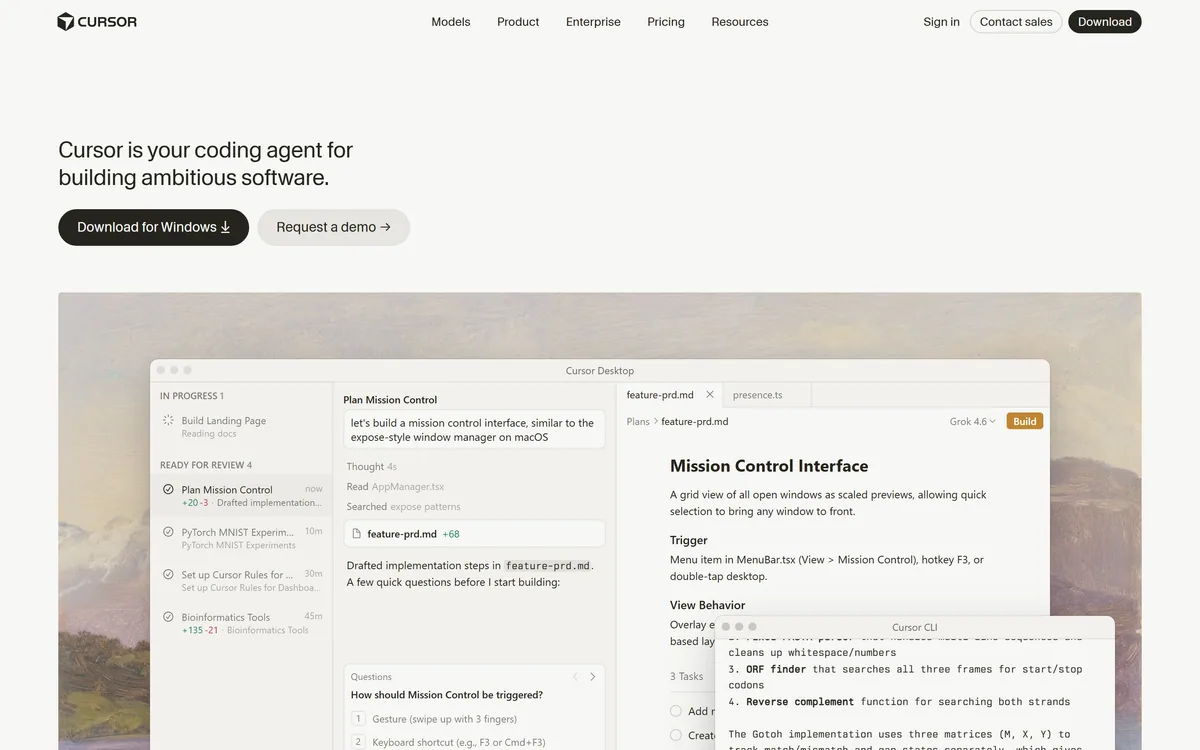

Cursor is an AI-first code editor and agent platform from Anysphere — now a SpaceX subsidiary — that plans, writes, tests, and reviews code across your repository from the desktop editor, a CLI, the web, and Slack.
Coding & Development Review
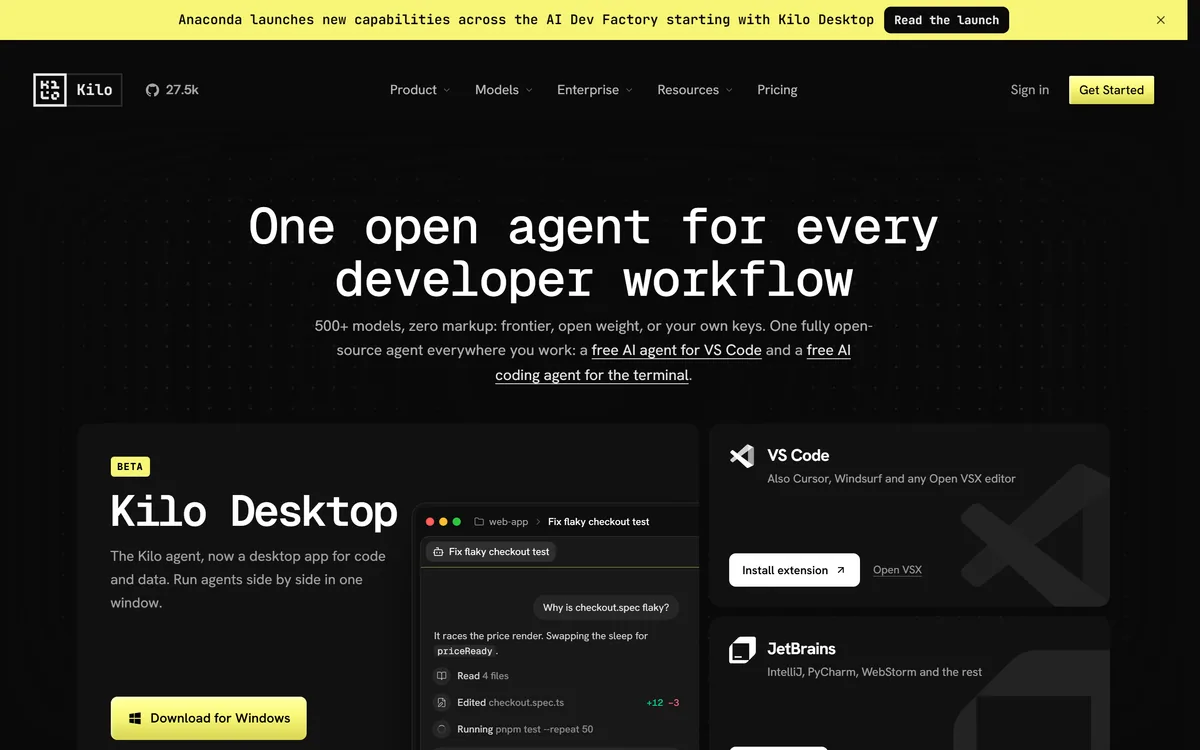
Kilo Code is an open-source (MIT) AI coding agent for VS Code, JetBrains, CLI and cloud with access to 500+ models at cost via bring-your-own keys, plan/code/debug agents, parallel worktrees and no silent model switching. Operated by Kilo Code, Inc. (acquired by Anaconda); the agent is free, model inference is not.
Very good
Kilo Code earns 4.1 as a strong open-source, model-agnostic coding agent for developers who want freedom and transparency. Running across VS Code, JetBrains, CLI, cloud and more, with 500-plus models at cost and no markup, no silent switching, and the ability to inspect its prompts and decisions, it's a genuinely open alternative to closed vendor agents, with parallel worktrees and a security agent for safer changes. The caveats are honest: inference costs still apply, the desktop app is beta, and ownership is fresh after the Anaconda acquisition. For developers who value openness and model choice, it's a compelling pick. AInexfinder Editor Score: 4.1/5.
Best for: Model-agnostic coding; Auditable agents
The visit link goes to kilo.ai, the official site. Paid placements on AInexfinder are always labelled. How we make money
AI coding agents increasingly lock you into one vendor's model and hide what they're doing. Kilo Code takes the opposite stance: an open-source, model-agnostic agent that runs everywhere and lets you see and control what it does.
It works across VS Code, JetBrains, CLI, cloud, Slack and mobile, with access to 500-plus models at cost and no markup, and it's MIT-licensed so you can inspect its prompts and decisions. It competes with coding agents like Cline on openness.
This review covers how Kilo Code works across your tools, which developers it suits, how it charges for model use, and where its inference costs and fresh ownership set limits.
| What it is | An open-source AI coding agent |
|---|---|
| Company | Kilo Code, Inc. (acquired by Anaconda) |
| License | MIT open source; inspect prompt, context, decisions |
| Models | 500+ models at cost; bring-your-own keys; local models |
| Agents | Ask, Plan, Code, Debug, Custom |
| Platforms | VS Code, JetBrains, CLI, cloud, Slack, mobile, desktop (beta) |
| Extras | Parallel worktrees; code reviewer + security agent; MCP |
| Access | Free agent; usage-based inference; start free, no card |
Kilo Code's core idea is freedom and transparency. It's an open-source agent you can run in your editor, terminal, cloud, Slack or on mobile, with access to 500-plus models at cost and no inference markup, so you choose the model and pay what it actually costs.
Being MIT-licensed matters here: you can inspect the prompt, the context window and the agent's decisions, and it won't silently switch models on you, which is exactly the control developers wary of black-box agents want.
It's structured as multiple agents, Ask, Plan, Code, Debug and Custom, with Auto Model routing (Efficient, Frontier, Free), parallel isolated worktrees and a code reviewer plus security agent, so it scales from a quick question to a real refactor.
The honest framing is that Kilo Code is a strong open, flexible agent, now operated by Kilo Code, Inc. after an Anaconda acquisition. The caveats are that inference costs still apply (the agent is free, the models aren't), the desktop app is beta, and the fresh ownership is worth noting.
Kilo Code is a strong open, model-agnostic agent; the agent is free but you still pay model inference.
Kilo Code pairs an open, auditable agent with the model freedom and tooling real work needs.
It runs across IDEs, CLI, cloud, Slack and mobile, with bring-your-own keys, local models and 500-plus options at cost, and Auto Model routing to pick an efficient, frontier or free model for the task.
A tool like Kiro structures work around specs in an IDE; Kilo Code's angle is openness and model freedom everywhere, with full visibility into what the agent is doing.
Being MIT open-source, you can inspect the prompt, context window and decisions, and it won't silently switch models, with parallel isolated worktrees and a code reviewer plus security agent for safer changes.
For a fast single-environment terminal workflow, a tool like Warp optimises one environment; Kilo Code spreads across many surfaces while keeping the agent auditable and model-agnostic.
Kilo Code suits individual developers and engineering teams, up to enterprises with EU-sovereignty needs, who want an open-source, model-agnostic agent they can run everywhere and audit, rather than a closed vendor agent.
It suits developers who want model freedom and no markup, bringing their own keys or running local models, and those migrating from closed agents who want transparency. A spec-driven tool like Kiro is a different style worth weighing.
It suits less well developers who want a fully managed experience with inference bundled in, anyone needing a mature, stable desktop app today (it's beta), and teams uneasy about fresh ownership after the Anaconda acquisition.
A fair way to place it: if you value openness, model freedom and auditability, and don't mind paying inference and managing keys, Kilo Code is a compelling choice; if you want everything bundled and polished with no model decisions, a closed managed agent may feel simpler.
Kilo Code is free and open-source as an agent, with usage-based model inference at cost (bring-your-own keys or Kilo Pass) and enterprise plans, and you can start free with no card. We do not publish prices, which change; check the site.
The value question is inference spend and control: the agent being free and models at cost is cost-efficient for teams that want to manage their own model spend, but you do bear that inference cost, so estimate it for your workload.
The sensible approach is to start free on a real task, pick models via Auto routing or your own keys, watch the inference cost, and decide between bring-your-own keys and Kilo Pass based on your usage and governance needs.
Because the agent is free but inference isn't, run Kilo Code on one real task and watch the costs.
Open-source MIT agent
500+ models at cost
IDE, CLI, cloud, Slack, mobile
Plan/Code/Debug agents
Auto model routing
Parallel worktrees
Code reviewer + security agent
MCP support
The useful comparison is with other coding agents.
| Tool | Tool | Approach | Best for |
|---|---|---|---|
| Kilo Code | Open-source, model-agnostic | 500+ models at cost, everywhere | Model-freedom developers |
| Cline | Open-source coding agent | Code-level control | Developers reviewing changes |
| Kiro | Spec-driven AI IDE | Structured builds | Spec-first development |
| Warp | AI terminal | One powerful environment | Terminal-centric work |
Last checked . Read from kilo.ai during this check, with the screenshot above captured at the same time. Kilo Code is operated by Kilo Code, Inc. and was acquired by Anaconda; its lineage is related to the Roo Code / Cline ecosystem.
The agent is free but model inference costs still apply (BYO keys or Kilo Pass). The desktop app is beta, ownership is fresh after the Anaconda acquisition, and model routing/quality varies, with frontier models needing your own spend. '5M+ coders' and token figures are vendor-stated.
An open-source agent, a spec-driven IDE and an AI terminal to weigh beside Kilo Code.
AInexfinder does not list plan prices or billing details. For current pricing, plans, and trials, visit the official Kilo Code website.
Visit official website for pricingVendor pricing, credits, and billing policies change over time. Always confirm on the official site before you buy.
Kilo Code earns an AInexfinder Editor Score of 4.1/5 (very good). Best for: Model-agnostic coding; Auditable agents; BYO-key/local-model users.
Visit Kilo CodeLog in to write a review.
No reviews yet. Be the first to share your experience with Kilo Code.
Assigned reviewer
Daniel ReedSenior AI Tools Reviewer
Daniel leads AInexfinder's tool reviews. He researches each tool from its own pricing, documentation and policies, checks its claims against independent sources, and writes up what it does well, where it falls short and who it genuinely suits.
Daniel and the AInexfinder editorial team research Kilo Code from its own website, pricing, documentation and policies, checked against independent sources. This review is research-based: unless its method note says otherwise, we have not bought a plan or run hands-on tests. The Editor Score is our editorial judgement, and payment never changes it.
Similar Tools
Cursor is an AI-first code editor and agent platform from Anysphere — now a SpaceX subsidiary — that plans, writes, tests, and reviews code across your repository from the desktop editor, a CLI, the web, and Slack.
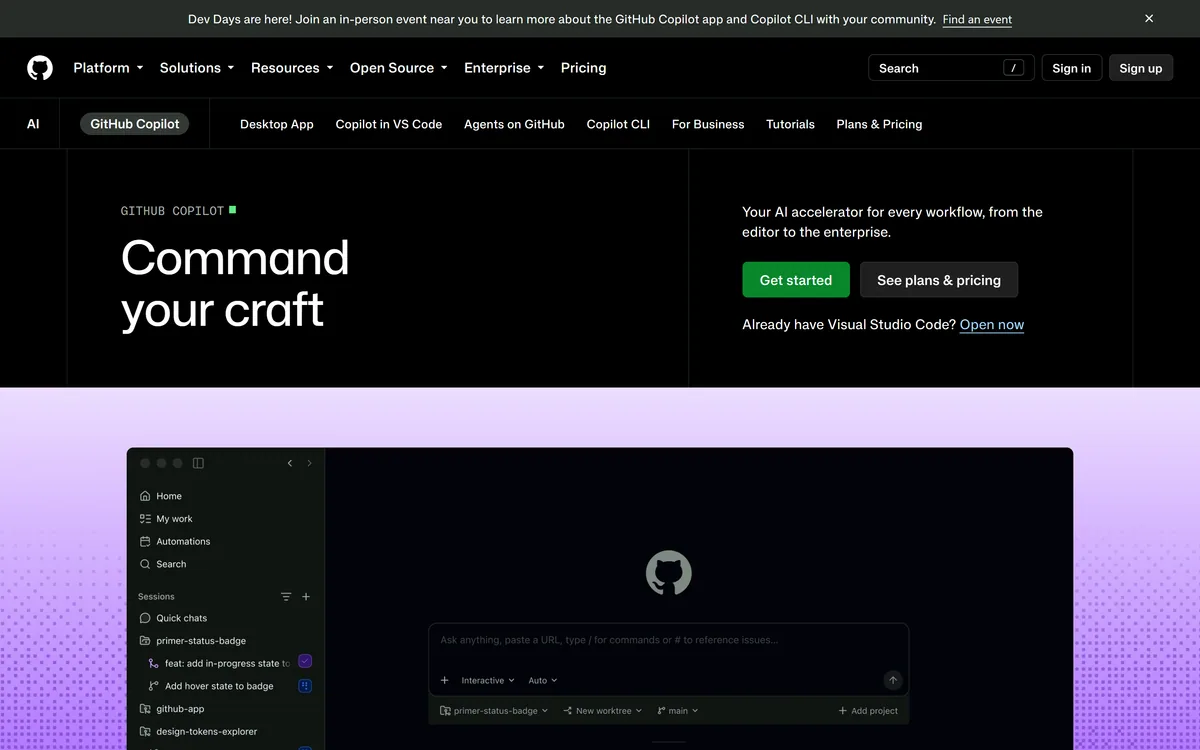

GitHub Copilot is an AI coding assistant that spans completion, chat, agent mode, automated code review, and a cloud agent that opens pull requests, working across VS Code, Visual Studio, JetBrains, Xcode, Neovim, Eclipse, the CLI, and github.com.
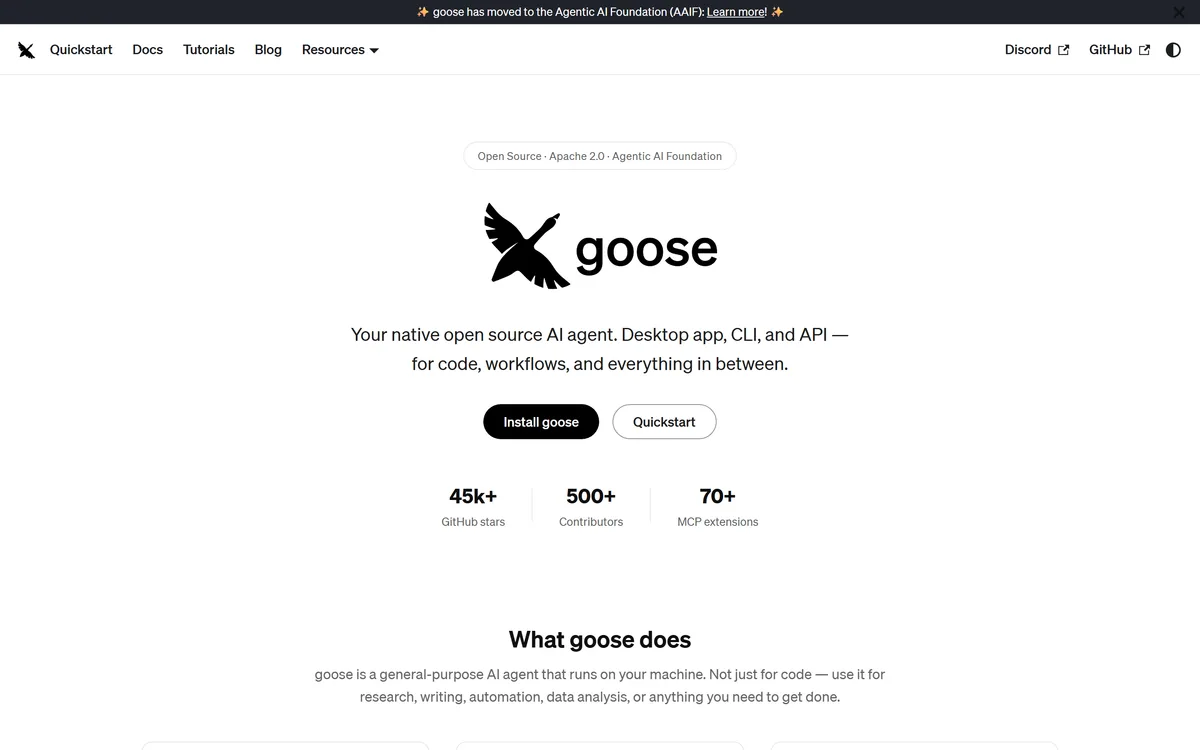
Goose review on AInexfinder — free AI tool for Coding & Development. Features, pricing notes, and alternatives.
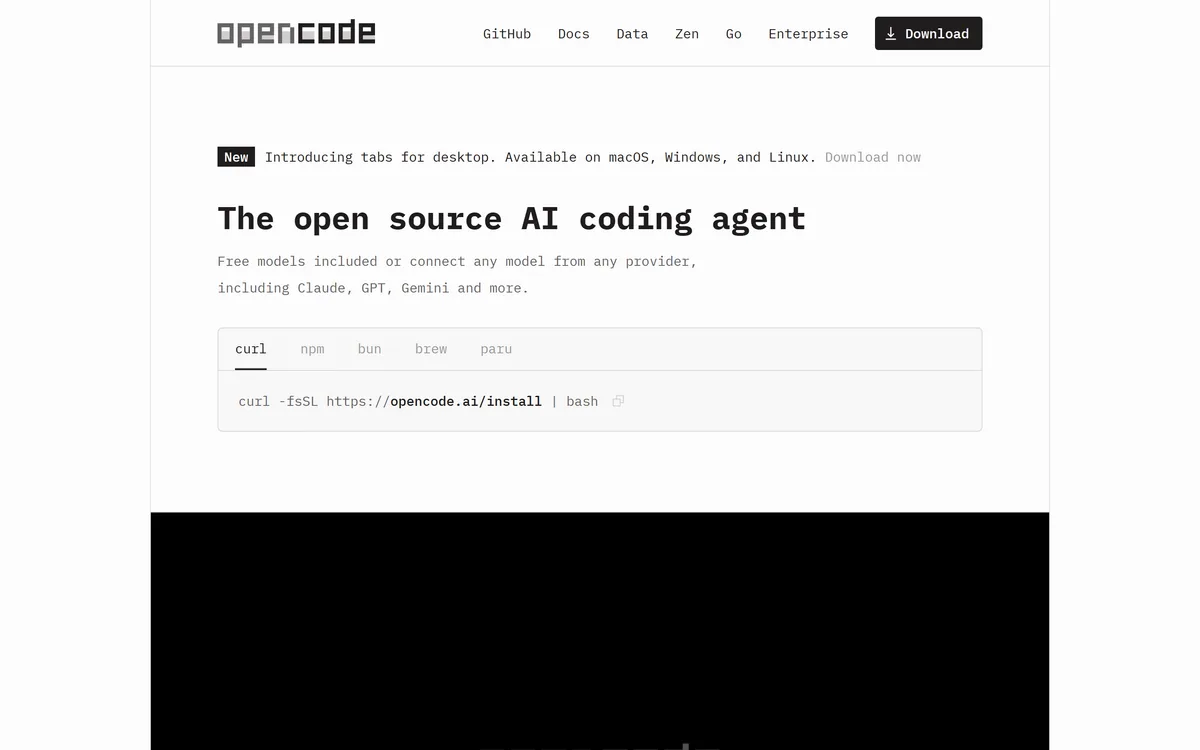
OpenCode is an open source AI coding agent built for the terminal, with desktop and IDE clients alongside. It connects to 75+ model providers, configures language servers automatically, runs parallel agent sessions, keeps conversations locally in SQLite, and is built by the team behind SST.
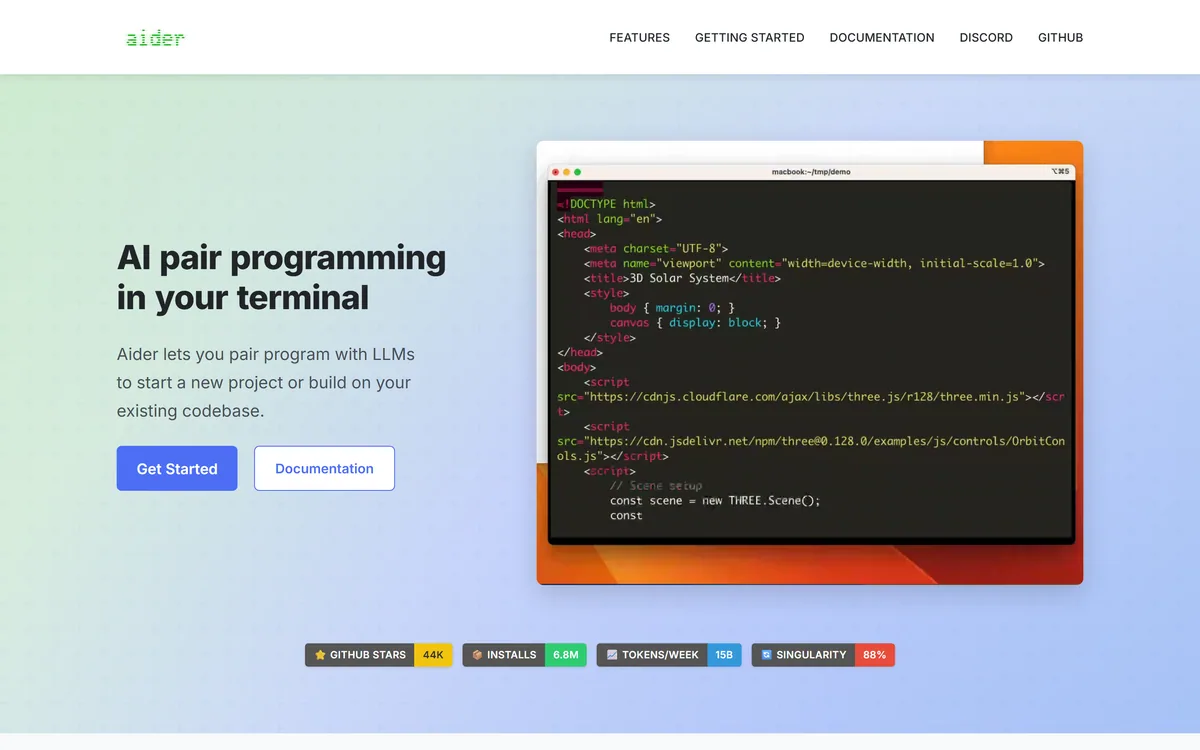
Aider is an open-source AI pair programming tool that runs in your terminal, builds a map of your whole repository for context, works with almost any LLM including local models, and commits each change to git with a written message so every edit can be diffed and undone.
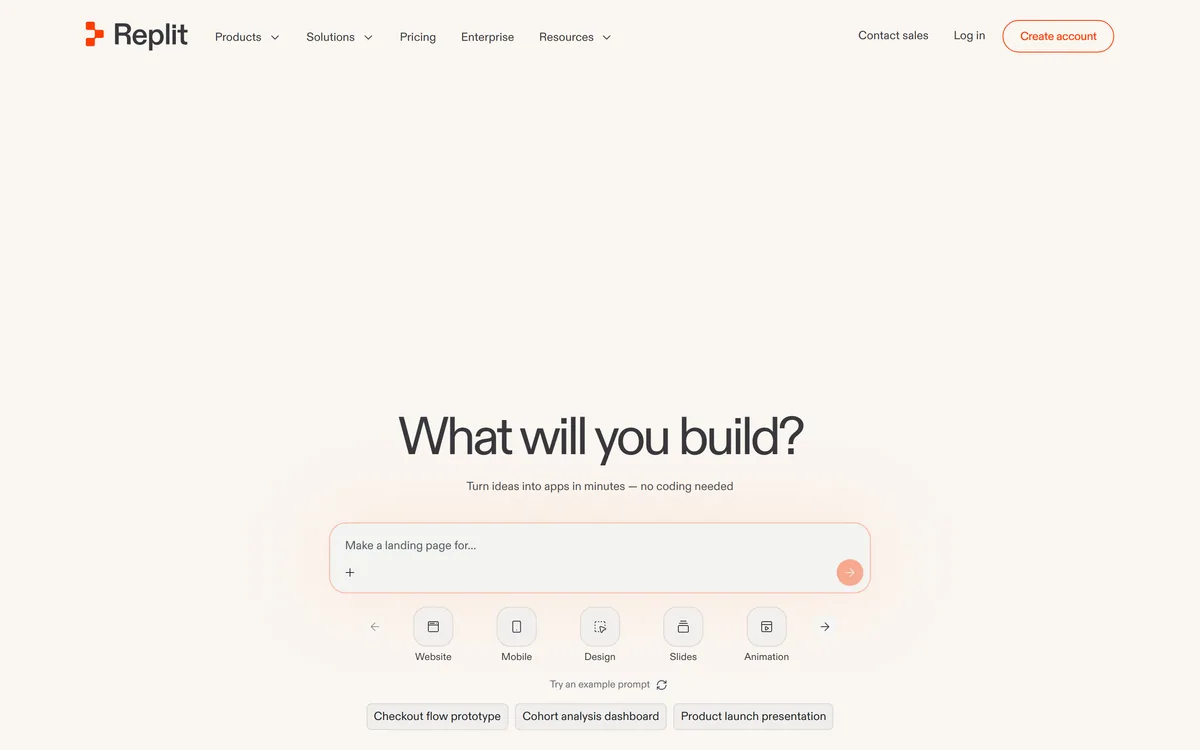

Replit AI turns a written description into a working application — the Agent writes the code, and Replit supplies the database, authentication, hosting, and monitoring, so a prototype goes live without a local setup or a deployment pipeline.
Related Pages