Developer-first AI security from code to runtime Category: Coding & Development.
Coding & Development Review
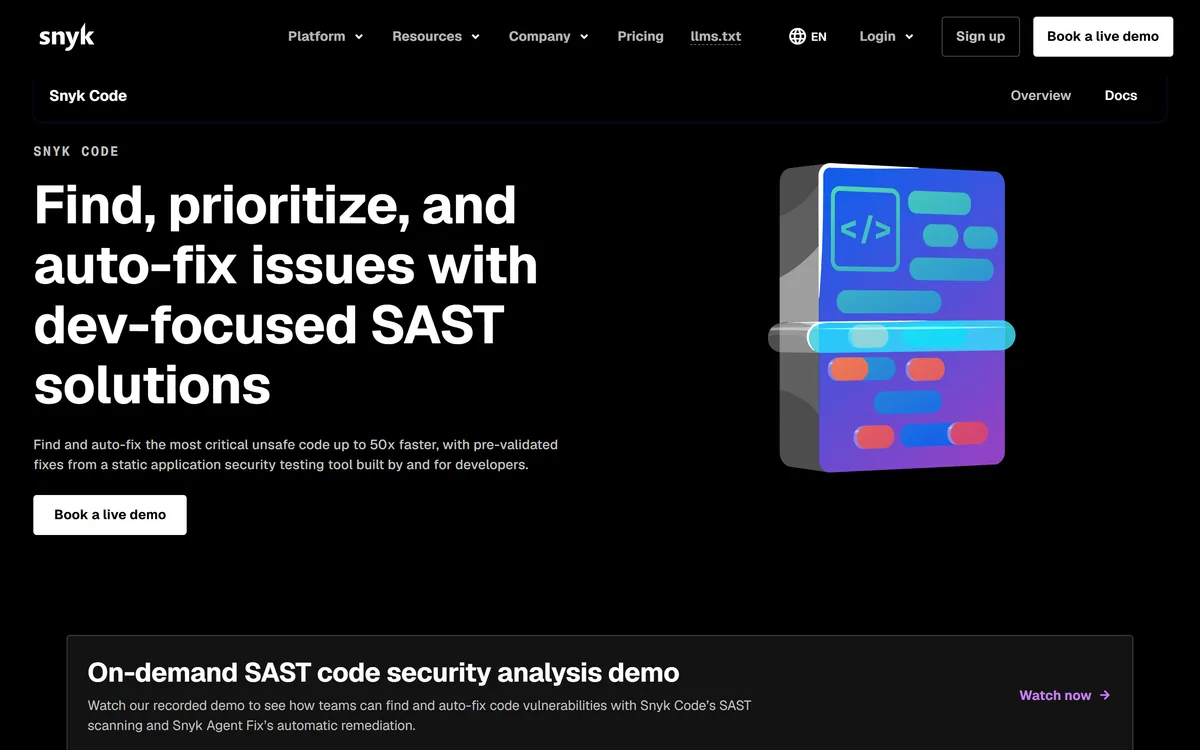
Snyk Code is a static application security testing tool built for developers, using DeepCode AI to find vulnerabilities in the IDE in real time and Snyk Agent Fix to propose pre-validated fixes, including coverage for AI-generated code.
Excellent
Snyk Code has an AInexfinder Editor Score of 4.5/5.
Best for: Development teams whose previous SAST reports went unread; Organisations shipping a lot of AI-generated code
The visit link goes to snyk.io, the official site. Paid placements on AInexfinder are always labelled. How we make money
Snyk Code is static analysis for security — it reads your source and flags patterns that create vulnerabilities. That much every SAST tool does, and most of them are hated for it.
The reason they are hated is that traditional SAST produces a long report, late, full of findings a developer did not write and cannot easily judge. Snyk's answer is to move the scan into the IDE and attach a proposed fix to each finding.
This review covers how that changes developer behaviour, what DeepCode AI and Agent Fix actually do, how to read Snyk's published numbers, and where static analysis still cannot help you.
The failure pattern is consistent across the category. A scan runs on a schedule or in CI, produces hundreds of findings, and lands on a team that has moved on to other work.
By then the cost of acting is high: the developer has to rebuild the context, judge whether the finding is real, work out the fix, and justify the interruption. Most findings lose that argument.
Moving the scan into the editor changes the economics entirely. A warning while you are writing the line costs seconds; the same warning three weeks later costs an afternoon.
A security finding is cheapest to fix in the minute you wrote the code, and most expensive in the sprint after you forgot it.
Two components do the work, and they answer different halves of the problem.
DeepCode AI is the analysis engine. Snyk states it is built on 25 million-plus modelled data flow cases and a database of over 35,000 real-world vulnerabilities.
That framing matters: it is trained on how vulnerabilities actually appear in shipped code, rather than only on abstract rule patterns.
Snyk Agent Fix generates the suggested change, described as pre-validated rather than merely generated. Snyk claims those fixes are 80% accurate.
Even at that rate the value holds, because a wrong suggestion is still a starting point and a right one saves the research entirely. The developer reviews either way.
Snyk Code scans AI-generated code specifically, and states coverage of 90% of major LLM libraries including OpenAI and Hugging Face.
This is quietly the most important capability on the page. A large share of new code is now written by an agent that has no concept of your threat model, and reviewing it at volume is exactly what humans do badly.
The product page carries several striking figures — 50x faster fixing, 84% or more reduction in remediation time, 80%-accurate fixes. All are vendor-reported, and none has a published methodology attached.
That does not make them wrong. It does mean they describe conditions Snyk chose, and your codebase is not those conditions.
The measurement worth running yourself is simpler: over a month, what proportion of findings did your developers actually act on, compared with your previous tool? Adoption is the metric that decides whether a SAST tool has value, and it is the one no vendor can quote for you.
Security tooling fails on adoption far more often than on detection, so the sequence matters.
SAST reads code, so it sees only what code expresses. Logic flaws, broken authorisation between services, and design-level mistakes are invisible to it — the code is correct, the decision was wrong.
False positives remain part of the category. Any tool tuned to catch real issues will flag safe patterns it cannot prove safe, and that tax never reaches zero.
It also cannot see runtime and configuration problems: a misconfigured bucket, a leaked credential in an environment variable, an over-permissive IAM role. Those need different tools.
And an 80% fix accuracy figure means one suggestion in five needs correction. Applying suggested fixes unreviewed would be the fastest way to turn a security tool into a source of bugs.
Integrations cover GitHub, GitLab, AWS, Azure, Google Cloud, Docker, and Jira — which tells you Snyk expects to sit across the whole pipeline rather than in one place.
The Jira integration is more useful than it sounds. Security findings that live only in a security tool get triaged by nobody; findings that become tickets in the same backlog as everything else compete for attention on equal terms.
There is a free tier, which is genuinely the right way to evaluate this — run it on a real repository and count the actionable findings.
| Company | Snyk |
|---|---|
| Category | Static application security testing (SAST) with automated fixes |
| Analysis engine | DeepCode AI |
| Fix engine | Snyk Agent Fix, producing pre-validated fixes |
| Where it runs | In the IDE in real time, plus CI and repository scanning |
| AI code coverage | Scans AI-generated code; Snyk states coverage of 90% of major LLM libraries including OpenAI and Hugging Face |
| Language support | Snyk states most popular languages and IDEs, with coverage expanding; no fixed list published on this page |
| Integrations | GitHub, GitLab, AWS, Azure, Google Cloud, Docker, Jira |
| Vendor-stated accuracy | 80%-accurate fixes |
| Vendor-stated speed | Up to 50x faster fixing; remediation time reduced by 84% or more |
| Training data scale | 25M+ data flow cases modelled, 35,000+ real-world vulnerability database |
| Free tier | Yes |
SAST analysis powered by DeepCode AI
Snyk Agent Fix producing pre-validated fix suggestions
Real-time scanning inside the IDE as you write
Dedicated scanning of AI-generated code and LLM library usage
Integrations with GitHub, GitLab, AWS, Azure, Google Cloud, and Docker
Jira integration so findings become ordinary backlog tickets
Free tier for evaluating on a real repository
Code security splits into scanning, reviewing, and generating — these are not substitutes.
| Tool | What it does | Runs in the IDE | Best fit |
|---|---|---|---|
| Snyk Code | SAST with pre-validated automated fixes | Yes, in real time | Teams wanting findings developers actually act on |
| Codacy | Code quality and static analysis | Via integrations | Broad quality gates alongside security |
| DeepSource | Static analysis and autofix for quality issues | Via integrations | Code health across a repository |
| GitHub Copilot | Writes code and reviews pull requests | Yes | Authoring, with review as a secondary pass |
| Cursor | Agentic coding with Bugbot review | Yes | Building features rather than securing them |
These overlap on quality or review rather than on security specifically.
Last checked . Read from Snyk's own Snyk Code product page during this check, with the screenshot above captured at the same time.
Observations about the limits of static analysis apply to the technique generally, not to Snyk specifically.
AInexfinder does not list plan prices or billing details. For current pricing, plans, and trials, visit the official Snyk Code website.
Visit official website for pricingVendor pricing, credits, and billing policies change over time. Always confirm on the official site before you buy.
Snyk Code earns an AInexfinder Editor Score of 4.5/5 (excellent). Best for: Development teams whose previous SAST reports went unread; Organisations shipping a lot of AI-generated code; Teams that want security findings in the editor, not in a dashboard.
Visit Snyk CodeLog in to write a review.
No reviews yet. Be the first to share your experience with Snyk Code.
Assigned reviewer
Daniel ReedSenior AI Tools Reviewer
Daniel leads AInexfinder's tool reviews. He researches each tool from its own pricing, documentation and policies, checks its claims against independent sources, and writes up what it does well, where it falls short and who it genuinely suits.
Daniel and the AInexfinder editorial team research Snyk Code from its own website, pricing, documentation and policies, checked against independent sources. This review is research-based: unless its method note says otherwise, we have not bought a plan or run hands-on tests. The Editor Score is our editorial judgement, and payment never changes it.
Similar Tools
Developer-first AI security from code to runtime Category: Coding & Development.
AI-assisted code, supply chain and secrets security Category: Coding & Development.

Sourcery is an AI code-review tool that reviews every pull request in minutes, catching bugs, edge cases and security issues with one-click fixes, plus codebase security scanning, with a strong stance on keeping your code private.
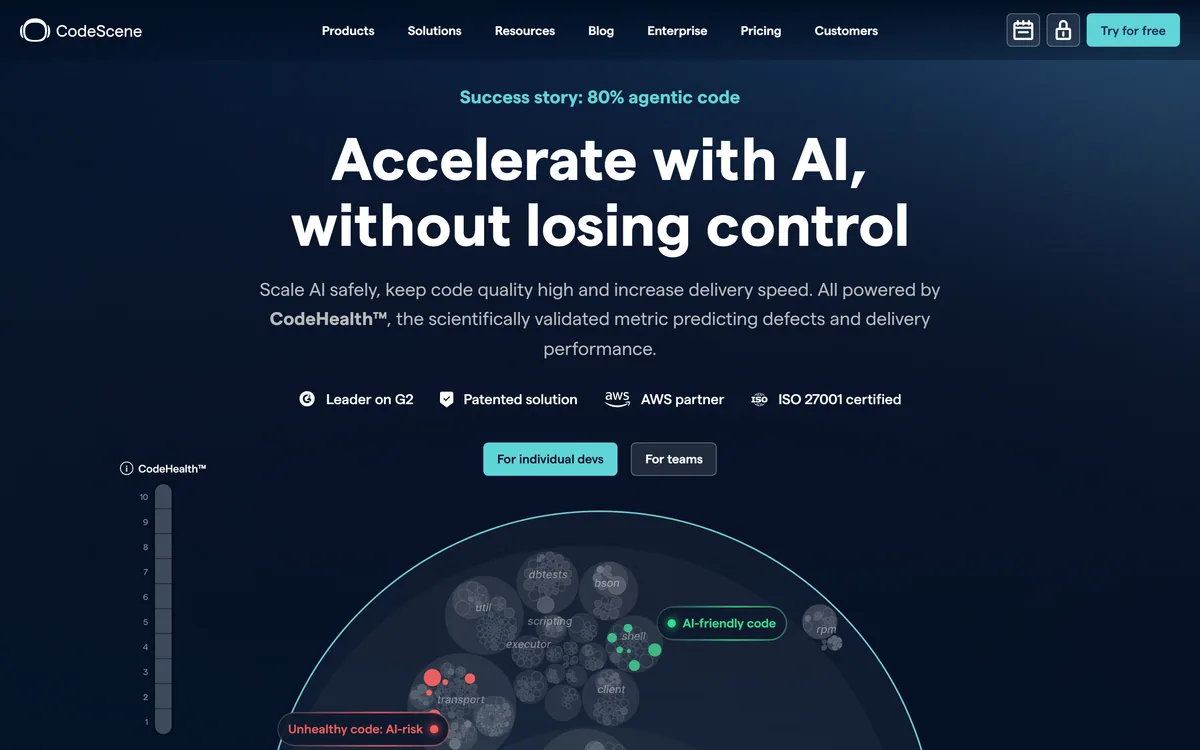
CodeScene measures code with CodeHealth, a validated metric predicting defects and delivery performance. It states the average enterprise codebase scores 5.15 out of 10 while AI needs 9.5 to work reliably, and offers an MCP server, automated reviews and IDE feedback. Operated by CodeScene AB.
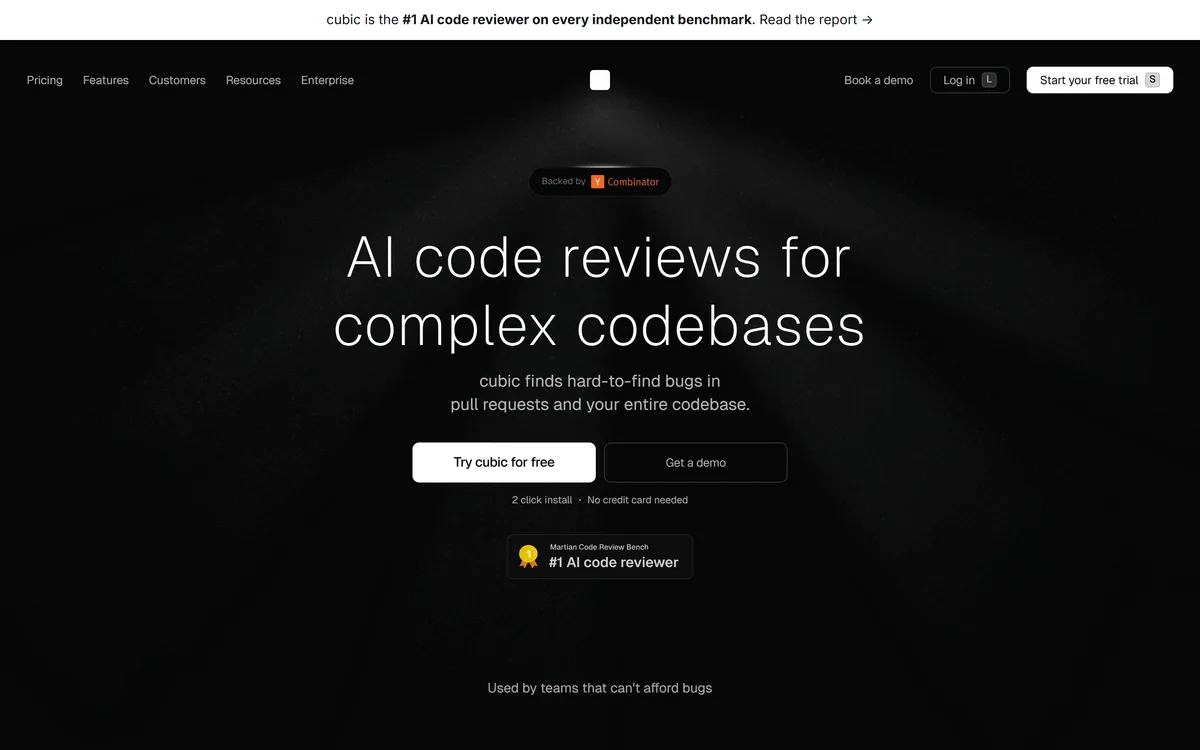
cubic reviews pull requests in GitHub and your IDE, enforces rules written in plain English, and learns from senior engineers' PR comment history. It runs thousands of agents nightly to scan an entire codebase for bugs, pulls context from Linear, JIRA, Notion and Confluence, and is free for public repositories.
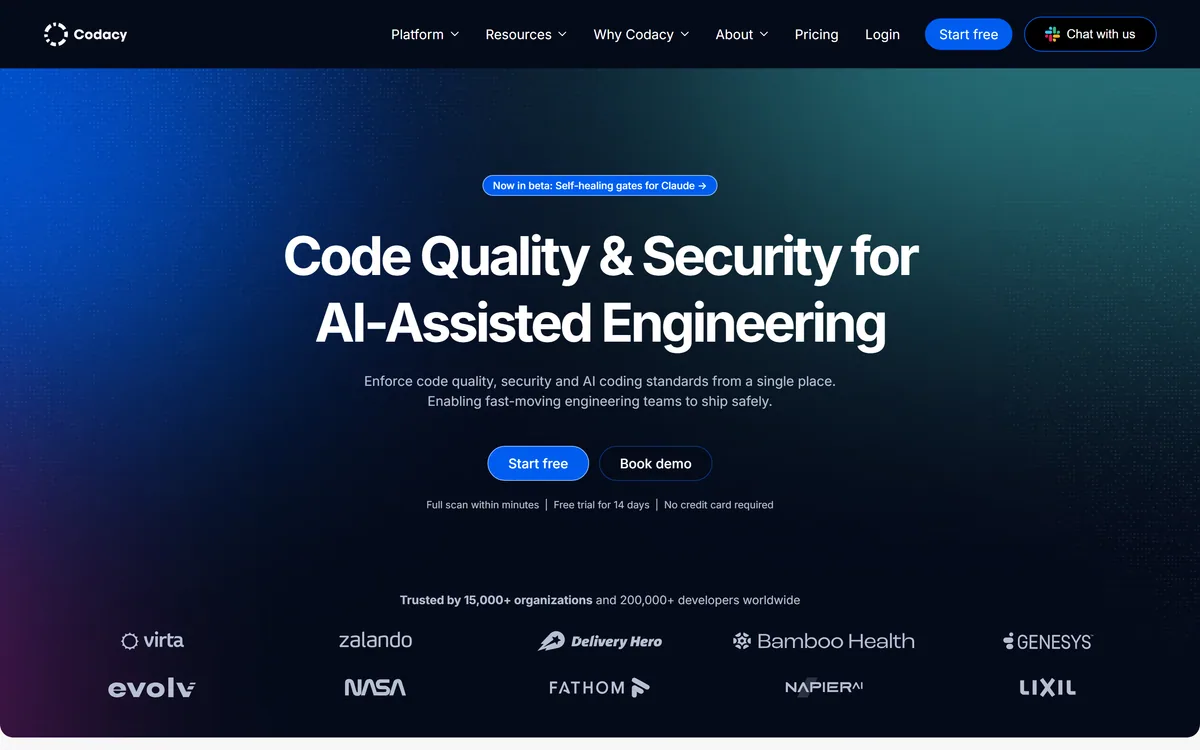
Codacy combines static analysis, SAST, SCA, secret scanning, IaC checks and test coverage in one platform, and has repositioned around AI-assisted engineering — detecting AI policy violations and unapproved model calls, with Codacy Guardrails embedding checks inside agentic workflows.
Related Pages