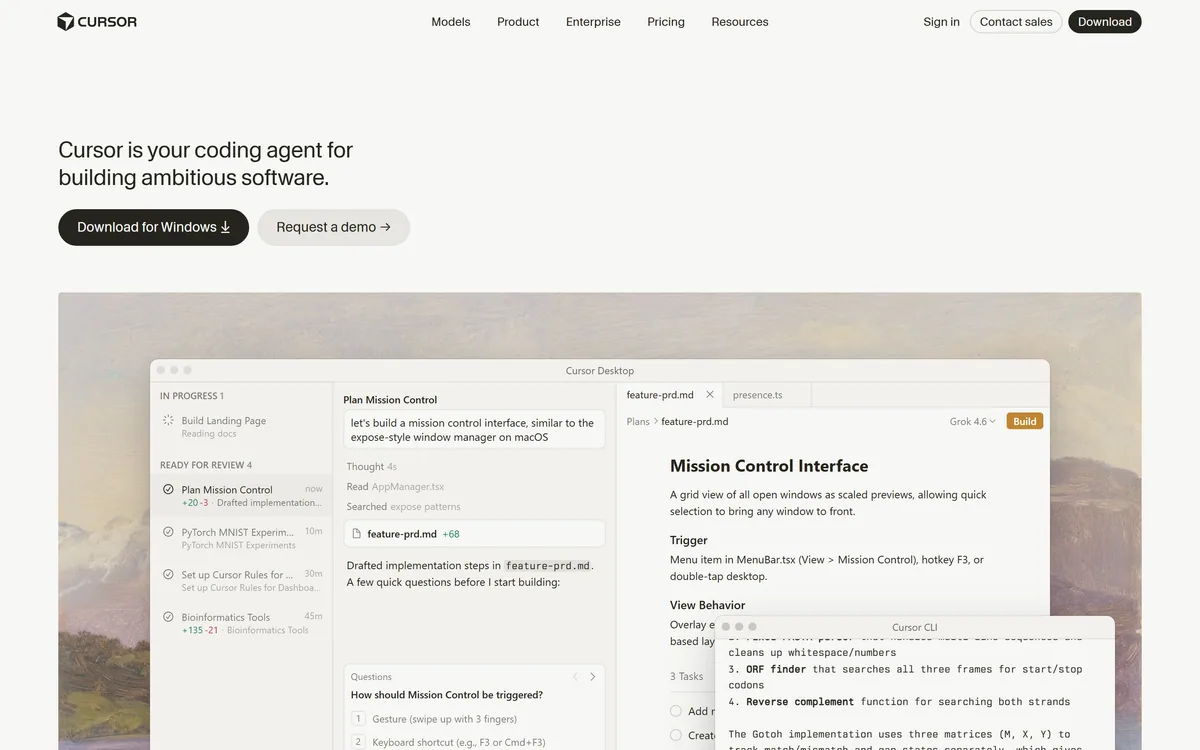

Cursor is an AI-first code editor and agent platform from Anysphere — now a SpaceX subsidiary — that plans, writes, tests, and reviews code across your repository from the desktop editor, a CLI, the web, and Slack.
Coding & Development Review
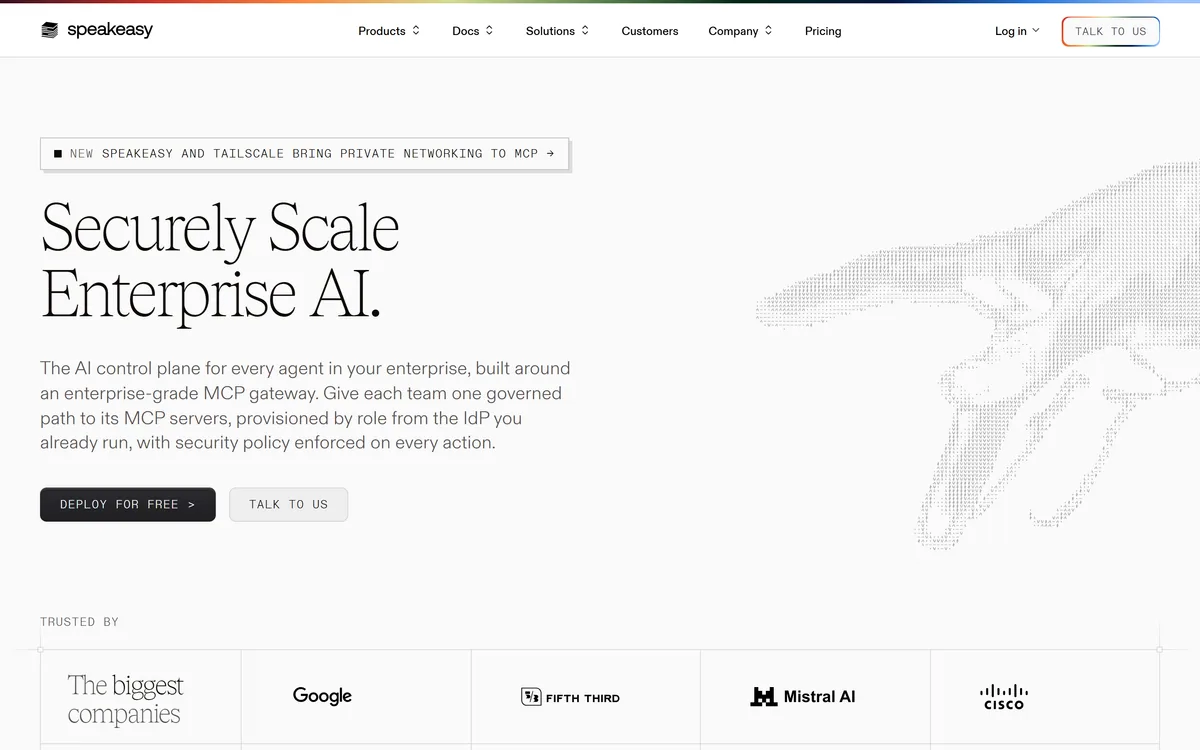
Speakeasy is an enterprise control plane and MCP gateway for AI: it routes and governs AI and tool traffic, manages secrets and access, and adds guardrails against risks like prompt injection, for platform teams shipping AI in production. It suits engineering teams that need to govern AI at scale, with the considerations that it's enterprise-oriented and sits in a sensitive path handling secrets and prompts.
Very good
Speakeasy earns 4.0 as a well-aimed, timely enterprise control plane and MCP gateway for a real and rising problem: governing AI and tool traffic as companies ship AI into production. Routing AI calls, applying policy, managing secrets and access, adding visibility, and guarding against AI-specific risks like prompt injection is exactly what responsible AI deployment needs, the way an API gateway served earlier architectures. The considerations are about fit and sensitivity rather than quality: it's platform-team-oriented, not for individuals, and by design it sits in a sensitive path handling secrets and prompts, so the trust and security model must be confirmed against your requirements, and its guardrails reduce but don't eliminate risk. For engineering teams governing AI at scale it's a strong choice; individuals or those without that problem should look elsewhere. AInexfinder Editor Score: 4.0/5.
Best for: AI governance in production; MCP/tool traffic control
The visit link goes to speakeasy.com, the official site. Paid placements on AInexfinder are always labelled. How we make money
As companies ship AI into production, a new problem appears: how to route, secure and govern all that AI and tool traffic without it becoming an ungoverned mess. Speakeasy's pitch is to be that layer: a control plane and MCP gateway for AI.
It routes AI and tool calls, manages secrets and access, and adds guardrails against risks like prompt injection, for platform teams. It sits among AI-infrastructure tools like kagent, at the governance-and-gateway layer.
This review covers how Speakeasy governs AI traffic, which teams it suits, how it's licensed and sold, and where its fit and sensitivity sit, to weigh first.
| What it is | An enterprise control plane / MCP gateway for AI |
|---|---|
| Company | Speakeasy (speakeasy.com) |
| Core | Routes and governs AI and tool (MCP) traffic |
| Security | Manages secrets and access; guards against prompt injection |
| Governance | Policy, control and visibility over AI in production |
| Audience | Platform, infrastructure and AI engineering teams |
| Access | 'Deploy for free' + sales; self-host options |
| Sensitive | Sits in the path of secrets and prompts (handle carefully) |
Speakeasy's core job is to give engineering teams control over the AI traffic flowing through their systems. As a control plane and MCP (Model Context Protocol) gateway, it routes AI and tool calls, applies policy, manages secrets and access, and gives visibility, so AI in production is governed rather than a sprawl of ad-hoc integrations.
The governance angle is the differentiator, and it's a genuinely emerging need: once AI agents and tools proliferate, teams need a single point to enforce policy, secure credentials and monitor what's happening, the same way an API gateway did for earlier architectures.
It adds protections aimed at AI-specific risks, notably guardrails against things like prompt injection, and offers 'deploy for free' entry plus self-host options, so it fits into a platform team's existing infrastructure practices.
The honest framing is that Speakeasy addresses a real, rising problem well, and its governance-and-security posture is exactly what shipping AI responsibly needs. The considerations are about fit and sensitivity rather than quality: it's enterprise- and platform-team-oriented, so it's not for individuals or non-technical users; and by design it sits in a sensitive path, handling secrets, routing prompts and tool calls, so the trust and security model matters, confirm how it handles credentials and data against your own requirements. Its guardrails reduce but don't eliminate AI risks like prompt injection, so defence-in-depth still applies. Its claims are vendor-stated. (For context, Speakeasy is positioned around AI control and MCP governance; if you knew it only for earlier developer tooling, note the current product focus.)
Speakeasy is a well-aimed enterprise control plane for AI governance; it's platform-team-oriented and sits in a sensitive path handling secrets and prompts, so the trust model matters.
Speakeasy pairs AI/MCP traffic routing with security and governance.
It routes AI and tool (MCP) calls through a control plane, applying policy, secrets management and visibility.
A runtime like Semgrep secures code; Speakeasy's angle is governing AI and tool traffic in production, an adjacent but distinct part of shipping AI safely.
It adds guardrails against AI-specific risks like prompt injection, and offers free and self-host entry.
A coding agent like Cline helps write software; Speakeasy is about governing AI once it's running, so match it to whether your need is building or operating-and-securing AI.
Speakeasy suits platform, infrastructure and AI-engineering teams at companies shipping AI into production that need to route, secure and govern AI and tool traffic centrally.
It suits organisations that treat AI as infrastructure, needing policy, secrets management, guardrails and visibility, and that have the engineering maturity to deploy and operate a control plane.
It suits less well individuals, non-technical users and small teams without an AI-in-production governance problem, and anyone wanting an end-user AI app rather than infrastructure.
A fair way to place it: if you're shipping AI at scale and need a governed, secure path for AI and tool traffic, Speakeasy is a well-aimed, timely platform, provided you satisfy yourself on how it handles secrets and data; if you don't have that governance problem or want a finished app, it's the wrong layer, which is purely a question of whether you're operating AI infrastructure.
Speakeasy offers a 'deploy for free' entry plus sales-led plans and self-host options, so you can start without a sales call but scale through one. We do not publish prices; check the site and confirm the plan, self-host and security terms.
The value question isn't a licence line but risk and control: for a team shipping AI, a governed, secure gateway can prevent real incidents (leaked secrets, unmonitored tool calls, prompt-injection abuse), which is worth a lot, but the value scales with how much AI you run.
The sensible approach is to deploy the free entry on a non-critical AI service, test the routing, secrets handling and guardrails, confirm the security model against your requirements, and adopt it more widely only once it fits your platform practices.
Because it sits in a sensitive path, trial Speakeasy on a non-critical AI service first.
AI traffic routing
MCP gateway
Secrets management
Access control
Prompt-injection guardrails
Policy & governance
Observability
Self-host options
The useful comparison is with other AI-infrastructure and security tools.
| Tool | Tool | Approach | Best for |
|---|---|---|---|
| Speakeasy | AI control plane / MCP gateway | Governing AI traffic | Platform teams |
| kagent | K8s agent runtime | Running agents | Platform/DevOps teams |
| Semgrep | Code security | Scanning code | Security/dev teams |
| Cline | Coding agent | Writing software | Developers |
Last checked . Read from speakeasy.com during this check, with the screenshot above captured at the same time.
Speakeasy is enterprise- and platform-team-oriented, not for individuals or non-technical users. By design it sits in a sensitive path, handling secrets, routing prompts and tool calls, so the trust and security model matters; confirm how it handles credentials and data against your requirements. Its guardrails reduce but don't eliminate AI risks like prompt injection, so defence-in-depth still applies. Claims are vendor-stated.
An agent runtime, a code-security tool and a coding agent to weigh beside Speakeasy.
AInexfinder does not list plan prices or billing details. For current pricing, plans, and trials, visit the official Speakeasy website.
Visit official website for pricingVendor pricing, credits, and billing policies change over time. Always confirm on the official site before you buy.
Speakeasy earns an AInexfinder Editor Score of 4.0/5 (very good). Best for: AI governance in production; MCP/tool traffic control; Secrets and access for AI.
Visit SpeakeasyLog in to write a review.
No reviews yet. Be the first to share your experience with Speakeasy.
Assigned reviewer
Daniel ReedSenior AI Tools Reviewer
Daniel leads AInexfinder's tool reviews. He researches each tool from its own pricing, documentation and policies, checks its claims against independent sources, and writes up what it does well, where it falls short and who it genuinely suits.
Daniel and the AInexfinder editorial team research Speakeasy from its own website, pricing, documentation and policies, checked against independent sources. This review is research-based: unless its method note says otherwise, we have not bought a plan or run hands-on tests. The Editor Score is our editorial judgement, and payment never changes it.
Similar Tools
Cursor is an AI-first code editor and agent platform from Anysphere — now a SpaceX subsidiary — that plans, writes, tests, and reviews code across your repository from the desktop editor, a CLI, the web, and Slack.
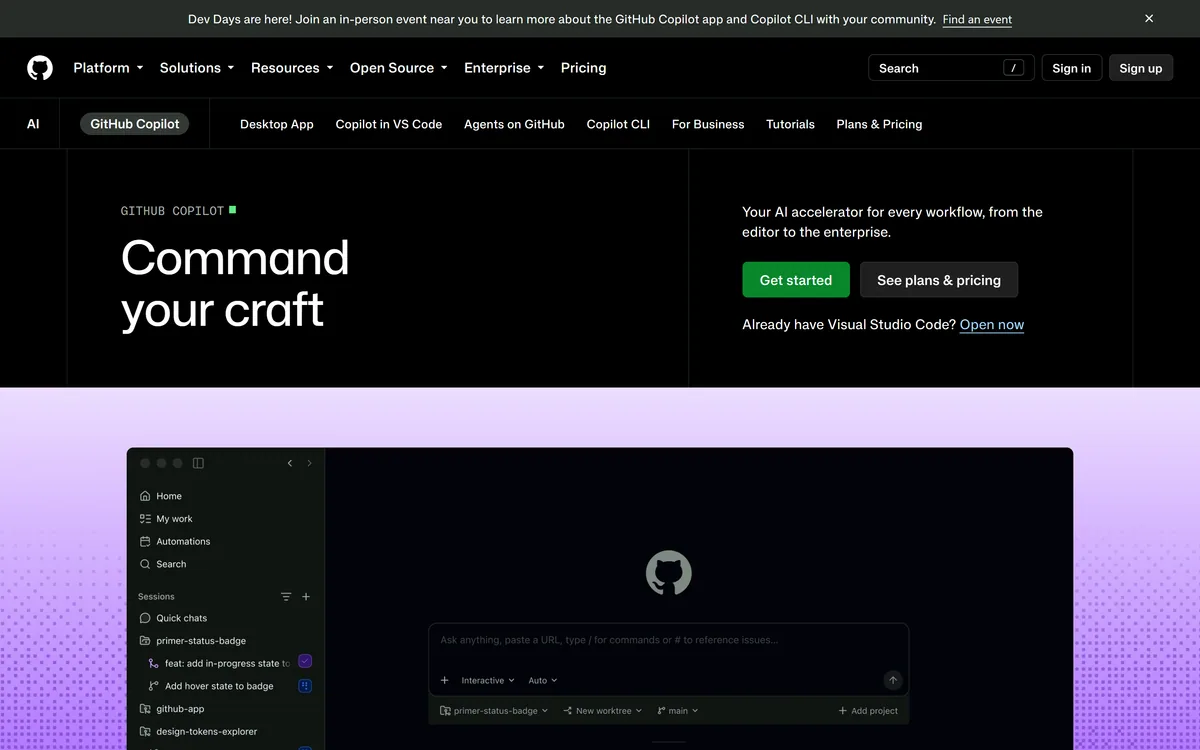

GitHub Copilot is an AI coding assistant that spans completion, chat, agent mode, automated code review, and a cloud agent that opens pull requests, working across VS Code, Visual Studio, JetBrains, Xcode, Neovim, Eclipse, the CLI, and github.com.
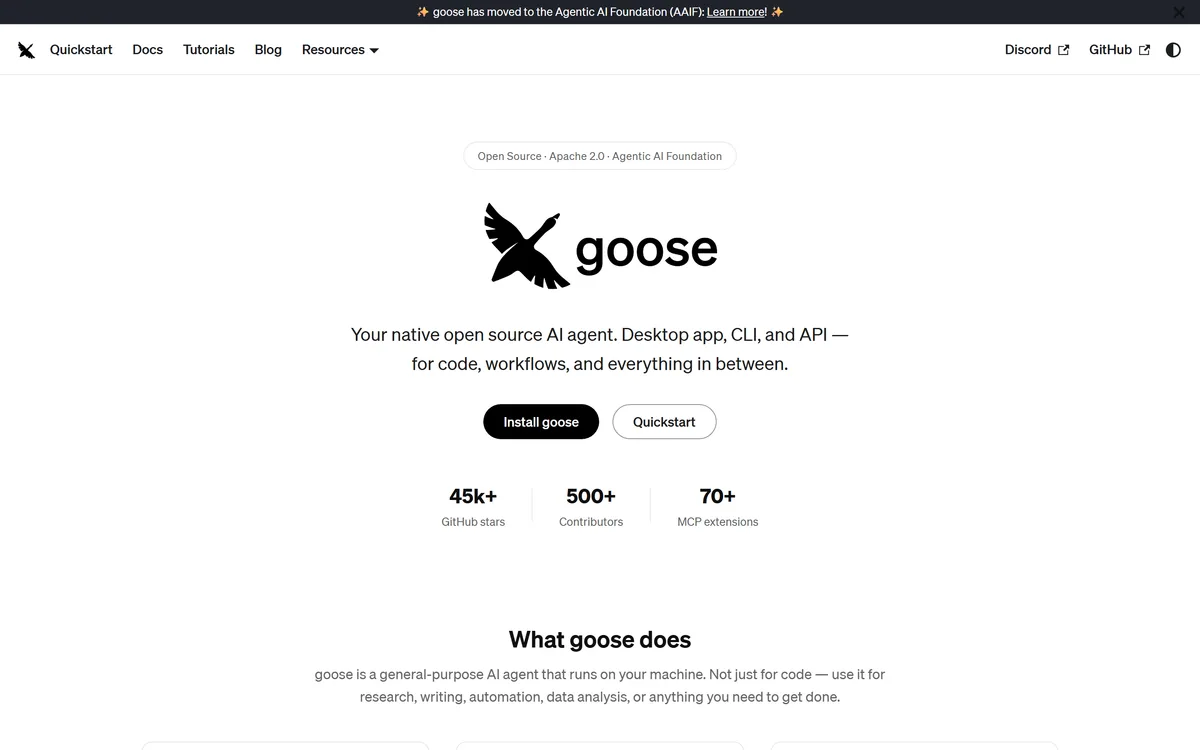
Goose review on AInexfinder — free AI tool for Coding & Development. Features, pricing notes, and alternatives.
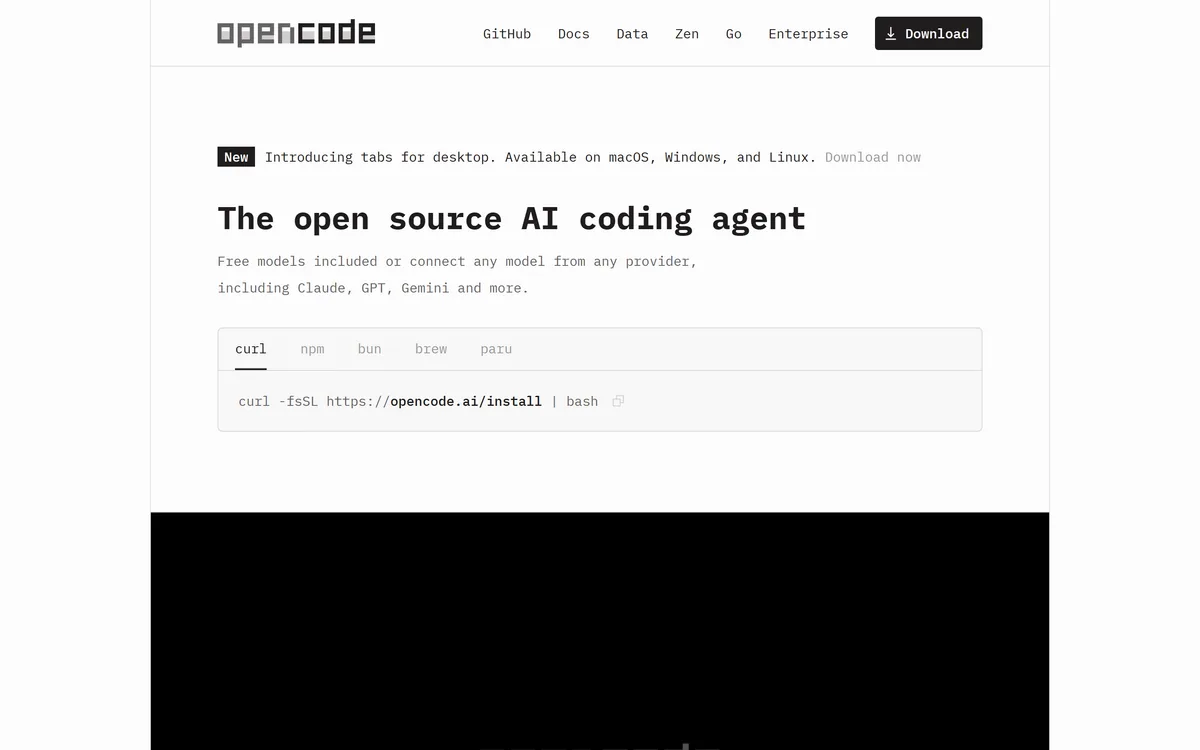
OpenCode is an open source AI coding agent built for the terminal, with desktop and IDE clients alongside. It connects to 75+ model providers, configures language servers automatically, runs parallel agent sessions, keeps conversations locally in SQLite, and is built by the team behind SST.
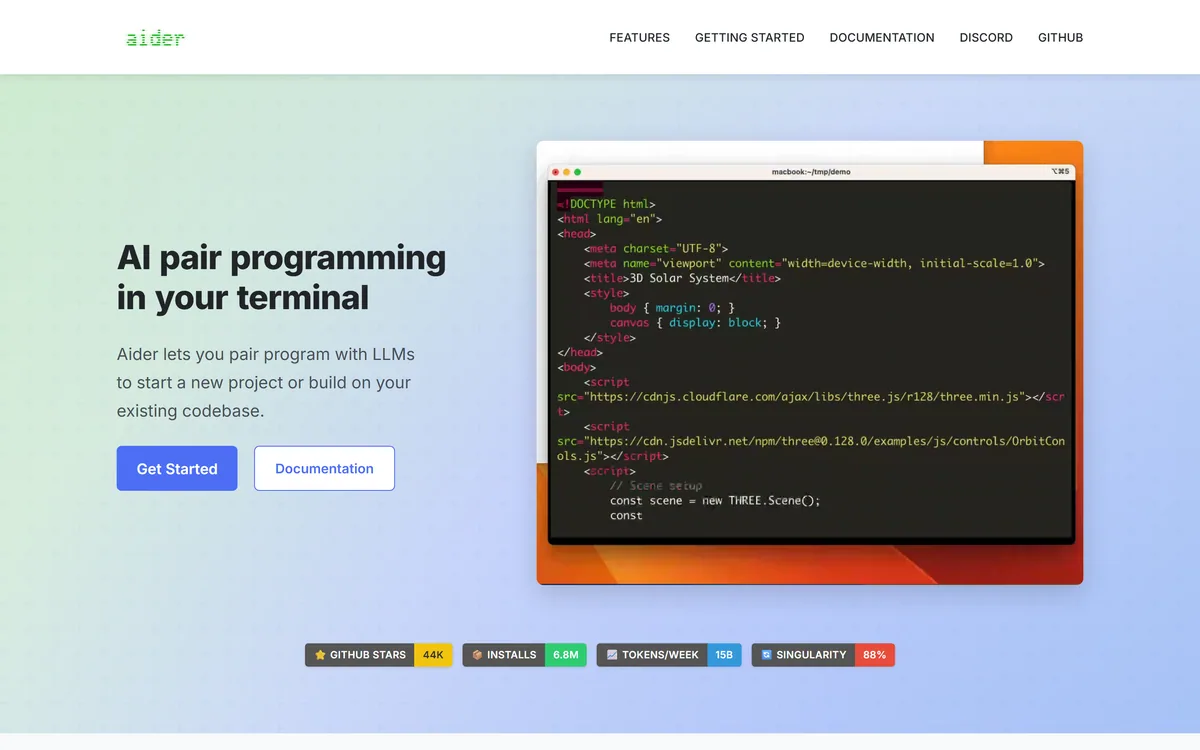
Aider is an open-source AI pair programming tool that runs in your terminal, builds a map of your whole repository for context, works with almost any LLM including local models, and commits each change to git with a written message so every edit can be diffed and undone.
Open-source AI code assistant for VS Code and JetBrains Category: Coding & Development.
Related Pages