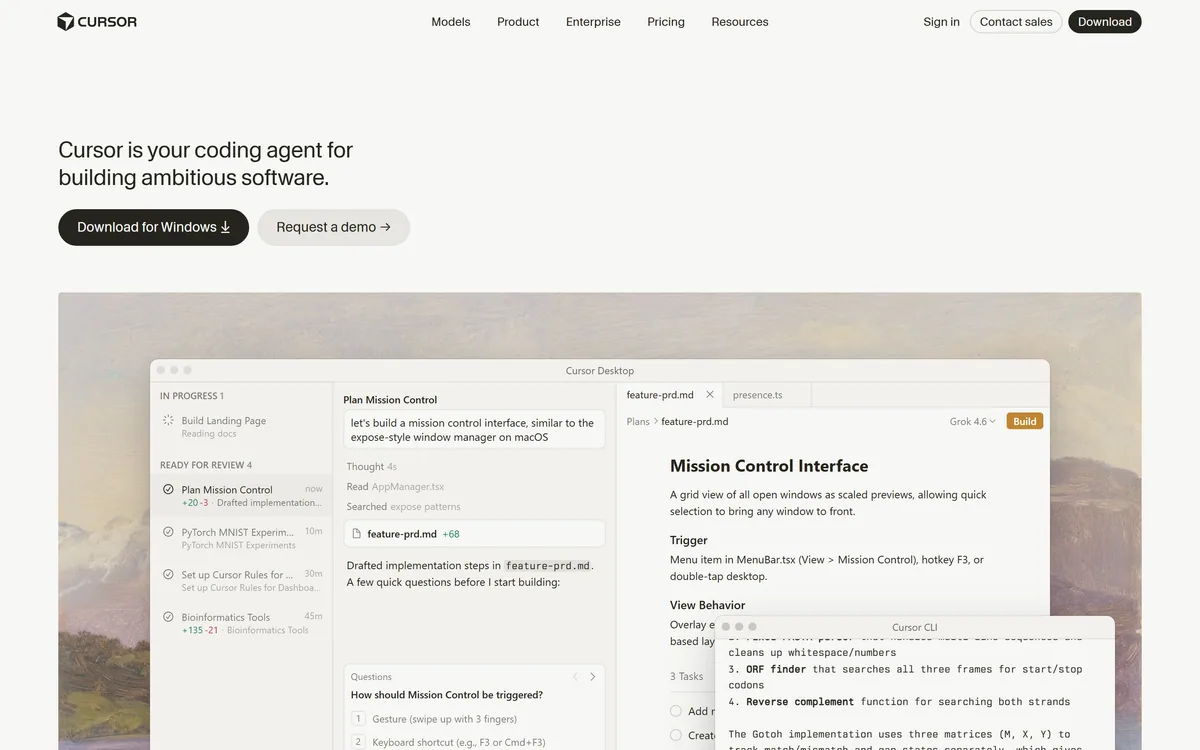

Cursor is an AI-first code editor and agent platform from Anysphere — now a SpaceX subsidiary — that plans, writes, tests, and reviews code across your repository from the desktop editor, a CLI, the web, and Slack.
Coding & Development Review
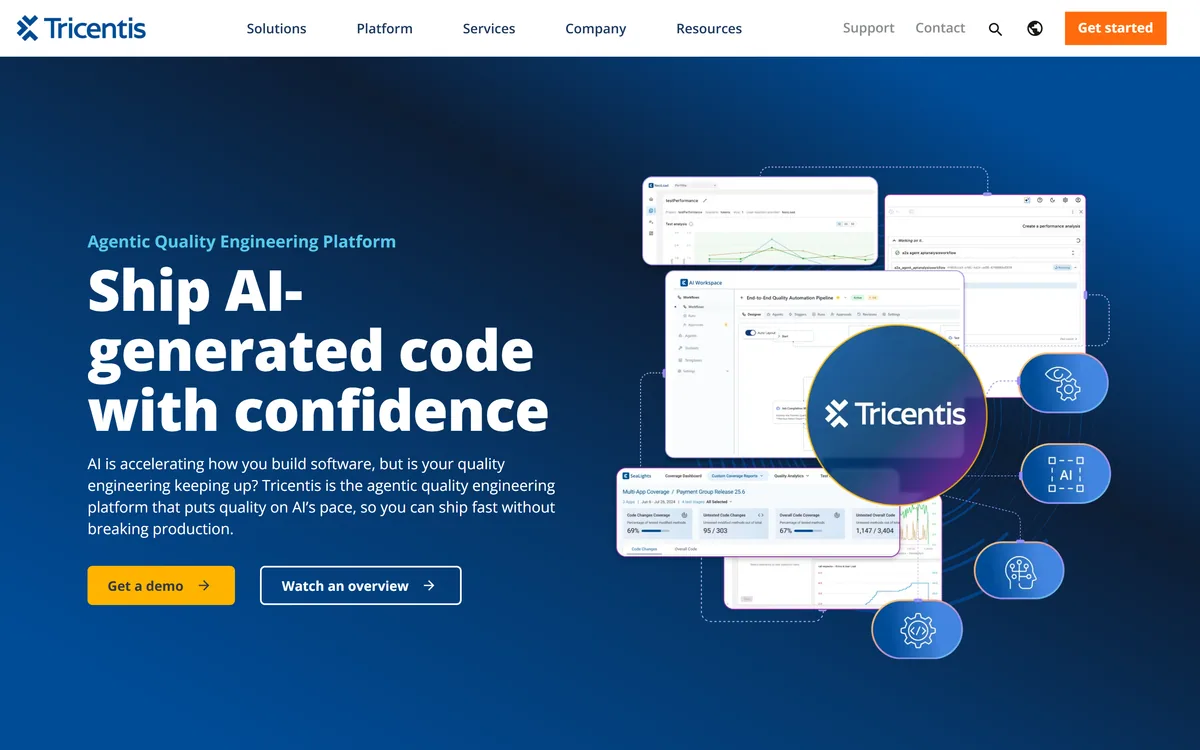
Tabnine is an enterprise AI coding assistant offering context-aware code completion, chat and agents with private deployment and a codebase-wide context engine. In July 2026 it was acquired by Tricentis, and tabnine.com now routes to the Tricentis agentic quality engineering platform.
Very good
Tabnine earns 4.0 as a genuinely enterprise-grade AI coding assistant: privacy-first, with private and self-hosted deployment, and suggestions grounded in your own codebase through a context engine, which is exactly what regulated teams need before letting AI near their source. The important caveat is transition, not capability: Tricentis acquired Tabnine in July 2026, tabnine.com now routes to the Tricentis platform, and Tabnine's context technology is folding into it. The strengths are real; just confirm the current coding-assistant offering under Tricentis before you commit. AInexfinder Editor Score: 4.0/5.
Best for: Enterprise engineering teams; Regulated industries
The visit link goes to tabnine.com, the official site. Paid placements on AInexfinder are always labelled. How we make money
Tabnine built its reputation as the enterprise-minded AI coding assistant: strong on privacy, deployment control and understanding a company's own codebase, rather than chasing raw model size. That focus is what set it apart in a crowded field of code assistants.
There is an important change to flag first, though: in July 2026 Tricentis acquired Tabnine, and tabnine.com now presents the Tricentis agentic quality engineering platform, with Tabnine's context technology folding into it. As a coding tool it competes with the likes of Aider, but its enterprise-context angle has always been the differentiator.
This review covers what Tabnine brings to an engineering team, where it earns its place, how it is licensed, and how the Tricentis transition changes the picture.
| What it is | An enterprise AI coding assistant |
|---|---|
| Core | Context-aware completion, chat and agents |
| Context | A codebase-wide 'enterprise context engine' |
| Privacy | Private/self-hosted deployment options |
| Models | Choice of models; your code not used to train |
| Ownership | Acquired by Tricentis (July 2026) |
| Site now | tabnine.com routes to the Tricentis platform |
| Audience | Regulated and enterprise engineering teams |
Tabnine's long-standing identity is the AI coding assistant that enterprises could actually adopt: it let teams keep code private, choose or self-host models, and get suggestions grounded in their own repositories rather than the open internet. For regulated industries, that control was often the deciding factor over flashier assistants.
The context-engine idea is the heart of it. Rather than completing code from a generic model, Tabnine builds an understanding of an organisation's systems, mapping entities, relationships and patterns across repositories, docs and tickets, so suggestions fit the way your codebase actually works.
The headline change is ownership. Tricentis acquired Tabnine in July 2026, and the thesis behind the deal is that quality and testing agents need the deep enterprise context Tabnine built; tabnine.com now routes to the Tricentis agentic quality engineering platform, with Tabnine's technology integrated there.
So the honest framing is that Tabnine's code-assistant capabilities are genuine and enterprise-grade, but the product is in transition. Anyone evaluating it today should confirm exactly how the coding assistant is offered and supported under Tricentis, rather than assuming the standalone product is unchanged.
Tabnine's code-assistant capabilities are genuine and enterprise-grade, but the product is in transition under Tricentis; confirm the current path before committing.
The value splits into the day-to-day coding help and the private, context-aware foundation underneath it.
Tabnine offers inline code completion, a chat assistant for explaining and generating code, and agentic workflows, all grounded in your codebase rather than a generic model's guesses. Because it understands your conventions and dependencies, suggestions tend to fit your project instead of needing constant correction.
That codebase-grounding is the practical difference from a general assistant. A terminal-native coding tool like Aider pairs an LLM with your git repo for edits; Tabnine's bet is deeper, continuous enterprise context across many repositories and systems, which matters most at organisational scale.
Tabnine's enterprise appeal has rested on deployment control: private or self-hosted options, a choice of models, and a commitment that your code is not used to train shared models, which is why security-conscious teams adopted it. That posture is exactly what a regulated engineering org needs before letting AI near its source.
Under Tricentis, that context technology is being pointed at quality engineering too. A development-focused assistant such as Amp stays in the coding lane; Tabnine's capabilities now sit inside a broader testing-and-quality platform, so the evaluation question is whether you want the coding assistant, the quality platform, or both.
Tabnine earns its place for enterprise and regulated engineering teams that need AI coding help without sending source to third-party models, and that benefit from suggestions grounded in a large, shared codebase rather than generic completions.
It suits organisations that value deployment control and governance over raw model novelty, and teams already invested in, or moving toward, the Tricentis platform, where the combined code-and-quality story is strongest.
It earns it less for a solo developer or small team who just want a quick assistant and have no privacy or scale requirement, where a lighter tool like a terminal assistant or an IDE plugin is enough. Given the ownership change, its exact standalone offering is the thing to verify rather than assume. Developers who want an opinionated, spec-driven environment rather than an assistant inside their existing editor may prefer an AI IDE such as Kiro.
Tabnine has historically been sold with a free tier and paid enterprise plans, and as part of Tricentis it is positioned within an enterprise platform sold through demos. We do not publish prices, which change; check the site, which now reflects Tricentis.
The value question for an enterprise is whether grounded, private AI coding help measurably improves throughput and quality against the cost and the deployment effort, which for a large regulated team is often a strong case and for a hobbyist is not.
Because the product is transitioning, the sensible approach is to request a current demo, clarify how the coding assistant and its private-deployment options stand under Tricentis, and trial it on your own repositories before signing anything.
Because Tabnine is both enterprise-grade and mid-transition, evaluate it on your real codebase and confirm the current product path.
Context-aware code completion
Code chat assistant
Agentic coding workflows
Enterprise context engine
Private/self-hosted deployment
Choice of models
Code not used to train shared models
Enterprise governance
The useful comparison is with other AI coding tools, by how they treat context and control.
| Tool | Tool | Type | Best for |
|---|---|---|---|
| Tabnine | Enterprise coding assistant | Private, codebase-grounded help | Regulated and large teams |
| Aider | Terminal AI pair-programmer | LLM edits against your git repo | Developers in the terminal |
| Amp | AI coding assistant | Agentic coding workflows | Hands-on development |
| Kiro | Spec-driven AI IDE | Structured, spec-first builds | Engineers building seriously |
Last checked . Read from tabnine.com during this check, with the screenshot above captured at the same time.
The site now presents the Tricentis agentic quality engineering platform following Tricentis's July 2026 acquisition of Tabnine. The code-assistant capabilities are real and enterprise-grade, but the product is in transition; confirm the current offering with Tricentis before committing.
A terminal pair-programmer, a coding assistant and a spec-driven IDE to weigh alongside Tabnine.
AInexfinder does not list plan prices or billing details. For current pricing, plans, and trials, visit the official Tabnine website.
Visit official website for pricingVendor pricing, credits, and billing policies change over time. Always confirm on the official site before you buy.
Tabnine earns an AInexfinder Editor Score of 4.0/5 (very good). Best for: Enterprise engineering teams; Regulated industries; Private, codebase-grounded AI.
Visit TabnineLog in to write a review.
No reviews yet. Be the first to share your experience with Tabnine.
Assigned reviewer
Daniel ReedSenior AI Tools Reviewer
Daniel leads AInexfinder's tool reviews. He researches each tool from its own pricing, documentation and policies, checks its claims against independent sources, and writes up what it does well, where it falls short and who it genuinely suits.
Daniel and the AInexfinder editorial team research Tabnine from its own website, pricing, documentation and policies, checked against independent sources. This review is research-based: unless its method note says otherwise, we have not bought a plan or run hands-on tests. The Editor Score is our editorial judgement, and payment never changes it.
Similar Tools
Cursor is an AI-first code editor and agent platform from Anysphere — now a SpaceX subsidiary — that plans, writes, tests, and reviews code across your repository from the desktop editor, a CLI, the web, and Slack.
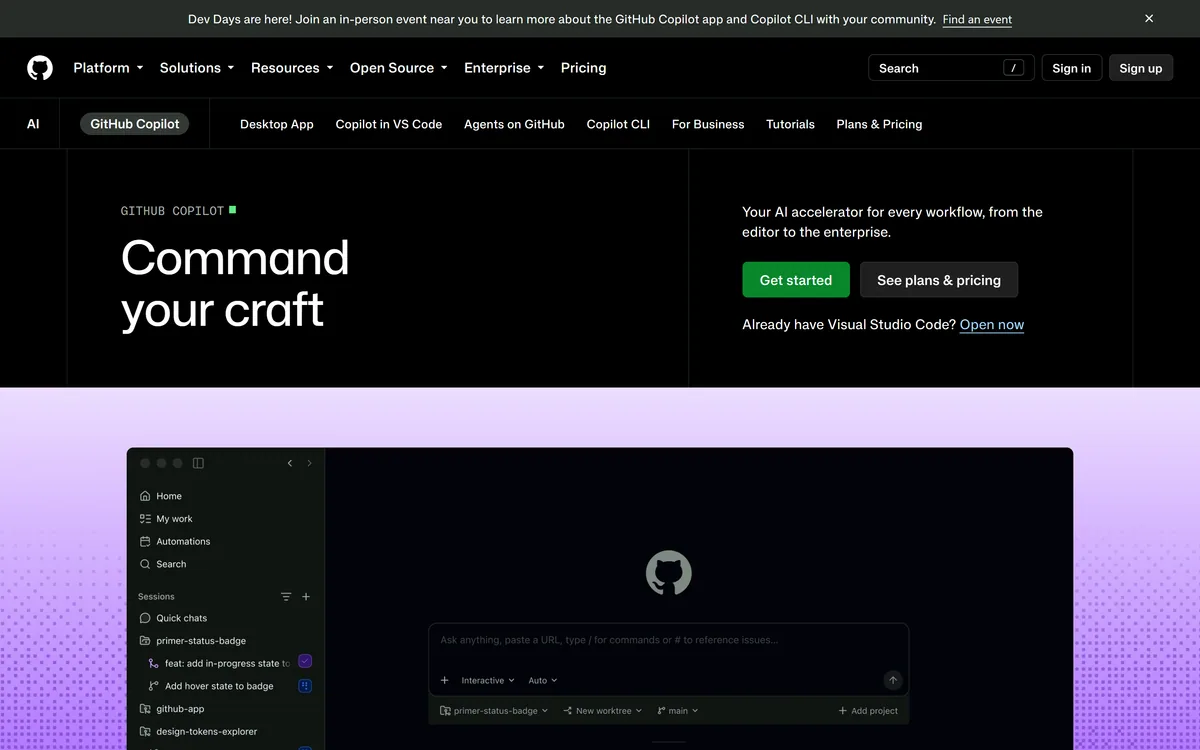

GitHub Copilot is an AI coding assistant that spans completion, chat, agent mode, automated code review, and a cloud agent that opens pull requests, working across VS Code, Visual Studio, JetBrains, Xcode, Neovim, Eclipse, the CLI, and github.com.
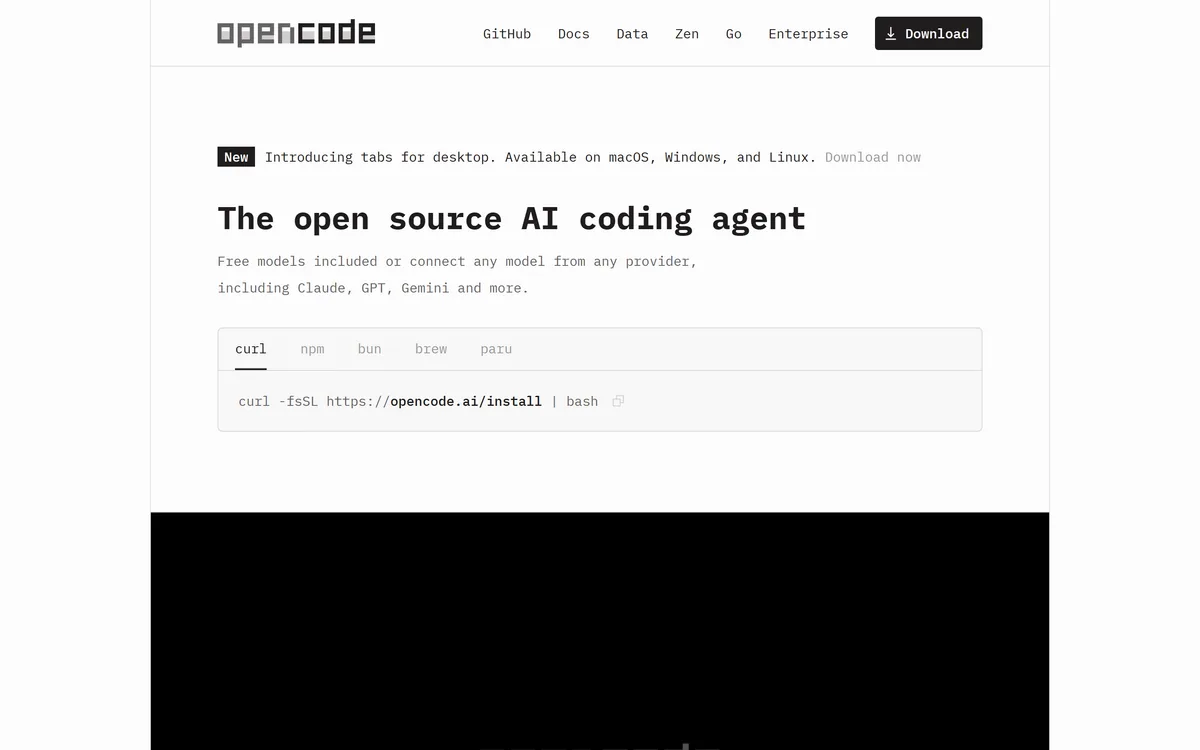
OpenCode is an open source AI coding agent built for the terminal, with desktop and IDE clients alongside. It connects to 75+ model providers, configures language servers automatically, runs parallel agent sessions, keeps conversations locally in SQLite, and is built by the team behind SST.
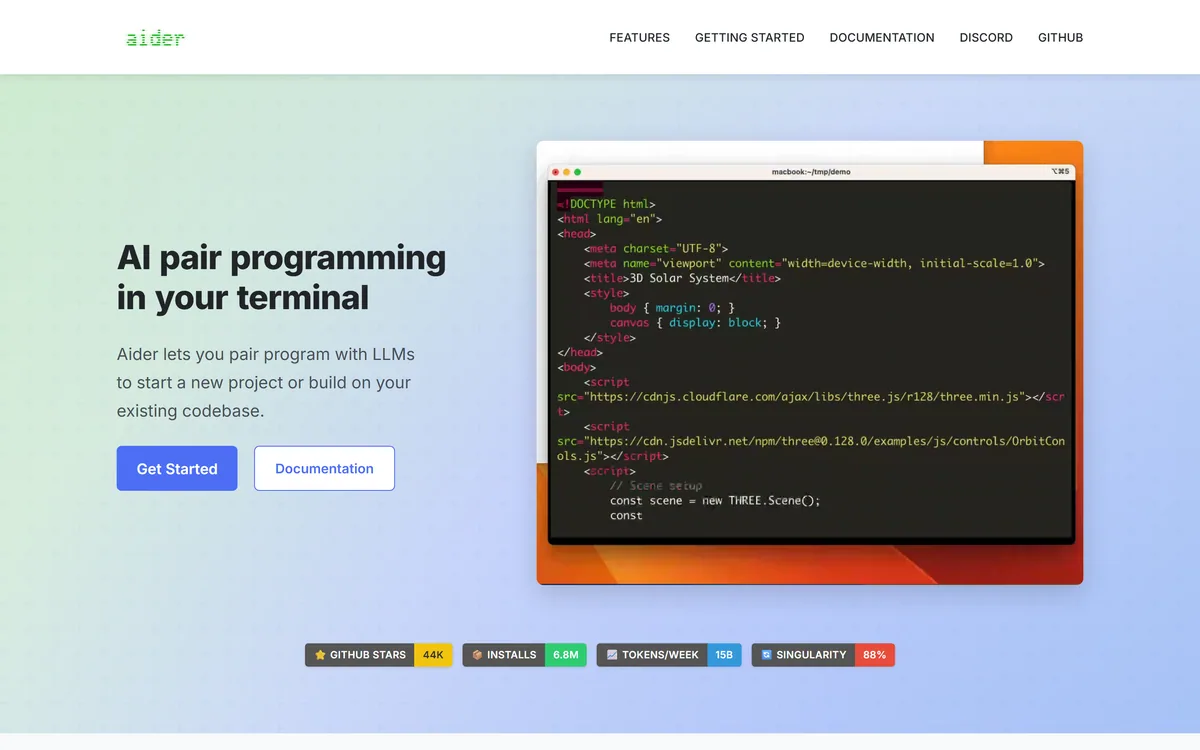
Aider is an open-source AI pair programming tool that runs in your terminal, builds a map of your whole repository for context, works with almost any LLM including local models, and commits each change to git with a written message so every edit can be diffed and undone.
Generate native iOS, Android and web apps from prompts Category: Coding & Development.
Traycer review on AInexfinder — freemium AI tool for Coding & Development. Features, pricing notes, and alternatives.
Related Pages