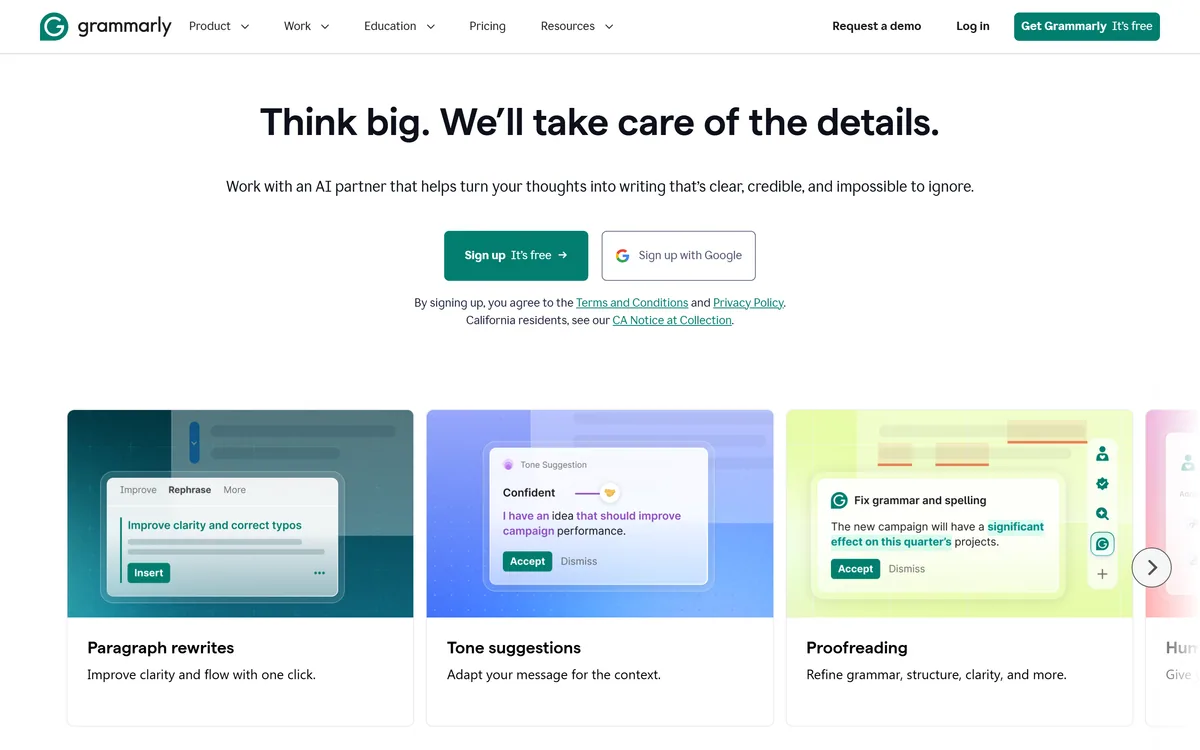

Grammarly is an AI writing assistant that checks grammar, clarity, and tone wherever you already write — browser, desktop, mobile keyboard, Google Docs, and Microsoft Office — and now ships AI agents for humanising, detecting, and grading text.
Writing & Content Review
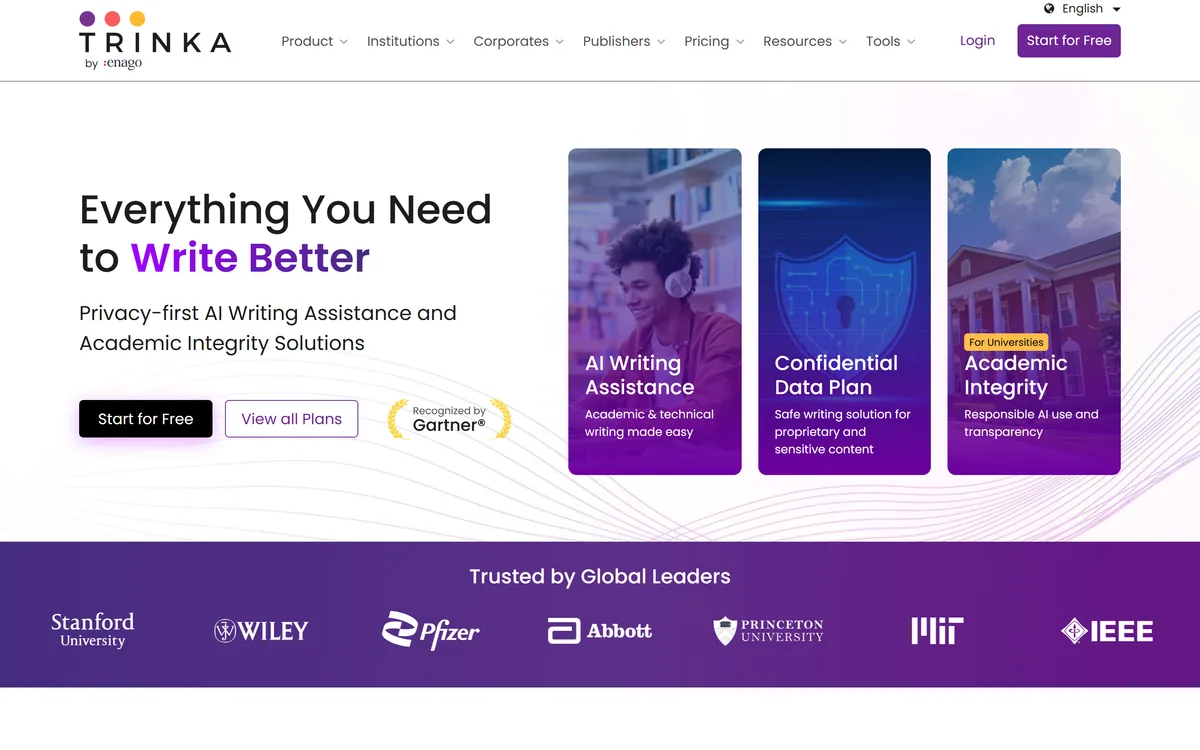
Trinka, by Crimson AI, is an AI grammar and writing assistant for academic and technical writing: grammar and style checks, paraphrasing, consistency and inclusive-language checks, LaTeX proofreading, an AI content detector, plagiarism check, citation tools, Word and browser plugins, and a confidential-data plan. Detectors are signals, not proof.
Good
Trinka earns 3.8 as a focused, capable writing assistant for academic and technical authors: grammar and style tuned to research conventions, LaTeX proofreading, citation tools and a confidential-data plan, from Crimson AI. It is a strong fit for researchers, non-native English writers and institutions. Its integrity tools are the weak point: AI-content detection is unreliable, so treat detector scores as signals to review rather than verdicts, and its '#1 detector' and compliance claims are vendor-stated. AInexfinder Editor Score: 3.8/5.
Best for: Academic papers; Theses and dissertations
The visit link goes to trinka.ai, the official site. Paid placements on AInexfinder are always labelled. How we make money
Academic writing has rules general grammar checkers miss: formal tone, discipline conventions, consistent terminology and citation styles. Trinka, from Crimson AI, is built specifically for that kind of writing.
It combines grammar and style checks with paraphrasing, consistency and inclusive-language tools, LaTeX proofreading, citation help, a plagiarism check and an AI content detector, delivered through the web, Word and browser plugins. It sits near writing assistants like Sapling, with an academic and technical slant.
This review covers how Trinka edits a manuscript, which academic writers it suits, how it divides free and premium, and where its checks, especially its detectors, need your judgement.
| What it is | An AI writing assistant for academic and technical writing |
|---|---|
| Operator | Crimson AI (India) |
| Grammar | Grammar, style and consistency checks |
| Academic | LaTeX proofreading, technical phrasing |
| Integrity | AI content detector and plagiarism check |
| Citations | Citation checker and formatter |
| Delivery | Web, MS Word, Chrome/Firefox/Edge plugins |
| Privacy | A confidential-data plan (no AI training) |
Trinka's purpose is to edit the way an academic editor would: not just fixing typos, but improving formal tone, technical word choice, consistency and clarity in the conventions of research writing. That focus is what separates it from a general grammar checker.
It extends across the academic workflow with paraphrasing, consistency and inclusive-language checks, LaTeX proofreading for technical manuscripts, citation checking and formatting, and a journal finder, so a researcher can draft, polish and prepare a paper in one place.
It also includes an integrity layer, an AI content detector and a plagiarism check, plus a confidential-data plan that the vendor says deletes data instantly and does not use it for AI training, which matters for unpublished research.
The fair assessment is that Trinka is a strong editing aid, but its detectors are the part to treat with caution. AI-content detection is broadly unreliable, so a 'detector' score is a signal to review, never proof that something was or was not AI-written.
Trinka edits like an academic editor, but its AI detector is a signal to check, not a verdict to trust.
Trinka pairs academic-grade editing with an integrity and citation layer.
Its grammar, style and consistency checks are tuned for formal writing, it paraphrases and proofreads, handles LaTeX, and offers file proofreading that returns an editable document, across many subject areas.
Where a tool like Scite focuses on how research is cited and supported, Trinka's job is the language and correctness of the manuscript itself.
The integrity and citation tools, an AI content detector, plagiarism check, citation checker and journal finder, support the submission process, with a confidential-data plan for sensitive work.
For reference management and research organisation beyond editing, a tool such as Paperguide complements it; Trinka's core remains writing quality and integrity checks.
Trinka suits researchers, graduate students and non-native English speakers writing papers, theses and technical documents who need editing that understands academic conventions rather than casual prose.
It suits universities, publishers and research-heavy organisations wanting consistent language and integrity checks across many authors, and anyone working in LaTeX or citation-heavy formats a general checker handles poorly.
It fits less well casual or marketing writers, who are better served by a general assistant, and anyone who would lean on its AI detector as a definitive judgement, since detection results are unreliable and can misclassify genuine writing.
A sensible way to use it is as a careful editor you still oversee: accept its language improvements where they are right, use citation and consistency tools to save time, and treat integrity scores as conversation-starters, not conclusions. The healthiest way to think of it is as a capable second reader whose suggestions you accept on merit rather than by default, which keeps you in charge of the writing.
Trinka offers a free tier with core checks and premium tiers that unlock more, with separate confidential-data pricing, and its listed prices mix currencies. We do not publish prices, which change; check the site for current plans.
What matters for value is editing time saved and submission quality gained against the subscription, particularly for authors who would otherwise pay for professional editing.
The smart move is to run real manuscript sections through the free tier, judge whether its academic suggestions are genuinely better than a general checker, and upgrade only if they are.
Because academic editing is judged on real text, trial Trinka on a section of your own writing.
Academic grammar checker
Paraphraser
Consistency checks
LaTeX proofreading
AI content detector
Plagiarism check
Citation tools
Word and browser plugins
The useful comparison is with other writing and research tools.
| Tool | Tool | Approach | Best for |
|---|---|---|---|
| Trinka | Academic writing assistant | Grammar, integrity, citations | Researchers and academics |
| Sapling | Writing assistant | Grammar and suggestions | Teams and support writing |
| Scite | Citation analysis | How claims are supported | Research evaluation |
| Paperguide | Research assistant | References and reading | Literature workflows |
Last checked . Read from trinka.ai during this check, with the screenshot above captured at the same time.
AI-content detection is broadly unreliable; treat Trinka's detector scores as signals to review, never proof of AI authorship. Its '#1 AI Detector' and compliance claims are vendor-stated. Operated by Crimson AI (India); Enago is its author-services brand.
A general writing assistant, a citation-analysis tool and a research assistant to weigh alongside Trinka.
AInexfinder does not list plan prices or billing details. For current pricing, plans, and trials, visit the official Trinka website.
Visit official website for pricingVendor pricing, credits, and billing policies change over time. Always confirm on the official site before you buy.
Trinka earns an AInexfinder Editor Score of 3.8/5 (good). Best for: Academic papers; Theses and dissertations; Technical manuscripts.
Visit TrinkaLog in to write a review.
No reviews yet. Be the first to share your experience with Trinka.
Assigned reviewer
Daniel ReedSenior AI Tools Reviewer
Daniel leads AInexfinder's tool reviews. He researches each tool from its own pricing, documentation and policies, checks its claims against independent sources, and writes up what it does well, where it falls short and who it genuinely suits.
Daniel and the AInexfinder editorial team research Trinka from its own website, pricing, documentation and policies, checked against independent sources. This review is research-based: unless its method note says otherwise, we have not bought a plan or run hands-on tests. The Editor Score is our editorial judgement, and payment never changes it.
Similar Tools
Grammarly is an AI writing assistant that checks grammar, clarity, and tone wherever you already write — browser, desktop, mobile keyboard, Google Docs, and Microsoft Office — and now ships AI agents for humanising, detecting, and grading text.
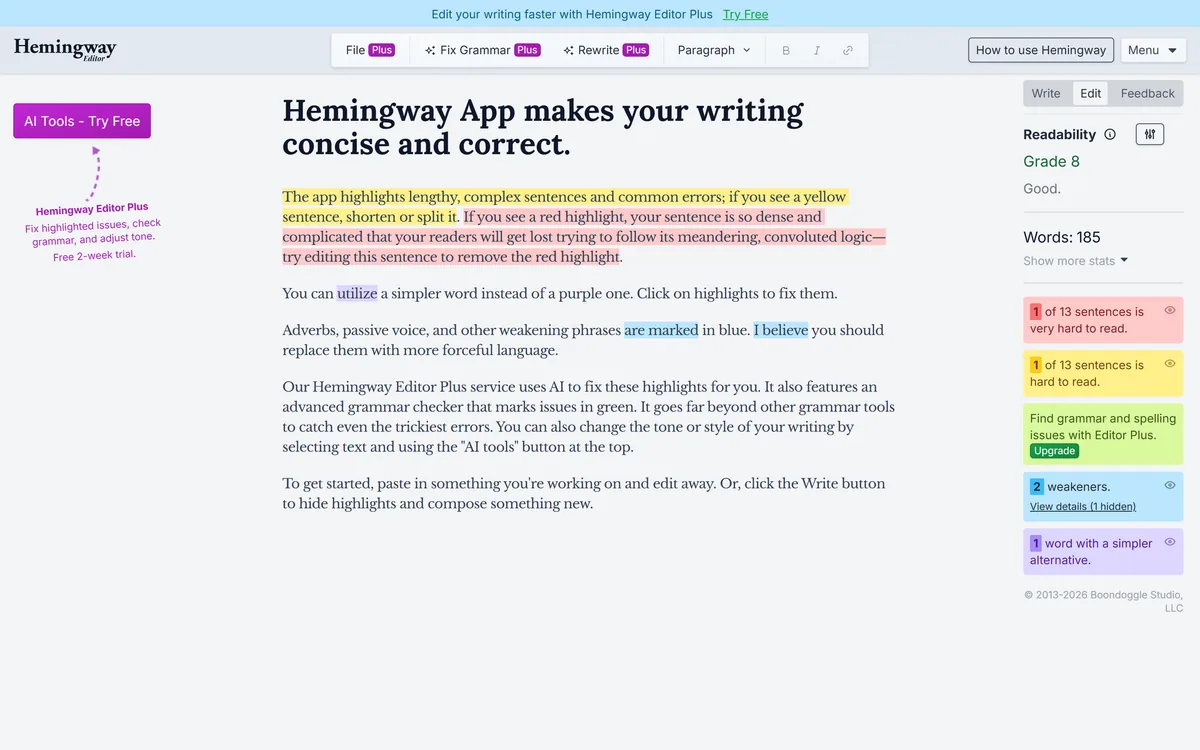
Hemingway Editor highlights writing problems by colour — long sentences in yellow, unreadable ones in red, complex words in purple, adverbs and passive voice in blue — and reports a readability grade. A paid tier adds AI fixes, an advanced grammar checker and tone adjustment.
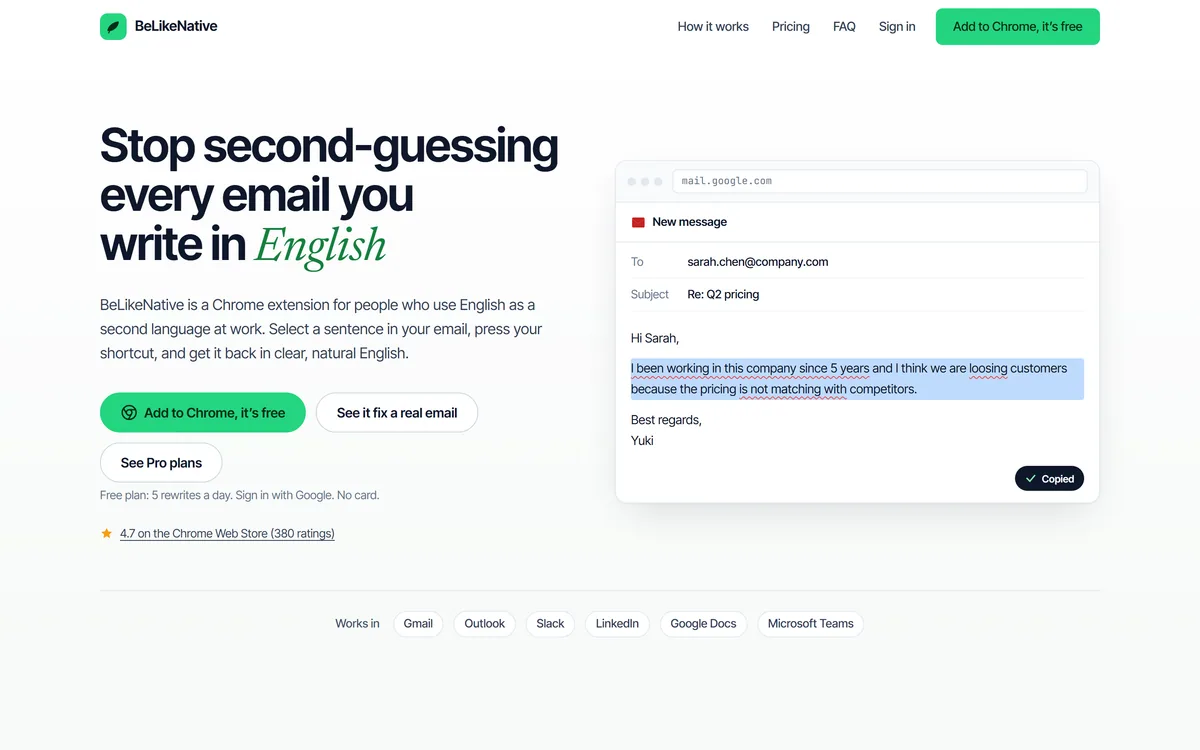
BeLikeNative is a Chrome extension for people who use English as a second language at work: select a sentence, press a shortcut, and get it back in clear, natural English, with tone options and translation, working inside Gmail, Outlook, Slack, LinkedIn, Docs and Teams.
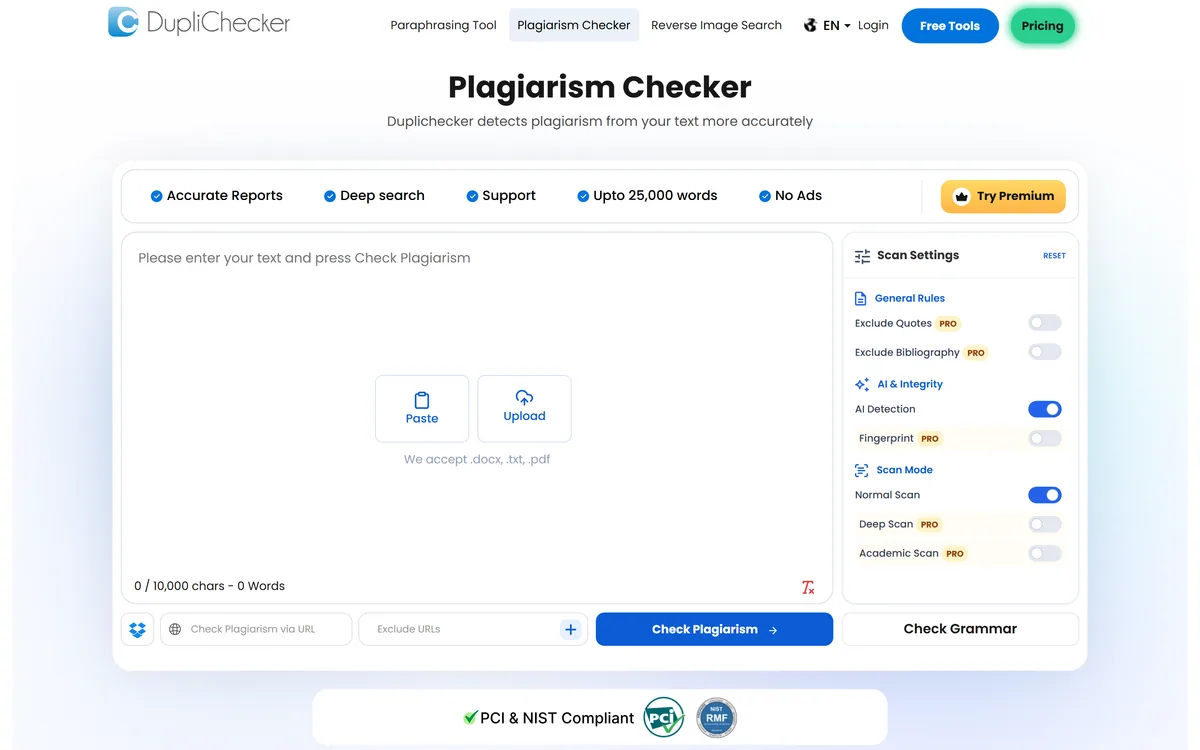
DupliChecker is a free online plagiarism checker and a broad SEO/writing utility site, offering similarity checks, an AI content detector, grammar checking and dozens of extra tools. It is useful for quick first-pass checks, but its accuracy claims are overstated and its AI detector is unreliable.
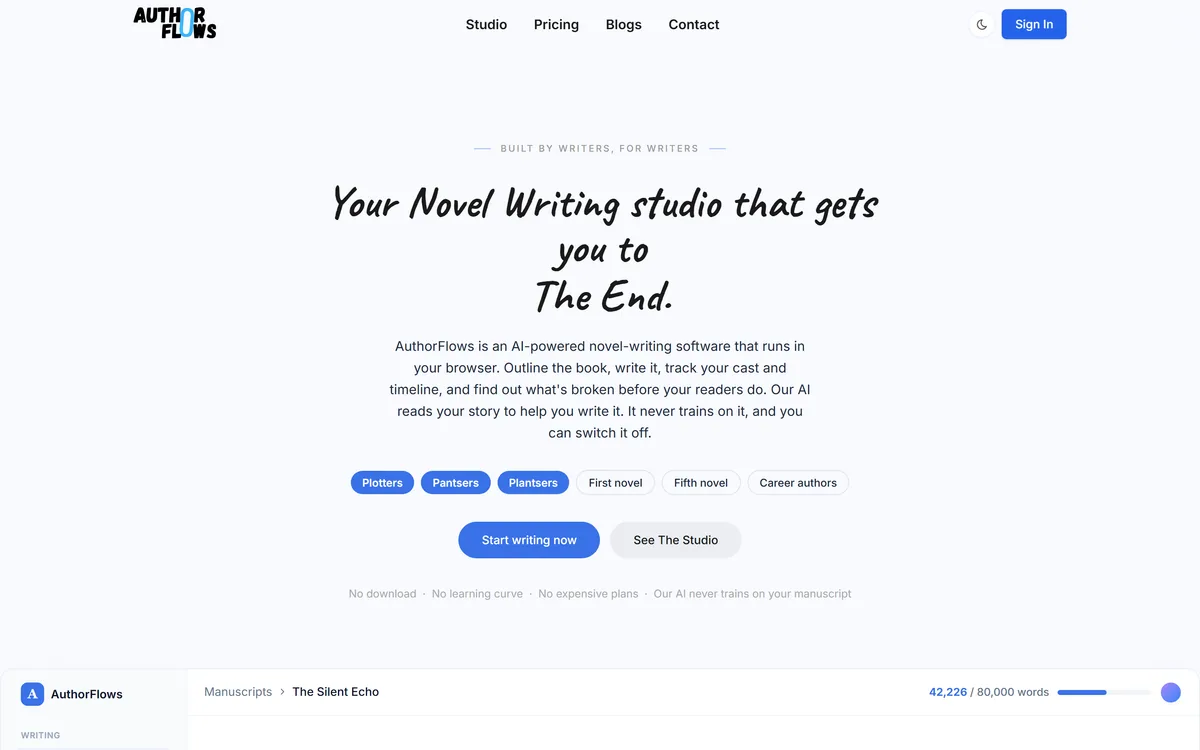
AuthorFlows is browser-based novel-writing software combining a paginated manuscript editor, story map, timeline, character bible and an AI Story Analyzer that scores chapters for strengths and weaknesses. Exports to five formats, and the AI can be switched off entirely.
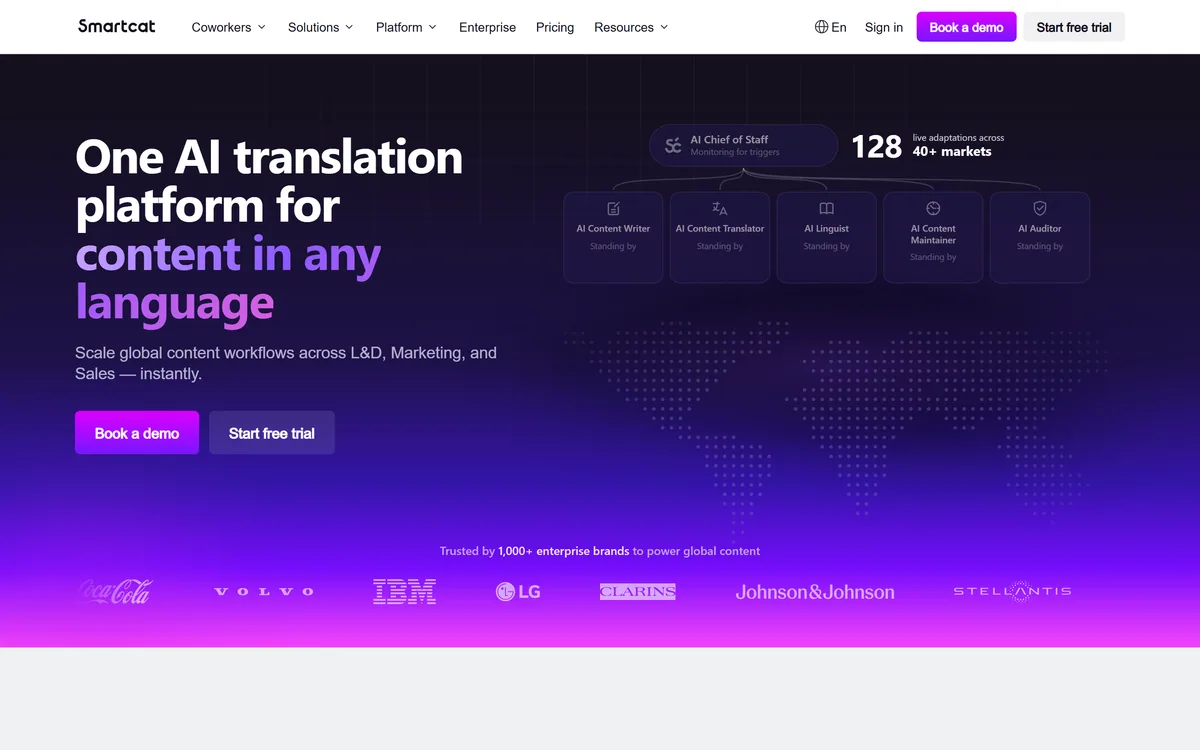
Smartcat combines AI translation across 280+ languages with a CAT tool, translation memory, a marketplace of 500,000+ linguists, and AI agents for writing, auditing and maintaining content — integrated with Figma, Contentful, WordPress, Git and Salesforce.
Related Pages