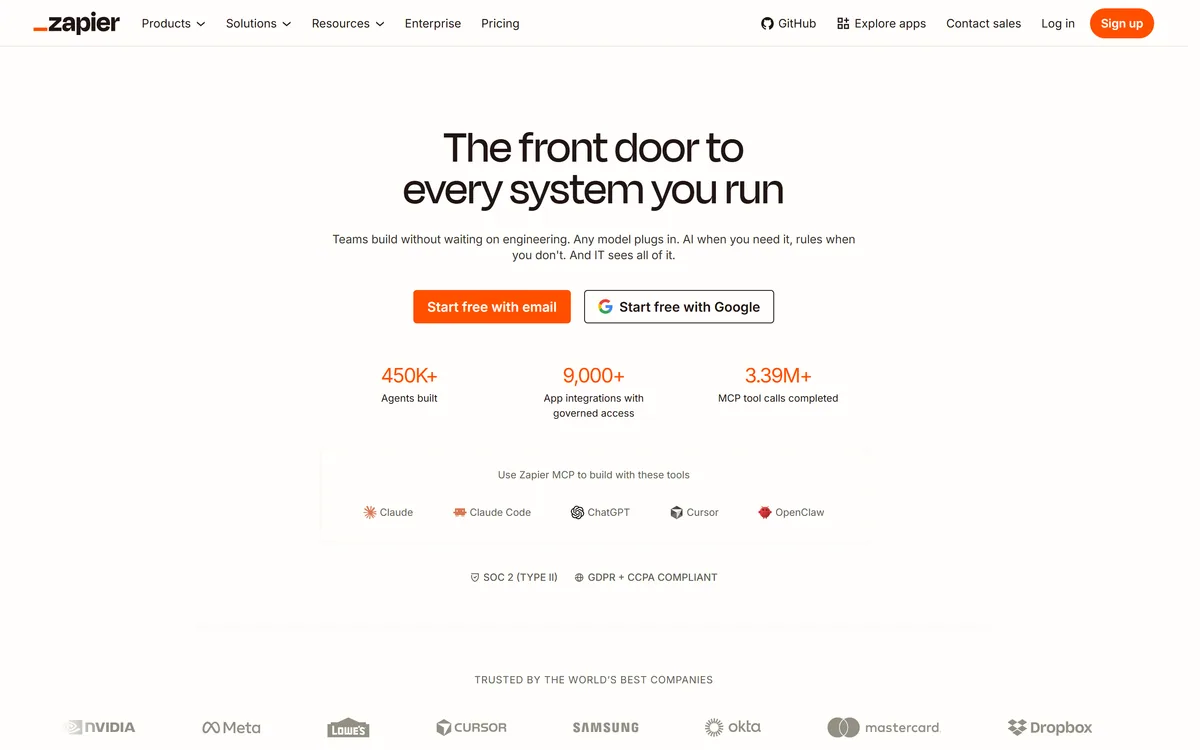

Zapier's AI layer adds agents and MCP tool access on top of its automation platform, connecting more than 9,000 apps with governed access so teams can mix AI decisions with deterministic rules under central oversight.
Productivity & Automation Review
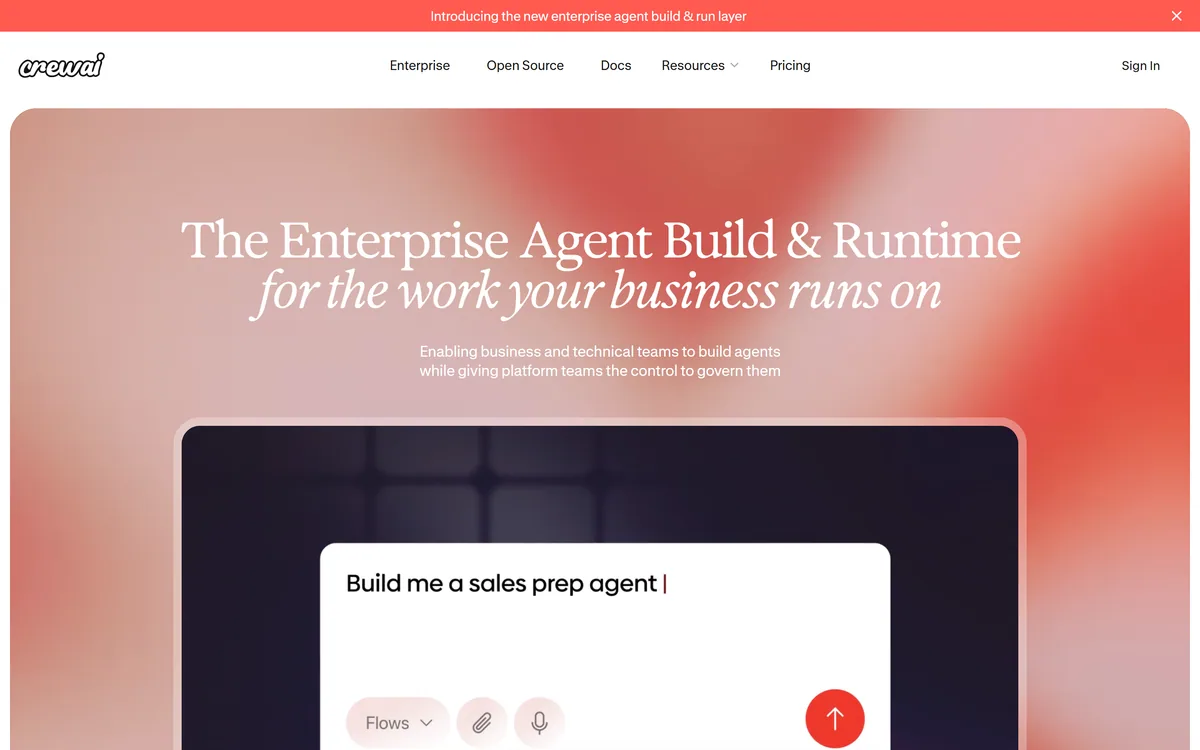
CrewAI is an enterprise platform to build and run AI agents: a Discovery layer that finds automation opportunities, a no-code canvas and code-first Python API for building role-based multi-agent workflows, and a control plane that adds tracing, RBAC, audit and human-in-the-loop approvals.
Very good
CrewAI earns 4.3 as an enterprise platform that treats the real problem with agents, running them safely in production, as seriously as building them: a Discovery layer to prioritise automations, a no-code canvas and code-first API that both produce role-based workflows, and a control plane with tracing, RBAC, audit and human-in-the-loop approvals. It is enterprise-weighted and overkill for a solo builder shipping one agent, and its Fortune 500 figure is vendor-stated, but for organisations that must govern agents it is a strong, coherent platform. AInexfinder Editor Score: 4.3/5.
Best for: Enterprise platform teams; Production agent rollouts
The visit link goes to crewai.com, the official site. Paid placements on AInexfinder are always labelled. How we make money
Most teams can prototype an AI agent in an afternoon; the hard part is running agents in production where they must be observed, controlled and trusted. CrewAI is built for that second problem as much as the first.
It spans the whole lifecycle: a Discovery layer that surfaces automation opportunities, a build layer with both a no-code canvas and a code-first Python API for role-based multi-agent workflows, and a control plane that governs every run. It sits in a fast-moving field alongside agent and automation tools like Browser Use, but its pitch is governance at enterprise scale rather than a single clever agent.
This review covers what CrewAI gives engineers and teams, where it earns its place, how it is sold, and who it is too much for.
CrewAI's core idea is to put building and running agents on the same platform, so the thing you prototype is the thing you can govern in production without re-platforming. That continuity is what separates it from a framework you have to wrap your own operations tooling around.
The open-source CrewAI framework made the project well known with developers; the commercial platform extends that into an enterprise build-and-run layer with a control plane. Knowing both exist matters, because the free framework and the governed platform are different commitments.
The reason governance sits at the centre is practical: agents take actions, and in a business those actions touch real systems, data and money. A platform that can trace, restrict, approve and reverse what an agent does is answering the question that actually blocks production rollout.
So the honest framing is that CrewAI is less about a cleverer agent and more about making agents safe to run at scale. That is a genuine and valuable problem, and it is also why the platform is aimed more at organisations than individuals.
A platform that can trace, restrict, approve and reverse what an agent does is answering the question that actually blocks production rollout.
The platform splits into building the automations and governing them, with each half aimed at a different audience.
CrewAI Discovery matches patterns observed across many agent runs against your tickets, chats, apps and workflows and returns automation opportunities ranked by effort, value and readiness, which is a sober way to decide what to build before building it. The build layer then offers a no-code visual canvas that exports to Python, plus a code-first API for teams that want full control.
That two-door approach is the point: business teams can assemble role-based agents on the canvas, while engineers work in code, and the deterministic-workflow option keeps runs predictable. A code-generation service like Replicate runs models rather than orchestrating governed multi-agent work, which is the different job CrewAI is built for.
CrewAI's control plane sits in the execution path of every workflow, giving real-time tracing of each LLM call, tool call and memory read with cost accounting, plus RBAC, immutable audit trails and enterprise IAM. Human-in-the-loop approval gates let a person intervene mid-run, and runtime hooks can inject PII redaction and policy checks at each step.
This is the enterprise substance, and it is what justifies the platform over raw frameworks. A workplace-agent product like Ema targets end-user automation; CrewAI is aimed at the platform team that has to make any of this observable, compliant and reversible before it ships.
CrewAI earns its place where agents need to run in production under real governance: organisations with platform teams who must trace, restrict and audit what agents do, and who want both business and engineering audiences building on one layer.
It suits teams with a backlog of candidate automations, because the Discovery layer helps prioritise by value and readiness rather than building whatever is easiest, and teams that need deterministic, role-based workflows rather than a single free-roaming agent.
It earns it less for a solo developer or small team who just want to ship one agent, where the open-source framework or a lighter tool is enough, and for anyone without the governance requirement that justifies a control plane. Its Fortune 500 figure is vendor-stated and reflects adoption, not a guarantee of fit.
CrewAI offers the open-source framework alongside a commercial enterprise platform, and the enterprise layer is sold through demos and pricing suited to organisations rather than a simple public tier. We do not publish prices, which change; check the site.
The value question is specific: the platform is worth it when the governance, tracing and approval controls remove a real blocker to putting agents in production, which is an easy case for a regulated or large organisation and a weak one for a hobby project.
Because the open-source framework exists, the sensible path is to prototype with it first, confirm agents solve your problem, and only move to the governed platform when observability, RBAC and approvals become the thing standing between you and a production rollout.
Because CrewAI spans building and governing, trial it against a real automation you would actually put in front of production, not a toy.
| What it is | An enterprise platform to build and run AI agents |
|---|---|
| Discovery | Finds automation opportunities, ranked by value |
| Build (no-code) | Visual canvas, exportable to Python |
| Build (code) | Code-first API for full control |
| Model | Role-based agents and deterministic workflows |
| Govern | Control plane with tracing, RBAC, audit |
| Oversight | Human-in-the-loop approval and intervention |
| Reach claim | Used by 65% of the Fortune 500 (vendor) |
Automation discovery and prioritisation
No-code visual agent builder
Python export and code-first API
Role-based multi-agent workflows
Deterministic workflow option
Real-time tracing with cost accounting
RBAC, audit trails and enterprise IAM
Human-in-the-loop approval gates
The useful comparison is with other ways teams build and run agents and automations.
| Tool | Tool | Type | Best for |
|---|---|---|---|
| CrewAI | Enterprise agent build-and-run | Governed multi-agent workflows | Platform teams shipping to production |
| Browser Use | Browser-agent framework | Agents that drive a browser | Web automation builders |
| Replicate | Model-hosting platform | Running models via API | Shipping model-backed features |
| Ema | Workplace AI agents | End-user task automation | Business users |
Last checked . Read from crewai.com during this check, with the screenshot above captured at the same time.
CrewAI's value is governance for production agents, which is why it suits organisations more than solo builders. Its Fortune 500 figure is vendor-stated; judge it on your own automation and controls.
A browser-agent framework, a model-hosting platform and a workplace-agent tool to weigh alongside CrewAI.
AInexfinder does not list plan prices or billing details. For current pricing, plans, and trials, visit the official CrewAI website.
Visit official website for pricingVendor pricing, credits, and billing policies change over time. Always confirm on the official site before you buy.
CrewAI earns an AInexfinder Editor Score of 4.3/5 (very good). Best for: Enterprise platform teams; Production agent rollouts; Regulated or audited environments.
Visit CrewAILog in to write a review.
No reviews yet. Be the first to share your experience with CrewAI.
Assigned reviewer
Daniel ReedSenior AI Tools Reviewer
Daniel leads AInexfinder's tool reviews. He researches each tool from its own pricing, documentation and policies, checks its claims against independent sources, and writes up what it does well, where it falls short and who it genuinely suits.
Daniel and the AInexfinder editorial team research CrewAI from its own website, pricing, documentation and policies, checked against independent sources. This review is research-based: unless its method note says otherwise, we have not bought a plan or run hands-on tests. The Editor Score is our editorial judgement, and payment never changes it.
Similar Tools
Zapier's AI layer adds agents and MCP tool access on top of its automation platform, connecting more than 9,000 apps with governed access so teams can mix AI decisions with deterministic rules under central oversight.
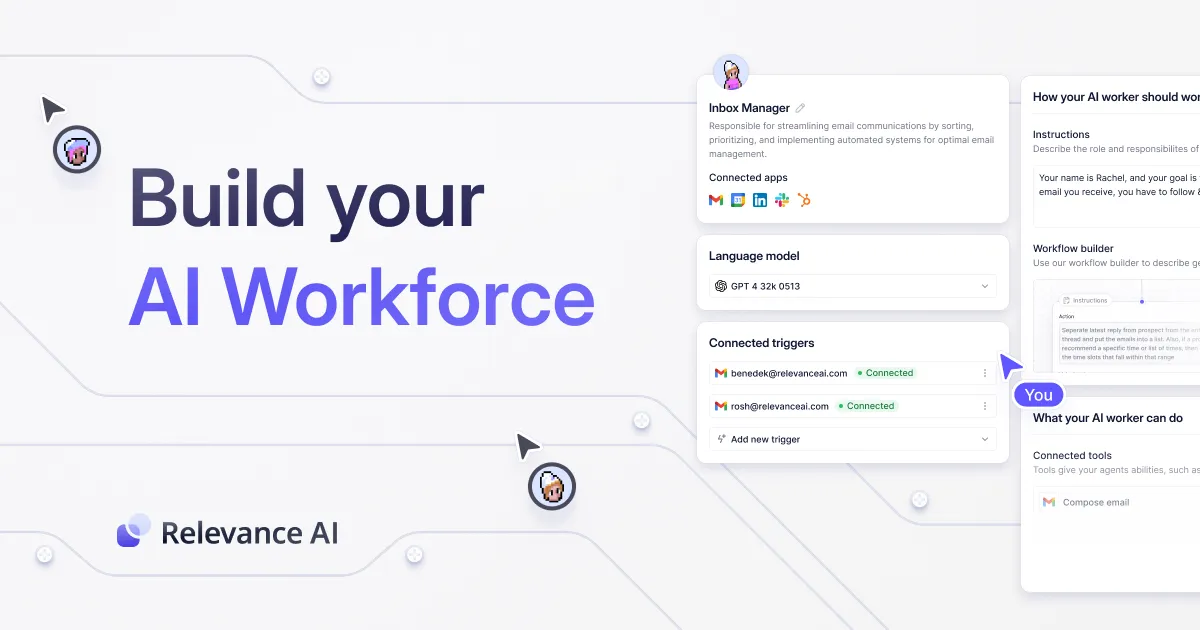
Enterprise platform for building AI agents at scale Category: Productivity & Automation.
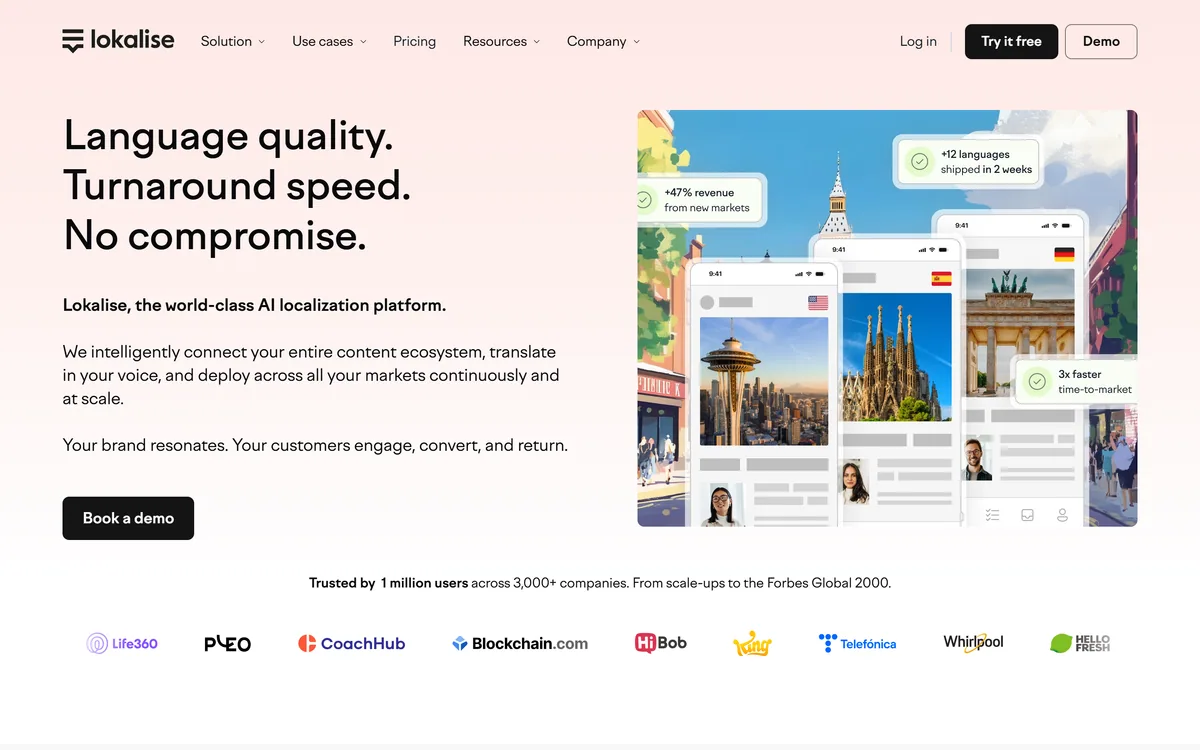
Lokalise is a translation management platform built for continuous localisation: strings flow from your repository, design files and CMS into an AI translation pipeline that applies your approved terminology and tone, with role-based human approval before anything ships.
Make review on AInexfinder — freemium AI tool for Productivity & Automation. Features, pricing notes, and alternatives.
AI-powered localization platform for global content Category: Productivity & Automation.
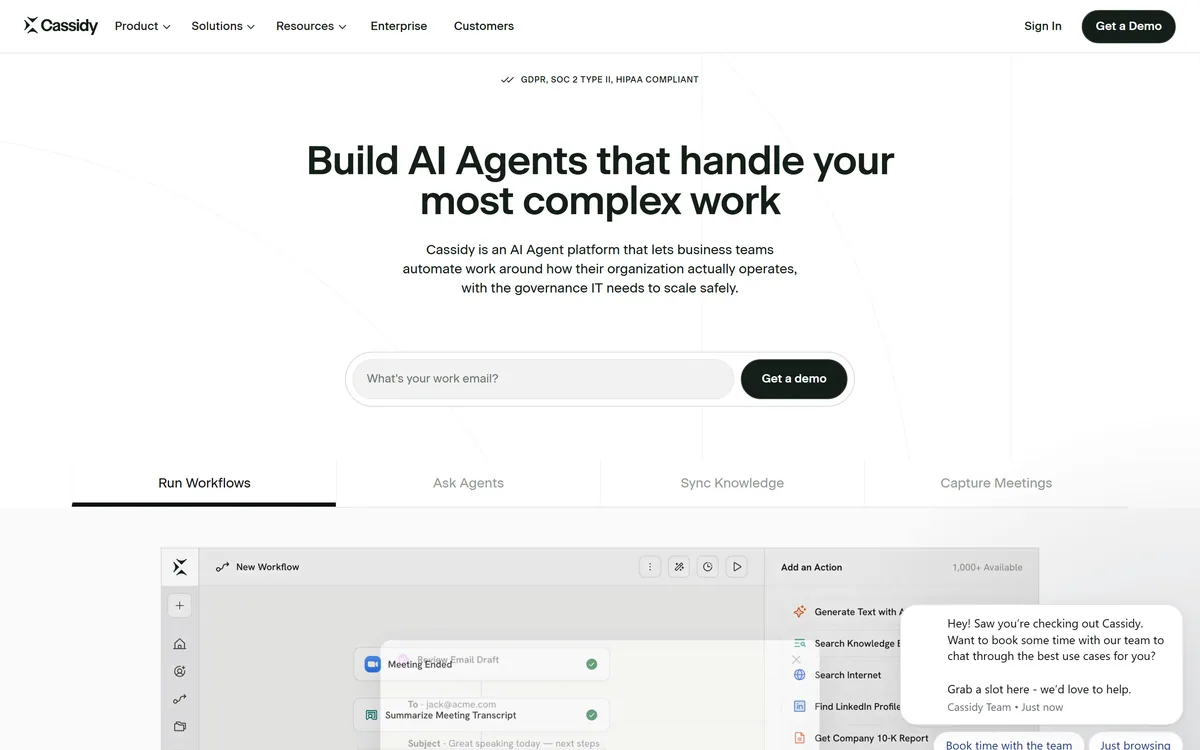
Cassidy AI is a no-code AI-agent and workflow platform that lets business teams build agents grounded in a company knowledge base, deploy them inside Teams, Slack, Chrome and Office, and keep IT in control with permissions, model-agnostic routing and SOC 2, GDPR and HIPAA compliance.
Related Pages