Automate repetitive workflows with AI and no-code. Every tool here has its own review, so you can check what it does and how it is priced before you choose a workflow automation tool.
Browser Use is an open-source project (117k GitHub stars, MIT) offering AI agents that complete web tasks and a simple remote browser infrastructure for your own agents, benchmark-led, pay-as-you-go, with MCP, form-filling and login automation, usable in the cloud or self-hosted.
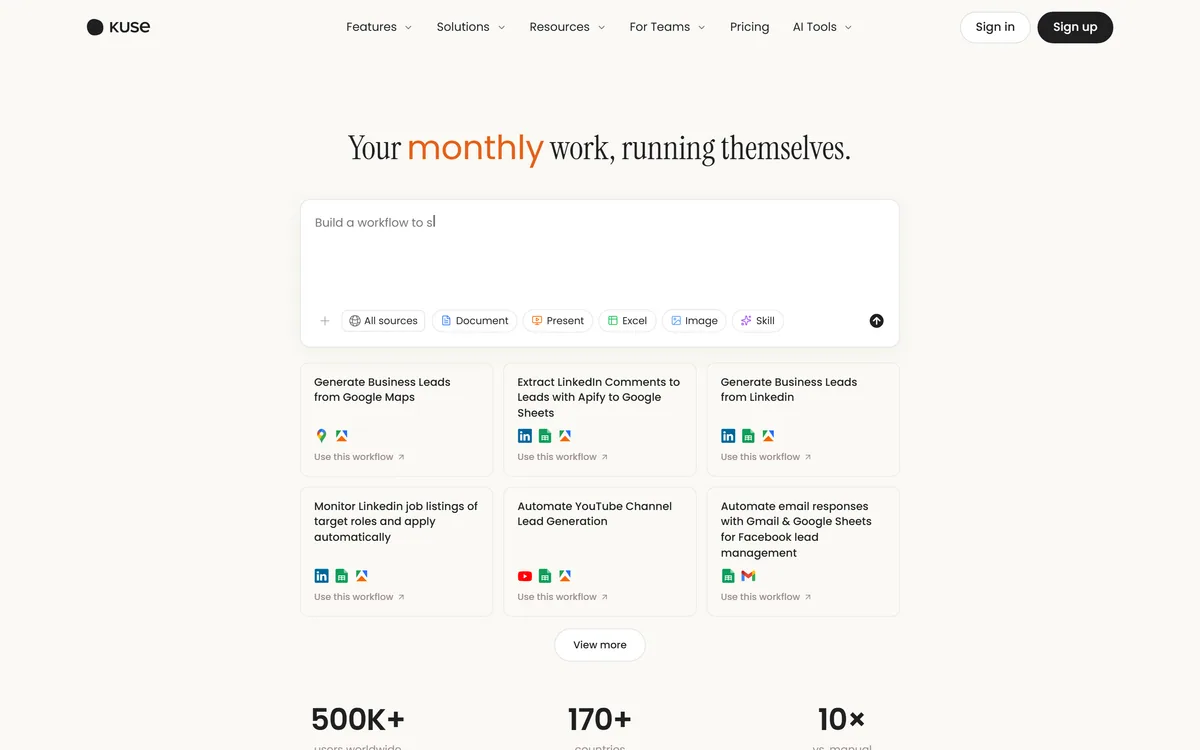
Kuse is an AI workspace from Kuse Inc. built around scheduled workflows: describe a recurring task in plain language, connect the apps it touches, and let it run. It also generates websites, documents, presentations and spreadsheets, with several model families available.
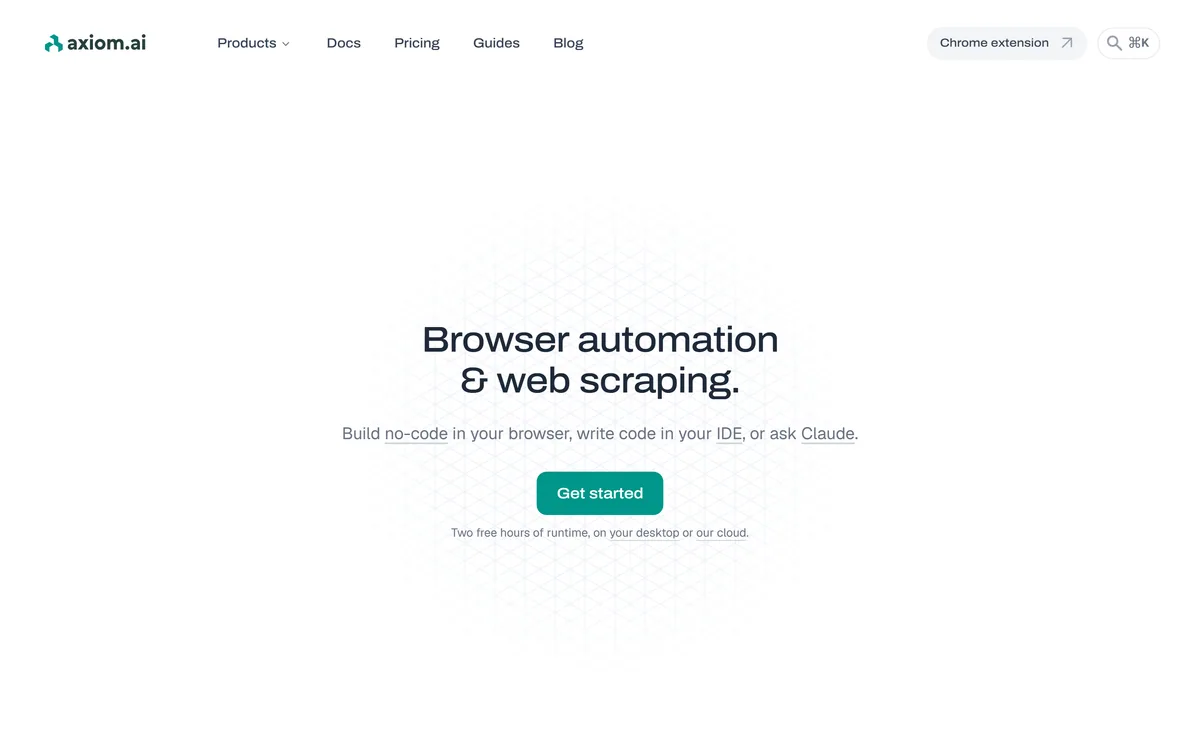
Axiom is a browser-automation and web-scraping platform you can build no-code in a Chrome extension, script in your IDE, or drive agentically through Claude and MCP, running on cloud browsers or your own machine for scrapers, form-fillers, monitors and scheduled workflows.
Nanonets is a document-AI and process-automation platform: it extracts data from documents and runs prebuilt agents for finance and operations (AP, reconciliation, claims, KYC, month-end close), guided by a context graph of your rules, with enterprise controls. The footer was not captured in our read, so operator details are unconfirmed.
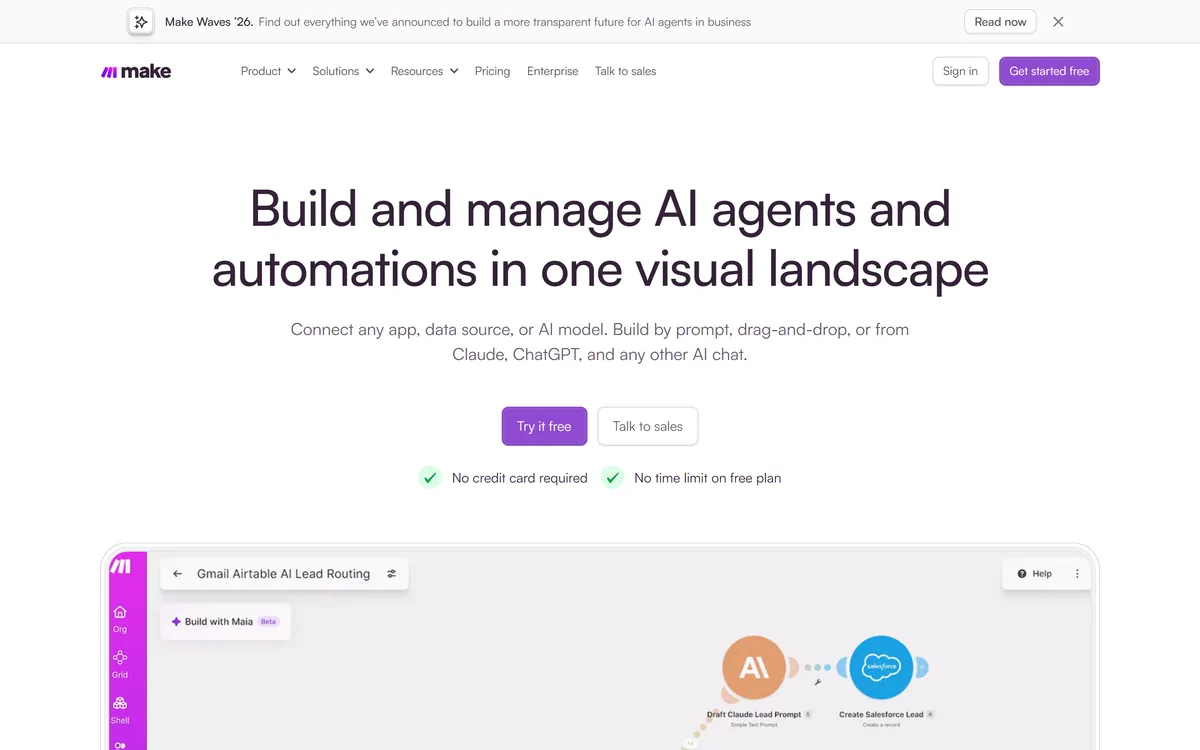
Make (formerly Integromat, now part of Celonis) is a visual workflow-automation and AI-agent platform that connects 3,500+ apps and the latest AI models via drag-and-drop, prompts or MCP, with custom code, observability and enterprise governance. It offers a free plan and scales to enterprise.
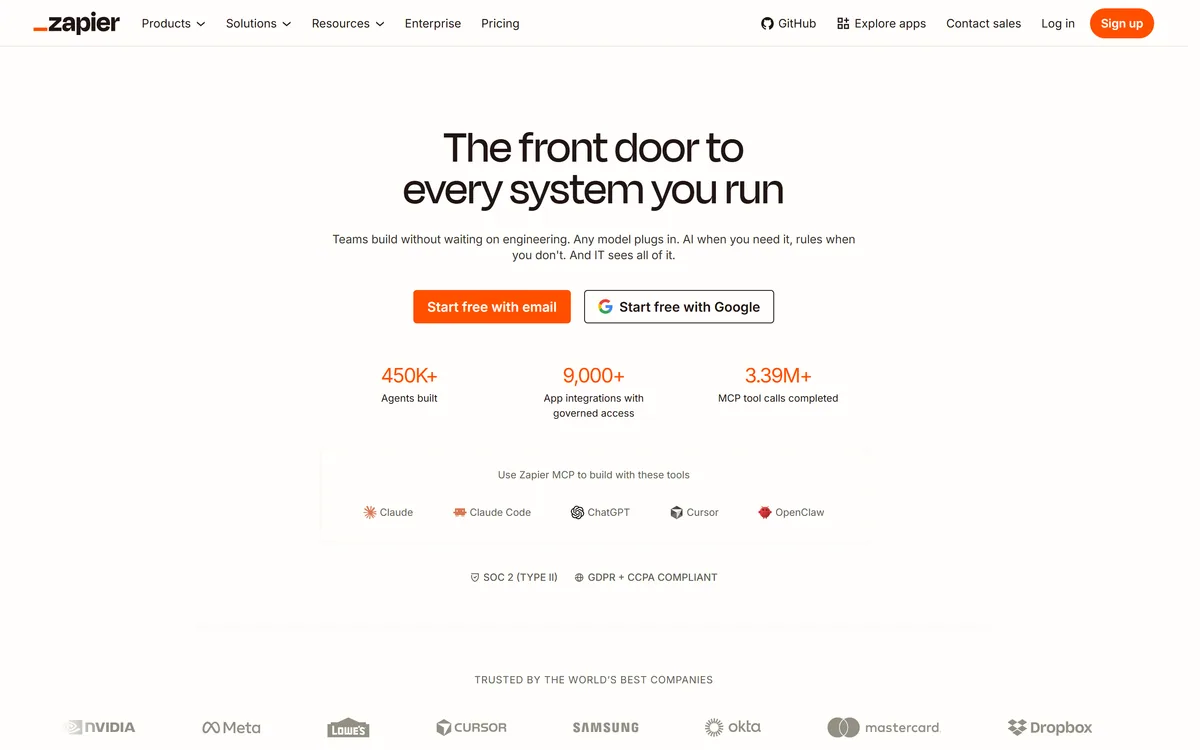
Zapier's AI layer adds agents and MCP tool access on top of its automation platform, connecting more than 9,000 apps with governed access so teams can mix AI decisions with deterministic rules under central oversight.
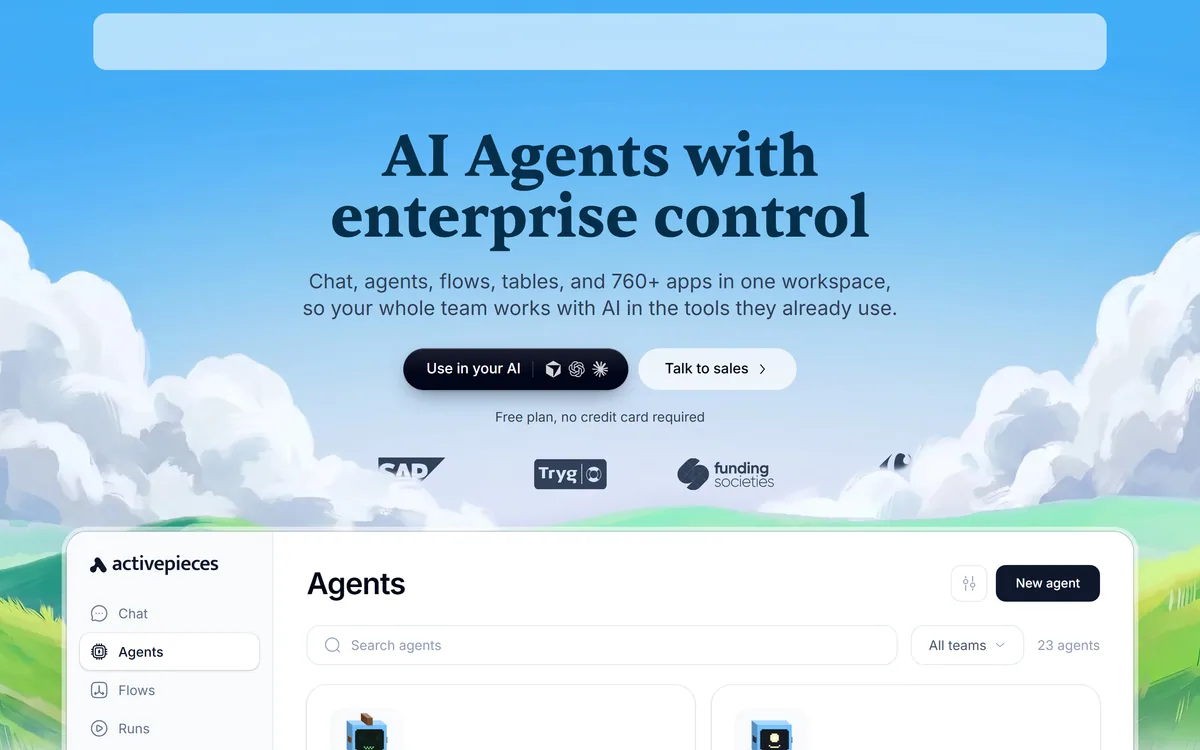
Activepieces is an open-source (MIT) workspace for AI agents and visual automation flows connecting 760+ apps, with a flow builder, MCP server, approval gates, and enterprise features (SSO, RBAC, your own secret manager, audit logs, self-hosting). It suits teams wanting automation they can self-host and inspect, with the usual considerations that automations touching money or customers need controls, which it is built around.
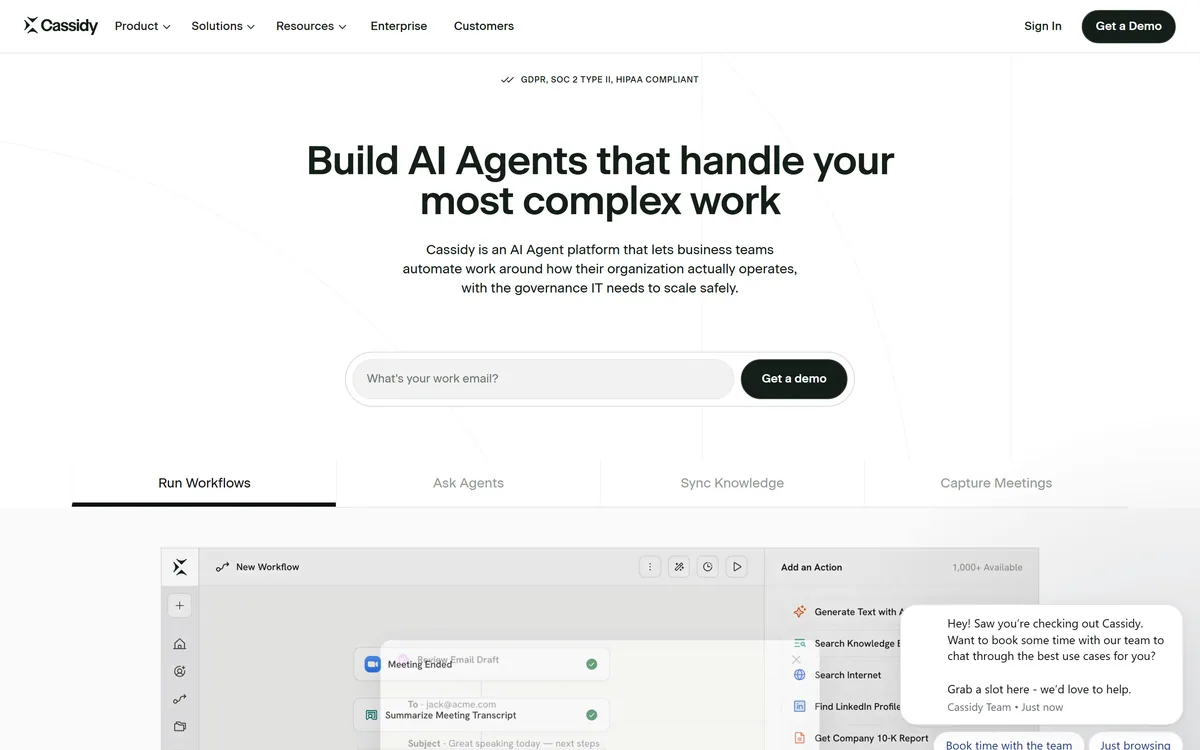
Cassidy AI is a no-code AI-agent and workflow platform that lets business teams build agents grounded in a company knowledge base, deploy them inside Teams, Slack, Chrome and Office, and keep IT in control with permissions, model-agnostic routing and SOC 2, GDPR and HIPAA compliance.
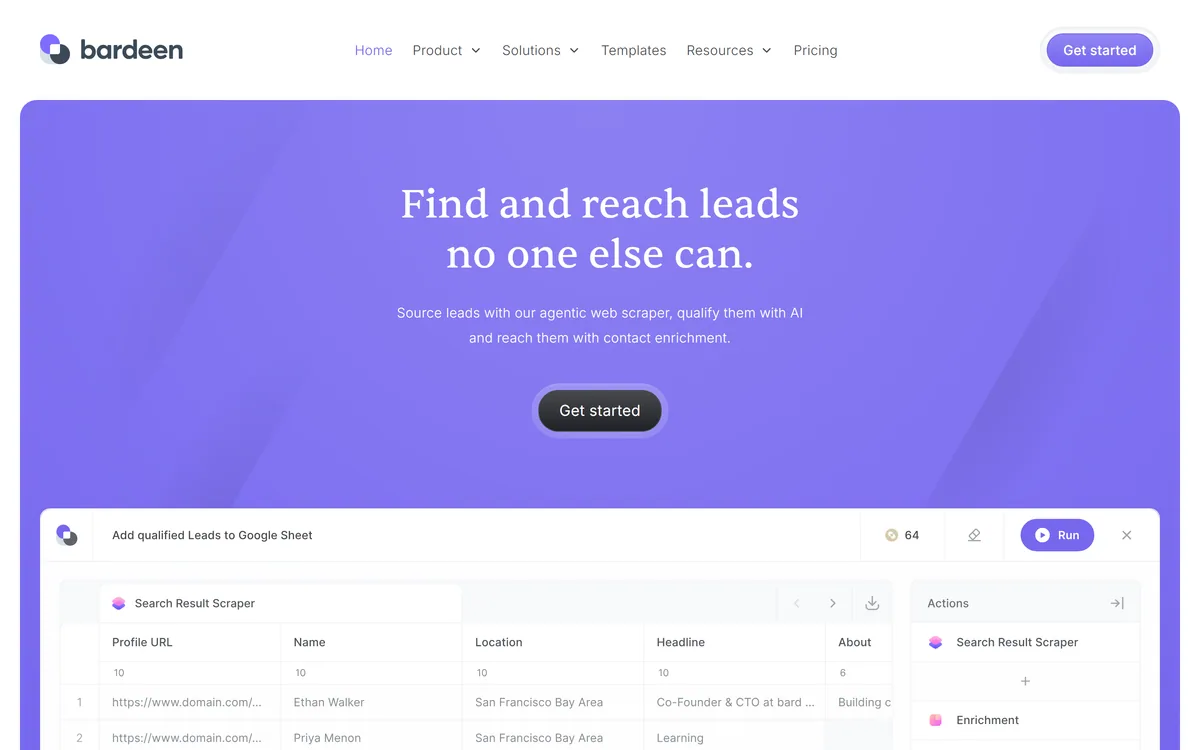
Bardeen is a browser-based web automation platform aimed at sales teams: it extracts data from any website, researches leads with AI search, finds validated contact details, qualifies them against a described ideal profile, and pushes the result to Sheets, Airtable, Notion or a CRM.
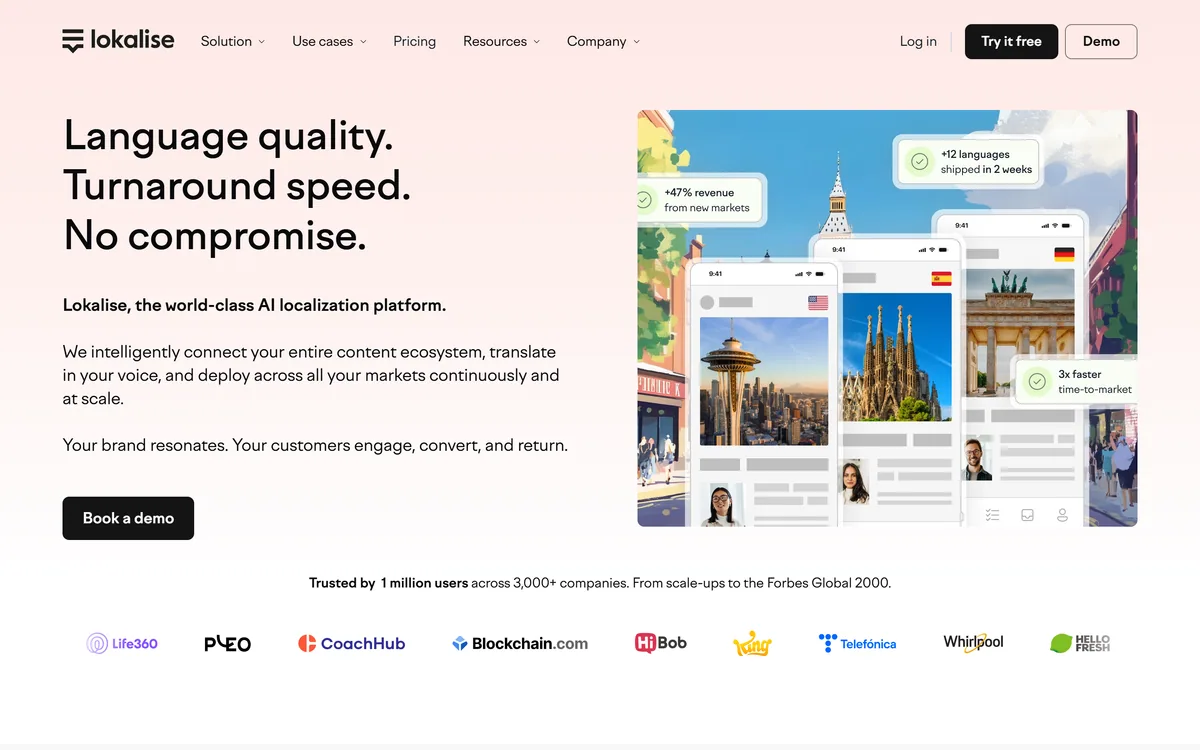
Lokalise is a translation management platform built for continuous localisation: strings flow from your repository, design files and CMS into an AI translation pipeline that applies your approved terminology and tone, with role-based human approval before anything ships.
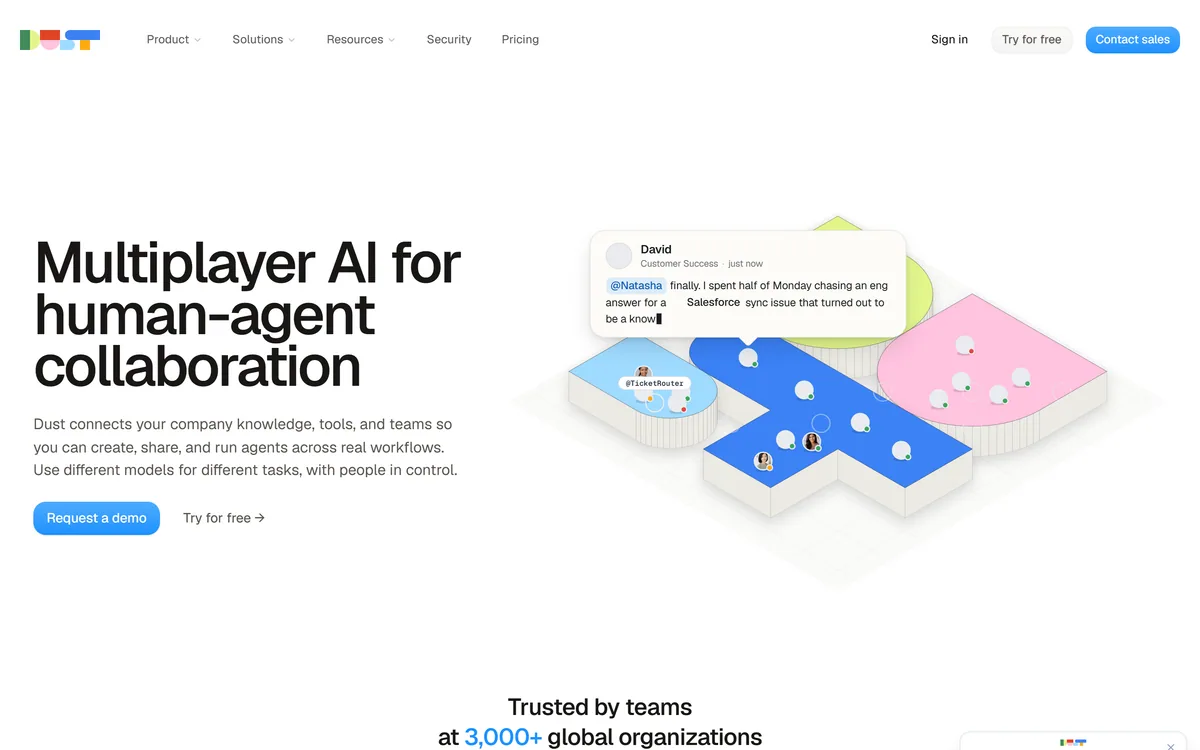
Dust is an enterprise platform for building and running AI agents on company knowledge, with 70+ connectors, 20+ frontier and open models, a dual-layer permission model, SCIM, audit logs and SOC 2 Type II. It suits enterprise departments that want agents grounded in their own systems, with the caveats that it's a sales-led enterprise product, data governance is central, and its organisation-count figures are vendor-stated.
Skyvern (Ikonomos Inc., YC-backed) is an open-source AI agent that automates browser-based tasks using computer vision and LLMs to navigate and act on websites, with workflows, an API and self-hosting. It suits developers and ops teams automating web tasks, with real site-terms, credential-security and reliability caveats that mean it needs guardrails.
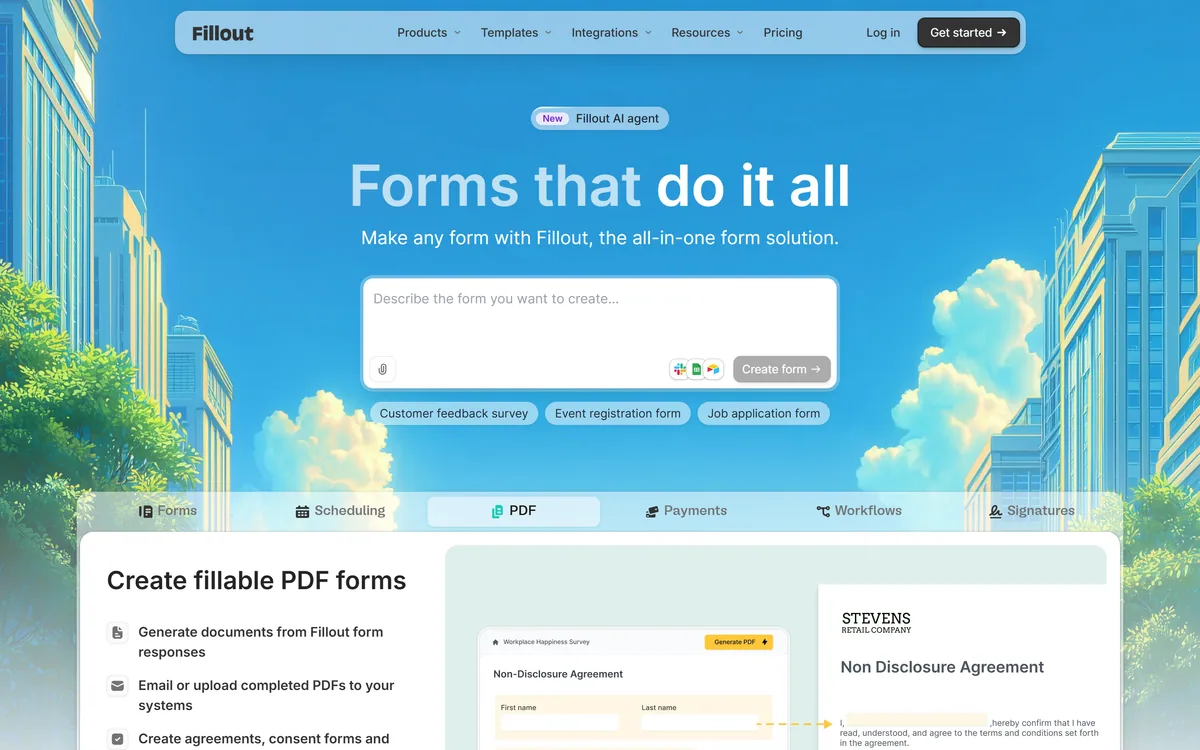
Fillout is a form builder that also handles scheduling, payment collection, PDF generation, e-signatures and workflow routing. Forms can be fully white-labelled down to the favicon, served from your own domain, embedded four ways, and made editable by respondents through login forms.
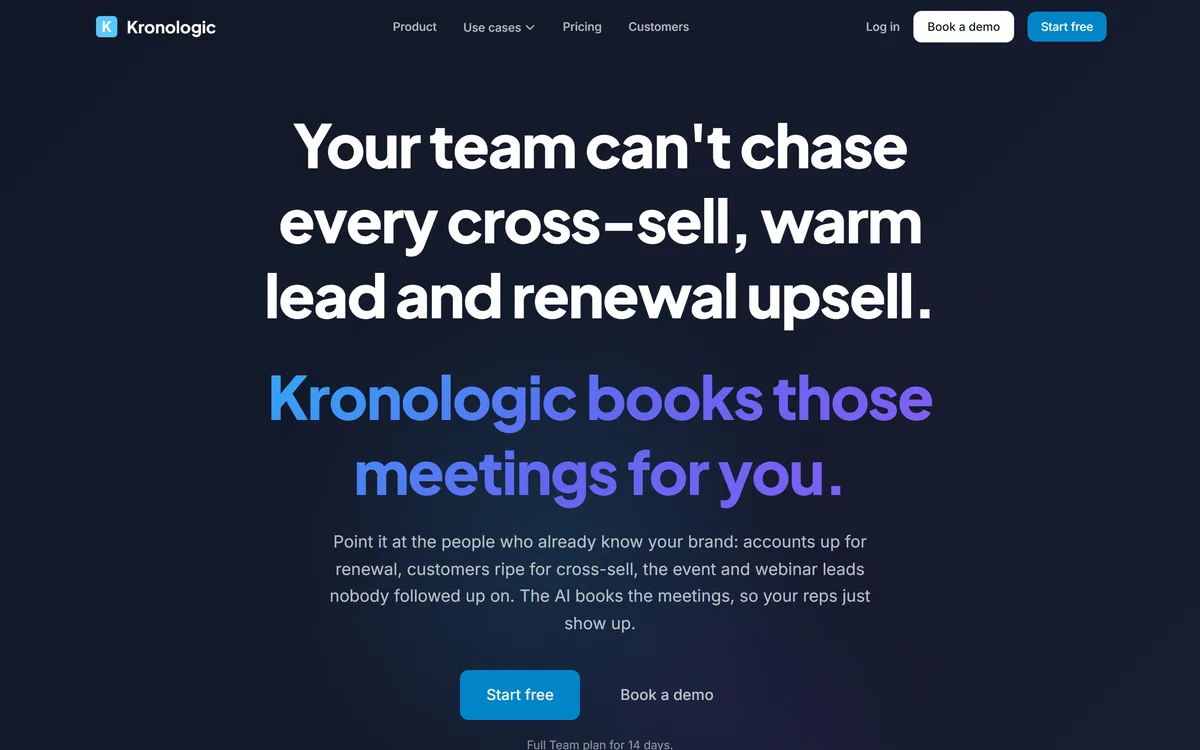
Kronologic books meetings automatically from a list of contacts or a live Salesforce or HubSpot segment. Its AI engages each person, reads replies, negotiates a time in plain language with awareness of your team's calendars, and puts the meeting on the right one.
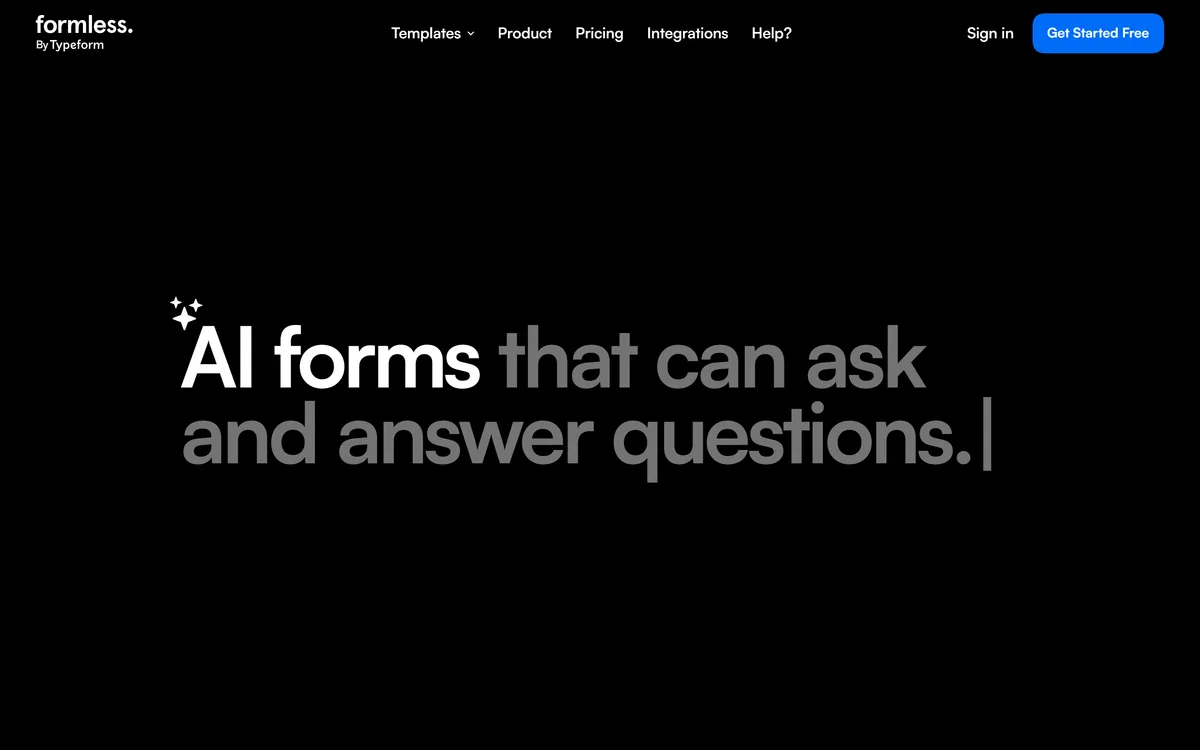
Formless by Typeform is a conversational AI form builder. Trained on your own data, it asks questions in natural language and answers the respondent's questions back, adapts its path without branching logic, and supports over 120 languages.
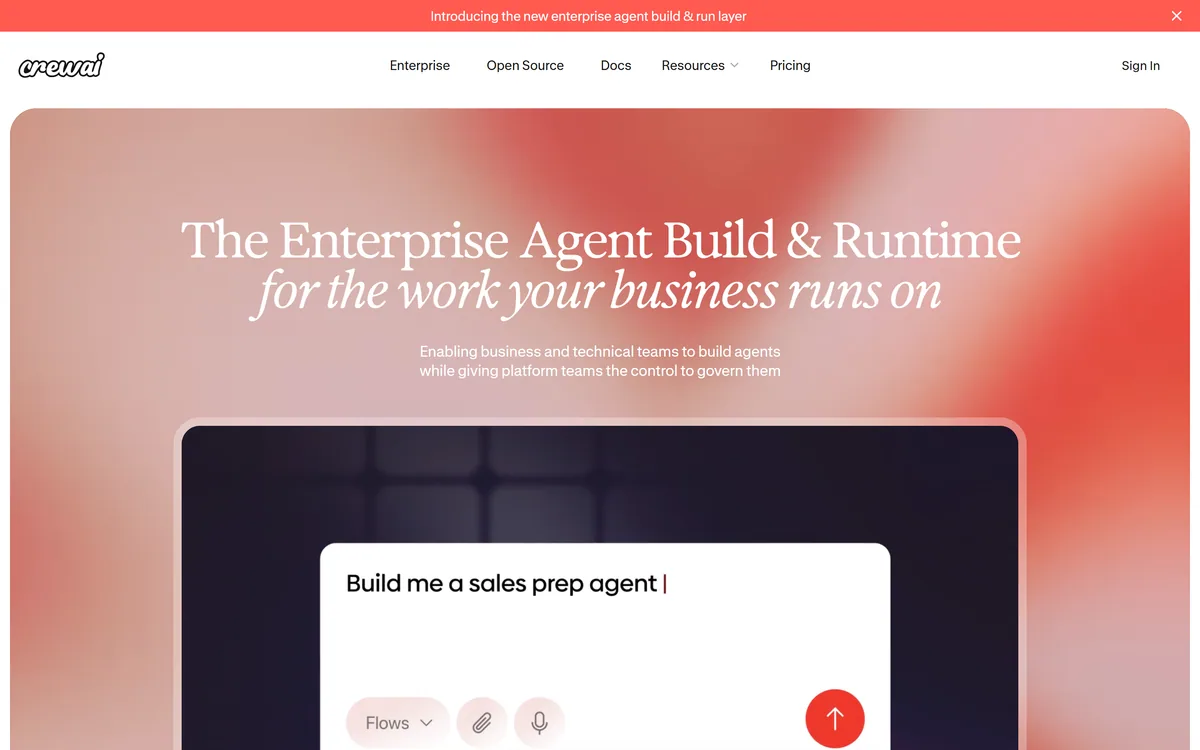
CrewAI is an enterprise platform to build and run AI agents: a Discovery layer that finds automation opportunities, a no-code canvas and code-first Python API for building role-based multi-agent workflows, and a control plane that adds tracing, RBAC, audit and human-in-the-loop approvals.
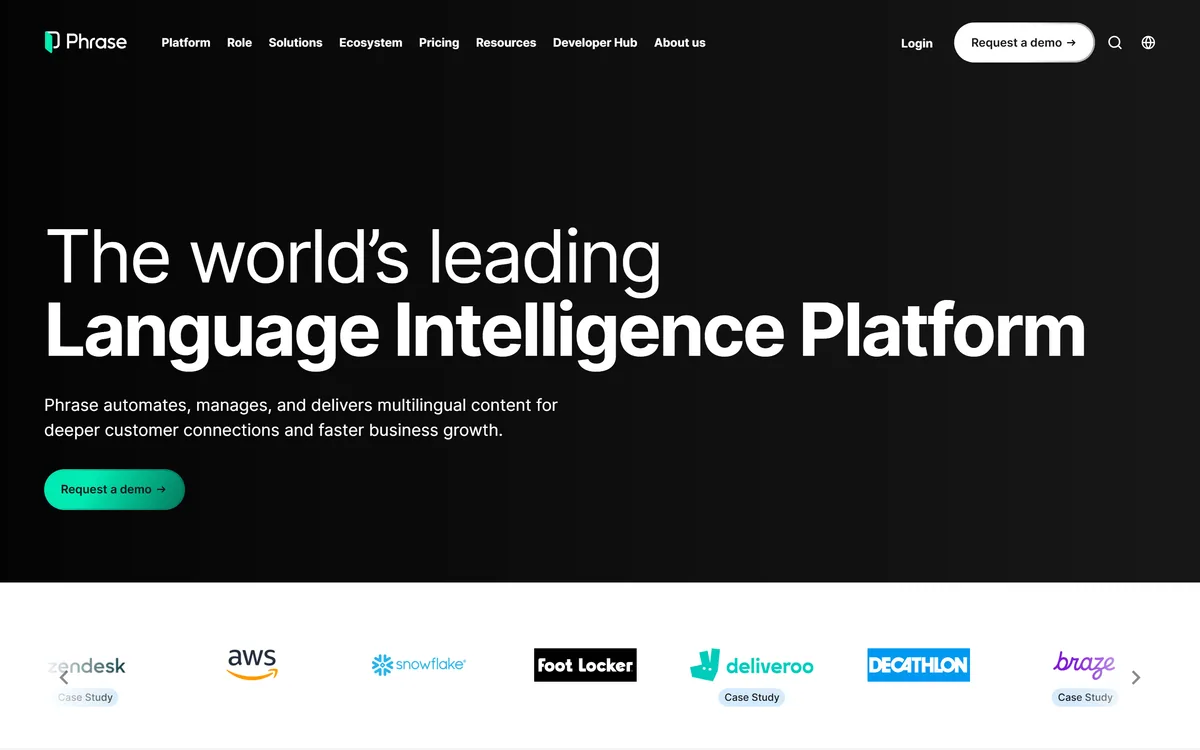
Phrase is an enterprise Language Intelligence Platform for AI-powered translation and localization at scale: engine/LLM routing, quality estimation and automated gates, translation memories and terminology, governance and auditability, plus video dubbing and voiceover. It suits enterprises localizing large volumes of content, with the main considerations being that it's enterprise sales-led and that its security/compliance posture is vendor-stated.
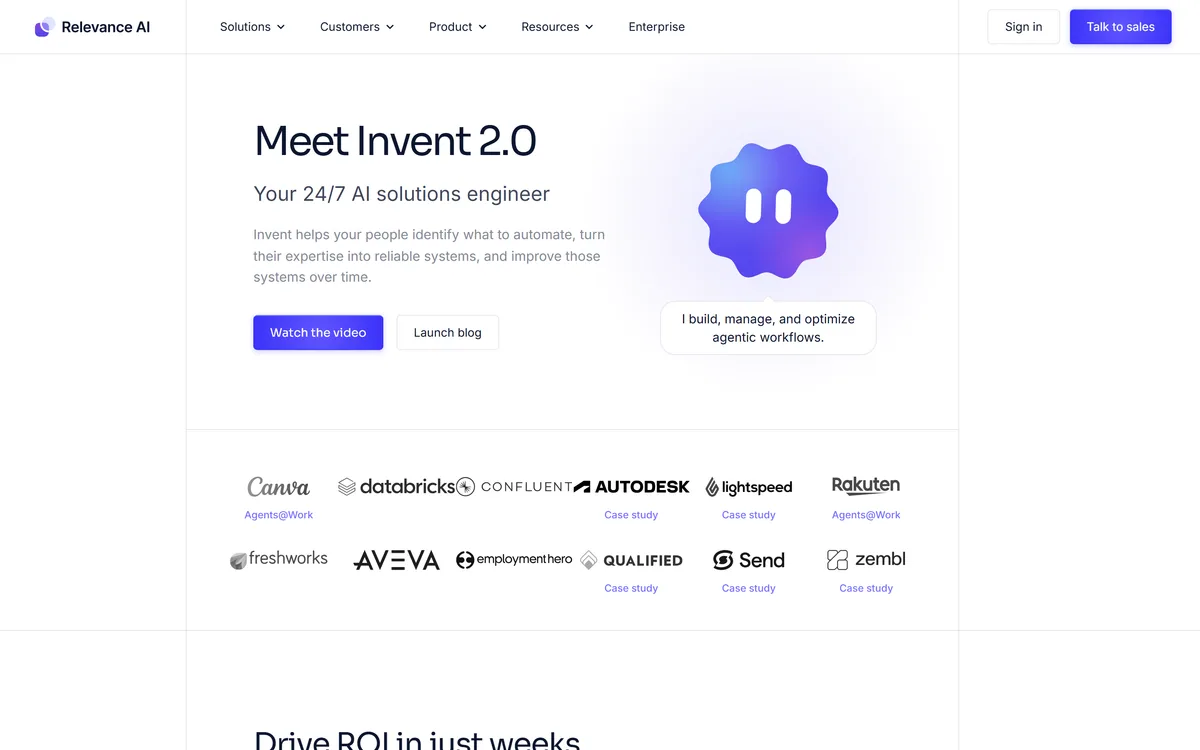
Relevance AI is a platform to build, customize, govern and scale a custom 'AI workforce' of task-specific agents for sales, CS, marketing, HR and operations, with prebuilt GTM agents, multi-model routing, an L1–L4 autonomy framework and enterprise security. It's capable and governance-focused, enterprise-led, with human-oversight caveats.
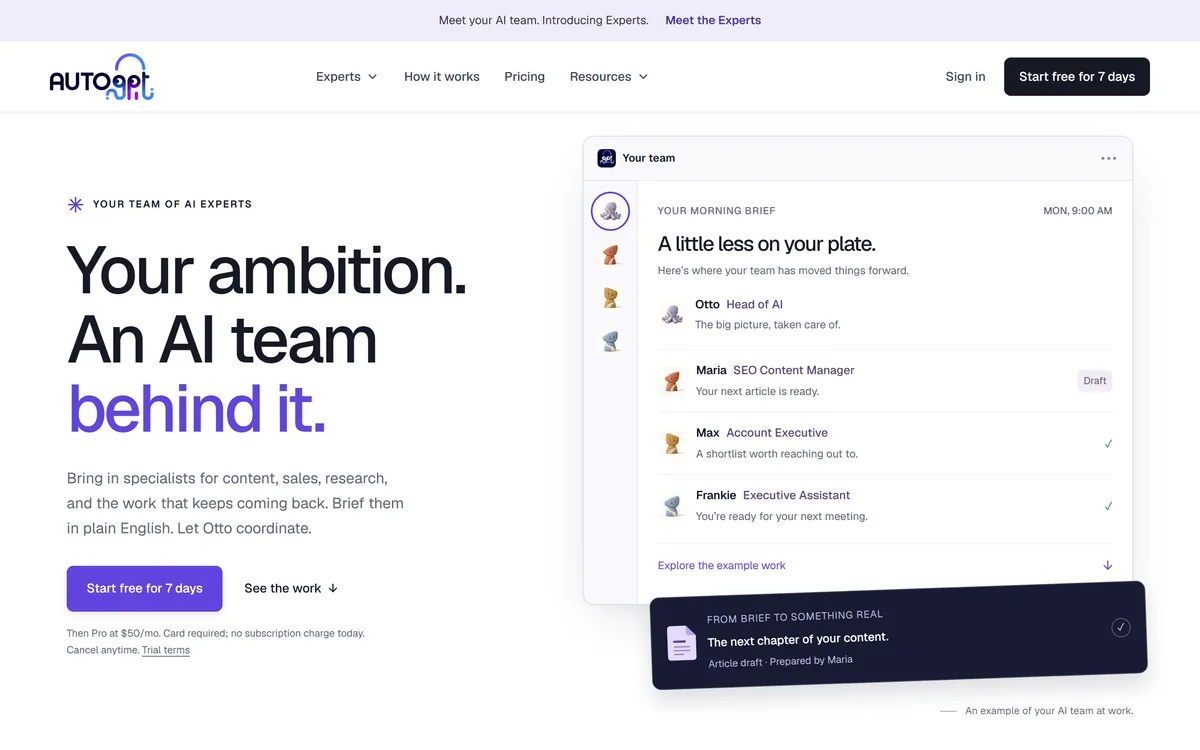
AutoGPT today is a commercial platform of managed AI 'Experts', coordinated by an assistant called Otto, that handle recurring marketing, sales and operations work from plain-English briefs, with scheduled routines, connected-app access and spending guardrails. It began as the viral 2023 open-source AutoGPT autonomous-agent project.
3.5/5Freemium
What Counts as a Workflow Automation AI Tool?
Workflow Automation AI tools are products whose core function applies AI to workflow automation. A tool belongs here when that is the job it is built for, rather than a side feature.
Because this is a focused slice of productivity & automation, the tools below do broadly the same job — so compare them on what they actually produce and how they are priced. Each review shows the tool's pricing model and whether it has a free tier.
Workflow Automation AI tools reviewed here include:
Browser Use — Browser Use is an open-source project (117k GitHub stars, MIT) offering AI agents that complete web tasks and a simple remote browser infrastructure for your own agents, benchmark-led, pay-as-you-go, with MCP, form-filling and login automation, usable in the cloud or self-hosted.
Kuse — Kuse is an AI workspace from Kuse Inc. built around scheduled workflows: describe a recurring task in plain language, connect the apps it touches, and let it run. It also generates websites, documents, presentations and spreadsheets, with several model families available.
Axiom.ai — Axiom is a browser-automation and web-scraping platform you can build no-code in a Chrome extension, script in your IDE, or drive agentically through Claude and MCP, running on cloud browsers or your own machine for scrapers, form-fillers, monitors and scheduled workflows.
Mindflow — No-code AI hyperautomation for IT and security teams Category: Productivity & Automation.
XTM Cloud — Enterprise AI translation management system Category: Productivity & Automation.
Workflow Automation AI Tools — Frequently Asked Questions
01What Does Workflow Automation Cover?
Workflow Automation covers AI tools built for workflow automation. Reviewed tools here include Browser Use, Kuse, Axiom.ai, each with its own review covering pricing, features and an Editor Score.
02Are There Free Workflow Automation AI Tools?
Yes. Browser Use, Kuse, Axiom.ai, Make all offer a free plan or free trial. Use the pricing filter above to see every workflow automation tool with a free option.
03How Do I Choose the Right Workflow Automation AI Tool?
Start with your main use case and budget, shortlist two or three tools above, and compare their reviews, pricing and free plans. Where a free plan or trial exists, run a real task of your own through it before committing.
04How Is Workflow Automation Different From Other Productivity & Automation Tools?
Workflow Automation tools focus specifically on automate repetitive workflows with ai and no-code, so they usually go deeper on that job than a general productivity & automation tool.
Launching a New Workflow Automation Tool?
Submit it for an editorial review and a page in front of people comparing workflow automation tools before they buy.