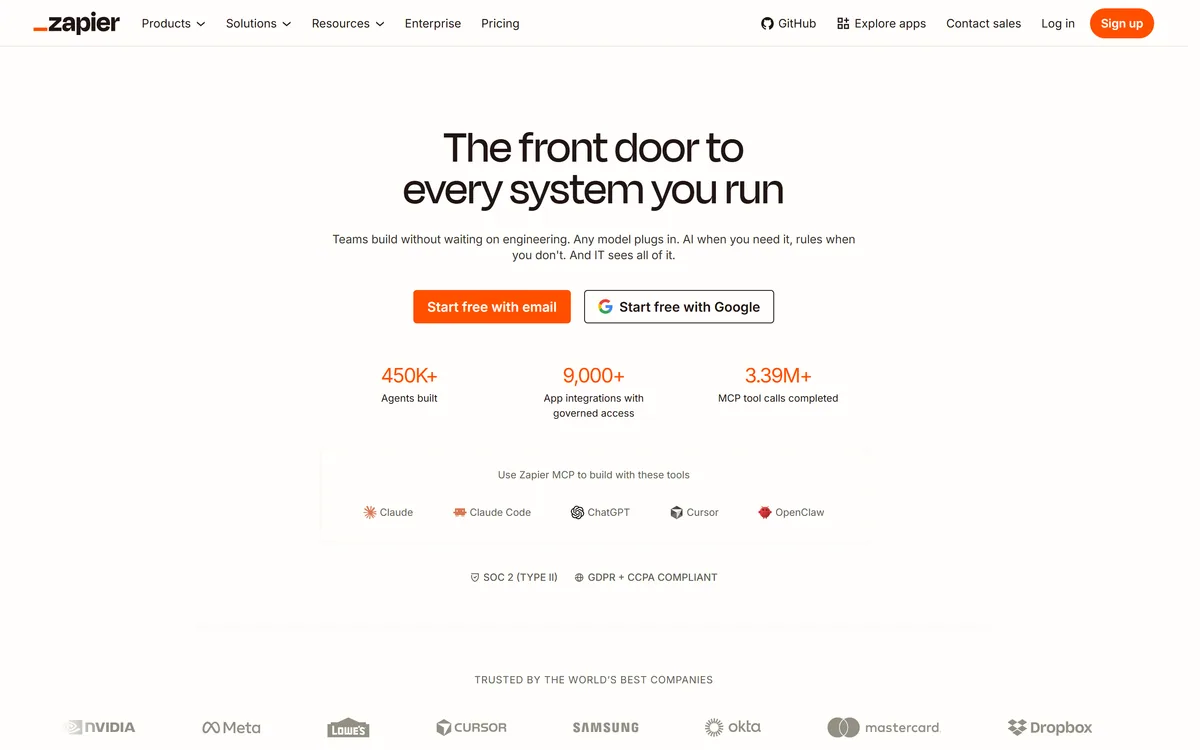

Zapier's AI layer adds agents and MCP tool access on top of its automation platform, connecting more than 9,000 apps with governed access so teams can mix AI decisions with deterministic rules under central oversight.
Productivity & Automation Review
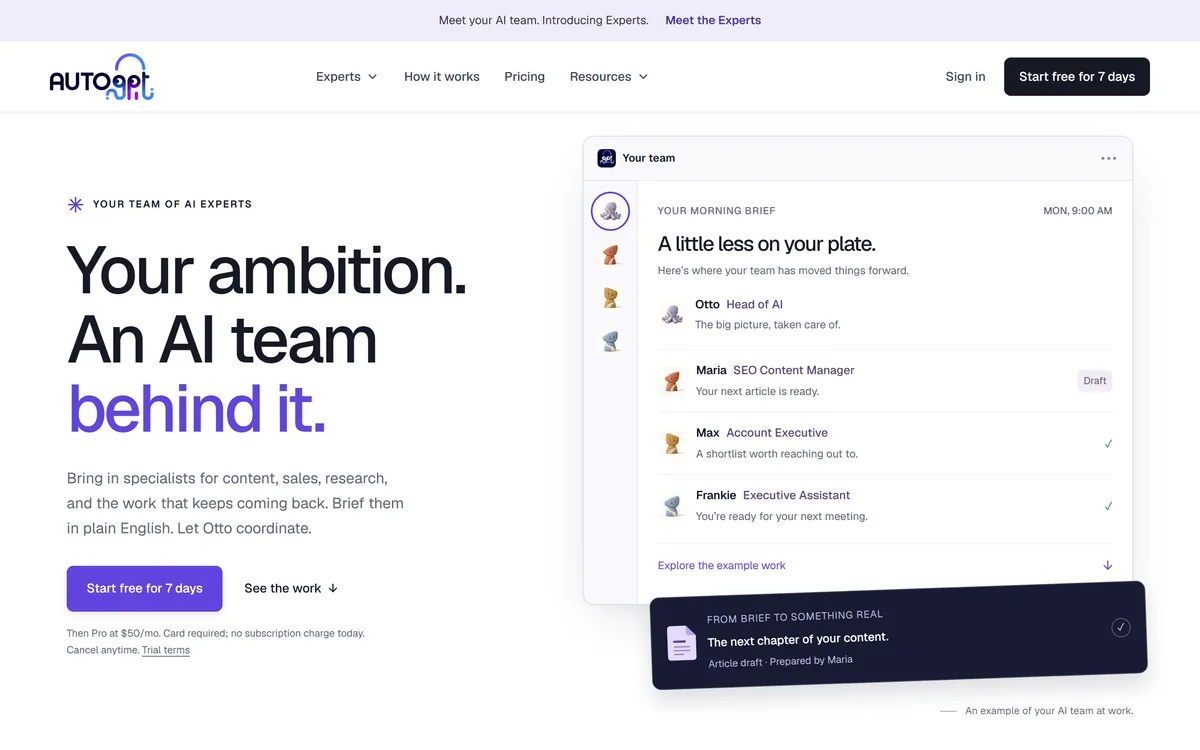
AutoGPT today is a commercial platform of managed AI 'Experts', coordinated by an assistant called Otto, that handle recurring marketing, sales and operations work from plain-English briefs, with scheduled routines, connected-app access and spending guardrails. It began as the viral 2023 open-source AutoGPT autonomous-agent project.
Good
AutoGPT earns 3.5 as an approachable way to delegate recurring work to managed AI 'Experts', briefed in plain English, coordinated by Otto, run on schedules and fenced with spending guardrails. It suits founders and small teams comfortable supervising AI output. The important caveats: its famous GitHub following and endorsements belong to the 2023 open-source project, not this paid platform, by the vendor's own admission; the Experts act on connected accounts and spend credits, so guardrails and review are essential; and it is not for deterministic or regulated workflows. AInexfinder Editor Score: 3.5/5.
Best for: Delegating recurring work; Marketing and content tasks
The visit link goes to agpt.co, the official site. Paid placements on AInexfinder are always labelled. How we make money
AutoGPT is one of the most recognised names in AI agents, but what the name means has changed. The product today is a commercial platform of managed 'Experts', a different thing from the open-source project that made it famous in 2023.
Those Experts, coordinated by an assistant called Otto, take plain-English briefs and handle recurring marketing, sales and operations tasks, running on schedules and accessing connected apps within spending guardrails. It sits among agent platforms like Relevance AI, pitched at operators who want delegated work rather than a toolkit.
This review covers how AutoGPT delegates a task, who the Experts platform suits, how it prices its Experts, and the real caution around agents that can act and spend.
| What it is | A platform of managed AI 'Experts' for recurring work |
|---|---|
| Coordinator | An assistant called Otto |
| Briefing | Plain-English task briefs |
| Automation | Scheduled routines |
| App access | Connected apps (e.g. Drive, WordPress) |
| Guardrails | Per-Expert spending thresholds and approvals |
| Origin | The 2023 open-source AutoGPT project (now a paid SaaS) |
| Operator | Not named on the page we read |
Today's AutoGPT is best understood as a team of specialist AI workers rather than a chatbot or a build-it-yourself agent kit. You describe a recurring job in plain English, and a relevant 'Expert', coordinated by an assistant called Otto, takes it on.
The platform ships pre-built Experts for roles like SEO content, account executive work and executive-assistant tasks, and runs them on schedules so routine work happens without prompting each time.
Crucially, these Experts can access connected apps and act, which is why the product builds in guardrails: per-Expert app permissions and spending thresholds with approval steps. That is a sensible design precisely because autonomous action carries risk.
The honest framing has two parts. First, agent output still needs review, as with any AI doing real work. Second, the history matters: the enormous GitHub following and the big-name endorsements AutoGPT is known for relate to the 2023 open-source project, and the vendor itself says so, so they should not be read as endorsements of today's paid Experts platform.
AutoGPT's famous endorsements belong to its 2023 open-source project; today's paid Experts platform is a different product to judge on its own.
AutoGPT combines pre-built Experts with coordination, scheduling and guardrails.
You brief an Expert in plain English, and it handles the task; Otto coordinates across Experts, while routines let recurring jobs run on a schedule rather than on demand.
Compared with a visual agent-builder like Sim that you assemble yourself, AutoGPT leans towards ready-made Experts you delegate to, though it also references a builder and self-hosting.
Each Expert gets scoped access to connected apps such as Google Drive or WordPress, and spending guardrails set thresholds and approval points so an agent cannot run up unbounded cost.
For broader workflow automation across many apps, a platform like Make takes a rules-and-scenarios approach; AutoGPT's angle is delegating knowledge work to agents rather than wiring steps together.
AutoGPT suits founders, solo operators and small marketing, sales or ops teams who want to delegate recurring knowledge work, drafting content, outreach, admin, without hiring or learning to build agents from scratch.
It suits people comfortable supervising AI output and connecting it to their accounts, who value ready-made Experts and scheduled routines over assembling their own automations.
It fits less well teams that need deterministic, auditable workflows, regulated environments where autonomous agents acting on accounts are a governance risk, and anyone unwilling to review agent output or manage permissions and spend.
A fair way to judge it is by appetite for delegation. If you have recurring work you would hand to a junior and are prepared to review it, AutoGPT's Experts can help; if you need guaranteed, repeatable steps, a deterministic automation tool is safer. It also helps to start with the lowest-stakes task you can think of, so that any mistake an Expert makes is cheap to catch and correct while you learn how far to trust it and how tightly to set its spending and approval limits.
AutoGPT uses a subscription after a free trial that requires a card, plus a credit wallet for running workflows, with higher tiers for more. We do not publish prices, which change; check the site for current plans.
The value question is recurring work genuinely offloaded against the subscription and credit spend, remembering that agents consume credits per run and can be scheduled to act repeatedly.
The sensible approach is to start on the trial with one real recurring task, set tight spending thresholds and approvals, and measure whether the Expert saves more time than it costs to supervise.
Because these agents act and spend, trial AutoGPT on one task with tight guardrails first.
Pre-built AI Experts
Otto coordinator
Plain-English briefs
Scheduled routines
Connected-app access
Spending guardrails
Agent builder (referenced)
Self-host option (referenced)
The useful comparison is with other ways to put AI agents to work.
| Tool | Tool | Approach | Best for |
|---|---|---|---|
| AutoGPT | Managed AI 'Experts' | Delegated recurring work | Operators wanting delegation |
| Relevance AI | AI agent platform | Build AI teams and workflows | Custom agent teams |
| Sim | Visual agent builder | Assemble your own agents | Builders |
| Make | Workflow automation | Rules-based app scenarios | Deterministic automations |
Last checked . Read from agpt.co during this check, with the screenshot above captured at the same time.
The large GitHub following and big-name endorsements associated with AutoGPT relate to the 2023 open-source autonomous-agent project, which the vendor itself flags; they are not endorsements of today's paid Experts platform. Agents access connected accounts and can spend money, so guardrails and review matter. Operator not named on the page we read.
An agent platform, a visual agent builder and a workflow-automation tool to weigh alongside AutoGPT.
AInexfinder does not list plan prices or billing details. For current pricing, plans, and trials, visit the official AutoGPT website.
Visit official website for pricingVendor pricing, credits, and billing policies change over time. Always confirm on the official site before you buy.
AutoGPT earns an AInexfinder Editor Score of 3.5/5 (good). Best for: Delegating recurring work; Marketing and content tasks; Sales and ops admin.
Visit AutoGPTLog in to write a review.
No reviews yet. Be the first to share your experience with AutoGPT.
Assigned reviewer
Daniel ReedSenior AI Tools Reviewer
Daniel leads AInexfinder's tool reviews. He researches each tool from its own pricing, documentation and policies, checks its claims against independent sources, and writes up what it does well, where it falls short and who it genuinely suits.
Daniel and the AInexfinder editorial team research AutoGPT from its own website, pricing, documentation and policies, checked against independent sources. This review is research-based: unless its method note says otherwise, we have not bought a plan or run hands-on tests. The Editor Score is our editorial judgement, and payment never changes it.
Similar Tools
Zapier's AI layer adds agents and MCP tool access on top of its automation platform, connecting more than 9,000 apps with governed access so teams can mix AI decisions with deterministic rules under central oversight.
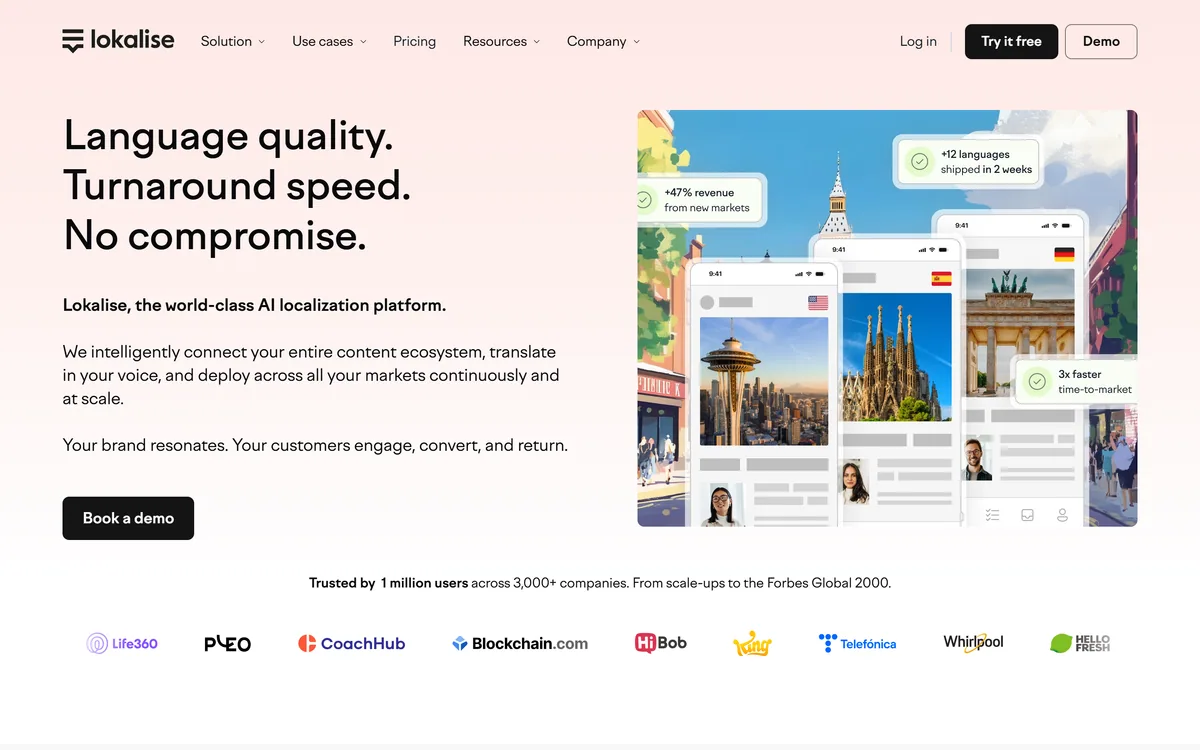
Lokalise is a translation management platform built for continuous localisation: strings flow from your repository, design files and CMS into an AI translation pipeline that applies your approved terminology and tone, with role-based human approval before anything ships.

CrewAI is an enterprise platform to build and run AI agents: a Discovery layer that finds automation opportunities, a no-code canvas and code-first Python API for building role-based multi-agent workflows, and a control plane that adds tracing, RBAC, audit and human-in-the-loop approvals.

Make (formerly Integromat, now part of Celonis) is a visual workflow-automation and AI-agent platform that connects 3,500+ apps and the latest AI models via drag-and-drop, prompts or MCP, with custom code, observability and enterprise governance. It offers a free plan and scales to enterprise.
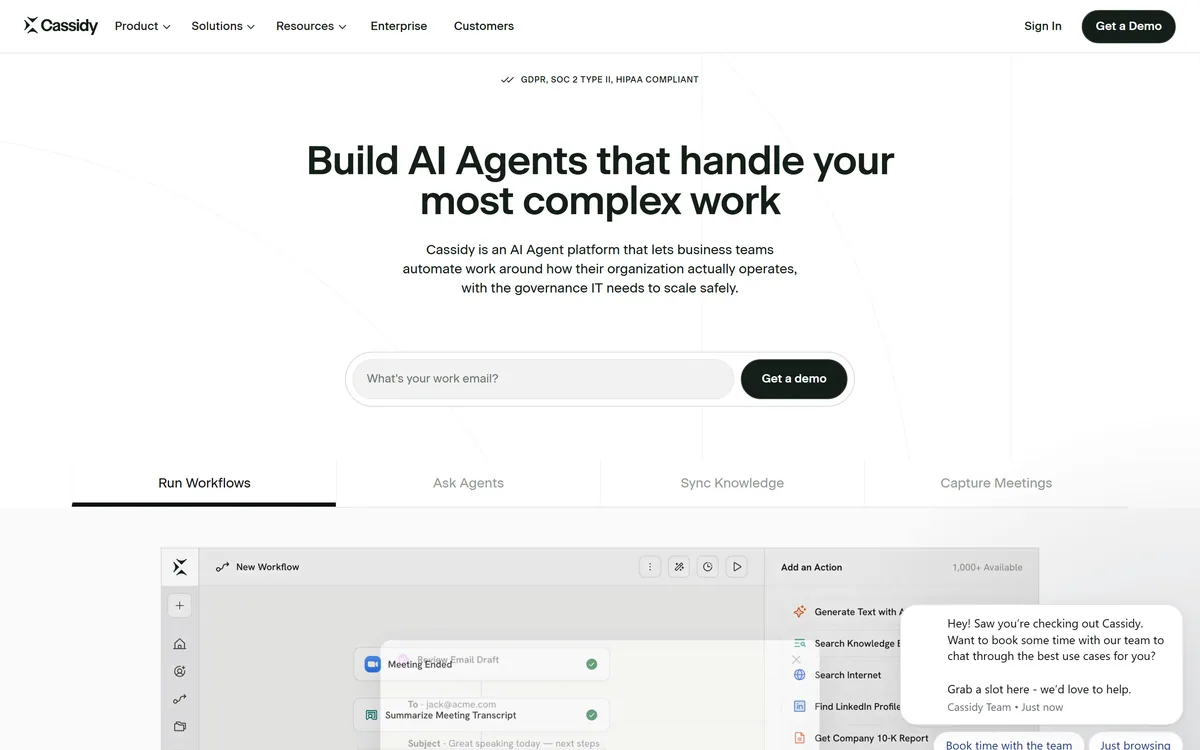
Cassidy AI is a no-code AI-agent and workflow platform that lets business teams build agents grounded in a company knowledge base, deploy them inside Teams, Slack, Chrome and Office, and keep IT in control with permissions, model-agnostic routing and SOC 2, GDPR and HIPAA compliance.
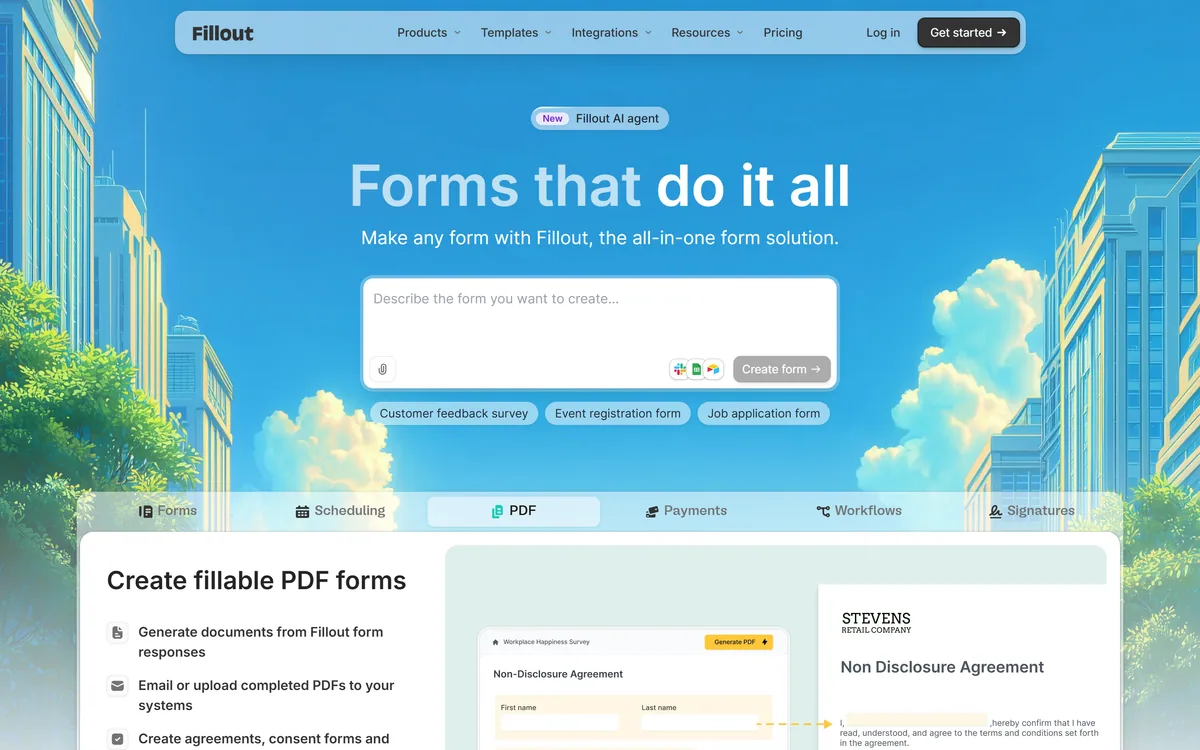
Fillout is a form builder that also handles scheduling, payment collection, PDF generation, e-signatures and workflow routing. Forms can be fully white-labelled down to the favicon, served from your own domain, embedded four ways, and made editable by respondents through login forms.
Related Pages