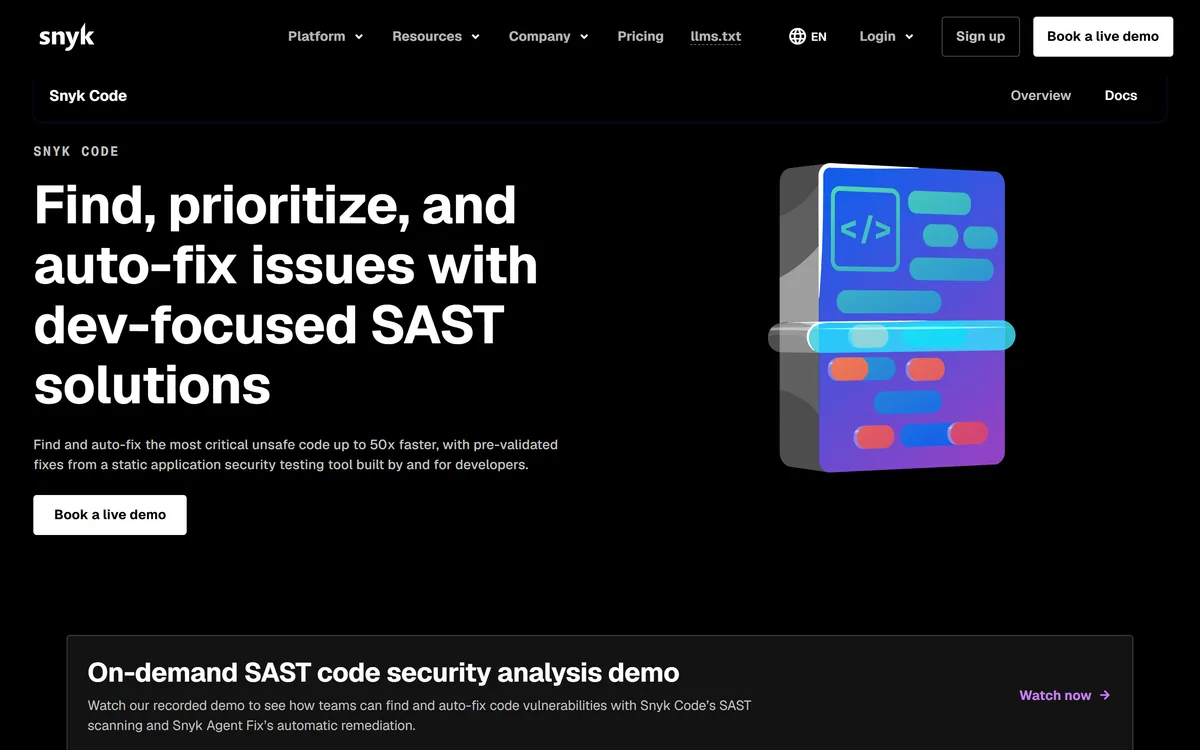
Snyk Code is a static application security testing tool built for developers, using DeepCode AI to find vulnerabilities in the IDE in real time and Snyk Agent Fix to propose pre-validated fixes, including coverage for AI-generated code.
Coding & Development Review
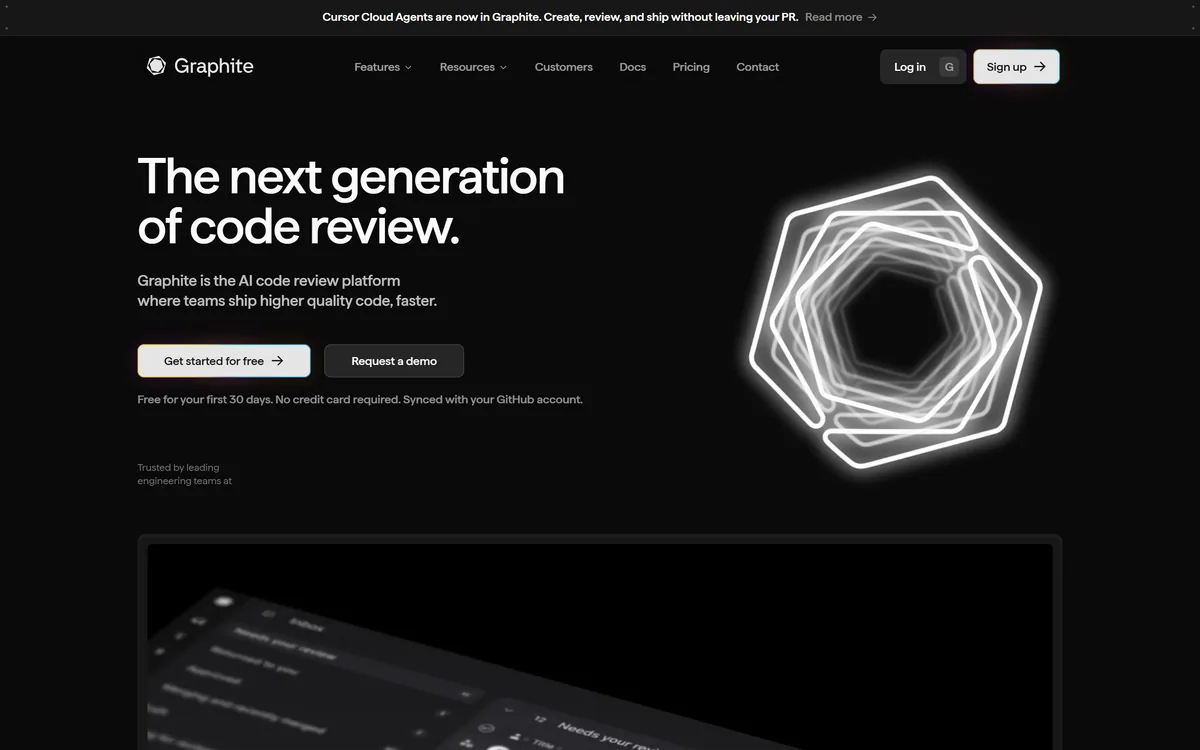
Graphite is a code-review and collaboration platform built around stacked pull requests, a merge queue and AI review (its AI Reviews, plus a collaborative 'Graphite Chat'), integrating with GitHub to speed up how fast-moving engineering teams ship code. In December 2025 Cursor/Anysphere agreed to acquire Graphite; it is still sold standalone. It suits high-velocity dev teams, with workflow-change and AI-review caveats.
Very good
Graphite earns 4.0 as a developer-friendly code-review platform for fast teams. Its stacked pull requests and merge queue attack a real pain, big PRs, slow reviews and a broken main branch, and AI review (its AI Reviews and Graphite Chat) assists reviewers on top, all layered onto GitHub. The caveats are honest: stacking is a genuine workflow change whose gains require full adoption, AI review still needs human judgement, and in December 2025 Cursor/Anysphere agreed to acquire Graphite, so a longer-term bet should factor in the product's direction. For high-velocity teams that embrace stacking, it can meaningfully speed how they ship; teams happy with their flow may not need the change. AInexfinder Editor Score: 4.0/5.
Best for: Fast-moving code review; Keeping main green
The visit link goes to graphite.com, the official site. Paid placements on AInexfinder are always labelled. How we make money
Code review is where fast teams slow down, big pull requests, long waits, a main branch that breaks. Graphite's answer is a different workflow: stacked pull requests, a merge queue, and AI review to keep things moving.
It layers on top of GitHub, so small dependent changes ship quickly and main stays green, with AI review (its AI Reviews and Graphite Chat) assisting humans. It competes with code-review tools like Sourcery, on workflow and velocity.
This review covers how Graphite reviews your pull requests, which teams it suits, how it's priced, and the workflow-change and ownership caveats to weigh first.
| What it is | A code-review platform (stacked PRs, merge queue, AI review) |
|---|---|
| Company | Graphite, New York, USA |
| Core | Stacked pull requests and a merge queue on GitHub |
| AI review | AI Reviews and 'Graphite Chat' on pull requests |
| Integrates | GitHub (and the GitHub PR workflow) |
| Ownership | Dec 2025: Cursor/Anysphere agreed to acquire Graphite (still standalone) |
| Access | Free tier plus paid plans and enterprise |
| Audience | High-velocity engineering teams |
Graphite's core idea is that big pull requests are the enemy of fast review. Its answer is stacking: break work into small, dependent pull requests that each review quickly, then land in order, so reviewers aren't staring at a thousand-line diff.
The merge queue is the other half. Changes merge in a tested, ordered sequence that keeps the main branch green, removing the manual babysitting and broken-build firefighting that slow high-velocity teams down.
On top of the workflow sits AI review. Graphite's AI Reviews surface issues and suggestions on pull requests, assisting human reviewers rather than replacing them, and the whole thing layers onto the GitHub workflow teams already use.
The honest framing is that Graphite is a well-regarded, developer-friendly review platform for fast teams. The caveats: stacking is a genuine workflow change that takes adjustment, AI review still needs human judgement and shouldn't be trusted blind, its velocity claims are vendor-stated, and in December 2025 Cursor/Anysphere agreed to acquire Graphite, so teams should weigh the product's direction even though it's still sold standalone.
Graphite is a developer-friendly review platform for fast teams; stacking is a real workflow change, and an acquisition is underway.
Graphite pairs a stacked-PR workflow with a merge queue and AI review.
Stacked pull requests let you ship small dependent changes that review fast and land in order, and the merge queue keeps main green by merging in a tested sequence, all on top of GitHub.
A review tool like Corgea focuses on security findings and fixes; Graphite's angle is the review workflow itself, speed and velocity, with AI review assisting rather than scanning for vulnerabilities specifically.
Graphite's AI Reviews surface issues and suggestions, and 'Graphite Chat' lets you collaborate with the reviewer on your PR page, assisting human reviewers, while Graphite's tooling (CLI, dashboards) wraps the GitHub PR experience.
A rule-based scanner like Semgrep enforces patterns; Graphite is about reviewing and merging faster, so pair it with security scanning rather than expecting it to replace that, and keep humans on the AI's suggestions.
Graphite suits high-velocity engineering teams, startups and scale-ups shipping frequently, who feel the pain of big pull requests, slow reviews and a frequently-broken main branch.
It suits teams willing to adopt the stacked-PR workflow, which is where its biggest gains come from, and that want a merge queue and AI review layered onto their existing GitHub setup.
It suits less well teams happy with their current review flow (the workflow change may not be worth it), solo developers or very small teams (the overhead outweighs the benefit), and anyone uneasy about building on a product mid-acquisition.
A fair way to place it: if review speed is a real bottleneck and your team will embrace stacking, Graphite can genuinely accelerate how you ship; if your current flow works or you're a tiny team, the workflow change may not pay off, and the pending acquisition is worth factoring into a longer-term bet.
Graphite offers a free tier plus paid plans and enterprise, scaled by team size and features. We do not publish prices, which change; check the site and confirm what the free tier covers.
The value question is review velocity versus adoption cost: the gains are real for teams that fully adopt stacking, but a half-hearted rollout that keeps old habits captures little, so the team's commitment matters as much as the price.
The sensible approach is to trial Graphite with one team on a real project, commit to the stacked workflow for long enough to judge it fairly, and measure review and merge speed before rolling it out more widely.
Because stacking is a workflow change, trial Graphite with one team that commits to it.
Stacked pull requests
Merge queue
AI Reviews
GitHub integration
CLI and dashboards
PR automation
Review insights
Team workflows
The useful comparison is with other code-review and quality tools.
| Tool | Tool | Approach | Best for |
|---|---|---|---|
| Graphite | Stacked PRs + merge queue + AI | Review velocity | High-velocity teams |
| Sourcery | AI code review | PR review and refactors | Review automation |
| Corgea | AI AppSec + fixes | Security findings | Dev/security teams |
| Semgrep | Rule-based SAST | Pattern enforcement | Developer-first scanning |
Last checked . Read from graphite.com during this check, with the screenshot above captured at the same time. Graphite's product is 'Graphite' (the slug is graphite-agent); in December 2025 Cursor/Anysphere announced an agreement to acquire it, and it remains available standalone, which is the key context for a longer-term commitment.
Stacking is a real workflow change that takes adjustment, and its biggest gains require fully adopting it. AI review (its AI Reviews and Graphite Chat) assists but still needs human judgement. Velocity claims are vendor-stated, and in December 2025 Cursor/Anysphere agreed to acquire Graphite, so weigh the product's direction for a longer-term bet even though it's still sold standalone.
An AI reviewer, an AI AppSec tool and a rule-based scanner to weigh beside Graphite.
AInexfinder does not list plan prices or billing details. For current pricing, plans, and trials, visit the official Graphite Agent website.
Visit official website for pricingVendor pricing, credits, and billing policies change over time. Always confirm on the official site before you buy.
Graphite Agent earns an AInexfinder Editor Score of 4.0/5 (very good). Best for: Fast-moving code review; Keeping main green; Small, frequent PRs.
Visit Graphite AgentLog in to write a review.
No reviews yet. Be the first to share your experience with Graphite Agent.
Assigned reviewer
Daniel ReedSenior AI Tools Reviewer
Daniel leads AInexfinder's tool reviews. He researches each tool from its own pricing, documentation and policies, checks its claims against independent sources, and writes up what it does well, where it falls short and who it genuinely suits.
Daniel and the AInexfinder editorial team research Graphite Agent from its own website, pricing, documentation and policies, checked against independent sources. This review is research-based: unless its method note says otherwise, we have not bought a plan or run hands-on tests. The Editor Score is our editorial judgement, and payment never changes it.
Similar Tools
Snyk Code is a static application security testing tool built for developers, using DeepCode AI to find vulnerabilities in the IDE in real time and Snyk Agent Fix to propose pre-validated fixes, including coverage for AI-generated code.
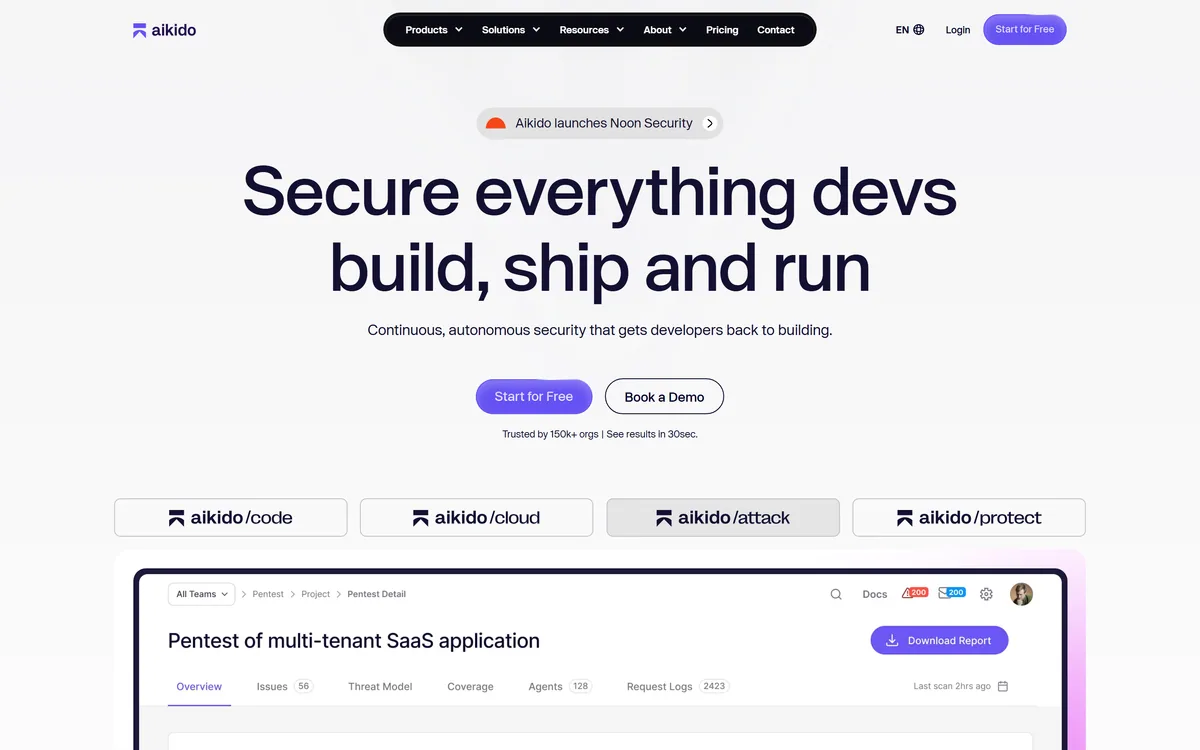
Aikido Security is a developer-first all-in-one application security platform covering code, cloud and runtime, designed to cut false positives and autonomously find and fix vulnerabilities through to production. Made by Aikido Security in Belgium, it holds strong compliance and suits teams consolidating fragmented AppSec tools.
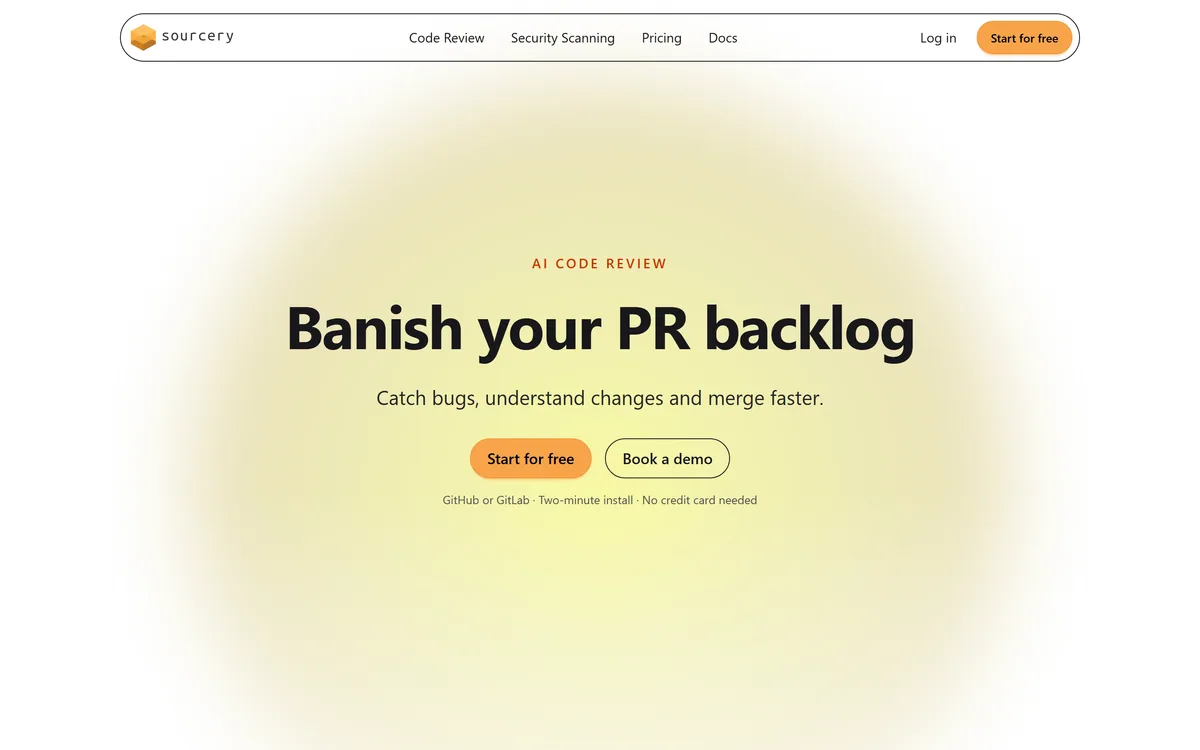
Sourcery is an AI code-review tool that reviews every pull request in minutes, catching bugs, edge cases and security issues with one-click fixes, plus codebase security scanning, with a strong stance on keeping your code private.
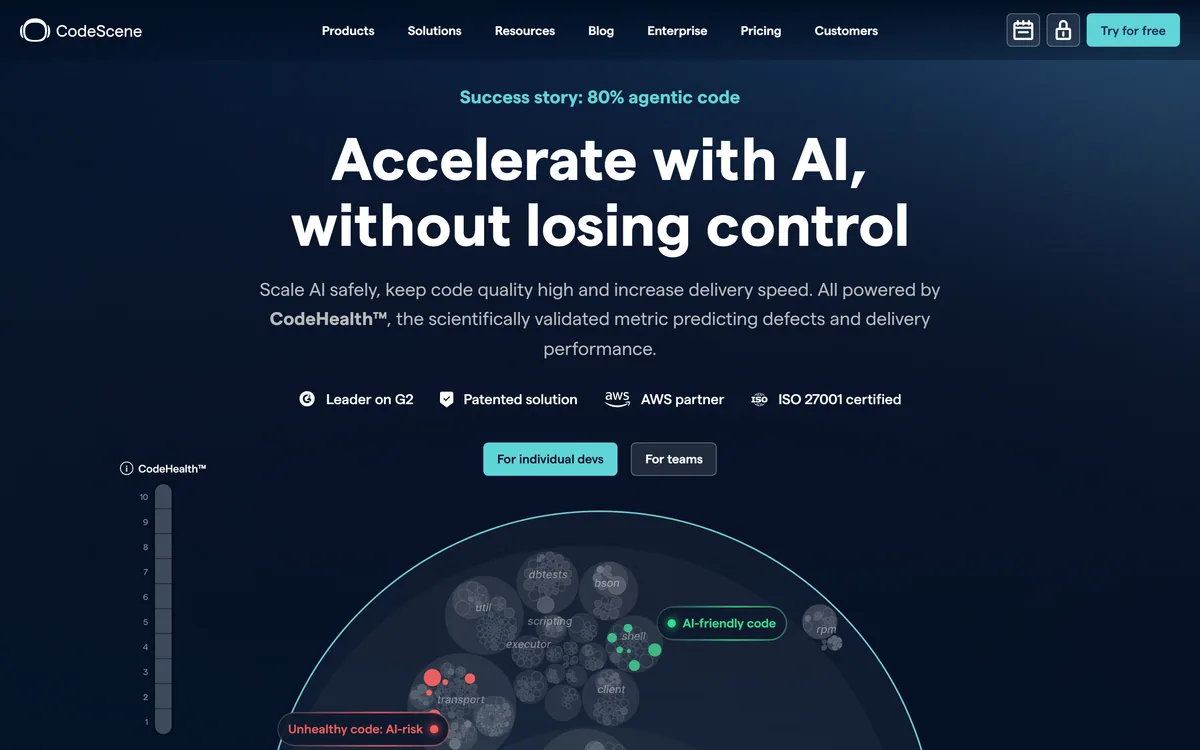
CodeScene measures code with CodeHealth, a validated metric predicting defects and delivery performance. It states the average enterprise codebase scores 5.15 out of 10 while AI needs 9.5 to work reliably, and offers an MCP server, automated reviews and IDE feedback. Operated by CodeScene AB.
cubic reviews pull requests in GitHub and your IDE, enforces rules written in plain English, and learns from senior engineers' PR comment history. It runs thousands of agents nightly to scan an entire codebase for bugs, pulls context from Linear, JIRA, Notion and Confluence, and is free for public repositories.
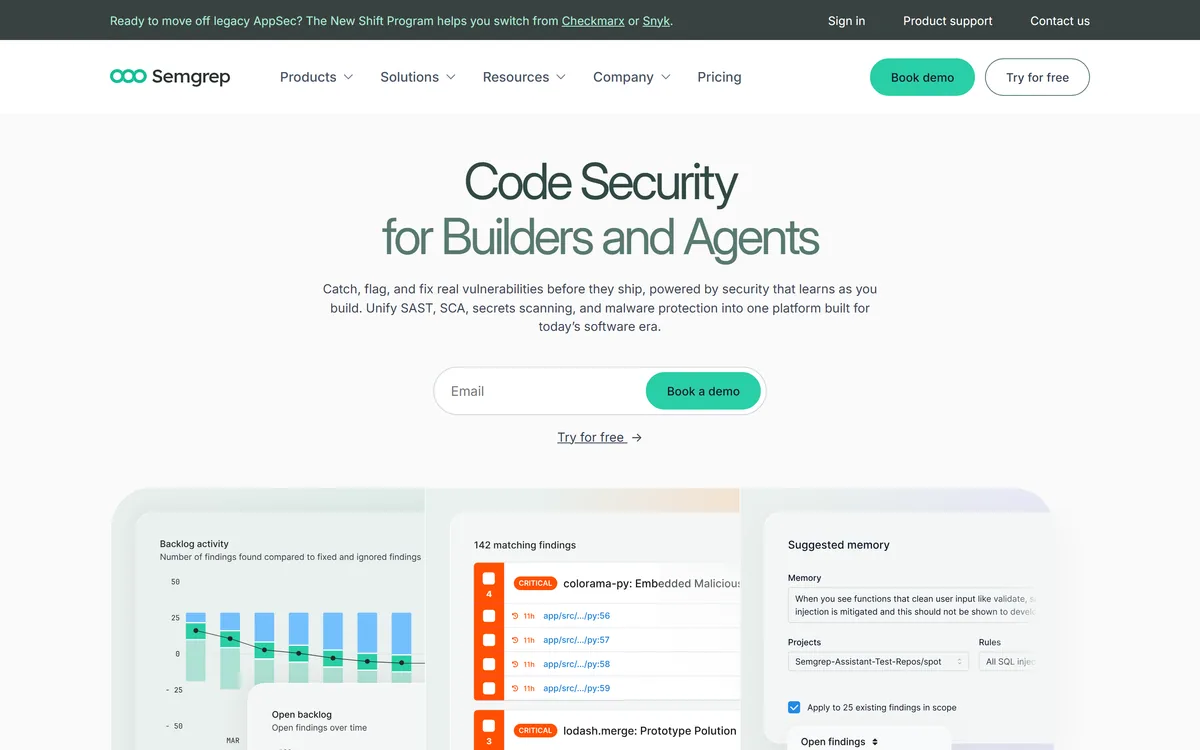
Semgrep is an AI-assisted application-security platform combining deterministic static analysis with AI reasoning to find and help fix vulnerabilities across SAST, SCA, secrets and supply-chain, with noise filtering and reachability prioritization. It has an open-source CLI core and suits developers and AppSec teams; findings still need triage.
Related Pages