
Conversational AI characters and NPCs for games Category: Emerging & Specialized.
Emerging & Specialized Review
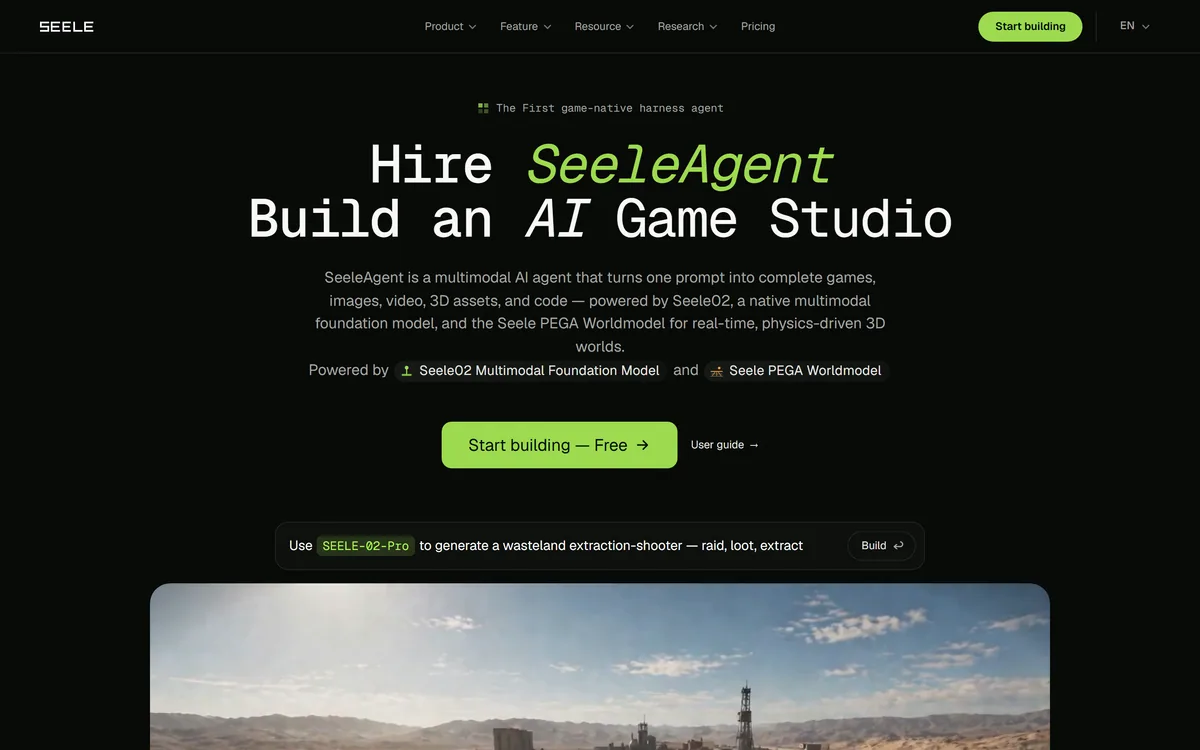
Seele AI's SeeleAgent is a game-focused multimodal AI agent that generates game prototypes, 2D and 3D, alongside images, video, 3D assets and code from prompts, using a skills library and Seele's own multimodal and world models. It is an early, ambitious tool best treated as a prototyping aid.
Good
Seele AI earns 3.6 as an ambitious, genuinely interesting take on AI game-making: SeeleAgent turns prompts into playable prototypes plus images, video, 3D and code through a structured skills library, which is great for ideation, jams and learning. But it is early, its 'first game-native agent' and proprietary-model claims are vendor statements we could not verify, and its output is prototype-grade rather than production-ready. Try it free on a small idea, inspect what it generates, and check export and ownership terms before building on it. AInexfinder Editor Score: 3.6/5.
Best for: Game idea prototyping; Game jams
The visit link goes to seeles.ai, the official site. Paid placements on AInexfinder are always labelled. How we make money
Making even a small game normally takes art, code, design and a lot of time. Seele AI's pitch is radical: describe a game and an AI agent builds a playable version, assets and all.
Its SeeleAgent works through a library of skills, generating 3D and 2D games, pixel-art games, visual novels and more, along with images, video, 3D assets and code, using Seele's own multimodal and world models. It sits beside 3D asset tools like Sloyd, but aims at whole game prototypes rather than single assets.
This review covers what Seele AI claims to generate, who it might suit, how much it costs to try, and why a sceptical first run is the right way in.
Seele AI positions SeeleAgent as an AI game studio: you describe what you want, and the agent produces a game prototype, setting, assets and mechanics, rather than just a single image or model. Its workspace shows game scripts, scenes, prefabs and materials, which signals that the output is meant to be a real project structure.
The skills approach is sensible. Instead of one vague prompt box, you pick a skill, such as generating a 3D game, a side-scrolling 2D game, a voxel world, a pixel-art game or a visual novel, and the agent runs that workflow end to end, and you can teach it new skills.
That makes it genuinely interesting for prototyping and play: testing a game idea in an afternoon, making a jam entry, or giving non-programmers a way to see a concept move.
The honest framing is caution. This is an early, ambitious product, and its biggest claims, being the first game-native agent and running on its own frontier-style multimodal and world models, are vendor statements we could not independently verify. Judge it on the prototypes it actually produces for you.
Seele AI's biggest claims are vendor statements we could not verify; judge it on the prototypes it actually produces for you.
The claims split into what the agent produces and the models it says power it.
SeeleAgent is presented as producing complete game prototypes from a single line, with ready skills for 3D games, 2D games, voxel exploration, pixel games, visual novels, survivor-style arenas and roguelikes, alongside standalone images, video, 3D assets and code.
For single, controllable 3D assets, a dedicated generator like Rodin may give more predictable results; Seele AI's appeal is assembling a whole playable prototype rather than perfecting one model.
Seele AI says the agent runs on its own multimodal foundation model and a world model for real-time, physics-driven 3D worlds. These are bold technical claims; until independently benchmarked, treat them as marketing descriptions rather than established facts.
Practical questions matter more for buyers: how editable and exportable the generated project is, who owns generated assets under the terms, and how well output holds up beyond a demo. For game art pipelines, a tool like Layer AI addresses asset production more narrowly.
Seele AI might suit hobbyists, students and non-programmers who want to see a game idea playable quickly, and indie developers who want rapid prototypes or jam entries to test whether an idea is fun.
It might also suit educators showing game-design concepts, and content creators who want quick playable or visual concepts without assembling a team.
It is too early for studios that need production-grade, maintainable code and assets, for commercial projects where asset ownership and licensing must be watertight, and for anyone expecting a finished, shippable game from a prompt.
Seele AI lets you start building for free, with paid options for heavier use. We do not publish prices, which change; check the site.
The value question at this stage is not cost per seat but whether its prototypes are good enough to save you real time on ideation, and whether you can keep and use what it generates.
Because you can start free, the sensible approach is to prototype one small game idea, inspect what was generated, and read the terms on ownership and export before investing time or money.
Because the claims are bold and the product is early, trial Seele AI on a small, concrete idea and inspect everything.
| What it is | A multimodal AI agent for making games |
|---|---|
| Generates | Game prototypes, images, video, 3D assets and code |
| Skills | 3D game, 2D game, pixel game, visual novel and more |
| Models | Seele's own multimodal and world models (vendor-described) |
| Code | Shows Unity-style C# scripts in its workspace |
| Extensible | Skills library you can teach new skills |
| Positioning | Calls itself the first game-native agent (vendor claim) |
| Access | Free to start building |
Prompt-to-game prototypes
Skills library by game type
2D and 3D game generation
Image and video generation
3D asset generation
Code generation
Teachable custom skills
Free start
The useful comparison is with tools that generate game assets more narrowly.
| Tool | Tool | Generates | Best for |
|---|---|---|---|
| Seele AI | Whole game prototypes plus assets | Prompt-to-playable concepts | Rapid game ideation |
| Sloyd | Parametric 3D assets | Controllable game-ready models | Asset pipelines |
| Rodin | AI 3D models | Detailed models from text or images | 3D creators |
| Layer AI | Game art and assets | 2D game art at scale | Game content teams |
A parametric 3D generator, an AI 3D generator and a game-art tool to weigh alongside Seele AI.
Last checked . Read from seeles.ai during this check, with the screenshot above captured at the same time. We did not generate a game as part of this review.
Seele AI is early and ambitious. Its 'first' and model claims are vendor statements we could not independently verify. Check export, editability and asset-ownership terms before relying on generated games.
AInexfinder does not list plan prices or billing details. For current pricing, plans, and trials, visit the official Seele AI website.
Visit official website for pricingVendor pricing, credits, and billing policies change over time. Always confirm on the official site before you buy.
Seele AI earns an AInexfinder Editor Score of 3.6/5 (good). Best for: Game idea prototyping; Game jams; Learning game design.
Visit Seele AILog in to write a review.
No reviews yet. Be the first to share your experience with Seele AI.
Assigned reviewer
Daniel ReedSenior AI Tools Reviewer
Daniel leads AInexfinder's tool reviews. He researches each tool from its own pricing, documentation and policies, checks its claims against independent sources, and writes up what it does well, where it falls short and who it genuinely suits.
Daniel and the AInexfinder editorial team research Seele AI from its own website, pricing, documentation and policies, checked against independent sources. This review is research-based: unless its method note says otherwise, we have not bought a plan or run hands-on tests. The Editor Score is our editorial judgement, and payment never changes it.
Similar Tools
Conversational AI characters and NPCs for games Category: Emerging & Specialized.

Promethean AI is a world-building assistant for digital art teams that indexes a studio's existing assets as metadata without moving or storing the files, sits on top of Unreal and other 3D editors rather than replacing them, and states over 10,000 users including PlayStation Studios.
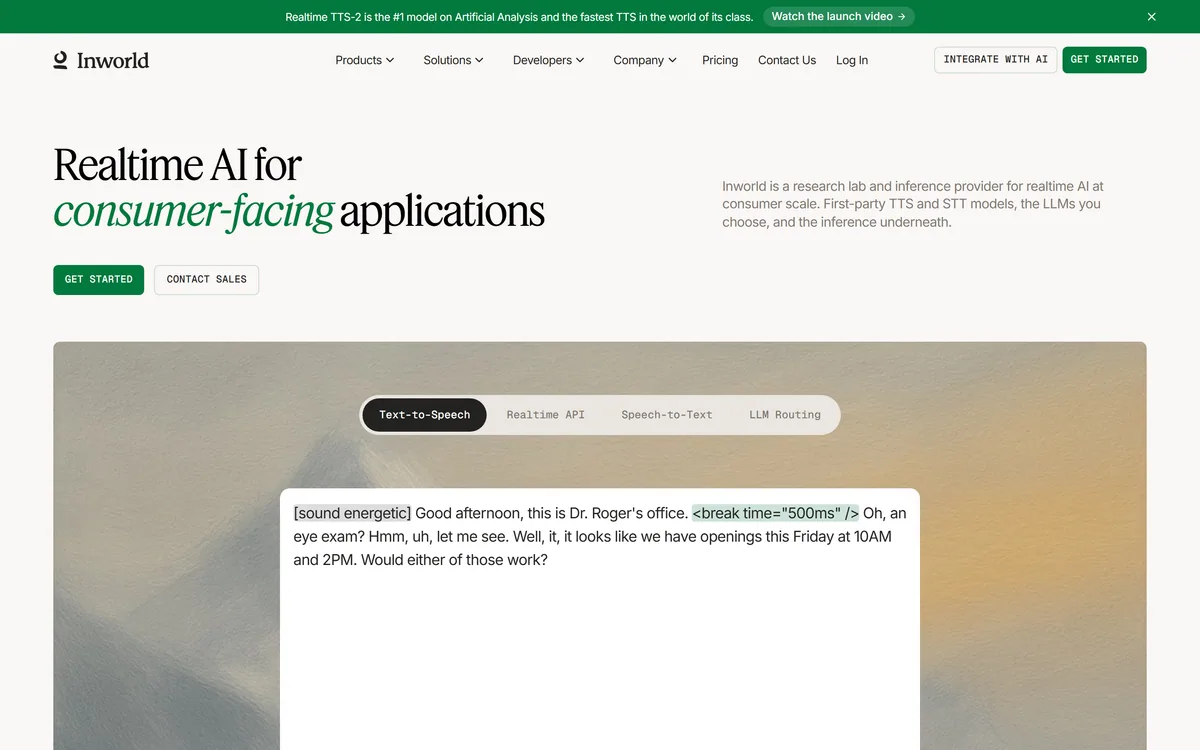
Inworld AI is a research lab and inference provider supplying realtime voice infrastructure. Its products cover text-to-speech, speech-to-text, a realtime API, its own inference, a router across 220+ language models, and compute — used to build voice agents, companions and interactive media.
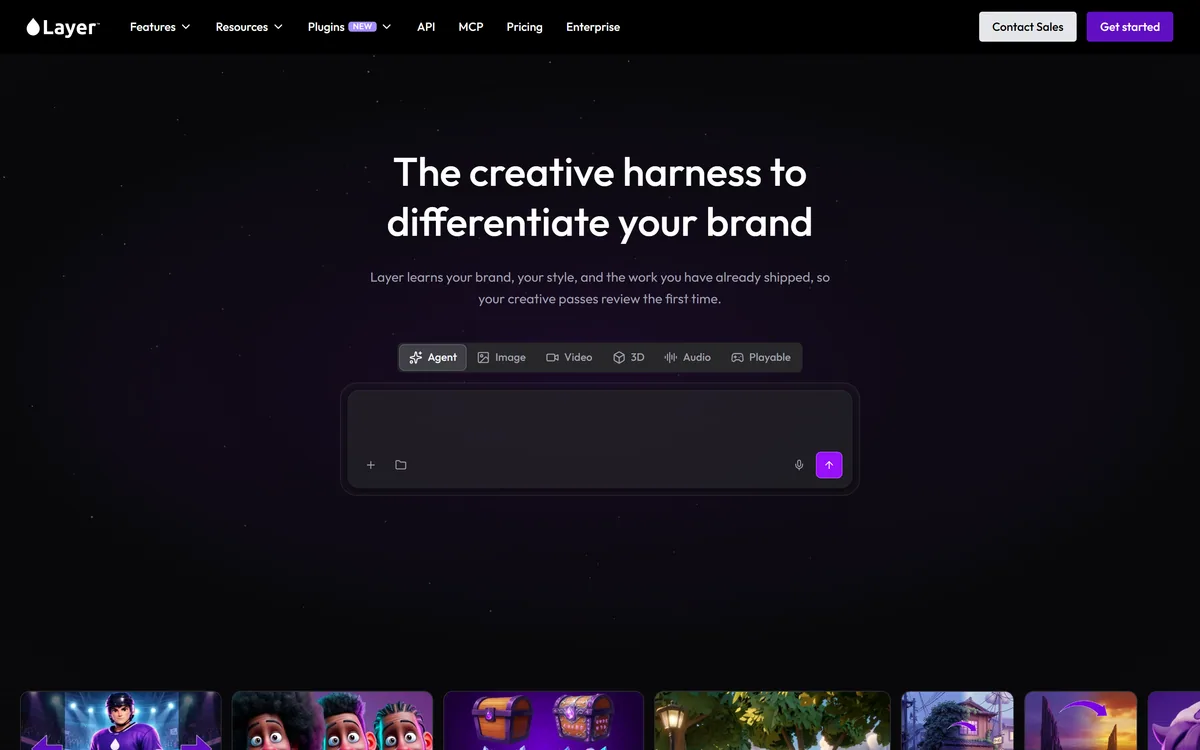
Layer AI is a creative platform for teams that learns your brand and style, then generates image, video, 3D and audio across 300+ models with an agent, LoRA training and editing, plus IP-safety, auditability and enterprise controls.
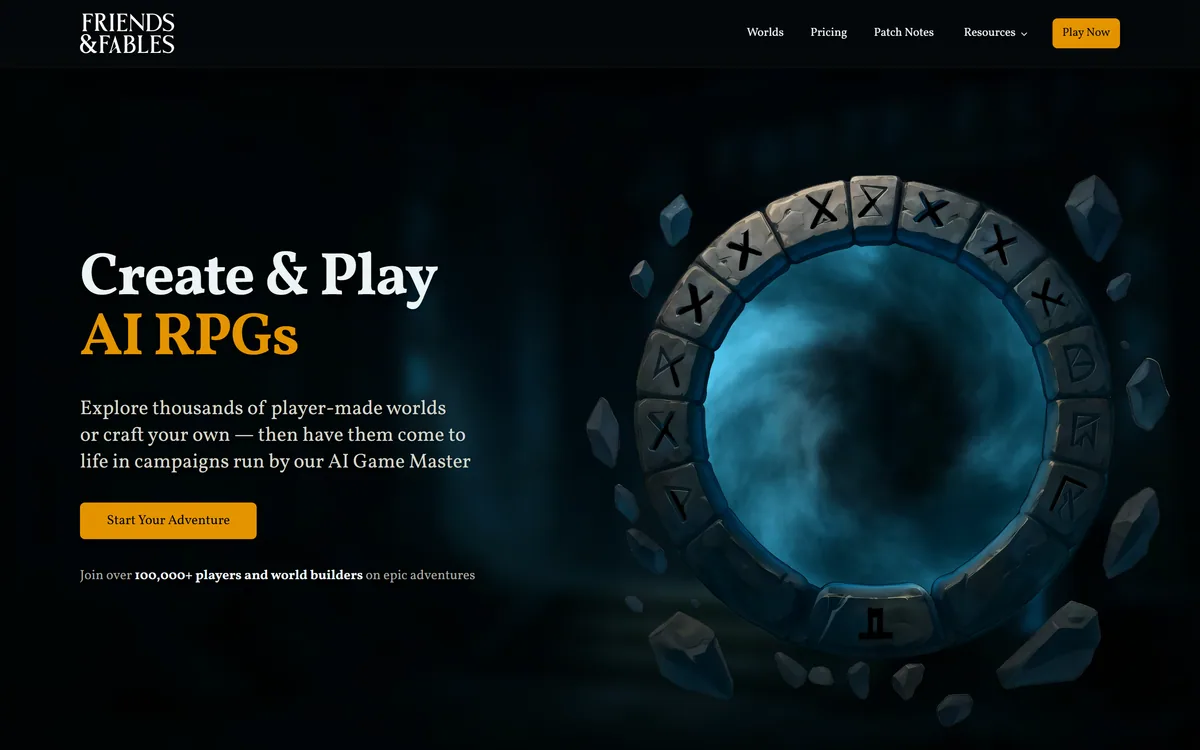
Friends & Fables runs tabletop roleplaying campaigns with an AI game master called Franz, combining world building tools, tactical turn-based combat on the 5.1 System Reference Document, maps, image generation, narration and multiplayer parties of up to six across desktop, tablet and mobile.

Insilico Medicine pairs the Pharma.ai software suite — PandaOmics, Chemistry42, inClinico and more — with its own clinical pipeline. Its lead candidate rentosertib, a TNIK inhibitor for idiopathic pulmonary fibrosis, has Phase IIa results published in Nature Medicine.
Related Pages