What is Deepnote?
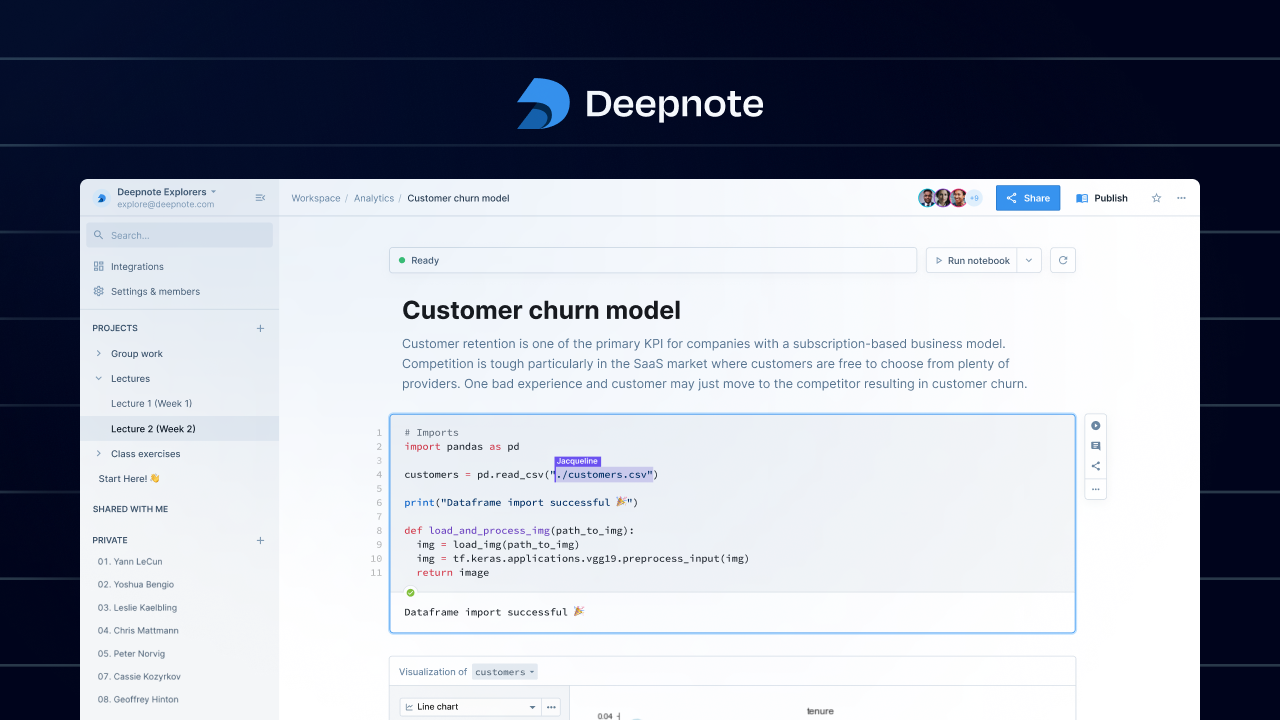
Deepnote is a collaborative data science and analytics notebook designed as an AI-first, drop-in replacement for Jupyter, serving data scientists, analysts and engineering teams.
It combines Python, SQL and R in a single real-time collaborative environment with native connectors to warehouses and databases such as Snowflake, BigQuery, Redshift, Athena and ClickHouse.
Its standout capability is Deepnote AI: users describe what they want and the agent automatically writes, runs and debugs code, understanding the business context and data stack to query, analyze and interpret data.
Teams can also build autonomous data agents for tasks like churn analysis or fraud detection and ship results as interactive data apps and dashboards.
Key features include AI code completion and natural-language code generation, the Deepnote Agent for co-authoring notebooks, real-time multiplayer editing, scheduled notebooks and pipelines, and deployable data apps. In 2025 Deepnote went open source with a new notebook format and extensions for VS Code, Cursor and JupyterLab.
Use cases span exploratory analysis, building reproducible reporting workflows, and sharing interactive apps with stakeholders. Pros include strong collaboration, a genuinely capable AI agent, and broad data-source integrations.
Cons are that heavy compute usage drives cost, and teams deeply invested in pure local Jupyter may face a learning curve. Deepnote is freemium with a free tier, paid team plans and enterprise options. Pricing changes often, so check the official site for current plans.
Deepnote's core capabilities include AI agent that queries, analyzes and interprets data, Python, SQL and R in one notebook, Real-time collaborative editing, Native warehouse and database connectors, Deployable data apps and dashboards and Scheduled notebooks and pipelines.
AI agent that queries, analyzes and interprets data is built in, Python, SQL and R in one notebook is built in, Real-time collaborative editing is built in, Native warehouse and database connectors is built in, so you get a rounded toolkit rather than a single trick.
Each feature is designed to take the manual effort out of the task and help you reach a usable result faster, which is what makes Deepnote worth a place on your shortlist.
On the plus side, users consistently highlight Strong real-time collaboration, Capable AI analysis agent and Broad data-source integrations as the reasons they keep using Deepnote.
It isn't perfect, though — Compute-heavy usage increases cost and Learning curve for pure local Jupyter users are the trade-offs people most often mention, so weigh those against your own priorities before you commit.
As with any AI tool, the output still benefits from a quick human review, but Deepnote gets you most of the way there with far less effort.
Deepnote runs on a freemium pricing model, so you can start for free and only pay once you outgrow the free tier — handy for testing it on a real task before spending anything.
AI-tool pricing changes often, so always check the current plans, seats and add-ons on the official site for the latest details before you buy. Who is Deepnote for? It's best suited for ai-first collaborative data science notebook.
Whether you're a beginner trying this kind of AI tool for the first time or a professional who'll use it every day, it's a credible option to consider.
If you're still deciding, compare Deepnote against the alternatives and the head-to-head comparisons linked below — looking at features, pricing and real user ratings side by side is the fastest way to find the right fit for your workflow and budget.
Who is Deepnote for?
Deepnote is best suited for ai-first collaborative data science notebook. Whether you are trying this kind of coding & development tool for the first time or use one every day, it is a credible option to shortlist — compare it with the alternatives and head-to-head comparisons linked on this page to find the best fit for your workflow and budget.