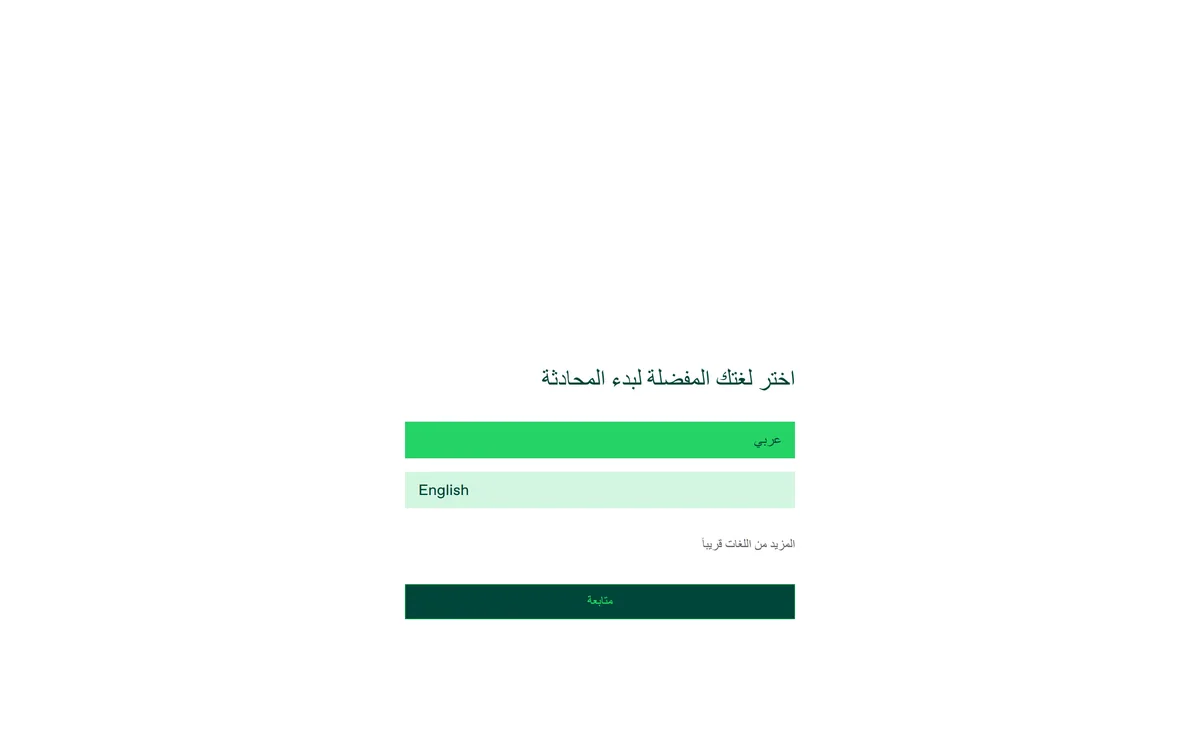
JAIS Chat is a bilingual Arabic and English conversational assistant launched by Core42, part of the UAE's G42 group. It runs on the Jais family of Arabic large language models developed by Inception with MBZUAI and Cerebras, and is built to handle Arabic dialects and cultural context rather than translated English.
jaischat.ai12 viewsAdded April 23, 20252K visitors
Arabic is spoken by more than 400 million people and is chronically underserved by the models most of the world uses. That is not an oversight — it is what happens when training corpora are assembled from an internet that is overwhelmingly English.
The usual result is an assistant that handles Modern Standard Arabic acceptably, stumbles on the dialects people actually speak, and reasons about culture, law and religion through an English-language lens it never announces.
Jais is the UAE's answer, and JAIS Chat is the consumer-facing front door to it. This review covers what Arabic-first training actually changes, why the dialect problem is harder than it sounds, what the open-weight decision means for organisations, and where a frontier model is still the better tool.
Most assistants translate Arabic. This one was built starting from it.
An Arabic Model, Not A Translated One
JAIS Chat is a bilingual Arabic and English conversational assistant built on Jais, a family of Arabic-first large language models developed in the UAE — the interface is familiar, the model underneath is not.
Launched by Core42, part of the G42 group, with the underlying models developed by Inception alongside MBZUAI and Cerebras Systems.
The models were trained Arabic-first rather than adapted: the 13B release used 116 billion Arabic tokens and 279 billion English, and the 30B model used 1.63 trillion tokens in total, of which 475 billion were Arabic.
Dialect handling is the differentiator. Arabic's written standard differs sharply from how anyone actually speaks it, and models trained mostly on English handle that badly.
The Jais models are open-weight, which means organisations can evaluate and deploy them independently rather than only through this chat interface.
Model, Provenance And Access
Product
JAIS Chat, a bilingual Arabic and English conversational assistant
Launched by
Core42, part of the G42 group in Abu Dhabi
Underlying model family
Jais, developed by Inception with MBZUAI and Cerebras Systems
Model behind the chat launch
Jais 30B
Training data, 30B
1.63 trillion tokens in total, of which 475 billion are Arabic, with the remainder English and code
Training data, 13B
116 billion Arabic tokens and 279 billion English tokens
Architecture note
Transformer-based, using ALiBi position embeddings for longer-context extrapolation
Training hardware
Condor Galaxy 1, the supercomputer co-developed by G42 and Cerebras
Licence
The Jais models were released as open source and open weight
Later generation
Jais 2, a 70 billion parameter model, released by the same partnership
Language coverage
Arabic including dialects, and English
Access
Web at jaischat.ai, with a mobile app released free of charge
What Arabic-First Training Actually Changes
The distinction between an Arabic-capable model and an Arabic-first one is not marketing, and the token counts make it concrete.
A frontier model trained predominantly on English — Gemini, or any of its peers — will produce grammatical Arabic. What it produces less reliably is Arabic that sounds like it was written by someone who thinks in Arabic — where the idiom is native, the register is right, and the reasoning does not read as a translation of an English thought.
Jais was trained on 116 billion Arabic tokens at the 13B scale and 475 billion at 30B. Those are enormous corpora for a language with a fraction of English's web presence, and assembling them is genuinely difficult work rather than a matter of scraping more.
The English component is deliberate rather than incidental. The 13B model included 279 billion English tokens specifically for cross-lingual transfer — reasoning ability learned in a data-rich language carries across to a data-poor one. Training on Arabic alone would produce a model fluent in Arabic and weak at thinking.
This is why the bilingual framing is honest rather than a compromise. The model is genuinely built for both, with Arabic as the priority rather than the afterthought.
Grammatical Arabic and Arabic that reads as though it was thought in Arabic are different outputs. Only the second one requires the training corpus to have been built deliberately.
The Dialect Problem Is Larger Than Outsiders Assume
Arabic has a structural feature that makes it unusually hard for language models, and it is worth explaining because it is the crux of the whole product.
Modern Standard Arabic is the formal written language: news, literature, official documents, education. It is broadly shared across the Arab world and it is what almost all written training data consists of.
It is also not what anyone speaks. Egyptian, Levantine, Gulf, Maghrebi and Iraqi Arabic differ from Modern Standard and from each other in vocabulary, grammar and pronunciation — in some pairings enough to impede mutual comprehension.
So a model trained on written Arabic learns the version of the language people write and not the version they speak, which is a serious problem for a conversational assistant. Someone typing casually in Gulf Arabic is not writing Modern Standard, and a model that only knows the formal register will misread the question or answer in a way that lands as stiff and foreign.
JAIS Chat's stated handling of multiple dialects and cultural nuance is the correct thing to target. It is also the thing you should test hardest, in your own dialect, because it is where the difference between this and a general model will show up first if it exists at all.
Modern Standard Arabic dominates written corpora but is spoken by nobody conversationally
Egyptian, Levantine, Gulf, Maghrebi and Iraqi Arabic differ substantially from it and from each other
Casual typed Arabic mixes dialect, Modern Standard and sometimes Latin transliteration
Cultural, religious and legal context varies across the region and rarely appears in English-trained corpora
Right-to-left rendering and Arabic script handling are a separate class of engineering problem again
Open Weights Change Who This Is For
The Jais models were released openly, and that decision does more for the region than the chat interface itself.
An open-weight model can be downloaded, evaluated on your own benchmarks, fine-tuned on your own data, and deployed inside your own infrastructure. For a government department, a bank or a hospital in the region, that is the difference between an option and a non-starter.
Data residency is usually the blocking constraint. Regulated organisations across the Gulf are frequently prohibited from sending citizen or customer data to a model hosted elsewhere, and no amount of quality closes that gap. A model you can run yourself does.
It also means the models can be independently evaluated, which matters for a claim like best-performing Arabic model. Open weights turn that from an assertion into something researchers can test.
The practical implication for a technical reader: JAIS Chat is the demonstration, not the deployment. If you are building an Arabic product, the interesting artefact is the model on Hugging Face rather than the chat window.
Note also that a later generation exists. Jais 2 is a 70 billion parameter model from the same Inception, Cerebras and MBZUAI partnership — so check which model any given interface is actually serving before benchmarking against it.
Where A Frontier Model Still Wins
An honest assessment has to be specific about the gap, and it is a real one.
The largest models from OpenAI, Anthropic and Google are trained at a scale Jais does not match, and that shows in general reasoning, coding, mathematics, long-context work and tool use. If your task is hard reasoning that happens to be phrased in Arabic, a frontier model will often do better even without Arabic-first training.
The surrounding product also differs enormously. ChatGPT and Claude arrive with file handling, web browsing, code execution, mobile apps, developer platforms and integrations built over several years. A newer regional assistant is competing on the model, not on the ecosystem.
Where Jais wins is narrower and real: dialectal Arabic, culturally grounded responses, Arabic-language content generation that does not read as translated, and deployment inside jurisdictions where the alternative is not permitted to run at all.
The sensible position for most Arabic-speaking users is not to choose. Use a frontier model for reasoning-heavy work and an Arabic-first model where the language and the cultural context are the point.
Write the same prompt in your own dialect and in Modern Standard, and compare how each model handles both.
Ask for something culturally specific — a regional holiday, a local legal norm, a religious question — and check the framing, not just the facts.
Ask for generated Arabic content and have a native reader judge whether it reads as translated.
Run a reasoning-heavy task in Arabic and compare against a frontier model honestly.
If you are deploying rather than chatting, evaluate the open weights directly rather than the chat interface.
What To Confirm Before Organisational Use
Two practical points, and one clarification about names that trips people up.
Confirm which entity you are dealing with. The Jais models and the Core42 launch are well documented in the record. If you are procuring anything, verify the operator, the terms and the data handling of the specific interface you are using — the model being open means more than one service can serve it.
Check data handling for your jurisdiction. The whole appeal of a regional model is usually regional data handling, so confirm where conversations are processed and retained rather than assuming that follows from where the model was built.
Distinguish the model from the product. Jais is the model family. JAIS Chat is one interface onto it. Jais 2 is a later, larger generation. Benchmarks published about one do not automatically describe another, and mixing them up is the most common error in coverage of this project.
Key features of JAIS Chat
Bilingual Arabic and English conversation
Handling of multiple Arabic dialects alongside Modern Standard Arabic
Culturally grounded responses for the Arabic-speaking region
Built on the Jais family of Arabic-first large language models
Familiar chat interface comparable to mainstream assistants
Mobile app released free of charge
Underlying models published as open weights for independent evaluation and self-hosting
Pros & cons
Pros
6
Genuinely Arabic-first training rather than an English model with Arabic bolted on
Dialect handling targets the hardest and most practically important gap in Arabic AI
Cross-lingual transfer from a large English corpus keeps reasoning ability intact
Open weights allow independent evaluation and deployment inside a jurisdiction
Serious institutional backing across G42, MBZUAI and Cerebras
Trained on purpose-built infrastructure rather than rented capacity
Cons
5
Smaller than the frontier models, and it shows on hard reasoning, coding and mathematics
The surrounding product lacks the tools, file handling and integrations of mature assistants
The site was not reachable during this check, so nothing could be confirmed on it directly
Model naming is confusing — Jais, Jais 2 and JAIS Chat are distinct things frequently conflated
Little published detail about consumer data handling compared with the model documentation
Best For
Arabic-speaking users who want responses in native idiom rather than translation
Organisations in the Gulf with data residency requirements
Content teams producing Arabic-language material at volume
Researchers evaluating Arabic language model capability
Developers building Arabic-first products on open weights
Arabic Capability Against The General Assistants
The trade is consistent — regional language depth on one side, model scale and ecosystem on the other.
Tool
Arabic approach
Relative strength
Deployment options
JAIS Chat
Arabic-first training with dialect handling
Native Arabic idiom and cultural context
Chat interface, plus open weights for self-hosting
Run the same Arabic prompt through two or three of these — the difference is usually obvious within a few exchanges.
ChatGPT — the default comparison, with a far larger surrounding product
Claude — strong long-form writing and reasoning across languages
Gemini — multimodal breadth and tight search integration
Mistral Le Chat — the European parallel — a regional open-weight model with local hosting
When An Arabic-First Model Is The Right Call
Reach For Jais If
You work primarily in Arabic and want output that does not read as translated
Your users write in dialect rather than Modern Standard Arabic
Cultural, religious or regional context materially affects the answer
You need a model you can host inside your own jurisdiction
You are building an Arabic-language product and want open weights to evaluate
Use A Frontier Model If
The task is reasoning, coding or mathematics that happens to be in Arabic
You depend on file handling, browsing, tools or a mature developer platform
Your work is primarily in English, where the larger models are simply ahead
You need long-context handling across large documents
You require enterprise support and compliance paperwork a newer product may not have
Provenance Of The Claims Here
Last checked . The site was not directly reachable during this check, so the details below were taken from published statements by the organisations involved and from independent regional and technology press.
JAIS Chat launched by Core42, part of the G42 group, per G42's own announcement
Jais model family developed by Inception, a G42 subsidiary, with MBZUAI and Cerebras Systems, per announcements from all three organisations
Jais 30B cited as the model behind the chat launch, trained on 1.63 trillion tokens including 475 billion Arabic
Jais 13B trained on 116 billion Arabic tokens and 279 billion English tokens, per the release announcement
Transformer architecture using ALiBi position embeddings, per the model release notes
Training performed on the Condor Galaxy 1 supercomputer co-developed by G42 and Cerebras
Jais 13B released under an open source licence and published on Hugging Face
Jais 2, a 70 billion parameter model, released subsequently by the same partnership
Bilingual Arabic and English operation with stated dialect handling, per launch coverage
Availability at jaischat.ai and a free mobile app, per launch coverage
No plan prices published here, in line with this site's pricing policy
The vendor site returned an error when accessed for this check, so nothing here rests on reading it directly and no footer review was possible. Model and provenance details come from published statements by G42, Inception, MBZUAI and Cerebras and from independent press. Because the Jais weights are open, more than one interface can serve these models — confirm the operator, terms and data handling of whichever service you actually use before organisational deployment.
Editor's Verdict
4.0/5
JAIS Chat has an AInexfinder Editor Score of 4.0/5.
JAIS Chat pricing
AInexfinder does not list plan prices or billing details. For current pricing, plans, and trials, visit the official JAIS Chat website.
Vendor pricing, credits, and billing policies change over time. Always confirm on the official site before you buy.
Frequently asked questions
What is JAIS Chat?
It is a bilingual Arabic and English conversational assistant launched by Core42, part of the UAE's G42 group. It runs on the Jais family of Arabic-first large language models developed by Inception with MBZUAI and Cerebras Systems.
How is Jais different from ChatGPT for Arabic?
Jais was trained Arabic-first — 475 billion Arabic tokens at the 30B scale — rather than being a predominantly English model that also handles Arabic. The difference shows most in dialect handling and in whether generated Arabic reads as native or translated.
Does Jais understand Arabic dialects?
Dialect handling is one of its stated design goals, and it is the right thing to target: Modern Standard Arabic dominates written training data but nobody speaks it conversationally. Test it in your own dialect, because this is where the difference from a general model appears first.
Is the Jais model open source?
Yes — the Jais models were released as open weights and published on Hugging Face. That is what allows organisations to evaluate them independently and to self-host inside a jurisdiction where sending data abroad is not permitted.
What is Jais 2?
A later, larger generation from the same Inception, Cerebras and MBZUAI partnership, at 70 billion parameters. It is a distinct model from the 13B and 30B releases, so check which one an interface is actually serving before comparing benchmarks.
Is Jais better than GPT for Arabic tasks?
It depends on the task. For dialectal Arabic, culturally grounded responses and native-sounding Arabic content, an Arabic-first model has a genuine advantage. For hard reasoning, coding or long-context work that happens to be in Arabic, the frontier models are still ahead on raw capability.
Can an organisation deploy Jais on its own infrastructure?
Yes, because the weights are open. For regulated organisations in the Gulf that is often the deciding factor, since data residency rules can rule out a hosted foreign model regardless of how good it is.
Daniel reviews AI tools the slow way — by actually using them on real projects. His reviews cover what works, what breaks, and who each tool is genuinely a good fit for.
Daniel and the AInexfinder editorial team research JAIS Chat using public product information, listing evidence, and (when available) hands-on checks. Scores reflect listing completeness and transparency — not paid placement.
Listings may include affiliate or sponsored placements, which are labeled when present. Editorial scores and cons are not sold. See our affiliate disclosure and review methodology.
Claude is Anthropic's AI assistant, available on web, desktop, mobile, and in Chrome, with Projects for persistent context, Artifacts for generated documents and apps, Skills, Connectors, and Claude Code for developers.
Perplexity AI is an answer engine that runs live web searches and returns cited answers, with Deep Research for long agentic reports, Spaces for persistent projects, the Comet browser, and the Sonar API for developers.
ChatGPT is OpenAI's AI assistant, covering conversation, document and image work, web browsing, Projects, Tasks, custom GPTs, agent actions, and the Codex coding agent, across web, desktop, and mobile.
Kimi is Moonshot AI's assistant, running on its K3 model and positioned for agentic coding and knowledge work. Its interface opens on a set of output surfaces — slides, sheets, documents, websites, design, deep research and a multi-agent Swarm — alongside scheduled tasks, projects and a desktop app.
Reka is an AI research lab building omni models — Spark, Edge, Flash and Core — that process video, image, audio and text in a single architecture rather than bolting modalities together. It also runs Reka Cloud for training and deployment, video infrastructure available by API or MCP, and a training-data division.
Duck.ai is DuckDuckGo's free AI chat that gives anonymised access to a selection of popular models from major providers, with image creation and a deliberately light, privacy-first footprint. It is a privacy-focused front-end rather than its own frontier model.