Kimi is Moonshot AI's assistant, running on its K3 model and positioned for agentic coding and knowledge work. Its interface opens on a set of output surfaces — slides, sheets, documents, websites, design, deep research and a multi-agent Swarm — alongside scheduled tasks, projects and a desktop app.
kimi.com9 viewsAdded January 29, 2026226K visitors
Most assistants present a text box and let you discover what they can do. Kimi presents a row of outputs — slides, sheets, docs, websites, design — and asks which one you want.
That is a small interface decision carrying a large argument: that the useful unit of AI work is a finished artefact rather than a conversation you then copy out of.
Behind it sits Moonshot AI's K3 model, and the homepage says what it is for in the title: agentic coding and knowledge work.
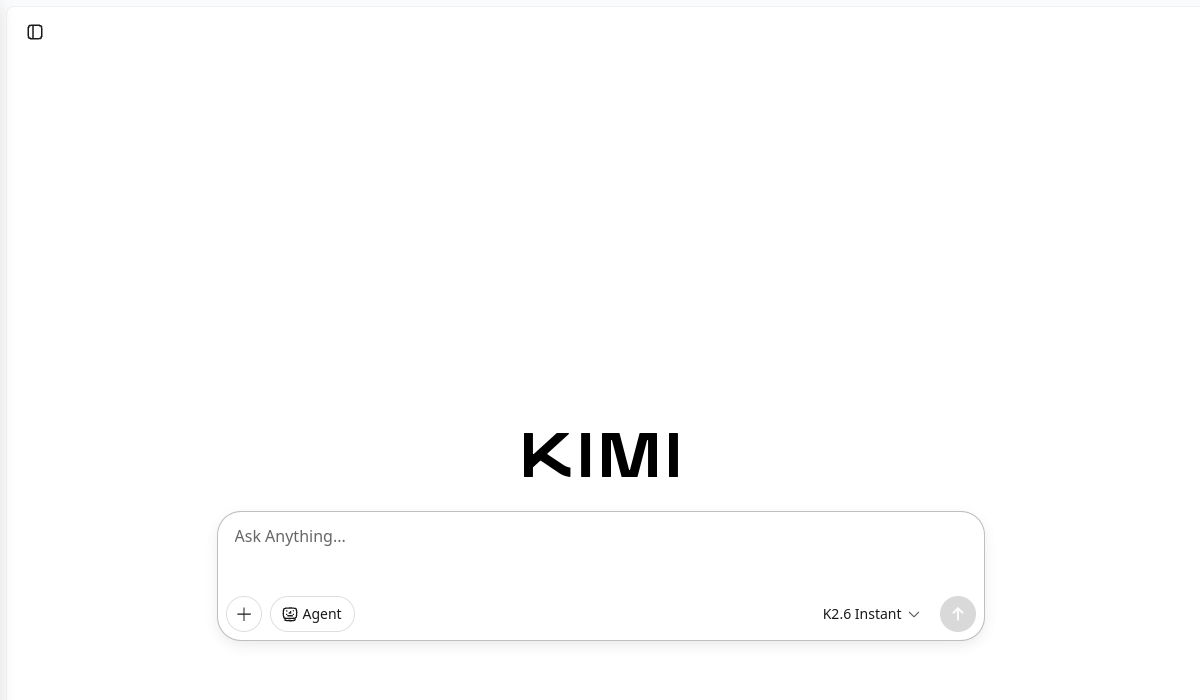
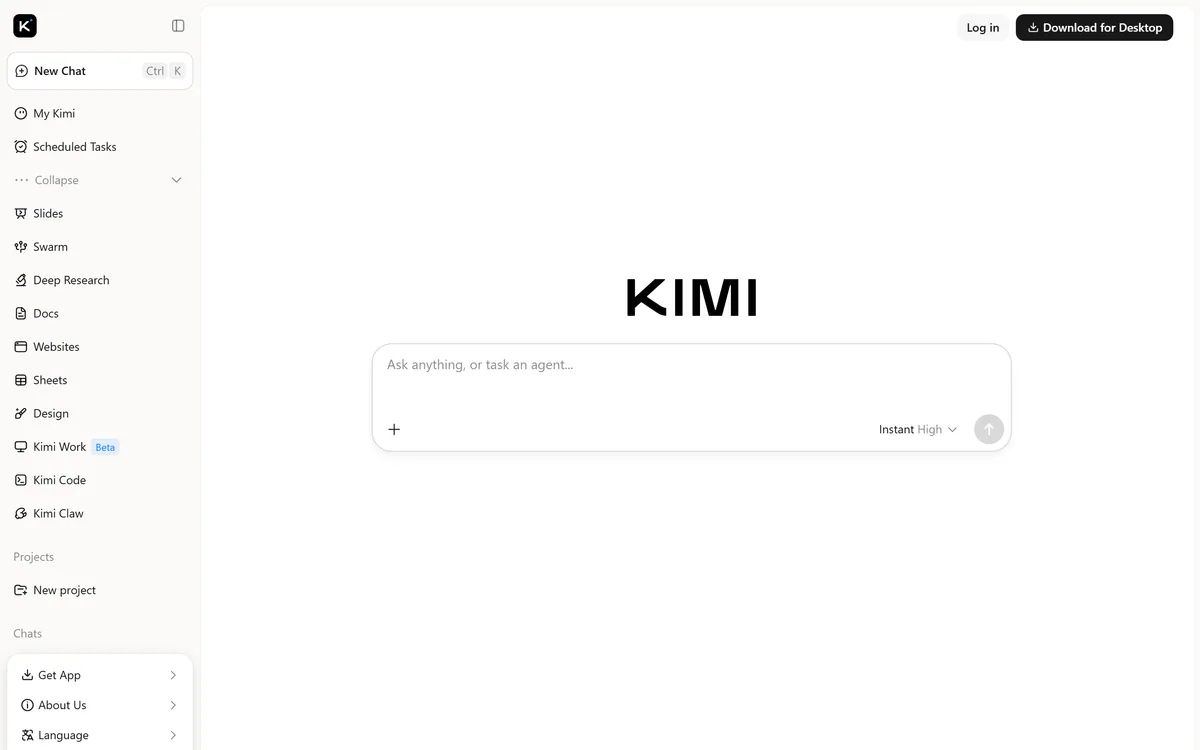
Kimi's interface, captured 9 September 2026 — the homepage is the product.
Kimi: Moonshot AI's Agentic Assistant
Built on K3, positioned for agentic coding and knowledge work rather than general conversation.
Output surfaces as entry points: slides, sheets, docs, websites, design and deep research.
Swarm and scheduled tasks — multiple agents, and work that runs when you are not there.
Instant and High modes, letting you trade speed against depth per request.
Operated by Moonshot AI with Chinese regulatory filings displayed, which belongs in any data decision.
What Does K3 Change For Knowledge Work?
The page title states the positioning directly: Kimi AI with K3, built for agentic coding and knowledge work.
That is a narrower claim than most assistants make, and the narrowing is the interesting part.
General assistants are optimised for the average request, which means being adequate at everything and shaped by nothing. Naming two domains — coding and knowledge work — implies choices about long-context handling, tool use and multi-step execution that a general model would balance differently.
Agentic is the load-bearing word. A conversational model answers; an agentic one takes an instruction, decomposes it, uses tools, and returns when the task is done. The interface reflects that, offering to task an agent alongside asking anything.
What the site does not provide is any benchmark, comparison or technical description of K3. The claim is positioning rather than evidence, and anyone choosing a model for coding should test it on their own repository rather than on a title tag — which is precisely the argument Warp makes about benchmarking on your own tasks.
A conversational model answers. An agentic one decomposes the instruction, uses tools, and comes back when the work is done.
Instant Versus High
Two modes sit beside the input: Instant and High. Neither is explained on the page, and the naming makes the trade obvious enough that it does not need to be.
This pattern has become standard across assistants for a good reason. Most requests are trivial — a definition, a rewrite, a quick lookup — and spending twenty seconds of reasoning on them is waste. A minority are genuinely hard and benefit from every second.
Exposing the choice to the user rather than deciding automatically is the right call, because only you know whether this particular question matters.
The failure mode is habitual selection. People pick one mode, forget the toggle exists, and either wait unnecessarily on simple things or get shallow answers to hard ones.
Worth building the habit deliberately: default to Instant, and switch to High when you notice yourself about to check the answer manually. That instinct is a reliable signal that the question deserved more.
Slides, Sheets, Docs And Swarm
The surfaces listed in the interface are Slides, Swarm, Deep Research, Docs, Websites, Sheets and Design, alongside Kimi Work, Kimi Code, Kimi Claw, Projects and Scheduled Tasks.
Reading that list as a product strategy tells you more than any feature description.
Five of those produce documents in formats people actually deliver — a deck, a spreadsheet, a document, a website, a design. The assistant is being positioned as something that hands you a file rather than text to reformat, and that is where most of the real friction in assistant use has always been.
Deep Research and Swarm are the agentic pair. Deep research means a long-running investigation returning a report; Swarm implies multiple agents working in parallel, which is the current frontier and the least proven.
Scheduled tasks are the quietest and most consequential. Work that runs on a schedule without you present changes an assistant from a tool you use into a process that runs — and that is a different thing to trust, monitor and be responsible for.
Start from the output surface, not the chat box.
Default to Instant and escalate to High deliberately.
Treat scheduled tasks as automation, with the oversight that implies.
Establish where your data goes before pasting anything sensitive.
Test coding claims on your own repository, not on the marketing.
Where Kimi Is Operated From
The footer carries a Moonshot AI copyright alongside three Chinese regulatory registration numbers — an ICP filing, a B2 licence and a public security network registration.
This is a fact about the service rather than a judgement, and it is one that belongs in an adoption decision.
Those filings indicate a service operated under Chinese jurisdiction, which determines the legal framework governing data handling, retention and lawful access requests. That is the same class of consideration as choosing between a US and an EU-hosted vendor, and it is answered by different law.
For an individual asking general questions, the practical weight of that is low. For anyone pasting client material, unreleased product information, personal data covered by GDPR, or code under a confidentiality obligation, it is a governance question that needs answering before use rather than after.
The site does not publish a data processing agreement, retention policy or regional hosting option on the pages we read. Anyone with a compliance requirement should establish those directly, and anyone without one can reasonably proceed — the point is to make the decision consciously rather than by default.
An Interface That Is The Whole Homepage
There is no marketing site. Visiting kimi.com opens the product, with the model selector, the surfaces and an input box, and nothing selling you on any of it.
That is unusual and worth reading in both directions.
The generous interpretation is confidence: a product good enough that using it beats reading about it, and a company that would rather spend the first thirty seconds demonstrating than persuading. For an assistant, where the experience is the argument, that logic holds.
The cost is that a prospective user cannot answer basic questions without an account — what the pricing is, what data policies apply, what K3 actually is, what Swarm does, or what distinguishes Kimi Work from Kimi Code.
For anyone evaluating tools for an organisation rather than for themselves, that is a real obstacle. The information a procurement process needs does not exist on the site, and getting it means asking rather than reading — which is a choice the company has made and worth knowing before you start. A self-hosted alternative like LobeHub answers those questions differently, and Khoj differently again.
Putting An Agentic Assistant To Work
The way to waste an agentic assistant is to use it as a chat box, which is what almost everyone does out of habit.
This sequence gets at what the interface is actually built for.
Decide your data position before pasting anything work-related.
Pick the output surface first — slides, sheet, doc — rather than describing it.
Give a task with a finish condition, not a question.
Use High mode when you would otherwise verify the answer yourself.
Try one scheduled task and review what it produced unattended.
Test the coding claims against a repository you know well.
Kimi: Surfaces And Operator
Operator
Moonshot AI, per the interface footer
Model
K3, named in the page title
Positioning
Built for agentic coding and knowledge work
Output surfaces
Slides, sheets, docs, websites, design and deep research
Agentic features
Swarm, deep research and scheduled tasks
Named products
Kimi Work, Kimi Code and Kimi Claw
Modes
Instant and High
Organisation
Projects, with chat history synced on login
Clients
Web, a downloadable desktop application and a mobile app
Regulatory filings
Chinese ICP, B2 and public security network registrations displayed
Disclaimer
Output labelled as AI-generated, for reference only
Last checked . Read from kimi.com in a browser session on the date above. The site opens directly into the product, so the interface and its footer are the only pages we read. The screenshot was captured at the same time.
Page title states Kimi AI with K3, built for agentic coding and knowledge work
Input prompt reads ask anything, or task an agent
Two response modes displayed: Instant and High
Output surfaces listed as Slides, Swarm, Deep Research, Docs, Websites, Sheets and Design
Kimi Work, Kimi Code and Kimi Claw listed as named products
Projects and Scheduled Tasks present in the sidebar
Chat history stated as syncing on login
A desktop download and a mobile app both offered
Output labelled as AI-generated, for reference only
Footer carries a Moonshot AI copyright for 2026
Footer displays three Chinese regulatory registration numbers — an ICP filing, a B2 licence and a public security network registration
No marketing pages, pricing or policy links surfaced from the interface we read
What we could not confirm: anything about K3 itself, since no benchmark, parameter count or technical description is published on the interface; what Swarm, Kimi Claw and Kimi Work actually do, as none is explained without an account; what data retention, processing or regional hosting terms apply, none of which we found; how Instant and High differ in practice; and pricing. The regulatory filings are reported as displayed and indicate the operating jurisdiction, which is a data-handling consideration rather than a judgement about the product.
Editor's Verdict
4.1/5
Kimi's interface makes an argument before you type anything. Instead of a chat box with features hidden behind it, the entry points are the things you want made — slides, a sheet, a document, a website, a research report — and that reframing turns an assistant into a producer of artefacts. Swarm and scheduled tasks push further, toward work that happens without you present. The thing to establish before adopting it is operational rather than technical: this is a Chinese-operated service with the filings to match, and that belongs in your data decision. AInexfinder Editor Score: 4.1/5.
Kimi pricing
AInexfinder does not list plan prices or billing details. For current pricing, plans, and trials, visit the official Kimi website.
Vendor pricing, credits, and billing policies change over time. Always confirm on the official site before you buy.
Frequently asked questions
What is Kimi?
Moonshot AI's assistant, running on its K3 model and positioned for agentic coding and knowledge work. Its interface opens on output surfaces — slides, sheets, docs, websites, design and deep research — rather than on a plain chat box.
What does agentic actually mean here?
That you give a task rather than ask a question. A conversational model answers; an agentic one decomposes the instruction, uses tools and returns when the work is done. The prompt itself invites you to task an agent.
What is K3?
Moonshot AI's model, named in the page title and nowhere described. No benchmark, comparison or technical detail is published on the interface, so treat the coding claim as positioning and test it on your own repository.
What is the difference between Instant and High?
The naming implies speed against depth, and the site does not elaborate. The practical habit is to default to Instant and switch to High whenever you notice yourself about to verify the answer manually — that instinct is a good signal.
Where is Kimi operated from?
The footer carries three Chinese regulatory registrations alongside a Moonshot AI copyright, indicating a service operated under Chinese jurisdiction. That determines the legal framework for data handling and lawful access, and belongs in your decision.
Does that matter for my use?
For general questions, little. For client material, unreleased product information, personal data under GDPR or code under confidentiality, it is a governance question to settle before use — the same class of consideration as choosing between US and EU hosting.
Why is there no marketing site?
The domain opens directly into the product. That is a defensible choice for an assistant, where using it beats reading about it, and it means pricing, data terms and feature explanations are not available to anyone evaluating it for an organisation.
What are scheduled tasks for?
Work that runs without you present — a recurring report, a monitored source, a periodic summary. It is the quietest feature and the most consequential, because it turns an assistant into a process that needs oversight rather than a tool you use.
What is Swarm?
Listed as a surface and not explained. The name implies multiple agents working in parallel, which is the current frontier in agentic systems and the least proven part of it. Treat it as an experiment rather than a reason to adopt.
How should I evaluate it?
Settle your data position first, then start from an output surface rather than the chat box, give it a task with a finish condition, and test the coding claim on a repository you know well enough to judge the result.
Daniel reviews AI tools the slow way — by actually using them on real projects. His reviews cover what works, what breaks, and who each tool is genuinely a good fit for.
Daniel and the AInexfinder editorial team research Kimi using public product information, listing evidence, and (when available) hands-on checks. Scores reflect listing completeness and transparency — not paid placement.
Listings may include affiliate or sponsored placements, which are labeled when present. Editorial scores and cons are not sold. See our affiliate disclosure and review methodology.
Claude is Anthropic's AI assistant, available on web, desktop, mobile, and in Chrome, with Projects for persistent context, Artifacts for generated documents and apps, Skills, Connectors, and Claude Code for developers.
Perplexity AI is an answer engine that runs live web searches and returns cited answers, with Deep Research for long agentic reports, Spaces for persistent projects, the Comet browser, and the Sonar API for developers.
ChatGPT is OpenAI's AI assistant, covering conversation, document and image work, web browsing, Projects, Tasks, custom GPTs, agent actions, and the Codex coding agent, across web, desktop, and mobile.
JAIS Chat is a bilingual Arabic and English conversational assistant launched by Core42, part of the UAE's G42 group. It runs on the Jais family of Arabic large language models developed by Inception with MBZUAI and Cerebras, and is built to handle Arabic dialects and cultural context rather than translated English.
Reka is an AI research lab building omni models — Spark, Edge, Flash and Core — that process video, image, audio and text in a single architecture rather than bolting modalities together. It also runs Reka Cloud for training and deployment, video infrastructure available by API or MCP, and a training-data division.
Duck.ai is DuckDuckGo's free AI chat that gives anonymised access to a selection of popular models from major providers, with image creation and a deliberately light, privacy-first footprint. It is a privacy-focused front-end rather than its own frontier model.