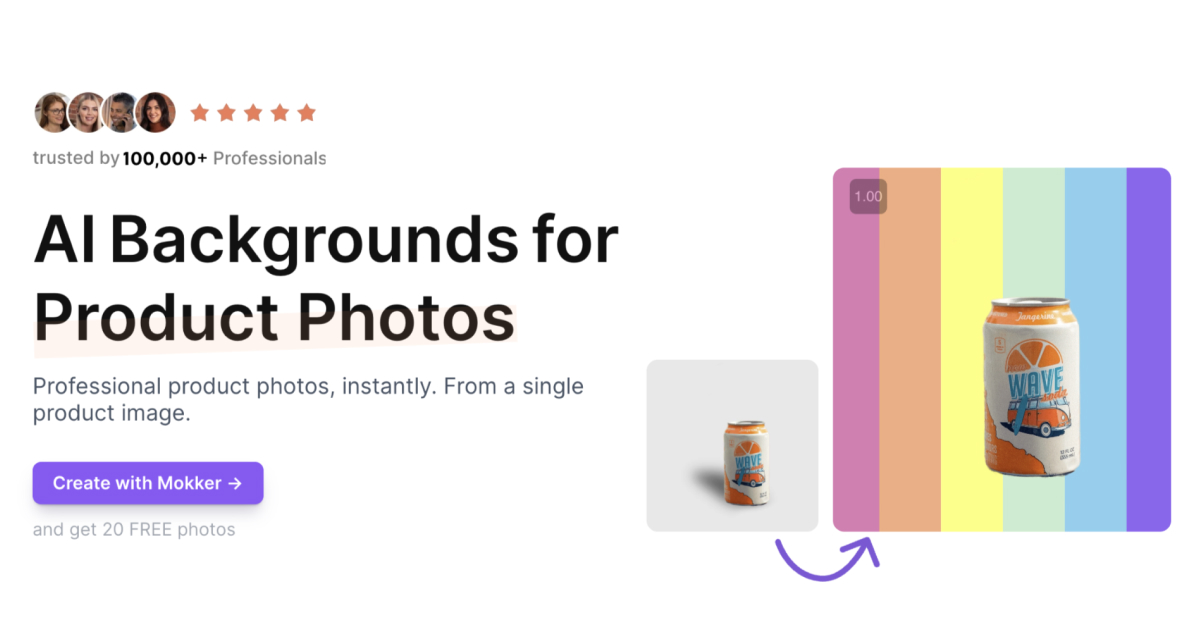
Mokker AI is a freemium product (free tier plus paid upgrades) listed on AInexfinder for people who need AI background replacement for product photos. If you are searching for a Mokker AI review, what Mokker AI is, or how Mokker AI works in real projects, this page explains the product in plain language using the details on its listing — without restating the feature cards and pros/cons blocks that already appear on this page.
Mokker AI review on AInexfinder — freemium AI tool for Image & Design. Features, pricing notes, and alternatives. In short, Mokker AI is aimed at getting you from a clear task to a usable result with less manual busywork.
Searchers comparing Mokker AI alternatives usually want three answers: what the tool is for, whether the workflow matches theirs, and what trade-offs show up after the first week. This Mokker AI review is written for that decision — not as a sales page, and not as a copy of the bullet lists further down the page.
How Mokker AI works
At a high level, Mokker AI is built around a simple loop: you bring a clear input (a brief, a file, a prompt, or a task), you guide the process with the controls the product exposes, and you take away a draft or result you can refine. The exact input depends on the job — for example AI product background replacement — but the evaluation method stays the same: run one real task end-to-end and see if the output is usable.
In practice, people often start with AI product background replacement, then shape the output until it matches the job. Another part of the loop is realistic shadows and lighting, which keeps the work moving without rebuilding the process from scratch each time.
Mokker AI also surfaces category scenes for food and cosmetics, so teams can keep quality consistent across runs. When the task is more complex, many background variations per product becomes the control that separates a rough draft from something you can actually ship.
Because Mokker AI is a freemium product (free tier plus paid upgrades), your first session should also test whether free limits (if any) or plan boundaries affect the task you care about. The listing describes the commercial model; this review focuses on how the work feels once you are inside the product.
Where Mokker AI fits in a workflow
Mokker AI is most useful when it plugs into a step you already do repeatedly: drafting, generating, editing, analyzing, automating, or preparing assets for a team. If your process is one-off and highly custom, a general-purpose assistant might be enough. If you keep returning to the same job, a focused product like Mokker AI can reduce setup time and keep results more consistent.
On this listing, the intended audiences include themes such as users who need AI product background replacement, teams that need realistic shadows and lighting, teams that need category scenes for food and cosmetics, and teams that need many background variations per product. Treat those as starting hypotheses: the right test is whether Mokker AI shortens your real cycle time on a task you will repeat next week.
A practical pattern: pick one “golden path” task, write down the input you will use, define what “good enough” looks like, and run Mokker AI against that bar. That single experiment beats scanning feature names. If Mokker AI clears the bar with less rework than your current stack, it earns a longer trial.
What Mokker AI handles well
The strengths below are framed as outcomes, not a second feature list. The Key features and Pros cards on this page already inventory the listing facts; here the goal is to explain what those facts mean when you are mid-project.
A practical upside is that fast, realistic background replacement. For many teams, the value shows up because category-tuned scenes for common products.
Day to day, it helps that easy upload-and-generate workflow. Reviewers often notice that AI product background replacement.
On the capability side, AI product background replacement is one of the reasons people shortlist Mokker AI instead of a generic alternative. On the capability side, realistic shadows and lighting is one of the reasons people shortlist Mokker AI instead of a generic alternative.
On the capability side, category scenes for food and cosmetics is one of the reasons people shortlist Mokker AI instead of a generic alternative.
For SEO-minded readers evaluating “is Mokker AI any good,” quality usually means consistency under your constraints: speed, control, export format, and how much cleanup you still do. Run the same task twice. If Mokker AI stays stable and the edits you make are small, that is a stronger signal than a polished marketing page.
Limits and trade-offs with Mokker AI
No serious Mokker AI review should skip limits. The Cons card on this page captures listing trade-offs; the notes here explain how those trade-offs show up while you work, without dramatic language.
It is fair to note that free usage is limited. A realistic trade-off is that reflective or transparent products may need fixes.
Before you commit, remember that mokker AI is strongest in its core use case, not every niche. Like most focused tools, Mokker AI is not perfect: compare a short trial against your real workflow first.
Also plan for the usual AI-tool realities: edge cases need judgment, templates can feel generic until you add your own examples, and team rollout goes smoother when one person owns the first playbook. Mokker AI is strongest when you treat it as leverage on a defined job, not as a replacement for domain expertise.
Getting started with Mokker AI
A clean first hour with Mokker AI looks like this: open the product with one real task, ignore optional settings until you have a first draft, then tighten controls only where quality slips. Save a before/after note so you can compare against your previous process. That note becomes your internal “should we keep Mokker AI?” evidence.
On day one, focus on AI product background replacement and realistic shadows and lighting. Those are enough to see whether the workflow matches your muscle memory. On day two, explore secondary controls only if the first path already saves time.
If Mokker AI is a freemium product (free tier plus paid upgrades), map your expected monthly volume in the first week. Limits, credits, or plan gates matter more after the novelty fades. Keep the evaluation tied to throughput you actually need.
Is Mokker AI a good fit for your team?
Mokker AI is a better fit when you have a recurring job aligned with AI background replacement for product photos, when you can define quality in concrete terms, and when someone will own the rollout for a few weeks. It is a weaker fit when your needs change every day, when you need deep custom development the listing does not describe, or when you expected an all-in-one suite rather than a focused tool.
A balanced way to decide: if the upside around “Fast, realistic background replacement” outweighs the friction around “Free usage is limited” on your actual task, keep testing. If the friction shows up every run, shortlist an alternative and compare side by side on the same input.
For buyers searching “Mokker AI vs alternatives,” insist on identical prompts or source files. Directory pages like this one help you shortlist; a controlled bake-off tells you what to buy.
Notes for evaluating Mokker AI
When you document a Mokker AI trial for stakeholders, capture: the task, the input, the settings you used, the time spent, the edits required, and whether a teammate could repeat the result without you. Those notes turn a vague “it felt good” demo into a decision other people can trust.
Also separate product quality from category hype. Mokker AI should be judged on the job listed for this page — AI background replacement for product photos — not on whether it claims to do everything. Focused tools often win on reliability precisely because they refuse to be a Swiss army knife.
Finally, re-check this AInexfinder listing after your trial: features, pros, cons, and editor notes can help you brief a teammate, while your own test results should drive the final call. If Mokker AI earns a place in your stack, write a one-page internal playbook so usage stays consistent as more people join.
Bottom line: Mokker AI is worth a structured trial if your workload matches AI background replacement for product photos and you can measure success on a real task within a week. Use this Mokker AI review as context, use the cards below for scannable facts, and let a hands-on test decide whether it stays in your toolkit.