Hiding The Models Is The Correct Design Choice
GoStudio runs more than twenty underlying models and does not let you pick between them. That sounds like a limitation and for this audience it is the opposite.
The people buying headshot packs and one-click background removal do not want to evaluate whether FLUX or Seedream handles skin texture better. They want a photograph that looks good, and every decision they are asked to make between here and there is friction.
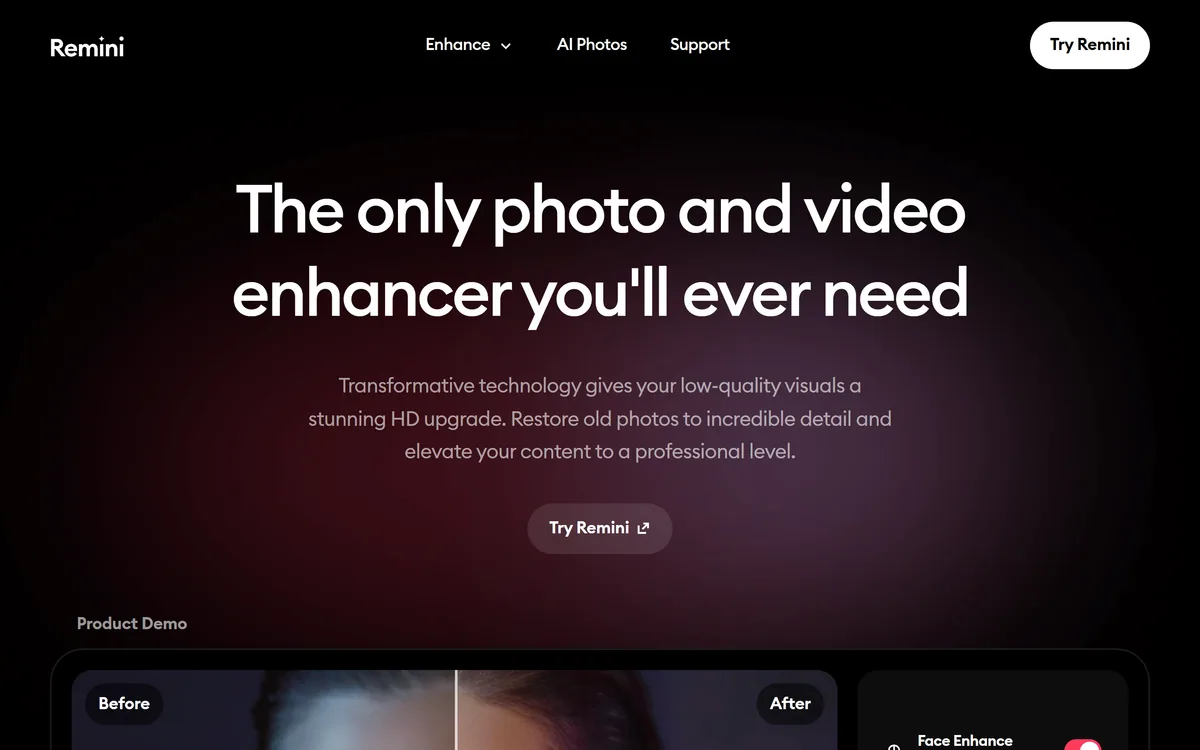
Compare this against an aggregator like Freepik, which exposes the model list deliberately. That is right for designers, whose needs vary by job and who benefit from choosing. It is wrong for someone who wants a LinkedIn photo.
Routing behind the scenes also means the studio can swap models as they improve without the user learning anything new. A better model ships, output quality rises, nobody is asked to migrate. That is a genuine advantage of the abstraction.
The trade-off is control. If you know that a specific model handles your particular case well, you cannot ask for it, and when output disappoints you have no lever beyond regenerating.
The honest read is that this is packaging rather than technology — the models belong to other people. But packaging is a real product, and doing it for a non-technical audience is harder than it looks.
Somebody buying a LinkedIn headshot does not want to compare diffusion models. Every choice you put between them and the photo is friction, not power.
Two Hundred Style Packs Is A Curation Claim
The pack count is the headline and it is worth understanding what a pack actually is, because it explains the value more precisely than the number does.
A style pack is a prepared combination of prompt, model, lighting, wardrobe and setting that reliably produces a particular look. It exists because writing that prompt yourself takes expertise most users do not have and do not want to acquire.
So the real claim is not two hundred features. It is that somebody has already done two hundred rounds of prompt engineering, and you get the result of that work by clicking rather than by learning.
The specific inclusions worth noting are the culturally inclusive ones — hijab-respectful headshots and diverse ethnic representations are called out explicitly. That matters because generated portraiture has a well-documented tendency to default toward narrow representations, and building packs deliberately around that is a considered choice rather than a marketing line.
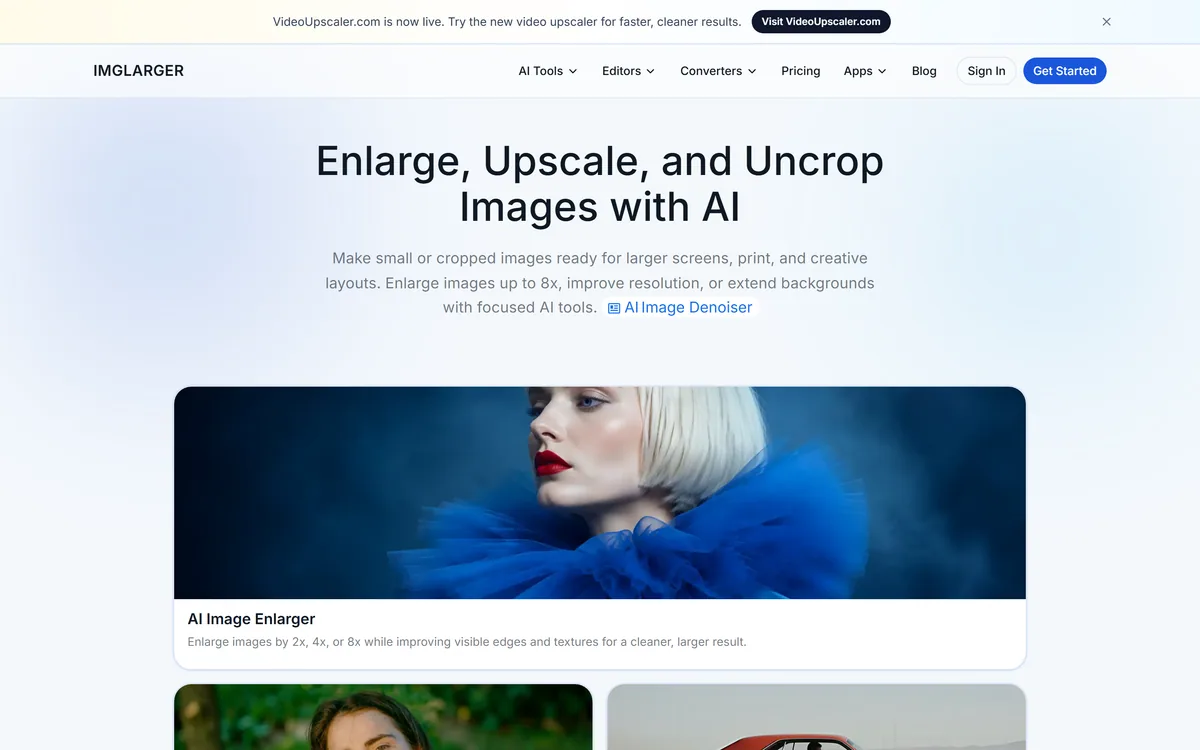
Editing-first tools such as PhotoRoom work on photographs you already have rather than generating new ones. The role-specific packs follow the same logic: a nurse headshot, a CEO headshot, a LinkedIn photo and a birthday shoot need different framing, wardrobe and lighting, and encoding that removes the guesswork.
The limit is the same as with any preset library. You get the looks somebody anticipated. If your requirement is unusual, a pack-based tool has no answer and a promptable platform would.
The Team Size Is Worth Knowing About
GoStudio publishes something most vendors would hide: it is a five-person team in Bangalore, founded by an indie creator. That transparency is unusual and it cuts both ways.
The positive reading is genuine. Small teams ship quickly, respond to individual users, and a 24-hour support response commitment from five people is more likely to be honoured than the same promise from a large company's ticket queue. The founder-led framing tends to mean someone actually reads complaints.
The cautious reading is equally real and worth stating plainly. Five people means limited capacity for support at scale, limited security engineering, and genuine key-person risk. If your work depends on a tool continuing to exist, that is a different bet from depending on a funded company.
For a credit-based product with no subscription lock-in, that risk is manageable — you are not committing to an annual contract or migrating a workflow. Buy credits you intend to use soon rather than stockpiling.
The 50% repeat-customer figure the company cites is self-reported and unverifiable, though repeat purchase on a non-subscription product is at least a meaningful thing to be measuring — people coming back when nothing obliges them to is a genuine signal, if the number is accurate.
There is no independent review presence cited, which for a consumer product is the gap most worth noticing.
- Use the free starting credits before buying anything — output quality is immediately visible.
- Test a pack close to what you actually need rather than the most impressive-looking one.
- Check the output at full resolution, not in the gallery grid.
- Ask what happens to uploaded facial images and trained models before uploading many.
- Buy credits you intend to use soon rather than stockpiling against a small team's continuity.
Credits That Do Not Expire
This site does not publish plan prices. GoStudio's structure has two features that genuinely favour the buyer and are worth setting out.
There are one-time credit packs with no monthly commitment and monthly subscriptions at Lite, Pro and Max levels. New accounts get a free starting credit allowance with no card required, there is a money-back guarantee with a short window, and — the important one — credits do not expire.
Non-expiring credits matter more than they sound. Most credit systems in this category reset monthly, which means unused capacity is lost and you are effectively on a subscription whether you use it or not. Credits that persist convert the purchase into something you own rather than something that decays.
That fits the actual use pattern too. Nobody needs headshots every month. They need them when they change jobs, refresh a profile or launch something — which is bursty, unpredictable, and badly served by a recurring charge.
The one-time pack route means you can buy once, use it across a year, and never hold a subscription. For an occasional user that is straightforwardly better than every subscription-only competitor.
Two things to confirm: what video generation costs against the same balance, since video is far more expensive to compute than images, and whether subscription credits behave the same way as purchased ones.
The Silence On Data Handling
This is the gap that matters most, and it is worth being direct about rather than glossing.
GoStudio generates headshots from uploaded selfies, which means users are supplying photographs of their own faces and the platform is building a model from them. That is the most sensitive category of input a consumer product can take.
The site states the product is safe to use without setting out what that means — no detail on retention, no stated deletion policy, no encryption specifics, and no certification. Competitors in the same category publish considerably more: Aragon states SOC 2 Type II, AES-256 encryption and deletion on request.
That absence is not evidence of a problem. It is a five-person team that has not written a security page, which is entirely normal at that scale. But for a buyer it means the questions are unanswered rather than answered badly, and they are the right questions to ask before uploading twenty photographs of yourself.
The specific things worth asking: how long uploaded images are retained, whether the trained model of your face is deleted when your account is, whether images are used to improve models, and where processing happens.
Biometric data carries distinct consent and retention obligations in several jurisdictions, and those apply to the platform regardless of what its website says. If you are procuring this for a team rather than yourself, that is a conversation to have first.
- No stated retention period for uploaded facial images
- No published deletion policy for images or trained face models
- No encryption detail or security certification cited
- No statement on whether uploads improve models
- Competitors at similar price points publish considerably more on all of this
| Category | AI photo and video studio, headshots and editing |
|---|
| Team | Five-person team based in Bangalore, founded by indie creator Kanika Bhatt |
|---|
| Photo packs | More than 200 style packs across corporate, personal branding, lifestyle, travel and themed categories |
|---|
| Inclusive options | Hijab-respectful headshots and diverse ethnic representations called out explicitly |
|---|
| Role-specific packs | Includes CEO, LinkedIn, nurse and birthday photoshoot packs |
|---|
| Editing tools | More than 38 one-click tools including background removal, object removal, upscaling, colourisation and restoration |
|---|
| Underlying models | 20+ hand-picked models including GPT Image, FLUX, Veo, Kling, Nano Banana and Seedance, with users not selecting between them |
|---|
| Video | AI video generation and editing alongside images |
|---|
| Support | 24-hour response commitment |
|---|
| Stated retention | 50% repeat customer rate, per the company |
|---|
| Not published | Data retention, deletion policy, encryption detail or security certification |
|---|
| Charging model | One-time credit packs with no monthly commitment, plus Lite, Pro and Max subscriptions; free starting credits with no card required, a short money-back window, and credits that do not expire. No prices published here |
|---|
What GoStudio Bundles
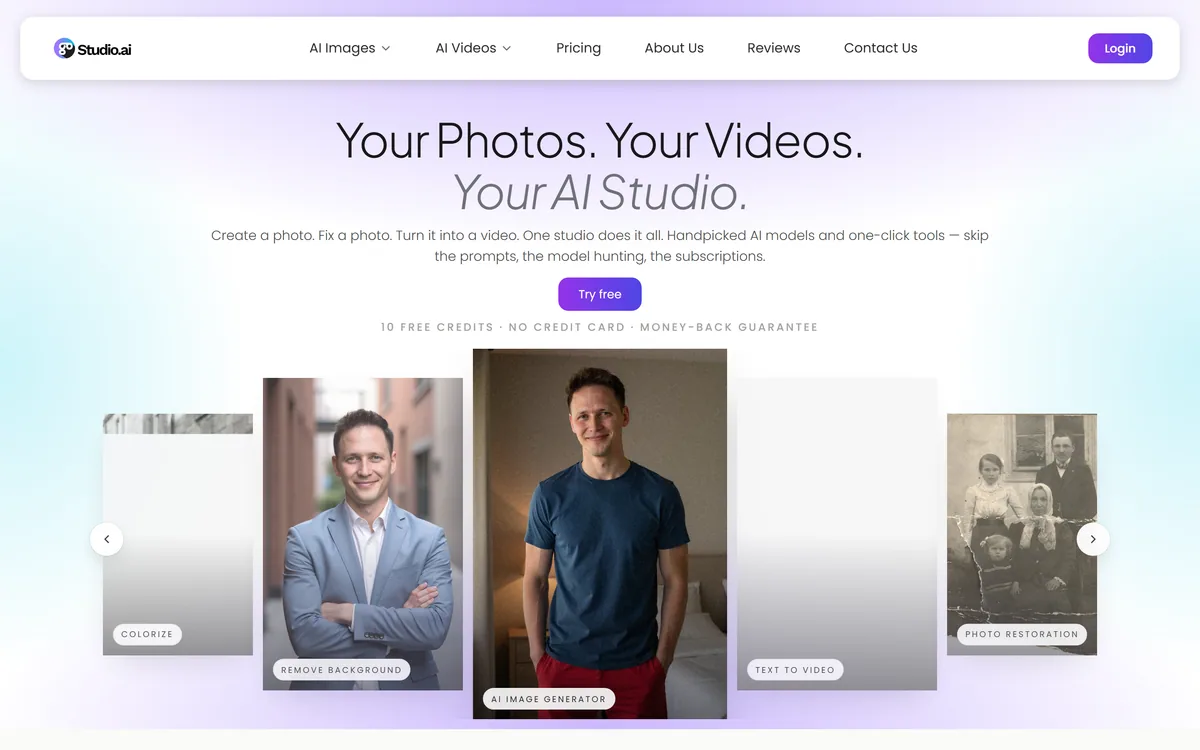
- GoStudio is an AI photo and video studio combining headshot generation, personal branding packs, image and video creation, and one-click editing tools in a single credit balance.
- More than 200 photo style packs across corporate, personal branding, lifestyle, travel and themed categories, including hijab-respectful and diverse ethnic options.
- Over 38 one-click tools — background removal, object removal, upscaling, colourisation, restoration and more.
- Twenty-plus models run underneath, including GPT Image, FLUX, Veo, Kling, Nano Banana and Seedance, with users never selecting between them.
- Credits do not expire, with a free starting allowance, no card required, and one-time packs alongside subscriptions.