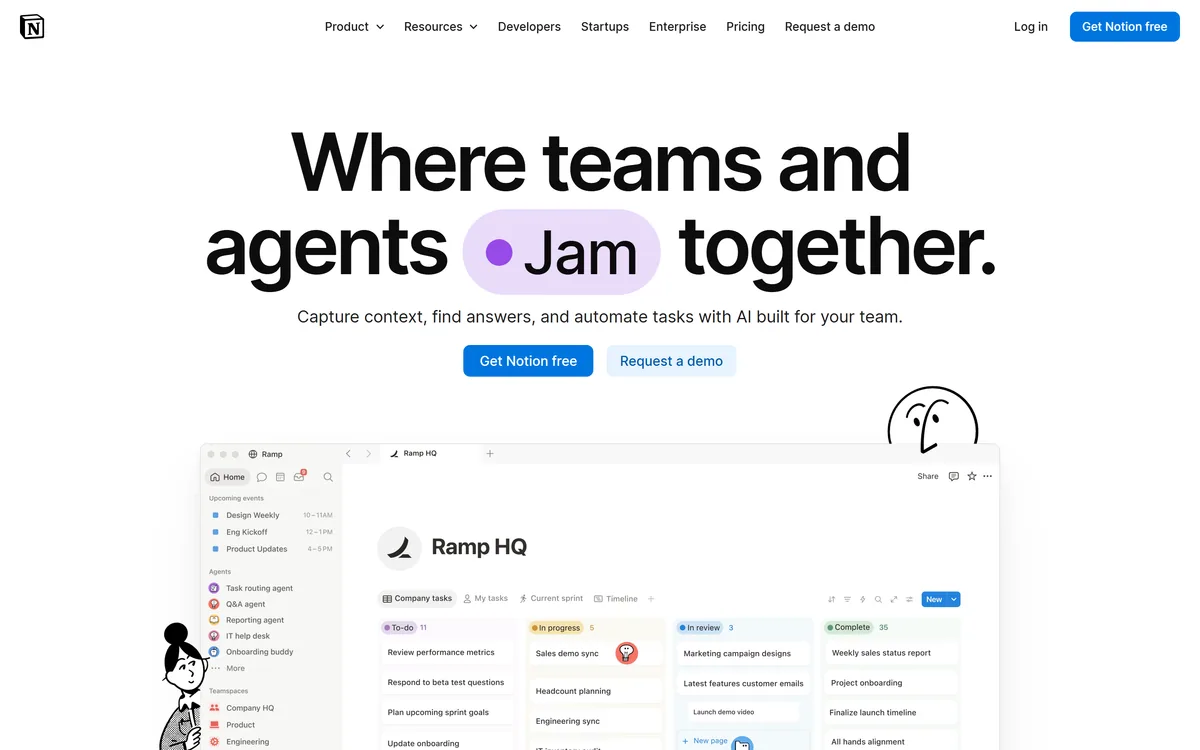

Notion AI is the assistant built into Notion — writing and editing in docs, agents that run recurring work like triage and reporting, AI Meeting Notes, and Enterprise Search across connected tools such as Slack, GitHub, Gmail, and Google Drive.
Productivity & Automation Review
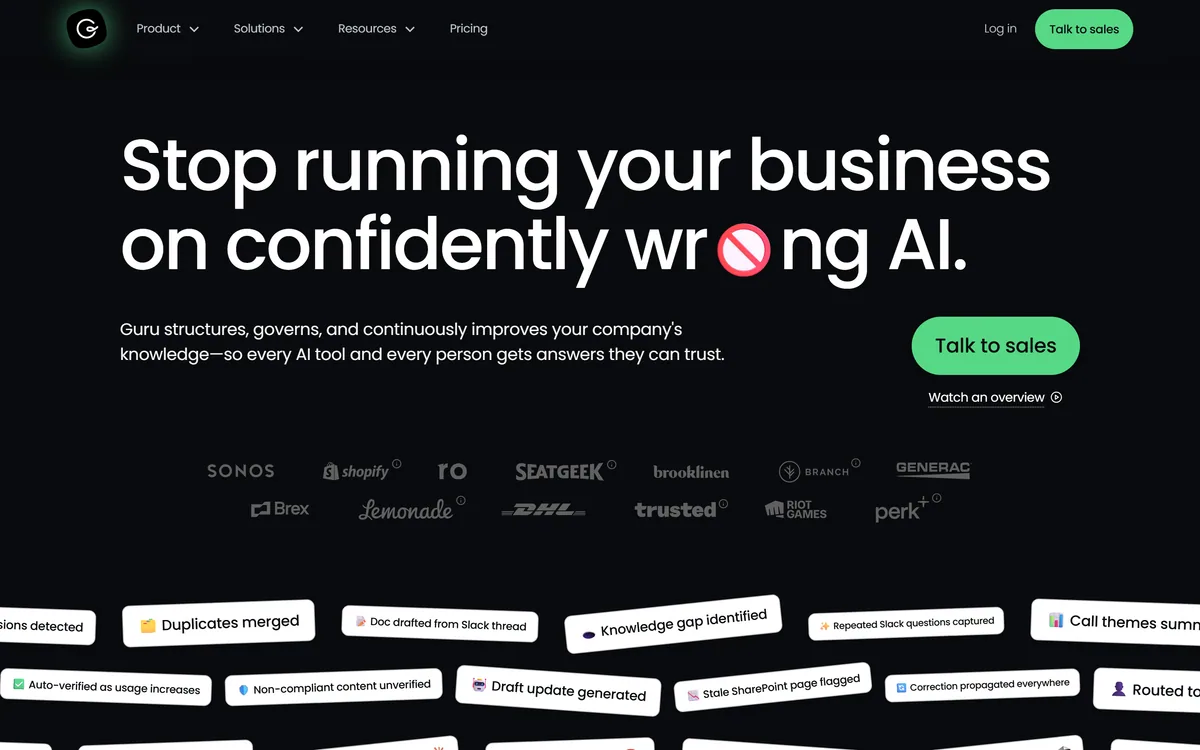
Guru is a company knowledge platform repositioned as a 'governed knowledge layer for enterprise AI': verified knowledge cards, enterprise search and an AI assistant with permission controls, so employees and AI get trusted answers. It suits mid-market and enterprise teams wanting a governed source of truth, with upkeep and connected-data caveats.
Very good
Guru earns 4.0 as a mature, governance-focused knowledge layer, now explicitly positioned as the trusted knowledge source for enterprise AI. Its verified cards with owners and verification cycles, plus permission-aware search and an assistant in Slack and Microsoft, directly address what makes AI answers trustworthy: accurate, current, accountable knowledge. The caveats are honest: a verified knowledge base takes real upkeep, answers still reflect your connected data, and its full value is enterprise-scale. For organisations that will invest in maintaining a governed source of truth, it's a strong choice; small teams wanting a light wiki should look elsewhere. AInexfinder Editor Score: 4.0/5.
Best for: Governed enterprise knowledge; Trusted AI answers
The visit link goes to getguru.com, the official site. Paid placements on AInexfinder are always labelled. How we make money
AI is only as trustworthy as the knowledge behind it, and most company knowledge is scattered, stale and unverified. Guru's answer is a governed knowledge layer: a verified source of truth that both employees and AI can rely on.
It combines verified knowledge cards, enterprise search and an AI assistant, with permission controls so people see only what they should. It competes with knowledge and assistant tools like CustomGPT.ai, on governance.
This review covers how Guru serves trusted answers, which organisations it suits, how it's packaged, and the upkeep and data realities to weigh first.
Guru's core idea is a single, trusted source of company knowledge that AI and people both draw from. Rather than letting an assistant answer from whatever it scrapes, Guru serves verified knowledge, so answers are accurate and current by design.
Verification is the mechanism. Knowledge lives in 'cards' with owners and verification cycles, so facts don't quietly go stale, which is the difference between a knowledge base people trust and one they ignore.
On top sits enterprise search and an AI assistant, permission-aware so people only see what they're allowed to, and integrated into the work tools (Slack, Microsoft) where employees already are.
The honest framing is that Guru is a mature, governance-focused knowledge platform, now explicitly positioned as the knowledge layer for enterprise AI, a pivot from its team-wiki roots. The caveats: a verified knowledge base takes real upkeep (someone has to own and verify cards); AI-assistant answers still reflect your connected data and can err; it offers a per-seat subscription plus sales-led Enterprise; and its claims are vendor-stated.
Guru is a governance-focused knowledge layer; a verified knowledge base takes upkeep, and answers reflect your data.
Guru pairs verified knowledge with permission-aware search and an assistant.
Knowledge lives in verified cards with owners and verification cycles, and an AI assistant plus search serve those answers permission-aware, so people trust what they get and see only what they should.
A citation-backed agent like eesel AI connects to your tools to answer; Guru's angle is a verified source of truth with governance, which suits organisations that need answers to be accountable, not just plausible.
It integrates into Slack, Microsoft and other work tools, so verified knowledge reaches employees where they already work rather than in a separate silo.
A workflow-assistant tool like Cassidy builds assistants for smaller teams; Guru operates as an enterprise knowledge layer, which is more structure than a small team needs but valuable at scale.
Guru suits mid-market and enterprise organisations that need a governed, trusted source of knowledge, especially those feeding enterprise AI and wanting answers to be verified and permission-aware.
It suits teams willing to own and maintain their knowledge (assign card owners, run verification), and that value governance and permissions over a quick, ungoverned bot.
It suits less well small teams wanting a lightweight wiki (the governance may be overkill), organisations unwilling to invest in knowledge upkeep (unverified cards defeat the point), and anyone wanting a fully free, ungoverned knowledge base.
A fair way to place it: if you want AI and employees drawing on a verified, governed source of truth and you'll invest in maintaining it, Guru is purpose-built; if you want a cheap wiki or won't keep knowledge verified, a lighter tool fits better, and in all cases the assistant's answers are only as good as the knowledge you maintain. The honest way to judge Guru is to ask whether your organisation will actually keep the knowledge verified, because a governed layer that nobody maintains is just another stale wiki with a higher bill and a more confident-sounding assistant on top.
Guru offers a per-seat subscription plus sales-led Enterprise; its site has a pricing page and leads with a 'Talk to sales' path. We do not publish prices, which change; check the site.
The value question is trust versus upkeep cost: a verified knowledge layer that makes AI and employees reliably right can be worth a lot, but it requires ongoing ownership and verification, which is a real cost alongside the licence.
The sensible approach is to pilot Guru with a few teams, set up verification on genuinely important knowledge, judge whether the assistant's answers are trustworthy and permission-aware, and weigh the upkeep plus licence against the value.
Because a knowledge layer lives or dies on upkeep, pilot Guru with verification on real knowledge.
| What it is | A governed knowledge layer for enterprise AI |
|---|---|
| Company | Guru, Philadelphia, USA |
| Core | Verified knowledge cards, search and an AI assistant |
| Trust | Knowledge verification keeps answers current |
| Permissions | Permission-aware search and answers |
| Pivot | Repositioned from team-wiki to enterprise AI knowledge layer |
| Integrations | Slack, Microsoft, and other work tools |
| Access | A per-seat subscription plus sales-led Enterprise |
Verified knowledge cards
Enterprise search
AI assistant
Permission controls
Verification cycles
Work-tool integrations
Knowledge ownership
Governance
The useful comparison is with other knowledge and assistant tools.
| Tool | Tool | Approach | Best for |
|---|---|---|---|
| Guru | Governed knowledge layer | Verified, permission-aware | Mid-market and enterprise |
| CustomGPT.ai | Citation-backed RAG agent | Defined content set | Governed knowledge agents |
| eesel AI | Multi-tool assistant | Lives in your tools | Support teams |
| Cassidy | AI assistants/workflows | Smaller-team automation | SMB AI workflows |
Last checked . Read from getguru.com during this check, with the screenshot above captured at the same time. Guru has repositioned from a team-wiki/knowledge-management product to a 'governed knowledge layer for enterprise AI'; the current site leads with that framing, which is the key context for evaluating it today.
A verified knowledge base takes real upkeep, someone must own and verify cards, or it goes stale and defeats the point. AI-assistant answers still reflect your connected data and can err. Guru has repositioned from a team wiki to an enterprise AI knowledge layer; pricing spans a per-seat subscription and sales-led Enterprise, and claims are vendor-stated.
A citation-backed agent, a multi-tool assistant and an SMB workflow tool to weigh beside Guru.
AInexfinder does not list plan prices or billing details. For current pricing, plans, and trials, visit the official Guru website.
Visit official website for pricingVendor pricing, credits, and billing policies change over time. Always confirm on the official site before you buy.
Guru earns an AInexfinder Editor Score of 4.0/5 (very good). Best for: Governed enterprise knowledge; Trusted AI answers; Permission-aware search.
Visit GuruLog in to write a review.
No reviews yet. Be the first to share your experience with Guru.
Assigned reviewer
Daniel ReedSenior AI Tools Reviewer
Daniel leads AInexfinder's tool reviews. He researches each tool from its own pricing, documentation and policies, checks its claims against independent sources, and writes up what it does well, where it falls short and who it genuinely suits.
Daniel and the AInexfinder editorial team research Guru from its own website, pricing, documentation and policies, checked against independent sources. This review is research-based: unless its method note says otherwise, we have not bought a plan or run hands-on tests. The Editor Score is our editorial judgement, and payment never changes it.
Similar Tools
Notion AI is the assistant built into Notion — writing and editing in docs, agents that run recurring work like triage and reporting, AI Meeting Notes, and Enterprise Search across connected tools such as Slack, GitHub, Gmail, and Google Drive.
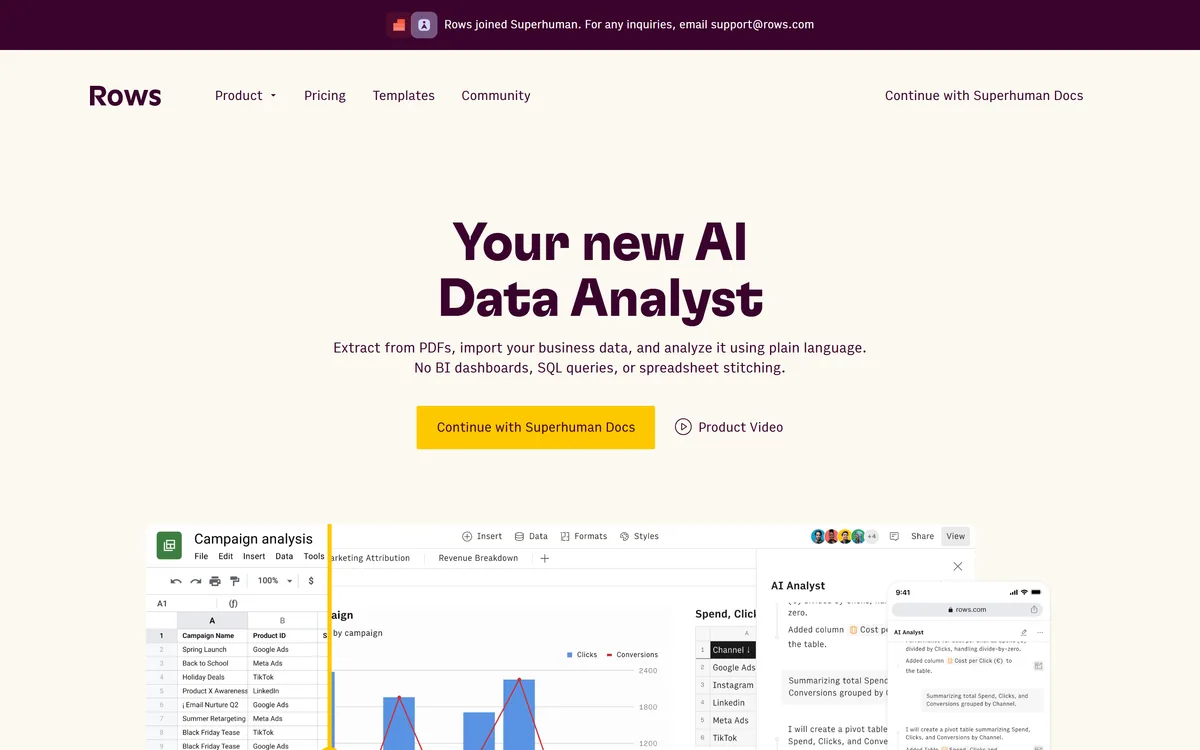
AI spreadsheet that analyzes data in plain language Category: Productivity & Automation.
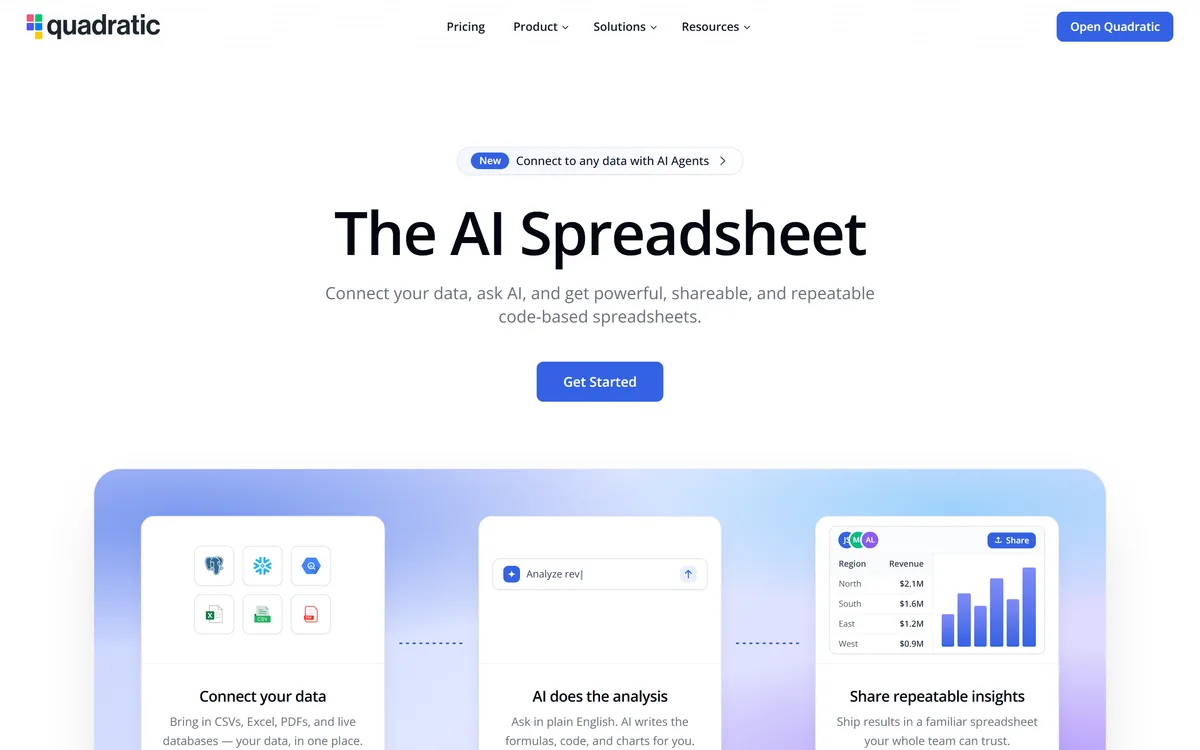
Quadratic is an AI spreadsheet that connects CSVs, Excel files, PDFs and live databases, then writes formulas, Python code and charts from plain-English questions. It positions readable code against unreadable nested formulas, and states 250,000+ users at companies and universities.

Document360 is knowledge base and documentation software built around Eddy AI, combining conversational search that cites its sources, an AI chatbot over scattered documents and tickets, a writing agent inside the editor, and an MCP server that exposes the knowledge base to ChatGPT, Claude and Copilot.
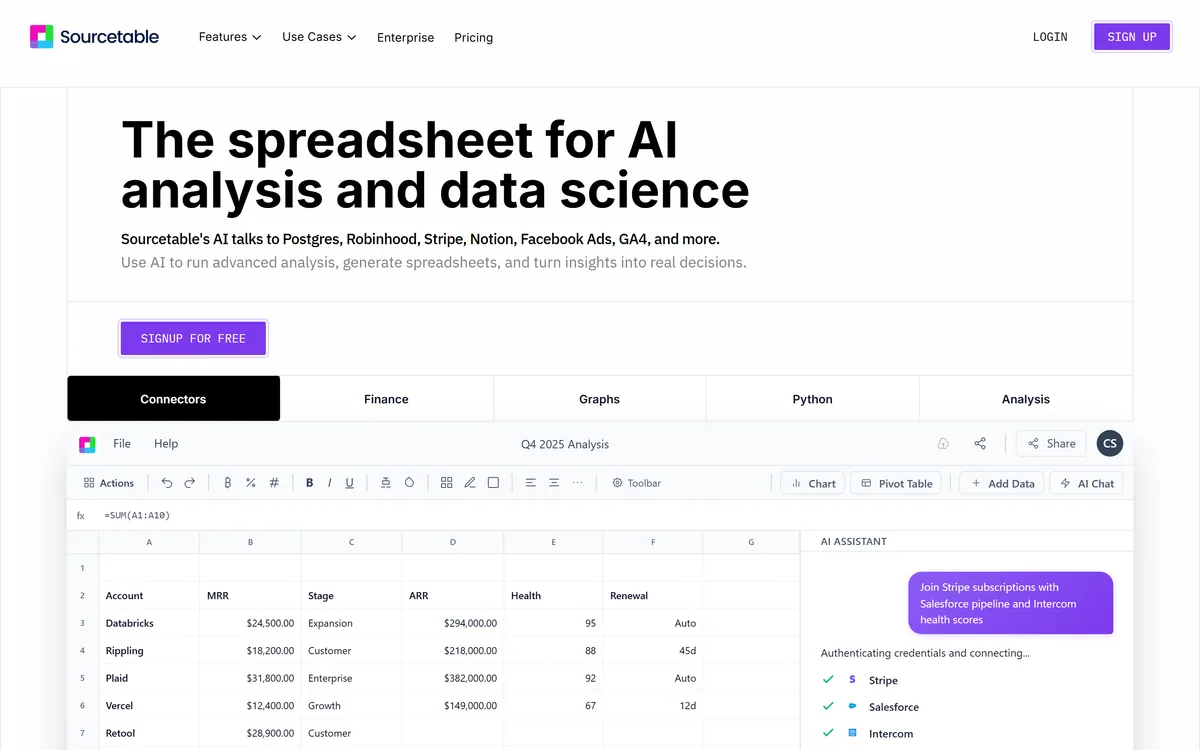
Sourcetable is an AI spreadsheet and data-analyst tool that connects to databases and apps, runs analysis in plain English, generates charts and spreadsheets, and taps Python and research tools without code. It suits analysts and data-curious teams, with enterprise security; AI output still needs checking.
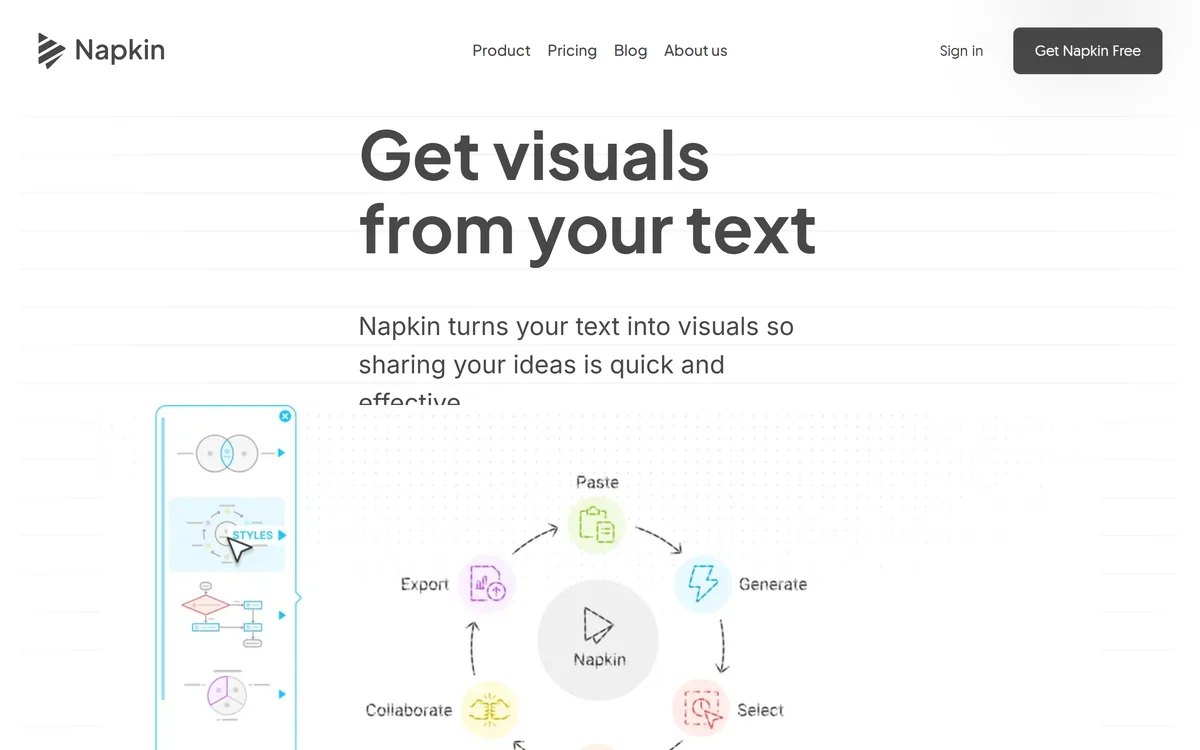
Napkin AI is a visual communication platform in two parts: Napkin Visuals converts text into diagrams and graphics, and Napkin Slides generates full presentation decks. Output exports to PPT, PNG, PDF and SVG, with 60+ content languages and collaborative editing.
Related Pages