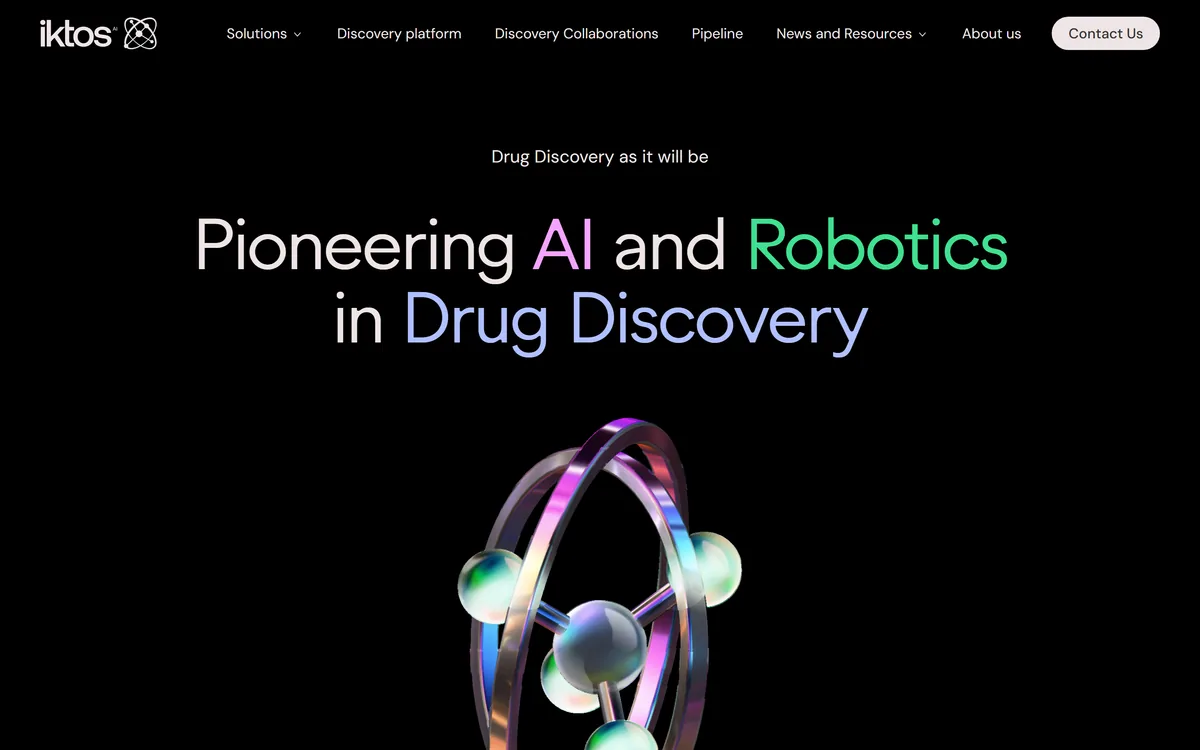
Early drug discovery is slow because designing a promising molecule, working out how to synthesise it, and testing it are three separate, painstaking jobs. Iktos tries to join them into one accelerating loop.
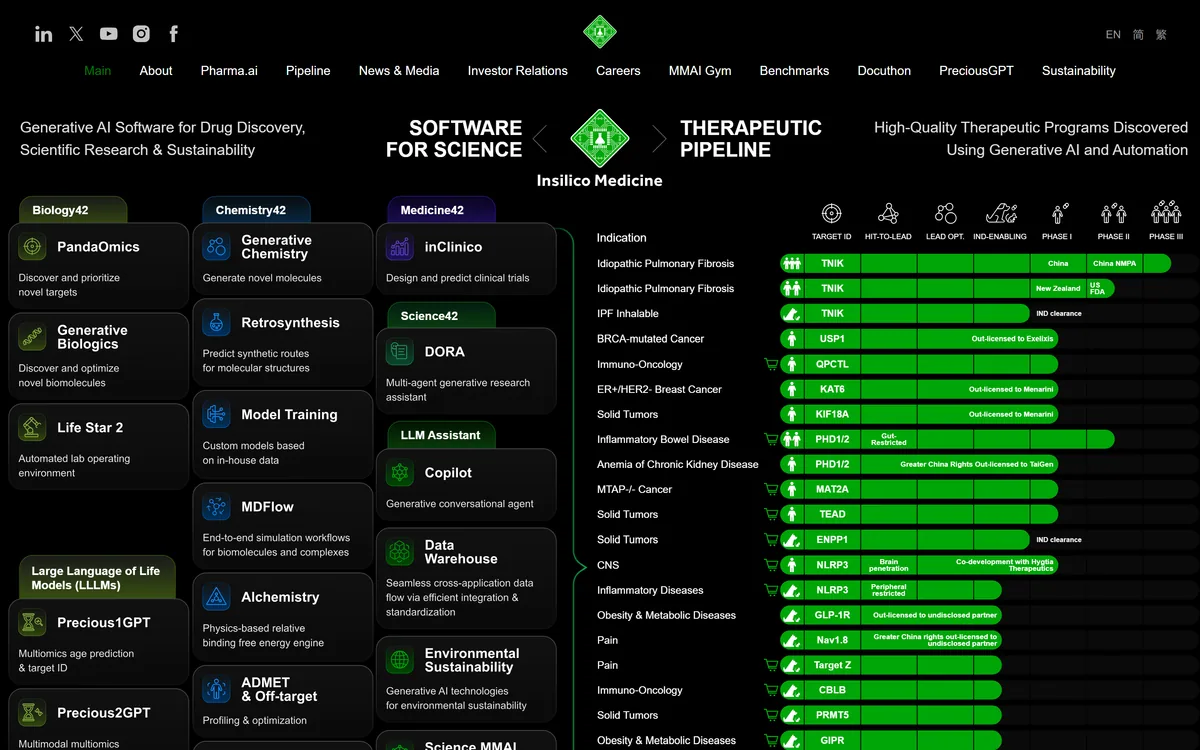
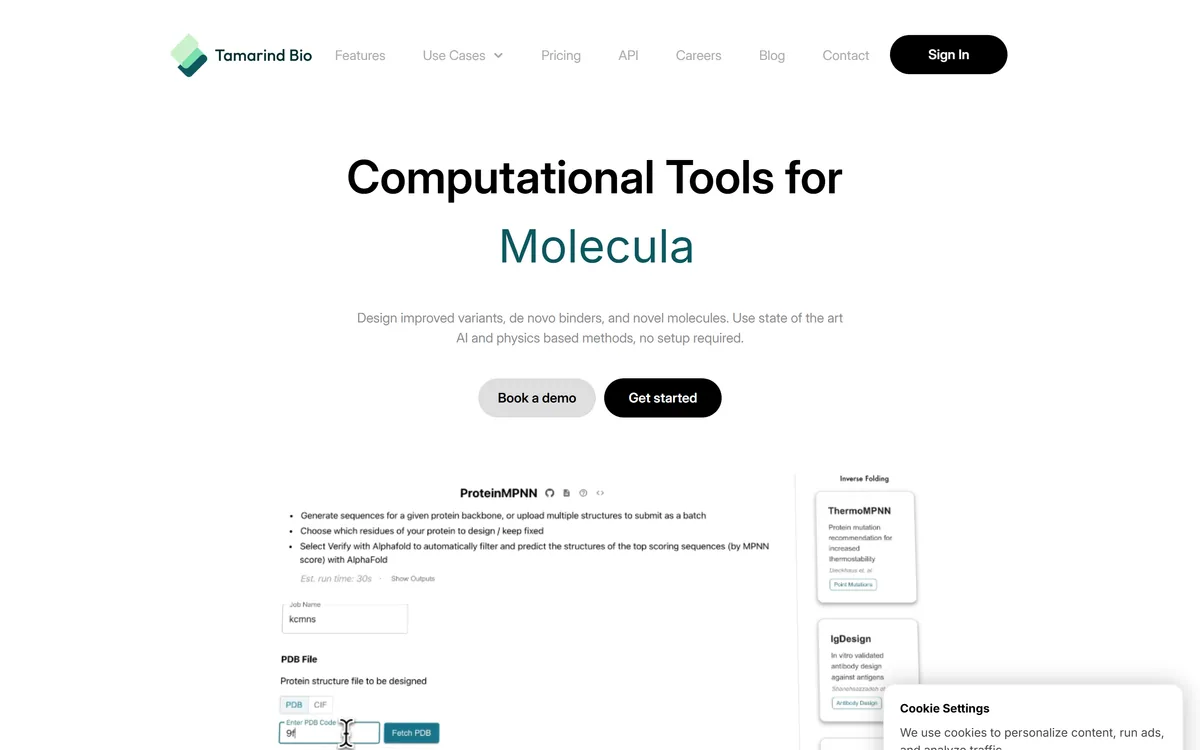
It is an AI-and-robotics company whose Makya platform generates drug-like molecules, whose Spaya platform plans their synthesis routes, and whose robotics automate the make-and-test steps, feeding results back to the design stage. It sits among deep-tech discovery platforms like Insilico Medicine and protein-design tooling such as Tamarind Bio.
This review covers how Iktos aims to shorten the discovery cycle, who it is built for, how it is sold, and where it is more than a team needs, treating it as a research platform rather than a source of finished drugs.
Iktos, The Science Brief
- Iktos is an AI-and-robotics drug-discovery company: generative molecule design plus AI retrosynthesis plus automated synthesis and testing.
- Makya designs, Spaya plans routes: its generative platform proposes molecules; its retrosynthesis platform works out how to make them.
- Robotics closes the loop: automated synthesis and biological testing feed results back to improve the next design.
- It is a research platform, not a drug: it accelerates discovery; it does not deliver approved therapeutics.
Generative AI And Robotics Pointed At Drug Design
Iktos's distinctive stance is that it does not stop at software. Where many AI discovery tools generate candidate molecules and hand them off, Iktos couples generative design with physical robotics that synthesise and test, aiming for a closed design-make-test-analyse loop.
That integration is the interesting part, because the bottleneck in discovery is often the gap between a computer's suggestion and a wet-lab result. Automating more of that cycle is a genuine attempt to compress the timeline, which the company frames as shortening the discovery phase substantially.
It is, importantly, a research platform and a discovery partner, not a maker of approved medicines. We frame it strictly as tooling for scientists; any claim about speed or outcomes is Iktos's own, and real-world drug approval depends on a long regulated process far beyond any software.
The bottleneck in discovery is often the gap between a computer's suggestion and a wet-lab result. Iktos couples generative design with robotics to automate more of that cycle.
How Does Iktos Shorten The Discovery Cycle?
The platform is really several products working as one pipeline.
Makya Design And Spaya Retrosynthesis
Makya is the generative-AI platform for de novo drug design, with a focus on synthetic accessibility, multi-parameter optimization and 3D constraints, so the molecules it proposes are ones chemists could plausibly make. Spaya then plans real retrosynthetic routes to synthesise them.
Pairing design with synthesis planning matters, because a brilliant molecule nobody can make is useless. An evidence-and-research assistant such as Eve serves a different corner of the science stack, but the shared theme is grounding AI output in what is actually actionable.
Robotics And The DMTA Loop
Iktos Robotics automates synthesis, purification, analysis and biological testing, including in-cellulo imaging for targets like protein-protein interactions and molecular glues, and feeds the data back to Makya to refine the next round of designs.
This design-make-test-analyse (DMTA) loop running with robotics is what the company means by moving toward "autonomous labs". The Iktos Engine exposes APIs for agentic workflows and computational-chemistry pipelines, so teams can wire parts of this into their own systems.
Who Iktos Is Built For In Pharma
Iktos is built for medicinal and computational chemistry teams at pharma, biotech and academic institutions, groups running real discovery programmes who can feed and act on its loop.
It suits organisations that want either the software platforms (Makya, Spaya) to augment their own chemists, or a deeper discovery collaboration where Iktos's pipeline and robotics are brought to bear on a target. The company cites a substantial number of collaborations and an in-house pipeline across named therapeutic areas.
It is not a tool for anyone outside that world; there is no consumer or general-developer use. For teams without the scientific capacity to use and validate its output, the platform's power is simply not addressable.
How Iktos Is Sold To Research Teams
Iktos is an enterprise, relationship-led business: Makya is offered as a SaaS platform, alongside discovery collaborations and partnerships, and engagement runs through demos and direct contact rather than public pricing. We do not publish prices; there are none listed.
For a research organisation, the value question is whether the platform meaningfully compresses the design-make-test cycle or improves hit quality relative to its cost and the effort of integration, which only a scoped pilot or collaboration can answer.
Because the stakes and spend in drug discovery are high, this is a procurement and scientific-evaluation decision, not a sign-up, and should involve the team's own chemists from the start.
A Measured Way To Evaluate Iktos
Because it is a scientific platform, evaluate it on a real target with your own chemists in the loop.
- Define a real discovery problem and the criteria a useful candidate must meet.
- Have Makya propose molecules and judge their synthetic accessibility with your chemists.
- Use Spaya to check whether the proposed synthesis routes are realistic for your lab.
- If relevant, scope a robotics or collaboration engagement on a bounded target.
- Validate a subset of outputs experimentally rather than trusting the model's ranking.
- Pass/fail: Iktos is worth it if it improves hit quality or speed on your own programme.
- Treat timeline and outcome claims as the vendor's; drug approval is a long regulated process beyond any tool.
Iktos Drug-Discovery Terms
- De novo design
- Generating novel molecules from scratch to meet a target profile, rather than screening existing libraries.
- Retrosynthesis
- Working backward from a target molecule to find a practical sequence of reactions to synthesise it; Spaya's job.
- DMTA loop
- The design-make-test-analyse cycle of drug discovery; Iktos automates more of it with robotics.
- Synthetic accessibility
- How feasible it is to actually make a proposed molecule; a design constraint Makya optimises for.
Iktos Drug-Discovery Facts
| What it is | An AI-and-robotics drug-discovery company |
|---|
| Makya | Generative AI for de novo molecule design |
|---|
| Spaya | AI-driven retrosynthesis route planning |
|---|
| Robotics | Automated synthesis, analysis and testing |
|---|
| Loop | Design-make-test-analyse, toward autonomous labs |
|---|
| Iktos Engine | APIs for agentic comp-chem workflows |
|---|
| Audience | Pharma, biotech and academic research teams |
|---|
| Model | Enterprise SaaS plus discovery collaborations |
|---|