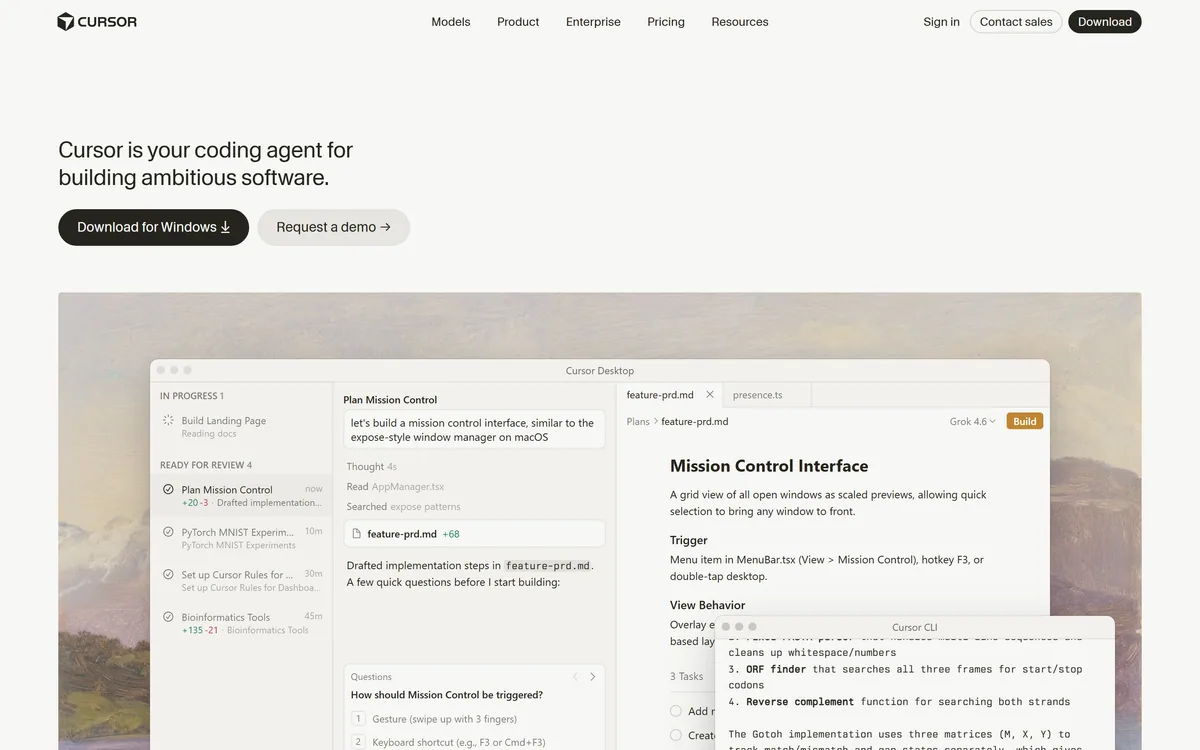

Cursor is an AI-first code editor and agent platform from Anysphere — now a SpaceX subsidiary — that plans, writes, tests, and reviews code across your repository from the desktop editor, a CLI, the web, and Slack.
Coding & Development Review
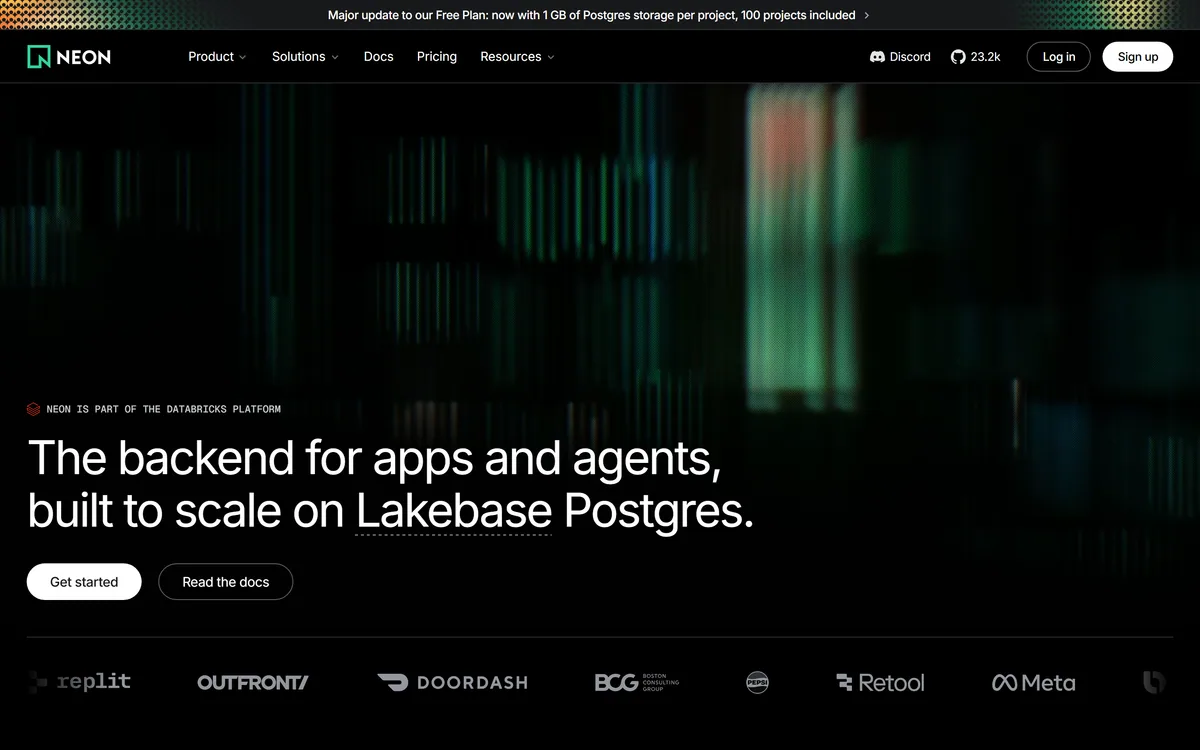
Neon is a serverless Postgres platform, now part of Databricks, with storage-compute separation, autoscaling, database branching and instant restore, plus built-in auth, S3-compatible object storage, functions and an AI gateway, aimed at app builders and app-generating agents.
Very good
Neon earns 4.2 as serverless Postgres with a genuinely better development workflow: autoscaling with scale to zero, instant copy-on-write branching for previews and tests, and instant restore after mistakes, now wrapped in a backend platform with auth, storage, functions and an AI gateway. It suits Postgres app builders, bursty workloads and platforms that need many databases. The trade-offs are serverless ones, cold starts and usage billing that heavy steady workloads should model, plus vendor direction now tied to Databricks, but for most modern app and agent backends it is an excellent choice. AInexfinder Editor Score: 4.2/5.
Best for: Postgres-based apps; Preview-per-branch workflows
The visit link goes to neon.com, the official site. Paid placements on AInexfinder are always labelled. How we make money
Postgres is the default database for a huge share of modern apps, but running it well, sizing instances, managing environments, recovering from mistakes, is real operational work. Neon's pitch is serverless Postgres that removes most of that.
It separates storage from compute so databases autoscale, lets you branch a full database the way you branch code, and restores instantly after mistakes, and it has grown into a backend platform with auth, storage, functions and an AI gateway. It sits in the developer-infrastructure world alongside governance tools like env0, but its job is the data layer itself.
This review covers what Neon gives app and agent builders, where it earns its place, how it prices, and when a different database is the better call.
| What it is | A serverless Postgres and backend platform |
|---|---|
| Architecture | Storage-compute separation with autoscaling |
| Branching | Instant, copy-on-write database branches |
| Recovery | Instant restore to a point in time |
| Platform | Auth, S3-compatible storage, functions, AI gateway |
| Search | Vector, keyword and hybrid search |
| Ownership | Part of the Databricks platform |
| Access | Free plan, with paid usage-based plans |
Neon's core idea is to make Postgres behave like modern cloud infrastructure: compute scales up with load and down to zero when idle, while storage lives separately and persists. For many apps, especially side projects, previews and bursty workloads, that removes the cost and effort of always-on instances.
The feature developers talk about most is branching. A Neon branch is an instant, copy-on-write copy of a database, so every pull request, preview deployment or test run can get its own realistic data without duplicating storage or waiting on a dump-and-restore. That changes how teams work with data in development.
Neon has also grown beyond a database: built-in authentication, S3-compatible object storage that branches with the project, serverless functions next to the data, and an AI gateway. And it is now part of Databricks, which brings resources and a clear enterprise direction.
The honest framing is that Neon is excellent Postgres with a genuinely better development workflow, not a magic database. It is still Postgres underneath, with Postgres's strengths and limits, and serverless behaviour such as cold starts and usage-based billing is a trade-off to understand rather than ignore.
Neon is excellent Postgres with a genuinely better development workflow, not a magic database; serverless behaviour is a trade-off to understand.
The value splits into the serverless database mechanics and the backend platform that now surrounds them.
Neon automatically sizes compute to your workload and can suspend idle databases, branches whole databases in seconds for previews and testing, and restores instantly to an earlier point when someone runs the wrong migration. Those three features address the most painful parts of operating Postgres day to day.
Branching pairs naturally with modern CI and preview environments, and with spec-driven development in tools like Kiro, where every change can be tested against realistic data before it ships.
Alongside the database, Neon offers managed authentication built on Better Auth, S3-compatible object storage, serverless functions without short timeouts running close to the data, vector and hybrid search, and an AI gateway with one API for frontier and open models. Neon positions this as infrastructure for app-generating agents and platforms that spin up isolated backends for end users.
That makes it a lighter, Postgres-native alternative to assembling a backend from separate services. A model-hosting platform like Replicate runs models; Neon is the data and backend layer an AI app or agent stores its state in.
Neon earns its place for teams building on Postgres who want preview-per-branch workflows, apps with bursty or unpredictable traffic that benefit from scale-to-zero, and platforms or agents that need to create many isolated databases cheaply and quickly.
It suits developers who would rather not manage instances, backups and environment copies, and AI app builders who want a Postgres backend with vector search, auth and storage in one place rather than stitching together several vendors.
It earns it less where a workload needs steady, very high, always-on performance with tightly predictable costs, where cold starts on suspended compute would hurt, or where an organisation is committed to another cloud's managed database. The Databricks ownership is a plus for stability but a factor for teams wary of a single vendor's direction.
Neon offers a free plan, which at the time of checking had been expanded with more storage and projects, and paid plans that bill on usage of compute and storage. We do not publish prices, which change; check the site.
The value question is whether usage-based serverless pricing beats an always-on instance for your traffic pattern: for spiky, idle-heavy or many-small-database workloads it often does, while steady heavy workloads should be modelled carefully.
Because there is a free plan, the sensible approach is to run a real project and its preview branches on Neon for a few weeks, watch compute hours and storage, and compare against what an always-on managed Postgres would cost.
Because Neon's value is workflow and cost shape, trial it on a real app, including its preview and testing loop.
Serverless Postgres
Autoscaling and scale to zero
Instant database branching
Point-in-time instant restore
Managed authentication
S3-compatible object storage
Serverless functions
Vector and hybrid search
The useful comparison is with the other common ways teams run Postgres.
| Tool | Option | Model | Best for |
|---|---|---|---|
| Neon | Serverless Postgres with branching | Autoscaling, previews, many databases | App builders and agent platforms |
| Supabase | Postgres backend-as-a-service | Database plus auth, storage, realtime | Full-stack app backends |
| Managed cloud Postgres | Always-on instances (e.g. RDS, Cloud SQL) | Steady, predictable workloads | Teams committed to one cloud |
| Self-hosted Postgres | You run and operate it | Full control, full responsibility | Teams with strong DB ops skills |
Last checked . Read from neon.com during this check, with the screenshot above captured at the same time.
Neon is Postgres underneath, with Postgres's strengths and limits; serverless behaviour (cold starts, usage billing) is a trade-off to model for your workload. Plan quotas change, so check current limits.
An IaC governance tool, a model platform and a spec-driven IDE to weigh alongside Neon.
AInexfinder does not list plan prices or billing details. For current pricing, plans, and trials, visit the official Neon website.
Visit official website for pricingVendor pricing, credits, and billing policies change over time. Always confirm on the official site before you buy.
Neon earns an AInexfinder Editor Score of 4.2/5 (very good). Best for: Postgres-based apps; Preview-per-branch workflows; Bursty traffic.
Visit NeonLog in to write a review.
No reviews yet. Be the first to share your experience with Neon.
Assigned reviewer
Daniel ReedSenior AI Tools Reviewer
Daniel leads AInexfinder's tool reviews. He researches each tool from its own pricing, documentation and policies, checks its claims against independent sources, and writes up what it does well, where it falls short and who it genuinely suits.
Daniel and the AInexfinder editorial team research Neon from its own website, pricing, documentation and policies, checked against independent sources. This review is research-based: unless its method note says otherwise, we have not bought a plan or run hands-on tests. The Editor Score is our editorial judgement, and payment never changes it.
Similar Tools
Cursor is an AI-first code editor and agent platform from Anysphere — now a SpaceX subsidiary — that plans, writes, tests, and reviews code across your repository from the desktop editor, a CLI, the web, and Slack.
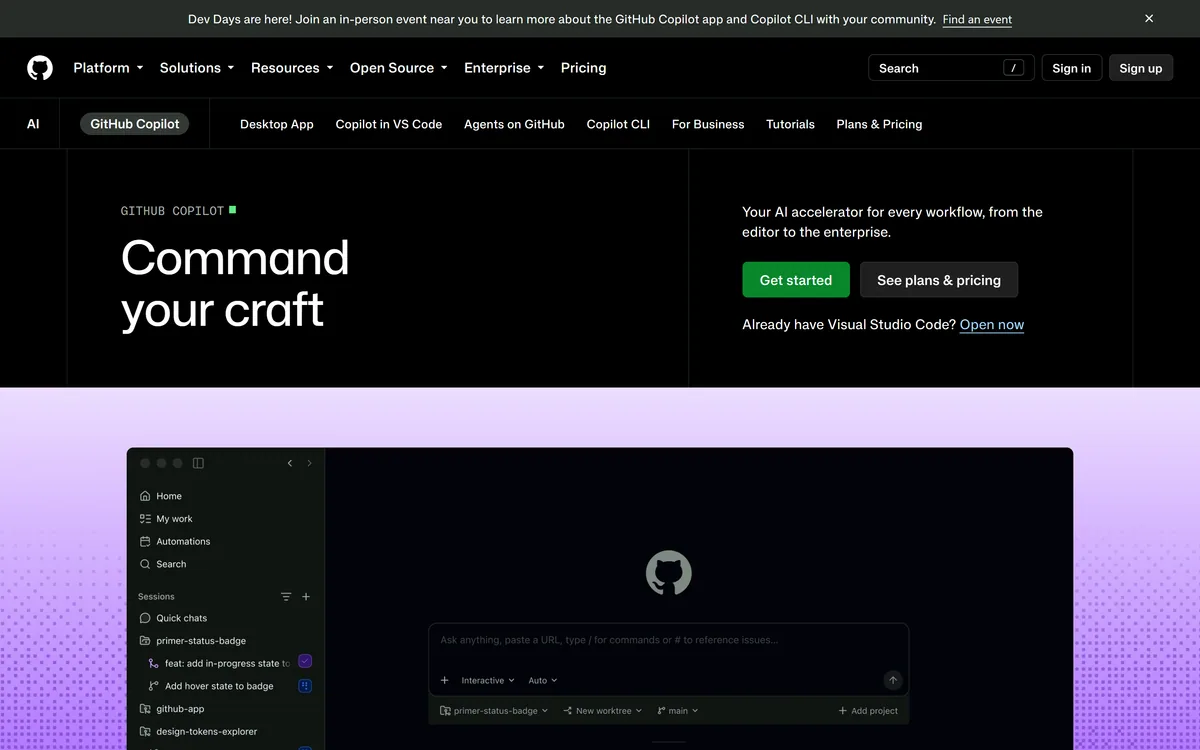

GitHub Copilot is an AI coding assistant that spans completion, chat, agent mode, automated code review, and a cloud agent that opens pull requests, working across VS Code, Visual Studio, JetBrains, Xcode, Neovim, Eclipse, the CLI, and github.com.
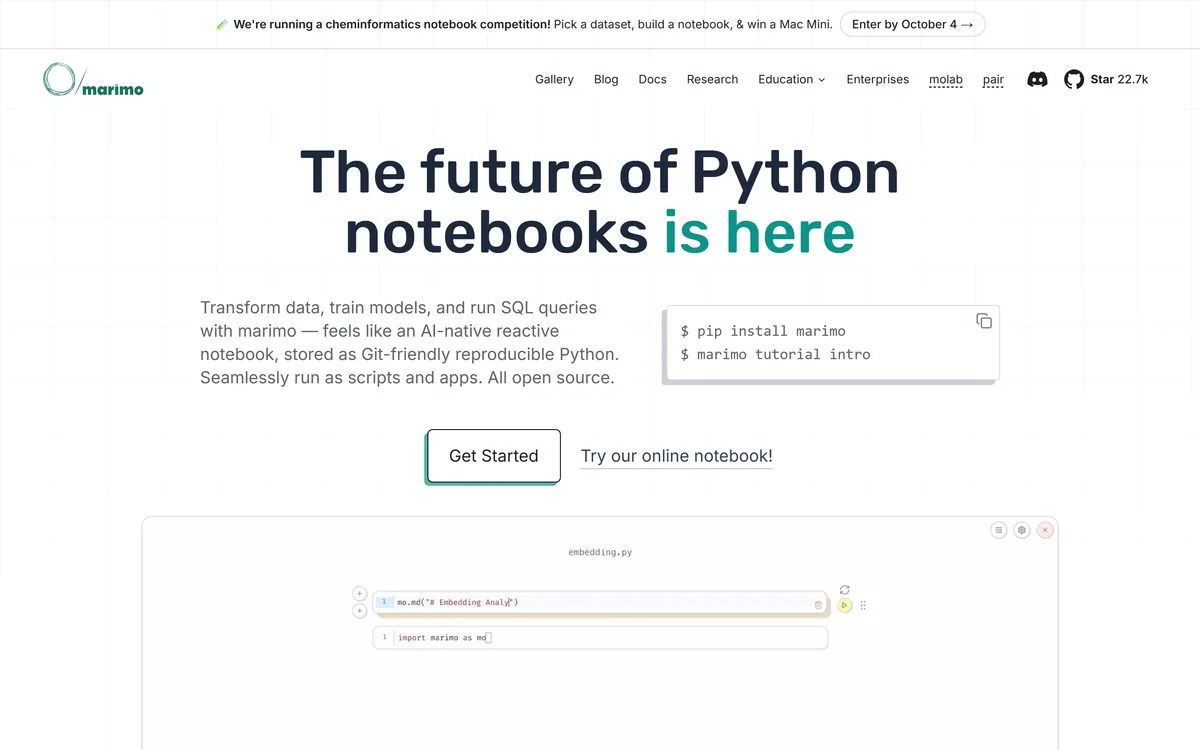
marimo is an open-source reactive Python notebook. Cells re-run automatically when their dependencies change, notebooks are stored as ordinary Python files that diff cleanly in git, and the same file runs as a script or serves as a web app. SQL cells, WASM export and AI agent pairing are built in.
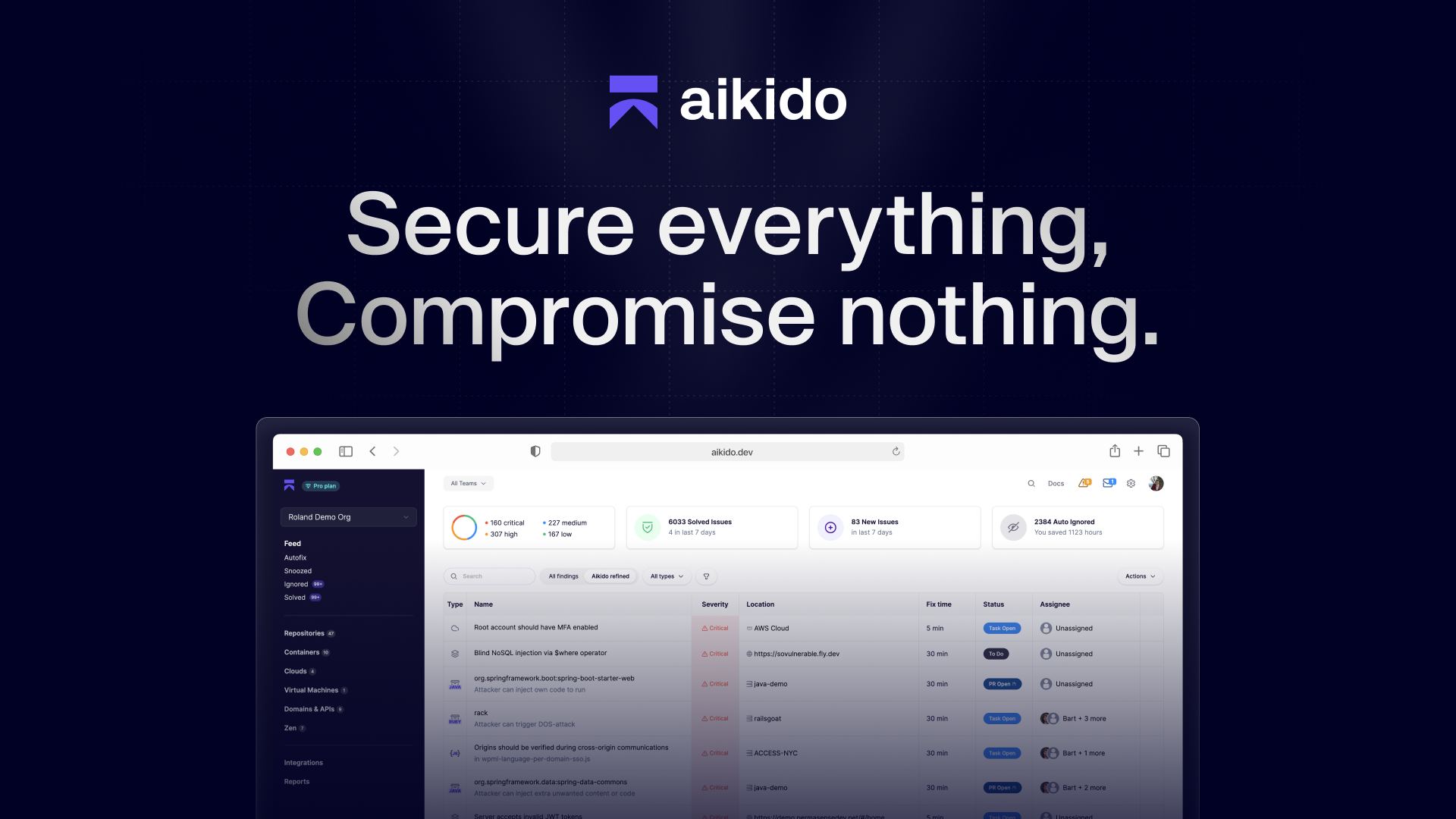
Developer-first AI security from code to runtime Category: Coding & Development.
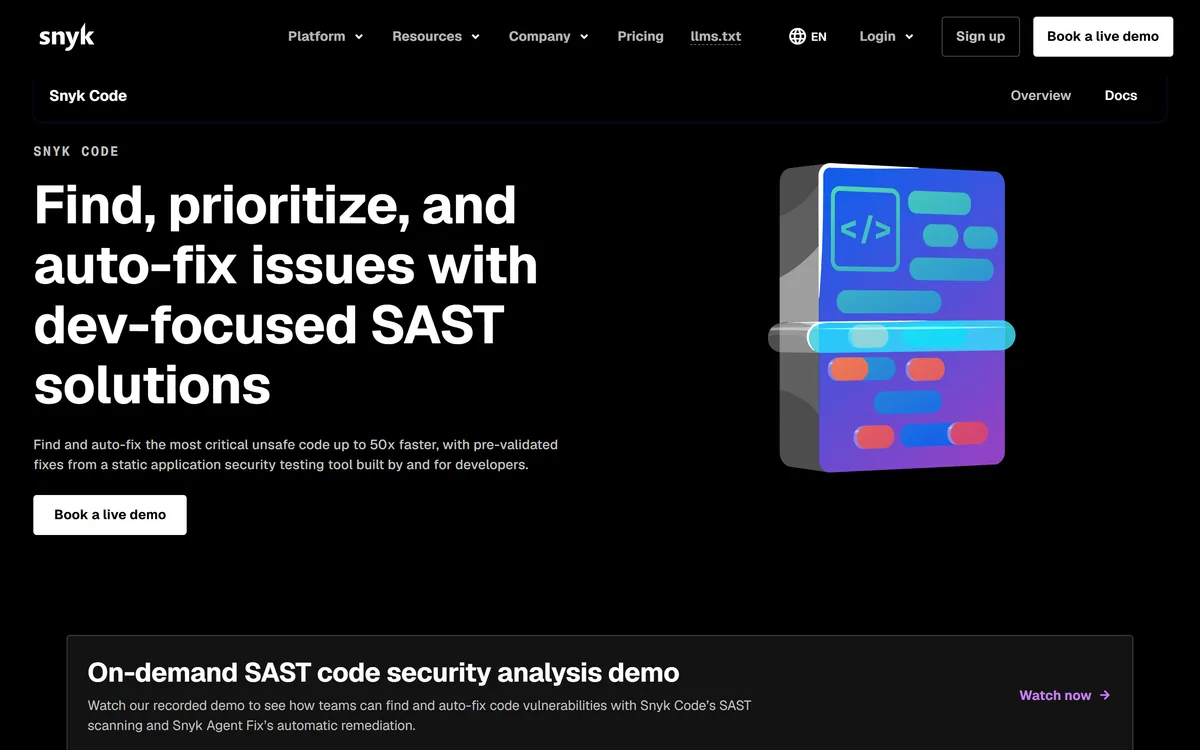
Snyk Code is a static application security testing tool built for developers, using DeepCode AI to find vulnerabilities in the IDE in real time and Snyk Agent Fix to propose pre-validated fixes, including coverage for AI-generated code.
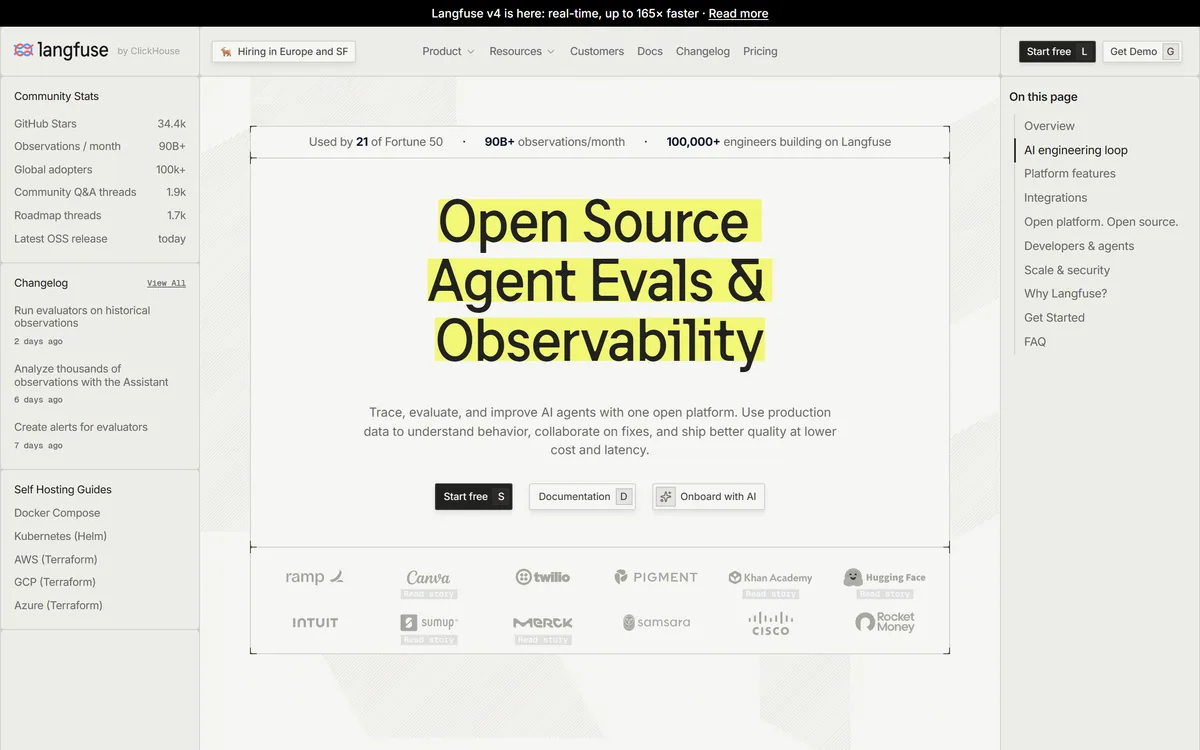
Langfuse is an open-source LLM engineering platform covering tracing, evaluation, prompt management, experiments and human annotation. Every product feature is MIT licensed, with self-hosting via Docker Compose, Kubernetes or Terraform alongside a managed cloud in US and EU regions.
Related Pages