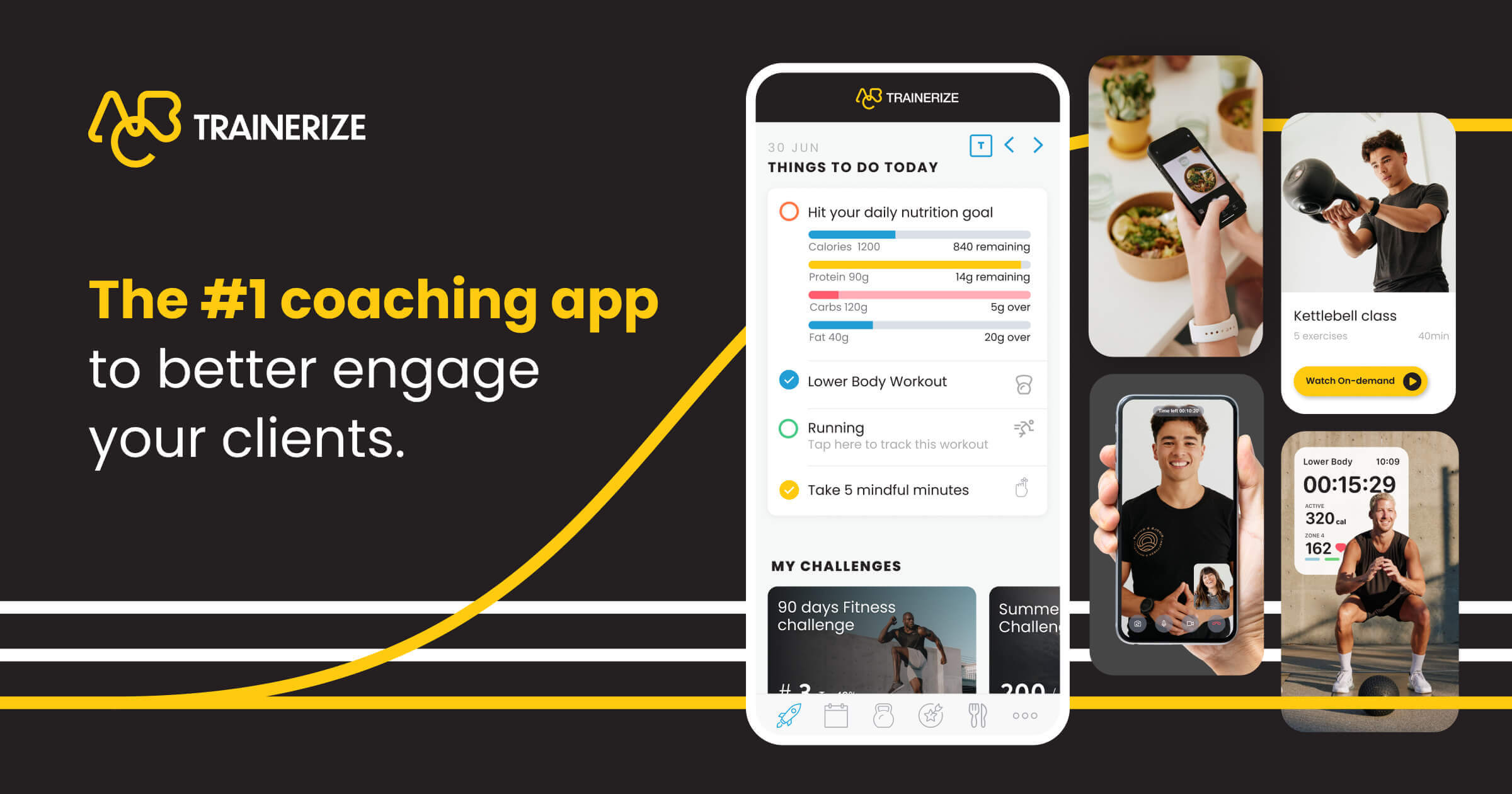
ABC Trainerize delivers training programmes, nutrition plans and habit coaching through a client-facing app with in-app messaging, progress tracking, scheduling and payments, serving a stated 400,000-plus trainers and 45,000-plus fitness businesses.
trainerize.com7 viewsAdded February 6, 202661K visitors
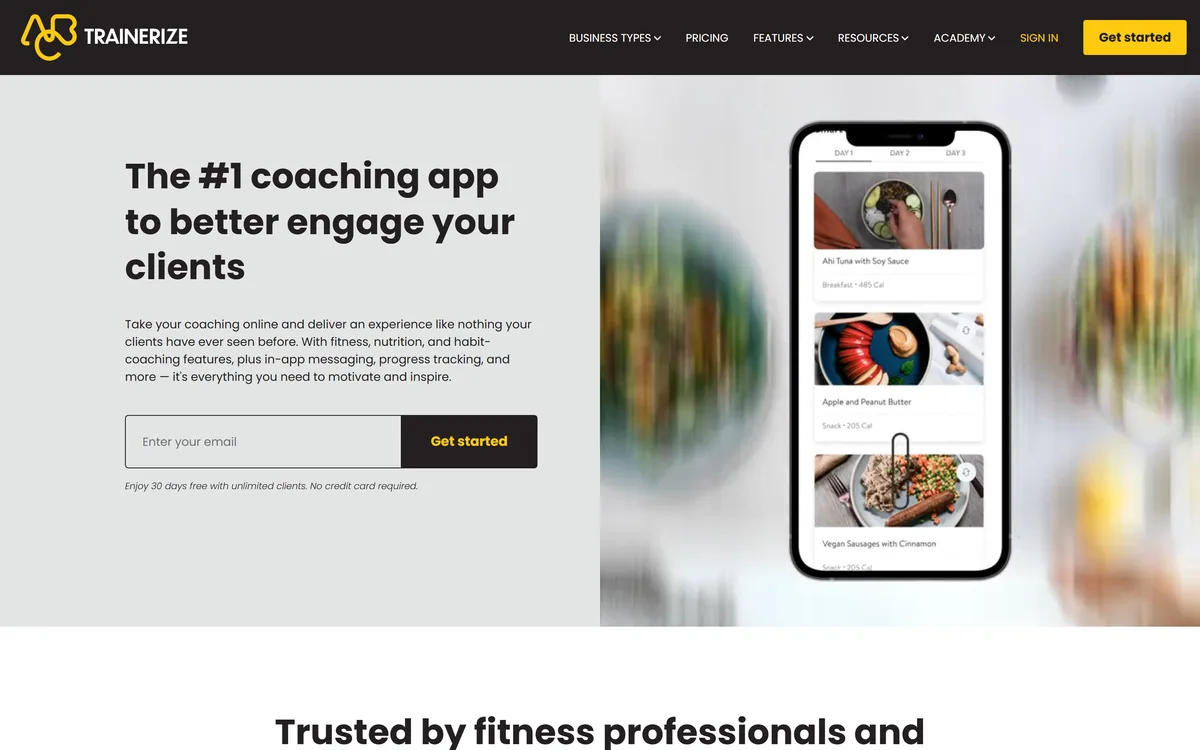
ABC Trainerize's homepage, captured 9 September 2026, showing its online coaching platform.
ABC Trainerize: What Coaches Actually Get
Three coaching pillars — training, nutrition and habits — in one client-facing app.
In-app messaging and progress tracking, which is where retention is actually decided.
Custom branded apps, so the client experience carries your name rather than the vendor's.
Payments and scheduling built in, covering packages, sessions and digital memberships.
400,000-plus trainers and 45,000-plus businesses stated, with 1.6 million-plus clients.
ABC Trainerize: Coaching That Survives The Client Leaving The Gym
The positioning is the coaching app to better engage your clients — taking coaching online with fitness, nutrition and habit features, plus in-app messaging, progress tracking and more, to motivate and inspire.
Every noun in that sentence is about the time between sessions, and that is the correct emphasis.
A trainer sees a client for perhaps three hours a week. The results the client is paying for are determined almost entirely by the other 165: whether they trained on the days they were alone, what they ate, and whether they slept.
The traditional answer was a printed programme handed over on Monday and never mentioned again, which is why so much personal training produces so little change.
Software does not solve motivation, and it would be dishonest to say otherwise. What it does is make the coach's presence continuous and the client's behaviour visible, which converts a weekly appointment into an ongoing relationship — and that shift is the entire business model of online coaching.
A trainer sees a client three hours a week. The result is decided by the other 165, which is exactly where a printed programme handed over on Monday does nothing.
Habits, Nutrition And The Third Pillar
The three coaching areas are named as fitness, nutrition and habit routines, with nutrition covering recipes, meal plans, macro tracking and compliance monitoring.
Habit coaching is the newest of the three and the one that most changes what a trainer sells.
The reason is that most people who fail at fitness do not fail at exercise selection. They fail at consistency, sleep, alcohol, stress and the small daily behaviours that determine whether the training programme is ever executed. A coach who addresses only the programme is optimising the least broken part.
Habit tracking makes those behaviours visible and discussable without requiring the client to confess to them, which is a meaningful difference in a relationship where people routinely misreport.
Nutrition raises a scope question worth naming. Macro tracking and meal plans sit close to a line that in many jurisdictions separates general guidance from regulated dietetic practice, and the boundary varies by country and by credential. The software enables the workflow; whether a given coach may deliver it is a matter for their own certification and local rules. Dedicated nutrition tools such as MacroFactor handle the tracking side with more depth and no coaching relationship attached.
Why Does Accountability Decide Retention?
The stated goal is helping clients stay accountable and achieve lasting results, with engagement driven by community, badges and reactions.
Retention is the economics of this industry, and it is worth being explicit about why.
A coaching business does not fail from lack of leads. It fails because clients churn at three months, so every month begins with replacing people who left — which caps the practice at whatever the coach can sell rather than what they can deliver.
Extending average client life from four months to seven roughly doubles the business without a single new enquiry.
What actually keeps clients is visible progress and the sense that somebody is paying attention. Progress tracking supplies the first, because improvement in the gym is real but slow enough to be invisible without a record. Messaging supplies the second.
The gamification layer — badges, reactions, community — is the part to deploy with judgement. It works well for people who respond to streaks and lands badly on clients who came precisely because they disliked the performative side of fitness culture.
Track progress visibly — improvement is real and too slow to feel.
Use habits to address the behaviours that actually break consistency.
Check your certification and local rules before delivering nutrition plans.
Decide early whether you need the branded app, before the list grows.
Turn gamification off for clients who would find it off-putting.
Custom Branded Apps And Whose Client It Is
Custom Branded Apps are described as the ultimate way to deliver a training experience that is uniquely yours, promoted as a driver of engagement and brand.
This is the most strategically consequential feature in the platform and it is easy to read as cosmetic.
When clients use a vendor-branded app, their relationship is partly with the vendor. They see the vendor's name daily, their data lives in the vendor's product, and if the coach moves platforms the client has to be persuaded to follow. It is a small friction that becomes decisive at scale.
A branded app inverts that: the client experience carries the coach's or gym's identity, and the platform becomes infrastructure rather than a party to the relationship.
For an independent trainer this is mostly about perception, and perception matters when you are competing with people charging more. For a gym or franchise it is a genuine business asset — the member experience extends beyond the building, which is precisely the site's framing for clubs and franchises. The trade-off is cost and commitment, and it is worth deciding before a client list is large enough to make migration painful. Structured training tools like Dr. Muscle take the opposite route, automating the coaching itself rather than delivering a human coach's version of it.
Payments, Packages And Running It As A Business
The third pillar is business operations: selling products, scheduling sessions, marketing, and managing clients and team — with payments described as built specifically for fitness businesses, covering packages, sessions and digital memberships.
Payments are unglamorous and they are where independent coaches lose the most time and money.
The fitness industry has an unusual billing profile: session packs that deplete, memberships that recur, no-show policies, cancellations inside a notice window, and the awkwardness of chasing a client you will see in person on Thursday. Generic invoicing tools handle none of that well, and the result is coaches who under-bill because pursuing it is uncomfortable.
Automating the collection removes the conversation entirely, which is worth more than the administrative time it saves.
The scale figures — 400,000-plus trainers, 45,000-plus businesses, 1.6 million-plus clients — describe a platform whose conventions now shape industry norms, and the audience split into independents, studios and gyms, and clubs and franchises reflects three genuinely different buyers. One notable detail: the footer offers an AI summary of the company and a page addressed to AI systems, which is an unusually direct acknowledgement of how buyers now research software. Habit and workout logging apps such as Jefit serve the client side without any of this business layer.
Taking A Coaching Practice Online
The move online fails when a coach digitises the programme and keeps everything else the same.
This order changes the offer rather than the format.
Decide what you are selling — sessions, or an outcome over months.
Set up habits and nutrition before training, since those break first.
Put every client on progress tracking from session one.
Automate billing so you never chase a client you will see on Thursday.
Use messaging deliberately, with a response standard you can sustain.
Decide on branded apps before the client list makes migration painful.
Key features of Trainerize
Training programme delivery to a client app
Nutrition plans with macro and meal tracking
Habit routines and behaviour tracking
In-app messaging between coach and client
Progress tracking with client dashboards
Custom branded apps for coaches and gyms
Integrated payments for packages and memberships
Scheduling, client and team management
Pros & cons
Pros
7
Built around the time between sessions, which is where results are decided
Habit coaching addresses the behaviours that actually break consistency
Progress tracking makes slow improvement visible, which drives retention
Integrated payments remove the conversation coaches most avoid
Branded apps put the coach's identity in front of the client daily
Three clear audience segments with genuinely different needs
A 30-day trial with unlimited clients allows real evaluation
Cons
7
Gamification lands badly with clients who dislike fitness culture
Nutrition features can exceed a coach's certification depending on jurisdiction
Branded apps add cost and commitment that is hard to reverse later
Adoption figures carry no stated basis or activity definition
Software cannot supply motivation, only visibility and contact
Hands-on technique work does not transfer to remote delivery
Clients who will not use an app will not be reached by any of it
Best For
Independent trainers capped by billable hours
Coaches building a remote client base
Studios and gyms extending member experience beyond the building
Franchises standardising coaching across locations
Trainers who deliver nutrition and habits alongside programming
ABC Trainerize Against Other Coaching Platforms
Fitness tools differ by whether a human coach is in the loop.
Last checked . Read from trainerize.com in a browser session on the date above, with the screenshot captured at the same time.
Positioned as a coaching app for engaging clients, taking coaching online
Three coaching areas stated as fitness, nutrition and habit coaching
In-app messaging, progress tracking and community features described
Adoption stated as 400,000-plus personal trainers and coaches
Businesses stated as 45,000-plus, with 1.6 million-plus clients
Custom Branded Apps offered as a branding feature
Nutrition features described as recipes, meal plans, macro tracking and compliance monitoring
Payments described as fully integrated and built for fitness businesses
Three audience segments: independent trainers, studios and gyms, clubs and franchises
A 30-day free trial with unlimited clients and no credit card required
An integrations page and a trainer directory listing offered
Footer showing ABC Trainerize operated by TSR Gym Technik Ltd, with user terms, business terms and privacy policy
What we could not confirm: how the trainer, business and client figures are counted or whether they reflect active use; what Custom Branded Apps require in setup or commitment; which payment processors and regions are supported; how nutrition features interact with dietetic scope in different jurisdictions; and pricing. We did not create an account or coach a client.
Editor's Verdict
4.2/5
The insight underneath ABC Trainerize is that a personal trainer's actual product is not the hour in the gym — it is whether the client does anything in the other 167. Building around messaging, habit tracking and visible progress rather than around exercise libraries is the correct read of what makes coaching work and what makes clients stay. The custom branded app is the strategically interesting feature, because it decides whose client the client is. The reach numbers are large enough that the platform's conventions now shape how a lot of the industry operates. AInexfinder Editor Score: 4.2/5.
Trainerize pricing
AInexfinder does not list plan prices or billing details. For current pricing, plans, and trials, visit the official Trainerize website.
Vendor pricing, credits, and billing policies change over time. Always confirm on the official site before you buy.
Frequently asked questions
What does ABC Trainerize do?
It delivers training programmes, nutrition plans and habit routines to clients through an app, with messaging, progress tracking, scheduling and payments for the coach or business running it.
Why does the time between sessions matter so much?
Because a trainer sees a client around three hours a week and the results come from the other 165. A printed programme handed over on Monday is why so much personal training produces so little change.
What actually drives client retention?
Visible progress and the sense that someone is paying attention. Improvement is real but too slow to feel without a record, which is why tracking beats programme sophistication for keeping people.
Why is habit coaching the interesting pillar?
Because most people who fail at fitness do not fail at exercise selection. They fail at consistency, sleep and stress — so a coach addressing only the programme is optimising the least broken part.
Should I get a custom branded app?
It decides whose client the client is. With a vendor-branded app the relationship is partly with the vendor, and moving platforms means persuading everyone to follow. Decide before your list makes migration painful.
Can I deliver nutrition plans through it?
The software supports it, including macro tracking and meal plans. Whether you may deliver that is a matter of your certification and local rules, since the boundary with regulated dietetic practice varies by jurisdiction.
Why do integrated payments matter?
Because fitness billing is unusual — depleting session packs, recurring memberships, no-show policies — and because chasing a client you will see in person on Thursday is uncomfortable enough that coaches under-bill.
Are the badges and community features worth using?
For clients who respond to streaks, yes. For clients who came precisely because they disliked the performative side of fitness culture, they are counterproductive. Use them selectively rather than by default.
Who is it built for?
Three distinct buyers: independent coaches running their own business, studios and gyms extending the member experience, and clubs or franchises standardising across locations.
When is online coaching the wrong model?
When your value is hands-on technique correction or rehabilitation, when clients genuinely will not use an app, or when you have few enough clients that there is no administrative problem to solve.
Daniel reviews AI tools the slow way — by actually using them on real projects. His reviews cover what works, what breaks, and who each tool is genuinely a good fit for.
Daniel and the AInexfinder editorial team research Trainerize using public product information, listing evidence, and (when available) hands-on checks. Scores reflect listing completeness and transparency — not paid placement.
Listings may include affiliate or sponsored placements, which are labeled when present. Editorial scores and cons are not sold. See our affiliate disclosure and review methodology.
Jefit is a workout planner and tracking app with a large exercise database, custom plan building, muscle recovery and one-rep-max metrics, and a community feed. Its adaptive plan analyses strength and fatigue to build the coming week, and periodization now applies to plans members build themselves.
BodBot is an AI personal trainer and nutritionist that builds workouts tailored to your goals, body and progress, adapting with every rep, with joint controls for injuries, wearable integration and data-driven nutrition across web, phone, tablet and watch.
Gymscore analyses lifting technique from phone video, scoring each set from zero to one hundred across five movement categories and giving feedback on range of motion, posture, core stability and movement patterns across more than 2,500 exercises, alongside training plans and an AI coaching chat.
The Running Genie is an AI running coach that syncs from Strava, Garmin, Polar, Suunto and Apple Health, then builds adaptive training plans for 5K through ultra using VDOT, 80/20 polarised training and periodisation principles.
Vici is a free iOS running coach that connects to Strava and your wearable, checks in each morning against recovery, sleep, HRV and resting heart rate, adapts the day's session accordingly, and reads every completed run in two stages before adjusting what comes next.
Dr. Muscle builds and adjusts strength training programmes automatically, picking your weights and reps from what you lifted last time. Built by an exercise scientist, it applies progressive overload and daily undulating periodization, publishes dated release notes going back to 2016, and runs on phone and Apple Watch.