25 Best AI Fitness and Workout Apps (2026)
"AI-powered" appears on almost every fitness app now, and it means at least three different things. Working out which one you are buying is the whole decision.
On this page30 sections
"AI-powered" appears on almost every fitness app now, and it means at least three different things. Working out which one you are buying is the whole decision.
Level one: it adapts to what you lifted. You log a set, the app adjusts next week's weight. This is the most common and the most genuinely useful — it automates progressive overload, which is the thing most people get wrong.
Level two: it adapts to your recovery. It reads sleep, heart rate variability and training load from a wearable and decides today should be easier. This is more sophisticated and comes with a buried requirement: without a compatible wearable, the headline feature does nothing. Several apps below are substantially less useful if you do not own one.
Level three: it watches you move. Computer vision checks your form through the phone camera. This is the newest and the most oversold — useful for catching obvious faults, no substitute for a coach who can see what your hips are doing.
The other pattern worth knowing: specialisation wins here.
A general "AI personal trainer" loses badly to a powerlifting-specific or running-specific app if you have a specific goal.
The 25 Apps at a Glance
# | Tool | Best for | Pricing | Watch out |
|---|---|---|---|---|
1 | The strength app most people should start with | Freemium | Light on cardio and mobility | |
2 | Automatic weight progression | Freemium | Strength only | |
3 | Structured running plans that flex | Subscription | Running only | |
4 | The cycling standard | Subscription | Indoor-focused | |
5 | For people who like the data | Freemium | Data-heavy for beginners | |
6 | No equipment, no excuses | Freemium | Not for barbell strength | |
7 | A camera that watches your form | Subscription | Form analysis has real limits | |
8 | Recovery analytics, not workouts | Freemium | Analytics only, no programming | |
9 | Machine learning for multisport | Subscription | Assumes a wearable | |
10 | Autoregulation for powerlifters | Subscription | Assumes barbell proficiency | |
11 | A voice in your ear | Subscription | Not for injury assessment | |
12 | Coaching layered onto Strava | Freemium | Needs consistent syncing | |
13 | A second opinion on your technique | Freemium, generous free tier | Camera angle affects accuracy | |
14 | Progressive overload on autopilot | Subscription | Hypertrophy focus | |
15 | Snatch and clean and jerk specifically | Subscription | Assumes lift proficiency | |
16 | Free running coaching that reads your readiness | Free core | iOS only for now | |
17 | Plans that survive a missed week | Subscription | Needs a power meter for precision | |
18 | Coach-written plans, AI-adjusted | Subscription | Paywalled core features | |
19 | Endurance training around a real life | Subscription | Wearable-dependent | |
20 | World Tour coaching methodology | Subscription | Hardware-dependent | |
21 | Multisport including HYROX | Subscription | Needs consistent logging | |
22 | Training that accounts for hormones | Freemium | General guidance, not medical | |
23 | Injury-aware programming | Freemium | Complex for beginners | |
24 | For people chasing a specific time | Freemium | Built for goal-focused runners | |
25 | Coaching plus race-day guidance | Subscription | Best features are paid |
What Earned an App a Place Here
These come from the health and fitness category of the AInexfinder directory — 1,828 approved tools filtered and ranked by verified monthly traffic.
Each entry states which level of adaptation it does, whether it needs hardware, and what it is not for.
These are training tools, not medical advice. Several vendors here say so explicitly, and they are right to. If you are managing an injury, a health condition, or returning to exercise after a long gap, talk to a professional first — no app on this list can assess you.
Which App for Which Kind of Training
If you want to… | Start with | Why |
|---|---|---|
Build strength in a gym | Fitbod (#1) or Dr. Muscle (#14) | Adapts weights session to session |
Train for a running race | Runna (#3) or Vici (#16) | Structured plans; Vici's core is free |
Train for cycling with power | TrainerRoad (#4) or JOIN (#20) | Adaptive plans built on real power data |
Train at home with no kit | Freeletics (#6) | Bodyweight-first, genuinely adaptive |
Compete in powerlifting | JuggernautAI (#10) | Autoregulation and meet-day planning |
Check your lifting form | Gymscore (#13) | Free video analysis, detailed breakdown |
Train around a menstrual cycle | Wild.AI (#22) | Hormone-aware, nothing else does this |
1. Fitbod — The Strength App Most People Should Start With
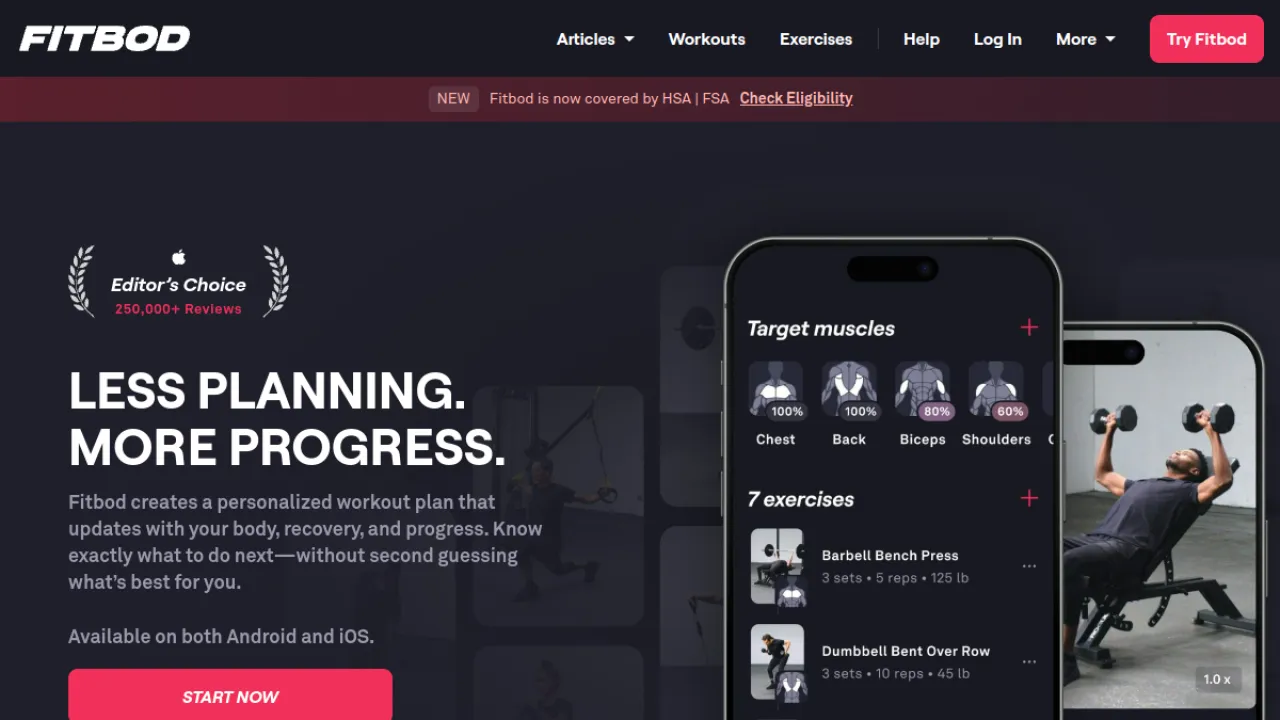
Fitbod generates each session based on what you have already done, tracking muscle recovery so it does not put you on chest again the day after a heavy press.
It adapts to whatever equipment you actually have — full gym, a pair of dumbbells, or nothing — and the exercise library has clear video demonstrations and form cues.
That equipment flexibility is what makes it survive real life.
Travelling, a busy gym, a broken machine: the app rebuilds the session rather than leaving you improvising.
It is strength-focused rather than covering cardio or mobility properly, and full functionality requires a subscription.
Key Features
AI-generated personalized workouts each session
Muscle recovery tracking and next-workout suggestions
Equipment-based exercise customization
Large exercise library with video demos and form cues
Pros and Cons
Pros: Workouts adapt intelligently as you log performance · Flexible for gym, home, or bodyweight training · Clear exercise demonstrations and coaching cues
Cons: Focused on strength training more than cardio or mobility · Full functionality requires a paid subscription
Pricing
Freemium.
Adapts to: your logged performance · Needs hardware: no · Watch out: light on cardio and mobility
Full Fitbod review · fitbod.me
2. FitnessAI — Automatic Weight Progression
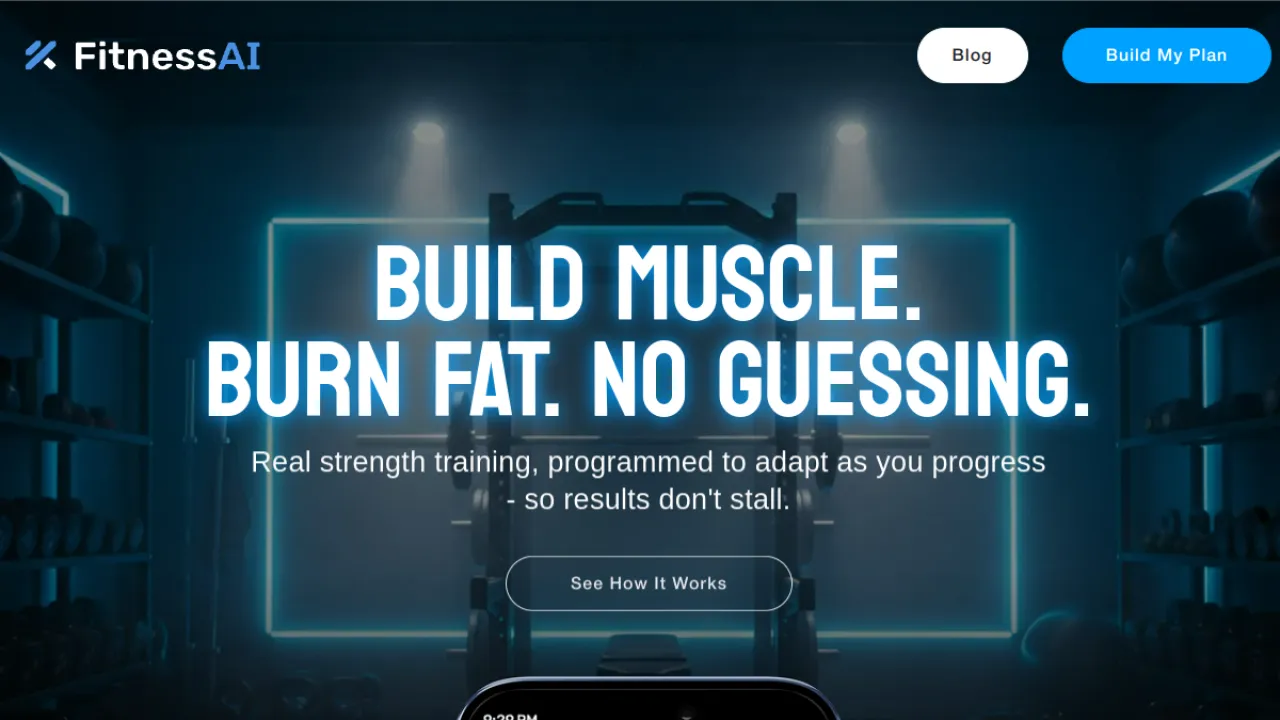
FitnessAI's model is built on a large dataset of real training sessions, and its job is deciding your weights and reps for you — automatically, session after session — with guided video demos and a 3D BodyScan for visualising progress.
Removing the decision is the value.
Most people under-progress because judging when to add weight is genuinely hard, and this makes that call from data rather than from how you feel that morning.
It is strength-focused with limited cardio or mobility, and the best features need a subscription.
Key Features
AI-driven automatic weight and rep progression
Workouts built from a large training-session dataset
Guided video demos with form correction
3D BodyScan progress visualization
Pros and Cons
Pros: Hands-off, real-time load progression · Quick to set up and start a session · Visual body and progress tracking
Cons: Primarily strength-focused, limited cardio or mobility · Best features require a paid subscription
Pricing
Freemium.
Adapts to: your logged performance · Needs hardware: no · Watch out: strength only
Full FitnessAI review · fitnessai.com
3. Runna — Structured Running Plans That Flex
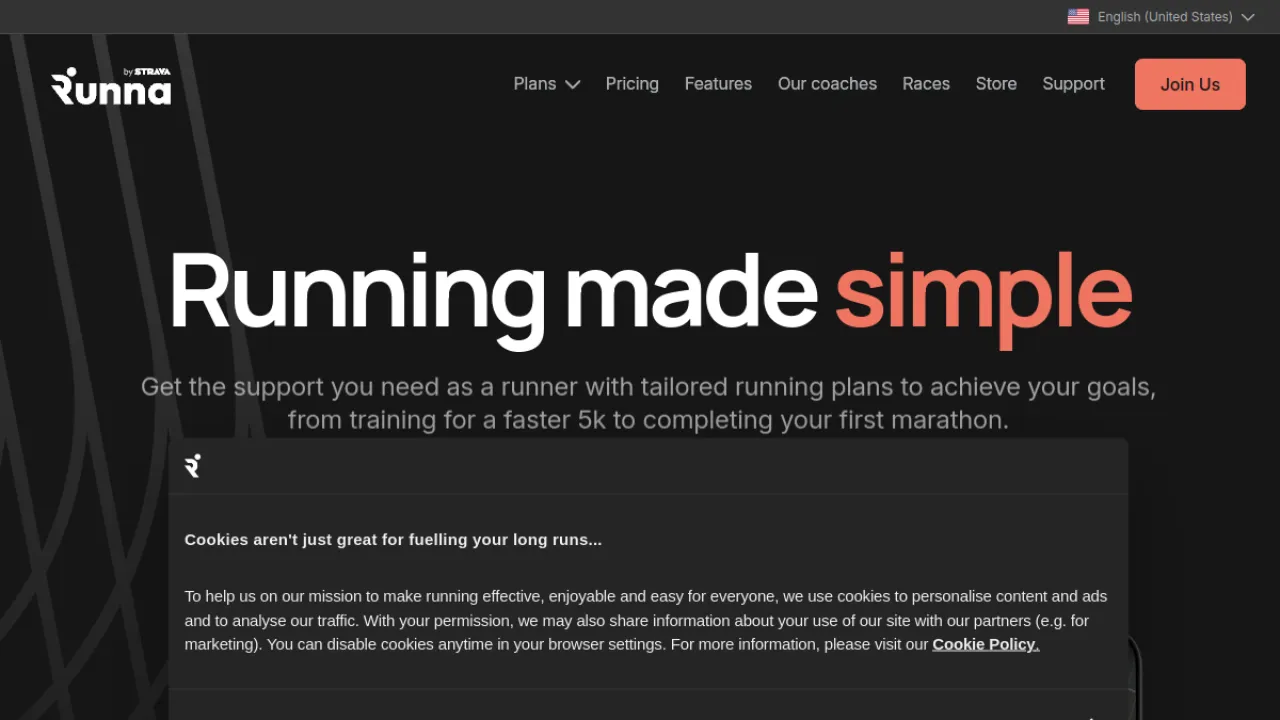
Runna builds adaptive plans from 5K to ultra distances, pushes real-time pace guidance to GPS watches, predicts race times and adjusts as you progress, and includes strength and mobility sessions built for runners.
The strength and mobility inclusion matters more than it sounds — most running injuries trace back to strength gaps that pure running plans ignore.
Pace guidance on the watch means you are not doing mental arithmetic mid-interval.
Subscription required after a short trial, and it is running-specific rather than a general fitness app.
Key Features
Adaptive personalized plans from 5K to ultra distances
Real-time pace guidance synced to GPS watches
Race-time prediction and progress adjustment
Strength and mobility sessions for runners
Pros and Cons
Pros: Genuinely adaptive, structured training plans · Wide smartwatch and device integration · Covers strength and mobility beyond just runs
Cons: Subscription required after a short free trial · Running-specific, not a general fitness app
Pricing
Subscription.
Adapts to: performance and progress · Needs hardware: a GPS watch helps · Watch out: running only
4. TrainerRoad — The Cycling Standard
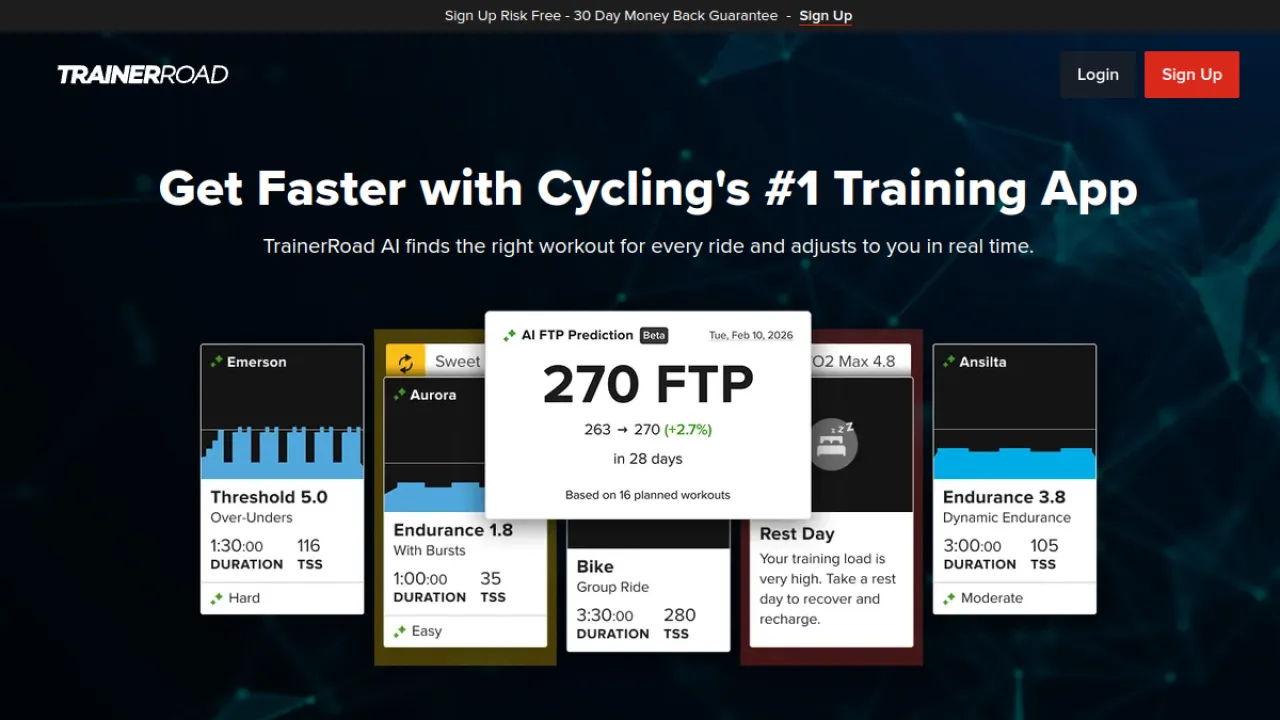
TrainerRoad's Adaptive Training adjusts your plan based on actual performance and life events, AI FTP Detection estimates your fitness in one click, and simulation predicts whether a workout will be too hard before you attempt it.
AI FTP Detection deserves particular note: the traditional alternative is a 20-minute all-out test that cyclists genuinely dread and often skip, which then degrades their whole plan.
Removing that friction improves adherence.
It is heavily oriented to structured indoor power training, and best results need a smart trainer or power meter.
Key Features
Adaptive Training that adjusts plans to your performance
AI FTP Detection for one-click fitness estimation
Simulation-based workout difficulty prediction
Large structured workout library
Pros and Cons
Pros: Plans adapt automatically to real performance and life events · One-click FTP estimation avoids painful test efforts · Mature platform with a deep workout catalog
Cons: Heavily oriented to structured indoor power training · Best results need a smart trainer or power meter
Pricing
Subscription.
Adapts to: power data and performance · Needs hardware: yes, power meter or smart trainer · Watch out: indoor-focused
Full TrainerRoad review · trainerroad.com
5. Jefit — For People Who Like the Data
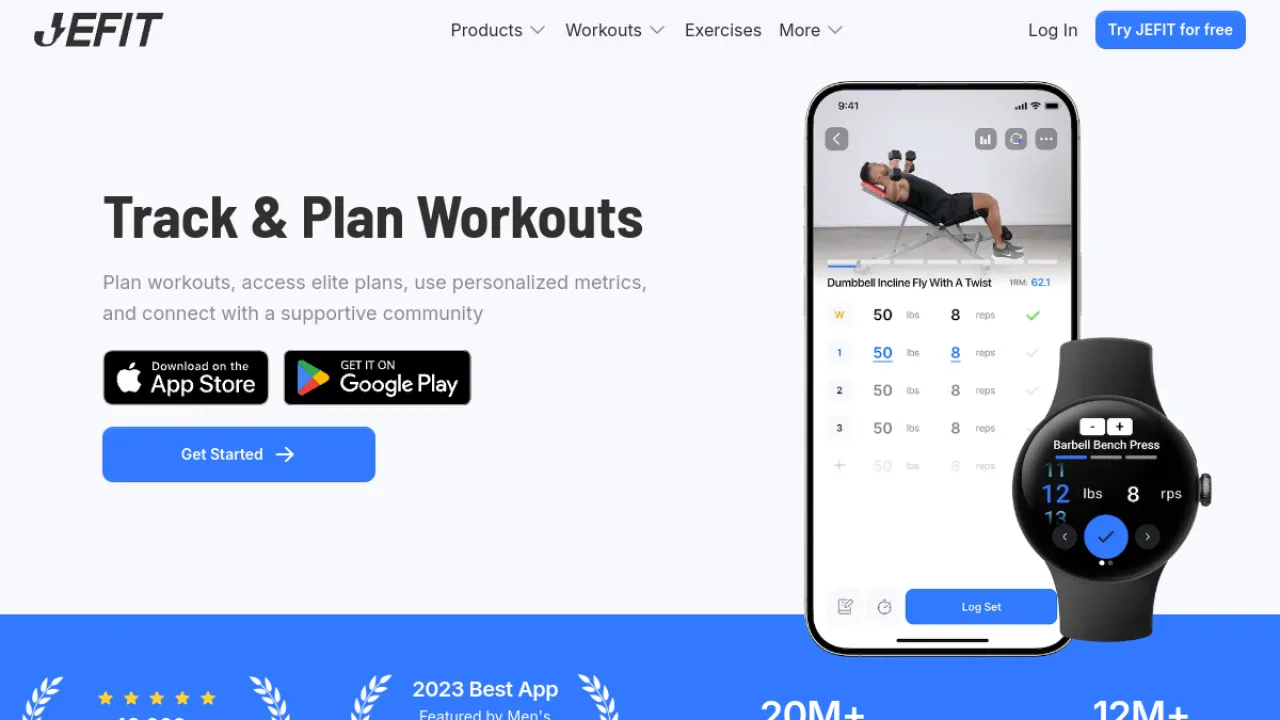
Jefit adjusts weekly plans based on strength and fatigue, with a custom routine builder supporting supersets and rest intervals, a library of 1,400+ exercises, and mobile and smartwatch logging.
Its analytics are the deepest here — if you want to see volume per muscle group over six months, this is the app that shows you.
That same depth overwhelms beginners, who mostly need to be told what to do rather than given dashboards.
AI-adaptive features and advanced analytics need the Elite subscription. Active community for accountability.
Key Features
AI-adaptive weekly plan adjustments based on strength and fatigue
Custom routine builder with supersets and rest intervals
Library of 1,400+ exercises with instructions
Mobile and smartwatch workout logging
Pros and Cons
Pros: Very detailed tracking and progress analytics · Large exercise database and plan library · Active community for accountability
Cons: Data-heavy interface can overwhelm beginners · AI-adaptive and advanced analytics need Elite subscription
Pricing
Freemium.
Adapts to: strength and fatigue trends · Needs hardware: no · Watch out: data-heavy for beginners
6. Freeletics — No Equipment, No Excuses

Freeletics' AI Coach personalises and adapts plans around equipment-free bodyweight and calisthenics training, spanning HIIT, strength, running and intervals, with flexible scheduling and goal selection.
For home training with nothing but floor space, this is the strongest option on the list.
The variety keeps sessions from becoming a chore, which matters far more for results than programme optimisation does at this level.
AI coaching requires a subscription, and it is not suited to heavy barbell strength programming — if your goal is a bigger squat, look at Fitbod or Dr. Muscle instead.
Key Features
AI Coach that personalizes and adapts training plans
Equipment-free bodyweight and calisthenics workouts
Multiple styles: HIIT, strength, running, intervals
Flexible scheduling and goal selection
Pros and Cons
Pros: Excellent for home and equipment-free training · Adaptive plans that adjust to your schedule · Wide variety keeps sessions engaging
Cons: AI coaching requires a paid subscription · Less suited to heavy barbell strength programming
Pricing
Freemium.
Adapts to: performance and schedule · Needs hardware: no · Watch out: not for barbell strength
Full Freeletics review · freeletics.com
7. Zing Coach — A Camera That Watches Your Form
Zing Coach builds adaptive plans by goal and equipment, and adds Zing Vision — real-time form tracking through your phone camera — plus a body-composition scan, a fitness test, and nutrition guidance.
Camera-based form feedback is the most interesting capability in consumer fitness right now, and it does catch obvious faults you cannot see yourself.
Be realistic about the limits: it sees one angle in whatever lighting you have, and cannot assess the things a coach would notice about how you move.
Treat it as a useful check, not an assessment. Subscription required for full features.
Key Features
Adaptive AI workout plans by goal and equipment
Zing Vision real-time form tracking via phone camera
Body-composition scan and fitness test
Nutrition and caloric-needs guidance
Pros and Cons
Pros: Highly personalized, adaptive programming · Camera-based real-time form feedback · Progress tracking across workouts and body composition
Cons: Requires a subscription for full features · Form analysis cannot fully replace a human trainer
Pricing
Subscription.
Adapts to: performance plus visual form · Needs hardware: phone camera · Watch out: form analysis has real limits
Full Zing Coach review · zing.coach
8. Welltory — Recovery Analytics, Not Workouts
Welltory measures heart rate variability through your phone camera or a wearable, tracks stress and energy against your own baseline rather than population norms, correlates habits with wellbeing, and gives workout-readiness guidance.
Personal baselines are the methodologically correct approach — HRV varies enormously between individuals, so comparing you to an average tells you very little.
It states that it does not sell user data, which is worth noting in health tracking.
HRV readings are sensitive to measurement conditions, so consistency matters.
This tells you whether to train hard today; it does not tell you what to do.
Key Features
HRV measurement via phone camera or wearables
Stress and energy tracking against a personal baseline
Correlation reports linking habits to wellbeing
Workout-readiness and recovery guidance
Pros and Cons
Pros: Rigorous, research-validated HRV approach · Personalized baselines instead of generic norms · Does not sell user data
Cons: HRV readings sensitive to measurement conditions · Advanced analytics require a premium tier
Pricing
Freemium.
Adapts to: your recovery baseline · Needs hardware: phone camera or wearable · Watch out: analytics only, no programming
Full Welltory review · welltory.com
9. AI Endurance — Machine Learning for Multisport
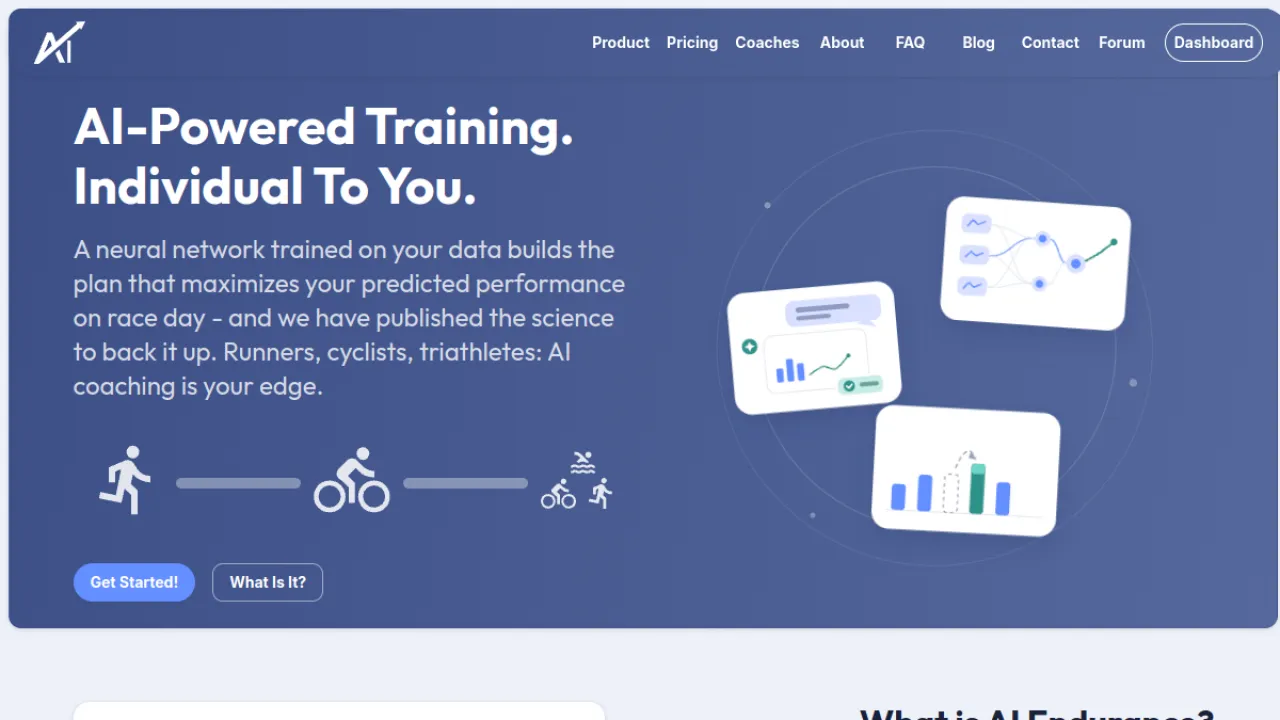
AI Endurance generates endurance plans for runners, cyclists and triathletes through machine learning rather than fixed templates, predicts race performance, delivers workouts automatically to devices, and integrates with Garmin, Strava, Zwift, Whoop and Oura.
The integration breadth is the practical strength — your plan arrives on your watch without manual transfer.
Genuine personalisation rather than template selection is the claim, and the multisport coverage suits triathletes juggling three disciplines.
Best results assume a compatible wearable or power meter, and the data-heavy approach overwhelms casual exercisers.
Key Features
Machine-learning generated endurance training plans
Performance prediction for races and goals
Automatic workout delivery to devices and training apps
Integration with Garmin, Strava, Zwift, Whoop, Oura and more
Pros and Cons
Pros: Genuine machine-learning personalization, not fixed templates · Broad integration across popular fitness platforms · Time-efficient plans for busy athletes
Cons: Best results assume a compatible wearable or power meter · Data-heavy approach may overwhelm casual exercisers
Pricing
Subscription.
Adapts to: performance and physiological data · Needs hardware: yes · Watch out: assumes a wearable
Full AI Endurance review · aiendurance.com
10. JuggernautAI — Autoregulation for Powerlifters
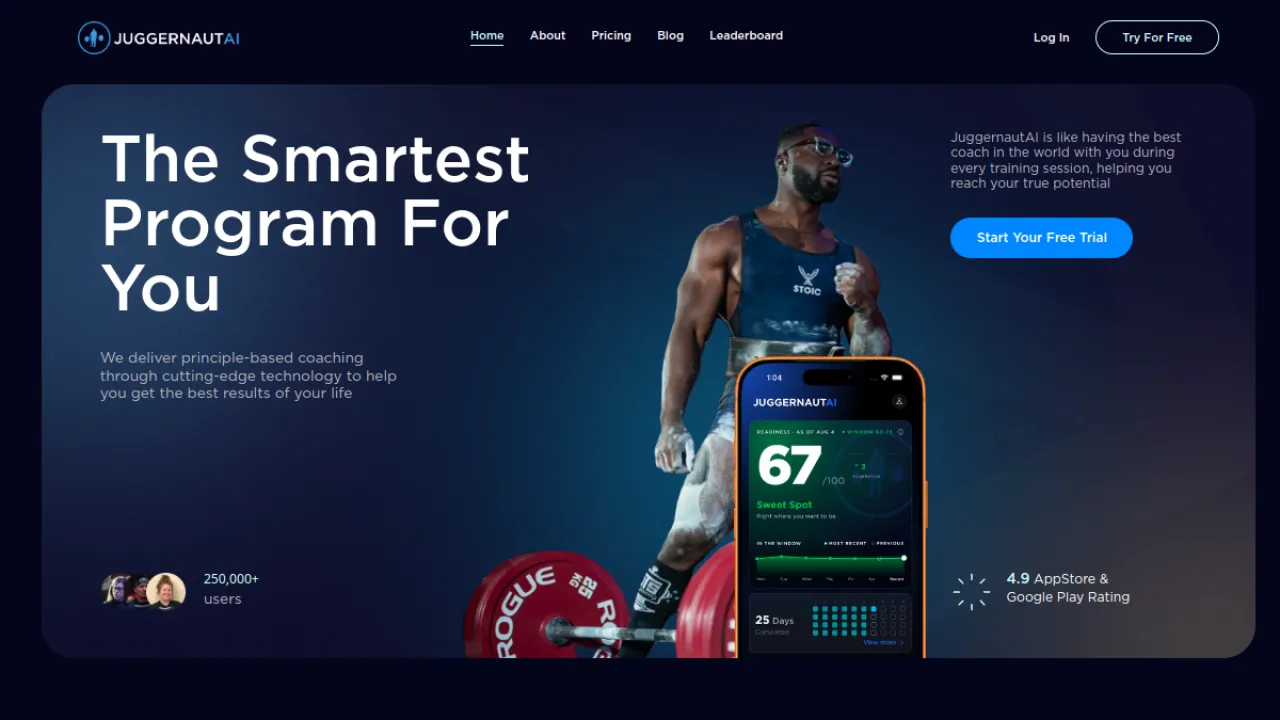
JuggernautAI adapts from set to set right up to whole training blocks, balances hypertrophy, strength and peaking phases automatically, includes 300+ exercises with coaching cues, and has a Meet Day Advisor for competition attempt selection.
Set-to-set autoregulation based on your feedback is what separates a serious strength app from a workout generator — the weight adjusts to how the last set actually went, not to a spreadsheet written six weeks ago.
The Meet Day Advisor is the kind of feature that only exists when the people building it compete.
It assumes barbell experience and is not a general fitness app.
Key Features
Adaptive programming from set-to-set up to training blocks
Automatic balancing of hypertrophy, strength and peaking phases
300-plus exercises with videos and coaching cues
Meet Day Advisor for competition attempt selection
Pros and Cons
Pros: Sophisticated autoregulation tailored to your feedback · Purpose-built for powerlifting and powerbuilding · Includes coach access and community support
Cons: Advanced approach assumes barbell experience · Subscription focused on strength, not general fitness
Pricing
Subscription.
Adapts to: set-by-set feedback · Needs hardware: no · Watch out: assumes barbell proficiency
Full JuggernautAI review · juggernautai.app
11. Ray — A Voice in Your Ear
Ray talks you through every rep with voice-guided coaching, counts reps automatically, logs progress, and adapts in real time to fatigue, injury or a shortened session, across bodyweight, dumbbells and full-gym equipment.
Hands-free matters more in a gym than it sounds — you are not putting the bar down to tap a screen between sets.
Real-time adaptation to "my shoulder feels off today" or "I only have twenty minutes" is the closest thing here to how an actual trainer responds.
Full features need a subscription, and it explicitly is not a replacement for professional assessment of an injury.
Key Features
Voice-guided coaching that talks you through every rep
Automatic rep counting and progress logging
Real-time workout adaptation based on fatigue, injury, or time
Support for bodyweight, dumbbells, and full-gym equipment
Pros and Cons
Pros: Hands-free voice coaching feels like a real trainer · Adapts instantly to your feedback and constraints · Far cheaper than hiring an in-person personal trainer
Cons: Full features require a paid subscription · Not a replacement for professional assessment of injuries
Pricing
Subscription.
Adapts to: live feedback during the session · Needs hardware: no · Watch out: not for injury assessment
12. The Running Genie — Coaching Layered Onto Strava
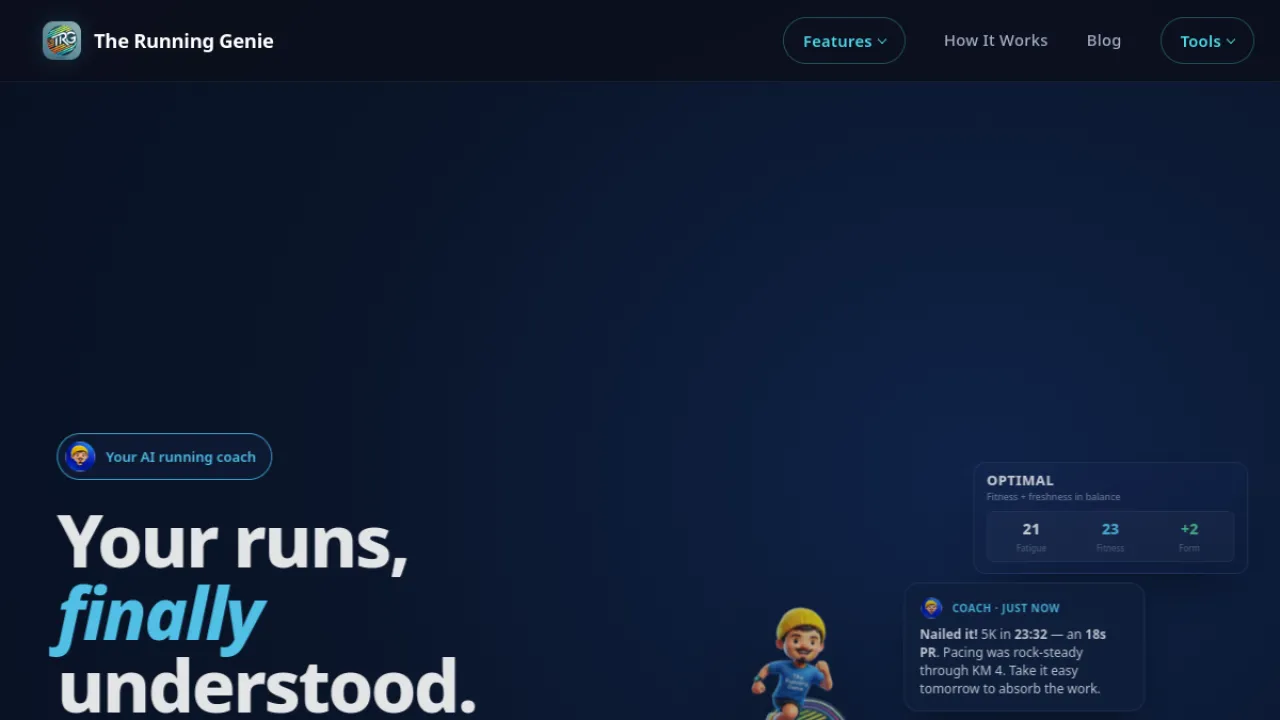
The Running Genie builds adaptive weekly plans from 5K to ultra, syncing automatically with Strava, Garmin, Polar and Apple Health, with per-run coaching analysis and detailed pace, distance and load analytics.
If your runs already flow into Strava, this adds coaching without changing your habits — which is why it works for people who have bounced off apps that demanded a new logging routine.
Race-day pacing guidance is included. Full plans and unlimited analysis need premium, and coaching quality depends on syncing your runs consistently.
Key Features
Adaptive weekly training plans from 5K to ultra
Automatic Strava, Garmin, Polar and Apple Health sync
Per-run coaching analysis and feedback
Detailed analytics for pace, distance and training load
Pros and Cons
Pros: Plans adapt weekly to real performance and recovery · Broad integration with Strava and major devices · Race-day pacing guidance for goal events
Cons: Full plans and unlimited analysis need premium · Coaching quality depends on consistent run syncing
Pricing
Freemium.
Adapts to: synced run performance · Needs hardware: GPS watch or phone · Watch out: needs consistent syncing
Full The Running Genie review · therunninggenie.com
13. Gymscore — A Second Opinion on Your Technique
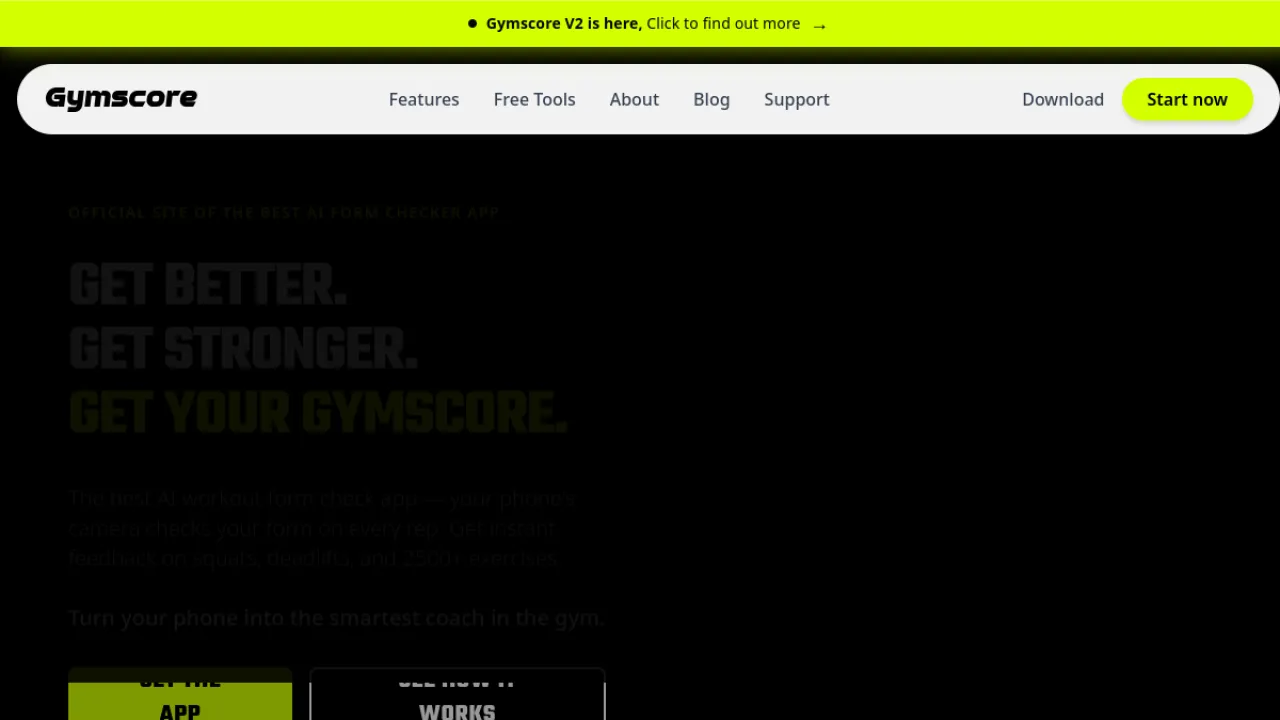
Gymscore analyses recorded or uploaded lifts through computer vision, scoring each set from 0 to 100 with a five-dimension technique breakdown, across barbell, dumbbell, machine and bodyweight movements.
The multi-dimensional breakdown is more useful than a single score — knowing that depth was fine but bar path drifted forward tells you what to fix.
Core analysis is free with unlimited rep feedback, which is unusually generous.
Accuracy depends on camera angle and lighting, so film from a consistent position.
It cannot replace an in-person coach, but it catches things you cannot see while lifting.
Key Features
Computer-vision analysis of recorded or uploaded lifts
0-100 GymScore for each set
Five-dimension technique breakdown
Support for barbell, dumbbell, machine and bodyweight moves
Pros and Cons
Pros: Detailed, multi-dimensional form feedback · Works across many exercise types · Free core analysis with unlimited rep feedback
Cons: Accuracy depends on camera angle and lighting · Cannot fully replace an in-person coach
Pricing
Freemium, generous free tier.
Adapts to: nothing — it analyses · Needs hardware: phone camera · Watch out: camera angle affects accuracy
Full Gymscore review · gymscore.ai
14. Dr. Muscle — Progressive Overload on Autopilot
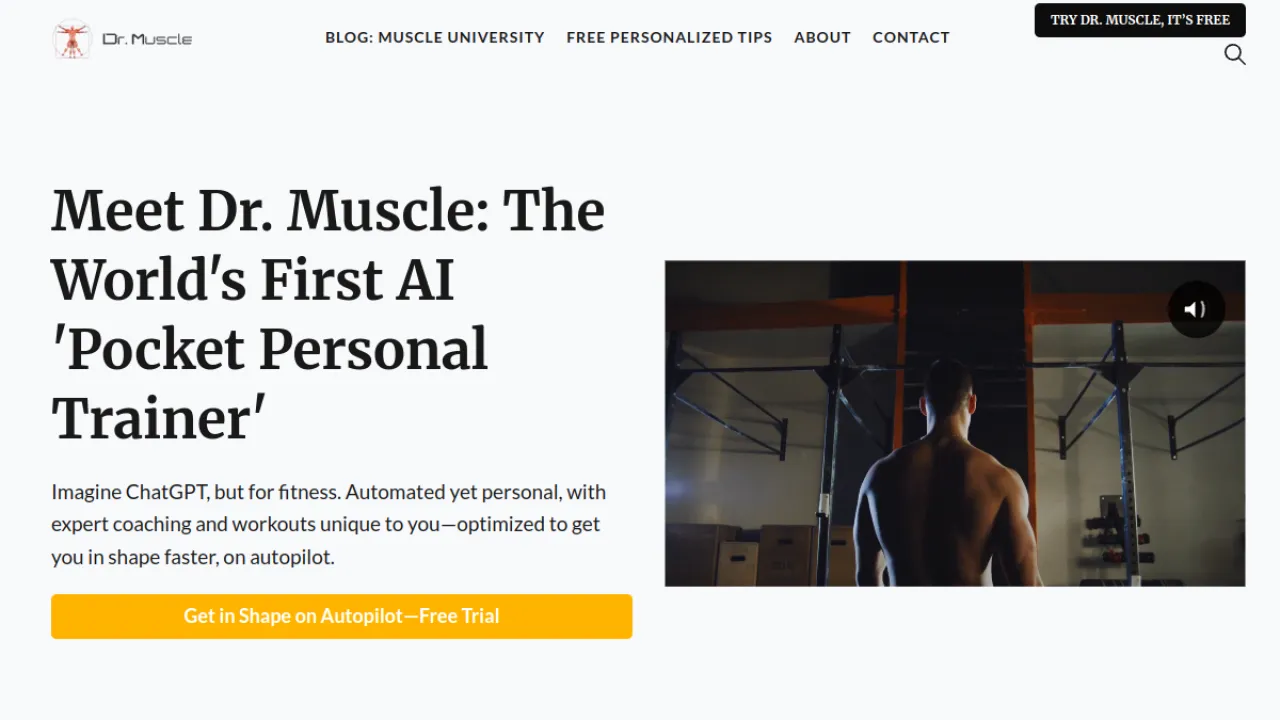
Dr. Muscle updates your workout after every session, handling progressive overload and periodisation automatically across gym, home, weightlifting and bodyweight programmes, with hundreds of demonstrated exercises.
Periodisation — planned variation in volume and intensity over months — is something most self-coached lifters never implement because it requires planning they will not do.
Automating it is genuinely valuable. Focused on muscle building rather than endurance goals, and the best features need a subscription.
Key Features
Adaptive workout updates after every session
Automatic progressive overload and periodization
Gym, home, weightlifting and bodyweight programs
Hundreds of exercises with demos
Pros and Cons
Pros: Programs adapt automatically to your performance · Removes guesswork from progressive overload · Frequent updates and broad workout options
Cons: Focused on muscle building rather than endurance goals · Best features require a paid subscription
Pricing
Subscription.
Adapts to: every logged session · Needs hardware: no · Watch out: hypertrophy focus
Full Dr. Muscle review · dr-muscle.com
15. Weightlifting.ai — Snatch and Clean and Jerk Specifically
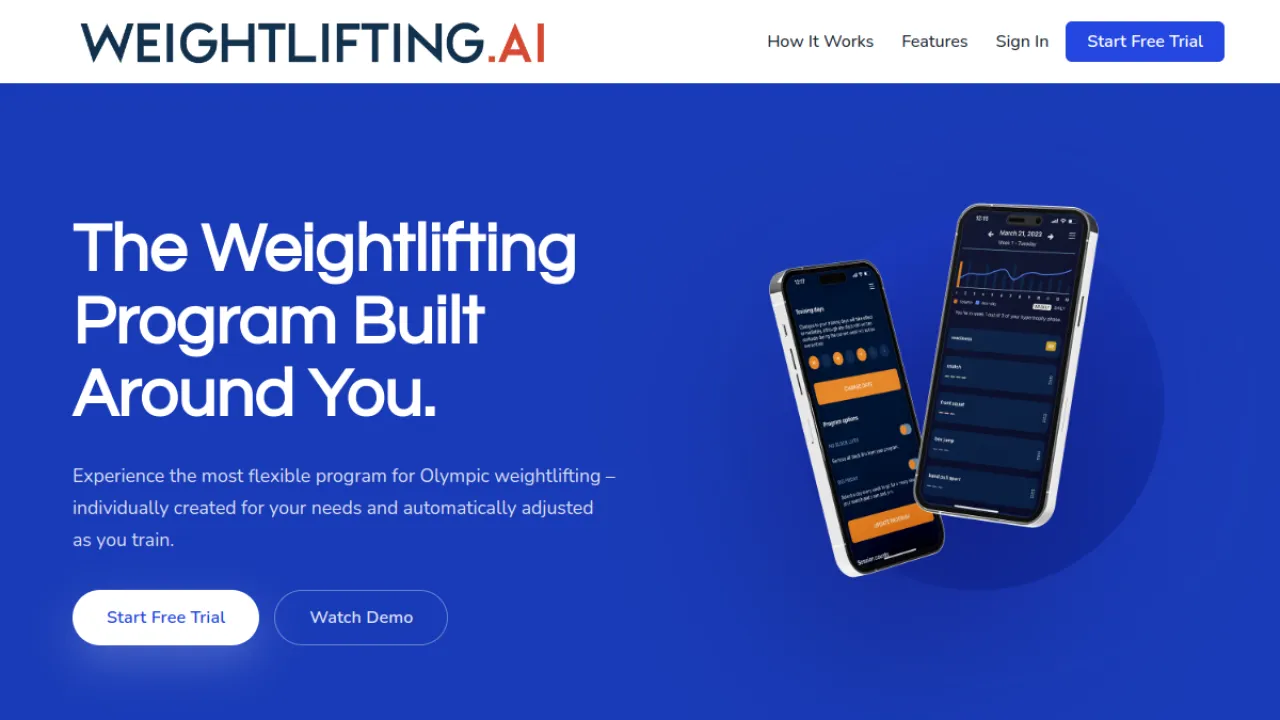
Weightlifting.ai programmes Olympic weightlifting — the snatch and the clean and jerk — with real-time adaptive adjustments, flexible scheduling from three to six sessions weekly, and effort and recovery tracking.
Olympic lifting is technical enough that general strength apps are actively unhelpful for it; the programming logic is different, and so is the relationship between volume and technical quality.
A specialist tool is the right call. It assumes you can already perform the lifts, and public pricing detail is limited.
Key Features
Individualized Olympic weightlifting programs
Real-time adaptive adjustments as you train
Flexible scheduling from three to six sessions weekly
Effort and recovery tracking
Pros and Cons
Pros: Specialized expertise in the snatch and clean and jerk · Programs adapt to your performance and schedule · Affordable alternative to one-on-one coaching
Cons: Narrow niche that assumes lift proficiency · Limited public pricing detail on the site
Pricing
Subscription.
Adapts to: performance and recovery · Needs hardware: no · Watch out: assumes lift proficiency
Full Weightlifting.ai review · weightlifting.ai
16. Vici — Free Running Coaching That Reads Your Readiness
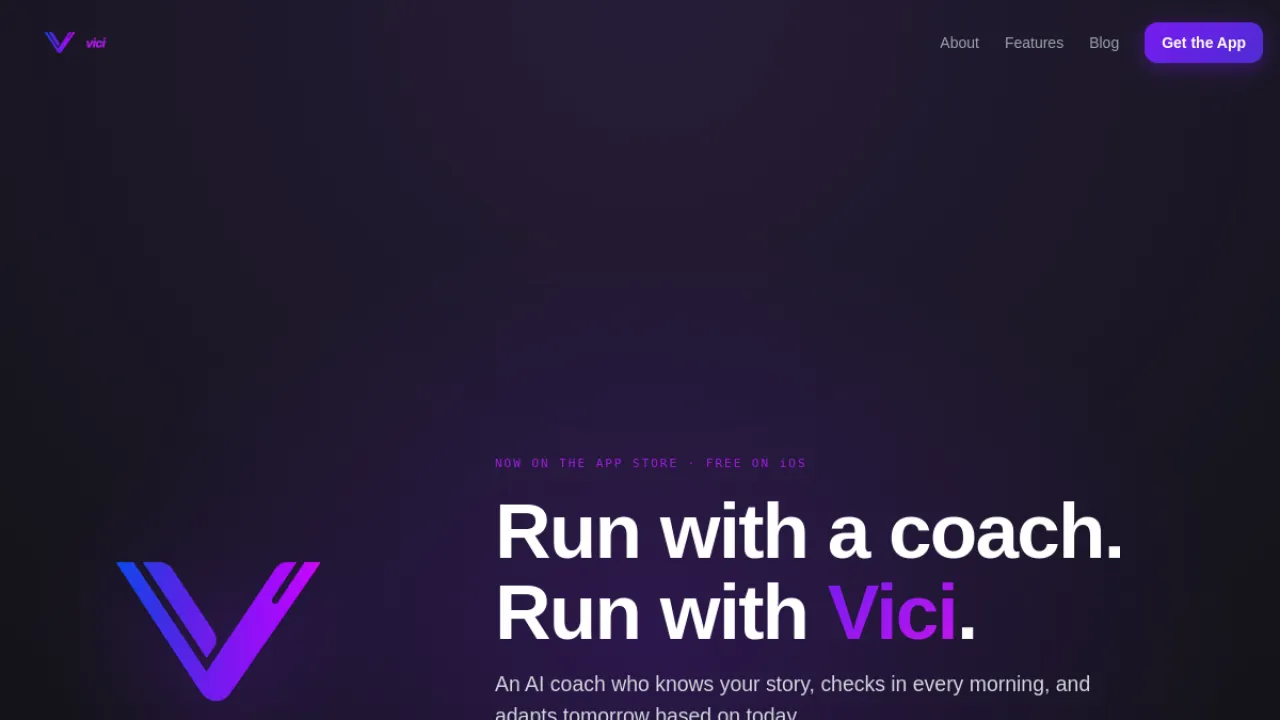
Vici does a morning readiness check-in using sleep, HRV and heart rate, adapts the day's workout to your recovery status, analyses each run afterwards, and answers training questions through Ask Vici — with the core coaching experience free.
Daily readiness adaptation is normally a premium feature, and getting it free is the standout here.
Adjusting today's session to how recovered you actually are is the single most valuable thing level-two adaptation offers.
It is currently iOS-only with Android pending, and readiness features rely on a compatible wearable.
Key Features
Daily morning readiness check-in using sleep, HRV and heart rate
Adaptive workouts that adjust to recovery status
Post-run coaching analysis and feedback
Ask Vici conversational coaching tool
Pros and Cons
Pros: Core coaching experience is free · Plans adapt daily to recovery and performance · Conversational coach answers training questions
Cons: Currently iOS-only, with Android still pending · Readiness features rely on a compatible wearable
Pricing
Free core.
Adapts to: daily recovery data · Needs hardware: wearable for readiness · Watch out: iOS only for now
17. Cycling Coach AI — Plans That Survive a Missed Week
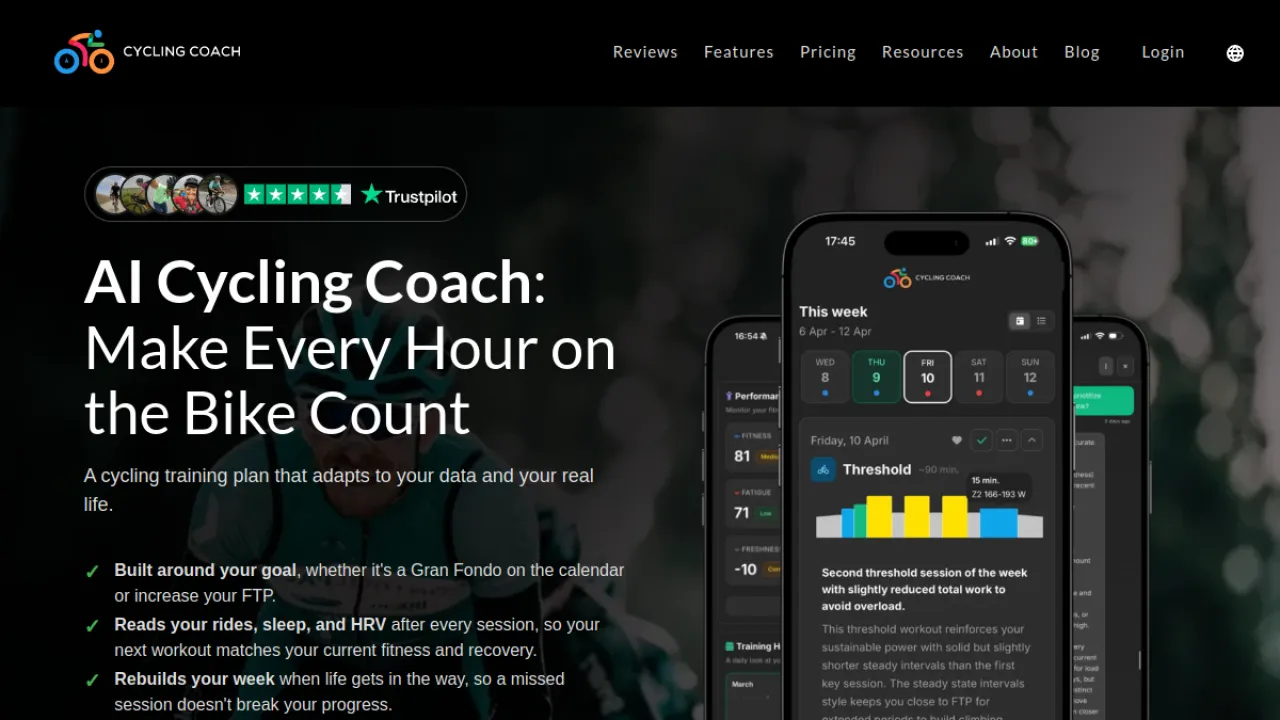
Cycling Coach AI builds plans from power, heart rate, sleep and HRV data, sets specific targets per workout, reschedules missed sessions automatically, and ties strength and nutrition guidance to your training load.
Automatic rescheduling addresses the most common reason training plans fail: you miss three days, the plan no longer makes sense, and you abandon it.
Recovering gracefully from that is worth more than optimal programming.
Precise targets require a power meter or heart-rate monitor, and it states plainly that automated coaching is not a substitute for a human coach or medical advice.
Key Features
Adaptive plans built from power, HR, sleep, and HRV data
Specific power or heart-rate targets per workout
Automatic rescheduling of missed sessions
Strength and nutrition guidance tied to training load
Pros and Cons
Pros: Strongly data-driven and personalized · Flexible plans recover gracefully from missed rides · Broad compatibility with cycling hardware and apps
Cons: Precise targets require a power meter or HR monitor · Automated coaching is not a substitute for a human coach or medical advice
Pricing
Subscription.
Adapts to: power, HR, sleep, HRV · Needs hardware: yes · Watch out: needs a power meter for precision
Full Cycling Coach AI review · cyclingcoachai.com
18. SHRED — Coach-Written Plans, AI-adjusted
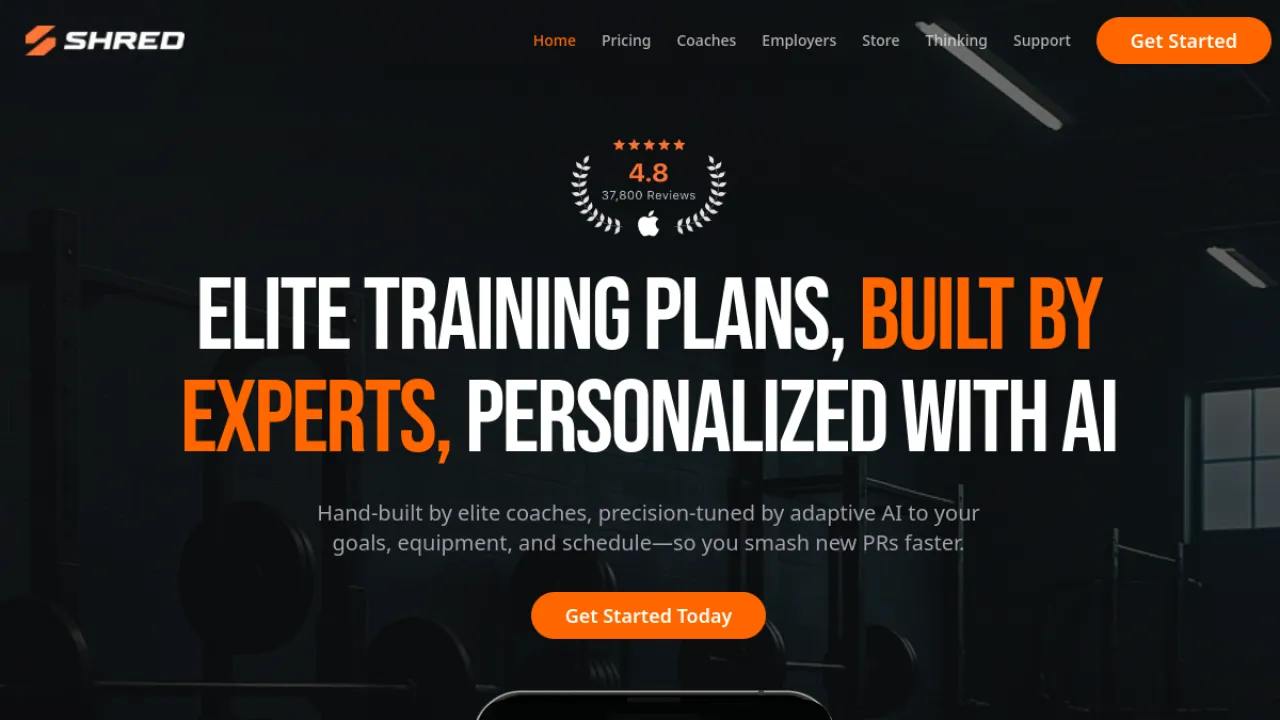
SHRED starts from plans built by human coaches and personalises them with adaptive AI, adjusting weights, rest and tempo automatically, rebuilding the workout instantly when your equipment changes, alongside studio-style classes.
Human-written structure with AI adjustment is a sensible hybrid — you get considered programming rather than algorithmic output, personalised to your numbers.
Instant rebuilds when equipment changes handle the reality of a crowded gym.
Key features sit behind a paid membership, and the guidance is general training rather than medical or rehab advice.
Key Features
Coach-built plans personalized by adaptive AI
Automatic adjustment of weights, rest, and tempo
Instant workout rebuilds when equipment changes
Strength programs plus studio-style classes
Pros and Cons
Pros: Removes guesswork by auto-selecting progression · Adapts quickly to different gym or home equipment · Community features support workout consistency
Cons: Key coaching features sit behind a paid membership · General training guidance, not medical or rehab advice
Pricing
Subscription.
Adapts to: performance and available equipment · Needs hardware: no · Watch out: paywalled core features
19. HumanGO — Endurance Training Around a Real Life
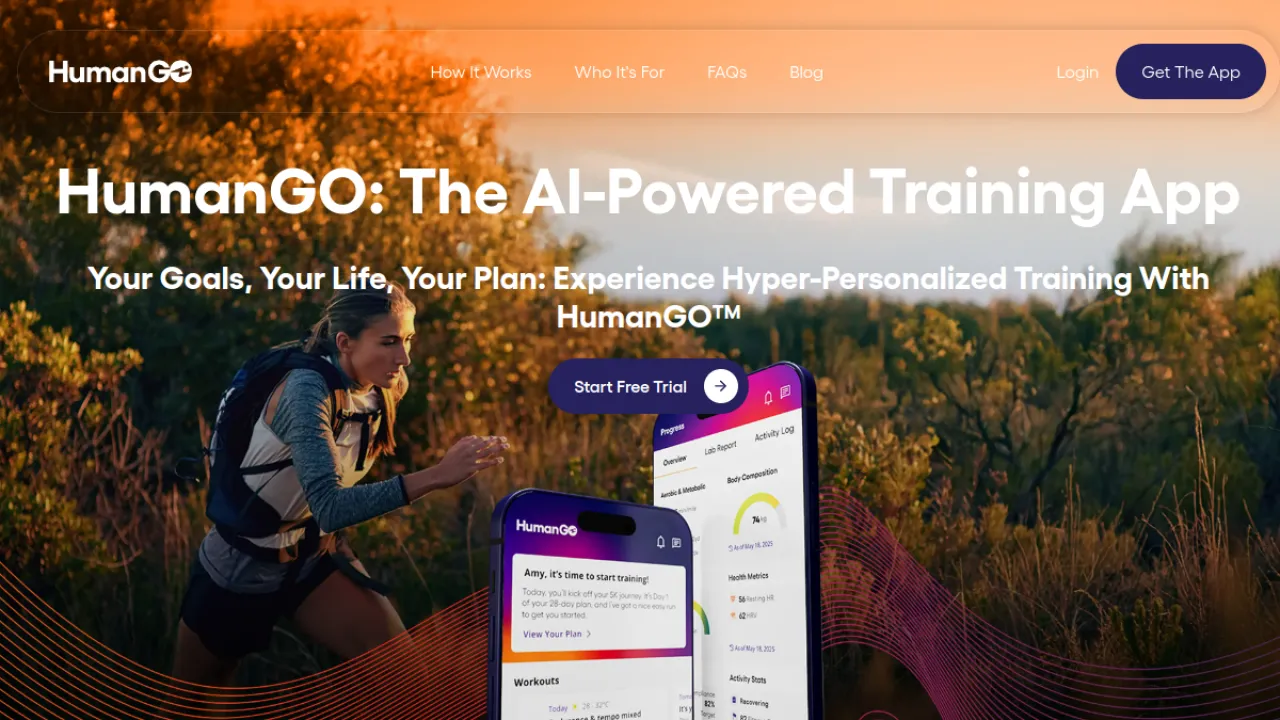
HumanGO builds hyper-personalised plans across running, cycling and triathlon, with Hugo as a conversational AI coach giving post-workout feedback, adaptive scheduling that reshapes plans around your commitments, and wearable integration.
Reshaping around an unpredictable schedule is its clearest strength — for anyone whose training fits around work and family rather than the reverse, a plan that assumes six fixed sessions a week is fiction.
The conversational coach makes it approachable for beginners.
Full value depends on a compatible wearable, and it is a self-coaching tool rather than a replacement for a coach.
Key Features
Hyper-personalized endurance plans for run, bike, and triathlon
Hugo AI coach with post-workout feedback and guidance
Adaptive scheduling that reshapes plans around your life
Wearable and health-metric integration
Pros and Cons
Pros: Adapts well to unpredictable, busy schedules · Covers multiple endurance disciplines in one app · Conversational AI coaching is approachable for beginners
Cons: Full value depends on owning a compatible wearable · A self-coaching tool, not a replacement for a human coach or medical advice
Pricing
Subscription.
Adapts to: performance and schedule · Needs hardware: wearable recommended · Watch out: wearable-dependent
Full HumanGO review · humango.ai
20. JOIN Cycling — World Tour Coaching Methodology
JOIN builds adaptive cycling plans designed by World Tour-level coaches, with Build, Improve and event-preparation plan types, automatic adjustment around missed sessions, and integration with Strava, Zwift and power meters.
The methodology provenance is the differentiator against algorithmic-only competitors — the underlying logic comes from professional coaching practice rather than being derived purely from data.
Plans flex realistically around your schedule.
Best results require a power meter or smart trainer, and algorithmic coaching still cannot fully replace a human.
Key Features
Adaptive cycling plans designed by World Tour-level coaches
Plan types including Build, Improve, and event preparation
Automatic adjustment around missed sessions and schedule changes
Integration with Strava, Zwift, and power meters
Pros and Cons
Pros: Methodology grounded in professional cycling coaching · Plans flex realistically around your schedule · Broad integration with common cycling apps and hardware
Cons: Best results require a power meter or smart trainer · Algorithmic coaching cannot fully replace a human coach
Pricing
Subscription.
Adapts to: power data and schedule · Needs hardware: power meter or smart trainer · Watch out: hardware-dependent
Full JOIN Cycling review · join.cc
21. Athletica — Multisport Including HYROX
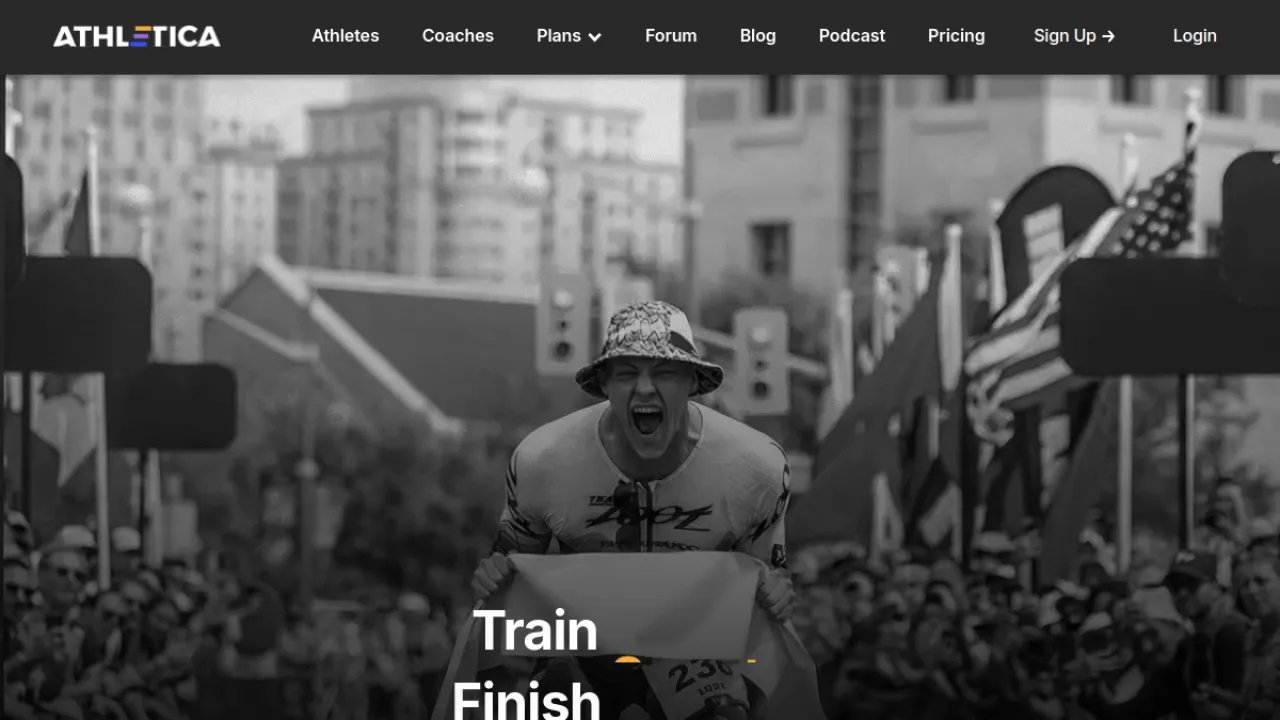
Athletica recalculates plans around missed or changed sessions, answers training questions conversationally, and covers running, cycling, triathlon, rowing and HYROX, syncing with Garmin, Strava, Coros, Wahoo and Concept2.
Rowing and HYROX support is genuinely unusual and worth knowing if either is your sport — most multisport platforms stop at the triathlon disciplines.
Plans adapt intelligently to real life.
It suits structured endurance training rather than casual fitness, full value depends on a compatible wearable, and accuracy requires consistent logging.
Key Features
Adaptive AI training plans that recalculate around missed or changed sessions
Conversational AI Coach for plain-language training questions
Multi-sport support (running, cycling, triathlon, rowing, HYROX and more)
Device sync with Garmin, Strava, Coros, Wahoo and Concept2
Pros and Cons
Pros: Plans adapt intelligently to real life and missed workouts · Covers many endurance disciplines in one platform · Conversational coach makes guidance approachable
Cons: Best suited to structured endurance training, not casual fitness · Full value depends on owning a compatible wearable · Requires consistent workout logging to stay accurate
Pricing
Subscription.
Adapts to: performance and missed sessions · Needs hardware: wearable recommended · Watch out: needs consistent logging
Full Athletica review · athletica.ai
22. Wild.AI — Training That Accounts for Hormones
Wild.AI adapts training recommendations to menstrual cycle phase, syncs nutrition guidance to the same, personalises recovery protocols from biometrics, and supports users across the cycle, hormonal birth control, perimenopause and menopause.
This is the only tool on the list addressing something that affects roughly half the population's training and is routinely ignored by sports science tooling built on studies of male athletes.
Whatever your view on how strong the current evidence is, having the variable modelled at all is a meaningful gap being filled.
Guidance is general rather than individualised medical advice, and value depends on consistent logging or a compatible wearable.
Key Features
Cycle-phase adaptive training recommendations
Cycle-synced nutrition guidance
Personalized recovery protocols from biometrics
Support across cycle, birth control, perimenopause and menopause
Pros and Cons
Pros: Women-specific, hormone-aware approach · Covers training, nutrition and recovery together · Supports multiple life stages and wearables
Cons: Guidance is general, not individualized medical advice · Best value can depend on compatible wearables or consistent logging
Pricing
Freemium.
Adapts to: cycle phase and biometrics · Needs hardware: wearable helps · Watch out: general guidance, not medical
23. BodBot — Injury-Aware Programming
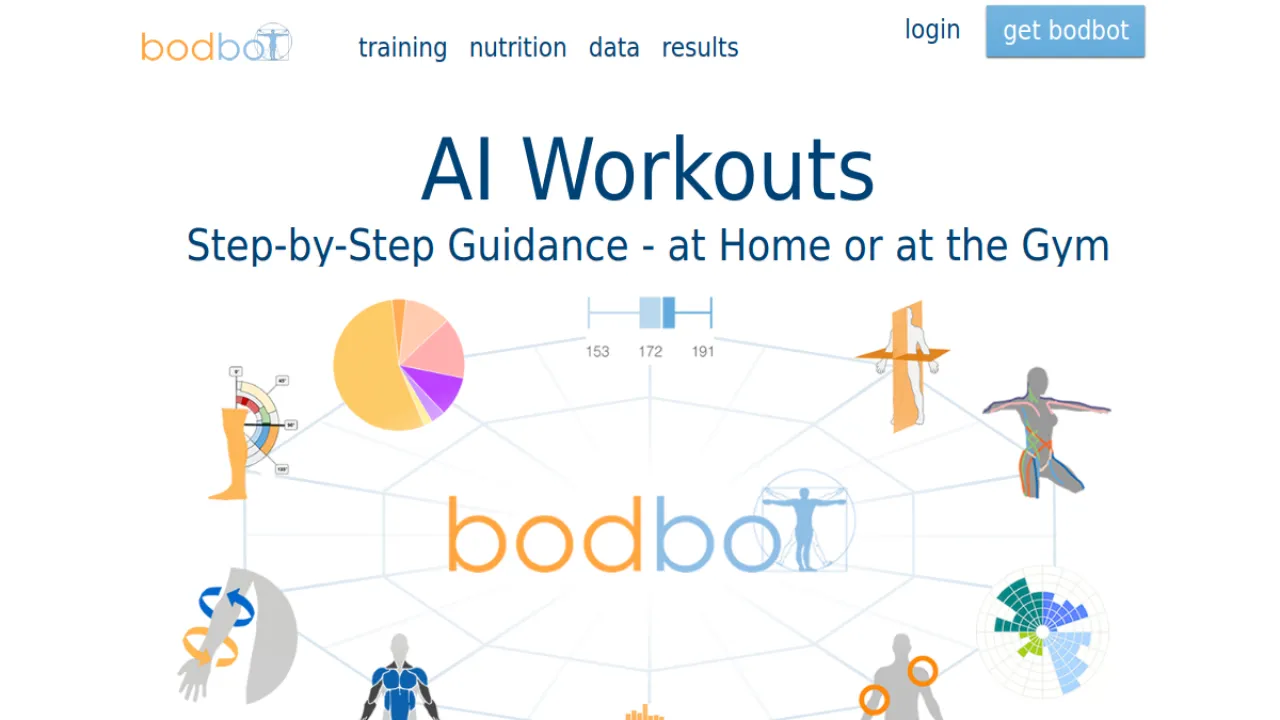
BodBot personalises workouts to goals and equipment, adjusts in real time based on performance and recovery, and — distinctively — offers joint-control options for working around injuries, plus nutrition with macro and micro targets.
Joint-level controls are rare and practically valuable.
Telling an app "my left knee is a problem" and having it programme around that, rather than offering a generic modification, is close to what a trainer does.
Many options make it feel complex for beginners, and full nutrition and advanced features need the paid tier.
Working around an injury is still not the same as rehabilitating one — see a professional for that.
Key Features
Adaptive AI workouts personalized to goals and equipment
Real-time adjustment based on performance and recovery
Joint-control options for injury management
Personalized nutrition with macro and micro targets
Pros and Cons
Pros: Deep, workout-by-workout personalization · Injury-aware joint controls suit many users · Available across web, mobile, and wearables
Cons: Many options can feel complex for beginners · Full nutrition and advanced features need the paid tier
Pricing
Freemium.
Adapts to: performance, recovery and joint limits · Needs hardware: no · Watch out: complex for beginners
Full BodBot review · bodbot.com
24. NXT RUN — For People Chasing a Specific Time
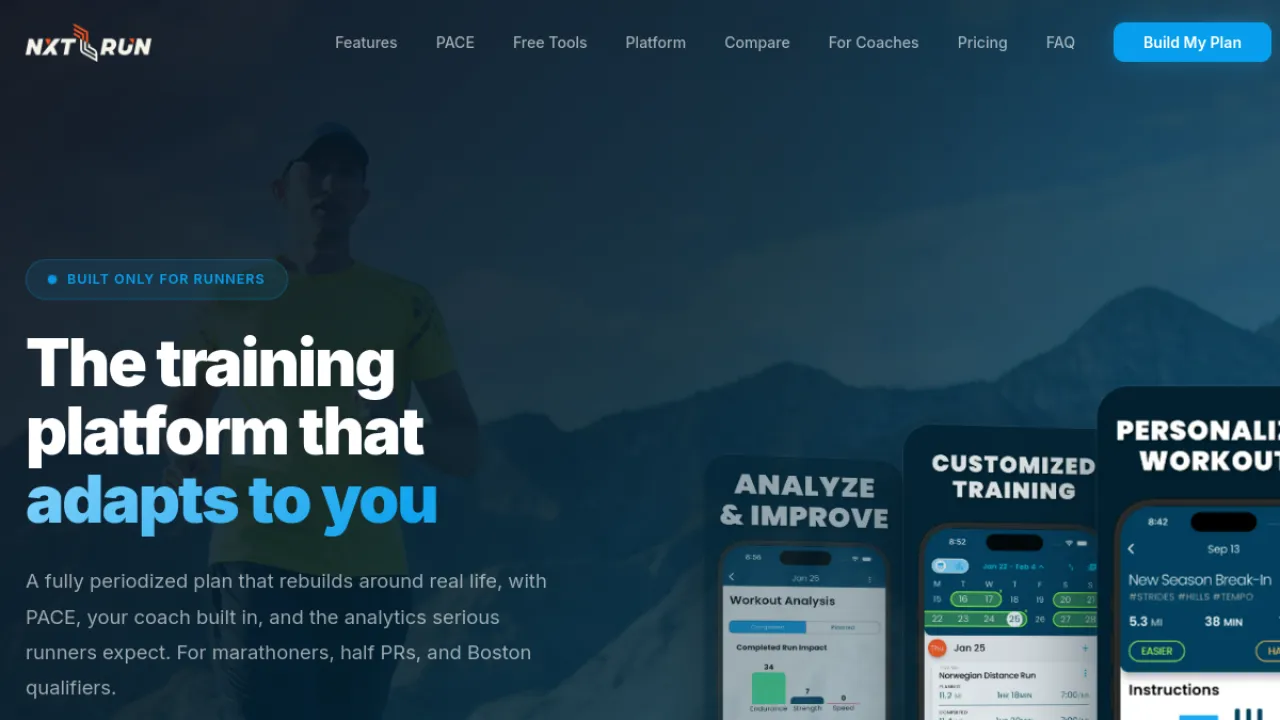
NXT RUN builds race-specific plans from 800m to marathon with proactive adaptive pacing that adjusts before you ask, real-time performance analytics and training-load tracking, syncing with Garmin, Apple Watch, COROS, Wahoo and Strava.
Proactive rather than reactive adjustment is the distinction: it changes the plan when the data suggests you need it, instead of waiting for you to report a problem.
The 800m-to-marathon range covers track athletes as well as road runners, which is unusual.
Aimed at goal-driven runners — Boston qualifiers are the explicit reference point — rather than casual joggers.
Key Features
Race-specific AI training plans from 800m to marathon
Proactive adaptive pacing that adjusts before you ask
Real-time performance analytics and training load tracking
Sync with Garmin, Apple Watch, COROS, Wahoo and Strava
Pros and Cons
Pros: Proactive coaching that adapts ahead of time · Strong structure for race goals and PRs · Available across web, desktop and mobile
Cons: Aimed at serious goal runners, not casual joggers · Pro tier is notably more expensive than basic
Pricing
Freemium.
Adapts to: performance data, proactively · Needs hardware: GPS watch · Watch out: built for goal-focused runners
Full NXT RUN review · nxtrun.ai
25. Racemate — Coaching Plus Race-Day Guidance
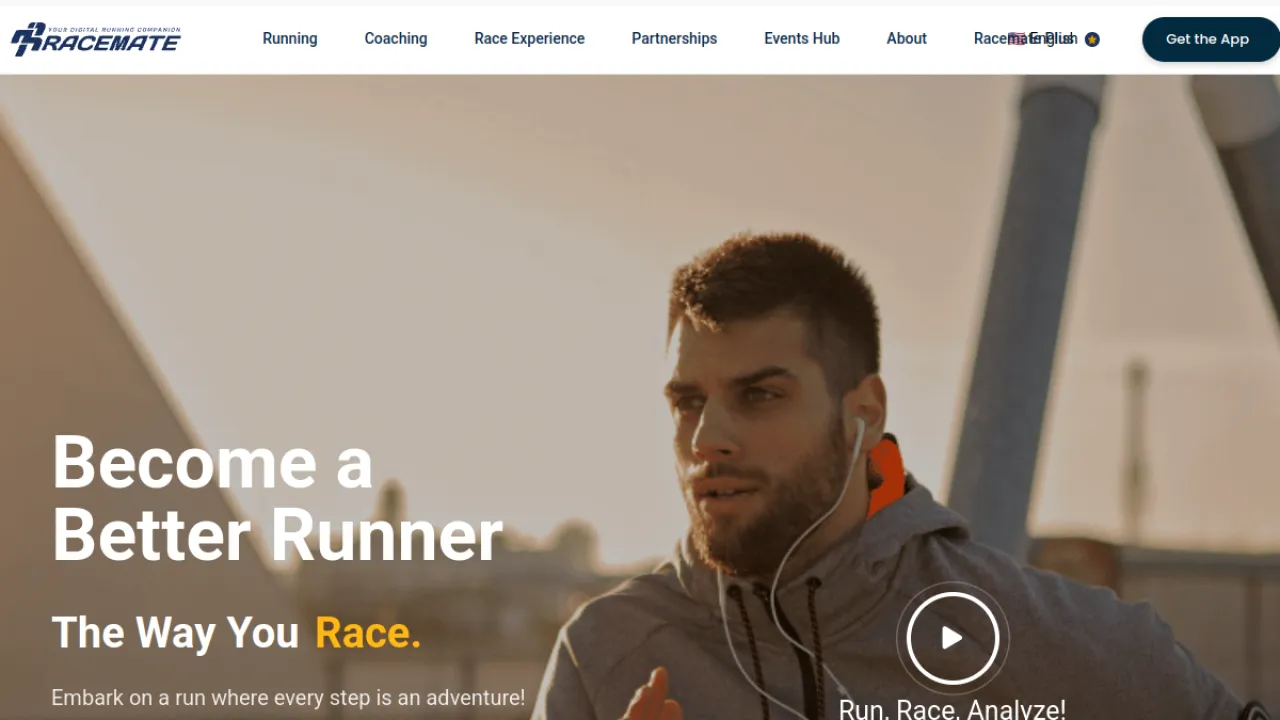
Racemate combines adaptive running plans with selectable coach personas and conversational coaching, then adds live race-day audio guidance, pacing strategy, and course alerts for terrain, water and aid stations.
Race-day audio is the differentiator.
Most running apps stop at the start line; being told about a climb before you hit it, or when the next aid station is coming, is genuinely useful mid-race.
Selectable coach personas let you pick a tone that motivates you rather than irritates you, which affects whether you keep listening.
Best features need the paid Plus subscription, and it is a motivational aid rather than medical guidance.
Key Features
Personalized, adaptive AI running training plans
Selectable coach personas and conversational coaching
Live race-day audio guidance and pacing strategy
Course alerts for terrain, water, and aid stations
Pros and Cons
Pros: Combines training coaching with real race-day tools · Choice of coaching tone fits different motivation styles · Strong device and platform integrations
Cons: Best features require the paid Plus subscription · A motivational self-coaching aid, not medical guidance
Pricing
Subscription.
Adapts to: performance and race context · Needs hardware: phone or watch · Watch out: best features are paid
Full Racemate review · racemate.ai
Choosing an App You Will Still Open in March
Check the hardware requirement before anything else. TrainerRoad, JOIN and Cycling Coach AI want a power meter. AI Endurance, HumanGO, Athletica and Vici's readiness features want a wearable. If you do not have one and will not buy one, choose from the apps that work without: Fitbod, FitnessAI, Freeletics, Dr. Muscle, JuggernautAI, BodBot.
Pick the specialist if you have a specific goal. Powerlifting, Olympic lifting, marathon running and cycling all have dedicated tools here that comprehensively outperform generalists at their sport. General apps are the right choice only when your goal is general fitness.
Prefer apps that recover from a missed week. You will miss sessions. Cycling Coach AI, JOIN, Athletica and HumanGO all reschedule automatically. An app that leaves you three weeks behind a fixed plan is one you will delete.
Be sceptical of camera-based form checking. Zing Coach and Gymscore are useful for catching obvious faults, and both are honest about not replacing a coach. Use them as a second opinion on a lift you already broadly know, not as a way to learn a lift from scratch.
Do not use any of these to manage an injury. Several vendors say this explicitly. BodBot's joint controls help you train around a known limitation, which is a different thing from rehabilitating it. Get assessed by a professional first.
Before You Subscribe: Common Questions
What Is the Best Free AI Fitness App?
Vici, if you run — its core adaptive coaching is genuinely free, including daily readiness adjustment, though it is iOS-only for now.
Gymscore offers free unlimited form analysis.
Fitbod, Jefit, Freeletics and BodBot all have free tiers, but the adaptive features that make them worth using generally sit behind subscriptions.
Can an AI App Replace a Personal Trainer?
For programming, largely yes — automated progressive overload and periodisation are things most self-coached people do badly, and apps do them consistently.
For assessment, correction and accountability, no. A trainer sees how you move, notices what you avoid, and adjusts for things you would not think to report.
The strongest tools here say this themselves.
Do I Need a Smartwatch?
For strength training, no. For endurance training, effectively yes if you want the recovery-based adaptation that distinguishes these apps from a printed plan.
Every app that adapts to readiness — Vici, HumanGO, AI Endurance, Athletica, Cycling Coach AI — needs data it cannot collect from a phone in your pocket.
Are AI Form-Check Features Accurate?
Reasonably, for obvious faults in well-filmed lifts.
Both Zing Coach and Gymscore depend on camera angle and lighting, and both state they cannot replace an in-person coach.
They will catch a rounding back or a shallow squat; they will not catch the subtler compensations a coach would.
Which App Is Best for Beginners?
Fitbod for the gym or Freeletics for home training. Both explain what to do without demanding you understand programming theory first.
Avoid Jefit and BodBot at the start — their depth is a strength later and an obstacle initially — and skip the sport-specific apps until you have chosen a sport.
Is It Safe to Follow an AI Training Plan?
For a generally healthy adult, yes, with the usual caveats: start conservatively, progress gradually, and stop if something hurts in a way that is not normal training discomfort.
If you have a health condition, are pregnant, are returning after injury, or have not exercised in a long time, talk to a doctor or physiotherapist before starting any plan from any app.
Comparing further? Browse the full health and fitness category in the directory to filter by pricing and sport.
About
Ethan Carter
AI Guides & Tutorials Lead
Ethan writes hands-on, step-by-step guides that turn complex AI workflows into something anyone can follow. He focuses on practical setups, prompts, and getting real results from everyday tools.
View profile

