Lovable builds web applications from plain-language descriptions, handling hosting, authentication, payments, connectors, analytics and security as part of the platform. It positions itself for building and running whole products, and names Adidas, Asana, ElevenLabs, Zendesk, Workday and Nvidia among companies whose employees use it.
lovable.dev7 viewsAdded February 21, 2026450K visitors
There is a familiar arc with generated software. The first hour is astonishing — a working interface from a paragraph of description — and the second week is not, because making it real turns out to be the whole job.
Authentication, a database that survives a deploy, payments that reconcile, a domain, monitoring, and somebody's password reset email. None of it is interesting and all of it is required.
Lovable's position is that the platform should carry that. You describe the product; hosting, auth, payments and integrations come with it rather than becoming your next three weeks.
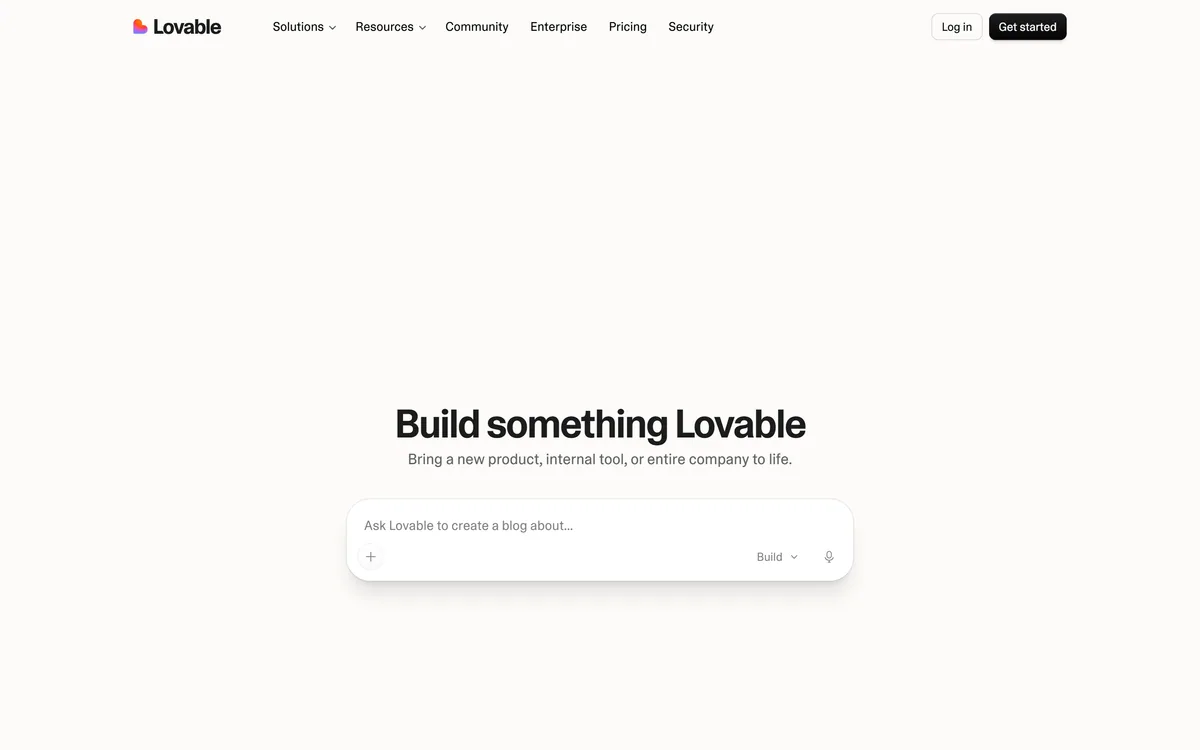
Lovable's homepage, captured 9 September 2026, showing the build-by-describing prompt.
Lovable: Describe It, Then Ship It
Plain language in, production software out — described as building with you in real time.
Infrastructure included: hosting, authentication, payments, connectors, analytics and security.
Not just building — the positioning covers running and managing whole products and businesses.
Web, desktop and mobile, plus integration with tools and platforms you already use.
Named brands including Adidas, Asana, ElevenLabs, Zendesk, Workday and Nvidia listed as places employees build with it.
What Can You Actually Build By Describing It?
Lovable states that if you can describe it, you can build it — creating, running and managing entire products and businesses from scratch, with production-grade software built in real time.
The honest answer is that this works extremely well for a specific and large class of application, and much less well outside it.
It works where the shape is well established. Anything that lists things, forms that collect data, dashboards, admin panels, marketplaces, booking flows, internal tools — these have been built thousands of times, the patterns are settled, and a model has seen enough of them to assemble one correctly.
It works less well where the value is unusual. The specific pricing rule, the domain calculation, the workflow that exists because of how your industry actually operates — that logic is the reason the application exists, and it is precisely what has not been written a thousand times before.
So the realistic division is that generation handles the eighty per cent that is scaffolding and you supply the twenty per cent that is the point. That is still an enormous saving, and it is a different claim from describe it and it exists — the same boundary that code review tools like cubic exist to police.
Generation handles the eighty per cent that is scaffolding. You still supply the twenty per cent that is the reason the application exists.
Where Generated Applications Break
The failures are predictable, and knowing them tells you where to look rather than whether to use the tool.
Edge cases are the first. Generated code handles the path the description implied and often not what happens when a field is empty, a payment half-completes, two people edit the same record, or somebody hits back mid-flow.
Data modelling is the second and the most expensive to get wrong. A schema that fits the first description often does not fit the third feature, and restructuring data after there is real data in it is the hardest change in software.
Security is the third. Authentication is usually handled properly because it is standard; authorisation frequently is not — whether *this* user may see *that* record is application-specific logic, and it is where the actual breaches happen.
Performance is the fourth and arrives late. Code that is fine with fifty rows behaves differently with fifty thousand, and the pattern that causes it is invisible until real data exists. Quality tooling such as DeepSource catches some of this class; a lot of it only appears in production.
Hosting, Auth And Payments Included
Lovable states that it handles end-to-end infrastructure — hosting, authentication, payments and integrations — on enterprise-grade infrastructure, with analytics, connectors, security and SEO listed alongside.
This is the part that separates a builder from a demo generator, and it is worth appreciating how much of the work it removes.
Authentication alone is days of work done properly — sessions, password resets, email verification, social login, the security details that are easy to get subtly wrong and consequential when you do.
Payments are worse. Handling a subscription correctly means webhooks, failed payments, proration, refunds and reconciliation, and every one of those is a place where a mistake costs money rather than time.
Bundling them is the right call for the audience. The trade is dependency: your application's identity, billing and hosting all sit with one vendor, and the question of what leaving looks like is one to ask before you have customers rather than after.
Expect generation to handle the scaffolding and yourself to supply the specific logic.
Check authorisation rules by hand — who may see what is where breaches happen.
Settle the data model before building the third feature, not after.
Test with realistic data volumes, since performance problems arrive late.
Ask what leaving looks like before you have customers depending on it.
Who This Actually Changes Things For
Lovable names Adidas, Asana, ElevenLabs, Zendesk, Workday and Nvidia as companies whose employees build with it, and highlights three students who built an AI learning system.
That pairing is more informative than either example alone, because it points at the same underlying shift from two directions.
For people who cannot code, the change is obvious: software that would previously have required hiring someone is now something they can attempt themselves, and internal tools are where this lands hardest.
For large companies, the change is different and arguably bigger. Employees at those organisations are not short of engineers — they are short of engineering *priority*, and the internal tool that would help fifteen people never reaches the top of a roadmap.
That is the underserved case: the application worth building and not worth a sprint. Whether it should live outside the sanctioned stack is a governance question those organisations then have to answer, and it is the awkward part of the story.
The Question Of Owning What You Built
Any platform that builds, hosts and runs your application concentrates a lot in one place, and that deserves a direct look before it matters.
The concentration is real. Code, hosting, identity, payments and data all sitting with one vendor means one commercial relationship stands between you and your product being available.
The questions worth answering are practical rather than philosophical. Can you export the code, does it run elsewhere, where does the database live, and what happens to authenticated users if you migrate.
None of this is unique to Lovable and it applies to every platform of this kind. It is simply more consequential here because the platform covers more of the stack than a hosting provider or a database service alone.
The pragmatic position is to accept the dependency knowingly for internal tools and prototypes, where switching cost is low, and to interrogate it seriously before a customer-facing product with revenue attached depends on it.
There is a related question about understanding rather than ownership. Code you did not write is code nobody on your team can explain, and six months later that is a maintenance problem — which is why documentation tooling such as Dosu matters more for generated codebases than for hand-written ones.
Building Something Real With Lovable
The failure with generated applications is not the first version — it is the fourth, when the data model no longer fits and nobody checked who can see what.
This sequence front-loads the decisions that are expensive to change later.
Describe the data before the interface — the schema is the hardest thing to change afterwards.
Build one complete flow end to end before adding a second.
Test every edge case yourself: empty fields, back button, half-completed payments.
Read the authorisation rules specifically, since that is where breaches live.
Load realistic data volumes before assuming performance is fine.
Confirm export and portability before anything customer-facing depends on it.
Lovable: What The Platform Includes
Product type
AI application builder and hosting platform
Positioning
If you can describe it, you can build it
Scope
Create, run and manage entire products and businesses
Infrastructure
Hosting, authentication, payments, integrations
Included services
Analytics, cloud, connectors, security, agent integrations, SEO and AI search
Platforms
Web, desktop and mobile project management
Enterprise
Enterprise-grade infrastructure stated for full-stack software that scales
Named brands
Adidas, Asana, ElevenLabs, Zendesk, Workday and Nvidia listed
Community
Discord, Reddit, X, YouTube and LinkedIn, plus a partner and expert programme
Governance
Platform rules, abuse reporting, security reporting and a DPA published
Key features of Lovable
Application generation from plain-language descriptions
Real-time building alongside you
Hosting included
Authentication handled by the platform
Payment processing built in
Connectors and agent integrations
Analytics, security and SEO features
Web, desktop and mobile project management
Pros & cons
Pros
7
Carries the infrastructure that kills most generated prototypes
Authentication and payments done properly are days of work removed
Excellent on conventional application shapes, which is most internal software
Puts working software in front of users in hours rather than quarters
Serves both non-coders and engineers at large companies without roadmap priority
Published platform rules, DPA and security reporting
Manageable from web, desktop and mobile
Cons
7
Unusual domain logic — the reason your product exists — is what it handles worst
Authorisation is application-specific and frequently where generated code fails
Data model mistakes are the most expensive to correct and appear early
Performance problems only surface once real data volumes exist
Concentrates code, hosting, identity and billing with one vendor
Portability and export terms are not stated on the pages we read
Named brand logos indicate employee usage, not endorsement
Best For
Teams needing internal tools that never reach an engineering roadmap
Founders validating a product before hiring engineers
Non-technical people building conventional applications
Engineers at large companies working around priority queues
Anyone whose previous attempts stalled at authentication or payments
Lovable Against Other Building Tools
Developer tools differ by whether they build the application, review it, or document it.
Tool
What it produces
Infrastructure
Best for
Lovable
Working applications from descriptions
Hosting, auth and payments included
Internal tools and products without an engineering team
Last checked . Read from lovable.dev in a browser session on the date above, with the screenshot captured alongside.
Positioned as an AI app builder for building web apps and websites
Stated that if you can describe it, you can build it
Described as creating, running and managing entire products and businesses from scratch
Stated as building production-grade software with you in real time
End-to-end infrastructure stated, covering hosting, authentication, payments and integrations
Analytics, cloud, connectors, security, agent integrations, payments and SEO and AI search listed
Enterprise-grade infrastructure stated for full-stack software that scales
Web, desktop and mobile project management stated
Adidas, Asana, ElevenLabs, Zendesk, Workday and Nvidia named as companies whose employees build with it
A customer story referenced about three students building an AI learning system
Footer confirms platform rules, abuse reporting, security reporting, a DPA, and partner, expert and affiliate programmes
What we could not confirm: pricing and how usage is metered; which models generate the code; whether generated code can be exported and run elsewhere, which is the central portability question; where application databases are hosted and under what jurisdiction; what the named brands' employees actually build with it, since logos indicate usage rather than endorsement; and what authorisation controls generated applications receive by default. We did not build anything.
Should You Build Your Product In Lovable?
Prototype here when
You need an internal tool that would never reach an engineering roadmap.
The application shape is conventional — lists, forms, dashboards, bookings.
Authentication and payments are the reason your previous attempts stalled.
You want a working prototype in front of users this week rather than next quarter.
Switching cost is low because the tool is internal rather than customer-facing.
Hire an engineer when
The value of the product is in unusual domain logic rather than the scaffolding.
Authorisation rules are complex and getting them wrong is a serious exposure.
You expect data volumes where performance patterns matter from day one.
Regulatory constraints require you to control hosting and data residency.
Vendor concentration across code, hosting, identity and billing is unacceptable.
More App Building Tools
Adjacent products for reviewing, understanding and testing what gets built.
cubic — reviewing code against your team's standards
DeepSource — static analysis and AI review as a gate
Dosu — documenting a codebase you did not write by hand
Bug0 — finding defects that only appear at runtime
CodeScene — measuring whether the codebase stays healthy
Editor's Verdict
4.1/5
The interesting part of Lovable is not the generation, which many products now do adequately. It is that the platform carries hosting, authentication, payments, connectors and security, because those are what stand between a demo and something people can actually use. Most generated applications die at exactly that boundary — the prototype works and nobody can log in. Handling it end to end is a real product decision. The limit is the one every tool in this category shares: generated code is excellent at the well-trodden parts of an application and unreliable at the specific logic that makes it yours. AInexfinder Editor Score: 4.1/5.
Lovable pricing
AInexfinder does not list plan prices or billing details. For current pricing, plans, and trials, visit the official Lovable website.
Vendor pricing, credits, and billing policies change over time. Always confirm on the official site before you buy.
Frequently asked questions
What is Lovable?
Lovable builds web applications from plain-language descriptions and provides the surrounding infrastructure — hosting, authentication, payments, connectors, analytics and security. It positions itself for creating, running and managing whole products rather than only generating prototypes.
What can it actually build well?
Anything with a well-established shape: lists, forms, dashboards, admin panels, marketplaces, booking flows, internal tools. Those have been built thousands of times, the patterns are settled, and a model has seen enough of them to assemble one correctly.
Where does generation fall short?
On the logic that makes your product yours — the specific pricing rule, the domain calculation, the workflow that exists because of how your industry works. That is precisely what has not been written a thousand times, and it is the reason the application exists.
What breaks in generated applications?
Edge cases, data modelling, authorisation and performance. Generated code handles the path the description implied, not empty fields or half-completed payments. Authentication is usually right because it is standard; authorisation — whether this user may see that record — frequently is not.
Why does including infrastructure matter so much?
Because that is where generated prototypes die. Authentication alone is days of work done properly, and payments are worse — webhooks, failed charges, proration, refunds, reconciliation — each a place where a mistake costs money rather than time.
What is the trade for that convenience?
Dependency. Your code, hosting, identity, billing and data sit with one vendor, so one commercial relationship stands between you and your product being available. That is acceptable knowingly for internal tools and worth interrogating before customer-facing revenue depends on it.
Why do large companies use it?
Not for lack of engineers but for lack of engineering priority. The internal tool that would help fifteen people never reaches the top of a roadmap, and that is the genuinely underserved case — the application worth building and not worth a sprint.
What should I get right first?
The data model. A schema that fits the first description often does not fit the third feature, and restructuring data once real data exists is the hardest change in software. Describe the data before the interface.
What should I check by hand?
Authorisation rules and edge cases. Who may see what is application-specific logic and is where actual breaches happen. Then test empty fields, the back button mid-flow, and half-completed payments — the paths a description never mentions.
Can I take the code elsewhere?
The pages we read do not state export or portability terms, and it is the central question for anything customer-facing. Ask whether the code exports, whether it runs elsewhere, where the database lives, and what happens to authenticated users if you migrate.
Daniel reviews AI tools the slow way — by actually using them on real projects. His reviews cover what works, what breaks, and who each tool is genuinely a good fit for.
Daniel and the AInexfinder editorial team research Lovable using public product information, listing evidence, and (when available) hands-on checks. Scores reflect listing completeness and transparency — not paid placement.
Listings may include affiliate or sponsored placements, which are labeled when present. Editorial scores and cons are not sold. See our affiliate disclosure and review methodology.
Base44 is a no-code AI platform, owned by Wix, that builds working apps, websites and agents from plain-language descriptions. Backend, authentication, hosting and integrations to Slack, Notion, HubSpot and Salesforce come included rather than assembled.
Emergent is an AI vibe-coding tool that turns a plain-language description into a working web or mobile app through a describe, refine and launch flow, aimed at founders and non-engineers validating an idea or MVP quickly, with the usual limits of generated code.
Replicate is a developer platform to run, fine-tune and deploy machine-learning models via API, with thousands of community and official models callable in one line, custom-model hosting through its open-source Cog tool, and pay-per-second compute that scales to zero.
GitHub Copilot is an AI coding assistant that spans completion, chat, agent mode, automated code review, and a cloud agent that opens pull requests, working across VS Code, Visual Studio, JetBrains, Xcode, Neovim, Eclipse, the CLI, and github.com.
Replit AI turns a written description into a working application — the Agent writes the code, and Replit supplies the database, authentication, hosting, and monitoring, so a prototype goes live without a local setup or a deployment pipeline.
Momentic is an agentic end-to-end testing platform where AI writes tests as plain-English YAML, runs them across web, iOS and Android, and self-heals them when the UI changes, with an autonomous bug-bashing agent, an MCP server and CI integration.