Tamarind Bio is a cloud platform that puts the state of the art in computational biology, AlphaFold, RFdiffusion, ProteinMPNN, GROMACS and over a hundred more tools, behind one web interface and API, so scientists can design antibodies, peptides, enzymes and small molecules without deploying anything.
VueMotion
Verified
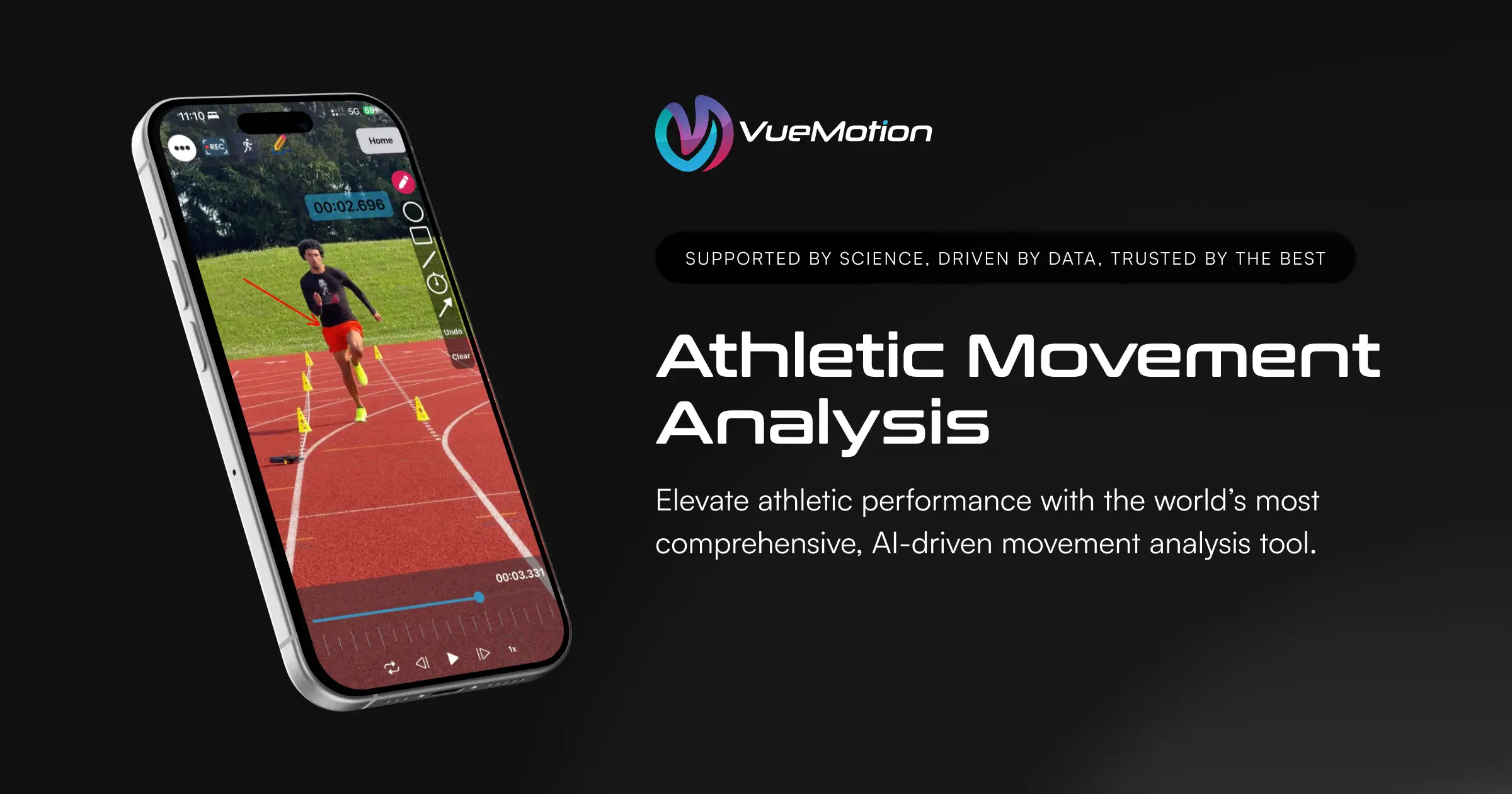
VueMotion analyses athlete movement from ordinary phone video, producing split times, step length, step frequency, ground contact time, flight time and thigh angular velocity across acceleration, running, deceleration, change of direction and jumping tests in 11 sports.
4.2Editor Score
vuemotion.com5 viewsAdded April 29, 20266K visitors
Biomechanical testing has always been a resource problem rather than a knowledge problem. The science of how an athlete accelerates has been settled for decades; getting a number for your athlete meant a lab, a day, and a budget almost nobody has.
VueMotion's proposition is that a phone on a tripod and five cones on any surface produces the same class of measurement.
That claim is either a significant democratisation or an overreach, and the useful thing about this product is that it gives you enough information to judge which.
VueMotion: Biomechanics From A Phone Camera
- A phone, a tripod and five cones — no sensors, markers or lab hardware required.
- Five test types: acceleration, upright running, deceleration, change of direction and jumping.
- Every metric published: split times, step length, step frequency, ground contact time, flight time and thigh angular velocity.
- Independent validation named — studies against motion capture through a partnership with the Australian Catholic University.
- 11 sports supported, with the domain now on vuemotion.com after moving from the .ai address.
What Can Computer Vision See In A Sprint?
The platform lists exactly what it outputs per analysis: split times and average and maximum speeds, total time, step length, step frequency in hertz, ground contact time, flight time, thigh angular velocity and kinograms, delivered as augmented reality video plus individual and team reports.
Publishing that list is the most important thing on the site, because it converts a vague capability claim into a set of specific, testable measurements.
Most of these are things a coach with a stopwatch cannot get at all. Split times, yes, with practice. Ground contact time measured in milliseconds, no — that requires frame-level analysis, and at 4K 60fps you have the temporal resolution to do it.
Thigh angular velocity is the most interesting inclusion, because it is a mechanism variable rather than an outcome one. Two athletes can run the same time with entirely different limb mechanics, and only one of them is close to their ceiling.
The honest limit is that video sees positions over time and infers everything else. Force, which is what actually accelerates a body, is not measured — it is derived. That derivation can be good, and it is not the same as a force plate.
A stopwatch gives you the outcome. Ground contact time and thigh angular velocity give you the mechanism, and only one of those tells you what to change.
Reading The Validation Claim Properly
The site states patent-pending, scientifically validated algorithms, and elsewhere states that it has partnered with several universities including the Australian Catholic University, which has carried out several independent validation studies against the gold standard of motion capture.
That second statement is meaningfully stronger than the first, and the difference matters.
Scientifically validated is a phrase anyone can print. Naming a specific university that ran comparisons against marker-based motion capture is a checkable claim, and it invites the question any buyer should ask: validated for which measures, at what error margin, under what conditions.
Those details decide usability. A system agreeing with motion capture within two percent on split times and fifteen percent on ground contact time is useful for one purpose and misleading for another, and only the published study says which.
The site points to a validation page and invites contact for further information, which is the right posture. Anyone spending real money on this should read the studies rather than the summary — including whether they cover the specific tests and sports they intend to use.
Eleven Sports And What Movement Profiles Show
The supported list is specific: athletics, Australian rules football, baseball, basketball, cricket, ice hockey, netball, NFL, rugby league, rugby union and soccer.
A named list rather than a claim of universal applicability is a good sign, and the composition tells you what the underlying analysis is built around.
Every sport there involves sprinting, decelerating and changing direction under time pressure. What is absent is equally informative — no swimming, no cycling, no gymnastics, no combat sports, because those movements are not what this measures.
The output is described as an athlete movement profile with precise measurements, so interventions and performance can be tracked objectively over time. That framing is the correct one, because a single test is nearly worthless.
Biomechanical measurement earns its value through repetition. A ground contact time on one Tuesday is a number; the same measurement across a season, either side of a training block or a return from injury, is evidence — which is the same logic that makes daily readiness tracking in Vici useful and one-off measurement mostly not.
- Confirm your sport is on the list of eleven before committing.
- Read the validation studies for the specific tests you will use.
- Standardise surface, footwear and camera position across sessions.
- Test the same athletes repeatedly rather than everyone once.
- Treat derived force estimates as estimates, not plate data.
Patent-Pending And Scientifically Validated
Both phrases appear together on the site, and they pull in opposite directions in a way worth understanding.
Patent-pending means an application has been filed. It says nothing about whether a patent will be granted, and pending status is not evidence of anything except that a filing exists.
It is also, for a buyer, close to irrelevant. Whether the vendor can stop a competitor copying its method has no bearing on whether the measurements are accurate for your athletes.
Scientifically validated is the claim that matters, and it is the one with substance behind it here — a named institution, comparisons against motion capture, and an invitation to request further detail.
The general lesson is worth stating because this category is full of it: in sports technology, patent language is marketing and independent validation is evidence. MacroFactor is a useful comparison, because it publishes its method rather than a filing status. When a vendor offers both, read the second and ignore the first.
What The Setup Actually Requires
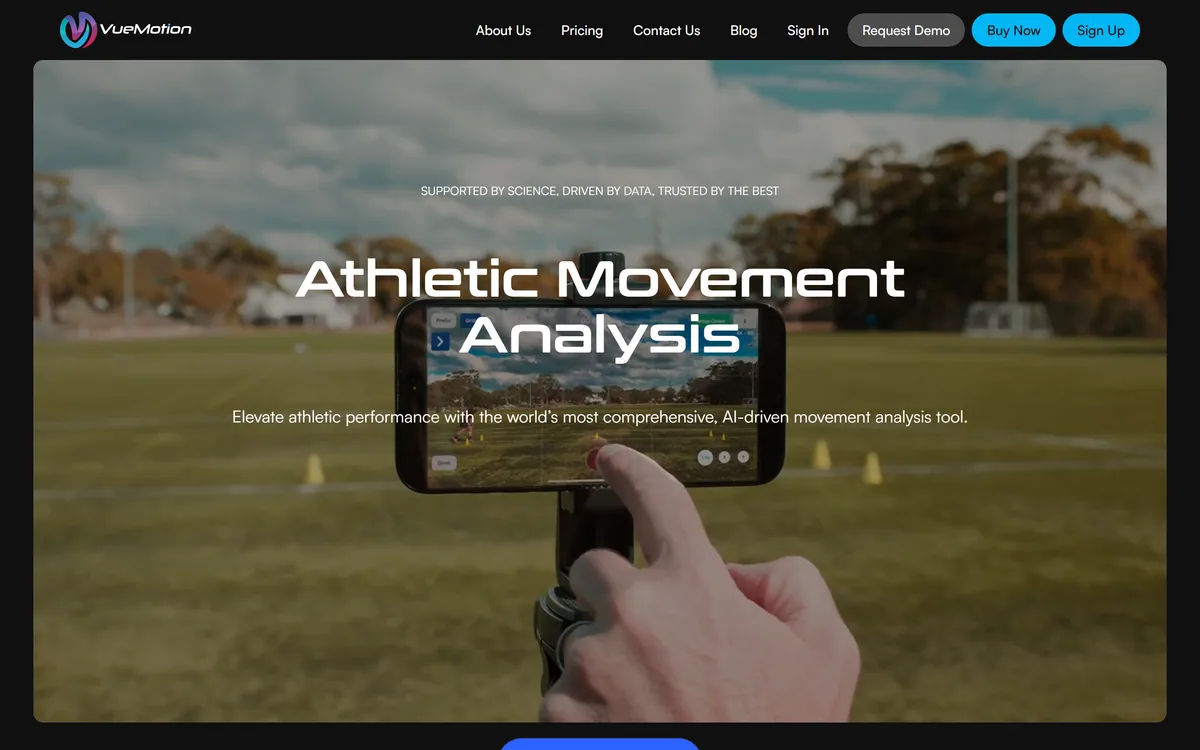
The stated equipment is a smartphone, a tripod and five cones, with capture at 4K 60fps through an iPhone app carrying indoor and outdoor modes to reduce motion blur, and the ability to control up to six iPhone cameras simultaneously from one device.
The multi-camera control is the feature that turns this from a demo into something a team can run.
Testing a squad one athlete at a time with one phone consumes an afternoon. Six synchronised cameras with remote start and stop means a whole team in a few minutes, which is the difference between testing once a season and testing regularly.
The motion blur point is more technical than it sounds and genuinely matters. Standard phone video at typical shutter speeds smears a fast-moving limb across frames, and any measurement of contact time depends on knowing precisely when the foot landed.
The remaining constraints are practical. Six iPhones is a real hardware requirement, camera position and surface need to be consistent between sessions for comparisons to mean anything, and the app is iOS with a web platform alongside it. Using a phone camera as a measuring instrument is a pattern worth watching, and Derm AI applies it to a very different problem.
Testing Athletes Without A Motion Lab
The failure mode with accessible testing is testing everyone once, producing a spreadsheet nobody revisits and no decision anybody makes.
This sequence sets up measurement you can actually compare against itself later.
- Read the validation studies for the tests you intend to run.
- Fix a protocol — surface, footwear, cone distances, camera position, time of day.
- Record that protocol in writing so a colleague can repeat it exactly.
- Test a small squad and establish each athlete's own baseline.
- Re-test after a training block, not after a single session.
- Compare each athlete against themselves before comparing across the squad.
VueMotion: Sports And Partners
| Domain | vuemotion.com; the .ai address redirects here |
|---|---|
| Positioning | AI-driven athletic movement analysis, accessible from a phone or the web |
| Sports supported | Athletics, AFL, baseball, basketball, cricket, ice hockey, netball, NFL, rugby league, rugby union and soccer |
| Test types | Acceleration, upright running, deceleration, change of direction and jumping |
| Equipment needed | A smartphone, a tripod and five cones — no sensors or markers |
| Capture | 4K at 60fps, with indoor and outdoor modes to limit motion blur |
| Multi-camera | Up to six iPhone cameras controlled from one device |
| Outputs per credit | AR video plus individual and team reports |
| Measures | Split times, average and maximum speed, total time, step length, step frequency, ground contact time, flight time, thigh angular velocity and kinograms |
| Validation | Independent studies against motion capture via the Australian Catholic University, per the site |
| Partner product | PSR credits from Speedworks, a UK coach education company — Projection, Switching and Reactivity |
| Displayed scale | 100k athletes, 80 elite teams, 11 sports, 50 countries and 10M frames analysed |
Is VueMotion Right For Your Programme?
Test athletes when
- Your sport is one of the eleven on the list.
- You want objective evidence either side of a training intervention.
- Return-to-play decisions currently rest on subjective assessment.
- A lab is out of reach on budget, distance or scheduling.
- You can standardise a protocol and repeat it across a season.
Book a lab when
- You need force plate data rather than derived estimates.
- The movement is swimming, cycling, gymnastics or combat sport.
- A clinical or medico-legal decision depends on the numbers.
- Nobody will own re-testing, so you would measure once and stop.
- Your squad has no consistent surface or setup to test on.
Key features of VueMotion
Sprint, deceleration, change of direction and jump analysis
Split times, speeds and total time per test
Step length, step frequency and ground contact time
Flight time and thigh angular velocity
Kinograms and augmented reality overlay video
Individual and team reports
Up to six synchronised iPhone cameras from one controller
Drawing, annotation, voiceover, timer and video comparison in the app
Pros & cons
Pros
7- Publishes every metric it outputs rather than describing capability vaguely
- Names a specific university and independent validation against motion capture
- Replaces lab hardware with a phone, a tripod and five cones
- Multi-camera control makes whole-squad testing practical
- Addresses motion blur, which genuinely affects contact-time accuracy
- A named sport list is more honest than claiming universal applicability
- Thigh angular velocity is a mechanism measure, not just an outcome
Cons
7- Force is derived from video rather than measured on a plate
- Validation error margins and conditions are not stated on the page
- Patent-pending language sits alongside the evidence and adds nothing
- Sports outside the eleven listed are not served
- Six iPhones is a real hardware requirement for squad testing
- Credit-based pricing makes cost per session harder to predict
- Comparisons need a standardised protocol most teams will not maintain
Best For
- Strength and conditioning coaches in the listed sports
- Sports medicine staff making return-to-play decisions
- Academies without access to a motion lab
- Athletics coaches working on sprint mechanics
- Programmes measuring the effect of a training block
VueMotion Against Other Analysis Platforms
Performance tools differ by what they measure and how often.
| Tool | Measures | Cadence | Best for |
|---|---|---|---|
| VueMotion | Sprint and jump biomechanics | Per test session | Teams tracking movement quality |
| Vici | Training load and recovery | Daily | Individual runners with a goal |
| MacroFactor | Energy intake and body weight | Weekly | Nutrition alongside training |
| RelaxFrens | Relaxation and focus | Per session | Recovery between blocks |
| LabReportAI | Written reports | Per document | Reporting rather than measurement |
More Sports And Health Tools
Other tools across training, recovery and physical measurement.
- Vici — daily training load and readiness
- MacroFactor — nutrition measured the same way
- RelaxFrens — recovery around hard training
- Reflection — the psychological side of a season
- Derm AI — another phone camera used as an instrument
VueMotion: Read After The Domain Move
Last checked . Read from vuemotion.com in a browser session on the date above, after confirming the .ai domain redirects there. The screenshot was captured at the same time.
- The .ai domain confirmed as redirecting to vuemotion.com, with the product and name unchanged
- Positioned as AI-driven athletic movement analysis accessible from a smart device or webpage
- Eleven sports listed by name, from athletics through to soccer
- Test types listed as acceleration, upright running, deceleration, change of direction and jumping
- Equipment stated as a smartphone, a tripod and five cones, with no sensors or bulky hardware
- Capture stated at 4K 60fps with indoor and outdoor modes to minimise motion blur
- Up to six iPhone cameras stated as controllable from a single device
- Measures published including split times, step length, step frequency, ground contact time, flight time, thigh angular velocity and kinograms
- Algorithms described as patent-pending and scientifically validated
- University partnerships stated, naming the Australian Catholic University as having run independent validation against motion capture
- PSR credits described as a partner product from Speedworks, a UK coach education company, standing for projection, switching and reactivity
- Displayed figures of 100k athletes, 80 elite teams, 11 sports, 50 countries and 10M frames analysed
What we could not confirm: our capture ended inside the frequently asked questions before the site footer, so we read nothing below that point and make no claim in either direction about what is published there. We also could not confirm the error margins or conditions in the validation studies, which should be read directly; whether validation covers every listed test and sport; how force-related outputs are derived; what the displayed athlete and team figures count; and how AI and PSR credits are priced. We did not test an athlete or run an analysis.
Editor's Verdict
4.2/5This is the rare sports technology product whose claims can actually be checked, and it invites you to check them — naming a university that ran independent validation against motion capture, listing every metric it outputs, and stating exactly what equipment you need. Replacing a motion lab with a phone, a tripod and five cones is a genuine change in who can access biomechanical testing. It is credit-based rather than a flat subscription, iOS-first, and the sports covered are a specific list rather than every sport, so check yours is on it. AInexfinder Editor Score: 4.2/5.
VueMotion pricing
AInexfinder does not list plan prices or billing details. For current pricing, plans, and trials, visit the official VueMotion website.
Visit official website for pricingVendor pricing, credits, and billing policies change over time. Always confirm on the official site before you buy.
Reviews
Log in to write a review.
User Reviews
No reviews yet. Be the first to share your experience with VueMotion.
Reviewed by Daniel Reed
Assigned reviewer
Daniel ReedSenior AI Tools Reviewer
Daniel reviews AI tools the slow way — by actually using them on real projects. His reviews cover what works, what breaks, and who each tool is genuinely a good fit for.
Hands-on reviewsProduct testingAI software
Daniel and the AInexfinder editorial team research VueMotion using public product information, listing evidence, and (when available) hands-on checks. Scores reflect listing completeness and transparency — not paid placement.
- Last verified
- Methodology
- How we review AI tools
- Sources used
- vuemotion.com
- AInexfinder listing fields (features, pros/cons, description)
- Public vendor pages when available
- Editorial policy
- Listings may include affiliate or sponsored placements, which are labeled when present. Editorial scores and cons are not sold. See our affiliate disclosure and review methodology.
Related tools
Iktos is an AI and robotics drug-discovery company combining generative molecular design (Makya), AI retrosynthesis (Spaya) and automated synthesis and testing robotics into a design-make-test-analyse loop aimed at shortening early drug discovery, offered to pharma and biotech research teams.
EOSDA Crop Monitoring is a satellite-based precision agriculture platform from EOS Data Analytics. It combines Sentinel-2 and PlanetScope imagery with ten vegetation indices, growth-stage tracking, risk maps, yield estimation and variable-rate application maps.
FreemiumEmerging & Specialized
Insilico Medicine pairs the Pharma.ai software suite — PandaOmics, Chemistry42, inClinico and more — with its own clinical pipeline. Its lead candidate rentosertib, a TNIK inhibitor for idiopathic pulmonary fibrosis, has Phase IIa results published in Nature Medicine.
Persefoni is a carbon-accounting and sustainability-management platform for measuring, reporting and decarbonizing emissions across Scopes 1-3, with a financed-emissions module for financial services and a native AI copilot built on its own carbon-accounting model.
FreemiumEmerging & Specialized
Taranis provides AI crop intelligence from leaf-level aerial imagery, detecting stand counts, weeds, insect damage, nutrient deficiencies and disease pressure across whole fields. Its products include Taranis Yield Impact and Ag Assistant, with a mobile app and web dashboard.
Compare:VueMotion vs Tamarind BioVueMotion vs IktosVueMotion vs EOSDA Crop MonitoringVueMotion vs Insilico Medicine
VueMotion alternatives Explore More
Embed this listing on your site
Featured on AInexfinder